Stop Yelling “No!” – Try The Positive Interrupter Noise Instead

As dedicated pet owners, our immediate instinct when we see our dog engaging in an unwanted behavior—like chewing a shoe or jumping on the counter—is often a sharp, loud “No!”. It feels like the right thing to do, a quick and decisive correction. However, as canine behavior specialists, we can assert that not only is yelling “No!” largely ineffective, but it can also inadvertently damage the trusting relationship you have with your dog. Constant scolding can lead to fear, anxiety, and confusion, turning you into a source of stress rather than a trusted leader. It tells your dog what not to do, but offers no guidance on what they should do instead. This article will introduce a powerful, humane, and vastly more effective technique: the positive interrupter. This simple sound, when properly conditioned, can stop unwanted behaviors in their tracks and redirect your dog’s focus back to you, all while building confidence and strengthening your bond.
The Science Behind ‘No’: Why Shouting Fails as a Training Tool
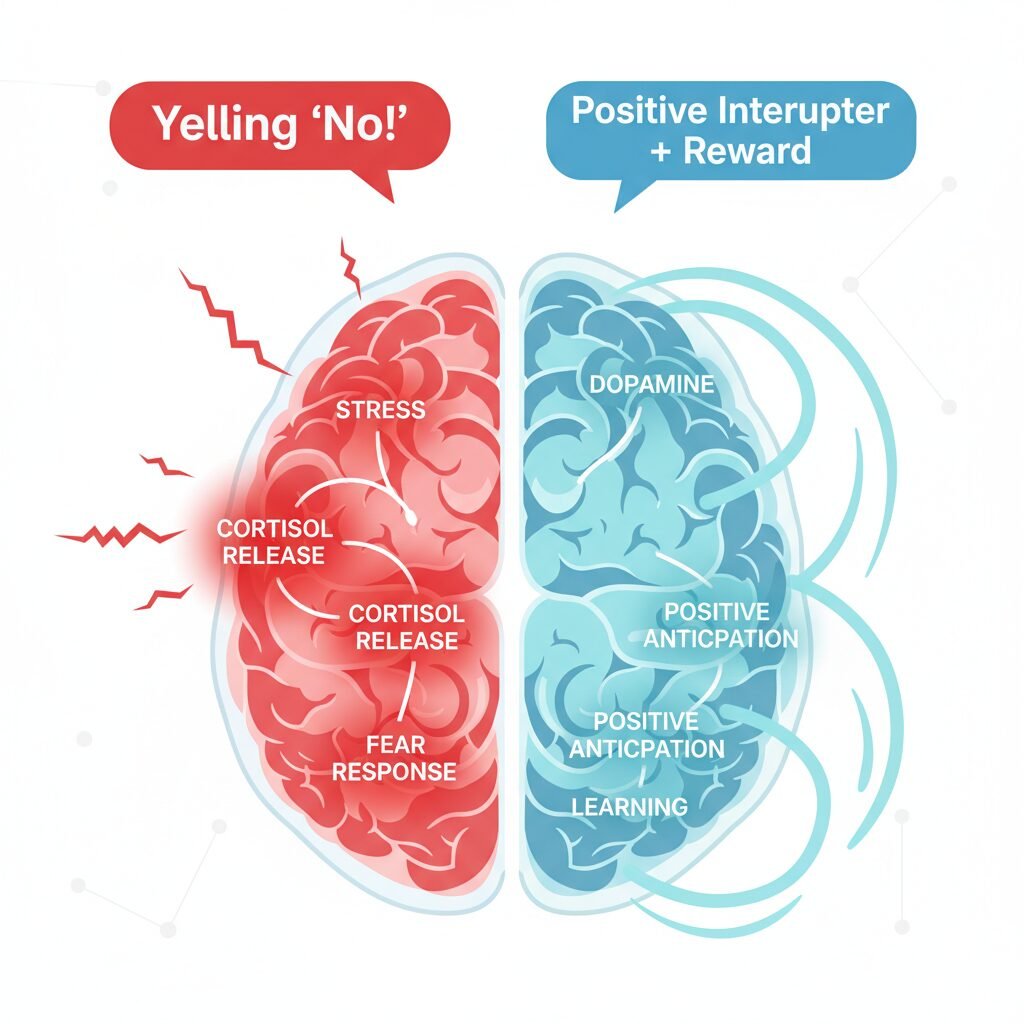
To understand why the positive interrupter works so well, we must first analyze why the traditional “No!” so often fails. The frequent use of a negative verbal marker is rooted in outdated dominance-based training theories that have been largely debunked by modern behavioral science.
The Problem of Habituation
Imagine you live near a train track. The first few times a train passes, the noise is jarring. After a few weeks, you barely notice it. This is habituation, and it’s precisely what happens when you constantly yell “No!”. Your dog learns that the sound is common, has no consistent consequence, and can be safely ignored. It becomes meaningless background noise.
Creating Negative Associations
Effective training is built on a foundation of trust and positive association. When you yell, you risk your dog associating your presence, your voice, and even your hands with something unpleasant or scary. This can lead to a dog who is hesitant to engage in training, avoids you when they have something they shouldn’t, or even develops defensive behaviors. Instead of a student, you create a subject who is afraid of making a mistake.
Lack of Clear Information
The most significant flaw of “No!” is its vagueness. It doesn’t provide any useful information. It tells the dog to stop, but stop what? And what should be done instead? This lack of direction leaves the dog to guess, often leading them to simply repeat the behavior later or try another, equally undesirable one. Effective communication is about clarity, and “No!” is one of the muddiest words in a dog’s vocabulary.
Expert Takeaway: A successful training program focuses on teaching a dog what you want them to do, rather than constantly punishing them for what you don’t want. The goal is to build a repertoire of desired behaviors that can be used to replace undesired ones.
Defining the Positive Interrupter: Your New Communication Tool

A positive interrupter is a unique, consistent sound that you teach your dog to associate with a high-value reward. Its sole purpose is to get your dog to stop what they are doing and immediately turn their attention to you with happy anticipation. It is not a command like ‘Sit’ or ‘Stay’. Think of it less as a stop sign and more as a pleasant announcement that says, “Hey, stop what you’re doing and look at me, because something amazing is about to happen!”
Choosing Your Sound
The key is to select a sound that is distinct from your everyday speech. If you use a word like “Hey” or “Excuse me,” its effectiveness will be diluted because your dog hears it in other contexts. The best sounds are short, sharp, and easy for you to produce consistently.
- A sharp kissy sound: This is a popular and effective choice.
- A tongue click: A crisp click made with the side of your tongue.
- A unique, short word: Some trainers use words like “Zing!”, “Oopsie!”, or “Pip!”. Choose something you won’t say by accident.
The sound itself doesn’t matter; the power comes from the consistent, positive association you are about to build with it.
Step-by-Step Guide: How to ‘Charge’ Your Positive Interrupter
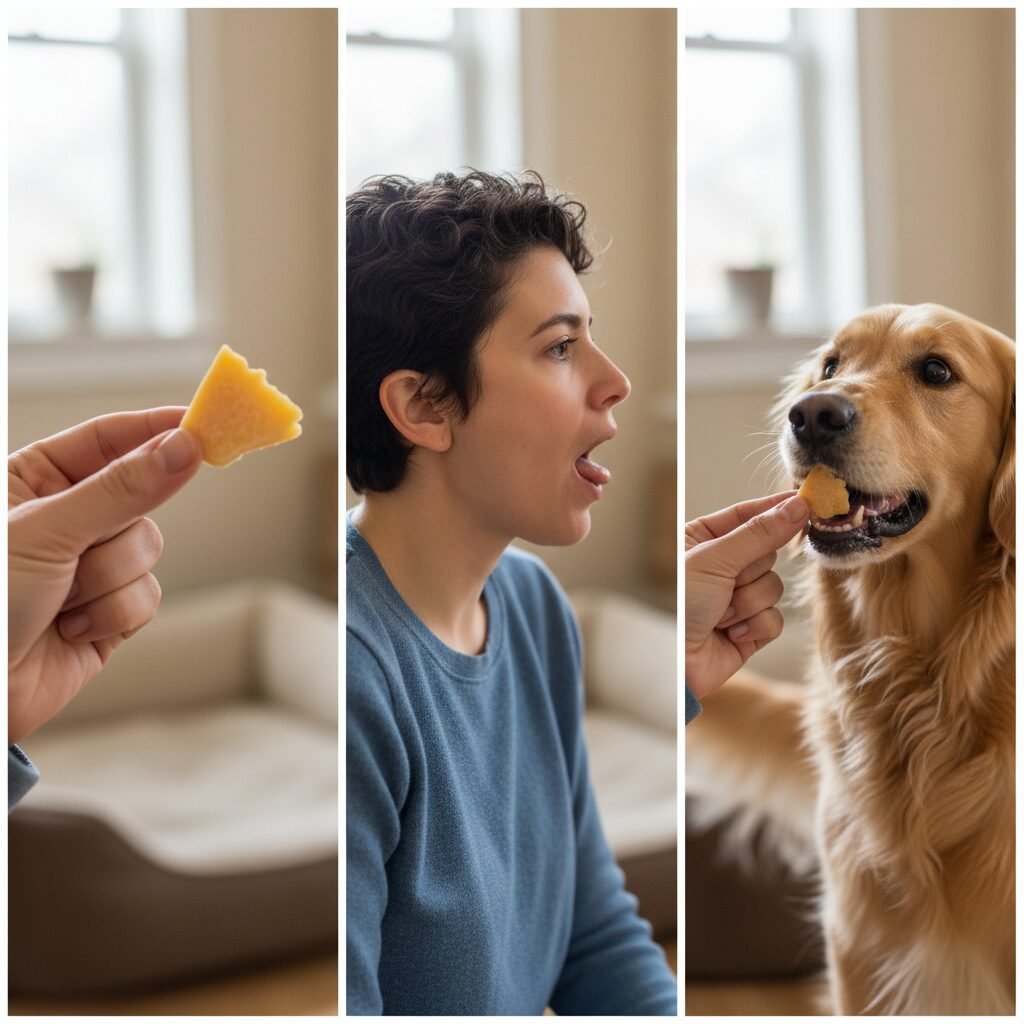
Before you can use the interrupter in real-life situations, you must first ‘charge’ it with positive meaning. This process, also known as classical conditioning, is simple, fast, and forms the foundation of its success. It’s about creating an automatic, reflexive response in your dog.
What You’ll Need:
- Your chosen sound: Be consistent from the very first repetition.
- High-value treats: These aren’t your dog’s everyday kibble. Think small pieces of chicken, cheese, hot dogs, or a commercial treat they absolutely love. The higher the value, the faster the association is built. Cut them into pea-sized pieces to allow for many repetitions.
- A quiet environment: Start in a place with minimal distractions, like your living room.
The Charging Process:
- Prepare Your Treats: Have a handful of treats ready so you can deliver them quickly without fumbling.
- Make the Sound: Produce your unique interrupter sound clearly one time. Keep your tone upbeat and pleasant.
- Deliver the Reward: Immediately after the sound ends, give your dog a high-value treat. The timing is critical. The sequence must always be: Sound -> Treat. Do not say the sound while the dog is eating or while you are reaching for the treat.
- Repeat: Pause for a few seconds, then repeat the process. A single training session should consist of 10-15 repetitions.
- Practice in Short Bursts: Conduct these short sessions 2-3 times a day for a few days. The goal is to build a strong, reliable connection in your dog’s brain.
Testing for Success
How do you know the interrupter is charged? Wait for a moment when your dog is calmly distracted and not looking at you. Make the sound. If their head whips around and they look at you with an expectant, happy expression, you’ve succeeded! Their brain has now made the connection: that sound predicts a fantastic reward.
Putting It Into Practice: Using the Interrupter in Real-Life Scenarios
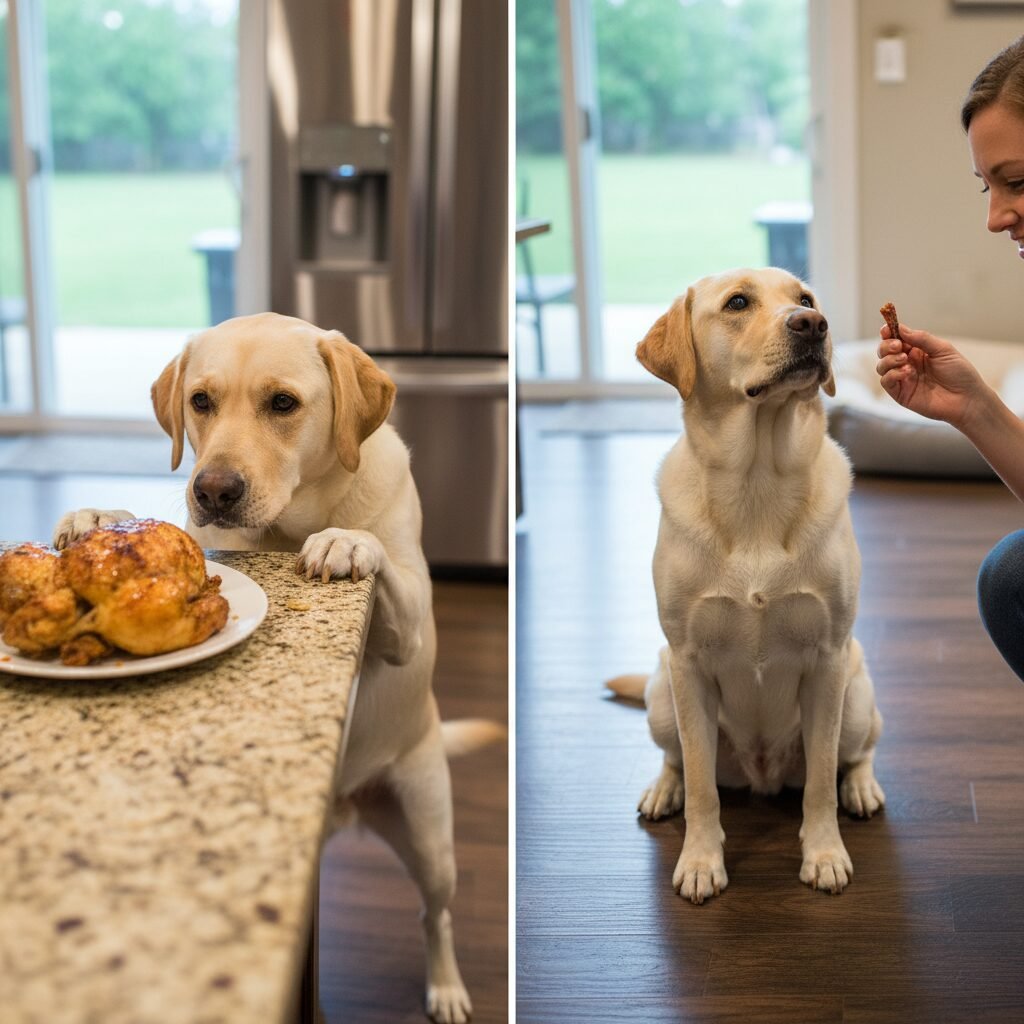
Once your interrupter is reliably charged, you can begin using it to manage unwanted behaviors. The complete process involves two critical parts: Interrupt and Redirect. Simply stopping a behavior is only half the battle; you must guide your dog toward a more appropriate alternative.
The Two-Step Method: Interrupt and Redirect
- Interrupt: The moment you see your dog about to engage in an unwanted behavior (or in the first second of doing it), make your positive interrupter sound. Their conditioned response should be to stop and look at you.
- Redirect: The instant you have their attention, give them a different, desirable behavior to perform. This could be asking for a ‘sit’, telling them to ‘come’, or directing them to a toy. When they successfully perform the new behavior, reward them enthusiastically with praise, play, or another treat.
This method works because it doesn’t just stop a bad habit; it actively builds a good one in its place. You are teaching your dog a constructive way to behave in that situation.
Common Scenarios and Redirection Strategies
Here is how you can apply this technique in various common situations:
| Unwanted Behavior | Interruption Point | Redirection Command | Reward for Success |
|---|---|---|---|
| Counter-Surfing | As soon as their paws go up on the counter. | Use the interrupter, then say, “Off!” and cue a “Sit”. | Praise and reward for sitting on the floor. |
| Chewing Furniture | The moment their mouth touches the table leg. | Use the interrupter, then say, “Leave it!” and offer a chew toy. | Praise enthusiastically when they engage with their toy. |
| Jumping on Guests | As they begin to crouch or launch into a jump. | Use the interrupter, then cue a strong “Sit” or “Place”. | Have the guest reward the calm, four-on-the-floor greeting. |
| Nuisance Barking at Window | After the first or second bark. | Use the interrupter, then call them to you with “Come!” and ask for a trick. | Reward them for disengaging from the window and focusing on you. |
Troubleshooting and Common Mistakes to Avoid

While the positive interrupter is a highly effective tool, its power can be diminished if used incorrectly. Avoiding these common pitfalls is essential for long-term success.
- Poisoning the Cue: The most critical mistake is to follow the interrupter sound with something unpleasant. If you make the sound and then scold, grab, or punish your dog, you will destroy the positive association. The sound must always predict a reward.
- Forgetting to Redirect: Simply interrupting the behavior and giving a treat is not enough. Without the redirection step, the dog may learn to offer the bad behavior just to hear the sound and get a treat. The reward should ultimately be for the appropriate, redirected behavior.
- Inconsistent Sound: Your interrupter noise needs to be the same every time. A weak kissy sound one time and a loud smack the next will confuse your dog. Consistency is paramount.
- Overuse or Nagging: The interrupter is for stopping a behavior in its tracks. It is not for calling your dog from the yard or getting their attention when they’re just resting. Using it too frequently for non-essential situations will cause it to lose its power, just like yelling “No!”.
What If It’s Not Working?
If you find your dog is not responding reliably, go back to the beginning. Your interrupter may need to be ‘re-charged’. Conduct a few more short, fun charging sessions using even higher-value treats than before. Ensure you are practicing in low-distraction environments before trying to use it when excitement levels are high. Training is a process, and sometimes you need to reinforce the fundamentals.
Conclusion
Moving away from a reactive “No!” to a proactive positive interrupter is more than just a change in technique; it’s a fundamental shift in your training philosophy. It transforms you from a figure of punishment into a trusted guide who provides clear, positive direction. By ‘charging’ a unique sound and using it to interrupt and redirect, you are not only managing behavior more effectively but also building a deeper, more joyful relationship with your canine companion. This method respects your dog’s intelligence and fosters a partnership built on communication and mutual trust. Be patient, be consistent, and celebrate the small victories. You are not just stopping bad habits; you are building a lifetime of good ones.