Why Every Dog Needs “Platform Training” for Perfect Focus
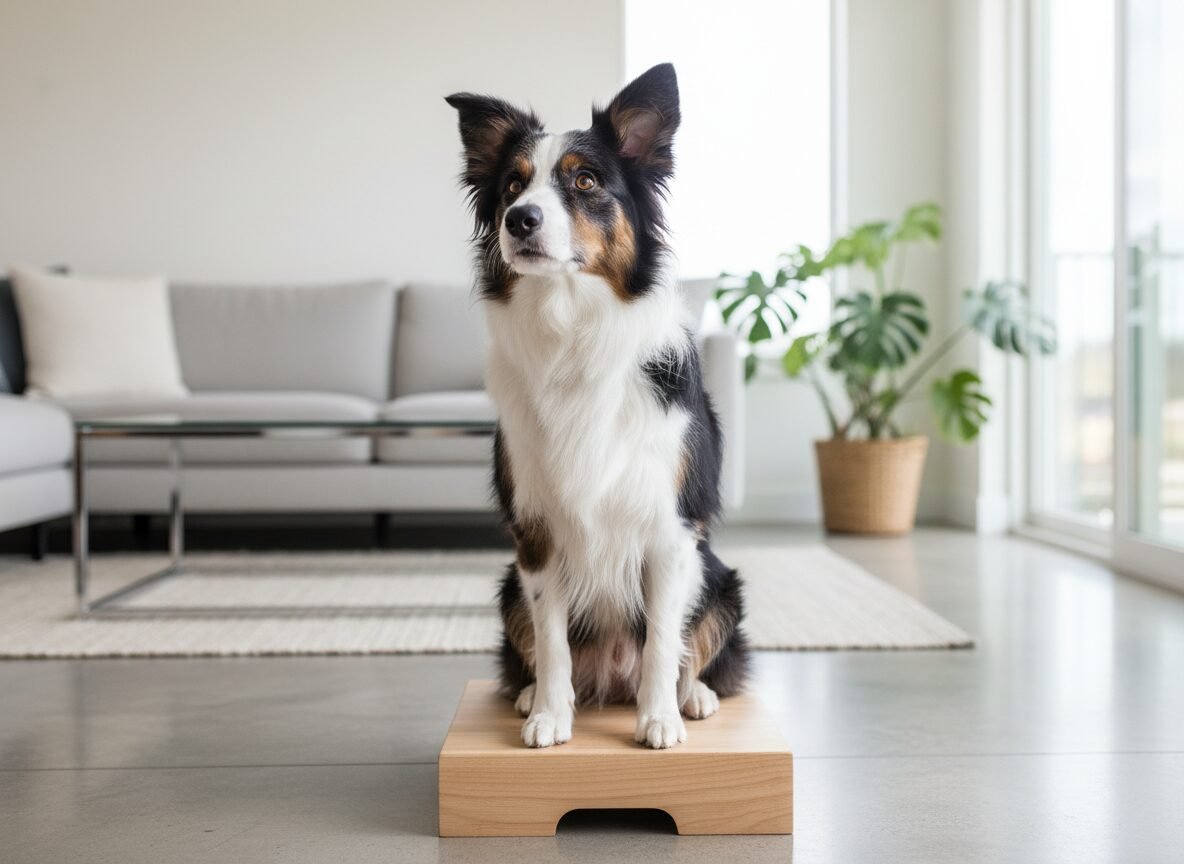
In the complex world of canine communication, clarity is king. As loving pet owners, we often struggle to cut through the noise of a distracting environment to gain our dog’s undivided attention. Whether it’s a squirrel in the yard, a passing car, or the allure of a new scent, a dog’s focus can be fleeting. This is where platform training emerges not just as another command, but as a foundational pillar of effective training and communication. It is a transformative technique that provides your dog with a defined ‘place of work,’ a physical boundary that simplifies their task and sharpens their mental acuity.
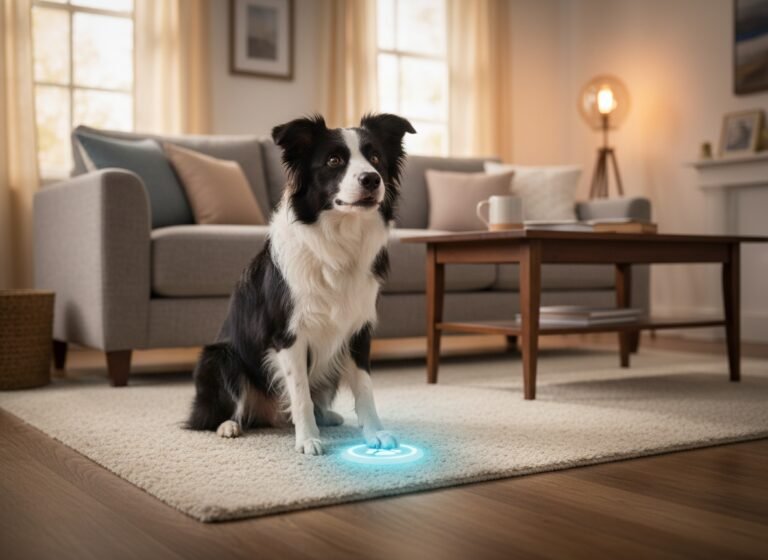
Platform training, at its core, involves teaching a dog to go to a specific, raised object and stay there until released. This simple action has profound psychological benefits. It leverages the power of clear criteria to help your dog understand precisely what is expected of them, eliminating the ambiguity that can lead to frustration and disengagement for both dog and owner. By mastering this skill, you are not just teaching a ‘place’ command; you are building a language of focus, cultivating impulse control, and fostering a level of confidence that permeates every aspect of your dog’s life. This guide will provide a comprehensive, expert-led exploration of why this method is indispensable for any dog owner seeking a more focused, confident, and well-behaved companion.
The Science Behind the Platform: Defining a ‘Place of Work’
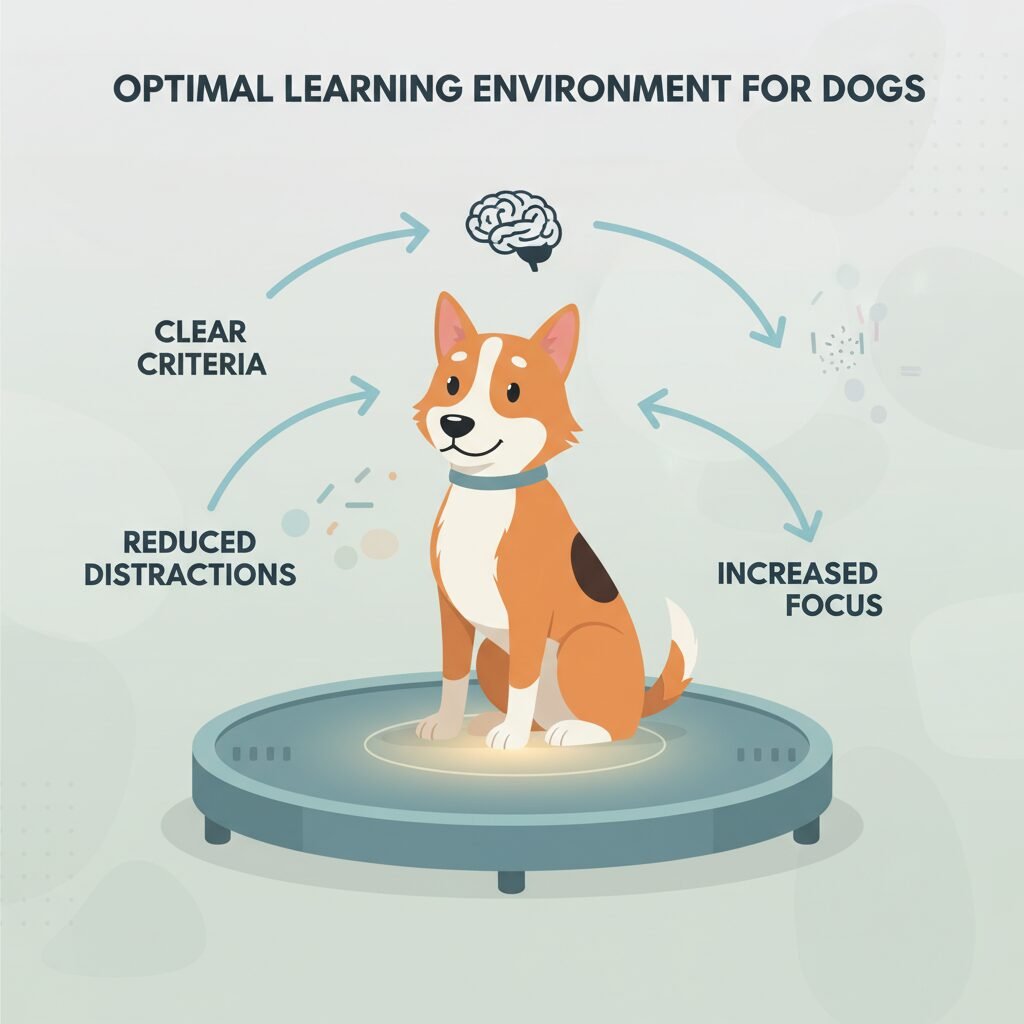
To understand the efficacy of platform training, one must first appreciate the canine mind. Dogs thrive on predictability and clear communication. When the rules of engagement are fuzzy, they can become anxious or resort to guessing, which often leads to unwanted behaviors. A training platform—be it a professional Klimb table, a Cato board, or even a DIY sturdy, low box—creates an unmistakable physical boundary. This is its primary power.
When a dog has all four paws on the platform, they are correct. When even one paw is off, they are incorrect. This binary, black-and-white distinction is incredibly easy for a dog to understand. It removes the guesswork associated with commands like ‘stay’ when performed on an open floor, where the dog might wonder if scooting a few inches breaks the command. The platform makes the criteria for success tangible.
How a Platform Enhances Focus:
- Reduces Environmental Stimuli: By elevating the dog slightly, the platform narrows their physical and mental world. It signals that the distractions on the floor are irrelevant; the important work happens here.
- Promotes Body Awareness (Proprioception): Teaching a dog to consciously place their feet on a specific object enhances their proprioception. This improved body awareness translates to better coordination and can build confidence, especially in timid dogs or those in canine sports.
- Creates a Positive Work Ethic: Through positive reinforcement, the platform becomes a place of high-value rewards and engagement with you. It becomes the dog’s ‘office,’ a place they are eager to go to because they know it’s where the fun and learning happen.
Expert Tip: The platform is not a place for punishment. It must always remain a positive space. Never send a dog to its platform as a ‘time-out,’ as this will poison the concept and undermine its effectiveness as a training tool.
Setting the Stage for Success: Your Platform Training Toolkit
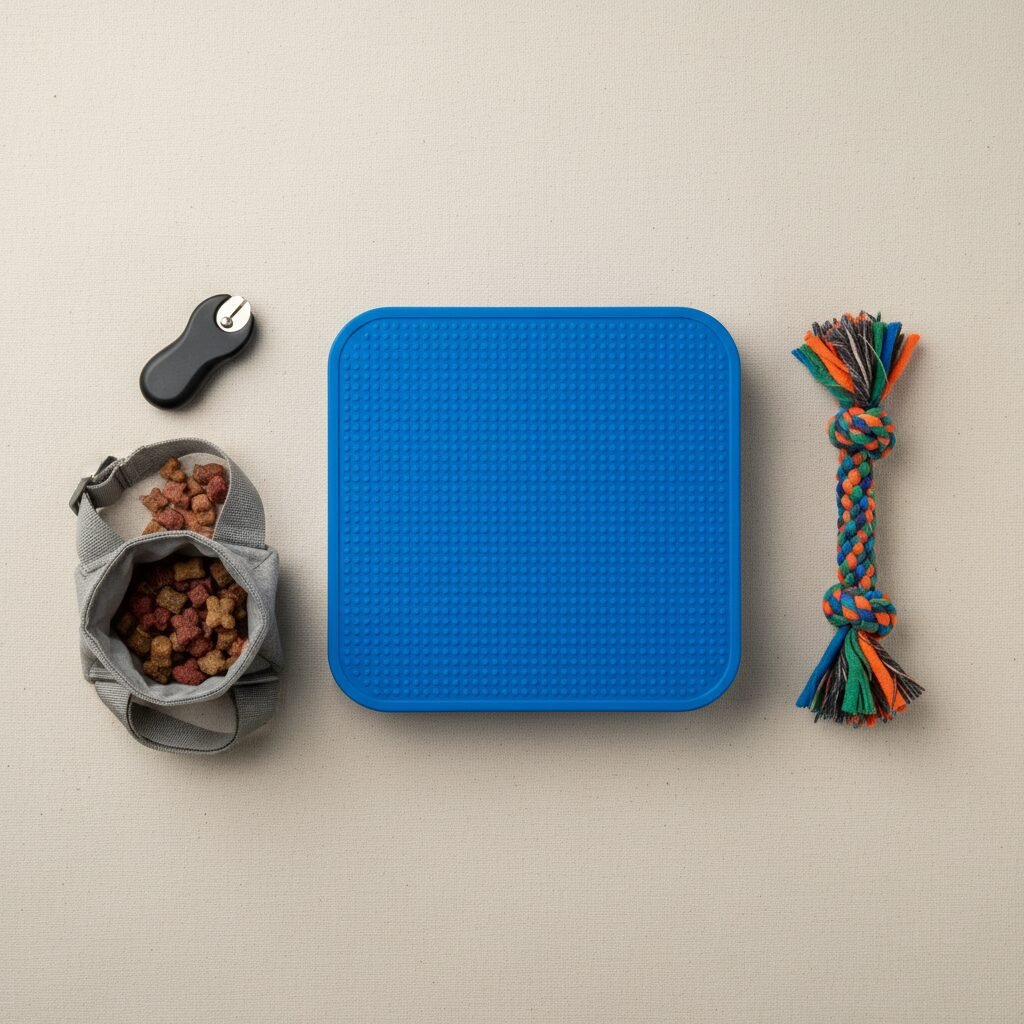
Before you begin, gathering the right tools will ensure your training sessions are smooth, efficient, and positive. The setup does not need to be expensive, but it must be safe and effective for your specific dog.
Choosing the Right Platform
The ideal platform is stable, has a non-slip surface, and is large enough for your dog to comfortably sit, lie down, and turn around, but not so large that the concept of a boundary is lost. Its height should be low enough for your dog to step onto easily without jumping.
| Platform Type | Pros | Cons |
|---|---|---|
| Professional Training Platforms (e.g., Klimb, Cato) | Durable, non-slip, stackable, designed for stability. | Can be a significant financial investment. |
| Canine Agility Pause Table | Extremely sturdy, excellent non-slip surface. | Often heavy, less portable, and expensive. |
| DIY Wooden Box | Cost-effective, can be customized to the perfect size. | Requires construction skills; must ensure it’s stable and splinter-free. |
| Repurposed Item (e.g., footstool, aerobic step) | Inexpensive, readily available. | May not be the right size; must verify stability and non-slip surface. |
Essential Rewards and Tools
- High-Value Treats: Use small, soft, and highly palatable treats that your dog loves. This is not the time for dry kibble. Think small pieces of cooked chicken, cheese, or commercial training treats.
- Clicker (Optional): A clicker is an excellent tool for marking the precise moment your dog performs the correct action (e.g., the instant all four paws touch the platform).
- A Non-Distracting Environment: Start your training in a quiet room inside your home where distractions are minimal.
Building the Behavior: A Step-by-Step Guide to Introducing the Platform
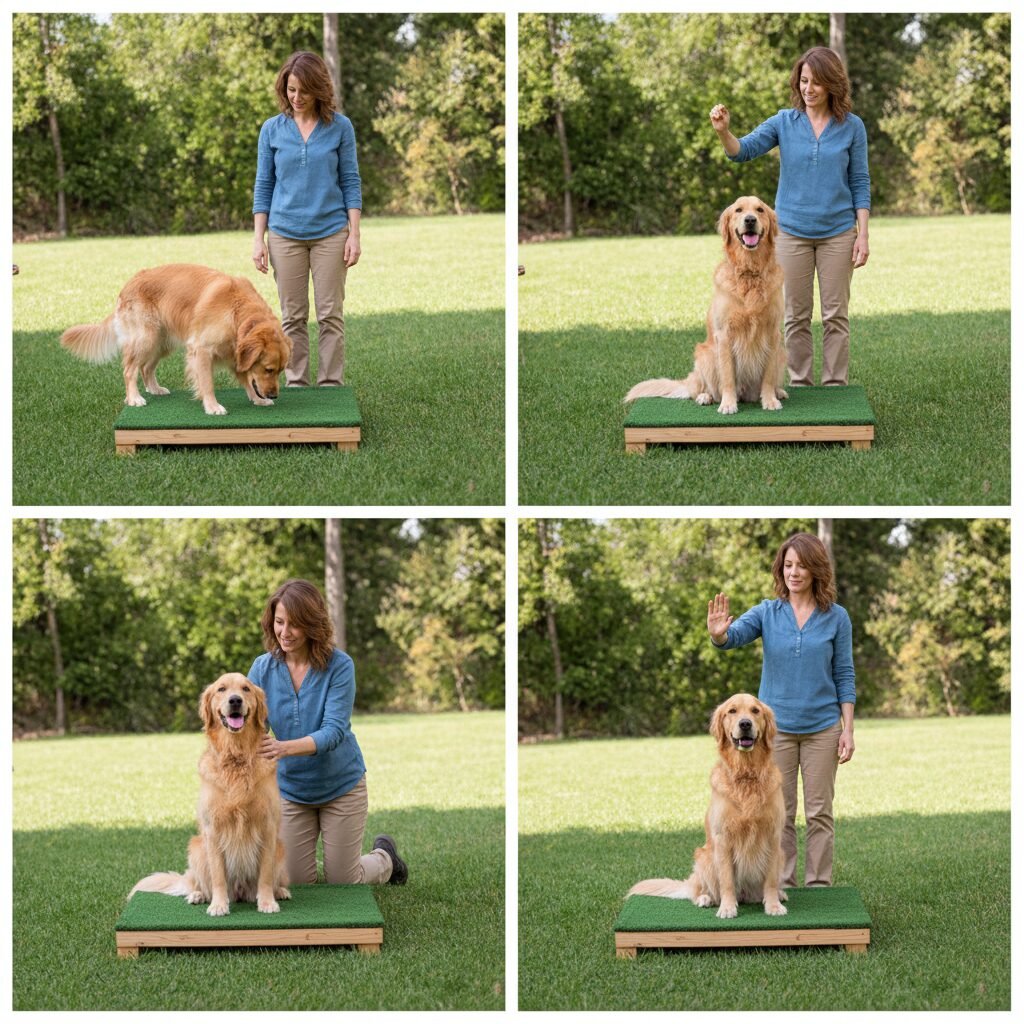
The key to platform training is to break it down into small, achievable steps, ensuring your dog is successful and confident at every stage. Keep sessions short (5-10 minutes) and always end on a positive note.
- Step 1: Introduce the Platform (Charging the Object). Place the platform on the floor. Let your dog investigate it. Any time your dog looks at, sniffs, or touches the platform, click (or use a verbal marker like “Yes!”) and toss a treat onto the platform. The goal is to build a positive association with the object itself.
- Step 2: Shaping ‘Paws On’. Encourage your dog to interact more. Reward any paw touching the platform. At first, reward one paw, then wait for two. Use a lure if needed by holding a treat to your dog’s nose and guiding them towards the platform. The moment they step onto it to get the treat, mark and reward generously. Repeat until your dog is confidently stepping onto the platform.
- Step 3: Building Duration. Once your dog is comfortably getting on the platform, start building duration. Ask them to get on, then wait just one second before you mark and reward. Gradually increase the time they must remain on the platform before receiving the reward. If they step off, that’s okay—no punishment. Simply lure them back on and try again with a shorter duration.
- Step 4: Adding a Verbal Cue. When your dog is reliably going to the platform and staying for a few seconds, you can add a verbal cue. Say your chosen cue (e.g., “Place,” “Platform,” “Spot”) right before they make the motion to get on. Consistency is key. Do not say the cue repeatedly if they don’t respond; instead, go back to luring them to ensure success.
- Step 5: Fading the Lure. Gradually fade the food lure. Pretend to have a treat in your hand and use the same hand motion. When your dog gets on the platform, reward them with a treat from your other hand. Over time, you can transition to just a hand signal or the verbal cue alone.
- Step 6: Introducing Distance and Distractions. Start adding distance by asking for the “Place” command from a few feet away. Slowly increase the distance as your dog succeeds. Once reliable, you can begin adding mild distractions, like a person walking through the room or a toy being placed on the floor. This process, known as ‘proofing,’ solidifies the behavior.
Mastering the Platform: Advanced Applications and Common Challenges
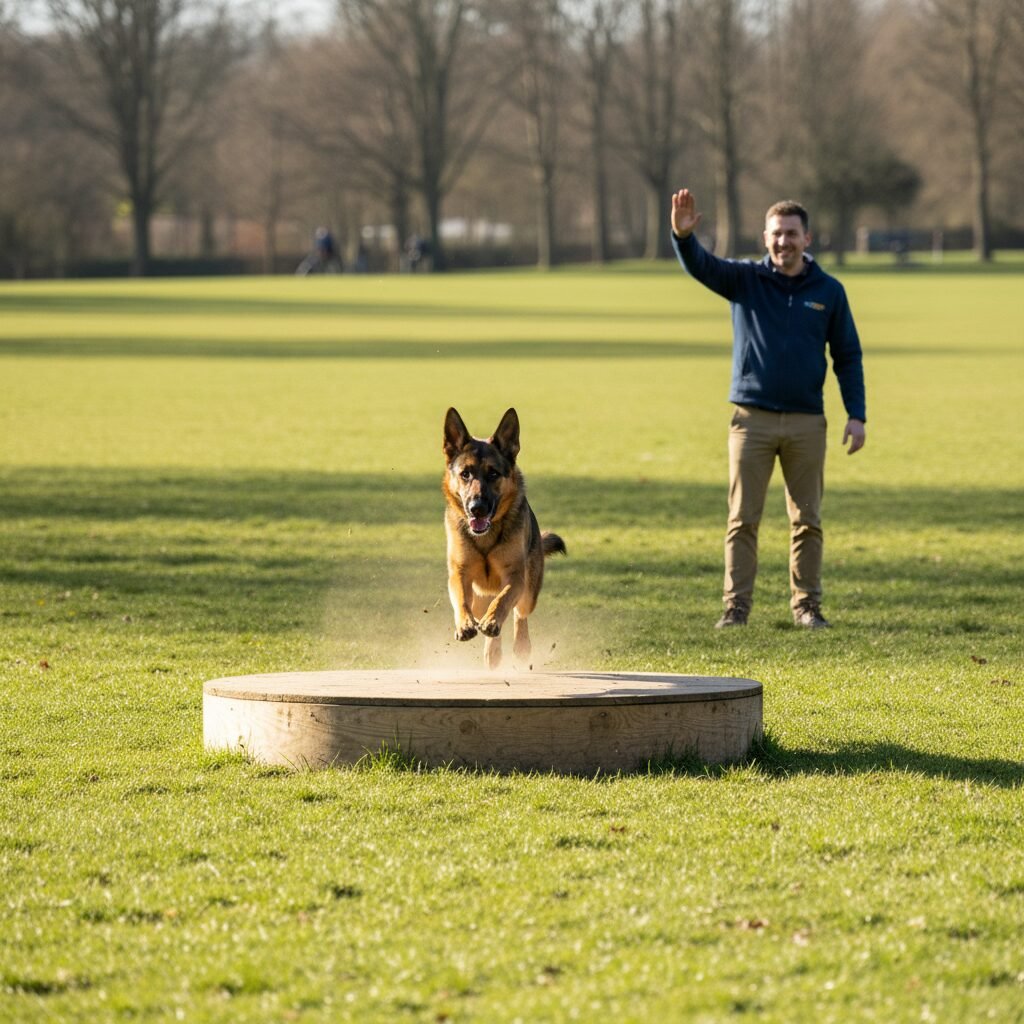
Once your dog has mastered the basic ‘place’ command, the platform becomes a versatile tool for a wide range of applications, from practical life skills to advanced dog sports.
Advanced Applications
- Stationing for Guests: The platform is an excellent management tool for when guests arrive. Instead of jumping, your dog can be sent to their platform, giving them a clear job to do and a way to remain part of the group in a calm, controlled manner.
- Cooperative Care: Use the platform as a station for grooming, nail trims, or mock veterinary exams. The clear boundaries and positive association can reduce the stress associated with these handling procedures.
- Distance Work: For dog sports like obedience or rally, the platform is invaluable for teaching ‘send-aways’ to a specific target. You can practice sending your dog to the platform from across the room or yard, building incredible responsiveness at a distance.
- A ‘Calm’ Spot: The platform can be used as a ‘zen’ spot. By rewarding calm behaviors on the platform (like a down-stay), you teach your dog that it is a place to settle and relax, which is useful in high-energy situations.
Troubleshooting Common Issues
Even with the best plan, you may encounter challenges. Here’s how to address them:
- My dog is hesitant to get on the platform. The platform may be too high, wobbly, or have a slippery surface. Check your equipment. Go back to Step 1 and heavily reward any interaction, no matter how small. Don’t pressure the dog; let them choose to engage.
- My dog keeps breaking their stay. You are likely increasing duration or distance too quickly. Go back to a point where they were successful and build up more slowly. Ensure you are using a clear release cue (like “Okay!” or “Free!”) so your dog knows exactly when the job is done.
- My dog offers other behaviors (like barking) on the platform. Your dog might be frustrated or overly excited. This often means the session has gone on too long or the criteria are not clear. End the session on a successful repetition and try again later with a shorter, simpler goal.
Conclusion
Platform training is far more than a party trick or a niche command for competitive dogs. It is a powerful communication system that provides the clarity and structure canines crave. By giving your dog a defined ‘place of work,’ you are removing ambiguity, building confidence, and sharpening their ability to focus on you amidst a world of distractions. The benefits extend from creating a calmer household and facilitating stressful procedures like grooming to laying the groundwork for advanced obedience skills. It strengthens the bond between you and your dog, replacing confusion with confident understanding.
Embracing this technique requires patience and consistency, but the investment pays dividends in the form of a more focused, engaged, and well-behaved companion. Start today, keep it positive, and watch as this simple raised square transforms your training and deepens your relationship with your dog in ways you never thought possible.