Pub Ready: How to Train Your Dog to Settle at Restaurants and Patios
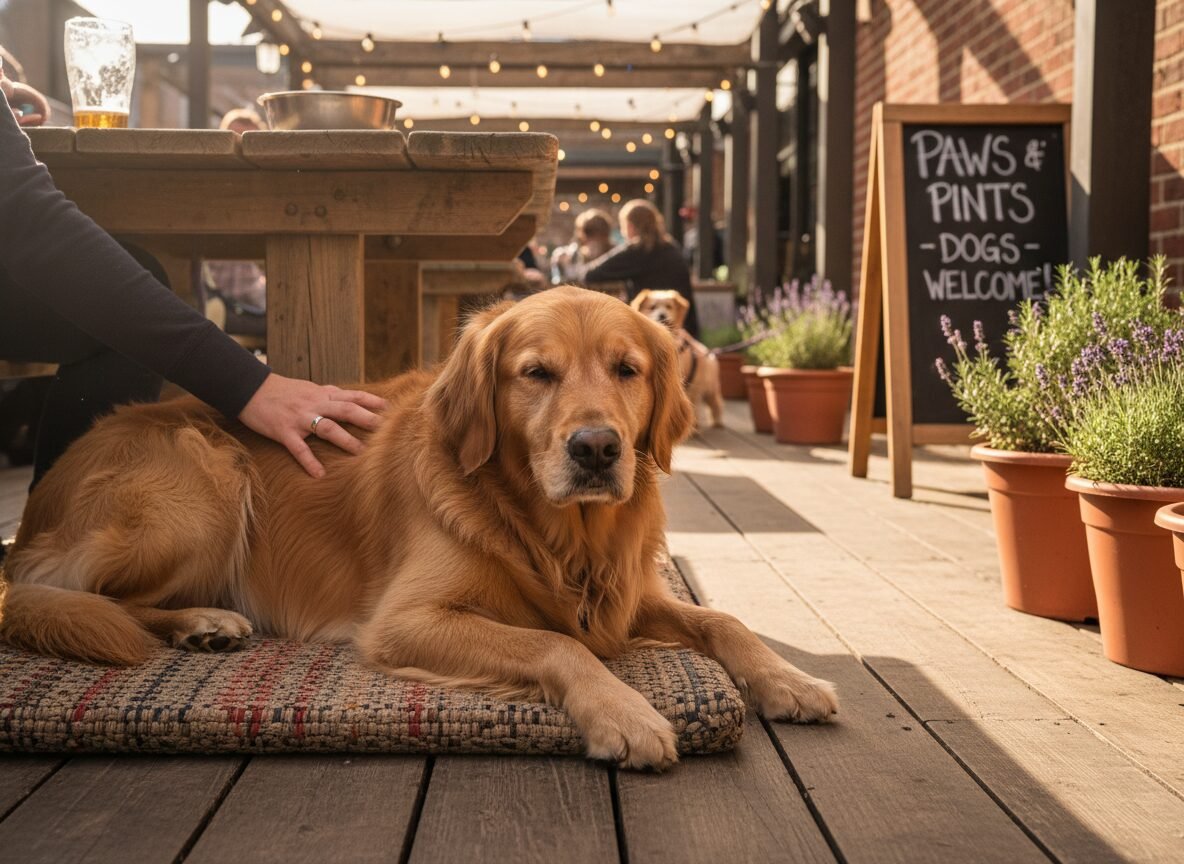
The allure of a sunny afternoon spent on a restaurant patio with your loyal canine companion by your side is undeniable for many pet owners. It represents a beautiful integration of our social lives with the pets we consider family. However, the reality of this idyllic scene hinges entirely on one crucial factor: your dog’s behavior. An afternoon of leisure can quickly become a stressful ordeal if your dog is whining, barking, pulling on the leash, or attempting to greet every passerby. This is where dedicated training transforms a potential challenge into a rewarding experience.
Training a dog to settle calmly in a busy, stimulating public environment is an advanced skill. It requires more than just a basic ‘sit’ or ‘stay’. It demands patience, consistency, and a clear understanding of canine behavior from the owner. This guide is designed to provide you with a professional, step-by-step methodology to achieve just that. We will move beyond simple commands and delve into creating a state of calm relaxation for your dog, no matter the distractions. By following these structured protocols, you will not only teach your dog a valuable skill but also strengthen your bond, building a foundation of trust that allows you to confidently include your dog in more aspects of your life. Prepare to invest the time, and you’ll soon be enjoying those perfect patio days with your best friend.
Foundational Skills: The Building Blocks of a Pub-Ready Pooch
Before you even think about reserving a table on a pet-friendly patio, you must ensure your dog has mastered a few core skills in a low-distraction environment, such as your home. These foundational commands are the non-negotiable prerequisites for public success. Attempting to train in a busy setting without this groundwork is akin to trying to build a house without a foundation—it is destined to be unstable. The goal is not just for your dog to perform a command, but to hold it with duration and amidst minor distractions, building reliability and self-control.
The Indispensable ‘Down-Stay’
A rock-solid ‘down-stay’ is the cornerstone of a calm public appearance. The ‘down’ position is inherently more relaxing for a dog than a ‘sit’ or ‘stand’, encouraging them to settle. The ‘stay’ component is what allows you to enjoy your meal without constantly managing your dog.
How to Reinforce It:
- Start with Duration: Ask your dog for a ‘down’. The moment they comply, reward them. Then, slowly increase the time you wait before rewarding again, starting with just a few seconds. Use a release cue like ‘Okay!’ or ‘Free!’ to let them know when the exercise is over.
- Add Distance: Once your dog can hold a ‘down-stay’ for at least a minute while you are right next to them, begin adding distance. Take one step back, then return and reward. Gradually increase the distance over many training sessions.
- Introduce Mild Distractions: In your home, practice the ‘down-stay’ while you walk around the room, open a cupboard, or sit on a chair. This teaches your dog that their job is to remain in place, regardless of your movements.
The ‘Settle’ or ‘Place’ Command
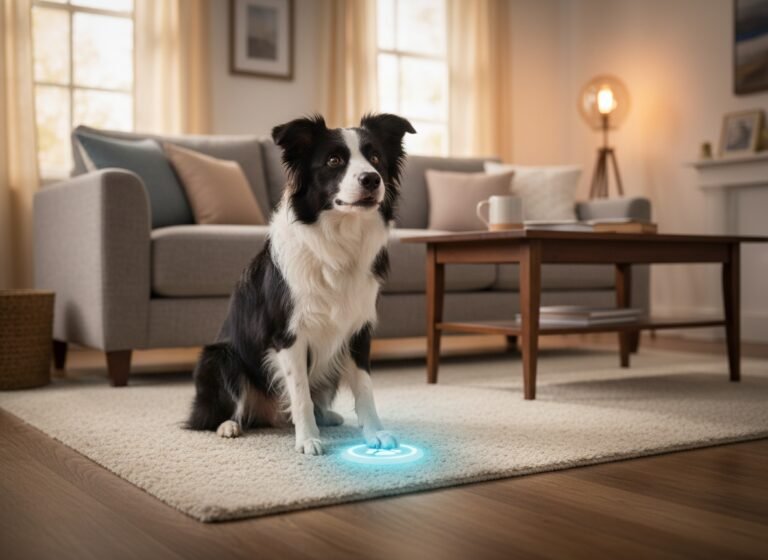
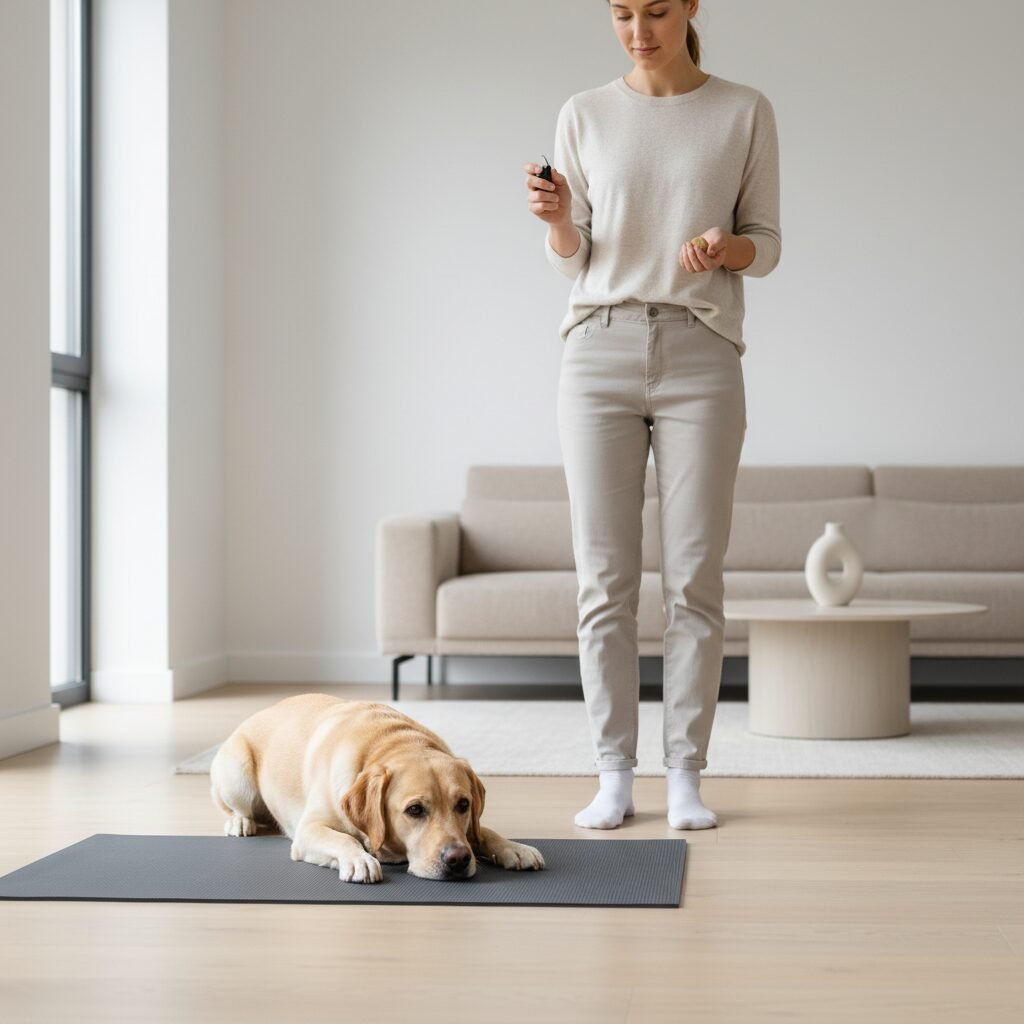
While a ‘down-stay’ is about position, the ‘settle’ or ‘place’ command is about location. You are teaching your dog to go to a specific spot—typically a mat or bed—and remain there until released. This mat becomes their ‘safe zone’ and a portable island of calm that you can take anywhere.
Teaching the ‘Place’ Command:
- Introduce the Mat: Place a distinct mat or elevated bed on the floor. Make it enticing by dropping high-value treats on it. When your dog steps onto the mat to investigate, use a marker word like ‘Yes!’ and reward them.
- Lure and Shape: Encourage your dog onto the mat. Once all four paws are on it, reward them generously. Repeat this until they eagerly step onto the mat when you gesture towards it.
- Add the Cue: Once your dog is reliably going to the mat, add the verbal cue ‘Place’ or ‘Settle’ just before they step onto it.
- Build Duration: Just like the ‘down-stay’, start asking your dog to remain on the mat for longer periods. Initially, reward them for simply staying on the mat. Then, ask for a ‘down’ on the mat and reward that. This combination of ‘Place’ and ‘Down’ is the ultimate goal for a restaurant setting.
Expert Tip: Always use a specific, portable mat for ‘place’ training. Over time, the mat itself becomes a powerful cue for your dog to relax. They will associate it with calmness and reward, making it easier to settle in new environments.
Essential Gear: Assembling Your Patio ‘Go-Bag’
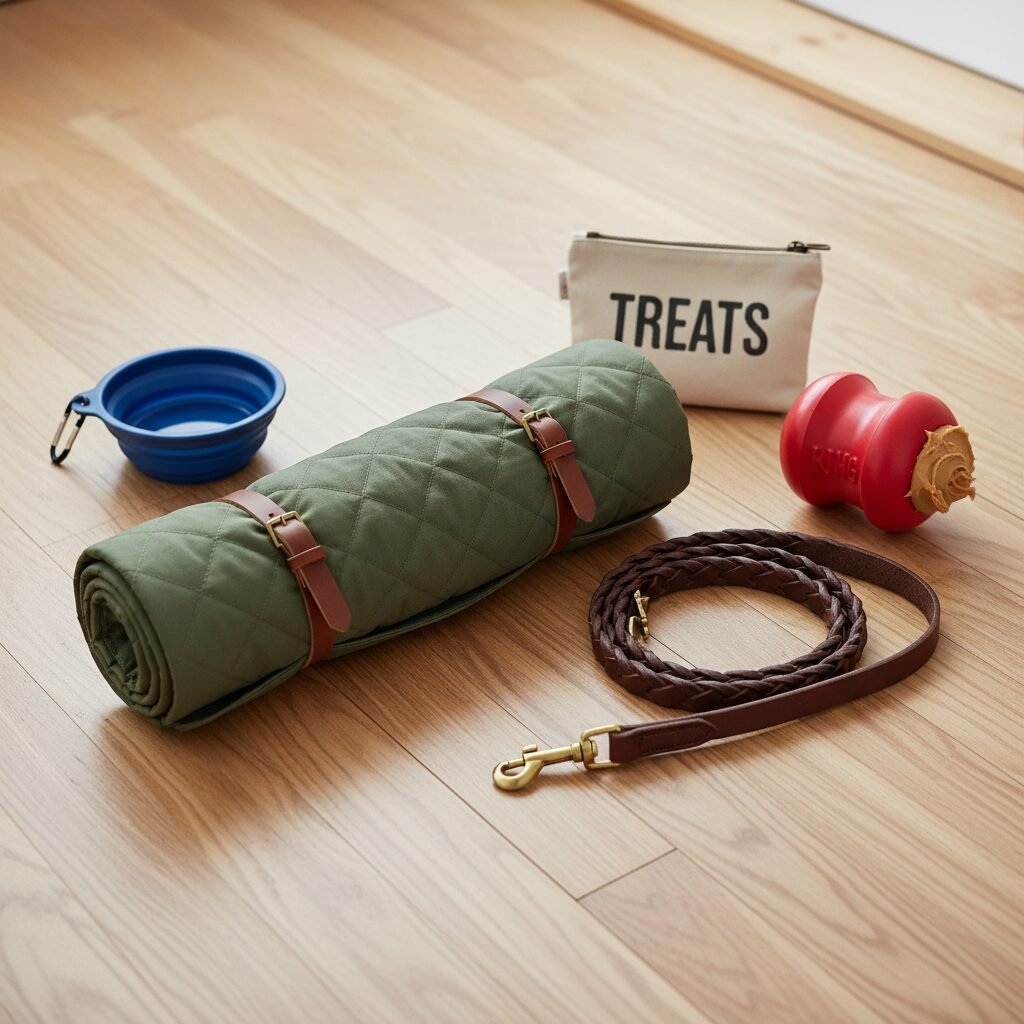
Success in public settings is as much about preparation as it is about training. Having the right equipment on hand can make the difference between a smooth outing and a frantic, stressful experience. Your goal is to create a ‘go-bag’ with everything needed to keep your dog comfortable, secure, and appropriately occupied. This proactive approach shows respect for the establishment, other patrons, and sets your dog up for success.
The Canine Comfort and Control Kit
Think of this kit as your dog’s personal toolkit for public relaxation. Each item serves a specific purpose in managing their behavior and ensuring their well-being.
| Item | Purpose and Professional Recommendation |
|---|---|
| Portable Mat or Bed | This is the ‘place’ you’ve been practicing on. It provides a familiar, comfortable spot for your dog and clearly defines their space. Choose one that is easily rolled up and transported. A thin, non-slip mat is often ideal. |
| Sturdy, Non-Retractable Leash | A standard 4-to-6-foot leash made of leather or nylon is essential for control. Absolutely avoid retractable leashes. They offer poor control in tight spaces, can easily tangle around furniture and people, and teach dogs that pulling extends their range. |
| High-Value, Low-Mess Treats | You will need rewards to reinforce calm behavior. Choose small, soft, high-value treats that your dog loves but that don’t create crumbs or a mess. Small pieces of cooked chicken or commercial training treats work well. |
| Long-Lasting Chew or Food Puzzle Toy | This is your secret weapon for sustained engagement. A durable chew like a bully stick or a rubber toy stuffed with frozen peanut butter or kibble can keep your dog occupied and calm for an extended period. This is not a reward for a command, but an activity to promote settling. |
| Collapsible Water Bowl | Patios can be warm, and your dog will need access to fresh water. Never assume the establishment will provide a bowl. Carrying your own is sanitary and ensures your dog stays hydrated and comfortable. |
| Harness or Collar | Ensure your dog is wearing a well-fitted harness (especially a front-clip one for better control) or flat collar with up-to-date identification tags. |
Assembling this bag before you leave removes last-minute stress and ensures you are fully equipped to handle the training session. It signals to both you and your dog that this is a structured, planned outing, not a spontaneous free-for-all.
The Step-by-Step Training Protocol: From Home to the Patio
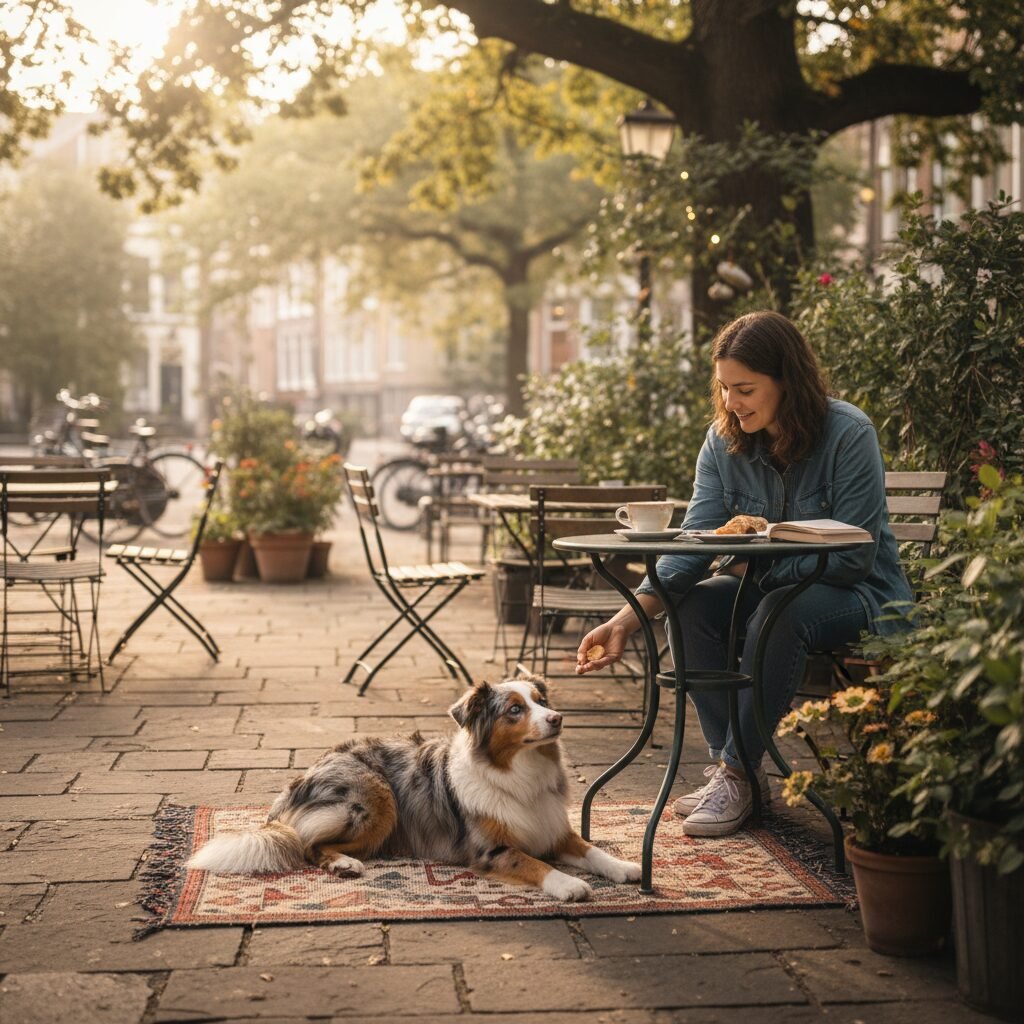
This is where we transition from foundational skills to real-world application. This process must be gradual and methodical. Rushing your dog into a high-stress environment before they are ready will only set back your training and create negative associations. Each step builds upon the last, systematically increasing the level of distraction and duration your dog can handle. Your role is to be a calm, confident leader and a keen observer of your dog’s body language.
Phase 1: Generalizing the ‘Settle’ Command
Your dog may be perfect on their mat in the living room, but can they do it in the kitchen? Or the backyard? Generalization is the process of teaching your dog that a command means the same thing in different locations and situations.
- Step 1: Change the Room. Practice ‘place’ and ‘down-stay’ on the mat in every room of your house.
- Step 2: Move Outdoors. Take the training to your backyard or front porch. The new sights, sounds, and smells are a mild increase in distraction. Reward heavily for success.
- Step 3: The Quiet Public Space. Find a quiet park bench or a secluded spot on a college campus during off-hours. This is the first true public test. Keep the session short and positive, focusing on rewarding calm behavior on the mat.
Phase 2: The ‘Dress Rehearsal’ at a Low-Key Location
Your first visit to a food establishment should not be during the weekend brunch rush. The goal of this phase is a ‘training setup’ designed for success.
- Scout a Location: Find a coffee shop or cafe with a quiet, spacious patio. Call ahead to confirm they are dog-friendly.
- Go During Off-Peak Hours: The best time for a first visit is a weekday mid-morning or mid-afternoon when it is least crowded.
- Choose Your Spot Wisely: Select a corner table away from the main foot traffic path. This minimizes distractions and prevents your dog from being in the way of servers or other guests.
- The Initial Settle: Upon arrival, before you even sit down, guide your dog to their mat next to your chair. Ask for the ‘place’ and ‘down’ command. Reward this initial success generously.
- Keep it Short: Your goal for the first visit is not to enjoy a full three-course meal. Plan to stay for 15-20 minutes—the duration of a single cup of coffee. End the session on a high note, while your dog is still calm and successful.
Phase 3: Gradually Increasing the Challenge
Once your dog has successfully handled several short, quiet outings, you can slowly begin to increase the difficulty. This must be done incrementally.
- Increase Duration: Gradually extend the length of your stay at the quiet cafe.
- Increase Distractions: Try visiting during a slightly busier time or choose a table a little closer to the action.
- Vary the Location: Once your dog is reliable at one quiet spot, try another. Every new location presents new challenges, reinforcing the generalization of the ‘settle’ skill.
Crucial Reminder: Throughout this process, your primary job is to advocate for your dog. If a situation becomes too overwhelming, it is your responsibility to calmly remove them. A graceful exit from a difficult situation is a training win, not a failure. It prevents your dog from practicing unwanted behaviors like barking or lunging.
On-Location Management: Navigating a Live Environment
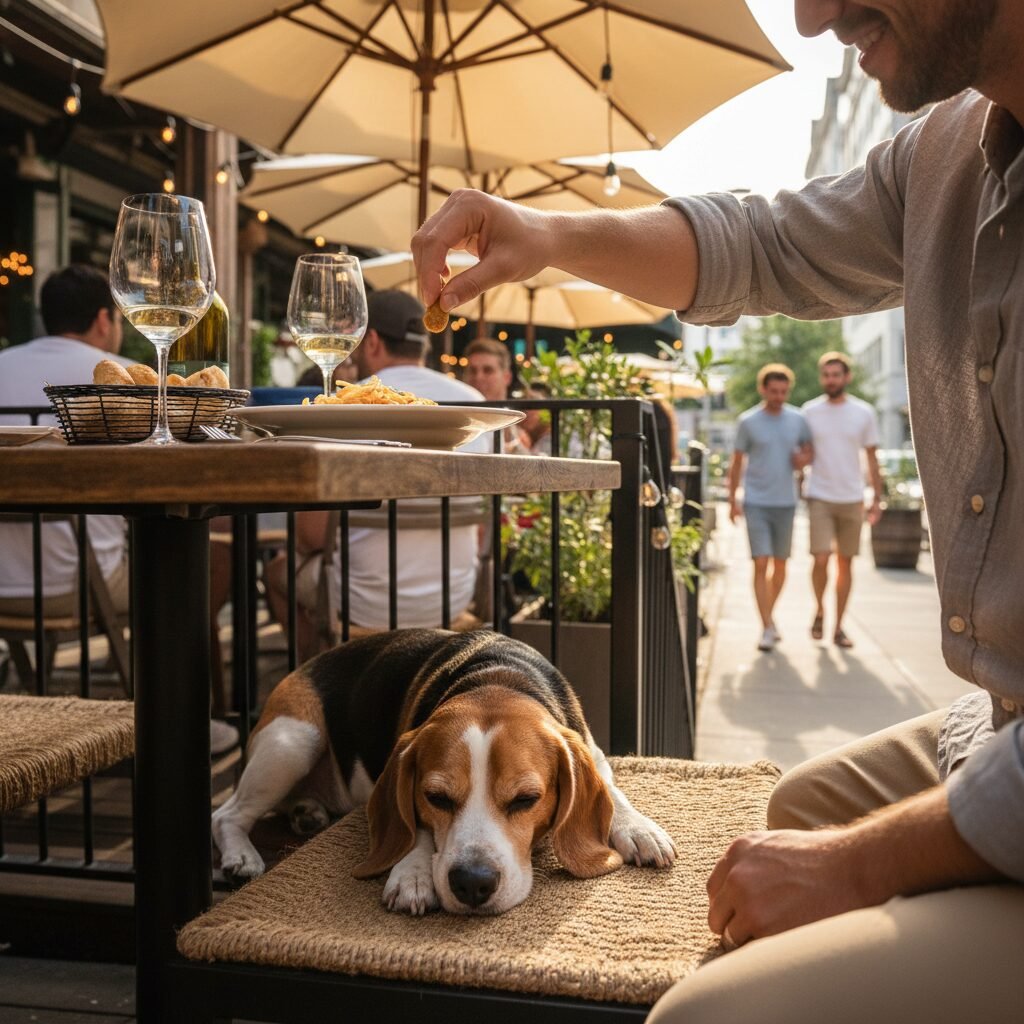
You have put in the foundational work and successfully completed your dress rehearsals. Now you are at a moderately busy patio, and your focus shifts from intensive training to active management. This involves proactively setting up the environment, managing your dog’s state of mind, and gracefully navigating interactions with the public. Your calm and confident handling of the situation will directly influence your dog’s ability to relax.
Strategic Positioning and Setup
Where you sit and how you position your dog is your first and most critical decision upon arrival.
- Anchor Your Dog: Position your dog’s mat between you and a wall or in a corner whenever possible. This creates a natural barrier and reduces the number of directions from which distractions can approach.
- Leash Management: Keep the leash short enough to prevent your dog from leaving their mat, but loose enough that there is no tension. You can step on the middle of the leash to anchor it securely and keep your hands free. This prevents them from lunging at a dropped piece of food or an approaching dog.
- Provide an Outlet: Once your dog has settled on their mat, provide them with their long-lasting chew or stuffed toy. This is not a bribe; it is a calming activity that gives them a ‘job’ to do. Chewing is a natural stress-reliever for dogs and helps them stay occupied while you eat.
Reading Your Dog and Intervening Early
Being a proactive owner means constantly observing your dog’s body language for early signs of stress or over-arousal. Do not wait for a bark or a lunge to react.
Watch for Subtle Cues:
- Lip licking or yawning when not tired
- A ‘whale eye’ (showing the whites of their eyes)
- A stiff, frozen posture
- A tightly closed mouth or panting when not hot
- Fixated staring at a person, dog, or piece of food
When you see these signs, intervene calmly. Use a cheerful ‘Watch Me’ command to redirect their focus back to you, followed by a reward. You may need to provide more frequent reinforcement or a higher-value chew if the environment is proving particularly challenging. If the stress signals continue to escalate, it is time to call it a day and leave on a positive note before a major reaction occurs.
Managing Social Interactions
Well-meaning people will want to greet your dog. While friendly, these interactions can disrupt your dog’s ‘settle’ and over-excite them. You must be your dog’s advocate.
- Politely Decline: It is perfectly acceptable to say, ‘He’s in training right now, so we’re not saying hello, but thank you for asking!’ A polite but firm boundary is key.
- Server Instructions: When your server approaches, ensure your dog remains in their ‘down’ position. Reward them for their calmness as the server interacts with your table. If your dog gets up, simply reset them on their mat without fuss.
Successful on-location management is a delicate balance of observation, prevention, and calm redirection. Your goal is for the outing to be so uneventful for your dog that they find it boring, which is the perfect state of mind for a long, relaxing settle.
Troubleshooting Common Challenges
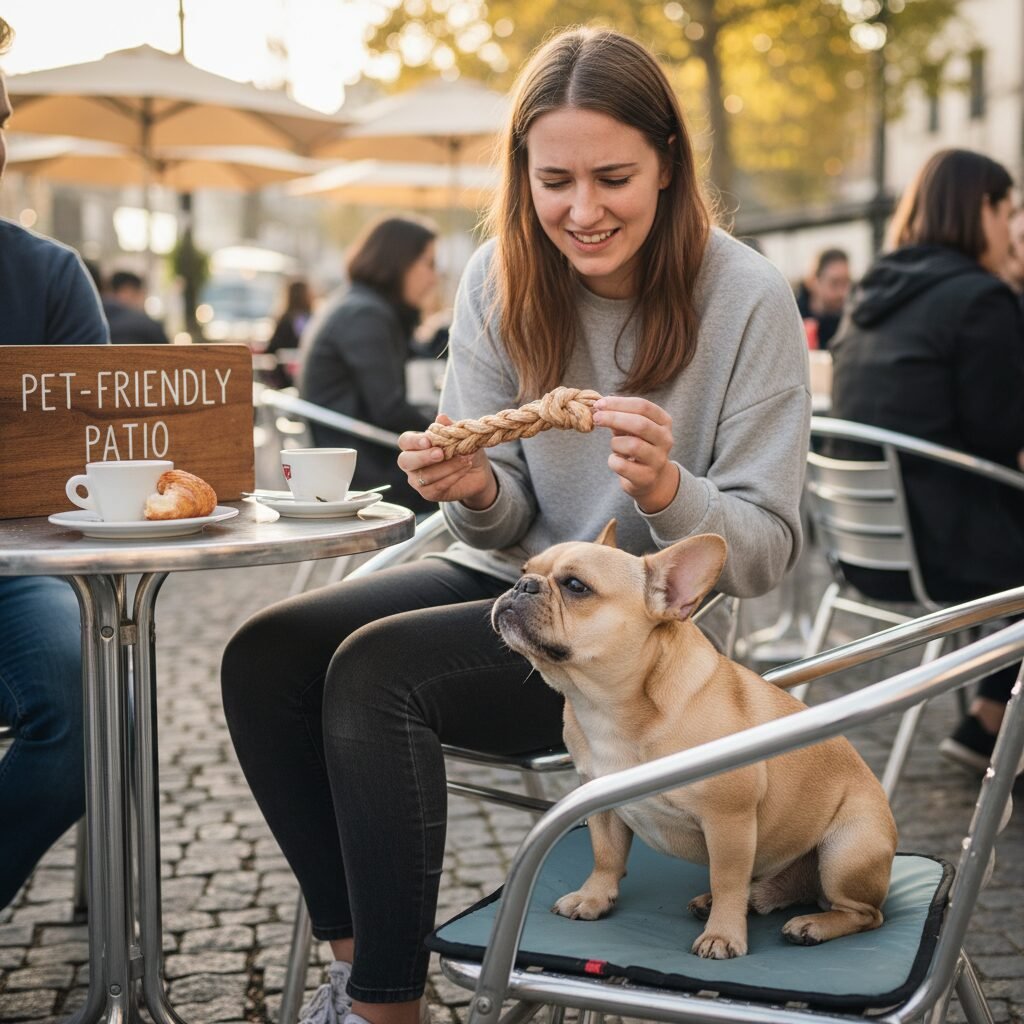
Even with the most diligent training, challenges will arise. Public environments are unpredictable, and dogs, like people, have their off days. The key to effective troubleshooting is to remain calm, avoid punishing the dog, and have a clear plan for addressing common issues. Panicking or scolding a dog that is already stressed will only worsen the behavior and damage your training progress.
Below are common problems encountered when taking dogs to public patios and the professional, positive-reinforcement-based solutions for each.
| Challenge | Underlying Cause | Management and Training Solution |
|---|---|---|
| Whining or Nuisance Barking | Often caused by boredom, excitement, or a demand for attention/food. The dog has learned this behavior gets a reaction. | Do not reward the noise with any attention (positive or negative). Wait for a brief moment of silence, then reward. Provide the long-lasting chew before the whining starts. If it persists, calmly end the session. Practice rewarding silence at home. |
| Begging or Staring Intently at Food | A natural impulse, often unintentionally reinforced by owners giving table scraps at home. | This is managed by a strict ‘no food from the table’ rule, both at home and in public. Redirect their attention to their own chew toy. The ‘Leave It’ command should be proofed at home around tempting food items before being relied upon in public. |
| Restlessness or Inability to Settle | The dog may be overstimulated, anxious, or may not have had enough exercise before the outing. | Ensure your dog has had a long walk or play session to burn off excess energy beforehand. If they are restless on the patio, run through a few simple commands (‘touch’, ‘watch me’) to re-engage their brain. If they cannot settle, the environment is too challenging for their current training level. Leave and try an easier location next time. |
| Over-Excitement Towards People or Dogs | Lack of impulse control or insufficient socialization. The dog sees other beings as an invitation to play or greet. | This requires going back to basics. Practice the ‘settle’ command at a distance from a park, rewarding your dog for calmly observing people and dogs without reacting. In the moment, use your body to block their view of the trigger and redirect with a high-value treat. Politely ask others not to engage with your dog. |
| Fear or Anxiety (Tucked Tail, Shaking) | The environment is genuinely overwhelming for the dog. This is not a training issue but an emotional state. | Forcing a fearful dog to endure a stressful situation is counterproductive and can create lasting fear. If you see signs of true anxiety, provide comfort and remove your dog from the situation immediately. Your priority is their well-being. Work on confidence-building exercises in much quieter environments. |
Remember that every challenge is a data point. It tells you what you need to work on. Perhaps your ‘leave it’ isn’t as strong as you thought, or maybe your dog needs more help learning to ignore other dogs. View these moments not as failures, but as valuable feedback to guide your future training sessions.
Conclusion
Training your dog to be a calm and reliable companion in public spaces like restaurants and patios is a significant achievement that opens up a world of shared experiences. It is a journey that requires a deep commitment to patience, consistency, and understanding. As we have explored, success is not born from a single command, but from a carefully constructed foundation of basic obedience, gradual exposure to new environments, and proactive management of your dog’s emotional state.
Remember the key pillars of this process: build a rock-solid ‘down-stay’ and ‘place’ command at home before venturing out. Always prepare your ‘go-bag’ with the essential tools for comfort and control. Progress at your dog’s pace, starting with short, quiet visits and only increasing the challenge when they have demonstrated consistent success. Most importantly, learn to read your dog’s body language and be their advocate, ready to intervene or make a graceful exit when a situation becomes too overwhelming.
There will be setbacks, and some outings will be more successful than others. This is a natural part of any advanced training. Embrace these moments as learning opportunities, celebrate the small victories, and continue to reinforce the calm, settled behavior you desire. The reward for your dedication is not just a well-behaved dog, but the profound joy and strengthened bond that comes from confidently navigating the world together, one peaceful patio visit at a time.