The Secret Pro Trainers Use: Master Complex Tricks Faster with Backchaining

As dedicated pet owners, we marvel at the complex behaviors we see dogs perform in competitions or on screen. We dream of teaching our own companions to fetch a specific item, put away their toys, or perform an intricate sequence of tricks. Yet, when we try, we often hit a wall. The dog gets confused, frustrated, or loses interest, and we abandon the effort, assuming the trick is simply too difficult. What if the problem isn’t the trick’s complexity, but the way we’re teaching it? Professional trainers have a powerful secret weapon for precisely this challenge: backchaining. This counterintuitive yet profoundly effective method flips traditional training on its head, starting with the final step and working backward. In this comprehensive guide, we will demystify backchaining, explore the science behind its success, and provide you with a step-by-step blueprint to master complex tricks faster and build a stronger, more confident bond with your dog.
What is Backchaining? A Paradigm Shift in Dog Training
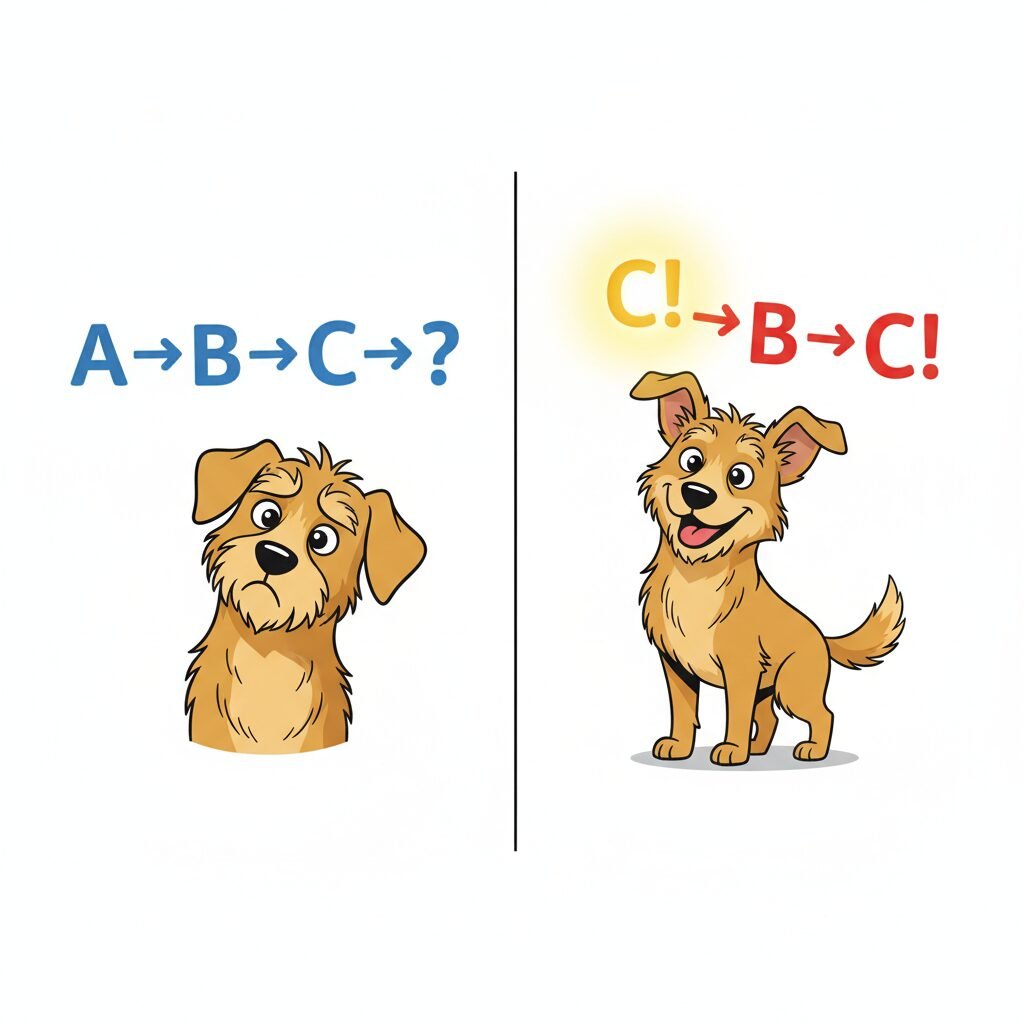
At its core, backchaining is a training technique used to teach a sequence of behaviors by starting with the very last behavior in the chain. Once the final step is mastered, the trainer introduces the second-to-last step, and so on, working backward until the dog can perform the entire sequence from beginning to end. This contrasts sharply with the more common method, known as forward chaining, where we teach the first step, then the second, and so on.
Forward Chaining vs. Backchaining: A Simple Analogy
Imagine teaching a child to write their name, ‘EMMA’.
- Forward Chaining Approach: You would first teach them to write ‘E’. Once they master ‘E’, you teach ‘M’. Now they practice ‘EM’. Then you add the next ‘M’ and practice ‘EMM’, and finally add ‘A’ for ‘EMMA’. The reward comes at the very end, after a lot of work on unfamiliar letters.
- Backchaining Approach: You would write ‘EMM_’ and have the child write the final ‘A’. They get a reward immediately for this small success. Next, you write ‘EM__’ and they write ‘MA’. Reward! Then ‘E___’ and they write ‘MMA’. Reward! Finally, you give them a blank space, and they write the full name ‘EMMA’.
In the backchaining model, every step the dog learns leads directly to the most practiced and rewarding part of the sequence—the final step. This fundamental difference is the key to its power.
Backchaining ensures that the dog is always working towards something it already knows and finds reinforcing. This builds incredible momentum and enthusiasm for the entire behavior chain.
The Psychological Advantage: Why Backchaining is So Effective
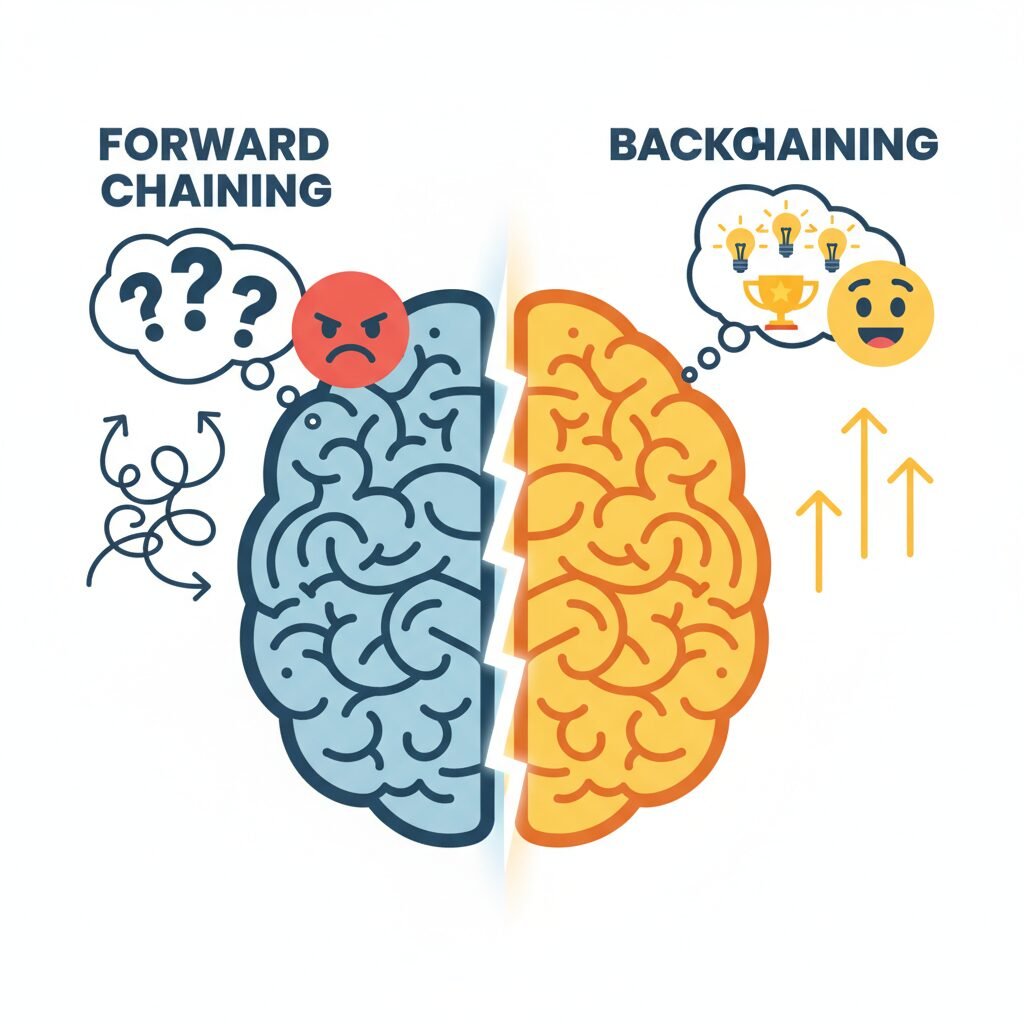
The effectiveness of backchaining isn’t magic; it’s rooted in the principles of behavioral psychology. By structuring the learning process in this unique way, we tap into a dog’s natural motivation and create a clearer path to success.
Building a Strong Reinforcement History
The most critical element in dog training is reinforcement. The final behavior in a chain is always the one that is closest to the primary reinforcer (the treat, toy, or praise). In backchaining, you teach this final, highly-rewarded behavior first. The dog masters it in isolation, building a strong and positive association. As you add the preceding steps, each new behavior becomes a cue that the well-known, highly-rewarded final step is coming. The final behavior itself becomes a secondary reinforcer for the step before it, creating a powerful cascade of motivation throughout the entire chain.
Boosting Confidence and Reducing Frustration
In forward chaining, the dog often performs several known behaviors before being asked to try a new, unknown one. If they fail at the new step, the entire effort feels unrewarding, which can lead to frustration and a breakdown in the training session. Backchaining avoids this pitfall. The dog is always moving from an unfamiliar task to a highly familiar and successful one. This structure makes the training process inherently confidence-boosting. The dog thinks, ‘I don’t know this part, but I know it leads to that awesome thing I’m great at!’ This mindset encourages persistence and a willingness to try.
Clarity and Purpose
For a dog, a long chain of behaviors can seem random and pointless until the very end. Backchaining provides immediate context. The dog understands the ‘goal’ of the sequence from the very beginning. This sense of purpose makes the learning process clearer and more logical from the animal’s perspective, accelerating comprehension and performance.
The Backchaining Blueprint: A Step-by-Step Guide
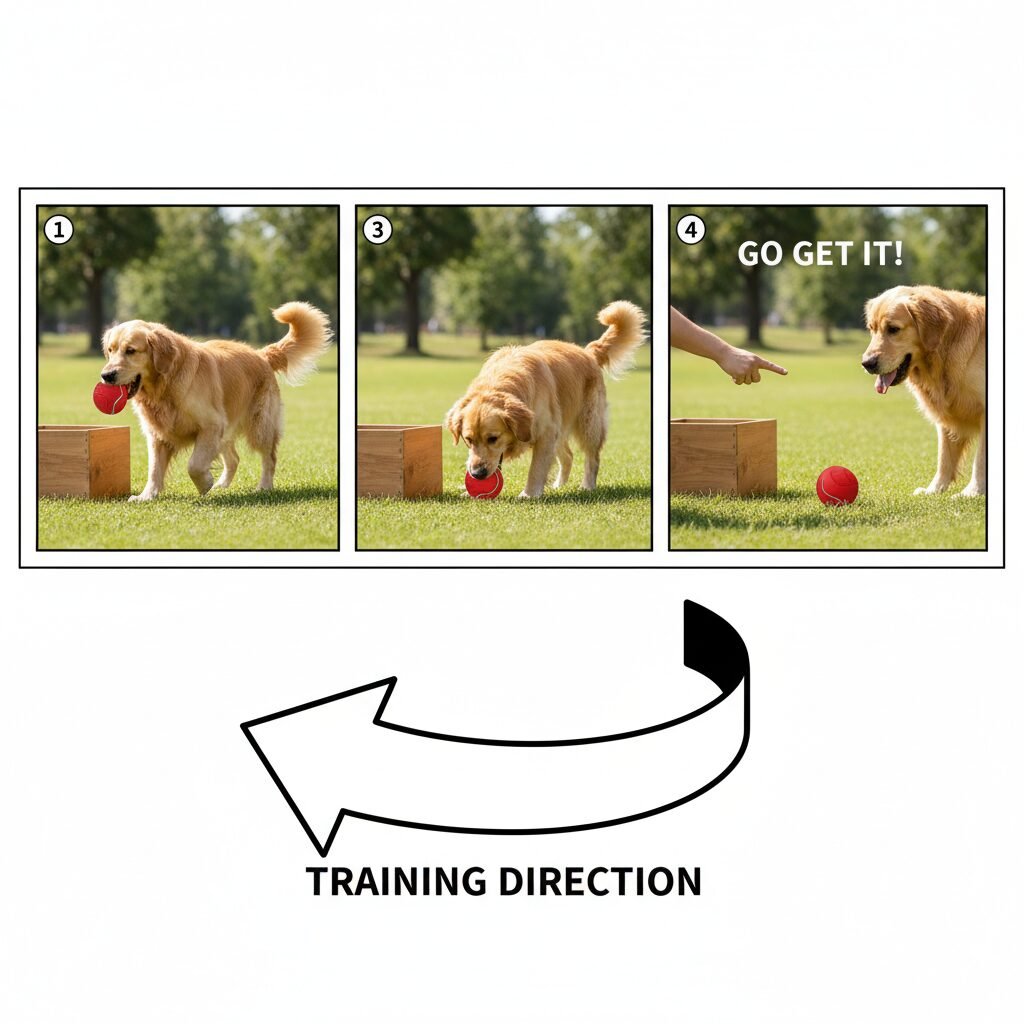
Theory is valuable, but practical application is where results are born. Let’s create a blueprint for teaching a complex trick using backchaining. Our example trick will be: ‘Go to the corner, pick up your teddy bear, and put it in the toy box.’
Step 0: Define Every Link in the Chain
Before you begin, you must break the desired behavior into its smallest possible components. For our example, the chain looks like this:
- Dog is in the corner of the room.
- Dog lowers its head towards the teddy bear.
- Dog opens its mouth over the teddy bear.
- Dog picks up the teddy bear.
- Dog turns towards the toy box.
- Dog walks to the toy box.
- Dog positions its head over the toy box.
- Dog drops the teddy bear into the toy box.
Step 1: Master the Final Behavior (Link 8)
Start with only the final piece of the puzzle. Place your dog directly in front of the toy box with the teddy bear already in its mouth. Say your cue for ‘drop it’ (e.g., ‘Drop’). The moment the bear falls into the box, mark the behavior (with a clicker or a verbal ‘Yes!’) and give a high-value reward. Repeat this until your dog is eagerly and reliably dropping the bear into the box from this position.
Step 2: Add the Second-to-Last Behavior (Link 7)
Now, we add the step just before the drop: positioning over the box. Hold the bear in front of your dog near the box. When they take it, their head will naturally be near the box. The moment their head is over the box, give the ‘Drop’ cue. Mark and reward the successful drop. Gradually, you can start holding the bear slightly further away, so they have to take a small step to get their head over the box before dropping.
Step 3: Continue Working Backward (Links 6, 5, 4…)
You will continue this process, adding one link at a time, always in reverse order.
- Link 6 (Walk to the box): Have the dog pick up the bear a few feet away from the box and encourage them to walk to it to perform the now-mastered ‘position and drop’ behavior.
- Link 4 (Pick up the bear): Place the bear on the floor in the corner. Cue the dog to pick it up (e.g., ‘Take it’). As soon as they do, they will initiate the chain they already know: turn, walk, position, and drop. Reward the final success.
By the time you get to the very first step (sending your dog to the corner), the rest of the chain is so fluent and reinforcing that the entire behavior flows seamlessly. You can now add a single verbal cue at the beginning, like ‘Clean up!’, to trigger the whole sequence.
Practical Applications: More Tricks to Teach with Backchaining
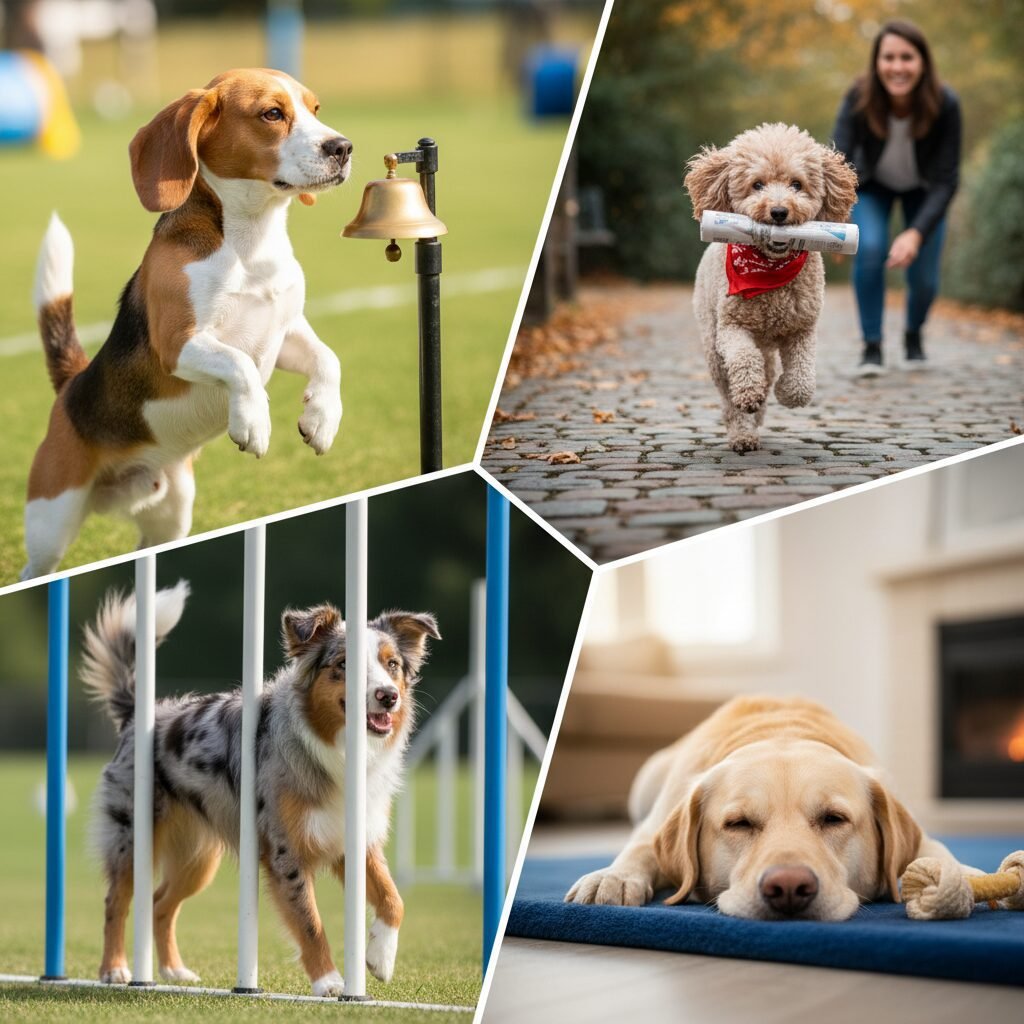
The ‘put your toys away’ trick is just one example. Backchaining is a versatile technique that can be applied to a wide range of complex behaviors, from practical tasks to impressive tricks for performance sports.
Here are several other behaviors that are ideally suited for the backchaining method, along with the final component you would teach first.
| Trick / Behavior | Final Behavior (Your Starting Point) | Primary Benefit |
|---|---|---|
| Go to Your Mat and Lie Down | Lying down on the mat. | Excellent for teaching a dog to settle and for stationing in new environments. |
| Fetch a Specific Item (e.g., ‘Get your leash’) | Placing the leash in your hand. | A useful life skill that can be expanded to many different objects. |
| Ring a Bell to Go Outside | Touching the bell with their nose or paw. | A clear, non-destructive way for a dog to communicate their needs. |
| Weave Through Poles | Going through the final gap between the last two poles. | A foundational skill for dog agility that requires precision and understanding of a sequence. |
| Roll Over | Lying on their side after the roll is complete. | Breaks down a physically complex trick into manageable, comfortable steps. |
Choosing Your Next Trick
When selecting a trick to teach with backchaining, always look for a clear, definable end point. The best candidates for this method are behaviors that involve a sequence of actions leading to a final, specific result. Avoid using it for duration-based behaviors like ‘stay’ or ‘heel’, as these are better taught through other methods that focus on building time and endurance rather than completing a sequence.
Troubleshooting Common Backchaining Challenges
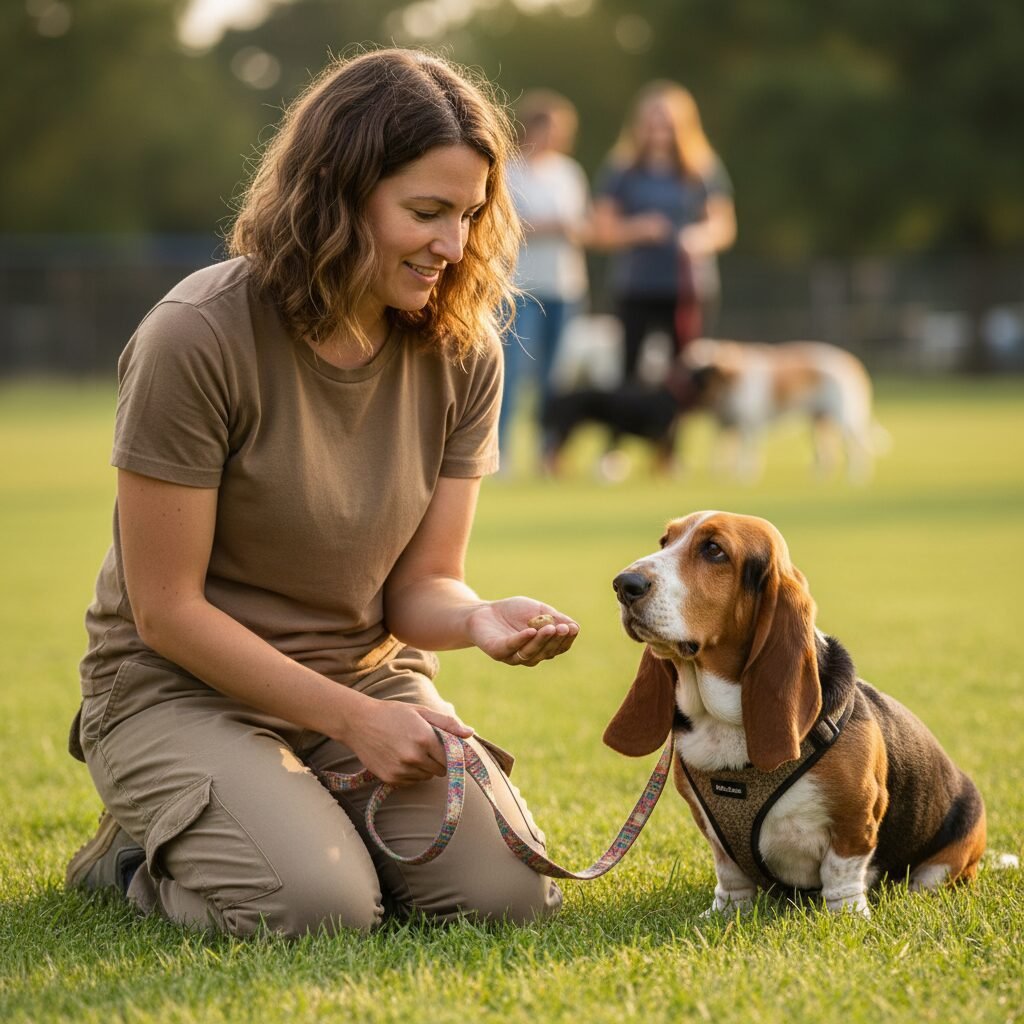
While backchaining is a powerful technique, trainers can sometimes encounter hurdles. Understanding these common pitfalls and how to address them will ensure your training sessions remain productive and positive.
Problem: My Dog Is Not Performing the New, Earlier Step.
Solution: This often happens when the ‘jump’ to the new step is too large. For example, if your dog has mastered dropping the toy in the box when it’s in their mouth, but won’t walk the two feet to the box, the gap is too wide. You need to ‘slice’ the behavior thinner. Add a micro-step in between, such as rewarding them for just turning their head toward the box, or taking a single step. Remember, the goal is to set the dog up for success. Always make the next step easily achievable.
Problem: The Behavior Chain is Breaking Down in the Middle.
Solution: A breakdown in the middle of a learned chain usually indicates that one of the ‘links’ is weaker than the others. Go back and reinforce that specific link in isolation for a few repetitions before re-inserting it into the chain. For instance, if the dog walks to the box but then drops the toy early, spend time just reinforcing the ‘carry’ portion of the behavior before asking for the full sequence again. You might also need to use a higher-value reward temporarily to rebuild motivation.
Problem: My Dog Seems Bored or Unmotivated.
Solution: Keep training sessions short and exciting! A few successful five-minute sessions are far more effective than one frustrating 30-minute session. Ensure your rewards are genuinely high-value for the dog—what is motivating today might not be tomorrow. Also, celebrate small victories with enthusiasm. Your energy plays a huge role in your dog’s engagement.
Expert Tip: Never let a training session end on a failure. If you’re struggling with a new step, go back to a previously mastered step that you know your dog can perform successfully. End on that positive, successful repetition to keep your dog’s confidence high for the next session.
Conclusion
Backchaining is more than just a clever training hack; it’s a systematic approach that respects canine psychology. By starting with the end in mind, we create a clear, confidence-boosting, and highly motivating learning path for our dogs. It transforms daunting, complex tricks into a series of achievable, rewarding steps. This method not only accelerates learning but also deepens the bond between you and your dog, replacing potential frustration with a shared sense of accomplishment. The next time you feel a training goal is out of reach, remember to flip your strategy. Start at the finish line and work backward. You’ll be amazed at how quickly your dog masters the impossible, proving that with the right technique, every pet owner can achieve professional-level results.