
Why Your Dog Gets Worse Before Getting Better: The Extinction Burst Trap

As a dedicated pet owner, you’ve committed to a new training plan. You’re ignoring the incessant barking, refusing to reward the jumping, and staying strong against the begging at the dinner table. For a few days, things seem to be working. Then, suddenly, it’s as if a switch flips. The barking becomes louder and more frantic than ever, the jumping more persistent, the nudging more forceful. It feels like a massive step backward, a total failure of your training efforts. Many owners give up at this exact moment, believing their dog is untrainable or that the method doesn’t work. However, what you are likely witnessing is a predictable, scientifically-documented phenomenon known as an extinction burst. Far from being a sign of failure, this escalation is often a signal that you are on the brink of a breakthrough. Understanding this concept is not just helpful; it is fundamental to successfully modifying your dog’s behavior. This guide will demystify the extinction burst, explain the psychology behind it, and provide you with the professional strategies needed to navigate it with confidence and emerge with a better-behaved companion.
What Exactly Is an Extinction Burst? A Deeper Dive into the Science
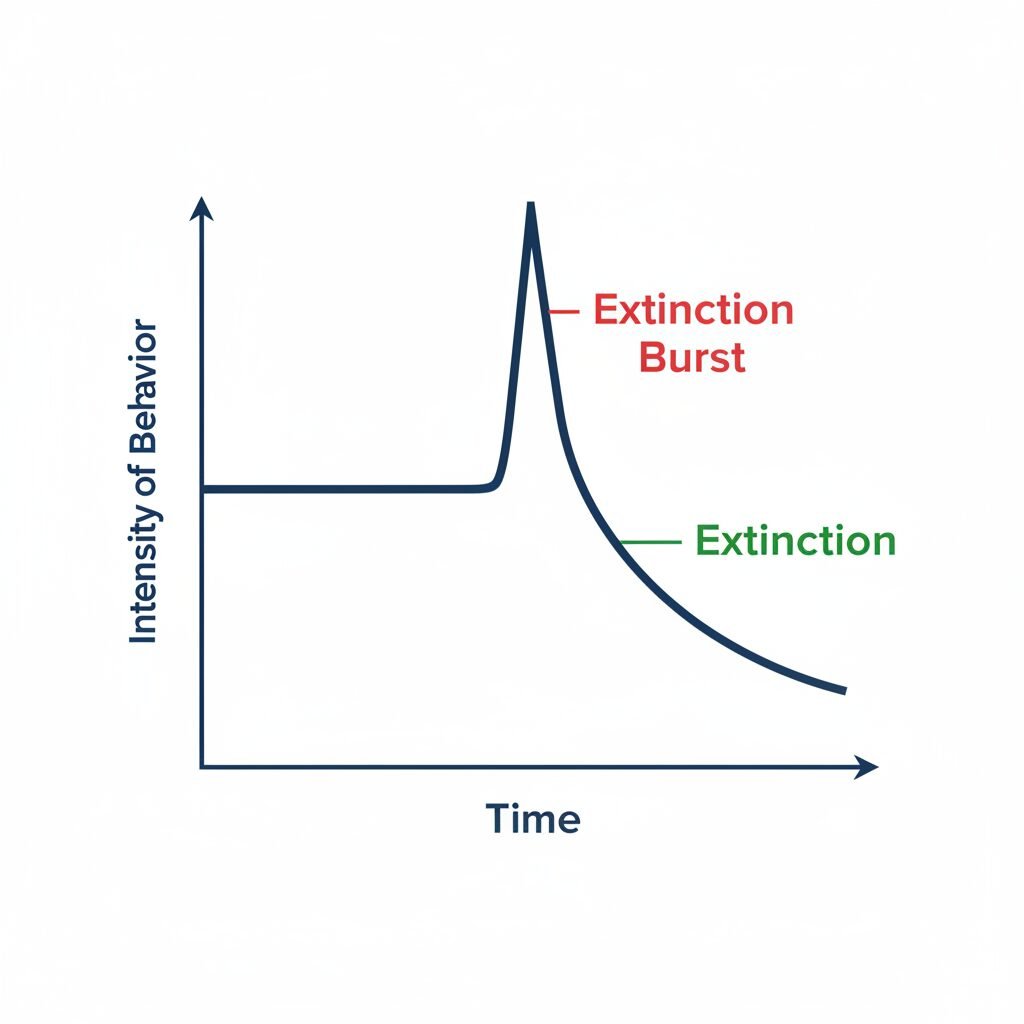
At its core, the extinction burst is a concept from behavioral psychology that applies to all learning animals, including humans. It describes the predictable and temporary increase in the frequency, intensity, or duration of a behavior immediately after its reinforcement is removed. To understand it fully, let’s break down the process.
The Four Pillars of an Extinction Burst
- The Learned Behavior: Your dog has learned, through repetition, that performing a specific action (e.g., pawing at you) results in a specific reward (e.g., getting a piece of your food). This connection has been reinforced over time.
- The Reinforcement: This is the ‘payoff’ for the behavior. It can be anything the dog values: food, attention (even negative attention like scolding), access to toys, or being let outside.
- The Extinction Process (Withdrawing Reinforcement): You, the owner, decide to stop the behavior. You begin the process of ‘extinction’ by consistently withholding the reinforcement. When the dog paws at you, you now ignore it completely.
- The Burst: The dog, not understanding why the previously successful strategy is no longer working, doesn’t give up immediately. Instead, it doubles down. It thinks, ‘Maybe I didn’t do it right? Maybe I need to do it more?’ This results in an escalation—the pawing becomes more frequent, harder, and may be accompanied by whining or barking. This frantic, intensified effort is the extinction burst.
Think of it like a person using a vending machine. You put your money in and press the button (the behavior), expecting a snack (the reinforcement). If the snack doesn’t come out, you don’t just walk away. You press the button again, maybe harder and faster. You might even shake the machine. This escalation is your own human extinction burst. Only after these intensified efforts fail do you finally give up and walk away (extinction).
This phase is the most challenging for pet owners because it feels counterintuitive. The behavior you’re trying to eliminate is suddenly at its worst. However, recognizing it as a clinical sign of the learning process is the key to maintaining consistency and achieving your long-term training goals.
Common Scenarios: Recognizing the Extinction Burst in Action
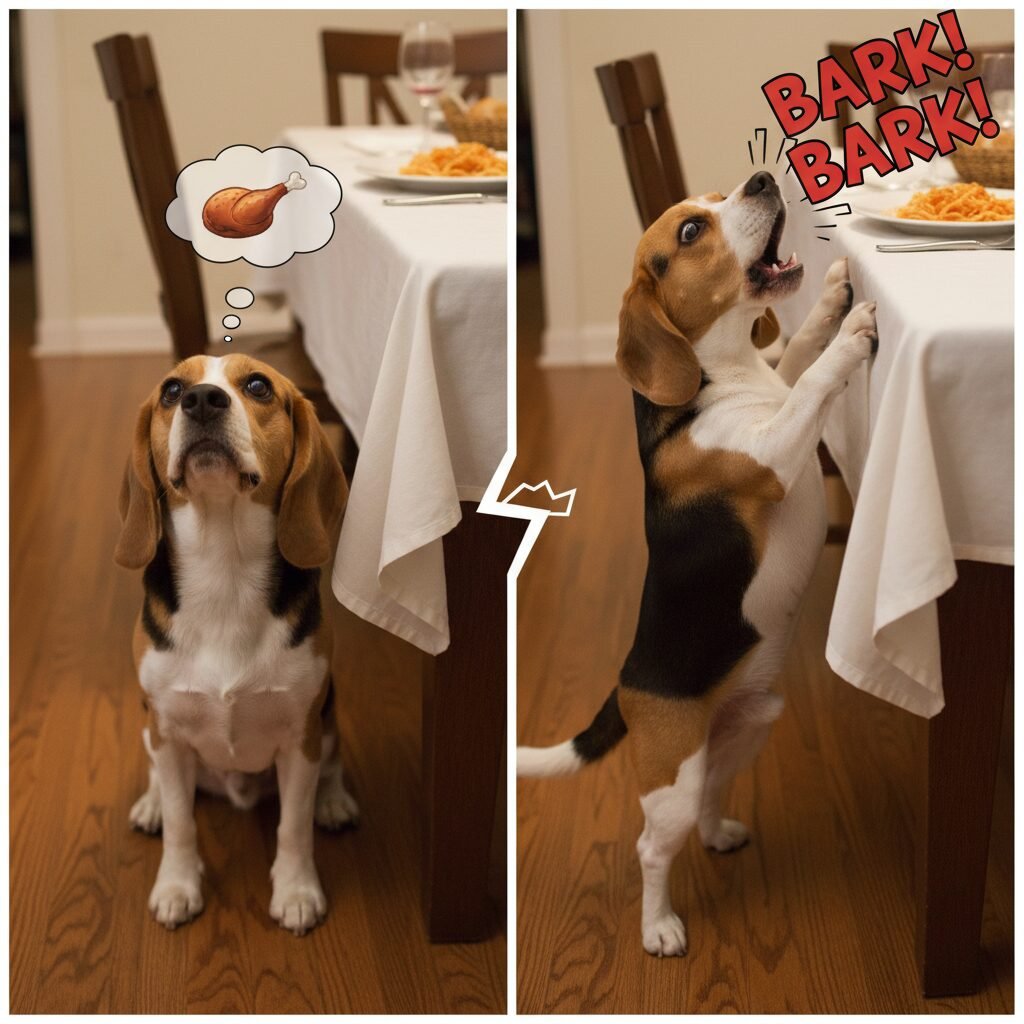
The extinction burst can manifest in various common behavioral issues. Recognizing the pattern is the first step toward managing it effectively. Here are some classic examples that pet owners frequently encounter:
Attention-Seeking Barking
Your dog has learned that barking gets your attention. You decide to implement a plan to ignore the barking. For the first day or two, the dog barks for its usual five minutes and then stops. On day three, when you continue to ignore it, the extinction burst hits. The five minutes of barking turns into fifteen minutes of non-stop, high-pitched, frantic barking. The dog may even add new behaviors, like running in circles or nudging you while barking, in a desperate attempt to get the reinforcement it’s used to.
Jumping on Guests
Previously, when your dog jumped on guests, you would say ‘No!’ and push it down. While you saw this as a correction, your dog perceived it as attention—a reward. Your new plan is to have guests turn their backs and ignore the dog until all four paws are on the floor. The first time you try this, the dog jumps once or twice, seems confused, and then the burst occurs. It may start jumping higher, nipping at clothing, or barking in frustration because its usual method for soliciting attention is no longer effective.
Begging at the Dinner Table
You’ve made a new rule: no more feeding the dog from the table. For years, a simple paw on your leg or a quiet whine was enough to earn a scrap. Now, you ignore these attempts. After a few minutes of its old tricks failing, the dog might escalate. The gentle paw becomes an insistent, scratching paw. The quiet whine turns into loud barking. It might pace around the table or try to put its head directly on the table, trying every variation of the behavior that has ever worked before.
In each of these scenarios, the formula is the same:
- A previously rewarded behavior is no longer rewarded.
- The dog temporarily increases the intensity and frequency of the behavior.
- This escalation is a predictable test to see what it will take to get the reward again.
The Trainer’s Playbook: How to Successfully Navigate an Extinction Burst

Surviving the extinction burst requires a clear plan and unwavering consistency. This is where training succeeds or fails. Following a structured approach will ensure you reinforce the right behaviors and successfully extinguish the wrong ones.
Step 1: Correctly Identify and Remove the Reinforcement
Before you can begin, you must be certain what is reinforcing the behavior. Is it your attention? Food? Access to a toy? Sometimes the reinforcement is not obvious. For example, yelling ‘No!’ at a barking dog is still a form of attention and can be highly reinforcing. You must commit to completely removing the payoff. This means no talking to the dog, no touching the dog, and no eye contact during the unwanted behavior.
Step 2: Fortify Your Consistency
This is the most critical element. Giving in, even once, during the peak of an extinction burst is catastrophic to your training. It teaches the dog a powerful and dangerous lesson: that extreme, over-the-top behavior is the new key to getting what it wants. This creates a variable reinforcement schedule, which is highly resistant to extinction and can make the behavior even worse in the long run. Every person in the household must be on the same page with the plan.
Step 3: Manage the Environment to Prevent Rehearsal
A key professional strategy is to prevent the dog from practicing the unwanted behavior in the first place. Management is not a replacement for training, but it is an essential component.
- For jumping on guests: Have your dog on a leash or behind a baby gate when guests arrive so it physically cannot practice jumping.
- For begging: Crate your dog with a high-value chew toy or place it in another room during mealtimes.
- For demand barking: Ensure the dog is well-exercised and has had its needs met to reduce the motivation for attention-seeking behaviors.
Step 4: Teach and Heavily Reinforce an Alternative Behavior
This is arguably as important as ignoring the bad behavior. You must show your dog what you want it to do instead. An animal that doesn’t know how to get reinforcement will naturally revert to old, unwanted habits. This is called Differential Reinforcement of an Alternative Behavior (DRA).
| Unwanted Behavior | Alternative Behavior to Teach & Reward |
|---|---|
| Jumping on guests | Sit politely or go to a designated mat |
| Barking for attention | Lie down quietly or bring you a toy |
| Begging at the table | Lie on a dog bed across the room |
The key is to reward the alternative behavior so lavishly that it becomes more appealing to the dog than the old, unwanted behavior. Use high-value treats, praise, and petting when the dog makes the right choice. This shifts the focus from ‘stop doing that’ to ‘do this instead,’ which is a much clearer and more positive approach for your dog.
The Other Side: What Happens After the Burst Subsides?

If you remain consistent and weather the storm of the extinction burst, you will be rewarded. The other side of the burst is the ‘extinction’ itself—a rapid and significant decrease in the unwanted behavior. The dog learns that the old behavior is simply no longer effective, and the new, alternative behavior is a much better way to get what it wants. The barking fits become shorter and less frequent until they cease. The jumping stops. The begging fades away.
Beware of the ‘Spontaneous Recovery’
It is important to be aware of another related phenomenon called spontaneous recovery. Weeks or even months after a behavior seems to be completely extinguished, your dog might suddenly try it again out of the blue. This is not a regression or a sign that your training has failed. It’s a normal part of the process, like the dog is thinking, ‘Hey, I’ll just check if this works again…’.
The response to a spontaneous recovery is exactly the same as your initial response: calmly and consistently withhold reinforcement for the old behavior and, if possible, redirect to the desired alternative behavior. If you remain consistent, these spontaneous recovery moments will become less and less frequent until they disappear entirely. Viewing these moments as quick ‘tests’ rather than setbacks will help you maintain your training composure and ensure long-term success.
Expert Tip: Keep a simple training log. Note the date, the behavior, its duration, and its intensity. This data will help you objectively see that even with a burst or a spontaneous recovery, the overall trend is one of improvement. It provides motivation when your patience is wearing thin.
Common Pitfalls: Mistakes to Avoid When Facing an Extinction Burst

Navigating an extinction burst can be emotionally taxing, making it easy to fall into common traps that undermine your progress. Being aware of these potential mistakes is crucial for staying on course.
- Giving In at the Peak: As previously mentioned, this is the cardinal sin. Caving during the worst of the burst super-charges the unwanted behavior. You have just taught your dog that extreme measures are what work.
- Resorting to Punishment: The frustration of an extinction burst can tempt owners to use punitive measures like yelling, leash corrections, or physical intimidation. This is counterproductive. Punishment can increase a dog’s anxiety and fear, damage your bond, and often creates new, more severe behavior problems without addressing the root cause of the original behavior.
- Misinterpreting the Dog’s Motivation: It is easy to label a dog in the midst of an extinction burst as being ‘stubborn,’ ‘dominant,’ or ‘spiteful.’ These are human labels that do not accurately describe the dog’s experience. The dog is not trying to defy you; it is confused because a rule it has understood for a long time has suddenly changed. It is repeating a behavior that has a history of success. Attributing malice to the dog’s actions will only increase your own frustration.
- Inconsistent Reinforcement of the Alternative Behavior: It’s not enough to just ignore the bad. If you forget to actively look for and reward the good, the dog has little incentive to change. You must be just as consistent with rewarding the ‘go to your mat’ behavior as you are with ignoring the jumping.
- Lack of Household Agreement: If one family member ignores the begging while another secretly slips the dog food under the table, the extinction plan will fail. The dog is being placed on a powerful intermittent reinforcement schedule, and the behavior will persist. Everyone must be committed to the same set of rules.
Avoiding these pitfalls requires preparation, patience, and a commitment to the principles of modern, humane dog training. Remember that you are working with your dog’s natural learning process, not against it.
Conclusion
The extinction burst is one of the most misunderstood yet critical milestones in dog training. It is a moment of frustration that tests the resolve of even the most dedicated pet owners. However, by reframing it from a ‘training failure’ to a ‘progress indicator,’ you can change your entire perspective. This temporary escalation of unwanted behavior is not a sign that your dog is stubborn or that your methods are flawed; on the contrary, it is scientific proof that the process of learning is underway. It means your dog has recognized the rule change and is trying to understand the new normal.
By understanding the science, preparing for the inevitable burst, managing the environment, and consistently reinforcing a better alternative behavior, you can navigate this challenging phase with the confidence of a professional. The extinction burst is not a trap to fall into, but a hurdle to overcome on the path to a deeper, more respectful, and well-behaved relationship with your canine companion. Stay consistent, stay patient, and trust the process. The breakthrough you are working toward is just on the other side of the noise.