The ‘Threshold’ Secret: Why Your Reactive Dog Training Is Failing
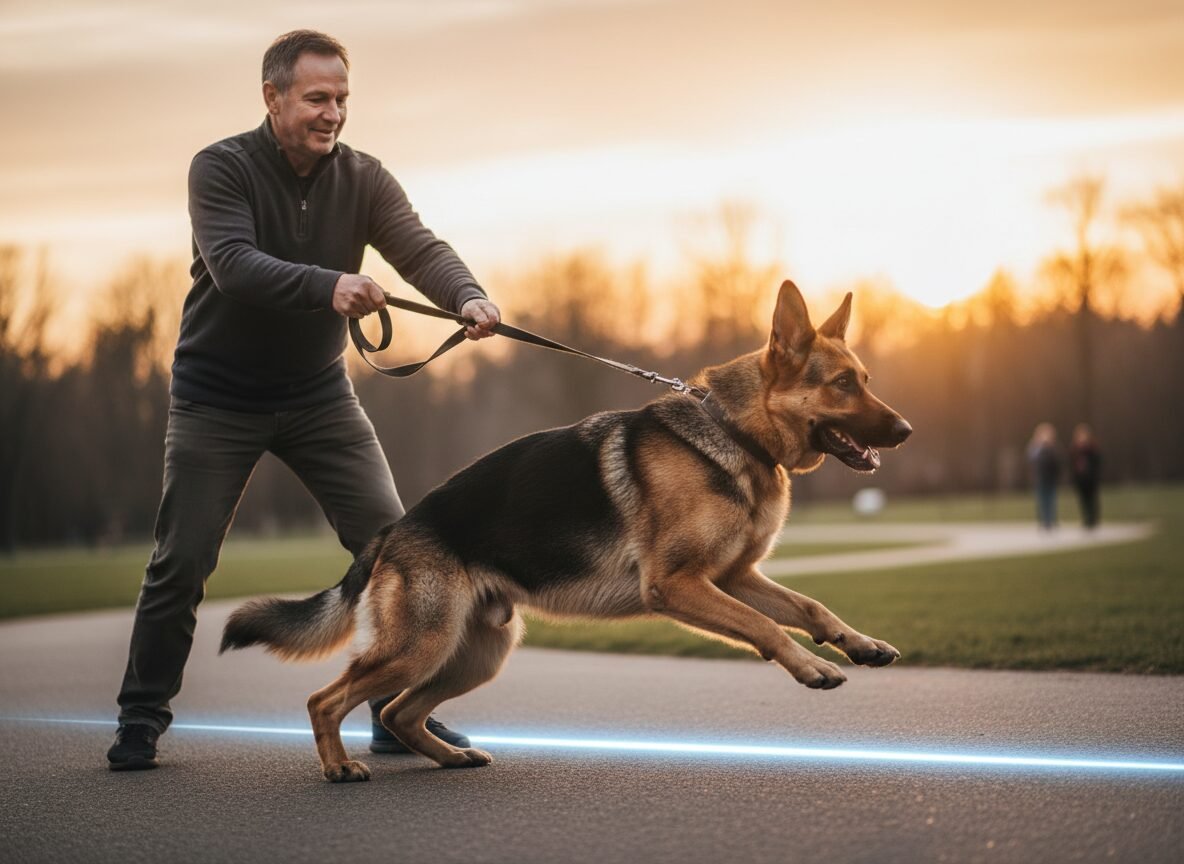
Living with a reactive dog can be an isolating and deeply frustrating experience. The daily walks filled with tension, the lunging and barking at triggers, and the feeling of being judged by others can take a significant emotional toll. You may have tried countless training methods, followed advice from books and videos, yet find yourself stuck in a cycle of reactivity with little to no progress. If this sounds familiar, it’s not because you’ve failed or your dog is ‘bad’—it’s likely because you’re missing the single most important piece of the puzzle: the threshold.
In professional dog training, understanding a dog’s threshold is not just a technique; it is the entire foundation upon which successful behavior modification is built. The ‘threshold’ is the invisible line between your dog’s ability to cope with a stimulus and their descent into an uncontrollable reactive state. Training a dog that has crossed this line is not only ineffective; it’s counterproductive, often reinforcing the very behavior you’re trying to eliminate. This article will demystify the concept of threshold, teach you how to become an expert at reading your dog’s signals, and provide a clear, actionable plan to transform your training approach from one of reaction management to one of proactive, confidence-building success.
Deconstructing the Threshold: The Line Between Calm and Chaos
Deconstructing the Threshold: The Line Between Calm and Chaos
At its core, a dog’s threshold is the tipping point where their nervous system shifts from a state of controlled awareness to one of overwhelming stress, triggering a fight-or-flight response. Imagine a cup being slowly filled with water. Each drop represents a small stressor: the sight of a trigger, the sound of a distant bark, the tension on the leash. As long as the water level is managed, the cup remains stable. But once a single drop causes it to overflow, the system is flooded. This overflow point is the threshold.
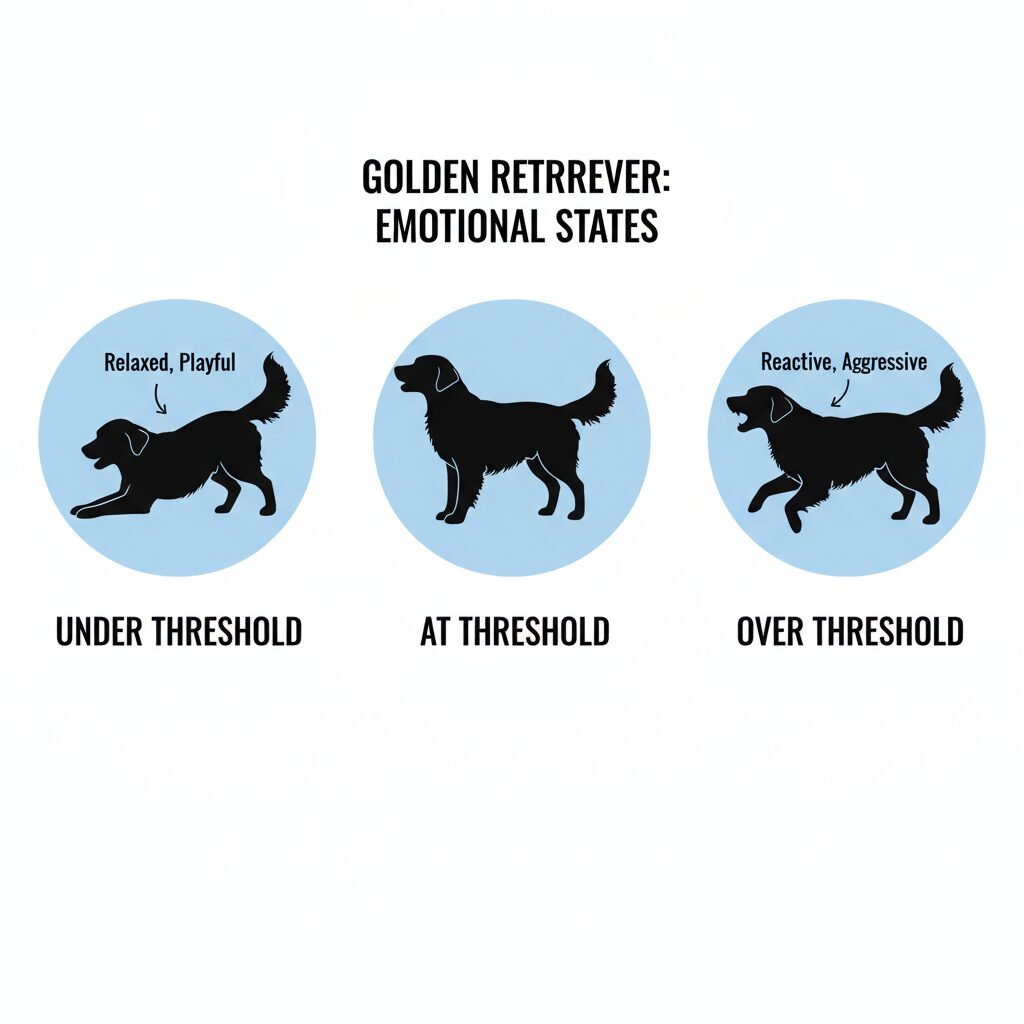
To work effectively, we must understand the three distinct zones of arousal:
- Under Threshold (The Green Zone): In this state, your dog is relaxed and comfortable. They may notice a trigger in the distance but are not stressed by it. Their body language is loose, and they are capable of thinking, learning, and responding to cues. This is the only zone where effective, positive training can occur.
- At Threshold (The Yellow Zone): Here, your dog has clearly noticed the trigger and is becoming stressed. They are hyper-vigilant and approaching their coping limit. You will see subtle but critical changes in body language. Learning becomes difficult as the dog’s focus shifts to assessing a potential threat. This is a crucial warning zone.
- Over Threshold (The Red Zone): The cup has overflowed. The dog is now reacting—barking, lunging, growling, or attempting to flee. The thinking part of their brain (the neocortex) has been hijacked by the emotional part (the amygdala). In this state, the dog cannot learn, process cues, or make good choices. They are simply reacting to overwhelming fear, anxiety, or frustration.
Recognizing the subtle signs of the Yellow Zone is paramount. Waiting until your dog is in the Red Zone is too late. Key signals that your dog is approaching threshold include:
- Body Freezing: A sudden, stiff pause where the dog’s entire body becomes rigid.
- Hard Stare: Intense, fixed focus on the trigger.
- Whale Eye: The whites of the eyes become visible as the dog looks sideways.
- Closed Mouth & Tense Jaw: A sudden stop in panting, with the mouth tightly closed.
- Subtle Stress Signals: Rapid lip licking, yawning out of context, or quick, shallow panting.
By learning to identify these precursors to an explosion, you shift from being a reactive owner to a proactive trainer, capable of intervening before the point of no return.
Becoming a Detective: How to Identify Your Dog’s Triggers and Thresholds

Becoming a Detective: How to Identify Your Dog’s Triggers and Thresholds
Your dog’s threshold is not a fixed line; it’s a dynamic boundary influenced by numerous factors, including the type of trigger, its distance, its intensity (e.g., a calm dog versus a barking dog), and your dog’s overall stress level on any given day. Your first task is to become a meticulous observer of your dog’s behavior. This requires setting aside your training goals temporarily and focusing solely on data collection.
Step 1: Identify Specific Triggers
Create a list of everything that causes your dog to react. Be as specific as possible. It’s not just ‘other dogs’; it might be ‘large, fluffy dogs,’ ‘dogs that stare,’ or ‘dogs that appear suddenly.’ Common triggers include:
- Unfamiliar dogs
- People (men, children, people in hats)
- Vehicles (bicycles, skateboards, large trucks)
- Loud noises
- Small animals (squirrels, cats)
Step 2: Start a Threshold Journal
The most powerful tool in your arsenal is a journal. On every walk or exposure opportunity, your mission is to find your dog’s threshold distance without crossing it. Take notes on what happens. This data will form the basis of your entire training plan.
| Date & Time | Trigger | Distance First Noticed (Dog’s Behavior) | Threshold Distance (Dog’s Behavior) | Environmental Notes |
|---|---|---|---|---|
| Oct 26, 4 PM | Labrador, on leash | 100 feet (Ears perked, soft body) | 60 feet (Body stiffened, mouth closed) | Quiet street, cool weather |
| Oct 27, 9 AM | Man with a hat | 50 feet (Tail lowered slightly) | 30 feet (Low growl, hard stare) | Busy sidewalk, after car ride |
| Oct 28, 6 PM | Bicycle | 150 feet (Head turned to look) | 75 feet (Began to pull, whine) | Park path, dusk |
This journaling process does more than just identify distances. It forces you to pay close attention to the subtle ‘Yellow Zone’ signals you might have previously missed. You will start to see patterns. Perhaps your dog’s threshold for other dogs is 70 feet, but for skateboards, it’s 150 feet. Maybe their threshold is lower in the evening when they are tired. This information is gold.
Trigger stacking is a critical concept to understand here. A dog might handle a person at 50 feet, and a bicycle at 100 feet, but if they see both at the same time, their threshold might be crossed at 200 feet because the stressors have combined. Always consider the total environmental picture.
The Core Strategy: Counter-Conditioning and Desensitization Below Threshold
The Core Strategy: Counter-Conditioning and Desensitization Below Threshold
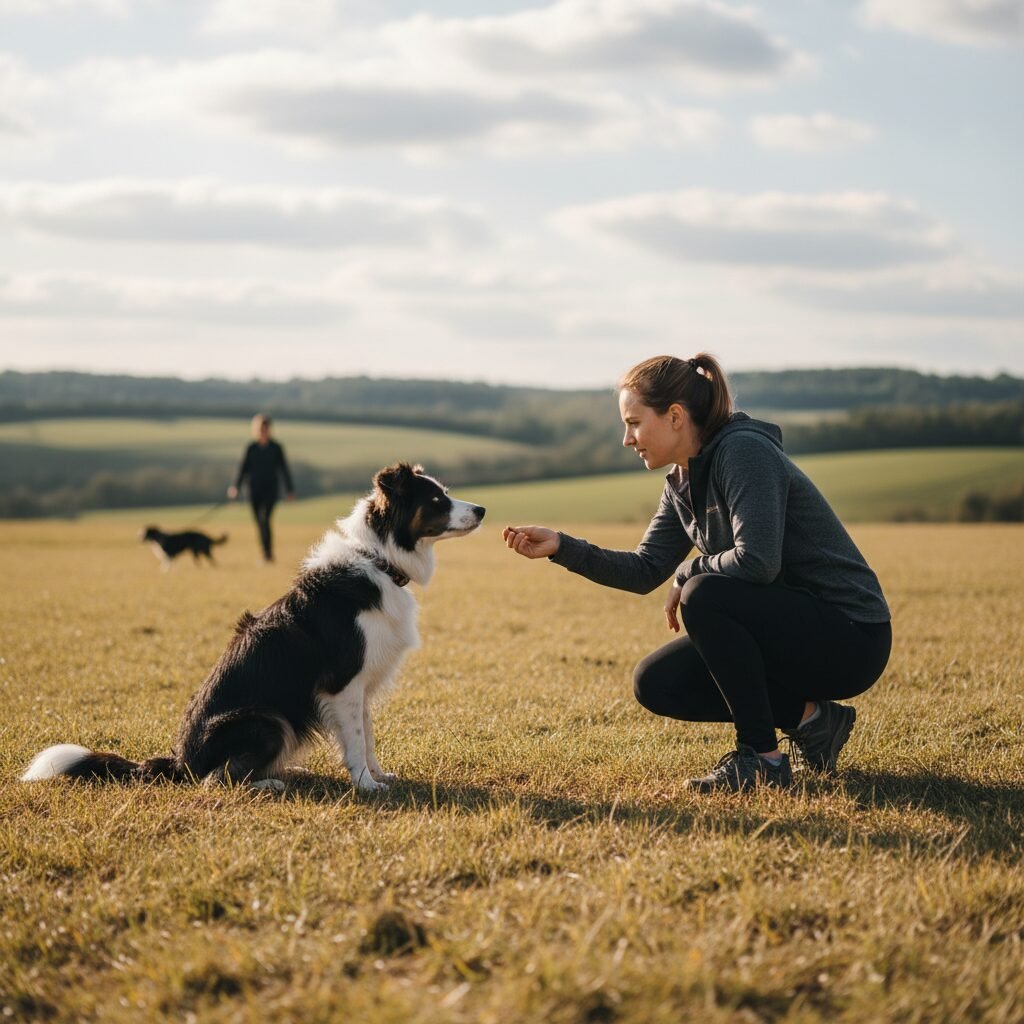
With your data collected, you can now begin the active training phase. The goal is no longer to ‘correct’ the reaction but to change the underlying emotion that causes it. We do this using a powerful, science-backed combination of Desensitization (DS) and Counter-Conditioning (CC).
- Desensitization (DS): This means gradually exposing your dog to their trigger at an intensity (usually distance) that is so low it does not produce fear or anxiety. You are working in the Green Zone.
- Counter-Conditioning (CC): This means changing your dog’s association with the trigger. We pair the sight of the trigger with something the dog finds incredibly wonderful (like boiled chicken, cheese, or liver), changing the emotional response from ‘Oh no, a scary dog!’ to ‘Oh wow, a dog appears and I get chicken!’.
Implementing a DSCC Session:
- Prepare Your Tools: You will need a standard 6-foot leash (no retractable leashes), a harness to avoid neck pressure, and extremely high-value treats that your dog rarely gets otherwise.
- Choose Your Location: Find a location where you can observe triggers from a safe distance, such as the edge of a large park or a quiet street corner.
- Establish the ‘Safe’ Distance: Using your journal, position yourself and your dog well beyond the identified threshold distance. If your dog’s threshold for another dog is 60 feet, start your session at 100 feet. The goal is for your dog to notice the trigger but remain calm.
- Execute the Protocol: The moment your dog looks at the trigger, mark the behavior with a verbal ‘Yes!’ and immediately deliver a high-value treat. Repeat this every time they look. The sequence is critical: Trigger Appears -> Dog Looks -> You Mark & Treat.
- End the Protocol: The moment the trigger disappears from view, all treats stop. This teaches a clear association: the presence of the trigger makes the good things happen.
This process, often called the ‘Look at That’ (LAT) game, is transformative. You are not asking your dog to do anything complex. You are simply rewarding them for observing the trigger calmly and, in doing so, you are rewiring their brain’s emotional response. Sessions should be short (5-10 minutes) and always end on a positive note before your dog gets tired or stressed.
Building Resilience: Systematically and Safely Raising the Threshold
Building Resilience: Systematically and Safely Raising the Threshold
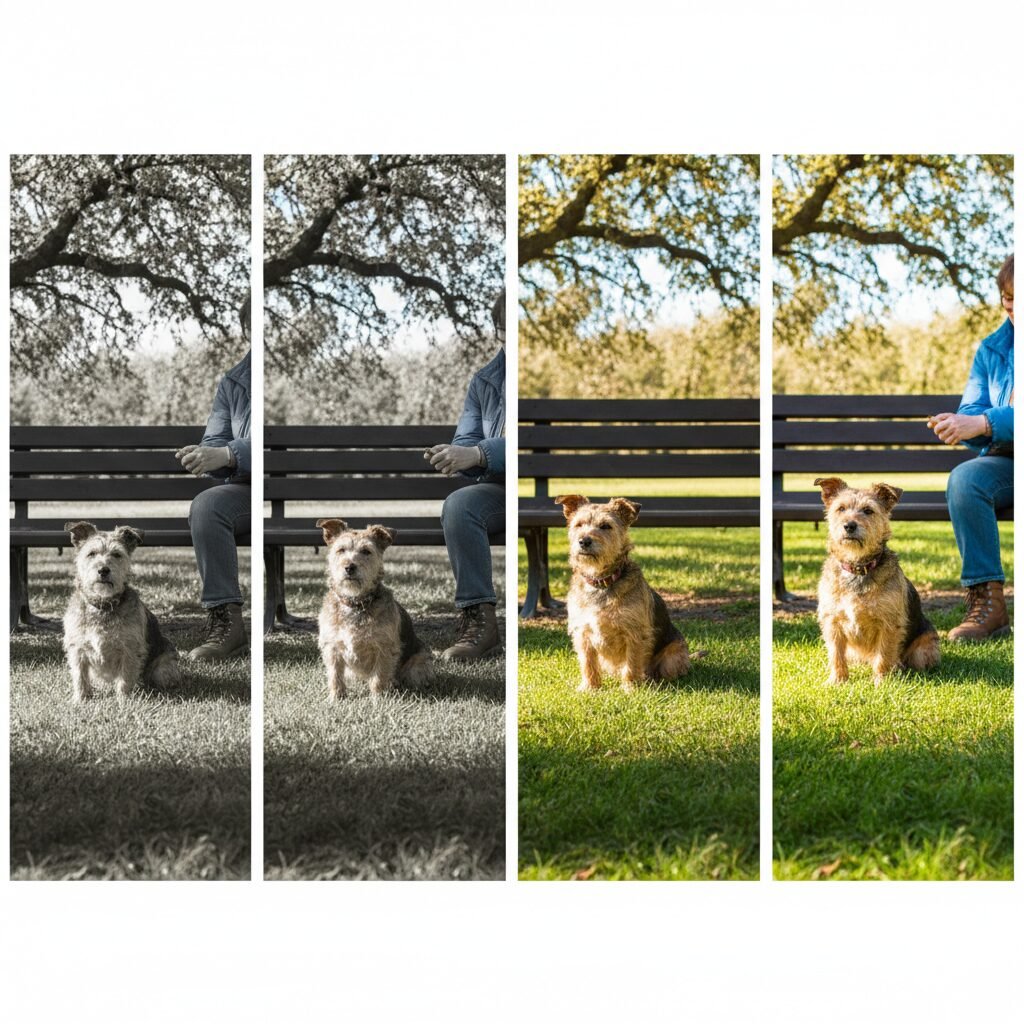
Progress in reactive dog training is measured in inches, not miles. The art of raising your dog’s threshold lies in systematically and incrementally decreasing the distance to the trigger while ensuring your dog remains in the Green Zone. Rushing this process is the most common reason for failure.
The Process of Progression:
- Achieve Mastery at the Current Distance: Before you even consider moving closer, your dog should be reliably calm at your starting distance. This means when a trigger appears, they may orient towards it, but then quickly and happily look back to you for their reward. Their body should remain loose and relaxed. This may take several sessions.
- Decrease the Distance by a Tiny Increment: When you are ready to progress, move just one or two steps closer to where triggers are likely to appear. This small change can feel significant to your dog.
- Repeat the DSCC Exercise: Conduct your training session at this new, slightly closer distance. Watch your dog’s body language like a hawk. Are they still in the Green Zone? Or are you seeing Yellow Zone signals like a closed mouth or a stiff body?
- Listen to Your Dog: If you see any signs of stress, it means you have moved too fast. This is not a failure; it is information. Simply increase the distance again to where your dog was last successful and work there a bit longer before trying again. Your dog dictates the pace of training.
Introducing Other Variables:
Once your dog is making steady progress with distance, you can begin to carefully manipulate other variables, one at a time:
- Duration: Start with triggers that pass by quickly. Gradually work up to triggers that remain in view for longer periods.
- Intensity: Begin with calm, predictable triggers (e.g., a senior dog walking slowly). Progress to more challenging triggers (e.g., a more energetic dog, a person jogging).
- Environment: Once you have success in one location, try practicing in a new, slightly more challenging environment.
Expert Tip: Your primary job as the handler is to be your dog’s protector and advocate. This means managing the environment to prevent unexpected encounters that could push your dog over threshold and set back your training. U-turns, crossing the street, and using visual barriers like parked cars are essential management skills.
Avoiding Setbacks: Common Mistakes That Sabotage Progress
Avoiding Setbacks: Common Mistakes That Sabotage Progress
Understanding the theory of threshold training is one thing; implementing it perfectly is another. Even the most dedicated owners can fall into common traps that undermine their efforts. Being aware of these pitfalls is the first step to avoiding them.
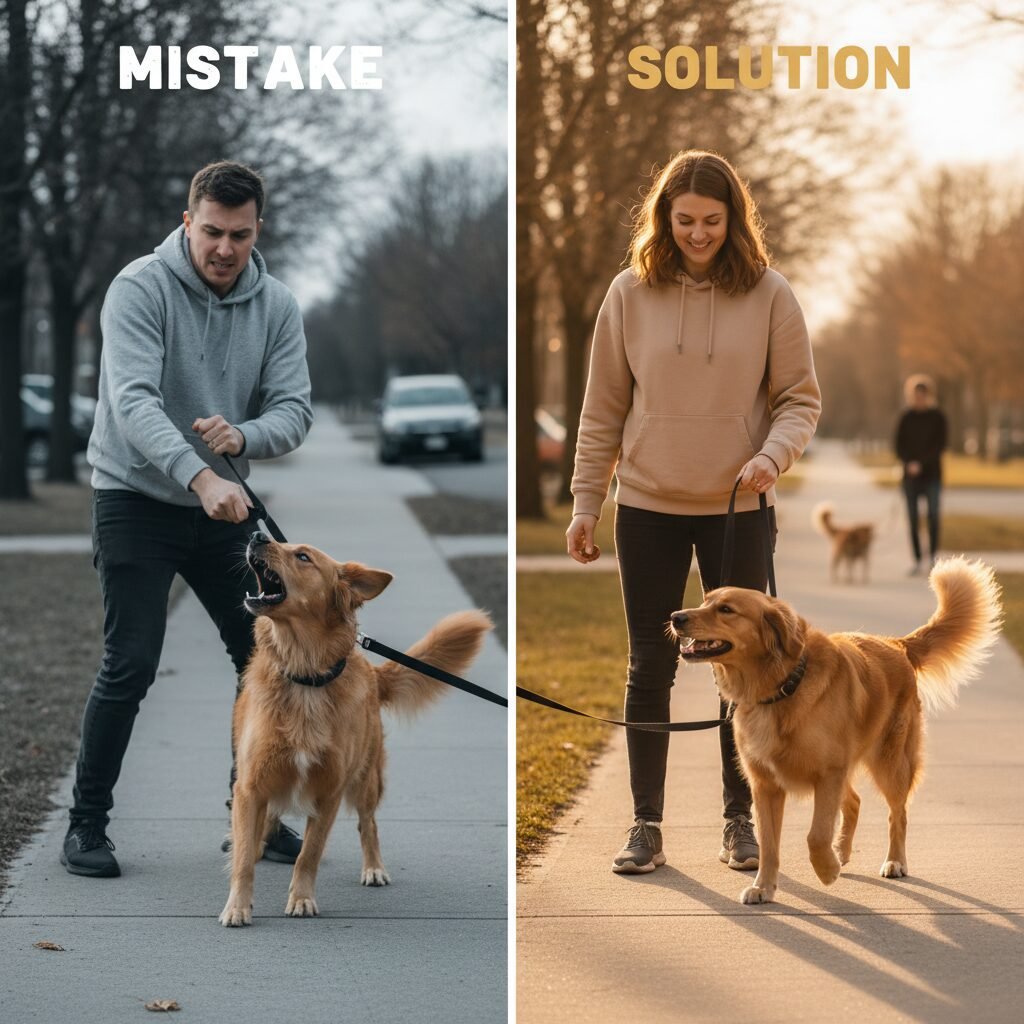
- Going Too Fast, Too Soon: This is the number one mistake. Enthusiasm for early progress can lead owners to push their dog closer to triggers before they are emotionally ready. This almost always leads to a reaction, which reinforces the dog’s fear and can undo weeks of hard work. Solution: Adhere strictly to your dog’s body language. If you see Yellow Zone signals, you are already too close.
- Using Low-Value Rewards: A piece of dry kibble is unlikely to compete with the overwhelming stimulus of another dog. The reward must be more valuable to the dog than the opportunity to react. Solution: Reserve special, high-value treats (cheese, hot dogs, freeze-dried liver) exclusively for reactivity training.
- Inconsistent Training: Sporadic sessions will not create the new neural pathways needed for lasting behavior change. Solution: Aim for short (5-15 minute), frequent sessions (3-5 times a week) rather than one long, stressful session on the weekend.
- Accidental ‘Flooding’: Flooding is the practice of over-exposing a dog to a trigger in the hope they will ‘get used to it.’ This is an outdated and cruel method that does not work. Forcing a dog to endure a terrifying situation only increases their sensitization and anxiety, making the problem worse. Solution: Always prioritize your dog’s sense of safety. U-turn and create distance immediately if you find yourself in an unexpected, overwhelming situation.
- Ignoring Overall Stress Levels: A dog’s ability to cope is like a battery. If their battery is already drained by a noisy household, lack of sleep, or a stressful vet visit, their threshold will be much lower on a walk. Solution: Implement ‘decompression’ activities into your dog’s routine. This includes sniff-focused walks in quiet natural areas on a long line, enrichment puzzles, and adequate rest to help lower their baseline cortisol levels.
Setbacks will happen. An off-leash dog may run up to you, or a trigger may appear from around a blind corner. When a reaction occurs, do not punish the dog. Your job is to calmly and quickly increase distance to help your dog feel safe again. Analyze what happened, and use it as data to adjust your plan for the next session.
Conclusion
The journey with a reactive dog is a marathon, not a sprint. The secret to crossing the finish line lies not in finding a magic collar or a quick fix, but in fundamentally shifting your perspective. By embracing the concept of threshold, you move from being a manager of explosions to an architect of confidence. You learn to listen to your dog’s quietest whispers of discomfort instead of only hearing their loudest screams.
This process demands patience, meticulous observation, and a deep commitment to your dog’s well-being. There will be days of incredible progress and days of frustrating setbacks. But every time you successfully keep your dog under their threshold in the presence of a trigger, you are making a powerful deposit in their bank of positive experiences. You are slowly, methodically teaching them that the world is not as scary as they think and that you are there to keep them safe.
Begin today. Put away the training agenda and just go for a walk with your journal. Watch, listen, and learn where that invisible line is for your dog. Identifying it is the first, most crucial step on the path to a calmer, more confident companion and a more peaceful life together.