
The 3-3-3 Rule: The Secret Timeline Every Rescue Dog Owner Needs to Know

Bringing a rescue dog into your home is an act of profound kindness, but it is also the beginning of a complex emotional journey for both you and your new companion. The transition from a shelter environment—or worse, a life of neglect—to a loving home is not instantaneous. It is a process of decompression, adjustment, and trust-building that unfolds over time. Many well-intentioned owners are surprised when their new dog is not immediately playful, affectionate, or confident. This is where the 3-3-3 Rule becomes an indispensable tool. This guideline serves as a realistic timeline for your dog’s adjustment period, breaking it down into three critical phases: the first 3 days, the first 3 weeks, and the first 3 months. Understanding this framework is not just helpful; it is essential for setting your dog up for success, preventing behavioral issues, and forging a bond that will last a lifetime. As canine behavior professionals, we consider this rule the cornerstone of a successful adoption.
Deconstructing the 3-3-3 Rule: A Foundational Overview
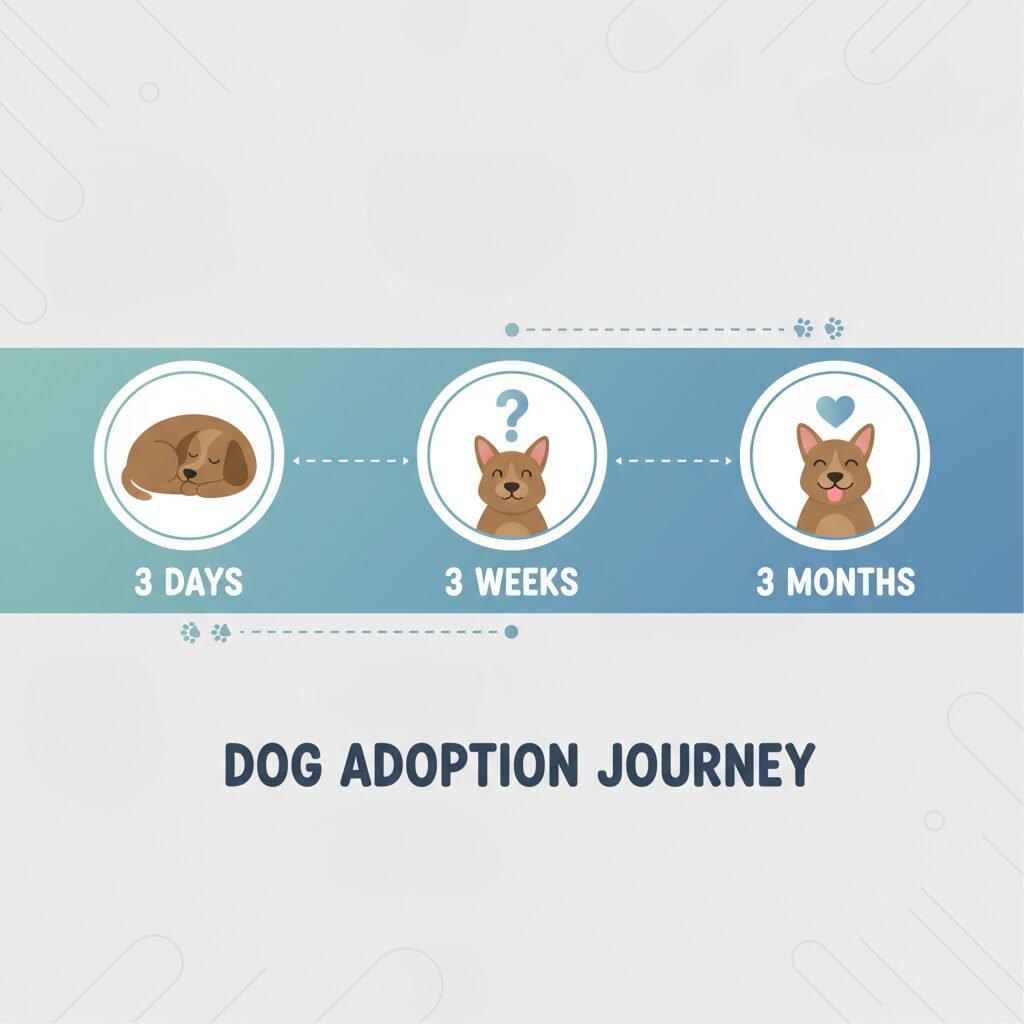
The 3-3-3 Rule is not a rigid set of commands but rather a map of your dog’s likely emotional and behavioral state during the initial stages of post-adoption life. It provides context for behaviors that might otherwise seem confusing or concerning. By anticipating these phases, you can adjust your expectations and interactions accordingly, providing the specific type of support your dog needs at each stage. Think of it as a guide to canine culture shock.
The Three Phases Defined:
- The First 3 Days: This is the initial decompression period. Your dog is likely feeling overwhelmed, frightened, and uncertain. Their primary focus is survival and observation. They are not yet ready to bond or play; they are simply trying to understand their new, strange environment.
- The First 3 Weeks: During this time, your dog begins to settle in. They are learning the rhythms and routines of your household. Their true personality starts to peek through the initial fear, and they may begin testing boundaries as they figure out the rules of their new life.
- The First 3 Months: This is when your dog finally starts to feel at home. A sense of trust and security has been established. They understand they are a permanent part of the family, and a true bond has formed. Their behavior is more consistent, and they have fully integrated into your life.
Recognizing these stages allows you to be a proactive and empathetic owner. Instead of pushing for affection too soon or becoming frustrated by a lack of immediate progress, you can provide the patience and structure necessary for a smooth transition.
Phase One: The First 3 Days – Decompression and Survival Mode

When your dog first crosses the threshold of your home, their senses are on high alert. The smells, sounds, and sights are entirely foreign. Many rescue dogs have experienced significant trauma or instability, and their immediate instinct is not to trust, but to protect themselves. During these first 72 hours, your primary goal is to provide a sense of safety and predictability, not to shower them with overwhelming affection or experiences.
What Your Dog is Experiencing:
- Overwhelm: They have left the only environment they knew, whether it was a shelter or a foster home. Everything is new and potentially threatening.
- Fear and Anxiety: Your dog does not know you, your family, or your intentions. They may exhibit signs of stress such as a tucked tail, pinned-back ears, panting, or hiding.
- Exhaustion: The stress of the transition is mentally and physically draining. Most dogs will spend a significant amount of this time sleeping or in a state of shutdown.
Your Role: Create a Sanctuary
Your job is to be a calm, quiet presence. Force nothing. Your home should be a low-pressure environment where the dog can simply be.
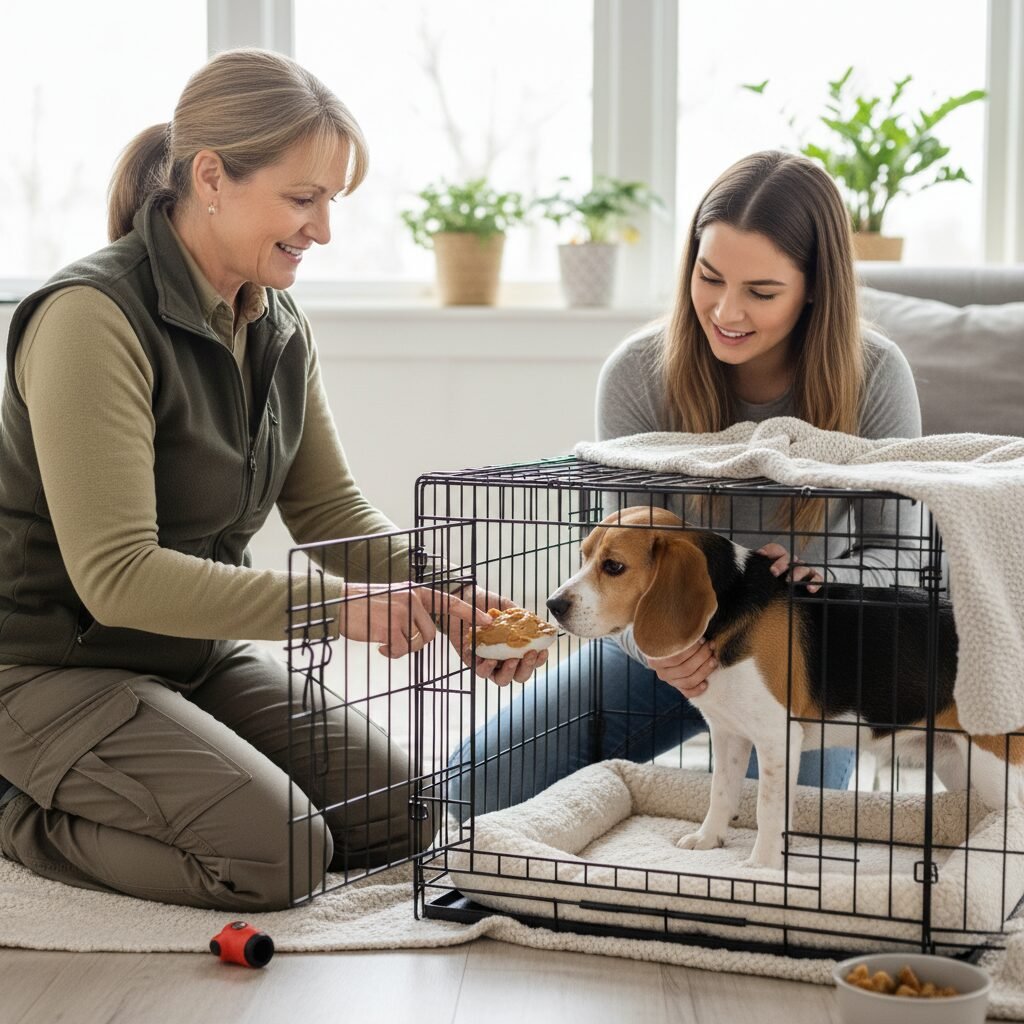
- Establish a Safe Zone: Set up a crate or a quiet corner with a comfortable bed. This should be a dog-only space where they can retreat and not be bothered by anyone, including children or other pets. Make it comfortable with a blanket that has your scent on it.
- Limit Exploration: Do not give your new dog full run of the house. Use baby gates or keep doors closed to limit them to one or two rooms. This prevents them from becoming overwhelmed and helps with house-training.
- Minimize Introductions: Resist the urge to invite friends and family over to meet the new dog. Keep introductions to resident pets slow, structured, and brief, if at all. Avoid dog parks, pet stores, or any high-stimulation environments.
- Start a Simple Routine: Take them out for potty breaks on a leash to the same spot every time. Feed them at the same times each day in their safe zone. Routine creates predictability, which reduces anxiety.
Patience is not simply the ability to wait – it’s how we behave while we’re waiting. In these first three days, your calm and patient behavior teaches your new dog more than any training command ever could. It teaches them they are finally safe.
Phase Two: The First 3 Weeks – Settling In and Emerging Personalities
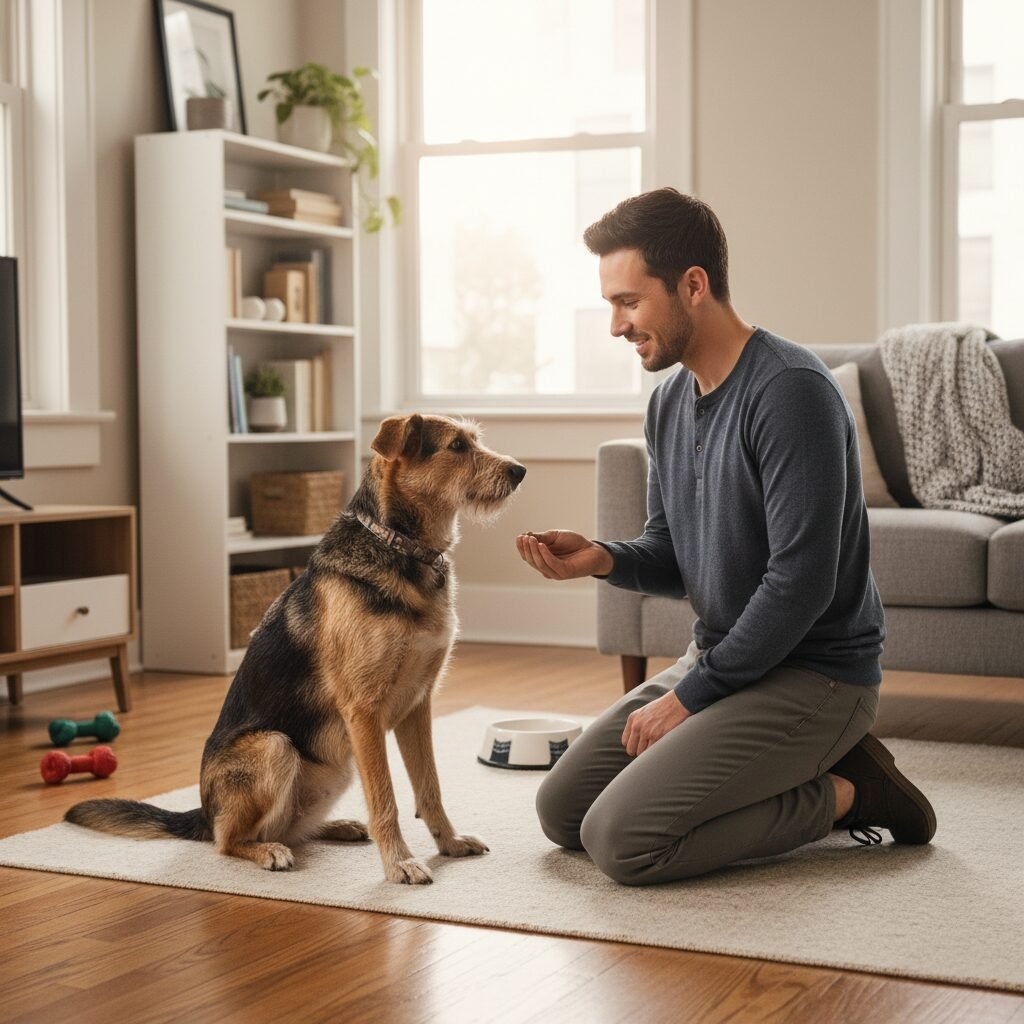
After the initial shock wears off, your dog will begin to realize that this new place is consistent and safe. They start to relax, and with that relaxation, their true personality begins to emerge. This is an exciting phase, but it can also be challenging. As your dog gains confidence, they will start to test boundaries to understand the rules of your home.
What Your Dog is Experiencing:
- Curiosity: They will start exploring more, sniffing around the house, and showing interest in their surroundings.
- Personality Emergence: You will start to see glimpses of the real dog—whether they are playful, cuddly, goofy, or reserved.
- Boundary Testing: This is when behavioral issues may first appear. They might chew on something inappropriate, have a house-training accident, or bark at noises. This is not defiance; it is information-gathering.
Your Role: Establish Consistent Leadership
Your focus now shifts from passive safety to active structure. Consistency is the most critical element during this phase. Every member of the household must be on the same page with rules and routines.
- Solidify the Routine: Stick to consistent times for feeding, walking, and potty breaks. A predictable schedule is a powerful tool for building security.
- Introduce Positive Reinforcement Training: Begin short, fun training sessions. Work on basic cues like ‘sit’, ‘stay’, and name recognition. Use high-value treats and praise to make it a positive experience. This builds your communication system and strengthens your bond.
- Manage the Environment: Continue to manage their space to prevent unwanted behaviors. Use crates, gates, and tethers to keep them safe and out of trouble when you cannot supervise them directly. This is not punishment; it is proactive management.
- Implement House Rules: Decide on the rules and enforce them consistently. Are they allowed on the furniture? Do they need to sit before getting their food bowl? Consistency from all family members is non-negotiable.
During this period, you may see behaviors that concern you. Remember that many of these are temporary and a direct result of the transition. Address them calmly and consistently, and do not hesitate to consult a professional trainer if you feel overwhelmed.
Phase Three: The First 3 Months – Building a Lasting Bond

By the three-month mark, your dog has likely accepted that your house is their forever home. The foundation of trust you have been carefully building is now solid. They understand the routines, know the rules, and feel a genuine connection to you and your family. This is the phase where the relationship truly blossoms, and your dog’s personality is in full view.
What Your Dog is Experiencing:
- Attachment and Security: They look to you for guidance and comfort. They are likely showing more affection and seeking out your company.
- Confidence: Their confidence in themselves and their environment has grown. They are comfortable and have a sense of belonging.
- Full Personality Unveiled: You now know their quirks, their likes, and their dislikes. Their behavior is much more predictable and stable.
Your Role: Deepen the Connection and Continue Training
While the major adjustment period is over, your work is not done. This is the time to enrich your dog’s life and solidify your bond through shared experiences and continued education.
- Advance Your Training: Move beyond the basics. Enroll in an obedience class, try a dog sport like agility or scent work, or work on more complex commands. This mental stimulation is crucial for a happy, well-behaved dog.
- Expand Their World (Safely): Continue to introduce new experiences, people, and places in a controlled and positive way. Pay close attention to their body language (e.g., ‘whale eye,’ lip licking, tense posture) to ensure they are comfortable and not overwhelmed.
- Maintain a Consistent Routine: While they are more secure, dogs thrive on routine. Continue to provide the structure they have come to rely on, even as you add more variety to their activities.
- Address Lingering Issues: If any behavioral challenges persist, now is the time to address them with more intensity, likely with the help of a certified canine behavior consultant. Issues like separation anxiety or leash reactivity often become fully apparent in this phase.
The three-month milestone is a celebration of how far you have both come. You have successfully navigated the most challenging part of the adoption journey and built a relationship based on mutual trust and respect.
Common Adoption Challenges and Professional Solutions
Even with a perfect understanding of the 3-3-3 rule, challenges will arise. A dog’s past trauma and ingrained habits do not disappear overnight. Below are common issues seen in newly adopted rescue dogs and the professional approach to managing them.
| Challenge | Behavioral Indicators | Management Strategy |
|---|---|---|
| Separation Anxiety | Destructive behavior, excessive barking/howling, or house soiling when left alone. May begin as soon as you prepare to leave. | Start with very short absences (seconds, then minutes) and gradually increase the duration. Provide high-value ‘alone time’ toys (e.g., food puzzles). Do not make departures or arrivals a big event. Consult a professional for desensitization protocols. |
| Resource Guarding | Stiffening, growling, or snapping when approached while eating, or in possession of a toy or resting spot. | Never punish the growl; it is a vital warning signal. Manage the environment to prevent guarding opportunities. Teach a ‘drop it’ cue using positive reinforcement. Work with a behaviorist to implement counter-conditioning exercises. Do not reach for the object. |
| Fear/Shyness | Hiding, trembling, avoiding eye contact, cowering, or defensive snapping when approached or in new situations. | Do not force interaction. Allow the dog to approach on their own terms. Use high-value treats to build positive associations (the ‘treat and retreat’ game). Create a predictable and quiet environment. Advocate for your dog’s space. |
| House-Training Setbacks | Urinating or defecating indoors, even after being outside. | Revert to house-training basics as if they were a new puppy. Frequent, leashed potty breaks with rewards for success. Clean all accidents with an enzymatic cleaner to eliminate odor cues. Rule out any medical issues with a veterinarian. |
Your Commitment: The Human Side of the Equation

The 3-3-3 Rule is as much a guide for the owner as it is a timeline for the dog. Your mindset and behavior during this critical period will directly impact your dog’s ability to adjust successfully. Adopting a rescue dog requires a significant emotional investment.
Managing Your Expectations
It is easy to envision a perfect canine companion from day one, but reality is often different. Let go of the fantasy and embrace the dog you have in front of you. They will not be perfect, and neither will you. There will be frustrating days and moments of doubt. This is normal. The journey is one of progress, not perfection. Celebrate the small victories—the first time they wag their tail, the first time they choose to lie down near you, the first solid night of sleep.
The Power of Consistency
Consistency is the language of security for a dog. When your responses, rules, and routines are predictable, you become a source of stability in a world that may have been chaotic for them. Every member of the household must be committed to the same set of rules. This unity presents a clear, understandable picture for your dog, accelerating their learning and reducing their anxiety.
When to Seek Professional Help
There is no shame in asking for help. In fact, it is the sign of a responsible and dedicated owner. If you are encountering behaviors that you do not understand or that feel unmanageable—such as aggression, severe anxiety, or persistent fear—contact a certified professional dog trainer or a veterinary behaviorist. Early intervention can prevent minor issues from becoming major problems and can provide you with the tools and support needed to help your dog thrive.
Conclusion
The 3-3-3 Rule is more than just a catchy phrase; it is a framework for empathy. It reminds us that our new dog is an individual with a history, and they need time to feel secure before they can truly flourish. By understanding and respecting the stages of their adjustment—from the initial fear of the first 3 days, to the boundary-testing of the first 3 weeks, to the bond-building of the first 3 months—you provide the greatest gift of all: the space and grace to become a cherished member of your family. The journey requires patience, consistency, and a deep well of compassion, but the reward is one of the most powerful connections a human can experience. Trust the process, trust your dog, and you will build an unbreakable bond together.