Crying in the Playpen? The ‘Settle’ Routine That Actually Works
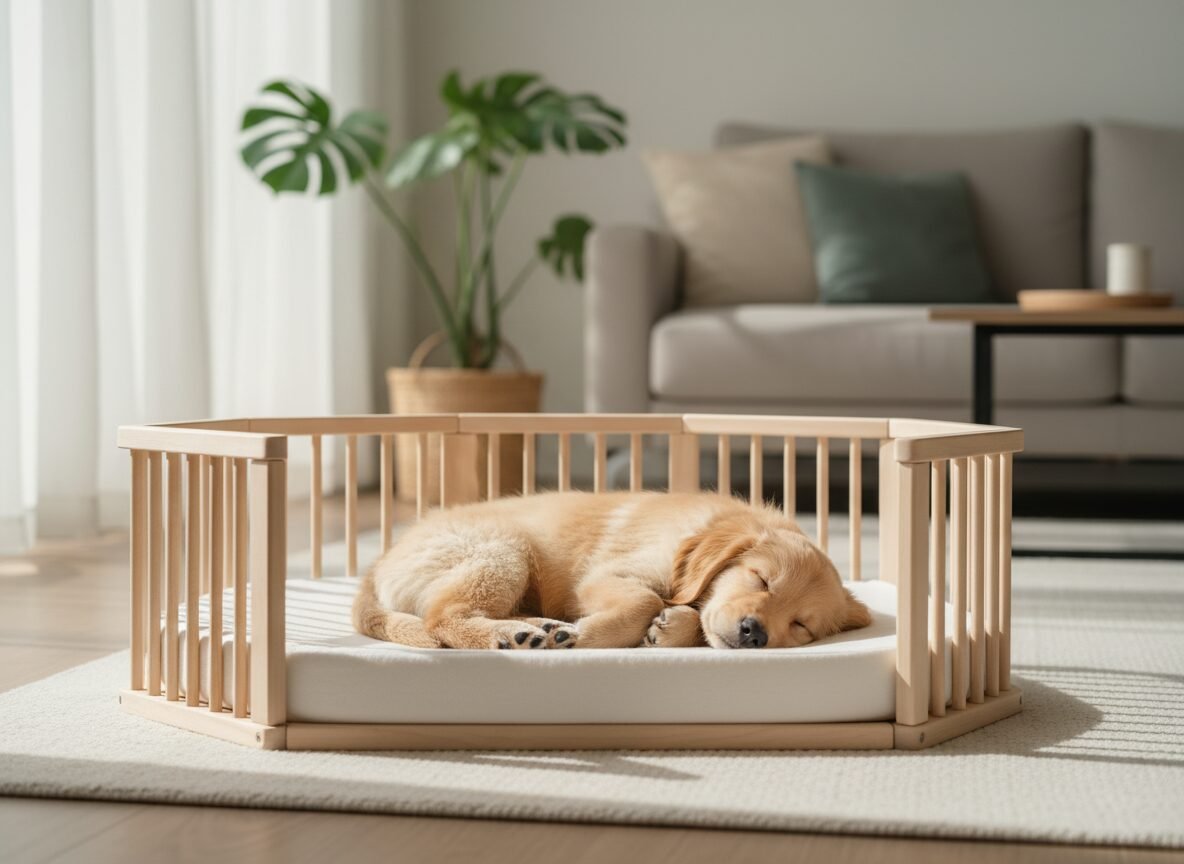
The sound is unmistakable and pierces through the calm of your home: the high-pitched, insistent cry of a puppy confined to a playpen. For many well-intentioned pet owners, this vocal protest triggers a wave of frustration, guilt, and confusion. You provided a safe space, filled it with toys, and yet your puppy acts as if they’ve been abandoned. This experience is incredibly common, but the solution is not to simply ‘let them cry it out’—a dated approach that can foster anxiety. The playpen is an essential management tool for safety and house-training, but it is only effective if your puppy perceives it as a place of security, not a place of isolation.
As a canine behavior consultant, I have guided countless owners through this exact challenge. The key to silence and serenity is not about forcing compliance; it’s about proactively teaching your puppy the invaluable life skill of how to settle. This guide will deconstruct the reasons behind your puppy’s distress and provide you with a systematic, positive reinforcement-based routine that actually works. We will transform the playpen from a source of anxiety into a sanctuary of calm, empowering you with the techniques to build a confident, independent, and well-adjusted canine companion.
The ‘Why’ Behind the Whining: Understanding Playpen Distress
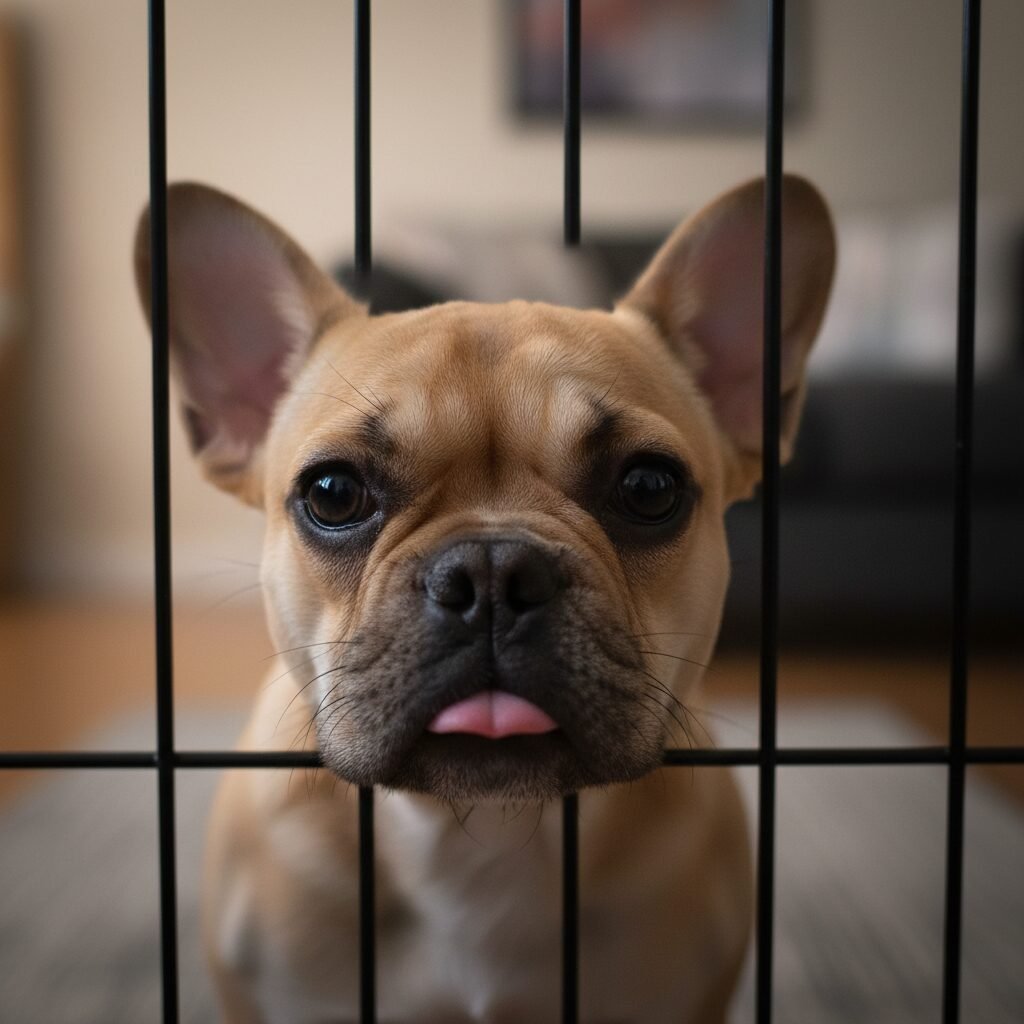
Before we can implement a solution, we must first accurately diagnose the problem. A puppy’s cry from the playpen is a form of communication, and understanding what they are trying to tell you is the first step toward resolving the issue. Ignoring the underlying cause will only lead to greater frustration for both of you.
Barrier Frustration
Many puppies, particularly those who are confident and social, cry out of sheer frustration. They can see you, hear you, and smell you, but they cannot get to you. This invisible wall creates a conflict in their mind, leading to vocalization, digging at the floor, or attempting to climb the sides. This is not necessarily anxiety; it is a protest against the restriction of their movement and access to their social group—you.
Isolation Distress
Puppies are social animals, hardwired to seek proximity to their littermates and mother for safety and warmth. When you leave them alone in a playpen, this can trigger a primal fear of isolation. This isn’t full-blown separation anxiety, which is a more complex clinical condition, but rather a normal developmental response to being alone. The puppy’s world has recently been turned upside down, and you are their sole source of security. The crying is a distress call, an instinctual attempt to be reunited with their protector.
Boredom and Under-Stimulation
A puppy’s brain is a sponge, and their body is a bundle of energy. If a puppy is placed in a playpen without adequate physical exercise or mental engagement beforehand, they will likely create their own entertainment—often in the form of barking and whining. If the playpen contains the same old boring toys, and the puppy hasn’t had a chance to run, play, or work their brain, the confinement will feel like a punishment, leading to vocal complaints.
Unmet Physical Needs
The most basic reason for crying should always be considered first. Does your puppy need to eliminate? Are they thirsty? Is the temperature uncomfortable? Before assuming a behavioral cause, always ensure their fundamental physiological needs have been met. A puppy with a full bladder cannot be expected to settle calmly, no matter how much training you have implemented.
The Foundation: Setting Up the Playpen for Success
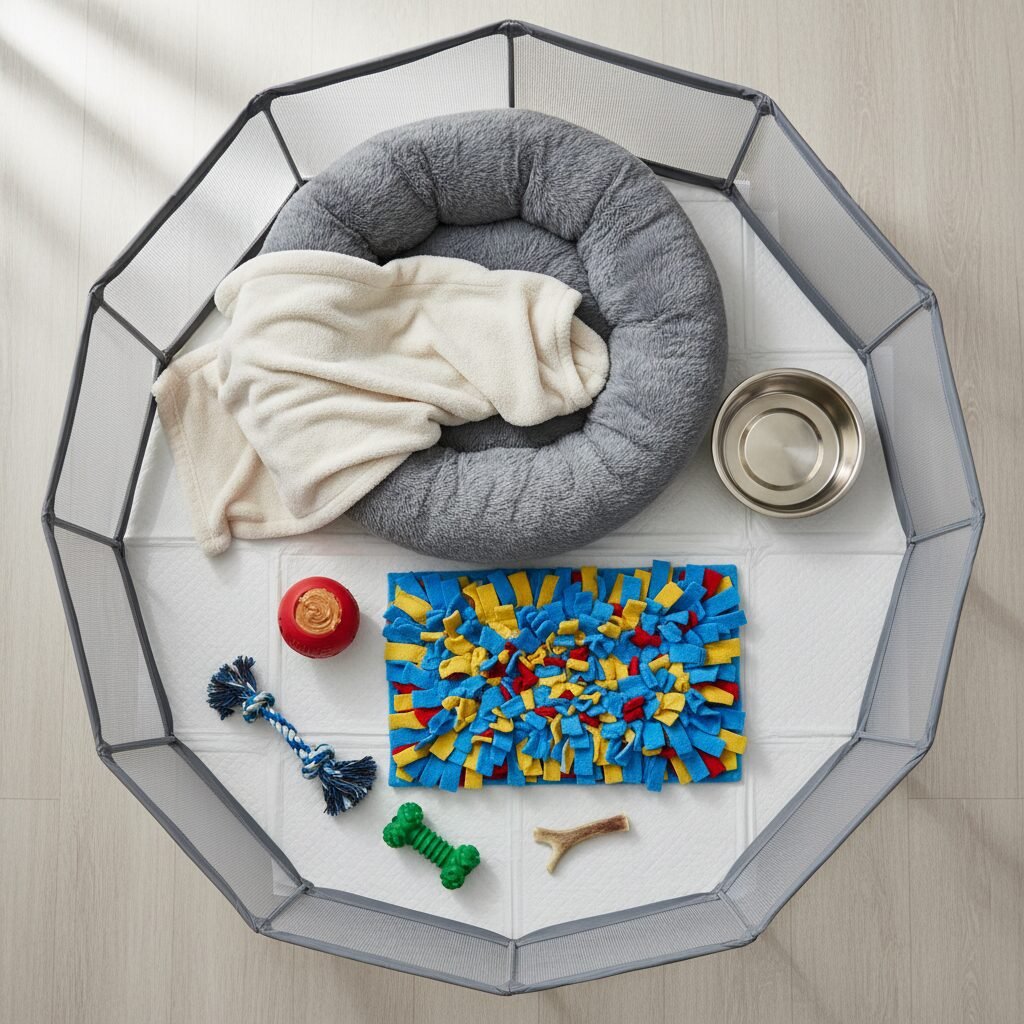
Your training routine will fail before it even begins if the environment is not set up to encourage success. The playpen should be a canine paradise, not a sterile cage. Your goal is to change your puppy’s emotional response to the space from negative to positive, a concept known in behavior science as changing the Conditioned Emotional Response (CER).
Location, Location, Location
Where you place the playpen is critical. Do not relegate it to an isolated laundry room or a distant basement. Initially, the playpen should be in the heart of the home, such as the living room or your home office. This allows the puppy to feel like part of the family, observe daily activities, and not associate the pen with social isolation. Being able to see you will significantly reduce initial distress.
Creating a Den of Comfort
The playpen should be equipped for comfort and security. A soft, washable bed or vet bedding provides a comfortable place to rest. Ensure there is a non-spill water bowl available at all times. The space should be large enough for the puppy to stand, turn around, and lie down comfortably, with a separate area for a potty pad if you are using them during house-training.
The Power of High-Value Enrichment
The playpen should be home to the best toys and chews—items your puppy only gets access to inside the pen. This creates a powerful positive association. Rotate these special items to maintain novelty. Excellent options include:
- Food-Dispensing Toys: Puzzle toys like a KONG classic stuffed with frozen peanut butter or wet food can keep a puppy occupied for a significant amount of time.
- Long-Lasting Chews: For puppies, appropriate options like bully sticks (under supervision), beef tendons, or hard rubber chew toys can be excellent for satisfying their natural urge to chew and promoting calmness.
- Snuffle Mats: Hiding a portion of their daily kibble in a snuffle mat encourages foraging and provides excellent mental stimulation.
By making the playpen the exclusive source of these incredible resources, your puppy will start to eagerly anticipate their time inside it.
Common Mistakes to Avoid Before You Begin
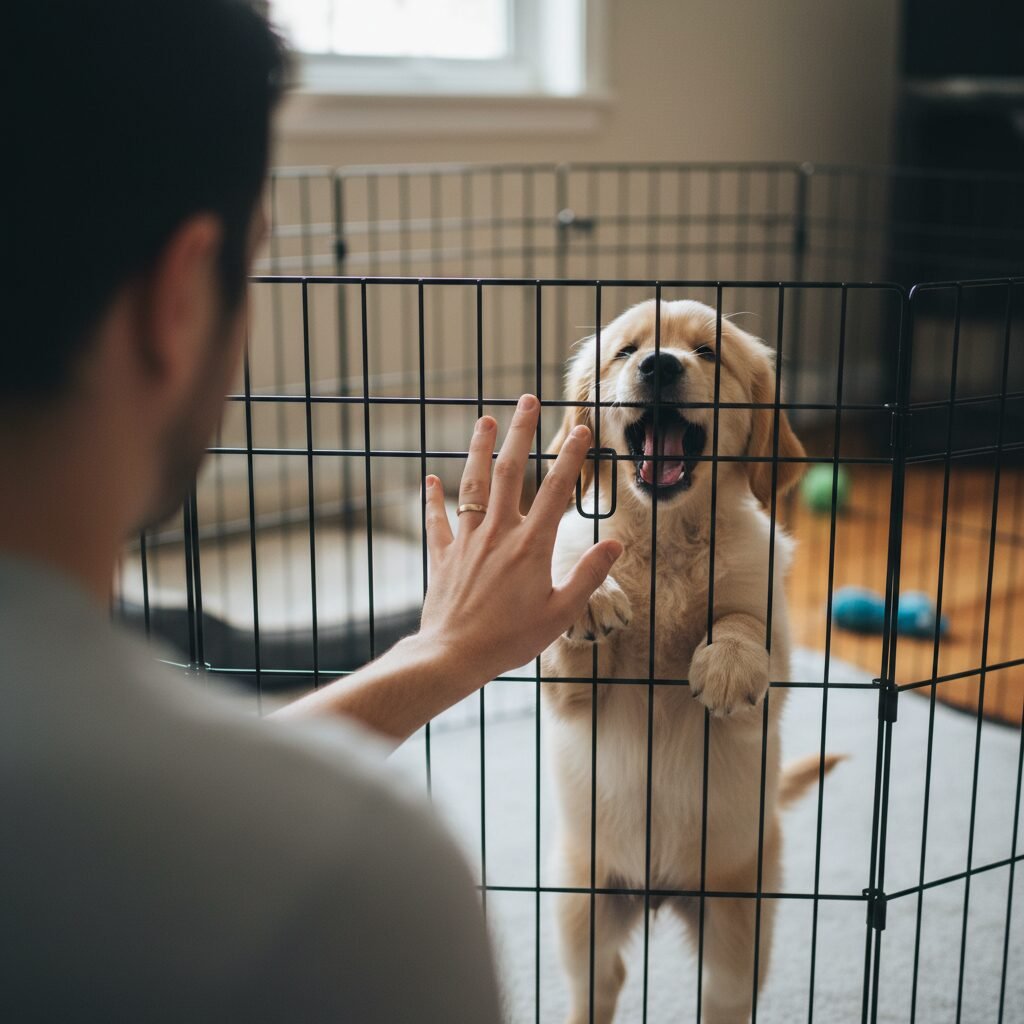
Many owners inadvertently sabotage their own training efforts by making a few critical errors. Avoiding these common pitfalls will set a solid foundation for the ‘Settle’ routine and prevent the development of long-term negative associations with the playpen.
Using the Playpen as Punishment
This is the cardinal sin of playpen training. If your puppy has an accident on the rug or is chewing on the furniture, it is tempting to scoop them up and place them in the pen as a ‘time out.’ This action directly teaches the puppy that the playpen is a place of punishment and social isolation. The pen must always be associated with positive or, at worst, neutral experiences. It is a management tool for prevention, not a reaction to misbehavior.
Giving In to the Demand Barking
When a puppy cries and you immediately let them out, you have just taught them a powerful lesson: vocalizing gets them what they want. This creates a reinforcement loop that is very difficult to break. While you should not let a puppy cry in genuine distress for extended periods, it is crucial not to reinforce demanding barks and whines. The key is to wait for a brief moment of silence—even just a second to catch their breath—before you open the gate. This teaches them that quiet, not noise, is what earns them freedom.
Too Much, Too Soon
Expecting a young puppy to spend hours in a playpen from day one is an unrealistic expectation. Their bladder control is limited, and their capacity for being alone is undeveloped. Start with very short durations, even just a few minutes, and build up gradually as the puppy demonstrates success. Pushing them past their threshold will only create anxiety and set your training back significantly.
Remember, we are building a skill and a positive association. This is a marathon, not a sprint. Patience and consistency are your most valuable assets.
The ‘Settle’ Routine: A Step-by-Step Guide
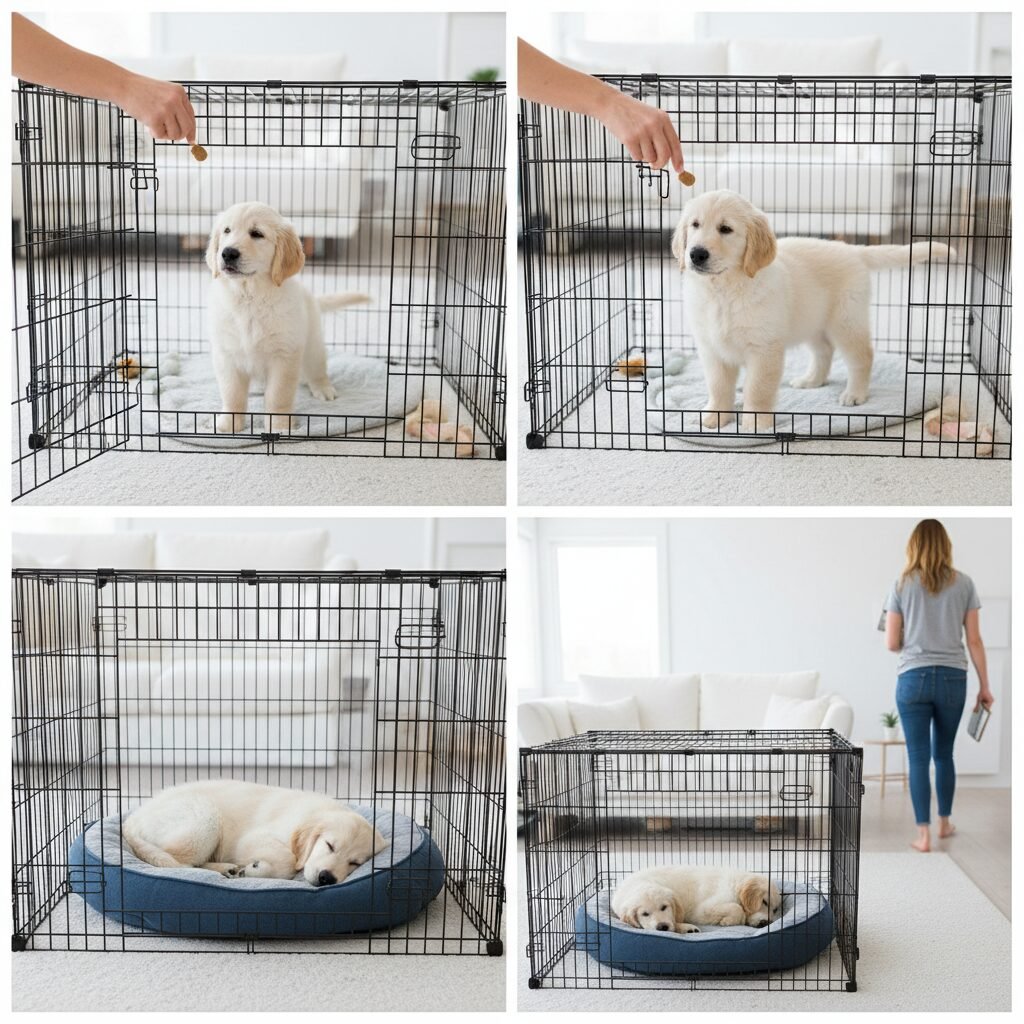
This routine is based on the principles of classical and operant conditioning. We will first build a positive association with the playpen (classical) and then reward the specific behavior of being calm and quiet (operant). You will need a supply of high-value training treats—small, soft, and incredibly tasty to your puppy.
-
Step 1: The Open-Door Policy
Begin with the playpen gate wide open. Without any pressure, toss a few high-value treats inside the pen. Let your puppy enter and exit freely to retrieve them. Do this for several short sessions over a day or two. The goal is simple: teach the puppy that good things happen inside the pen. Do not close the gate at all during this stage. We are building a foundation of voluntary, happy entry.
-
Step 2: The ‘In and Out’ Game
Once your puppy is happily entering the pen, you can begin to close the gate. Ask your puppy to go in (or lure them with a treat), close the gate, immediately give them another treat through the bars, and then open the gate to let them out. The entire duration of confinement is less than five seconds. Repeat this multiple times. The goal is to create a high number of repetitions where closing the gate is a non-event that predicts a treat and immediate freedom.
-
Step 3: Capturing Calmness
Now, we begin to add a tiny bit of duration. Close your puppy in the pen with a special chew toy or a stuffed KONG. Stay close by. The moment your puppy disengages from you and interacts with the toy, or lies down, or even just stands quietly, calmly say ‘Yes’ and drop a treat in. This technique is called ‘capturing.’ You are marking and rewarding the moments of calm, teaching your puppy that this is the desired behavior. Start with very short intervals, rewarding every few seconds of quiet at first.
-
Step 4: Introducing the ‘Settle’ Cue
Once your puppy is reliably offering calm behavior, you can add a verbal cue. As they are in the process of lying down to relax, say your chosen word, such as ‘Settle’ or ‘Place,’ in a calm, soft tone. Then, mark (‘Yes’) and reward. Over time, your puppy will associate the word with the action of relaxing in their pen. You can then begin to ask for the ‘Settle’ when they enter the pen.
-
Step 5: Building Duration
This is where patience is paramount. Gradually increase the amount of time between rewards. If you were rewarding every 5 seconds of quiet, try for 7 seconds, then 10, then 15. The key is to reward them before they start to get antsy or vocal. If they start crying, you have waited too long. Simply shorten the duration for the next repetition to ensure they succeed. Your goal is to slowly build up to several minutes of calm behavior while you are still in the room.
-
Step 6: Adding Distance
Once your puppy can remain settled for 5-10 minutes while you are sitting next to the pen, you can begin to add distance. Stand up. Walk a few feet away. Return and reward. Then, walk to the other side of the room. Return and reward. Eventually, you can walk out of the room for a few seconds, then return before the puppy has a chance to panic. This process systematically teaches the puppy that your departure is not permanent and that calm behavior will be rewarded upon your return.
-
Step 7: Generalizing the Behavior
Practice makes perfect. Conduct these short training sessions at various times throughout the day, not just when you need to confine the puppy. Practice when the puppy is already a bit tired, such as after a play session or a walk. This will help them generalize the ‘Settle’ command and understand that it applies in different contexts and states of arousal.
The Critical Role of Enrichment and Exercise
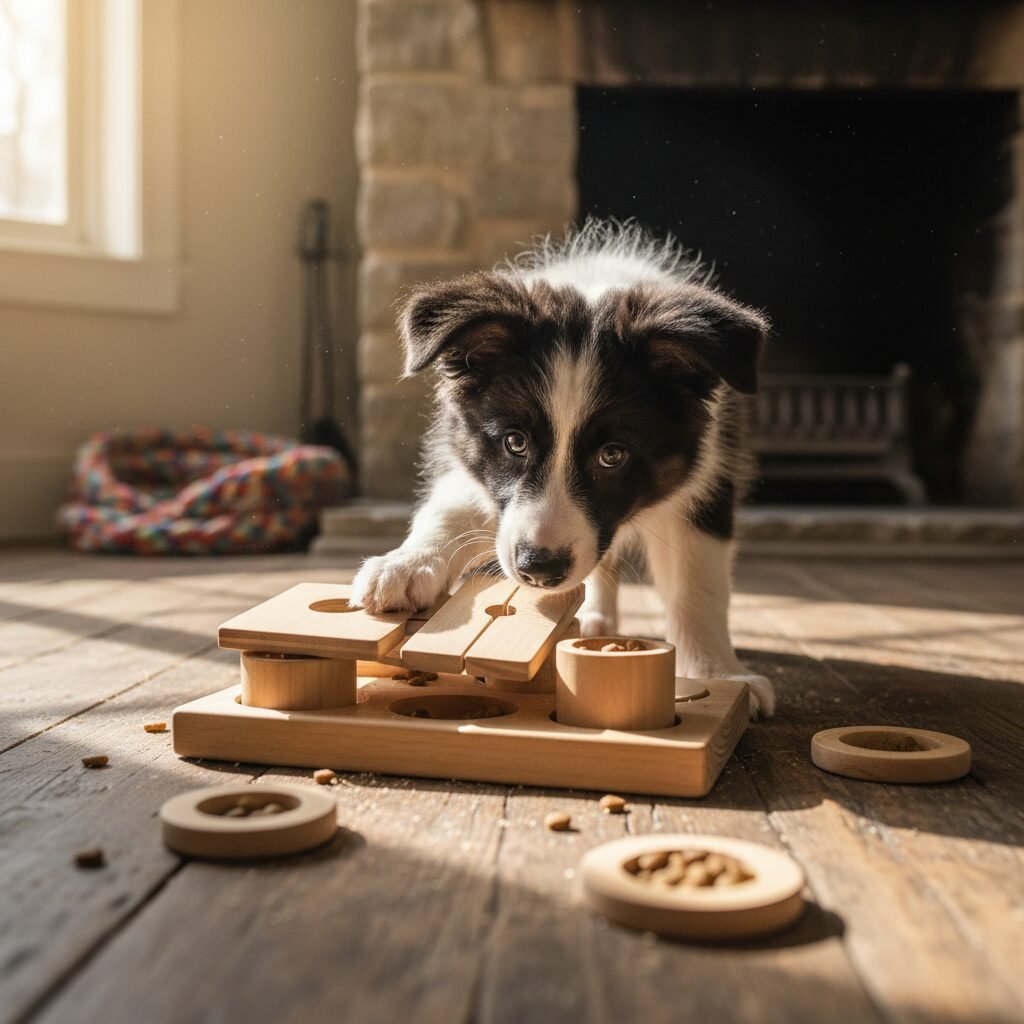
A common error in judgment among pet owners is underestimating the energy levels of a young puppy. A puppy that has been cooped up all day is a poor candidate for settle training. You cannot expect a dog to lie down quietly if their physical and mental needs have not been met. Think of exercise and enrichment as the fuel for your training success. A fulfilled puppy is a calm puppy.
Appropriate Physical Exercise
Exercise needs vary by breed, age, and individual temperament, but all puppies need opportunities to move their bodies. This does not mean strenuous, repetitive exercise like long-distance running, which can be harmful to developing joints. Instead, focus on short bursts of activity.
- Play Sessions: Several 10-15 minute sessions of fetch, tug-of-war (with rules), or flirt pole play throughout the day are more beneficial than one long, exhausting walk.
- Socialization and Exploration: Walks should be about more than just potty breaks. Allow your puppy to sniff and explore their environment. This ‘scent work’ is incredibly mentally taxing and fulfilling for a dog.
Always conduct a play or training session before you plan to put the puppy in the playpen for an extended period. This helps drain their physical energy, making them more inclined to rest.
Essential Mental Stimulation
Mental exercise is just as important as physical exercise. A bored dog is a destructive or noisy dog. Engaging your puppy’s brain can tire them out as effectively as a run in the park.
| Enrichment Type | Description | Best For |
|---|---|---|
| Puzzle Toys | Toys that require the dog to solve a problem (slide, lift, or push) to get a food reward. | Independent problem-solving, slowing down fast eaters. |
| Snuffle Mats | A fabric mat with strips for hiding kibble, encouraging the natural behavior of foraging. | Mental stimulation during meal times, calming activity. |
| Training Sessions | Short, 5-minute sessions teaching new cues like ‘sit,’ ‘down,’ or ‘touch.’ | Building your bond, improving obedience, and tiring out the brain. |
| LickiMats | Textured mats where you can spread soft food (like yogurt or pumpkin), encouraging licking, which is a self-soothing behavior. | Anxiety reduction, creating a calm state before crating. |
By providing a robust schedule of both physical and mental activities, you ensure that when your puppy enters the playpen, they are genuinely ready for downtime and rest, not primed for frustrated energy release.
Troubleshooting: What If My Puppy Is Still Crying?
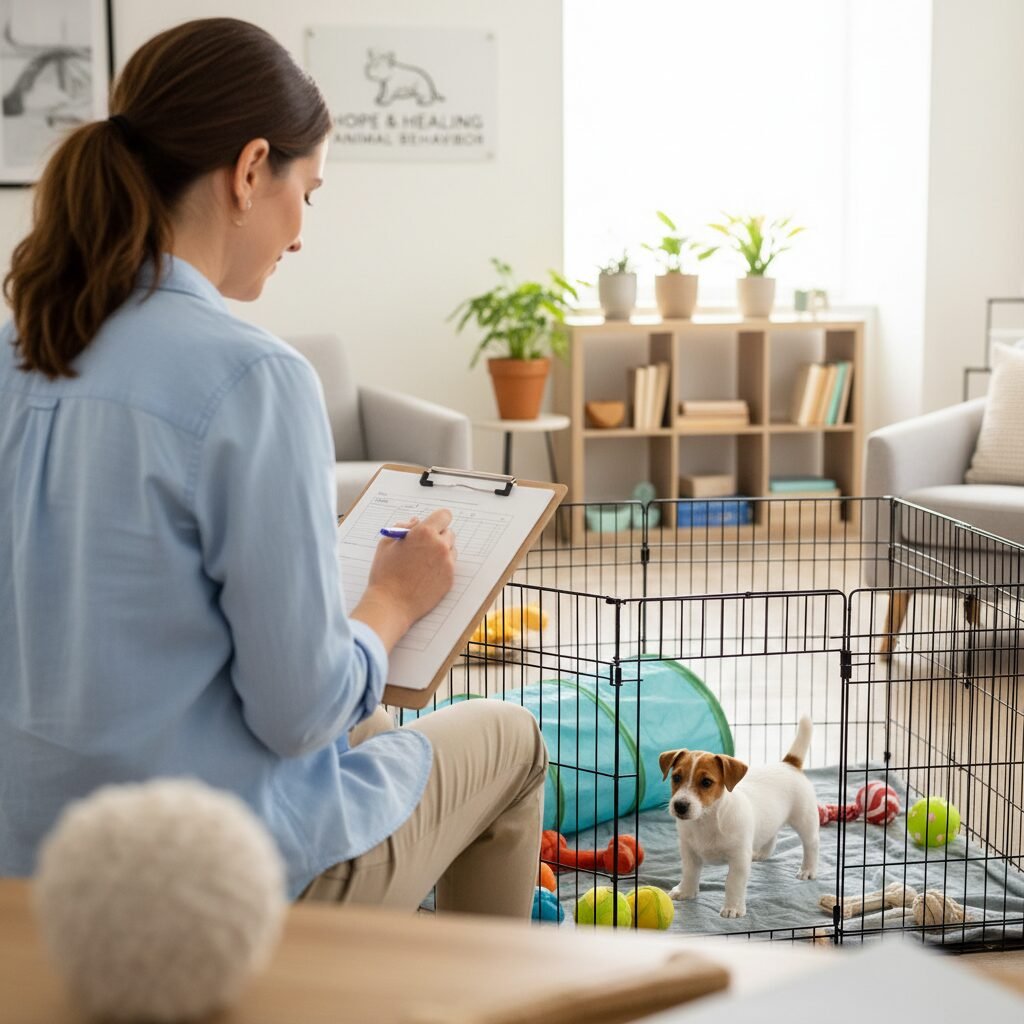
Even with a perfect training plan, you may encounter setbacks. Behavior is not linear, and puppies will test boundaries. Understanding how to troubleshoot common issues will keep you on the right track and prevent you from giving up.
Regression and ‘Extinction Bursts’
It is common for a puppy who was doing well to suddenly start crying again. This is known as a regression. Often, it occurs because the owner has increased the duration or distance too quickly. If this happens, simply take a step back in your training plan to a point where the puppy was successful and work your way forward again more slowly. Another phenomenon is the ‘extinction burst.’ When you stop reinforcing a previously rewarded behavior (like crying), the dog may perform the behavior with more intensity before it finally stops. If your puppy’s crying temporarily gets worse, it is often a sign that the training is working. Stay consistent, and do not give in.
Analyzing the Cry: Distress vs. Demand
It is important to learn the difference between a cry of genuine distress and a bark of demanding frustration. A distress cry is often high-pitched, continuous, and may be accompanied by frantic pacing or trembling. This indicates the puppy is over their emotional threshold, and you need to end the session and try again later with a much shorter duration. A demand bark is typically sharper, more rhythmic, and is aimed directly at you. The puppy is not in distress; they are protesting. This is the type of vocalization that must not be reinforced.
When to Consult a Professional
While most playpen crying is a normal developmental phase that can be resolved with training, there are instances where it can be a symptom of a more serious issue like clinical separation anxiety. If your puppy exhibits the following signs, it is time to consult a Certified Separation Anxiety Trainer (CSAT) or a board-certified veterinary behaviorist:
- Excessive drooling or panting when left alone.
- Destructive behavior aimed at exits like doors and windows.
- Inappropriate elimination (urination or defecation) only when alone.
- Inability to be left alone for even a few seconds without panicking.
These symptoms go beyond typical puppy behavior and require a specific, nuanced protocol that is best guided by an expert.
Conclusion
Mastering the ‘Settle’ routine is more than just a solution to crying in the playpen; it is a foundational skill that will benefit your dog for its entire life. You are teaching your dog the invaluable ability to regulate their own emotions, to find calm in moments of independence, and to trust that being alone is safe. The playpen, when introduced correctly, becomes a sanctuary—a tool that grants you peace of mind and grants your puppy a secure space to call their own.
The path to a quiet, contented puppy is paved with consistency, patience, and positive reinforcement. There will be good days and challenging days, but your commitment to this process is an investment in a future of harmonious coexistence. By understanding the ‘why’ behind the whining and diligently applying the steps outlined in this guide, you will not only solve a temporary problem but also deepen the bond of trust and communication with your new best friend.