Thirsty & Aggressive? Fixing Water Bowl Resource Guarding
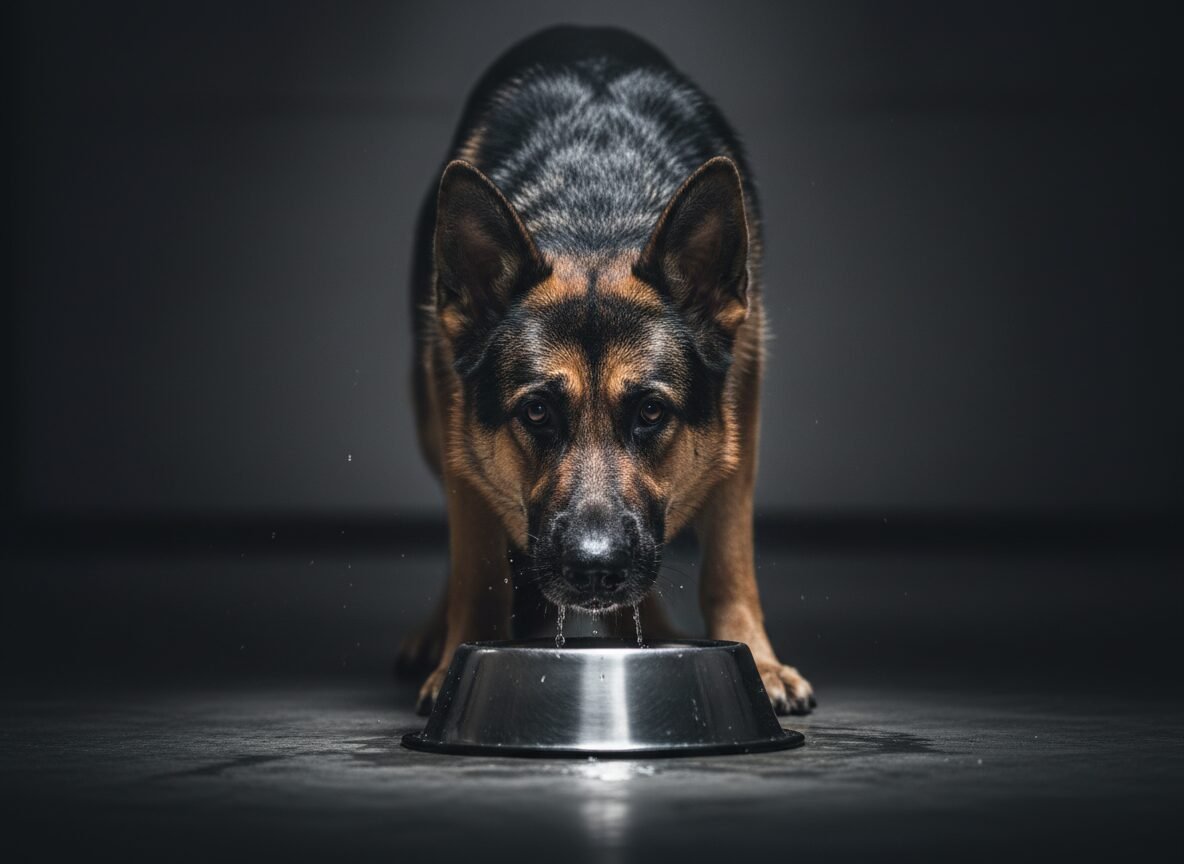
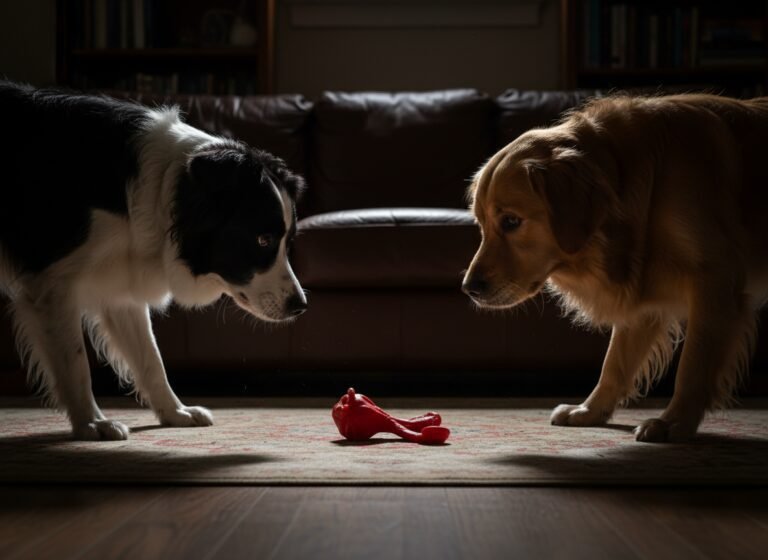
Witnessing your dog transform from a loving companion into a tense, growling guardian over something as simple as a water bowl can be deeply unsettling. This behavior, known as resource guarding, is one of the more serious issues pet owners face. It is not an act of dominance or malice; it is a manifestation of deep-seated anxiety and the instinct to protect a vital resource. The growls and stiff posture are not signs of a ‘bad dog’ but rather a desperate communication of fear and insecurity.
Understanding the psychology behind water bowl guarding is the first step toward resolution. A dog’s instinct dictates that resources like food, water, and safe resting spots are critical for survival. When a dog perceives a threat to one of these resources—whether that threat is real or imagined—it will engage in behaviors to control it. This guide will provide a comprehensive, professional framework for addressing this issue. We will dissect the causes, identify the warning signs, and lay out a systematic, positive-reinforcement-based plan to modify the behavior safely and effectively. Your goal is not to win a battle of wills but to teach your dog that your presence near its water bowl is a predictor of positive outcomes, not a threat.
Understanding the Root Cause: Why Dogs Guard Water
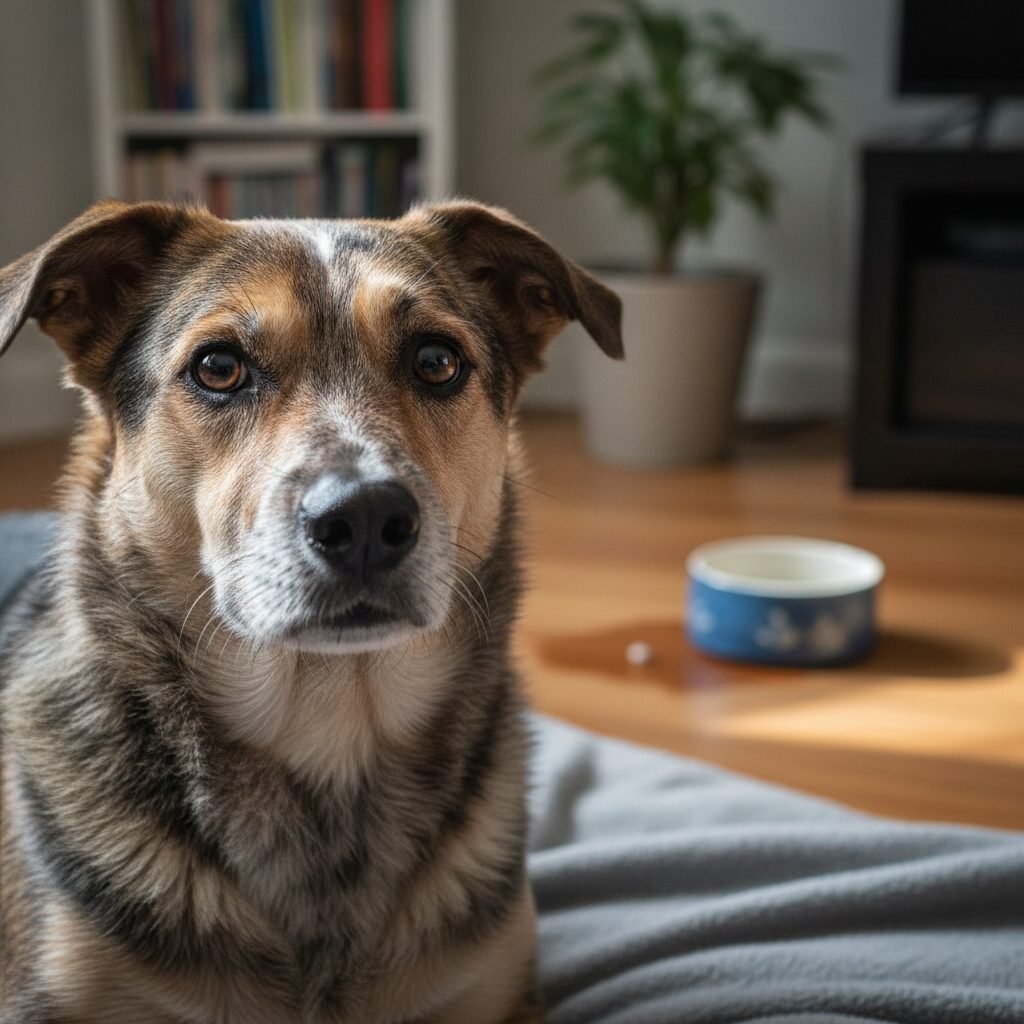
Resource guarding is fundamentally an issue of emotional distress, primarily anxiety and fear. To effectively address the behavior, you must first understand its origins. The act of guarding a water bowl is rarely a conscious decision to challenge your authority; it is an instinctual response driven by a perceived need to protect a life-sustaining resource. Several factors can contribute to the development or sudden onset of this behavior.
Instinct and Genetics
At its core, resource guarding is a survival mechanism. In the wild, canids who successfully defended their resources were more likely to survive and reproduce. This genetic predisposition can be stronger in certain breeds or individuals. For a dog, a full water bowl represents security. The fear of losing that security can trigger defensive behaviors when someone approaches.
Past Experiences
A dog’s history plays a significant role. Dogs who have experienced scarcity, such as former strays or those from puppy mills, may be more prone to guarding. If a dog had to compete with littermates or other dogs for access to water, it may have learned that passive behavior results in going thirsty. This learned behavior can persist long after the dog is in a safe, resource-rich environment.
Household Dynamics
Changes in the home environment can be a major trigger. The introduction of a new pet, a new baby, or even a visiting houseguest can create social pressure and competition. The guarding dog may feel its position and access to resources are now threatened, causing it to become defensive. Even tension between human family members can elevate a dog’s overall anxiety, which may manifest as resource guarding.
Underlying Medical Conditions
A sudden increase in thirst, known as polydipsia, can lead to a dog placing a higher value on its water bowl, thus triggering guarding behavior. Polydipsia can be a symptom of serious medical issues, including:
- Kidney disease
- Diabetes mellitus
- Cushing’s disease
- Urinary tract infections
If you observe a sudden onset of water guarding accompanied by increased drinking and urination, a veterinary examination is imperative to rule out a medical cause. Treating the underlying health problem may resolve the behavioral issue entirely.
Reading the Warning Signs: From Subtle to Severe
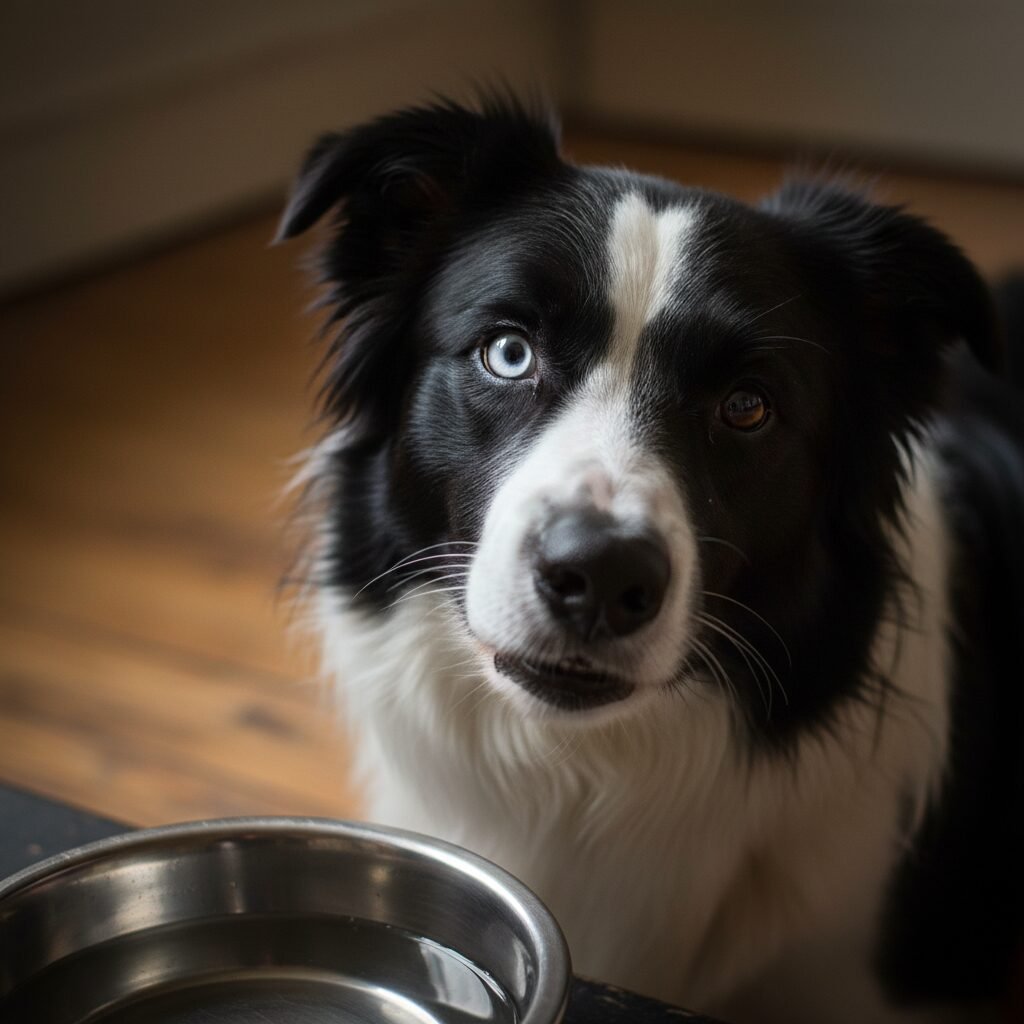
A dog’s communication is sophisticated and often subtle, especially in the early stages of resource guarding. Recognizing the initial, quiet signals is critical to intervening before the behavior escalates to a dangerous level. Dogs typically provide a series of warnings—an ‘escalation ladder’—before resorting to a bite. Ignoring or punishing these warnings can teach a dog to skip them entirely, resulting in a dog that bites without apparent provocation.
Pay close attention to your dog’s body language when you approach its water bowl. The signs often progress as follows:
- Subtle Cues (The Freeze): This is often the first and most missed signal. The dog will abruptly stop drinking and become completely still as you approach. Its body will be tense and rigid. It may lower its head over the bowl, using its body to shield it.
- Hard Eye Contact: The dog will look directly at you, often with a hard, unblinking stare. You may also see ‘whale eye,’ where so much of the white of the eye is visible that it forms a crescent shape. This is a clear indicator of anxiety and stress.
- Lip Curling and Growling: If the subtle cues are ignored, the dog may escalate to more overt warnings. A slight lift of the lip to expose the teeth is a clear threat display. This is often accompanied by a low, rumbling growl. The growl is not aggression for its own sake; it is a critical communication tool that says, ‘I am uncomfortable, please back away.’
- Snapping and Lunging: An air snap, where the dog bites the air in your direction without making contact, is a final warning before a bite. A lunge is a more committed action intended to drive you away. These are distance-increasing signals and indicate the dog is highly agitated.
- Biting: A bite is the last resort when all other warnings have failed to remove the perceived threat. It signifies that the dog’s threshold has been completely crossed.
Understanding this ladder is not just about identification; it is about respecting your dog’s communication. The goal of behavior modification is to address the underlying anxiety so these warning signals are no longer necessary.
Essential Management and Safety Protocols: Your First Line of Defense
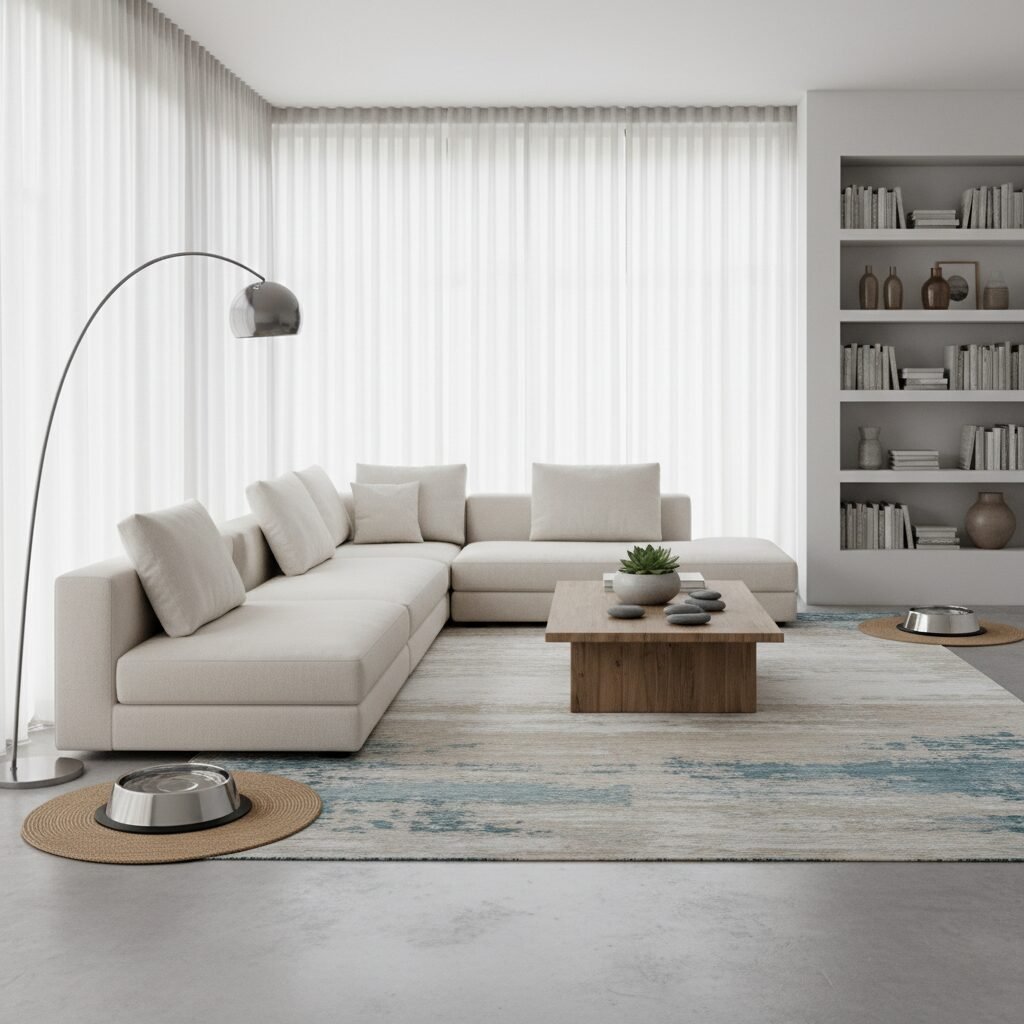
Before you begin any training protocol, you must implement strict management strategies. Management is not a long-term solution, but it is a critical first step to ensure everyone’s safety and prevent the dog from practicing the unwanted behavior. Every time your dog successfully guards its bowl by making you retreat, the behavior is reinforced. Your primary goal is to prevent these confrontations from happening.
1. Implement a Multiple-Bowl System
Immediately reduce the perceived value of any single water bowl by providing multiple sources of water. Place at least two or three water bowls in different, low-traffic areas of your home. This creates an environment of abundance, not scarcity. If one bowl is in a high-traffic kitchen, place another in a quiet office or bedroom. This gives the dog choices and reduces the pressure to guard a single spot.
2. Control the Environment
Identify who or what triggers the guarding. Is it people, other dogs, or both? Once identified, you must prevent the trigger from approaching the dog while it is drinking. This may mean using baby gates to create safe zones, leashing the other pets in the home, or instructing family members (especially children) to give the dog a wide berth. Safety is non-negotiable. A child should never be allowed to approach a resource-guarding dog.
3. Do Not Punish the Growl
This is the most critical rule of safety. It is a natural human reaction to want to scold a dog for growling. However, punishing a growl is like removing the batteries from a smoke detector. You have not eliminated the fire; you have only eliminated the warning that the fire exists. A dog that is punished for growling learns that its warnings are ineffective or dangerous. It may then suppress these signals and escalate directly to a bite. Respect the growl as a form of communication and use it as information: your dog is over its threshold, and you need to increase the distance.
The Step-by-Step Behavior Modification Plan
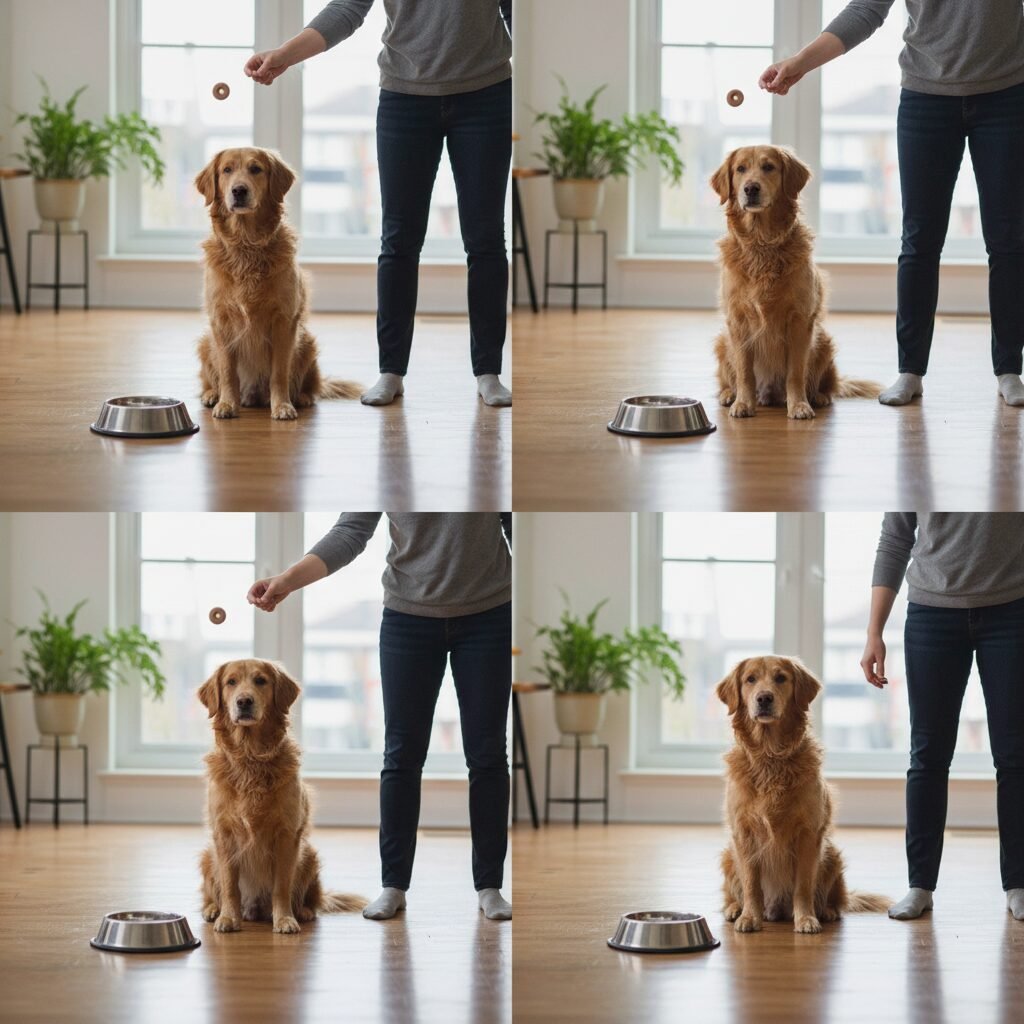
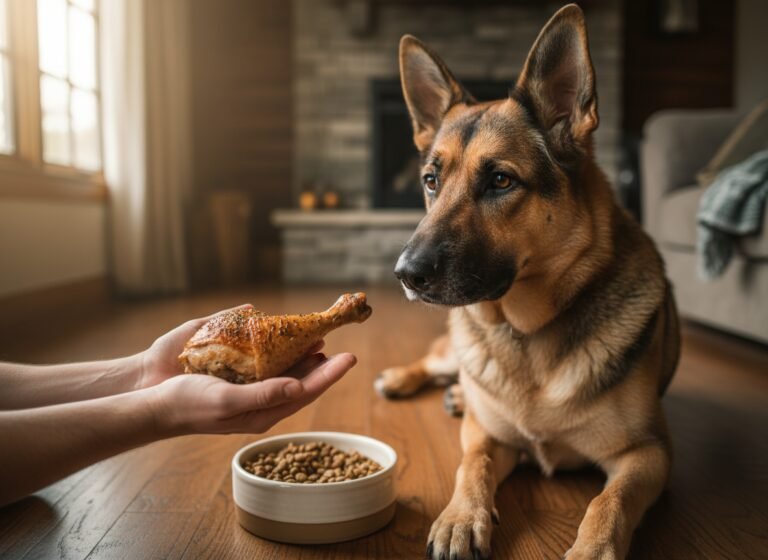
The core of resolving resource guarding lies in changing the dog’s emotional response. Through a careful process of desensitization and counter-conditioning (DSCC), you will teach your dog that your approach to the water bowl predicts wonderful things, not threats. This process must be done slowly and systematically, always staying ‘sub-threshold’—at a level where your dog is aware of you but not yet anxious or reactive. You will need a supply of extremely high-value treats; plain kibble will not suffice. Think small pieces of cooked chicken, cheese, or freeze-dried liver.
-
Step 1: The ‘Walk-By’ Game
The goal of this initial step is to change your dog’s association with your mere presence in the vicinity of the bowl. Start by identifying your dog’s threshold distance—the distance at which you can walk by the bowl without eliciting any signs of guarding (freezing, staring). For a severe guarder, this might be 15 feet. For a milder case, it might be 5 feet. Once you know this distance, casually walk past the bowl. As you pass, toss a high-value treat in your dog’s direction, aiming for it to land near them but not so close that they feel pressured. Do not stop, do not talk to the dog, and do not make eye contact. Simply walk, toss, and continue on your way. Repeat this 5-10 times in a short session. The dog should learn: ‘When my human walks by the bowl, delicious things appear from nowhere!’
-
Step 2: Decreasing the Distance
Once your dog is visibly relaxed and even looks at you with happy anticipation during the ‘Walk-By’ Game, you can begin to gradually decrease the distance. Reduce the path of your walk-by by only a foot or two. Continue tossing the high-value treat as you pass. Watch your dog’s body language carefully. If you see any stiffening or staring, you have moved too quickly. Go back to the previous distance where they were successful and work there for a few more sessions before trying to decrease the distance again. This stage requires patience; it may take days or weeks to progress.
-
Step 3: The Approach and Treat
When you can comfortably walk within a few feet of the bowl without triggering a reaction, you can change the game. This time, walk directly toward the bowl *when the dog is not using it*. Stop a few feet away, toss a treat so it lands right next to the bowl, and immediately turn and walk away. The dog now learns that your direct approach to the bowl makes a treat appear in that exact location. The act of you walking away after the treat is delivered releases the spatial pressure and builds trust.
-
Step 4: Adding Value to the Bowl
After your dog is completely comfortable with Step 3, you can progress to adding value directly to the bowl. Again, do this only when the dog is not at the bowl. Approach the empty or partially full bowl, drop a super high-value treat directly into the water, and walk away. The dog will then ‘discover’ this amazing bonus. You can also add a splash of low-sodium chicken or beef broth. The association becomes incredibly powerful: ‘My human’s hands near my bowl make it even better!’
-
Step 5: Generalization and Maintenance
Once you have successfully worked through these steps, your dog’s emotional response should have shifted from anxiety to positive anticipation. Now, you must generalize the training. Have other family members practice the same exercises, starting from Step 1. Practice in different rooms if you have multiple water bowls. Continue to randomly ‘add value’ to the water bowl throughout the dog’s life to maintain the positive association. This is not a ‘one and done’ fix but a new way of interacting around a previously contentious resource.
What NOT to Do: Common Mistakes That Worsen Guarding
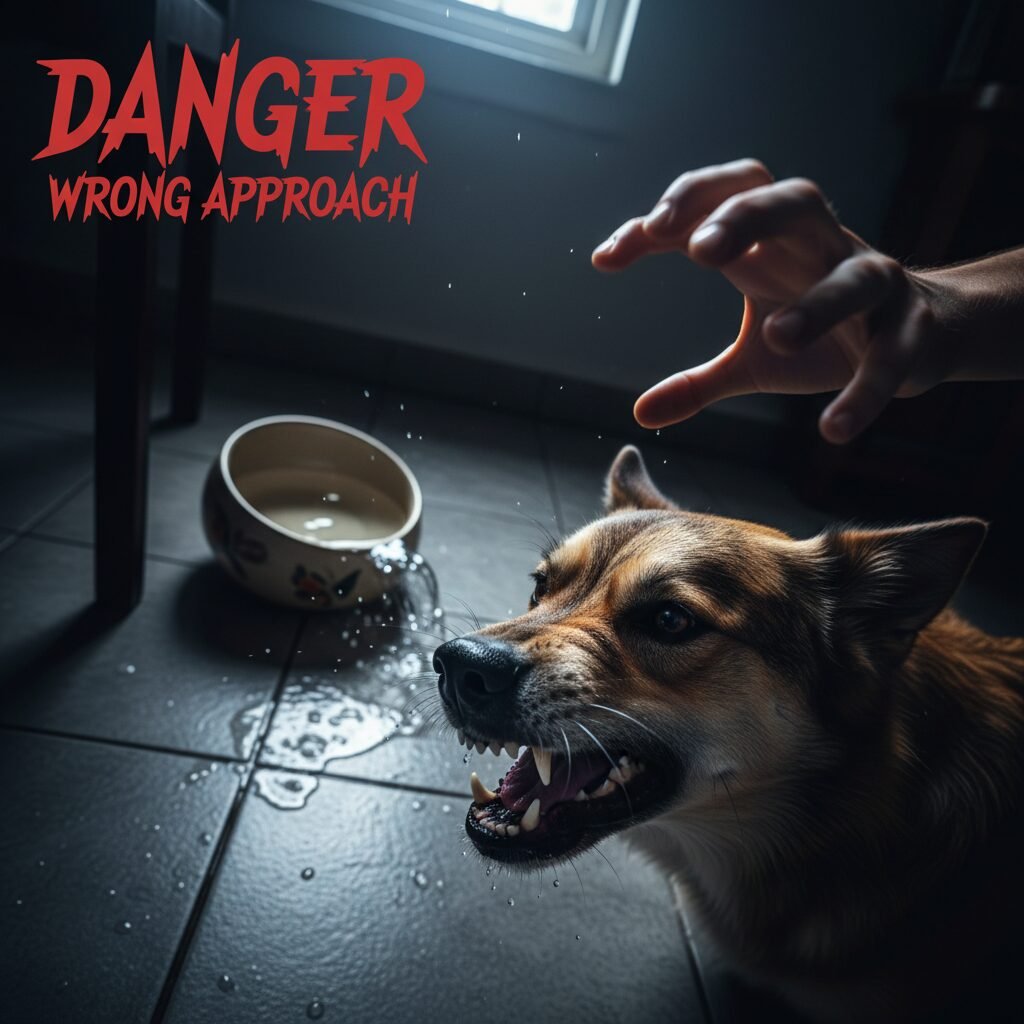
The training methods used to address resource guarding can either help or harm. Outdated, confrontational techniques are not only ineffective but are also dangerous, as they increase a dog’s anxiety and the likelihood of a bite. Avoiding these common mistakes is just as important as implementing the correct protocol.
- Never Use Physical Punishment: Hitting, shaking, or using techniques like the ‘alpha roll’ (forcing a dog onto its back) will be interpreted by the dog as a life-threatening attack. This will shatter any trust you have and confirm the dog’s belief that it must defend its resources aggressively to survive. This approach dramatically increases the risk of a severe bite.
- Do Not Take the Bowl Away: Removing the water bowl as a form of punishment only validates the dog’s fear of losing its resource. It teaches the dog that its guarding behavior was justified because you did, in fact, come to take the bowl. This will make the guarding more intense in the future.
- Avoid Reaching Into the Bowl: Forcing your hand into the bowl while the dog is drinking is a highly confrontational act. You are invading the dog’s personal space and physically challenging it for the resource. This is a common way people get bitten and serves no productive purpose in a positive-reinforcement-based plan.
- Don’t Trade ‘Up’ In the Moment: While trading is a useful technique in some contexts, attempting to offer a treat to a dog that is actively guarding can be risky. The dog may lunge to grab the treat and then immediately return to guarding the bowl, or it may bite the hand that offers the trade. The DSCC plan outlined previously is a much safer way to change the underlying emotion without confrontation.
The foundation of effective behavior modification is building trust, not fear. Confrontational methods destroy trust and create a more unpredictable and dangerous dog.
When to Consult a Professional
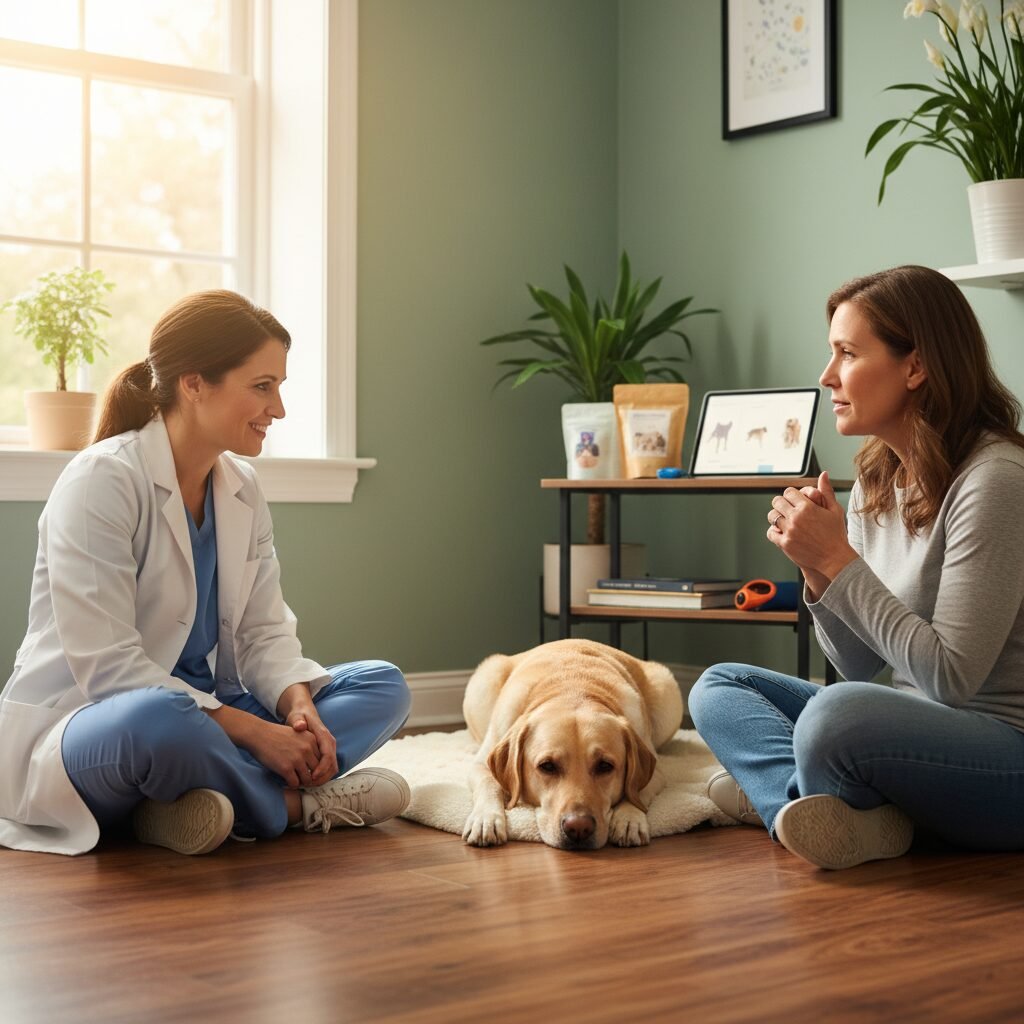
While the behavior modification plan described is the industry standard for treating mild to moderate resource guarding, some situations warrant immediate professional intervention. Attempting to resolve severe aggression without expert guidance can be dangerous. It is a sign of responsible ownership to recognize when you need help.
You should seek professional help immediately under the following circumstances:
- The presence of children in the home: The risk is simply too high. A certified professional can help you implement a safety and management plan that protects your children while you work on the behavior.
- The aggression is severe: If the dog has already bitten, or if the guarding behavior involves lunging, snapping, or a very low threshold for reacting, professional guidance is essential.
- The behavior is not improving: If you have been consistently following the behavior modification plan for several weeks with no improvement, or if the behavior is getting worse, you need an expert to assess the situation. There may be nuances that a professional can identify.
- You feel fearful or overwhelmed: It is perfectly normal to feel scared or stressed when living with an aggressive dog. A professional can provide not only a training plan but also support and confidence to you as the owner.
Who to Call
The dog training industry is unregulated, so it is crucial to find a qualified professional. Look for these credentials:
- Veterinary Behaviorist (DACVB): A veterinarian who has completed a residency in animal behavior. They can diagnose and treat behavioral issues and are licensed to prescribe medication that may be necessary to manage anxiety.
- Certified Applied Animal Behaviorist (CAAB): A professional with a Ph.D. or Master’s degree in animal behavior. They are experts in behavior modification.
- Certified Professional Dog Trainer (e.g., CPDT-KA, KPA-CTP): Look for trainers with certifications that require continuing education and a commitment to humane, science-based methods. Specifically seek out those with extensive, documented experience in aggression cases.
A professional will provide a customized plan for your specific dog and home environment, ensuring the highest chance of safe and successful resolution.
Conclusion
Addressing water bowl resource guarding is a journey that requires patience, consistency, and a deep understanding of your dog’s emotional state. Remember that this behavior stems from fear, not a desire for dominance. By implementing careful management to ensure safety and systematically working through a positive reinforcement plan, you can change your dog’s perception. You can transform from a perceived threat into a trusted provider who only adds value to their life. The goal is to rebuild the bond of trust, demonstrating through your actions that the resources are safe and your presence is a source of comfort, not conflict. If you find yourself struggling or the behavior is severe, do not hesitate to enlist the help of a qualified professional. With the right approach, you can restore peace to your home and security to your dog’s mind.