The “Rule of 7”: The Secret to Socializing a Fearless Puppy

The period between three and sixteen weeks of age represents the most critical developmental window in a dog’s life. During this brief, finite time, a puppy’s brain is uniquely wired to accept new experiences with curiosity rather than fear. What occurs—or fails to occur—during this phase will permanently shape their future temperament, confidence, and ability to cope with the human world. Failing to capitalize on this window is a leading cause of fear, anxiety, and aggression in adult dogs. This is where the “Rule of 7” emerges not as a mere training tip, but as a foundational framework for proactive socialization. Developed by trainers to provide a simple yet effective guideline, this rule helps ensure a puppy is exposed to a wide array of stimuli in a controlled, positive manner. This guide will provide a clinical and practical breakdown of this principle, empowering you to build a resilient, fearless, and well-adjusted canine partner for life.
The Neurological Imperative: Understanding the Socialization Window
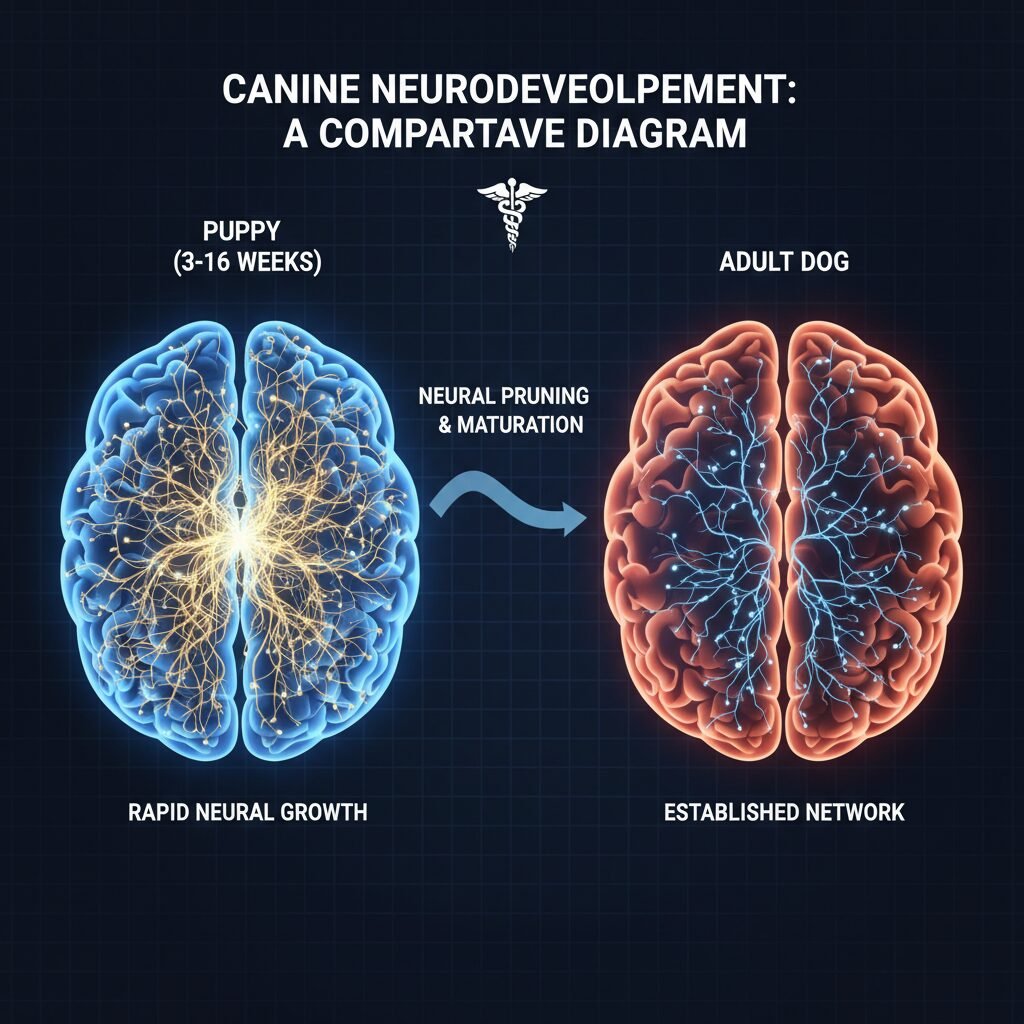
To appreciate the power of the “Rule of 7,” one must first understand the science governing a puppy’s early development. The critical socialization period, peaking from approximately 3 to 16 weeks, is a time of explosive neurological growth. The puppy’s brain is a sponge, forging neural pathways at an astonishing rate. Experiences during this time are not just fleeting memories; they are the architectural blueprints for future behavior.
During this window, the puppy’s natural curiosity typically outweighs its fear response. This biological programming encourages them to explore and learn about their environment—what is safe, what is normal, and what is friendly. An encounter with a person in a wheelchair, the sound of a vacuum cleaner, or the feeling of grass under their paws is cataloged as a normal part of life. After approximately 16 weeks, this window begins to close. The brain’s plasticity decreases, and the natural fear response becomes more pronounced. A novel stimulus that would have been met with curiosity at 12 weeks might be met with suspicion and fear at 6 months. This is not a matter of training failure, but of developmental biology. Socialization is not about obedience; it is about inoculation against future fear. By providing a rich tapestry of positive experiences during this critical period, you are fundamentally shaping your dog’s brain to perceive the world as a safe and predictable place.
Deconstructing the “Rule of 7”: A Guideline, Not a Mandate
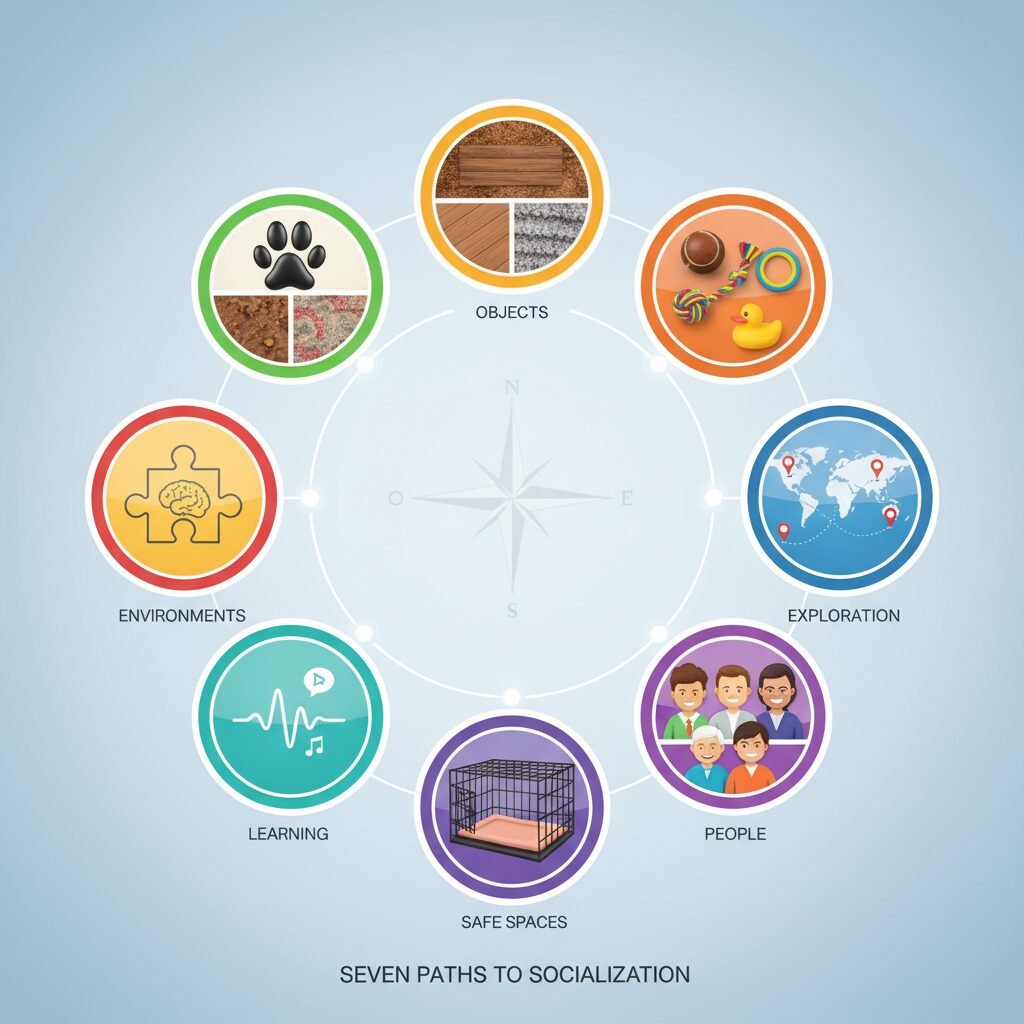
The “Rule of 7” is a mnemonic device, popularized by esteemed trainer Pat Miller, CPDT-KA, CDBC, to help new puppy owners remember the importance of varied environmental exposure. It is a target to aim for, not a rigid checklist to be completed at all costs. The core principle is variety and positivity. The original rule suggests that by the time a puppy is 7 weeks old (though this is often extended to 12-16 weeks for practicality), they should have been exposed to a variety of experiences. The goal is to create a well-rounded dog who does not startle at new things because novelty itself has become normal.
It is crucial to understand that these exposures must be curated and managed to be overwhelmingly positive. A single traumatic event can undo the benefits of dozens of positive ones. The puppy’s body language is your primary guide. A curious, forward-leaning posture with a loosely wagging tail indicates a positive experience. Conversely, a puppy showing ‘whale eye’ (the whites of their eyes visible), a tucked tail, pinned-back ears, or attempting to retreat is a clear signal to stop the interaction immediately and increase the distance from the trigger. The “Rule of 7” is a tool for building confidence, not for ‘toughening up’ a puppy through forced exposure, a dangerous and outdated practice known as flooding.
The 7 Categories of Experience: A Practical Application

Applying the “Rule of 7” requires a deliberate and thoughtful approach. Below is a detailed breakdown of each category, complete with safe and effective examples. Remember to introduce these new experiences for short durations and pair them with high-value treats or gentle praise to build positive associations.
Category 1: Experience 7 Different Surfaces
Tactile experiences are fundamental. A dog who has only known carpet may show fear or hesitation when faced with slick tile or wet grass. Exposing their paws to various textures builds proprioceptive awareness and confidence. Safe surfaces include: carpet, hardwood, tile, concrete, grass (in a private, parvo-safe yard), dirt, sand, and even a damp towel or a wobbly cushion to build balance.
Category 2: Play With 7 Different Types of Objects
Novel objects can be frightening to an unsocialized dog. Introduce a variety of items in a playful, non-threatening manner. Allow the puppy to investigate at their own pace. Examples include: cardboard boxes, plastic bottles (with caps and rings removed), metal bowls (for the sound), crinkly toys, large balls, fabric tunnels, and even safe household items like a wooden spoon. Never force interaction.
Category 3: Experience 7 Different Locations
The world is a vast place, and a well-socialized puppy should feel comfortable in various settings. While you must wait until their vaccination series is complete for high-traffic public areas, you can still provide variety. Safe locations include: a different room in the house, a secure backyard, a friend’s (fully vaccinated dog) home and yard, a ride in the car (secured in a crate or harness), the front porch to observe the world, and pet-friendly stores where they can be carried or sit in a cart.
Category 4: Meet 7 Different, Well-Behaved People
Socialization with humans is paramount. Your puppy should learn that people come in all shapes, sizes, and appearances. Ensure interactions are calm and allow the puppy to initiate contact. Introduce them to: a person wearing a hat, someone with a beard, a tall person, a child (under strict supervision), someone using a cane or walker, a person in a uniform, and someone of a different ethnicity.
Category 5: Overcome 7 Different Challenges
Building a dog’s problem-solving skills and resilience is a key part of socialization. These ‘challenges’ should be simple, confidence-building exercises. Examples include: stepping over a small obstacle like a broom handle on the floor, finding a treat hidden under a cup, navigating a simple ‘maze’ made of pillows, going up and down a single step, and walking through a doorway with a curtain or sheet hanging over it.
Category 6: Eat From 7 Different Containers
This helps prevent resource guarding and neophobia (fear of new things) around food. It also makes them more adaptable. Use their regular food in: their own stainless steel bowl, a ceramic bowl, a metal pie tin, a puzzle feeder, a Kong toy, a snuffle mat, and even scattered in a clean, empty cardboard box to encourage foraging.
Category 7: Be in 7 Different Places in the House
This simple step prevents the puppy from becoming overly attached to one specific spot, which can lead to separation anxiety or territorial behavior. Have them spend calm, supervised time in: a crate in the living room, a playpen in the kitchen, on a mat in the home office, gated in a puppy-proofed bathroom, in the laundry room (while the machine is off, then on), and so on. This teaches them to settle and be calm in various parts of their home environment.
The Cardinal Rule of Socialization: Quality Over Quantity

It cannot be overstated: the single most important aspect of socialization is the quality of the exposure. One profoundly negative experience can create a lasting phobia that requires extensive counter-conditioning to resolve. Your primary role as the puppy’s guardian is to be their advocate and protector, ensuring their experiences with the world are safe and positive.
This requires you to become a student of canine body language. A happy, confident puppy has a relaxed body, a soft mouth, and a gently wagging tail. A stressed or fearful puppy, however, will give subtle signals long before they growl or snap. Look for:
- Whale Eye: The whites of the eyes are clearly visible as the puppy looks away from the trigger.
- Lip Licking or Yawning: These are classic calming signals, indicating the puppy is feeling stressed.
- Pinned Ears: Ears held flat against the head are a sign of fear or anxiety.
- Tucked Tail: A tail tucked between the legs is a universal sign of fear.
- Freezing or Hypervigilance: A sudden stillness or frantic scanning of the environment indicates the puppy is overwhelmed.
If you observe any of these signs, you must immediately and calmly increase the distance between your puppy and the trigger. Do not coddle them, but do not force them to ‘face their fears.’ Simply create space until their body language returns to neutral. Then, you can re-approach from a greater distance, pairing the sight of the trigger with high-value treats to begin building a positive association. This is the foundation of effective, humane socialization.
Common Socialization Pitfalls and How to Avoid Them
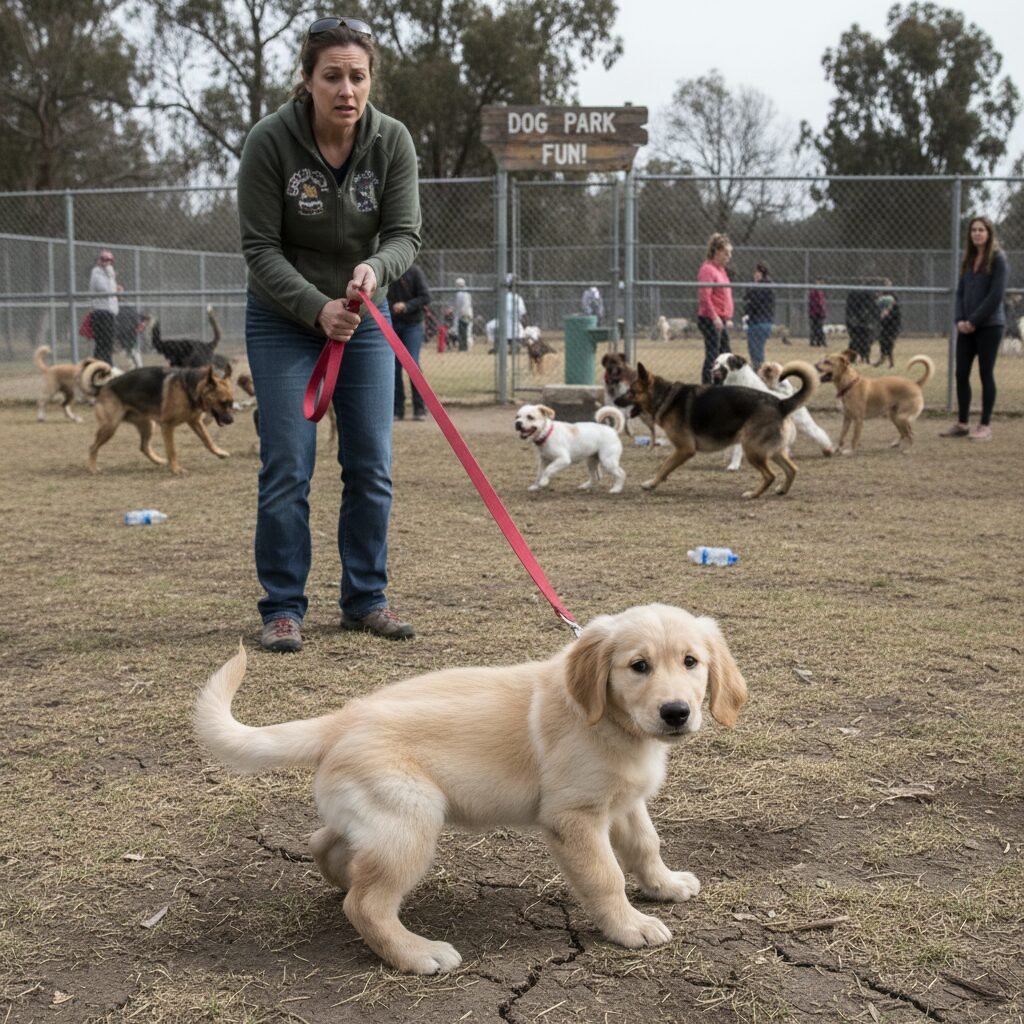
Even with the best intentions, owners can make critical errors during the socialization process. Awareness of these common mistakes is the first step toward avoiding them and ensuring a successful outcome.
| Mistake | Correction & Rationale |
|---|---|
| Overwhelming the Puppy (Flooding) | Avoid chaotic, high-intensity environments like crowded festivals or busy dog parks. Instead, opt for short, controlled exposures. The goal is positive association, not endurance. Flooding creates fear, it does not cure it. |
| Forcing Interactions | Never hold your puppy while a stranger pets them if the puppy is trying to get away. Always allow your puppy an escape route and the choice to engage or not. This builds trust and agency. |
| Misinterpreting Fear as Stubbornness | A puppy that freezes or refuses to walk forward is not being ‘bad.’ They are communicating fear or uncertainty. Identify the trigger and create distance. Forcing them forward will only validate their fear. |
| Relying Solely on Dog Parks | Dog parks are often uncontrolled environments with poorly socialized adult dogs. A negative encounter can be severely damaging. Socialization should focus far more on neutral exposure to dogs from a distance and one-on-one playdates with known, stable, vaccinated adult dogs. |
| Neglecting Sound Desensitization | Many future noise phobias (thunder, fireworks) can be mitigated with early, gentle exposure. Play recordings of these sounds at a very low volume while the puppy eats or plays, gradually increasing the volume over many days and weeks. |
| Stopping After 16 Weeks | While the critical window closes, socialization is a lifelong process. Continue to provide new and varied experiences throughout your dog’s life to maintain their social skills and confidence. |
Beyond the Rule: Lifelong Social Maintenance

The end of the primary socialization window around 16 weeks does not signal the end of socialization efforts. It signals a shift from inoculation to maintenance. A dog that was well-socialized as a puppy can still develop behavioral issues if their world shrinks and their experiences become monotonous. Lifelong social maintenance is essential for preserving the foundation you have so carefully built.
This involves continuing to expose your dog to novel situations in a positive way. Continue visiting new places, such as different hiking trails or pet-friendly patios. Periodically arrange controlled interactions with well-behaved dogs and people. Enroll in advanced training classes like rally, agility, or nose work; these activities not only provide physical and mental stimulation but also continuously expose your dog to new environments, people, and dogs in a structured setting. Regular car rides, walks through different neighborhoods, and encounters with new sights and sounds reinforce the puppyhood lesson that novelty is not something to be feared. This ongoing process ensures your dog remains a confident, adaptable, and well-adjusted member of society for their entire life.
Conclusion
The “Rule of 7” is more than a checklist; it is a philosophy of proactive, responsible puppy ownership. It provides a tangible framework for navigating the most formative period of your dog’s life. By thoughtfully exposing your puppy to a rich and varied world of surfaces, objects, locations, people, and challenges, you are doing far more than teaching manners. You are building a resilient brain, forging a confident temperament, and giving your dog the invaluable gift of fearlessness. Remember to prioritize the quality of each experience, learn to read your puppy’s subtle cues, and act as their trusted advocate. The work you invest during these crucial early weeks will pay dividends for a lifetime, resulting in a stable, happy, and well-adjusted companion capable of navigating the human world with confidence and grace.