The $0 DIY Enrichment Game That Tires High-Energy Dogs Out Fast
Owners of high-energy dogs understand a unique form of exhaustion. You can walk for miles, play fetch until your arm aches, and still be met with a dog who is bouncing off the walls, ready for the next adventure. This relentless energy often leads to frustration for the owner and destructive behaviors in the dog, such as chewing, barking, or digging. The common assumption is that more physical exercise is the only answer, but this is a fundamental misunderstanding of canine needs.
Many of today’s most popular breeds—from Australian Shepherds to German Shorthaired Pointers—were developed for complex jobs requiring intense cognitive effort, not just physical stamina. When we fail to provide an outlet for this mental energy, we leave them feeling unfulfilled and bored. The solution is not always a longer run, but a smarter way to play. This guide will introduce you to a powerful, cost-free enrichment game that targets your dog’s brain, providing the cognitive workout they crave. Prepare to see your high-energy companion transformed into a calm, satisfied, and truly tired dog, all with an item you already have in your kitchen.
Understanding Canine Fatigue: Why Mental Exercise is More Tiring Than Physical
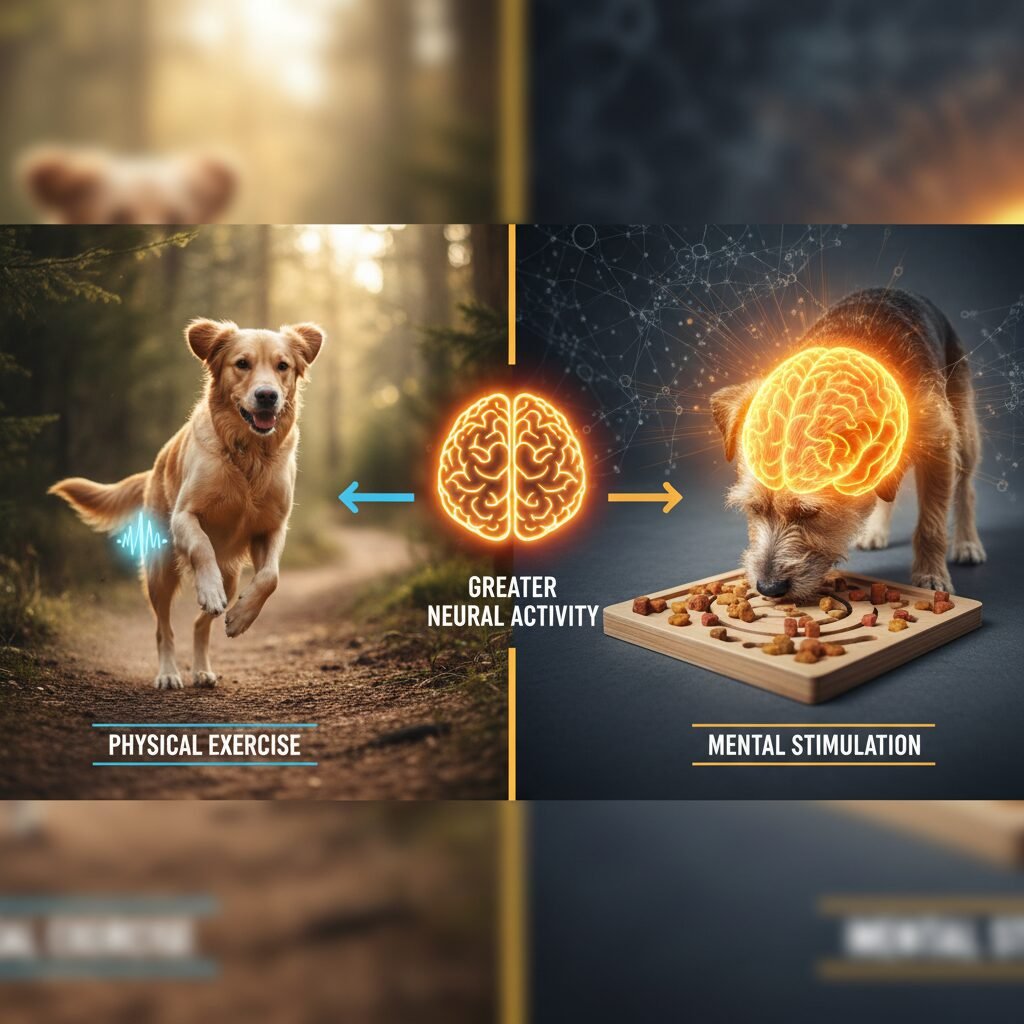
To effectively manage a high-energy dog, we must first differentiate between physical fatigue and mental fatigue. Physical exercise strengthens the body, building cardiovascular health and muscle. While essential, it also increases stamina. The more you run your dog, the better they become at running for longer distances. This creates a cycle where you must constantly escalate the physical activity to achieve the same level of tiredness.
Mental exercise, however, operates differently. Activities that involve problem-solving, scent detection, and learning new skills engage the dog’s brain in a demanding way. A dog’s primary sense for interpreting the world is their nose. Their olfactory system is thousands of times more powerful than our own, and the portion of their brain dedicated to processing scent is proportionately massive. When a dog is actively using their nose to search and discriminate between scents, they are performing a complex neurological task. This cognitive load is profoundly fatiguing. Think of it as the difference between a person jogging on a treadmill versus taking a three-hour advanced calculus exam. Both are tiring, but the exam leaves you mentally drained in a way the jog does not.
This principle is rooted in a concept known as contrafreeloading. Studies show that most animals, including dogs, prefer to work for their food rather than receive it for free. This innate drive to solve problems and achieve a goal is a core part of their behavioral needs. By providing structured enrichment games, we are not just tiring them out; we are fulfilling a deep-seated psychological requirement, leading to a more balanced and contented animal.
The Ultimate $0 Enrichment Game: Muffin Tin Mania
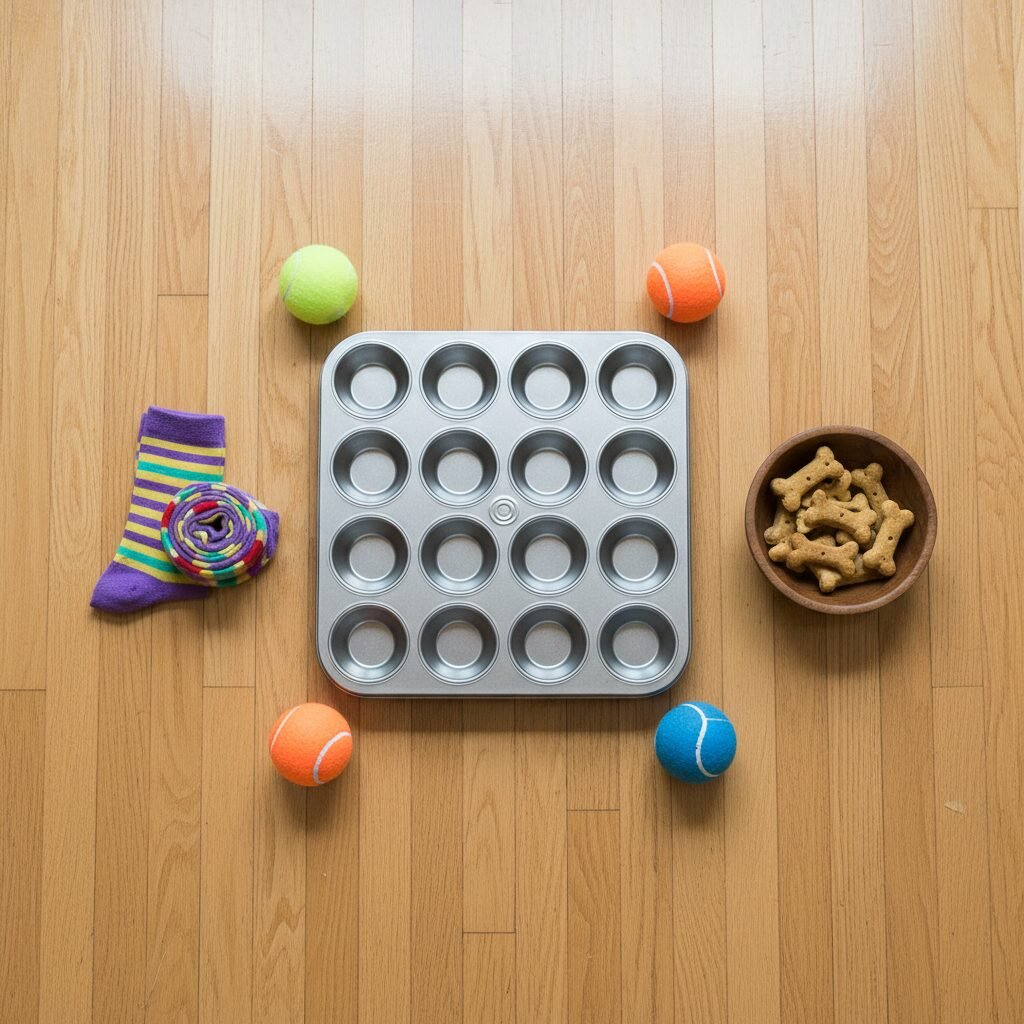
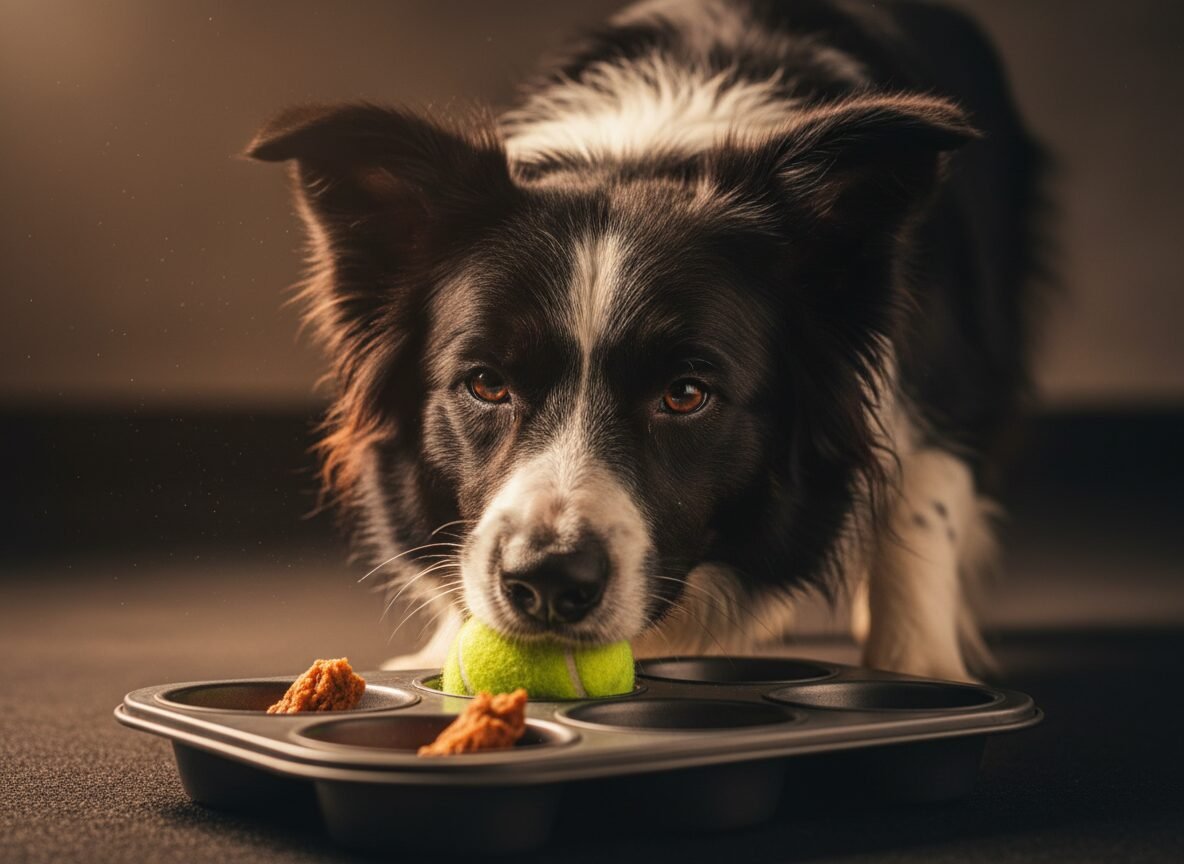
The most effective enrichment tools are often the simplest. You do not need expensive, electronically complex puzzles to challenge your dog’s mind. The “Muffin Tin Mania” game leverages the power of scent work and problem-solving using only common household items. It is infinitely scalable, allowing you to adjust the difficulty to match your dog’s skill level, from a complete novice to a seasoned canine genius.
Required Materials:
The beauty of this game is its accessibility. All you need is the following:
- A Standard Muffin Tin: A 6 or 12-cup metal or silicone muffin tin works perfectly. For powerful chewers, a sturdy metal tin is recommended to prevent destruction.
- High-Value Treats or Kibble: Use small, aromatic treats that your dog loves. The smellier, the better, as this will engage their olfactory senses more effectively. You can also use a portion of your dog’s daily kibble allotment to make mealtime an enriching activity.
- Obstacles: This is where you can get creative. The goal is to find objects that can cover the muffin tin cups and are safe for your dog to interact with. Good options include:
- Tennis balls or other similarly sized dog-safe balls
- Balled-up socks
- Small, durable toys (e.g., KONGs, rubber blocks)
- Scrunched-up pieces of fabric or old t-shirts
Always ensure the obstacles you choose are large enough that your dog cannot swallow them. Supervision during this game is mandatory to ensure safety.
How to Play: A Step-by-Step Protocol
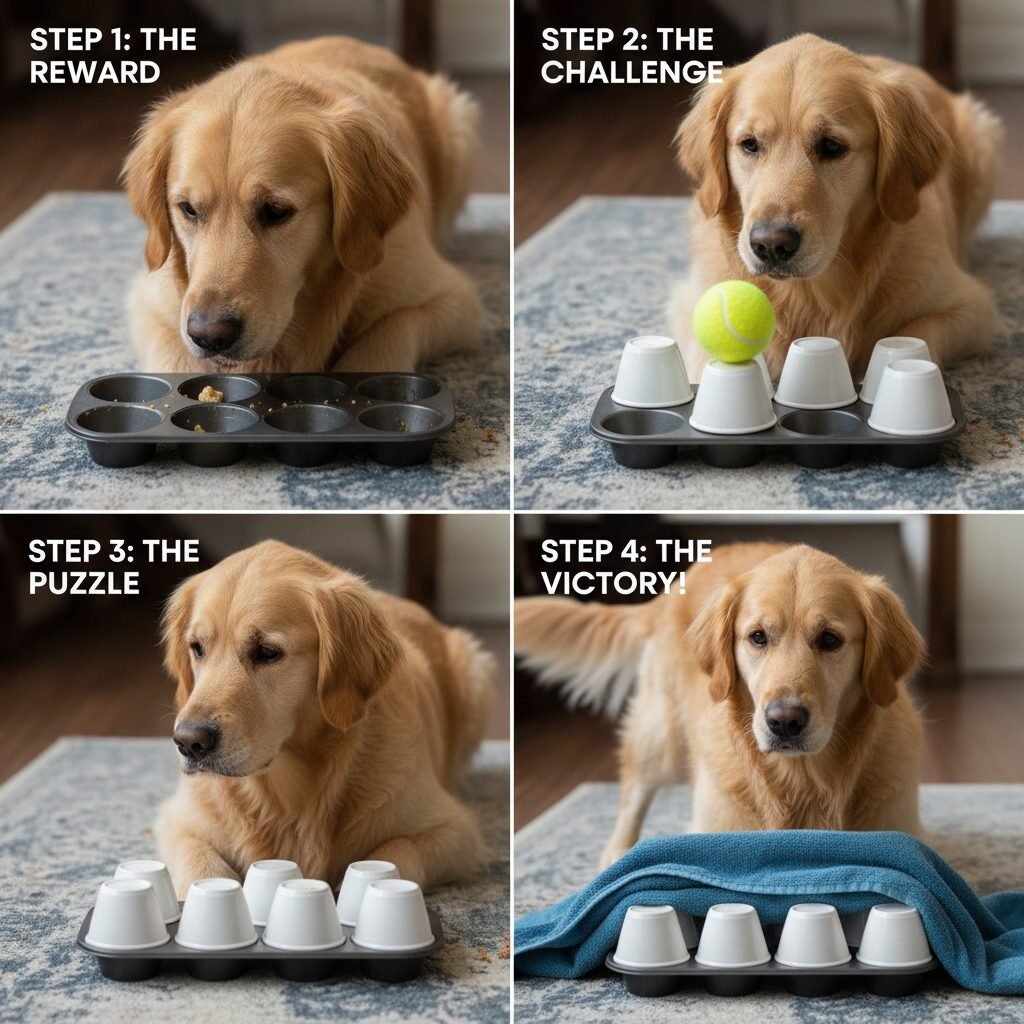
Introducing this game correctly is crucial for building your dog’s confidence and preventing frustration. Follow this progressive protocol, only moving to the next level when your dog is consistently and enthusiastically succeeding at the current one. Each session should be short and positive, lasting no more than 5-10 minutes.
-
Step 1: Foundation and Scent Introduction (Level 1)
The initial goal is to teach your dog that the muffin tin is a wonderful object that dispenses food. Place the empty tin on the floor and let your dog sniff it. While they watch, drop a single treat into each cup. Do not cover the cups. Give your dog a release cue like “Okay!” or “Find it!” and allow them to eat the treats freely. Their only task is to move from cup to cup. This builds a powerful positive association and teaches them the basic mechanics of the game. Repeat this 2-3 times before ending the session on a high note.
-
Step 2: Introducing a Simple Obstacle (Level 2)
Once your dog confidently approaches the tin, it’s time to introduce a minor challenge. Place treats in three or four of the cups, letting your dog watch you. Then, while they are still watching, cover one of the baited cups with a tennis ball. Leave the other baited cups open. Release your dog to play. They will likely eat the free treats first. When they get to the covered cup, they will have to problem-solve. They might nudge the ball with their nose or paw at it. The moment they successfully move the ball and get the treat, offer enthusiastic verbal praise. This reinforces their problem-solving effort.
-
Step 3: Scaling the Cognitive Challenge (Level 3)
When your dog can reliably move a single obstacle without hesitation, you can increase the difficulty. Place treats in half of the muffin cups. Cover all the baited cups with your chosen obstacles (e.g., tennis balls). Now, the dog must not only displace the objects but also use their nose to remember or determine which cups contain the reward. This requires more focus and methodical work. Some dogs will clear all the balls systematically, while others will use their nose to check each one before moving it. Both are correct expressions of problem-solving.
-
Step 4: Expert Level and Variations (Level 4)
For the dog that has mastered the previous levels, you can introduce more complex variations to keep the game challenging. Mix and match different obstacles in the same game—some cups covered with balls, others with balled-up socks, which require a different motor pattern to remove. The ultimate challenge is to cover the entire muffin tin with a towel or a small blanket after baiting and covering the cups. Now, the dog cannot see the obstacles at all. They must rely entirely on their sense of smell to locate the treats through the fabric, then manipulate the towel to uncover the game, and finally solve the puzzle underneath. This multi-layered problem provides an immense cognitive workout for even the most brilliant dogs.
Protocol for Success: Troubleshooting & Best Practices

To ensure the Muffin Tin Mania game remains a positive and safe experience, adhere to these best practices. Proper implementation is key to unlocking its full potential as an enrichment tool.
- Manage Frustration: If your dog becomes frustrated—perhaps by whining, barking at the tin, or walking away—you have likely increased the difficulty too quickly. Frustration inhibits learning. Immediately end the session on a positive note by making it easier (e.g., uncovering a cup for them) and revert to the previous, mastered level in your next session.
- Prevent Chewing: This is a puzzle, not a chew toy. Supervise your dog at all times. If they begin to bite or chew the tin or the obstacles, calmly interrupt them with a cue like “Uh-uh” and briefly remove the game. Re-present it after a few seconds. This teaches them that interacting with their mouth is only for the treats, not the equipment. If chewing persists, use a more durable metal tin and harder rubber balls.
- Session Duration and Frequency: Keep sessions short. For most dogs, 5-15 minutes of this intense mental work is equivalent to a much longer period of physical activity. It is better to have one short, successful session per day than one long, frustrating one. You will know the session was effective when your dog chooses to settle down for a nap shortly after playing.
- Use High-Value Rewards: The motivation to solve the puzzle comes from the reward. Especially when starting, use treats that are more enticing than their regular food. Small, soft, and smelly treats work best as they provide a strong scent to target and are quick to eat, keeping the game’s momentum going.
- The Owner’s Role is a Coach: Your job is to set up the game for success and offer quiet encouragement. Avoid excessive coaching or pointing. Let your dog work through the problem independently. The confidence they build by solving it themselves is a significant part of the enrichment.
A well-structured enrichment plan doesn’t just manage energy; it builds a dog’s confidence, reduces anxiety, and strengthens the human-animal bond through positive, shared experiences. – Dr. Anya Sharma, DVM, DACVB
Expanding Your Enrichment Toolkit: More No-Cost Games
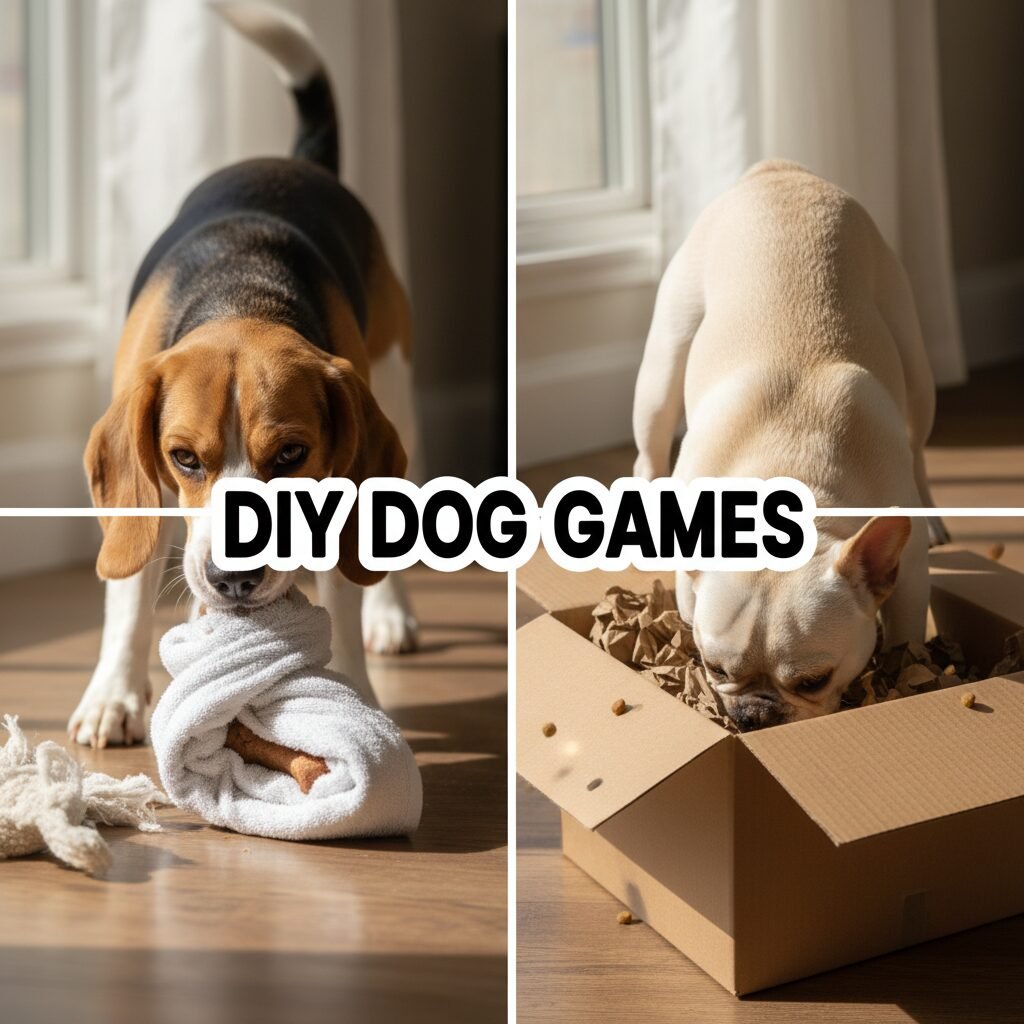
Muffin Tin Mania is a fantastic starting point, but the principles of DIY enrichment can be applied in many ways. Once your dog understands the concept of working for food, you can rotate through various games to keep things interesting. All of these can be created with items you already have at home, costing you nothing but a few minutes of your time.
- The Towel Burrito: Lay a towel flat on the floor. Sprinkle treats or kibble across it. Roll the towel up tightly into a “burrito.” For an extra challenge, you can tie the rolled-up towel into a loose knot. Present it to your dog and let them use their nose and paws to unroll it and find the food.
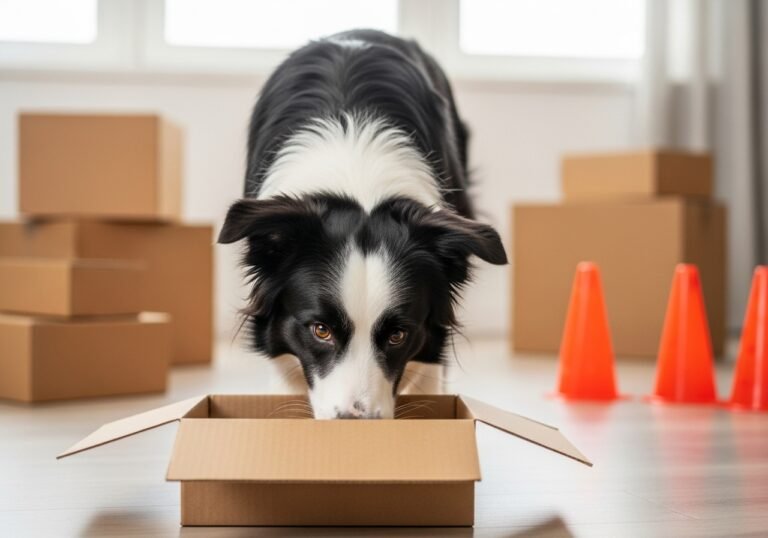
- The Box of Wonders: Take a cardboard box and fill it with dog-safe materials like packing paper, old t-shirts, or empty toilet paper rolls. Scatter your dog’s meal or some treats amongst the items. This encourages them to forage, a natural canine behavior, as they dig through the materials to find their reward. Always remove any tape or staples from the box.
- The “Find It” Game: This is a classic nose work game that requires no equipment other than treats. Start by having your dog in a “stay.” Place a treat on the floor in plain sight a few feet away and give your release cue, “Find it!” When they eat it, praise them. Gradually increase the difficulty by hiding the treats in more obscure places—behind a chair leg, under the edge of a rug, or on a low shelf. This game directly taps into their powerful hunting instincts.
- The Shell Game: Use three opaque plastic cups. While your dog watches, place a treat under one cup. Shuffle the cups around slowly. Encourage your dog to indicate which cup hides the treat. When they touch the correct one with their nose or paw, lift it and let them have their reward. This game specifically challenges their memory and focus.
Conclusion
Meeting the needs of a high-energy dog goes far beyond managing their physical exercise. True fulfillment for these intelligent animals lies in challenging their minds and satisfying their innate desire to work and solve problems. The Muffin Tin Mania game is more than just a clever trick; it is a direct and effective application of behavioral science that addresses the root cause of many unwanted behaviors—cognitive boredom. By investing just a few minutes each day in this type of structured, mental enrichment, you provide a powerful outlet for your dog’s intellect.
You will likely notice the benefits extend far beyond a tired-out pet. Dogs who receive regular mental stimulation are often calmer, more focused, less prone to anxiety and destruction, and more responsive to training. Enrichment builds confidence and strengthens the bond you share. You don’t need an arsenal of expensive toys to have a happy, well-behaved dog. You simply need to understand their needs and provide a meaningful outlet for their incredible minds. Start with the muffin tin, and watch your brilliant companion thrive.