
The 2-Week Shutdown: Why Every Rescue Dog Needs This Reset Period

The moment you bring a new rescue dog home is filled with emotion—excitement, joy, and an overwhelming sense of love. Your first instinct is to shower them with affection, introduce them to friends, explore the neighborhood, and visit the local dog park. While these intentions are born from a place of kindness, they are precisely the opposite of what your new companion needs. For a dog that has experienced the upheaval of a shelter, a transport, and a completely new environment, this flurry of activity is not a warm welcome; it is a terrifying sensory overload.
This is where the 2-Week Shutdown comes in. It is a critical, non-negotiable decompression period designed to help your new dog slowly and safely acclimate to their new life. It is not about deprivation or punishment; it is a profound act of empathy. By intentionally limiting stimulation and pressure for fourteen days, you provide the mental and emotional space your dog requires to let their true personality emerge. This period is your first and most important investment in building a foundation of trust, security, and a healthy bond that will last a lifetime. Skipping this step is often the root cause of behavior problems that surface weeks or months down the line. This guide will provide the expert framework you need to execute this protocol successfully.
The Psychology of a Rescue Dog: Understanding Decompression

To understand the necessity of the shutdown, you must first understand the internal state of a newly rescued dog. Regardless of their history, the transition from a shelter or previous home into yours is profoundly stressful. Their world has been turned upside down multiple times. This experience floods their system with cortisol, the primary stress hormone. Chronically elevated cortisol levels lead to a state of hypersensitivity, anxiety, and reactivity. The dog is operating in a constant state of ‘fight or flight.’
Think of it as ‘trigger stacking.’ Each new experience—a new person, a new sound, a new smell, a car ride—is another block stacked on an already unstable tower. Eventually, the tower will collapse. This collapse can manifest as aggression, reactivity, extreme fear, or a complete shutdown where the dog becomes unresponsive. The 2-Week Shutdown is designed to methodically remove those blocks, allowing cortisol levels to return to a baseline. It gives the dog’s nervous system a chance to reset.
During this time, the dog is not learning complex commands. They are learning one fundamental lesson: this place is safe, these people are predictable, and I can finally relax. They are observing you, your routines, and the rhythm of the household from a safe distance, without the pressure to perform or interact. This period of observation is crucial for them to begin to understand their new world and feel secure within it.
What is the 2-Week Shutdown? The Core Principles
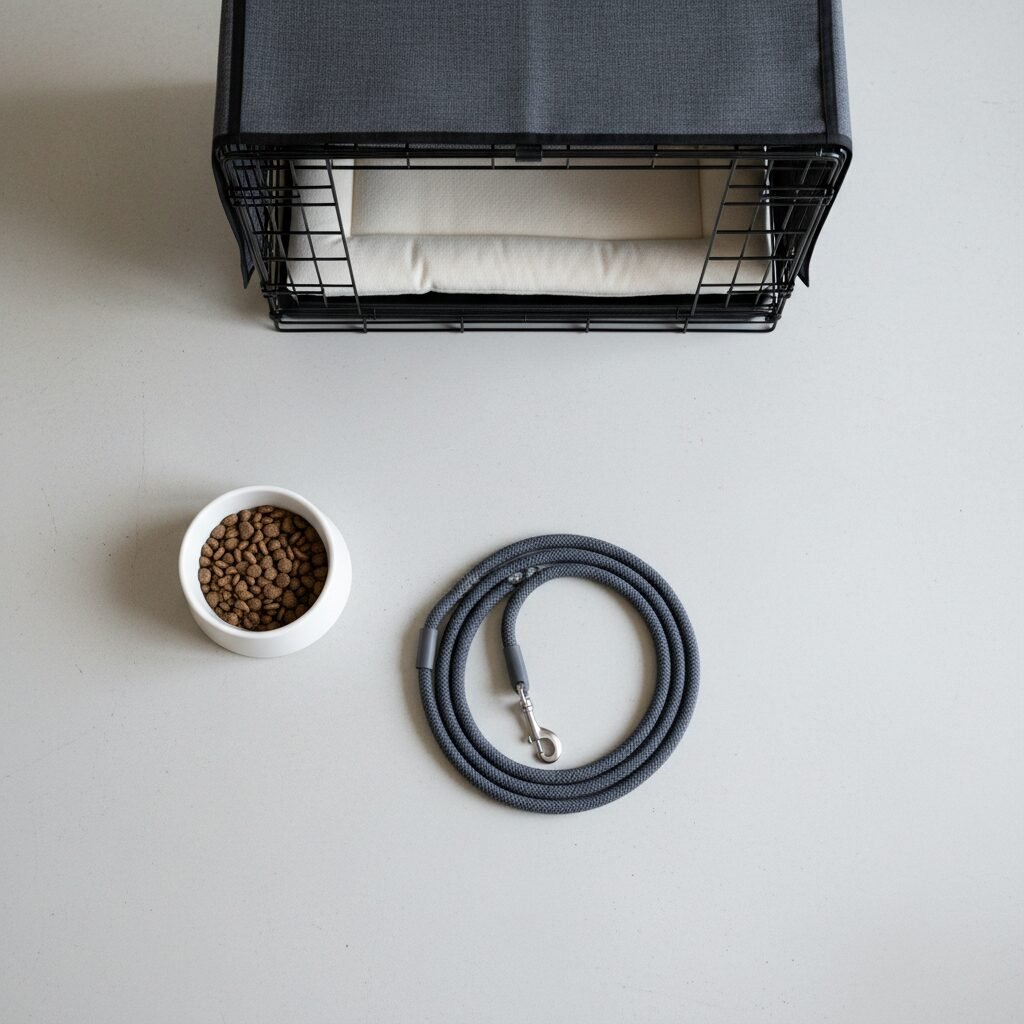
The 2-Week Shutdown is a management protocol, not a training plan. Its primary goal is to minimize stress by creating a highly predictable and controlled environment. The rules are simple but must be followed with absolute consistency by every member of the household. The core principles are built around limiting exposure and managing expectations.
- Limited Space: The dog should not have free-roam access to the entire house. Use crates, exercise pens, and baby gates to create a small, safe, and easily managed ‘decompression zone.’ This is typically in a quiet area of the home.
- No Visitors: Do not invite friends or family over to meet the new dog. Your dog needs to bond with and learn to trust the immediate household members first.
- No Outings (Except for Potty): Avoid trips to pet stores, dog parks, breweries, or even long, meandering walks through busy neighborhoods. All outings should be brief and functional.
- Structured Routine: Potty breaks, feeding times, and crate time should happen at the same time every day. Predictability creates security.
- Minimal Interaction: This is often the hardest rule for new owners. Avoid forced affection, cuddling, or intense play. Let the dog initiate contact. All interactions should be calm and brief.
- Focus on Calmness: The goal is to teach the dog how to be calm in their new environment. Reward calm behavior—lying down, resting, or chewing on a toy—with quiet praise or by simply leaving them be.
Adhering to this structure prevents the dog from making mistakes and practicing unwanted behaviors born from fear and anxiety. It is the ultimate preventative measure.
The Critical ‘Don’ts’ of the First Two Weeks

To successfully implement the shutdown, knowing what not to do is as important as knowing what to do. The following activities are strictly off-limits for the first 14 days. Violating these boundaries can set your dog back significantly and undermine the entire process.
- Do NOT visit the dog park. This is an unpredictable, high-arousal environment that is incredibly overwhelming for a new dog. It is a common source of negative experiences that can lead to lifelong reactivity.
- Do NOT introduce your new dog to friends, family, or neighbors. Your dog needs to bond with you first. Too many new people can cause immense stress and confusion.
- Do NOT take your dog to pet-friendly stores or patios. These places are a sensory overload of sights, sounds, and smells that a decompressing dog cannot handle.
- Do NOT force interaction. Do not loom over the dog, force them to cuddle, or pick them up. Let the dog choose when and how to interact. Consent is key.
- Do NOT introduce them to resident pets without extreme caution and management. Ideally, resident pets should be kept completely separate for the first few days, then introduced slowly through crates and gates. Never leave them unattended together during this period.
- Do NOT begin formal obedience training. The dog’s brain is not in a state to learn complex cues like ‘stay’ or ‘heel.’ The focus should be solely on acclimation and routine.
- Do NOT let them have free reign of the house or yard. This prevents accidents and keeps them from becoming overwhelmed. A leash should be kept on the dog, even indoors, for management.
The Shutdown Protocol: A Phased Approach
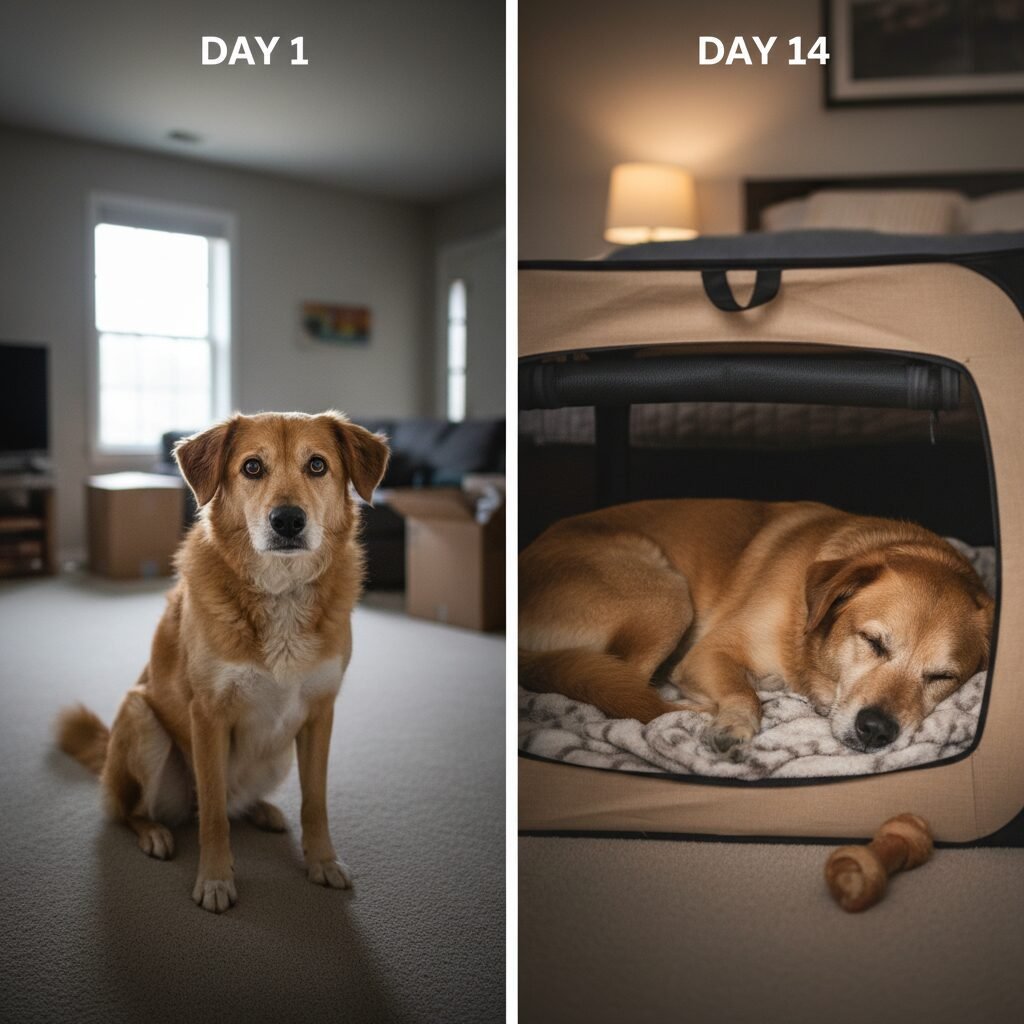
This protocol is not static; it evolves as the dog begins to settle. Breaking it down into phases makes it more manageable and allows you to adjust based on the individual dog’s progress. Remember to always use a secure harness and a standard 6-foot leash for any time outside the home.
Phase 1: The First 72 Hours (Days 1-3) – Total Decompression
The first three days are the most critical. The goal is zero pressure. Your dog has just left a chaotic shelter environment; your home should be a sanctuary.
- Arrival: Before bringing the dog inside, take them for a brief potty walk in the designated spot in your yard. Keep it short and calm.
- Decompression Zone: Lead the dog directly to their designated safe space—a crate in a quiet room is ideal. The crate should be equipped with a comfortable bed and a safe chew toy. Leave the crate door open if you are in the room, but ensure the room itself is closed off.
- Potty Breaks: Take the dog out on a leash to the same potty spot every 2-3 hours. Do not talk to them or play. Be boring. When they eliminate, give quiet, calm praise (‘good potty’) and immediately return inside.
- Feeding: Feed all meals inside the crate to build a positive association. Place the bowl down and walk away. Give them space to eat in peace.
- Interaction: Absolutely minimal. Do not seek the dog out. You can sit quietly in the same room and read a book, allowing the dog to observe you from a distance. If they approach you, you can offer a gentle, brief scratch on the chest, then stop.
Phase 2: Building Routine (Days 4-10) – Gentle Structure
By this point, your dog should be learning the basic household routine. You can now begin to introduce very gentle, structured activities.
- Leash Walks: Begin short, 10-15 minute walks. The goal is not exercise but ‘sniffaris.’ Walk the same quiet route every time. Let the dog sniff as much as they want; this is how they process information and de-stress. Avoid any interaction with other people or dogs. If you see another dog, calmly turn and walk the other way.
- Indoor Management: The dog can spend time out of the crate while supervised, but they should remain in their designated room or area, managed with a baby gate. Keep a leash trailing (handle cut off to prevent snagging) for easy management.
- Enrichment: Introduce simple food puzzles or a frozen Kong in their crate. This provides mental stimulation without social pressure.
- Bonding: You can begin very short, positive interactions. Sit on the floor and toss high-value treats away from you. This teaches the dog that good things happen when you are near, without the pressure of direct contact.
Phase 3: Gentle Introduction (Days 11-14) – Expanding the World
If your dog is showing signs of relaxation (loose body, eating well, sleeping soundly), you can begin to slowly expand their world.
- Exploring the House: Allow the dog to explore one other room of the house on leash with you for a few minutes at a time. Keep it brief and positive.
- Yard Time: If you have a securely fenced yard, you can allow them to explore it on a long line. Stay with them and keep the sessions short.
- Basic Focus: You can start rewarding the dog with a treat for simple eye contact or for responding to their name inside the house. Keep sessions under 2 minutes. This is not formal training; it is relationship building.
- Continued Management: Do not abandon the structure yet. The dog should still be crated or in their safe zone when unsupervised. The core principles of avoiding visitors and overwhelming outings still apply.
Reading Your Dog’s Body Language: The Key to Success

Success during the shutdown depends entirely on your ability to accurately interpret your dog’s communication. Dogs speak with their bodies, and their signals are often subtle. Ignoring or misinterpreting these signs of stress can lead you to push the dog too far, too fast. During this period, become a student of canine body language. Watch for these common stress signals, often called ‘calming signals’:
- Yawning: A yawn outside of the context of being tired is a classic sign of stress or anxiety.
- Lip Licking or Nose Licking: Quick flicks of the tongue are used by dogs to appease a perceived threat or to self-soothe when they feel uncomfortable.
- Whale Eye: This is when the dog turns its head away but keeps its eyes on the perceived threat, showing the whites of its eyes in a half-moon shape. It is a clear indicator of high anxiety.
- Pinned Ears: Ears that are pulled back flat against the head signal fear or worry.
- Tense Body and Face: A stiff, rigid posture, closed mouth, and furrowed brow indicate the dog is on high alert and not relaxed.
- Shaking Off: A full-body shake when not wet can be a way for a dog to literally ‘shake off’ a stressful encounter.
Recognizing these signs allows you to intervene before your dog becomes overwhelmed. If you see them, it’s a cue to increase distance from the trigger, remove the dog from the situation, or simply give them more space.
| Body Language Cue | Relaxed Dog | Stressed Dog |
|---|---|---|
| Eyes | Soft, almond-shaped, relaxed gaze | Hard stare or ‘whale eye’ (whites showing) |
| Ears | Neutral, relaxed position for the breed | Pinned back flat against the head or hyper-alert |
| Mouth | Softly closed or slightly open, panting gently | Tightly closed, lips pulled back, excessive panting or drooling |
| Body Posture | Loose, fluid, wiggly movements | Stiff, rigid, lowered, or cowering |
| Tail | Neutral position or wagging in a wide, sweeping motion | Tucked between legs or held high and stiff with a rapid, short wag |
Common Questions and Misconceptions

Is the 2-Week Shutdown cruel or boring for the dog?
This is a common concern from caring owners. It’s crucial to reframe your perspective. For a dog whose life has been chaotic and terrifying, ‘boring’ is a gift. It is safety. It is peace. The predictability and lack of social pressure are not cruel; they are therapeutic. You are giving their mind and body a chance to heal from the trauma of displacement.
My dog seems really confident and happy. Do I still need to do the shutdown?
Yes. Absolutely. Many dogs enter a ‘honeymoon period’ where they seem perfectly fine. This is often a facade. The dog is on its ‘best behavior,’ trying to figure out the rules and avoid conflict in a new and uncertain environment. The true personality and any underlying behavioral issues often don’t surface for several weeks or even months. The shutdown is a proactive measure to prevent these issues from developing by establishing a solid foundation of security before the dog’s adrenaline-fueled bravado wears off.
What if I have other pets in the home?
The shutdown is even more critical in a multi-pet household. The ‘crate and rotate’ method is essential. This means the new dog and resident pets are never in the same space at the same time for at least the first week. They can be exposed to each other’s scent by swapping bedding. Introductions should happen slowly, through baby gates, with both animals on leash, for very short, positive sessions. Never leave a new dog and a resident dog unattended, even for a moment, during the first few weeks.
What comes after the two weeks?
After 14 days, you do not simply end the protocol and flood the dog with experiences. You begin to slowly and methodically introduce new things, one at a time. Take a new walking route. Visit a quiet park during an off-peak time. Have one calm friend come over for a short visit where they ignore the dog. Watch your dog’s body language closely. If they show signs of stress, you have moved too fast. Take a step back. The end of the shutdown marks the beginning of a gradual, lifelong process of learning about your dog and supporting them through new experiences.
Conclusion
The 2-Week Shutdown is the single most impactful action you can take to ensure a successful future with your rescue dog. It requires patience, discipline, and a willingness to put your dog’s emotional needs ahead of your own excitement. It may feel counterintuitive to limit interaction when all you want to do is bond, but this period of structured calm is the deepest form of communication. You are telling your dog, in a language they can understand, that they have finally landed in a safe, predictable place where they can let go of the fear and anxiety they have been carrying.
By investing these fourteen days, you are not just preventing problems like separation anxiety, reactivity, and fear-based aggression; you are actively building a resilient, confident companion. You are establishing a line of communication based on trust and respect. This short-term commitment pays a lifetime of dividends in the form of a stable, well-adjusted dog and a truly unbreakable bond.