The Neighbor Feud: Ending Fence Fighting Once and for All
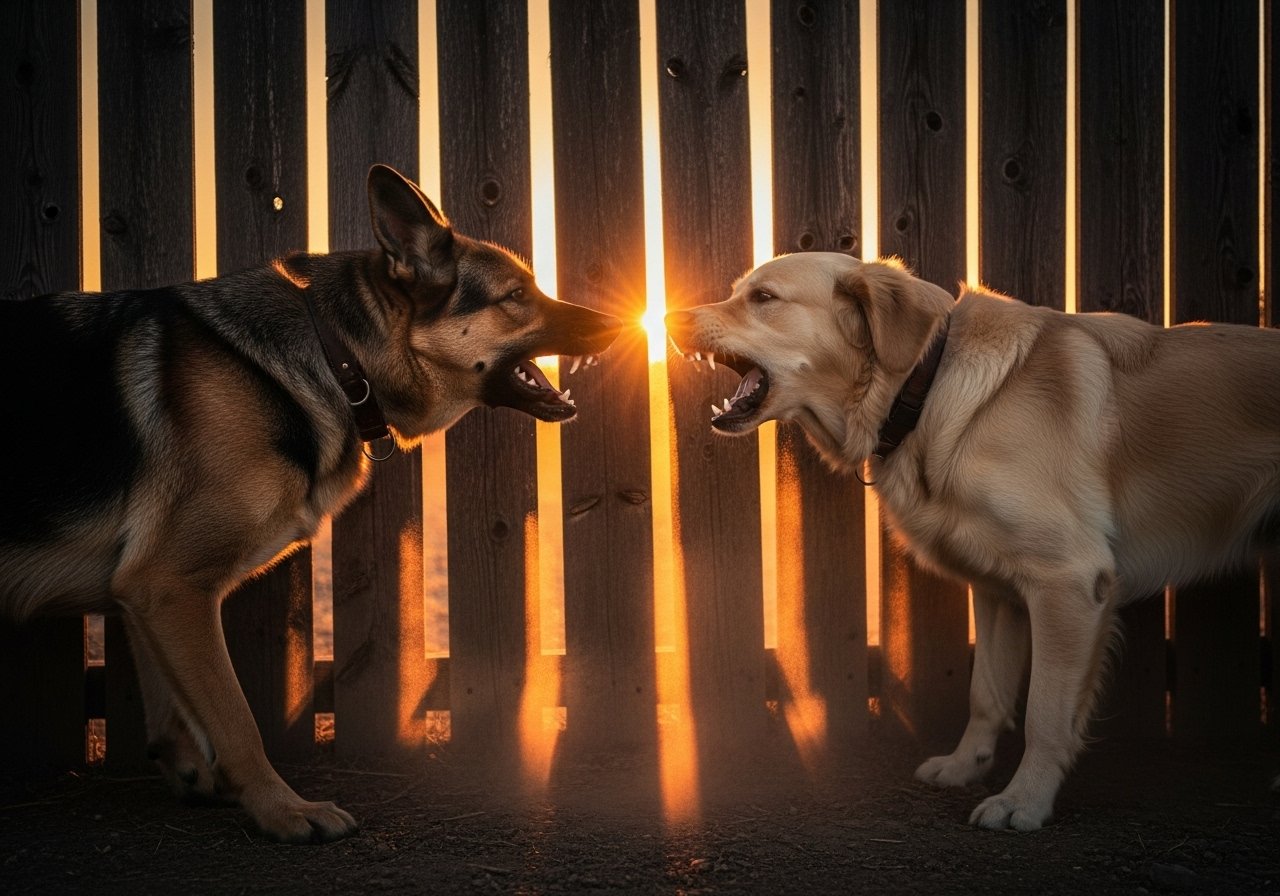
The daily ritual of letting your dog into the yard should be a moment of peace, not a prelude to a neighborhood war. Yet for many owners, the sound of the back door opening is immediately followed by a cacophony of barking, snarling, and frantic pacing along the property line. This behavior, known as fence fighting or barrier frustration, is more than just a nuisance. It’s a significant source of stress for you, your dog, and your neighbors, and it can escalate into dangerous redirected aggression. Understanding this complex behavior is the first critical step toward restoring tranquility to your backyard and your community. This guide will provide a professional, in-depth framework for addressing the root causes of fence fighting and implementing a systematic training plan to achieve lasting peace.
Understanding the Psychology Behind Fence Fighting

Before we can modify a behavior, we must first understand its origins. Fence fighting is not simply ‘bad’ behavior; it is a complex emotional response driven by a variety of powerful instincts and psychological states. Identifying the primary motivator for your dog’s fence reactivity is crucial for selecting the most effective intervention strategy.
Territorial Aggression
At its core, many dogs are hardwired to protect their territory. The yard is their domain, and the presence of another dog (or person) on the other side of the fence is perceived as a direct intrusion. The fence, while a physical barrier, acts as an amplifier. It prevents a natural canine greeting ritual, which involves circling and scent investigation. This inability to properly assess the ‘threat’ builds frustration and anxiety, which explodes into aggressive displays. The neighbor’s dog retreating is seen as a victory, reinforcing the belief that barking and lunging successfully defended the territory.
Barrier Frustration and Reactivity
Not all fence fighting stems from pure aggression. For some dogs, especially those who are social but easily aroused, the fence creates intense frustration. They may desperately want to play with or greet the other dog, but the barrier prevents it. This frustration boils over into a frenzy of barking and lunging that can look identical to territorial aggression. This is common in adolescent dogs or breeds with high energy levels who lack sufficient outlets for their social and physical needs.
Redirected Excitement or Aggression
This is one of the most dangerous aspects of fence fighting. When a dog is in a high state of arousal and cannot reach the target of its frustration (the neighbor’s dog), it may redirect that intense energy onto the nearest available target. This could be another dog in the same yard, a nearby child, or even the owner trying to intervene. The owner grabbing the collar in the heat of the moment can trigger a severe, unintentional bite.
Lack of Socialization or Negative Past Experiences
A dog that was not properly socialized as a puppy may lack the social skills to interpret the intentions of other dogs. They may default to a defensive-aggressive strategy when faced with an unknown canine. Similarly, a dog that has had a negative encounter with another dog in the past may generalize that fear, viewing any dog near its territory as a potential threat.
Expert Insight: The fence itself is a key part of the problem. It allows for repeated, high-intensity face-to-face confrontations without resolution. Each episode rehearses and strengthens the reactive behavior, making it a deeply ingrained habit.
Phase 1: Immediate Management and Environmental Setup
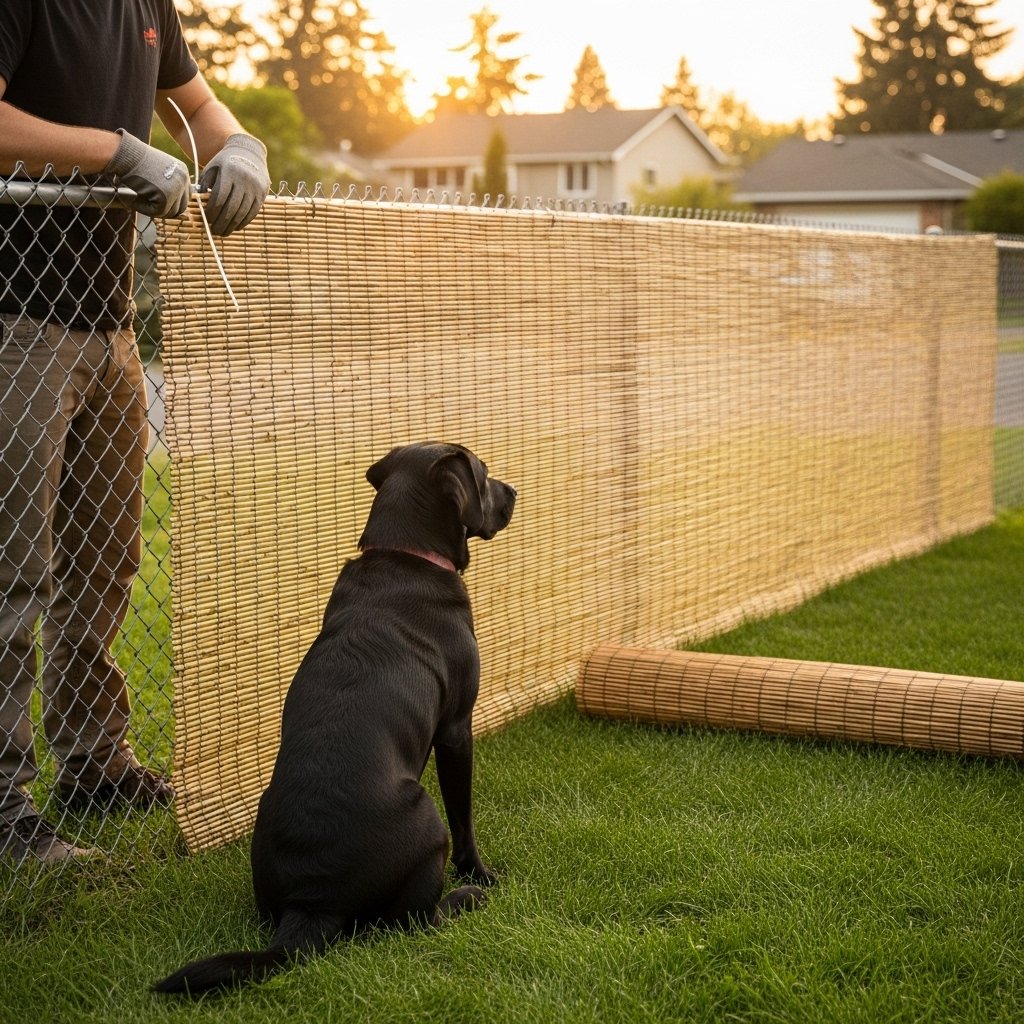
Before any training can begin, you must stop the dog from practicing the unwanted behavior. Every time your dog rushes the fence and barks, the behavior is reinforced. Management is not training, but it is the non-negotiable first step that makes training possible.
Implement Visual Barriers
The principle is simple: out of sight, out of mind. If the dogs cannot see each other, the trigger is significantly diminished. Consider these options:
- Privacy Fencing Slats: These can be woven into existing chain-link fences to create a solid visual block.
- Rolled Bamboo or Reed Fencing: An affordable and attractive option that can be attached to any existing fence type.
- Privacy Screen Fabric: A durable, commercial-grade fabric designed to block views and reduce wind.
The goal is to make the barrier at least six feet high, as many dogs can see over standard four-foot fences.
Control Yard Access
Your dog should not have unsupervised access to the yard, especially during times the neighbor’s dog is likely to be out. This means no doggy doors that lead directly to the problem area. Accompany your dog outside on a leash for potty breaks. This gives you complete control and prevents the opportunity for an incident.
Coordinate with Your Neighbor
This can be a delicate conversation, but it is often essential for success. Approach your neighbor calmly and explain that you are actively working on a training plan to resolve the issue. Propose a staggered schedule for yard time so the dogs are not out simultaneously. Sharing a simple schedule can prevent countless confrontations and show that you are taking the problem seriously.
| Management Technique | Primary Goal | Estimated Cost |
|---|---|---|
| Visual Barrier (e.g., Reed Fencing) | Remove the visual trigger of the other dog. | $50 – $300 |
| Leashed Potty Breaks | Prevent rehearsal of fence fighting behavior. | $0 (Time Investment) |
| Neighbor Coordination | Eliminate simultaneous yard access. | $0 (Diplomacy) |
Phase 2: The Step-by-Step Training Protocol
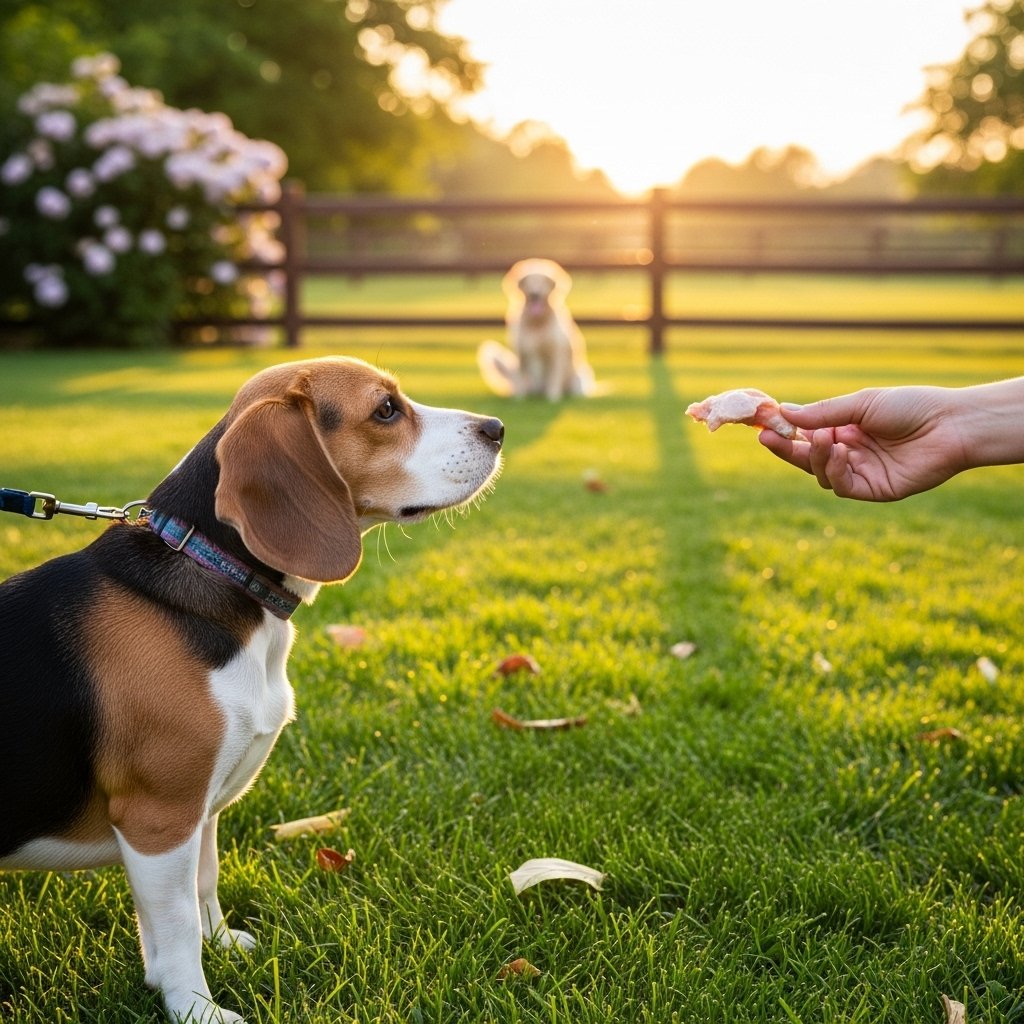
With management in place, you can now begin the process of changing your dog’s emotional response to the presence of the other dog. This protocol is based on two core principles of modern animal behavior: Desensitization (gradually exposing the dog to the trigger at a level that does not provoke a reaction) and Counter-Conditioning (changing the dog’s association with the trigger from negative to positive).
What You’ll Need:
- A secure leash and a properly fitted harness or collar.
- Extremely high-value treats: Think boiled chicken, small pieces of cheese, or freeze-dried liver. These should be treats your dog only gets during these training sessions.
- A clicker (optional, but helpful for marking precise moments of calm behavior).
Step 1: Find the Threshold
The threshold is the exact distance at which your dog can notice the neighbor’s dog without reacting. This might be 100 feet away, 50 feet away, or even just looking out a back window. Your goal is to work ‘sub-threshold,’ where your dog is aware but still calm enough to think and learn. If your dog is barking, lunging, or fixated, you are too close. Increase the distance until they are calm again.
Step 2: Create a Positive Association (Counter-Conditioning)
Position yourself with your dog at the sub-threshold distance. The moment your dog looks at the neighbor’s dog (the trigger), mark the behavior (‘Yes!’ or a click) and immediately deliver a high-value treat. The sequence is critical: Dog Sees Trigger -> You Mark & Treat. The treat must appear after the trigger appears. We are teaching the dog that the sight of the other dog makes good things happen.
Step 3: Gradually Decrease the Distance
Over many sessions, as your dog remains calm and looks to you for a treat upon seeing the other dog, you can begin to slowly decrease the distance to the fence. This process can take weeks or even months. If at any point your dog reacts, you have moved too quickly. Simply increase the distance back to the last point of success and work there a while longer before trying again.
Step 4: Introduce Alternative Behaviors
Once your dog has a strong positive association, you can start asking for a simple, alternative behavior. Instead of just looking at the other dog, ask for a ‘sit’ or ‘look at me.’ This gives your dog a specific job to do when the trigger appears, which is incompatible with fence fighting. The ‘Look at That’ (LAT) game is perfect here. The dog looks at the trigger, then looks back at you for a reward. This turns the trigger into a cue to engage with you.
| Training Stage | Dog’s Behavior | Owner’s Action | Goal |
|---|---|---|---|
| 1. Finding Threshold | Aware of other dog, but not reacting. | Maintain distance, observe body language. | Establish a calm starting point for training. |
| 2. Counter-Conditioning | Looks at other dog calmly. | Mark and deliver a high-value treat immediately. | Change emotional response from negative to positive. |
| 3. Decreasing Distance | Remains calm as you move closer over many sessions. | Reward calm behavior at each new distance. | Generalize the calm response closer to the fence. |
| 4. Alternative Behaviors | Sees other dog and looks back at you. | Reward the check-in or cued behavior (e.g., sit). | Create a reliable, new behavioral pattern. |
Enrichment and Generalization: Building a Calmer Dog
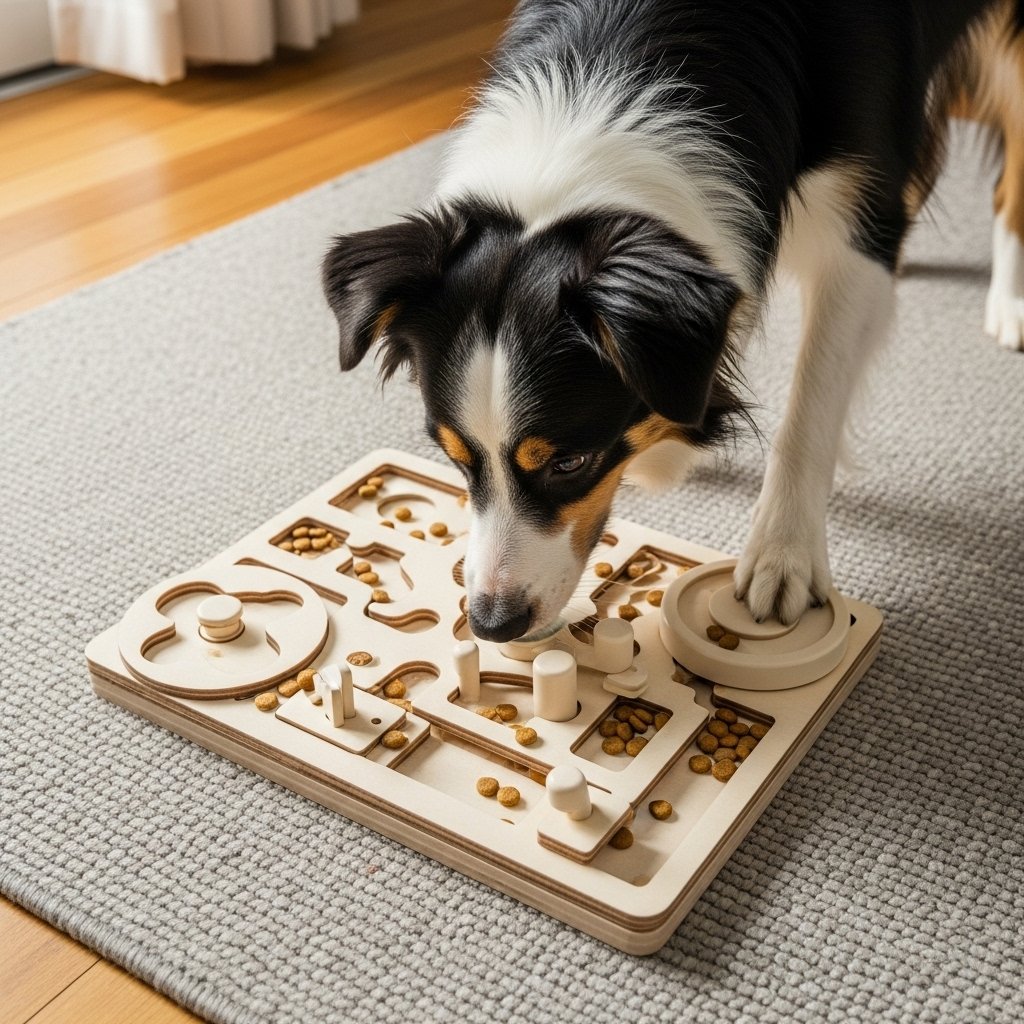
The training you do at the fenceline is only part of the solution. A dog that is generally calm, fulfilled, and mentally stimulated is far less likely to engage in reactive behaviors. Integrating enrichment into your dog’s daily life can dramatically lower their baseline stress and arousal levels, making them more resilient to triggers.
Increase Physical Exercise
A tired dog is a good dog. Ensure your dog is receiving adequate physical exercise appropriate for their age, breed, and health. This means more than just a walk around the block. Activities like running, swimming, or playing fetch in a neutral area (away from the problem fence) can help expend excess energy that might otherwise fuel fence fighting.
Provide Mental Stimulation
Mental exercise is just as tiring as physical exercise. Engage your dog’s brain to reduce boredom and anxiety.
- Puzzle Toys: Food-dispensing toys require your dog to problem-solve to get their meal.
- Scent Work: Hide treats around the house or yard and encourage your dog to use their nose to find them. This is a naturally calming activity for dogs.
- Training Sessions: Short, positive reinforcement training sessions for new tricks or commands build confidence and strengthen your bond.
Practice ‘Calm on Cue’
Teach your dog to settle on a mat or bed inside the house. Reward them for voluntarily lying down and relaxing. Over time, you can transfer this skill to the yard, asking them to go to their ‘calm spot’ (perhaps a comfortable outdoor bed) instead of rushing the fence. This gives them a default action that is incompatible with reactivity.
Important Note: Avoid high-arousal games like fetch or tug-of-war in the yard if the neighbor’s dog is present. These games can increase adrenaline and make a reaction more likely. Reserve high-energy play for neutral locations or times when the trigger is absent.
When to Seek Professional Help

While the methods outlined in this guide are effective for many cases of fence fighting, some situations require the intervention of a qualified professional. Attempting to handle severe aggression on your own can be ineffective and dangerous. It is crucial to recognize the signs that you need to escalate your approach and consult an expert.
Red Flags That Require a Professional
- Redirected Aggression: If your dog has ever redirected its frustration and bitten or attempted to bite you, another pet, or a family member during a fence fighting episode, professional help is non-negotiable.
- Extreme Intensity: If the dog’s reaction is so intense that you cannot get their attention at any distance, or if they are completely inconsolable, a professional can help create a more structured and safe plan.
- No Progress: If you have been consistently applying the management and training techniques for several months with no discernible improvement, you may be missing a key component that a professional eye can identify.
- Fear-Based Behavior: If the fence fighting appears to be rooted in deep-seated fear (e.g., cowering, trembling, tail tucked followed by an explosive outburst), a veterinary behaviorist may be needed to assess whether behavior medication could be a helpful part of the treatment plan.
Finding the Right Professional
The dog training industry is unregulated, so it’s vital to choose a qualified expert. Look for professionals with the following credentials:
- Veterinary Behaviorist (DACVB): A veterinarian who has completed a residency in animal behavior. They can diagnose medical and behavioral conditions and prescribe medication.
- Certified Applied Animal Behaviorist (CAAB): A professional with a Ph.D. or Master’s degree in animal behavior.
- Certified Professional Dog Trainer (CPDT-KA/KSA): A trainer who has passed a comprehensive exam and adheres to a code of ethics based on humane, science-based training methods.
Avoid any trainer who recommends using punishment-based tools like shock collars, prong collars, or choke chains to address fence fighting. These methods suppress the behavior without changing the underlying emotion and can significantly worsen aggression and anxiety.
Conclusion
Ending the neighborhood feud of fence fighting is a marathon, not a sprint. It requires a deep understanding of your dog’s emotional state, a commitment to consistent management, and the patience to implement a methodical training plan. By preventing the behavior through smart environmental setup and actively changing your dog’s feelings through positive reinforcement, you can rebuild a peaceful coexistence. Remember to celebrate small victories, manage your own frustration, and never hesitate to seek professional guidance when needed. With dedication, you can transform your yard from a battleground back into a sanctuary for both you and your canine companion.