Why Your Dog Attacks Your Boots (And How to Stop It)
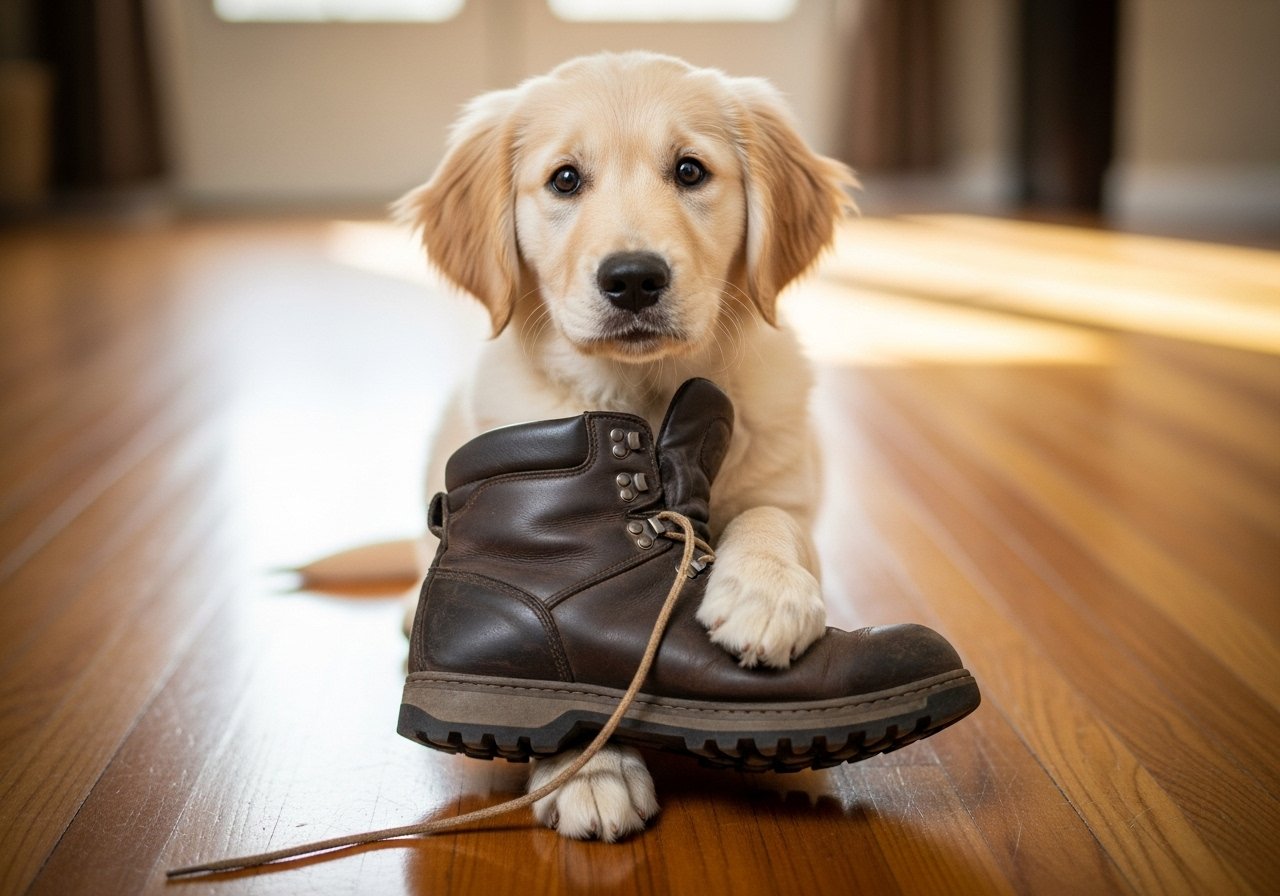
Coming home to find a favorite pair of boots shredded into a slobbery mess is a uniquely frustrating experience for any dog owner. It can feel personal, destructive, and utterly baffling. Why the boots? Why not the dozens of toys you’ve provided? This behavior, while maddening, is rarely born from malice. Instead, it’s a complex canine communication, signaling everything from boredom and anxiety to the simple, irresistible allure of your personal scent.
Understanding the ‘why’ behind the boot attack is the critical first step toward finding a lasting solution. Punishing the behavior without addressing its root cause is often ineffective and can damage the trust you share with your dog. This guide will delve into the psychology of your dog’s footwear fascination and provide a professional, step-by-step training plan. We will move beyond simple corrections to implement a strategy based on management, redirection, and positive reinforcement, empowering you to stop the destructive chewing for good and foster a more harmonious home environment.
Decoding the Boot Obsession: The Root Causes of Footwear Destruction
Instinct and Scent
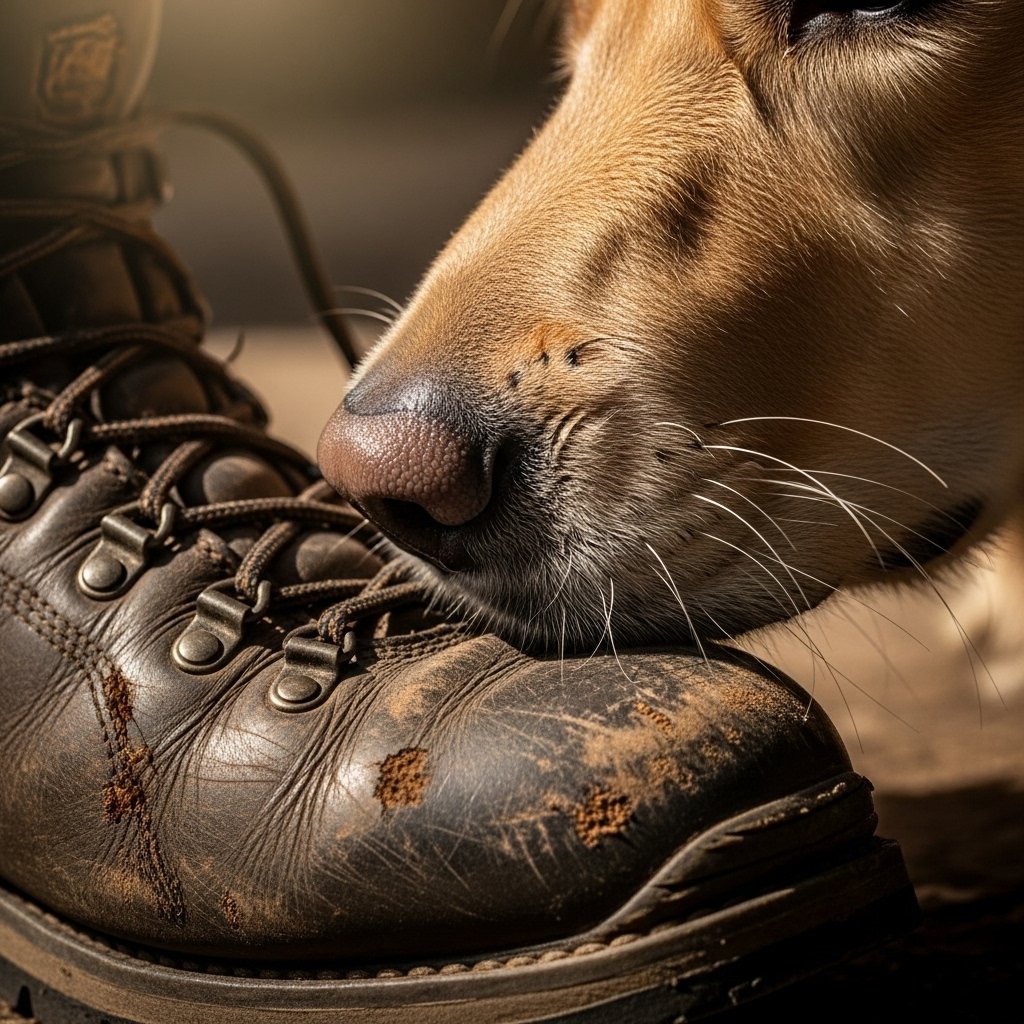
At the core of this behavior is your dog’s most powerful sense: smell. Your boots are a concentrated library of scents. They carry the aroma of every place you’ve walked, the sweat from your feet, and most importantly, your unique scent. For a dog, your scent is a source of immense comfort and connection. Chewing on an object that smells so strongly of you can be a self-soothing activity, especially when you’re away. Leather, in particular, retains the scent of its animal origin, which can also be highly appealing to a dog’s primal instincts.
Teething and Oral Fixation
For puppies, the world is explored through their mouths. The period of teething, typically between three to six months of age, is marked by intense discomfort as adult teeth push through the gums. Chewing provides relief. The firm yet yielding texture of a leather or rubber boot can feel incredibly satisfying on sore gums. This early habit, if not redirected, can easily persist into adulthood as a learned behavior for comfort or recreation.
Boredom and Lack of Stimulation
A leading cause of destructive behavior in dogs of all ages is a lack of adequate physical and mental exercise. A dog without a ‘job’ will often invent one, and deconstructing a boot can be a very engaging project. It involves various textures, sounds, and scents, providing a significant sensory payoff for an under-stimulated mind. If your dog spends long hours alone without enrichment, they are far more likely to seek out inappropriate, high-value items like footwear to pass the time.
Anxiety and Stress
Boot-chewing can also be a displacement behavior—an outlet for stress, fear, or anxiety. Separation anxiety is a common trigger. As mentioned, your scent is comforting. In a state of panic when left alone, a dog may frantically chew on your boots as a desperate attempt to feel closer to you. Other stressors, such as thunderstorms, fireworks, or changes in the household (a new baby, a move), can also manifest as new or intensified destructive chewing.
Expert Insight: Observe when the chewing happens. Is it only when you’re gone? Or does it happen right in front of you? The context provides critical clues to the underlying motivation, distinguishing attention-seeking play from deep-seated anxiety.
Preparing for Success: Assembling Your Training Toolkit
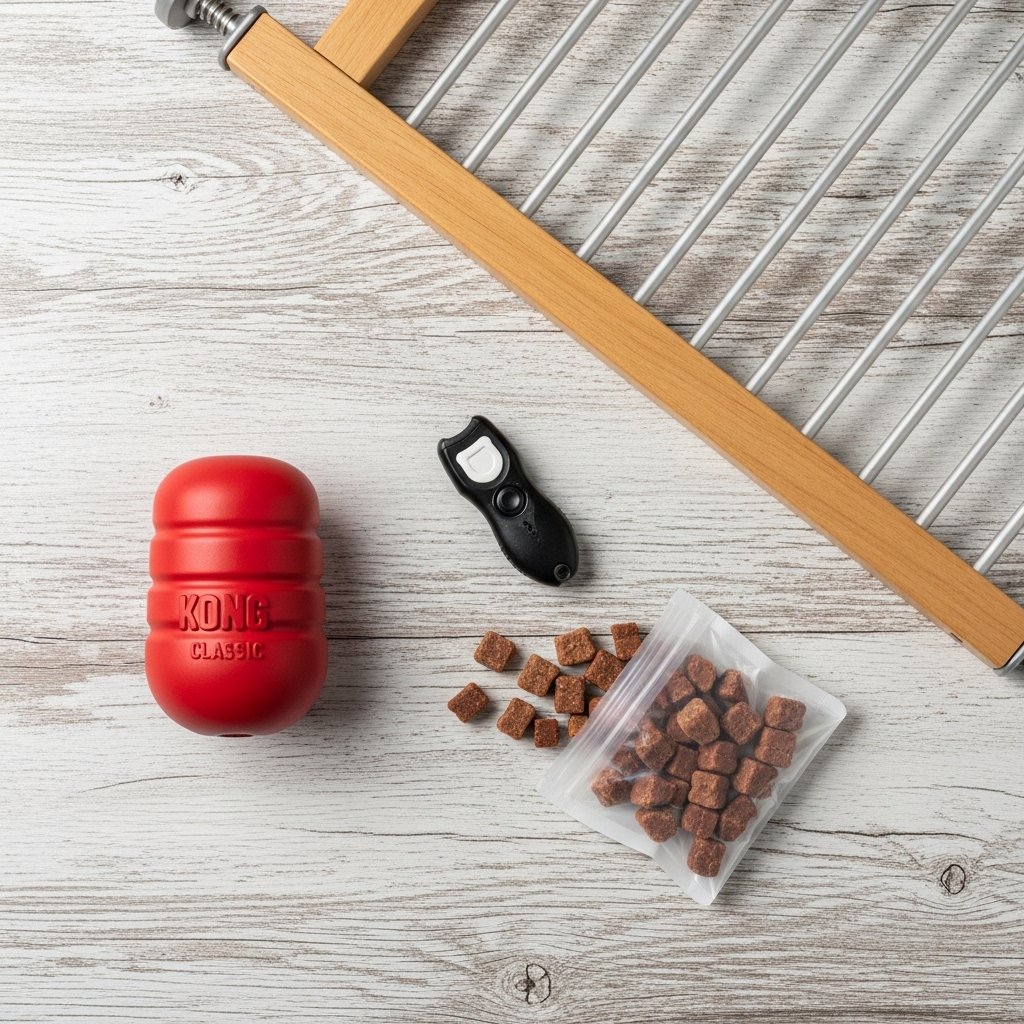
Before you begin active training, you must set up the environment for success. The goal is to make the right choice (chewing a toy) easy and the wrong choice (chewing a boot) difficult or impossible. This is not just about tools, but also about adopting a proactive mindset.
Environmental Management
Management is your first and most powerful tool. It’s the practice of controlling the environment to prevent the unwanted behavior from occurring in the first place. Every time your dog successfully chews a boot, the behavior is self-reinforced and becomes more ingrained. Your management toolkit should include:
- Secure Storage: Invest in closed-door closets, shoe racks placed in inaccessible areas, or sealed storage bins. The most foolproof method is to ensure boots are never left where your dog can reach them.
- Dog-Proofing Zones: Use baby gates or pet gates to restrict your dog’s access to areas where shoes are commonly kept, like mudrooms or entryways, especially when unsupervised.
The Redirection Arsenal
You cannot simply take something away from your dog without offering a suitable alternative. Your goal is to provide items that are even more appealing than your boots. Build a collection of high-value chew toys:
- Durable Rubber Toys: Items like those from the Kong brand can be stuffed with food (peanut butter, kibble, yogurt) and frozen, turning them into a long-lasting, mentally stimulating puzzle.
- Dental Chews: These serve the dual purpose of satisfying the urge to chew while also promoting dental health.
- Nylon Bones: For powerful chewers, these offer a safe and durable option.
- Puzzle Toys: These engage your dog’s brain, helping to tire them out mentally and reduce boredom-related chewing.
Rotate these toys regularly to keep them novel and exciting. A toy that has been hidden for a week can feel brand new and more enticing to your dog.
The Step-by-Step Protocol to Stop Boot Chewing
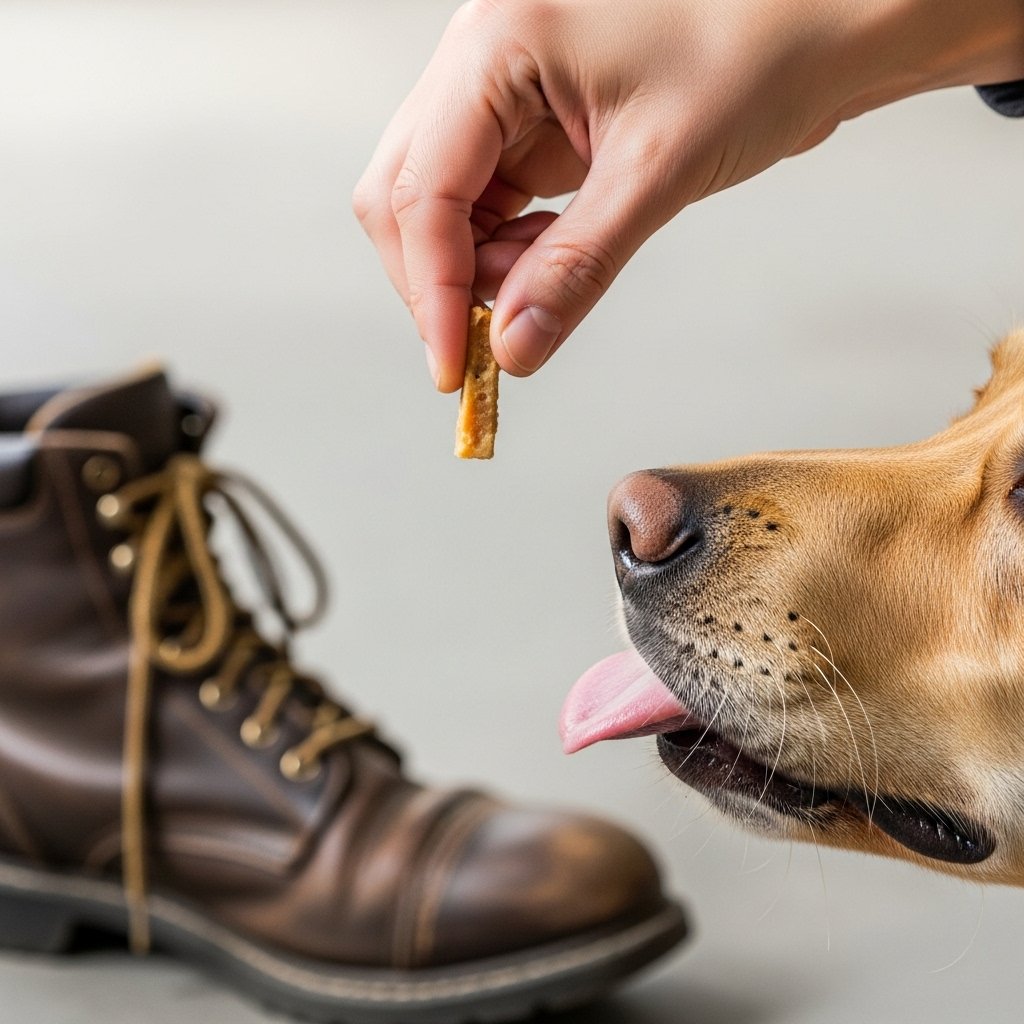
With your management plan in place and your redirection tools ready, you can begin the active training process. This protocol is built on positive reinforcement, teaching your dog what you want them to do, rather than just punishing what you don’t.
Step 1: Master the ‘Leave It’ Command
The ‘Leave It’ command is non-negotiable for safety and good manners. It teaches your dog to disengage from an item on cue.
- Start with a low-value item your dog isn’t obsessed with. Place a boring piece of kibble in your closed fist. Let your dog sniff. The moment they turn away, even for a second, say “Yes!” and reward them with a high-value treat from your other hand.
- Once they reliably ignore the kibble in your fist, place it on the floor and cover it with your hand. When they stop trying to get it, mark with “Yes!” and reward.
- Progress to having the item uncovered on the floor. Say “Leave it” as they approach. When they hesitate or look at you, reward them enthusiastically.
- Only once your dog has mastered this with boring items should you slowly increase the difficulty, eventually practicing with an old shoe you don’t care about (a ‘training shoe’). Always make the reward for leaving the shoe more exciting than the shoe itself.
Step 2: The Art of Redirection and Reinforcement
When you catch your dog approaching a boot, don’t yell. Instead, calmly interrupt and immediately redirect their attention.
- Call their name in an upbeat tone. As soon as they look at you, praise them.
- Offer them one of their high-value chew toys. Make it exciting by wiggling it around or smearing a tiny bit of peanut butter on it.
- When they take the toy and start chewing, give them lots of verbal praise like “Good dog! What a good chewer!” This reinforces that chewing is a great activity, as long as it’s on an approved item.
Step 3: Reinforce Calm Behavior Around Boots
The final step is to change your dog’s association with boots from ‘forbidden toy’ to ‘boring object’.
- Place a ‘training shoe’ on the floor at a distance. Any time your dog looks at it and then looks away, or simply ignores it, toss them a treat. You are rewarding the choice to disengage.
- Sit on the floor with your dog and their favorite chew toy. Have a boot nearby. Reward your dog for calmly chewing their own toy while in the presence of the boot.
- Gradually decrease the distance between your dog and the boot over many short, successful sessions. The goal is for the dog to remain completely indifferent to the boot.
Troubleshooting and Advanced Scenarios

What If My Dog Becomes Possessive?
If your dog growls, snaps, or freezes when you approach them with a boot, you are dealing with resource guarding, not simple chewing. This is a more serious issue. Do not attempt to physically take the item away, as this can escalate the aggression and lead to a bite. Instead, trade up. Offer something of extremely high value, like a piece of chicken or cheese, tossed a few feet away. When the dog leaves the boot to get the treat, calmly remove the boot. If resource guarding is a consistent problem, it is crucial to consult a certified professional dog trainer or veterinary behaviorist for a personalized safety and modification plan.
Dealing with Training Regression
It’s common for dogs to revert to old behaviors, especially during times of stress. If your dog suddenly starts chewing boots again after a period of success, don’t get discouraged. Re-evaluate the situation. Has their exercise routine changed? Is there a new stressor in the house? Go back to basics: tighten up your management protocols and restart the training exercises from Step 1. Keep sessions short, positive, and frequent to rebuild the good habits.
When to Consult a Professional
While most cases of boot-chewing can be resolved with management and training, some situations warrant professional help. You should seek guidance from a veterinarian or a certified behavior consultant if:
- The chewing is accompanied by other signs of severe separation anxiety, such as destructive behavior throughout the house, house soiling, or persistent vocalization when left alone.
- The behavior includes resource guarding or any form of aggression.
- You have been consistent with the training protocol for several weeks with absolutely no improvement.
- The chewing could be a sign of a medical issue, such as a nutritional deficiency or gastrointestinal discomfort (a condition known as pica).
Common Mistakes Pet Owners Make (And How to Avoid Them)
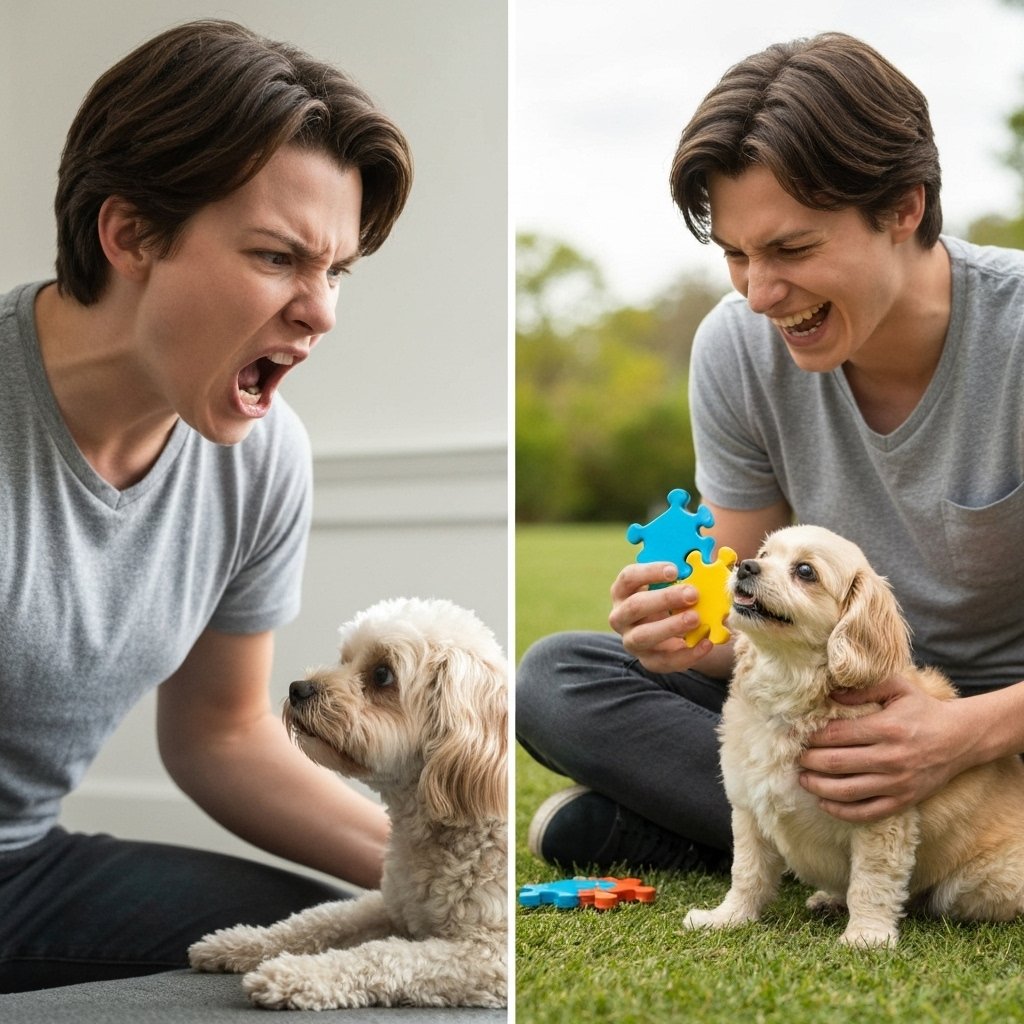
Your success depends not just on what you do, but also on what you avoid doing. Steer clear of these common training pitfalls that can inadvertently make the problem worse.
Using Punishment
Scolding your dog, using a spray bottle, or physically punishing them after you find a destroyed boot is ineffective. Your dog cannot connect the punishment to an action they took hours, or even minutes, ago. This approach only creates fear and anxiety, which can actually increase stress-related chewing. It teaches your dog to fear your presence, not to avoid the boots.
Giving Old Shoes as ‘Toys’
This is one of the most confusing things you can do. Dogs cannot differentiate between your ‘good’ boots and the ‘bad’ boots you’ve given them permission to chew. By providing an old shoe as a toy, you are sending the message that all shoe-shaped items are acceptable for chewing. This mixed message will sabotage all of your training efforts. Stick to designated dog toys only.
Inconsistent Management
Leaving your boots out ‘just this once’ can be all it takes to undo weeks of hard work. Management must be 100% consistent, especially in the early stages of training. Every successful boot-chewing session reinforces the habit. Be diligent about putting footwear away until your dog has proven they can be trusted.
Neglecting Your Dog’s Core Needs
Remember that chewing is often a symptom of a larger problem, like boredom or excess energy. You can’t expect your dog to behave calmly if their needs aren’t being met. Ensure your dog receives daily physical exercise appropriate for their age and breed, as well as mental enrichment through training, puzzle toys, and interactive play. A tired, fulfilled dog is a well-behaved dog.
Final Tip: Focus on building a ‘chew-toy habit.’ Make their designated toys the most fun and rewarding things in the house. Regularly stuff them with treats, engage in games of tug or fetch with them, and praise your dog enthusiastically whenever you see them chewing on an appropriate item.
Conclusion
Reclaiming your boots from the jaws of your canine companion is a journey of patience, consistency, and understanding. By moving beyond frustration and decoding the behavior’s root cause—be it the allure of your scent, the ache of teething gums, or the void of boredom—you can address the real issue. The solution lies not in punishment, but in a proactive, three-pronged approach: diligent management of the environment, clear redirection to appropriate alternatives, and positive reinforcement of the choices you want your dog to make.
Implementing these strategies does more than just save your shoes. It strengthens your communication, deepens your bond, and teaches your dog valuable impulse control. Every successful ‘Leave It’ command and every time they choose their toy over your boot is a victory that builds trust and mutual respect. Stay consistent, celebrate the small wins, and you will not only solve the problem but also cultivate a happier, better-behaved companion for life.