Tire Out Your High-Energy Dog in 15 Minutes With These Nose Work Games
Owning a high-energy dog is a uniquely rewarding experience, filled with boundless enthusiasm and a zest for life. However, it can also be exhausting. You can walk for miles and play fetch until your arm aches, only to find your canine companion still bouncing off the walls. The secret that professional trainers know is that physical exercise alone is often not enough. High-energy breeds, in particular, require significant mental stimulation to achieve true contentment and calm. This is where the power of nose work comes in.
A dog’s sense of smell is its most powerful and sophisticated tool. Engaging this incredible olfactory ability is one of the most mentally taxing activities a dog can perform. A mere 15 minutes of focused scent detection can be more tiring for a dog than a full hour of running. This guide will walk you through a series of progressive nose work games designed to channel your dog’s energy productively, build focus, and boost confidence. Prepare to unlock a calmer, more fulfilled version of your dog, all within the comfort of your home.
The Science of Scent: Why Nose Work is the Ultimate Mental Workout
The Science of Scent: Why Nose Work is the Ultimate Mental Workout
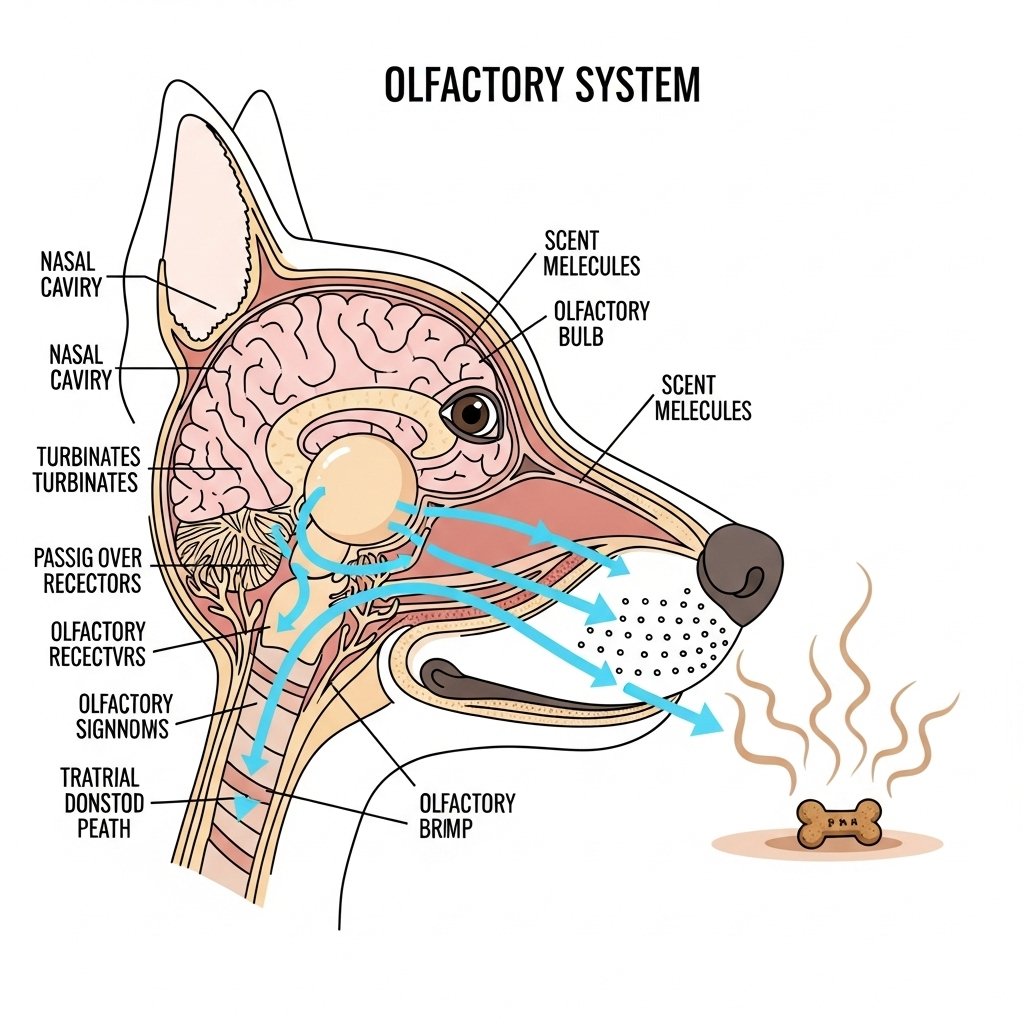
To understand why nose work is so effective, we must first appreciate the anatomical marvel that is the canine nose. A dog’s olfactory system is exponentially more powerful than a human’s. While we have around 6 million olfactory receptors, dogs possess up to 300 million. The part of their brain dedicated to analyzing smells is, proportionally, 40 times larger than ours. When a dog sniffs, it’s not just passively taking in air; it’s actively processing a complex world of information that is invisible to us.
This intense processing requires immense brainpower. Every sniff involves identifying individual scent molecules, filtering out background odors, and creating a detailed ‘scent picture’ of the environment. When we ask a dog to find a specific, hidden scent, we are tasking them with a complex problem-solving exercise. They must:
- Discriminate: Isolate the target scent from all other ambient smells.
- Source: Follow the scent trail to its strongest point.
- Indicate: Communicate to their handler that they have found the target.
This sequence of tasks is incredibly demanding. It engages their natural instincts in a structured way, providing a fulfilling ‘job’ that satisfies their primal drive to hunt and forage. Unlike repetitive physical exercises, which can sometimes increase arousal, nose work encourages calm, focused concentration. This mental exertion effectively drains their energy reserves, leading to a relaxed and satisfied state. It’s the difference between running a marathon and solving a complex puzzle—both are tiring, but the latter exhausts the mind.
In canine behavioral science, we often say that 15 minutes of intensive scent work is equivalent to a 60-minute leash walk in terms of the mental energy expended. It’s the most efficient way to meet the needs of an intelligent, active dog.
Getting Started: Essential Tools and Scent Preparation

Getting Started: Essential Tools and Scent Preparation
Before you begin your nose work journey, it’s important to set your dog up for success. The beauty of these games is their simplicity; you likely already have everything you need at home. The key is to create a positive and clear association with the activity.
What You’ll Need:
- High-Value Treats: These should be small, soft, and incredibly smelly. Think beyond standard kibble. Pieces of cheese, hot dogs, dried liver, or commercial training treats with a strong aroma work best. The smellier the treat, the easier it will be for your dog to find and the more motivated they will be.
- Containers: You will need a variety of objects to hide the treats in or under. Start simple with cardboard boxes of various sizes. As your dog progresses, you can use items like plastic cups, muffin tins, toilet paper rolls, or specialized scent work containers.
- A Designated Training Space: Begin in a quiet, low-distraction area, such as a single room with the door closed. This helps your dog focus solely on the game without being sidetracked by other sights, sounds, or smells.
Preparing the Scent and Your Dog:
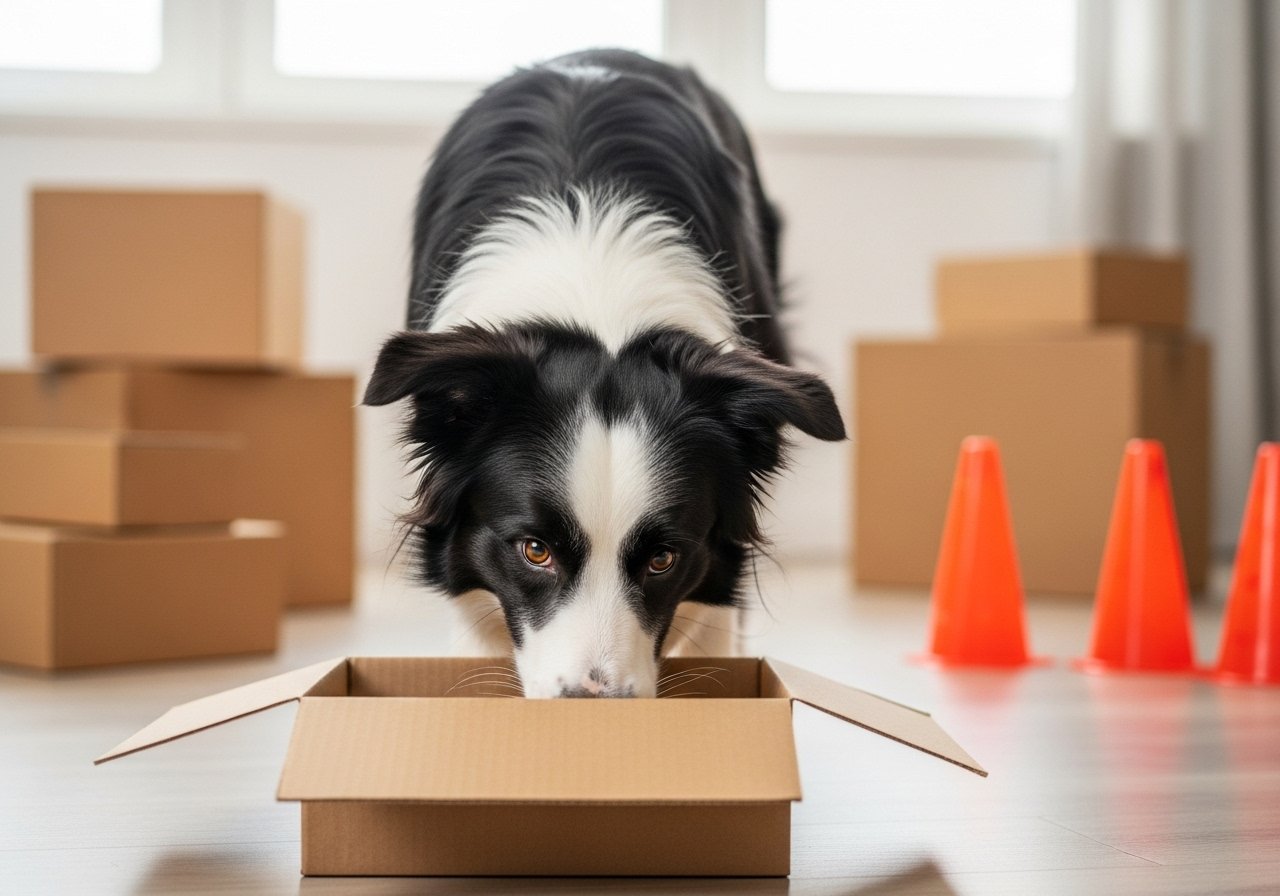
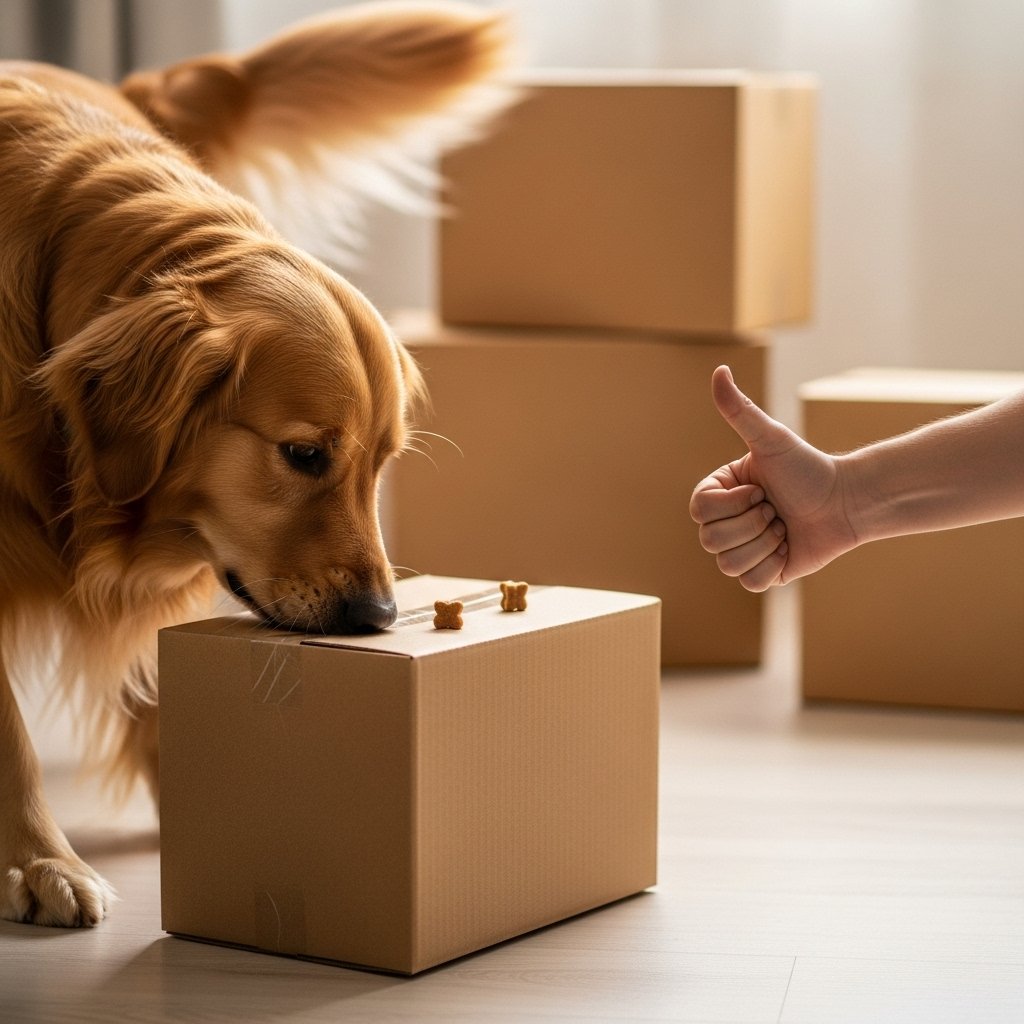
The first step is to ‘charge’ the scent, meaning you teach your dog that a specific smell equals a fantastic reward. Let your dog watch you place a high-value treat into a container (like a small, open cardboard box). Place the box on the floor and use a clear, enthusiastic cue word like “Find It!” or “Search!”. When your dog puts their nose in the box and eats the treat, praise them lavishly. Repeat this 5-6 times until your dog eagerly dives for the box as soon as you give the cue. This initial phase builds a powerful, positive association with the game and the command.
Game 1 (Beginner): The ‘Find It’ Box Game
Game 1 (Beginner): The ‘Find It’ Box Game
This foundational game teaches your dog the core concept of searching for a hidden reward. It’s the perfect starting point and can be mastered quickly, building your dog’s confidence for more complex challenges.
- Step 1: The Single Box. With your dog watching, place a treat in one cardboard box. Put the box on the floor and give your cue, “Find It!”. When they find it, offer enthusiastic praise. Repeat this several times.
- Step 2: Introduce a Second, Empty Box. Now, place two boxes on the floor a few feet apart. Let your dog watch as you place the treat in only one of them. Give the cue. Your dog may investigate the empty box first. Be patient and silent. Do not point or help. Allow them to use their nose to solve the problem. When they find the correct box, reward them with praise and excitement the moment their nose touches it.
- Step 3: Increase the Number of Boxes. Once your dog is successfully choosing the correct box out of two, add a third, then a fourth. Scatter them around the room to encourage more movement and searching. Continue to let your dog watch you place the treat initially.
- Step 4: The Blind Find. This is the crucial step. Have someone hold your dog, or have them wait in a ‘stay’ outside the room. Hide the treat in one of the boxes without your dog seeing which one. Bring your dog into the room and give the “Find It!” cue. This is the first time they must rely entirely on their sense of smell, not their eyes. The moment they locate the correct box, celebrate with a ‘jackpot’ of praise and maybe an extra treat. This is the true beginning of nose work.
Game 2 (Intermediate): The Muffin Tin Puzzle

Game 2 (Intermediate): The Muffin Tin Puzzle
Once your dog has mastered the concept of searching, you can introduce a challenge that requires more dexterity and problem-solving. The muffin tin puzzle encourages them to manipulate objects to get their reward.
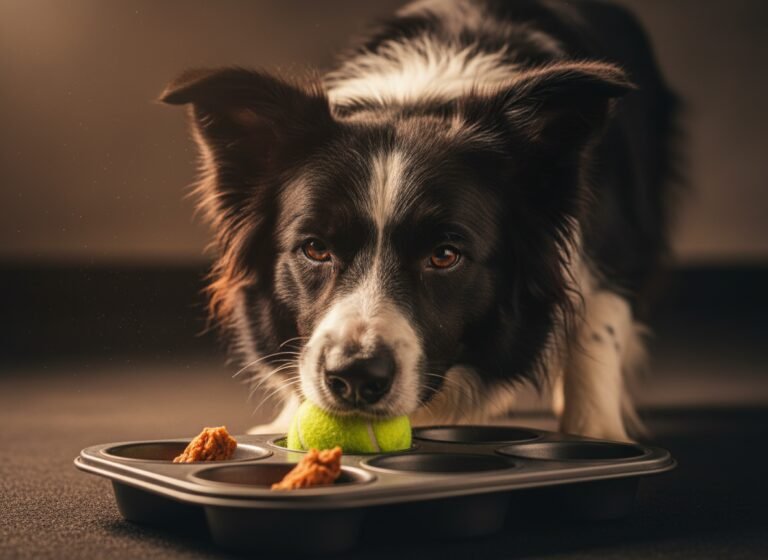
For this game, you will need a standard 6 or 12-cup muffin tin and several tennis balls or similar-sized toys that can cover the cups.
- Step 1: Introduction. Place the empty muffin tin on the floor and let your dog investigate it. Drop a few treats into the cups while they watch, allowing them to eat freely. This ensures they are not afraid of the tin itself.
- Step 2: Partial Coverage. Place a single treat in one of the cups. While your dog is watching, place a tennis ball over the treat. Give your cue. Your dog will have to figure out how to knock the ball away with their nose or paw to get the treat. Praise them enthusiastically when they succeed.
- Step 3: Fill the Tin. Once they understand the concept, place treats in three or four of the cups and cover all the cups with tennis balls. Now, they must not only displace the balls but also use their nose to determine which cups actually contain a reward. This prevents them from simply knocking all the balls out randomly and forces them to engage their sense of smell.
- Step 4: Increase Difficulty. To make it more challenging, use fewer treats. For a 12-cup tin, perhaps only hide two or three treats. This requires a more thorough and patient search, providing a greater mental workout.
Game 3 (Advanced): The Canine Shell Game

Game 3 (Advanced): The Canine Shell Game
This game is a significant step up in difficulty and is fantastic for dogs that need an intense, short-burst mental challenge. It requires them to track a scent that is being moved, testing their focus and memory.
You will need three identical, opaque cups or small containers. Ensure they are light enough for your dog to knock over but sturdy enough not to break.
- Step 1: The Setup. Line up the three cups upside-down in a row. With your dog watching intently, place a high-value treat under one of the cups.
- Step 2: The Simple Find. Give your “Find It!” cue. Your dog should easily knock over the correct cup. Praise them when they do. Repeat this 2-3 times without moving the cups.
- Step 3: The Slow Shuffle. Now, place the treat under the center cup. Slowly and deliberately, slide the cups around, swapping their positions just once or twice. Keep the movements slow and obvious at first. Give the cue. This is challenging because they may rely on sight, but the lingering scent will help guide them. Reward them for finding the correct cup.
- Step 4: The Expert Shuffle. As your dog gets better, increase the speed and complexity of the shuffle. Use more swaps and faster movements. This forces them to rely almost entirely on their nose to pinpoint the correct cup after the movement has stopped. This level of concentration is incredibly taxing and a powerful way to tire out a sharp mind.
To help you decide which game is right for your dog’s current level, consult the following table:
| Game | Difficulty Level | Primary Skills Learned | Best For |
|---|---|---|---|
| ‘Find It’ Box Game | Beginner | Scent identification, basic search pattern, building drive. | All dogs, especially those brand new to scent work. |
| Muffin Tin Puzzle | Intermediate | Object manipulation, scent discrimination among multiple targets. | Dogs who understand the basic search and need a physical puzzle element. |
| Canine Shell Game | Advanced | Scent tracking, intense focus, ignoring visual misdirection. | Highly focused dogs who get bored easily and need a significant mental challenge. |
Troubleshooting and Best Practices

Troubleshooting and Best Practices
Even with the best preparation, you might encounter a few common hurdles. Patience and consistency are your greatest tools for success.
Common Challenges and Solutions:
- My dog loses interest quickly. Your treats may not be high-value enough. Switch to something with a stronger smell. Also, keep sessions very short in the beginning—just two or three minutes. Always end on a successful find so your dog finishes feeling confident and eager for the next session.
- My dog gets frustrated and starts barking or digging. This is often a sign that the difficulty has increased too quickly. Go back a step to where they were last successful and practice at that level for a few more sessions before moving forward. Frustration is the enemy of learning.
- My dog is just using its eyes, not its nose. This is very common, especially in the beginning. This is why the ‘blind find’ is so important. Ensure you are hiding the treat when your dog cannot see you. For the shell game, use cups that are truly identical to prevent them from picking up on small visual differences.
Best Practices for Success:
- Keep it Positive: Never scold your dog for a ‘wrong’ answer. Nose work should always be a fun and rewarding game. Simply reset and try again. Your enthusiasm is contagious.
- Use a Specific Cue: Only use your “Find It!” cue for this game. This helps your dog understand exactly what is being asked of them.
- Quit While You’re Ahead: Always end the session before your dog gets tired or bored. A few successful finds in a 5-10 minute session are far more valuable than a frustrating 20-minute drill. This keeps them wanting more.
Conclusion
Incorporating short, 15-minute nose work sessions into your daily routine can fundamentally change the dynamic with your high-energy dog. You are not just tiring them out; you are providing a deeply fulfilling outlet for their most powerful natural instinct. This form of mental enrichment reduces problem behaviors born from boredom, such as destructive chewing and excessive barking, while simultaneously building your dog’s confidence and focus. The focused time you spend together playing these games will also do wonders for your bond.
Start with the basics, celebrate every small success, and pay close attention to your dog’s body language. You will quickly discover a powerful tool for creating a calmer, happier, and more balanced canine companion. The quiet moments of contented sleep after a good nose work session will be the ultimate reward for you both.