Sliding Door Phobia: Helping Dogs Conquer Grocery Store Entrances
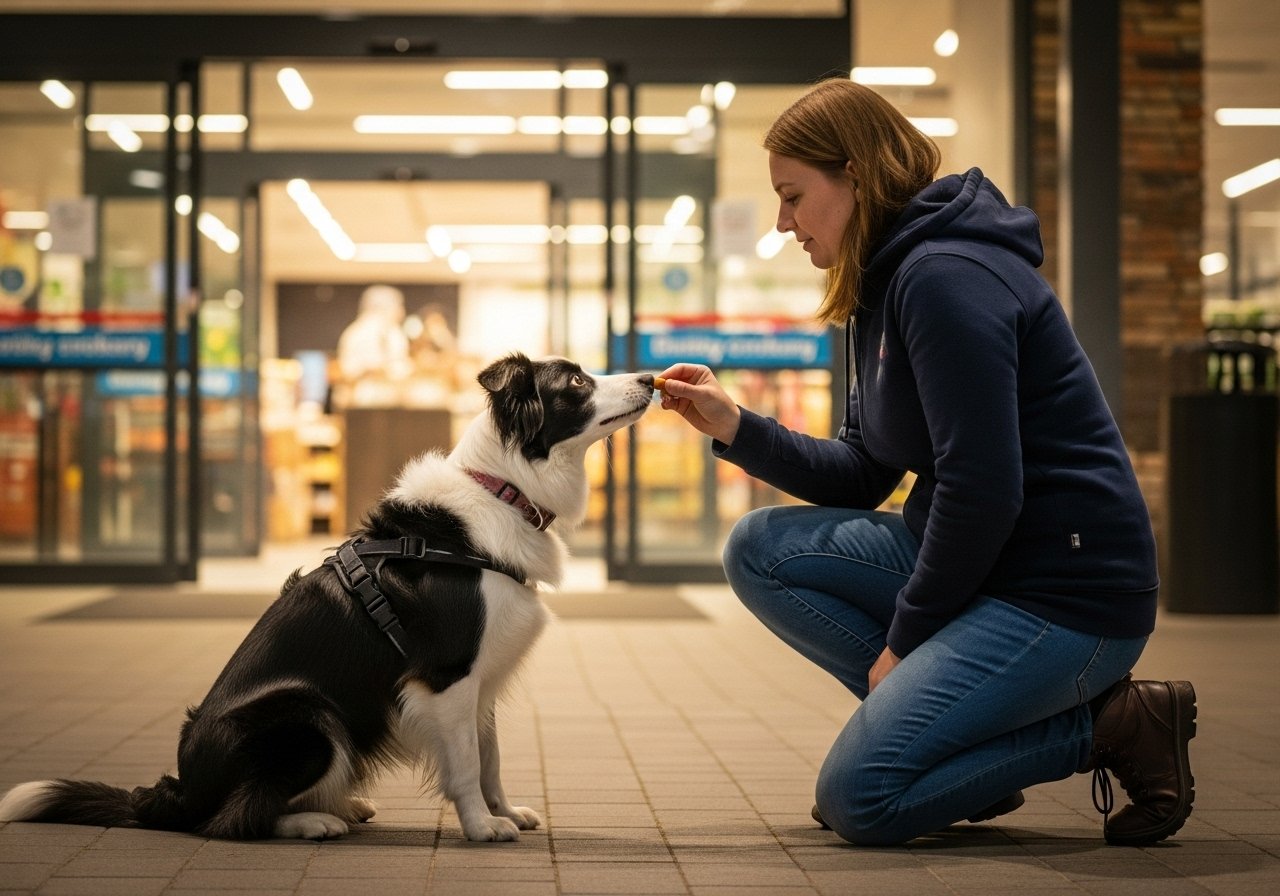
The sudden, almost silent whoosh of an automatic sliding door can be a source of profound anxiety for many dogs. What we perceive as a modern convenience, our canine companions can interpret as a startling, unpredictable threat. This fear, often termed sliding door phobia, is particularly challenging at high-traffic locations like grocery stores, turning a simple errand into a stressful ordeal for both pet and owner. This is not a trivial fear; it stems from a dog’s innate sensory perceptions and survival instincts. The unexpected movement, the subtle hiss of the mechanism, and the change in air pressure can trigger a significant startle response, leading to avoidance, freezing, or even panic.
Understanding the root of this phobia is the first step toward resolving it. This guide is designed to provide you, the dedicated pet owner, with the knowledge and tools necessary to help your dog overcome this specific fear. We will move beyond simple commands and delve into the principles of modern, science-based behavior modification. By employing techniques like desensitization and counter-conditioning, you can systematically change your dog’s emotional response from one of fear to one of calm neutrality, or even happy anticipation. The journey requires patience, consistency, and an unwavering commitment to positive reinforcement, but the reward—a confident, comfortable companion who can navigate the world by your side—is immeasurable.
Understanding the Fear: Why Sliding Doors Spook Your Dog
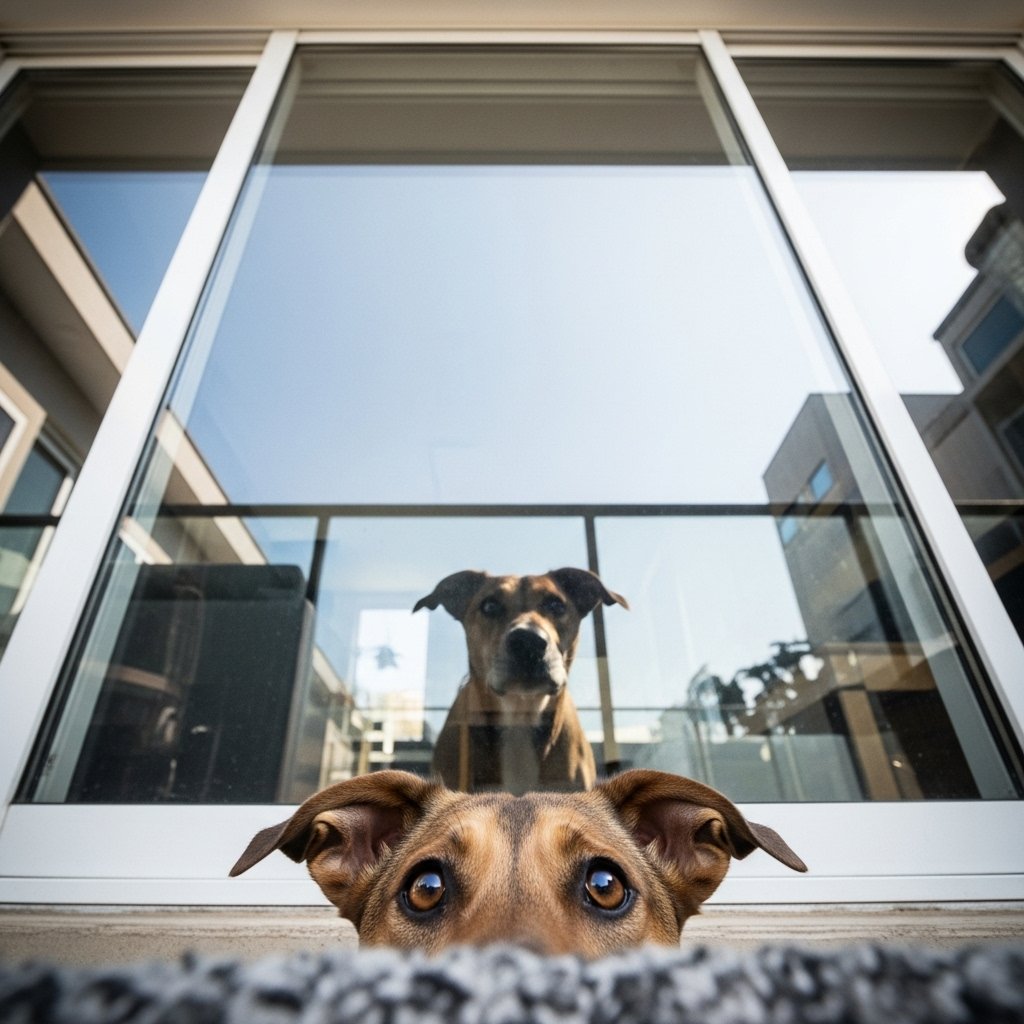
To effectively address your dog’s phobia, we must first understand the world from their perspective. A dog’s sensory experience is vastly different from our own, and automatic doors can present a perfect storm of unsettling stimuli.
Sensory Overload
Dogs process auditory and visual information with incredible sensitivity. The high-frequency sounds produced by the door’s motor and belt mechanism, which may be barely audible to us, can be grating or alarming to a dog. Visually, the sudden, rapid movement of a large glass panel appearing from nowhere violates their natural expectation of a solid, static environment. There is no clear, telegraphed intention behind the door’s movement, making it seem like a silent, unpredictable predator or obstacle.
Negative Associations
A single frightening experience can be enough to create a lasting phobia. Perhaps the door closed too quickly, tapping their hindquarters or tail. Maybe a loud cart banged nearby just as the door opened, creating a powerful negative association. It’s also possible the dog was already in a heightened state of anxiety due to the crowded parking lot or other environmental stressors, and the door was simply the final trigger that cemented the fear. Once this association is formed, the dog’s brain flags automatic doors as a potential danger to be avoided at all costs.
The Startle Reflex and Lack of Control
The element of surprise is a key component of this phobia. Unlike a door that a person opens, the automatic door moves on its own, triggered by an invisible sensor. This lack of a clear cause-and-effect relationship can be deeply unsettling for an animal. The dog doesn’t understand what makes the door move, and this unpredictability removes any sense of control they might have over their environment, leading to heightened anxiety and a desire to escape the situation.
Expert Insight: A dog’s fear is a genuine emotional response, not an act of disobedience. Approaching the issue with empathy and understanding is the foundation of successful training.
Essential Tools for Desensitization Training
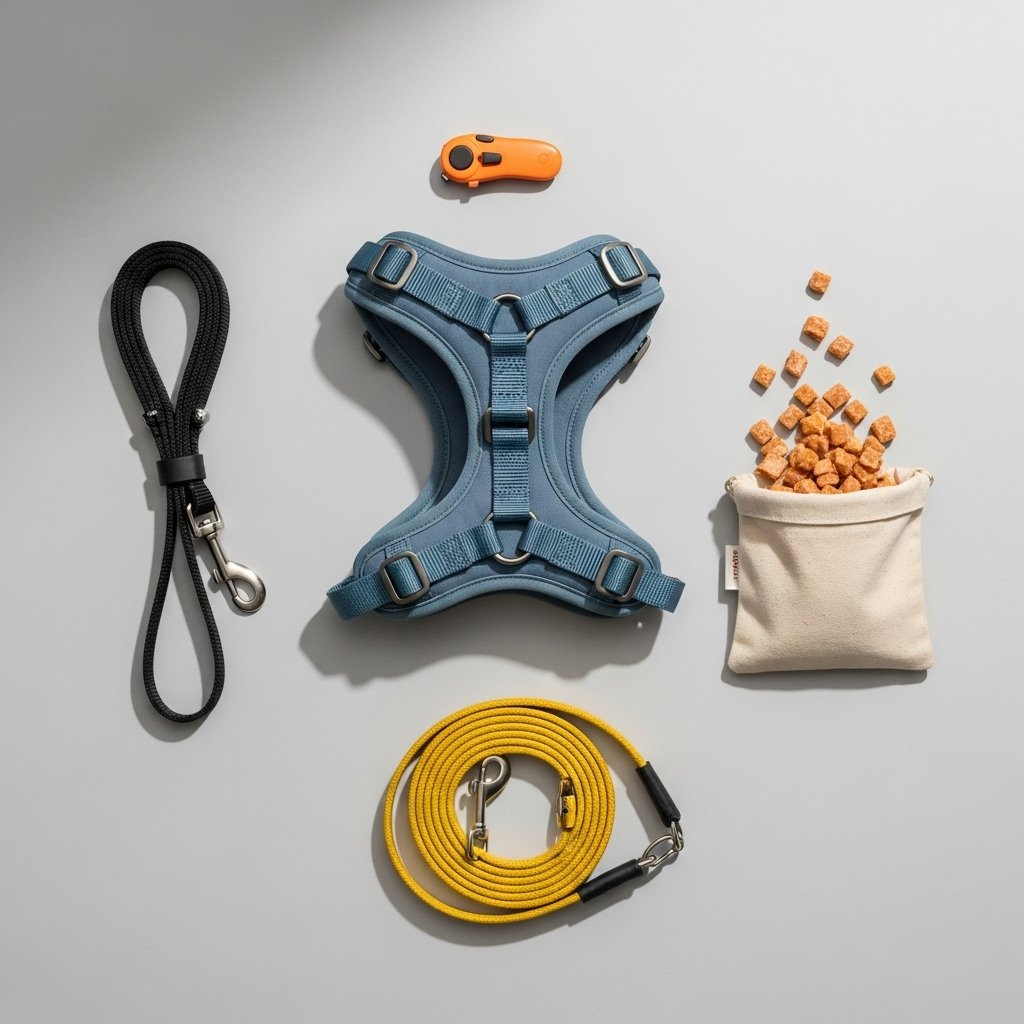
Before beginning the training process, gathering the right equipment is essential for setting you and your dog up for success. The goal is to create a positive and controlled learning environment. You do not need expensive or complicated gadgets; the focus is on safety, comfort, and effective reinforcement.
Must-Have Equipment
- High-Value Treats: These are not your dog’s everyday kibble. Think small, soft, and incredibly delicious morsels like boiled chicken, small pieces of cheese, or commercial training treats that your dog absolutely loves. The treat’s value must be higher than the fear your dog is experiencing.
- A Comfortable Harness: A well-fitting, front-clip or back-clip harness is preferable to a collar. It prevents pressure on your dog’s trachea if they pull and gives you better, more gentle control without causing discomfort or increasing anxiety.
- A Standard-Length Leash (4-6 feet): This leash is for close-proximity work and ensuring your dog’s safety. Avoid retractable leashes, as they offer less control and can snap, further frightening an already anxious dog.
- A Long Line (15-30 feet): A long line is invaluable for the initial stages of training when you need to work at a greater distance from the door while still keeping your dog safely secured.
- A Clicker (Optional): For those familiar with clicker training, this tool can be excellent for precisely marking the moment your dog displays calm behavior. If you are not a clicker trainer, a consistent verbal marker like a clear “Yes!” works just as well.
Preparing these items in a dedicated ‘training bag’ can make your sessions more efficient and less stressful. Having everything ready allows you to focus entirely on your dog’s body language and the training process itself.
The Step-by-Step Desensitization and Counter-Conditioning (DSCC) Protocol
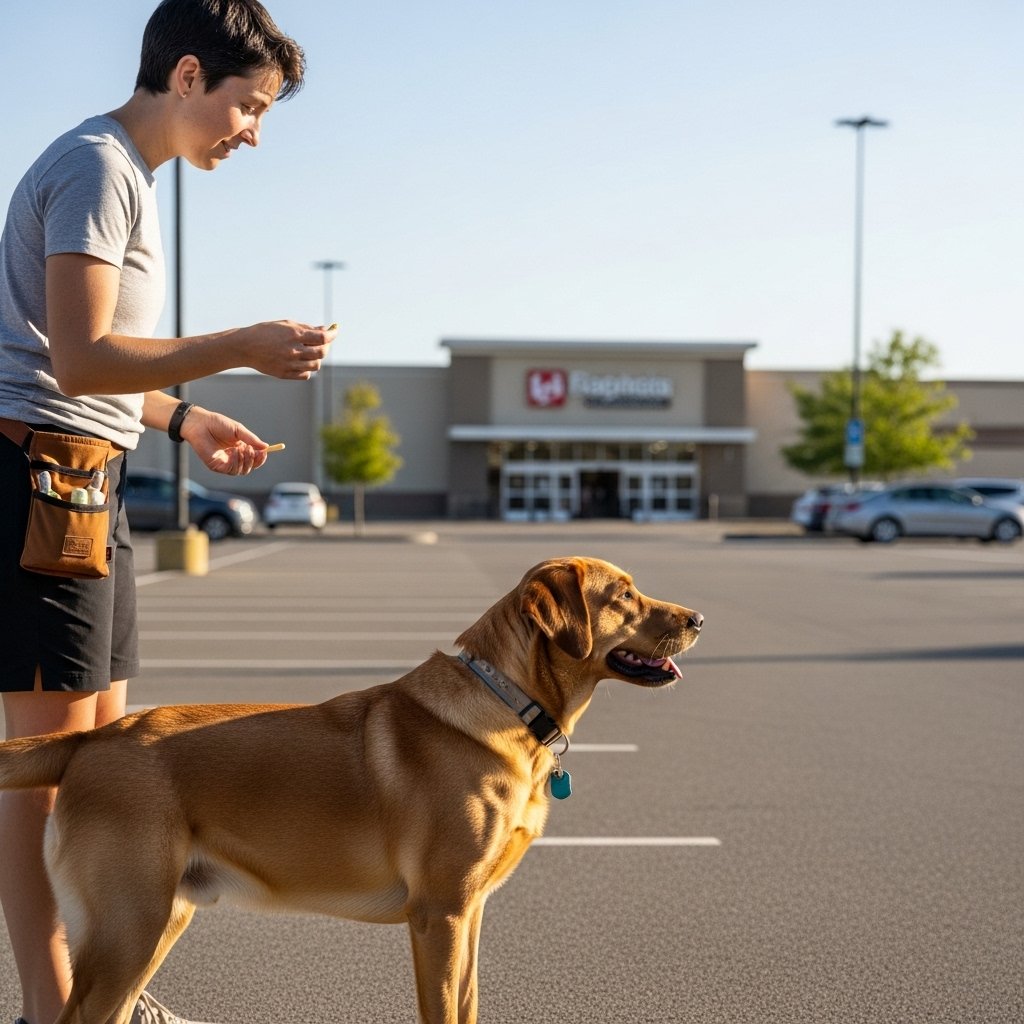
This protocol is the core of the training plan. Desensitization means gradually exposing your dog to the scary thing (the door) at a level that does not produce fear. Counter-conditioning means changing your dog’s fearful association into a positive one by pairing the scary thing with something wonderful (high-value treats). The key is to always work sub-threshold, meaning at a level of intensity where your dog is aware of the stimulus but not frightened by it.
Each session should be short (5-10 minutes) and end on a positive note. Do not rush the process; progress is measured in weeks, not days.
-
Step 1: Find the Threshold
Take your dog to a location with an automatic door, like a grocery store, during a less busy time. Using your long line for safety, start far away in the parking lot. Slowly walk toward the entrance until you find the exact distance where your dog first notices the door and shows a very mild sign of concern (e.g., a slight ear twitch, a momentary pause). This is your dog’s threshold. Immediately stop, turn around, and walk a few feet further away to a point where they are completely relaxed. This is your starting training distance.
-
Step 2: The ‘Look at That’ Game
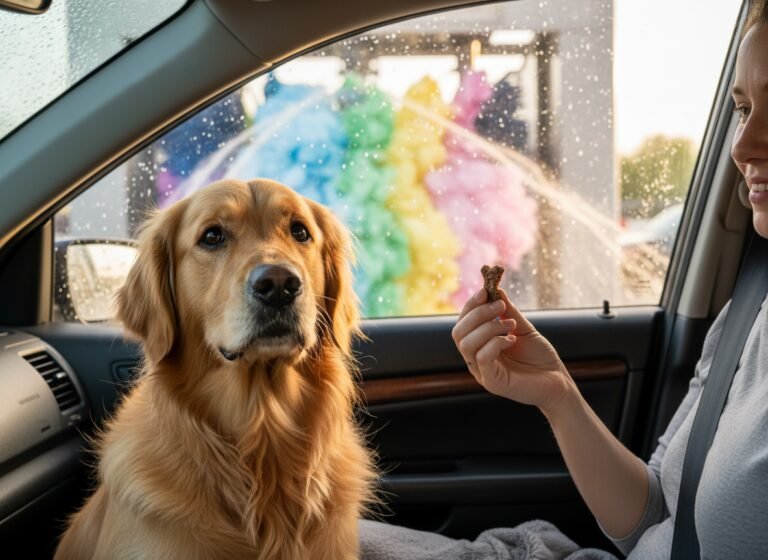
At your starting distance, wait for your dog to glance at the sliding door. The very instant their head turns toward the door, use your marker word (“Yes!”) or click, and immediately give them a high-value treat. The goal is for the dog to look at the door and then immediately look back to you for the reward. Repeat this for a few minutes. If the dog is too nervous to take a treat, you are too close. Increase the distance.
-
Step 3: Introduce Door Movement
Once your dog is comfortable with the static door, you need to add movement. It’s often best to enlist a helper for this. While you and your dog play the ‘Look at That’ game at a safe distance, have your helper walk through the door, causing it to open and close. Mark and reward your dog for calmly observing the movement. Start with infrequent activations and gradually increase the frequency as your dog’s confidence grows.
-
Step 4: Decrease the Distance
Over many sessions, once your dog is consistently and happily looking at the moving door from a distance and looking back to you for a treat, you can begin to slowly decrease the distance. Move forward only a few feet at a time. If at any point your dog shows signs of fear (tucking tail, panting, refusing treats), you have moved too quickly. Simply increase the distance back to where they were last successful and work there a bit longer before trying to advance again.
-
Step 5: Parallel Pathing and Quick Pass-Throughs
When you can work relatively close to the entrance, practice walking past the entrance in a parallel line, not directly toward it. Reward your dog for staying calm as you pass. The final step is a quick pass-through. On a loose leash, with a happy tone, walk briskly through the door while dropping a few high-value treats on the ground just inside. Don’t linger. Go in, get the treats, and immediately exit. The entire experience should be fast, positive, and focused on the food.
Patience is Paramount: Never drag or force your dog through a door. This will only intensify their fear and damage their trust in you. Let the dog set the pace.
Troubleshooting and Common Mistakes to Avoid
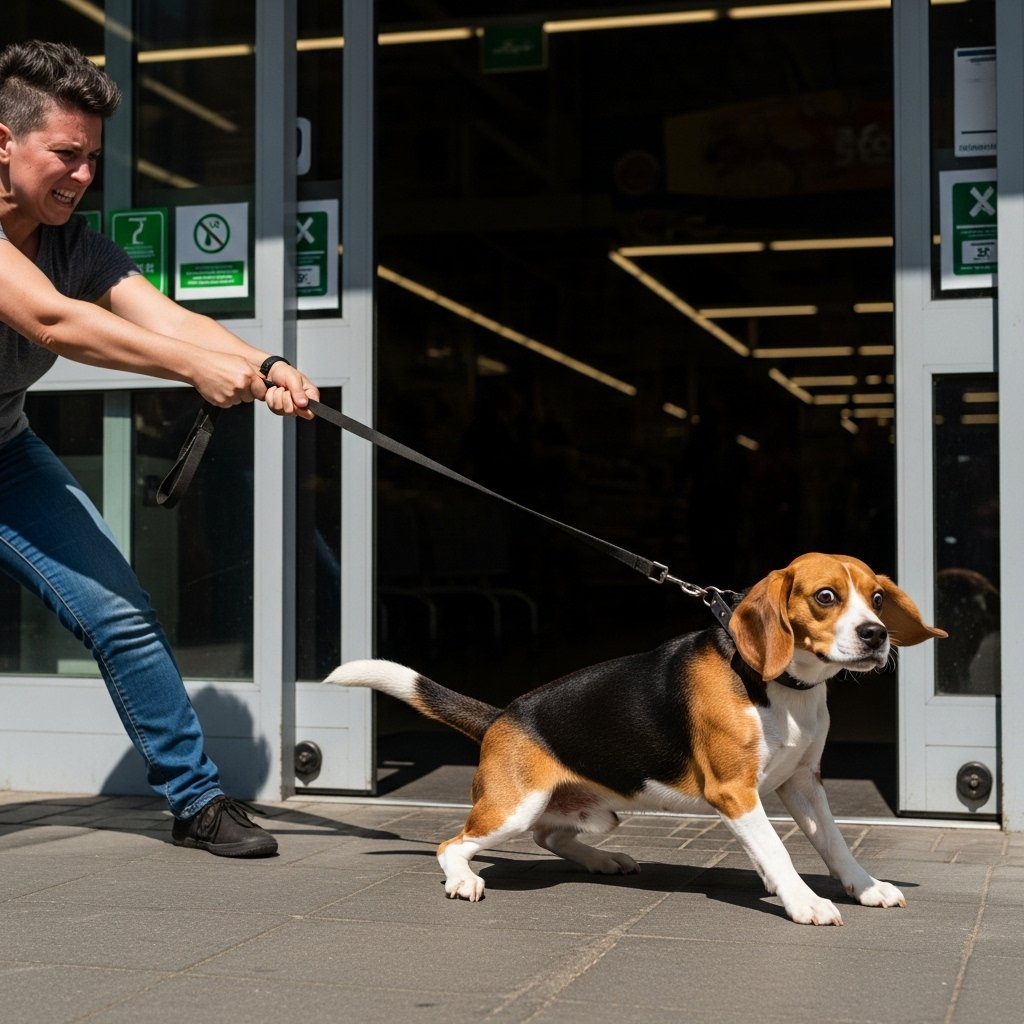
Even with the best plan, you may encounter setbacks. Understanding common pitfalls can help you troubleshoot your training and stay on the right track. The most critical rule is to protect your dog from a frightening experience, as this can undo your hard work.
Common Training Errors
- Flooding: This is the most damaging mistake. Flooding is the act of forcing a dog into a situation where they are overwhelmed by their fear, such as dragging them through the sliding doors. This does not teach them the door is safe; it teaches them that they cannot escape a terrifying situation and that they cannot trust their handler. It sensitizes them further and can create other, more severe behavior problems.
- Moving Too Quickly: Enthusiasm for your dog’s progress is great, but advancing the steps too quickly is a primary cause of failure. Each step must be mastered with the dog showing relaxed, happy body language before you increase the difficulty. If your dog is showing stress signals (lip licking, yawning, whale eye), you need to take a step back.
- Inconsistent Sessions: Short, frequent training sessions are more effective than long, infrequent ones. Consistency is key to building new neural pathways and positive associations in your dog’s brain. Aim for a few 5-minute sessions per week rather than one hour-long session on the weekend.
- Using Low-Value Rewards: The reward must be more powerful than the fear. If your dog is not eagerly taking the treat, it is not high-value enough for the situation, or you are too close to the trigger and their anxiety is overriding their appetite.
- Punishing Fearful Behavior: Never scold, jerk the leash, or otherwise punish a dog for showing fear. Fear is an involuntary emotional response, not a choice. Punishment will only add another negative association to the situation, making the phobia worse and eroding your dog’s trust in you.
If you feel stuck or your dog’s fear is not improving, it’s a sign to re-evaluate your approach, increase your distance, and potentially seek professional guidance. Every dog is an individual, and some require a more nuanced plan.
When to Seek Professional Help
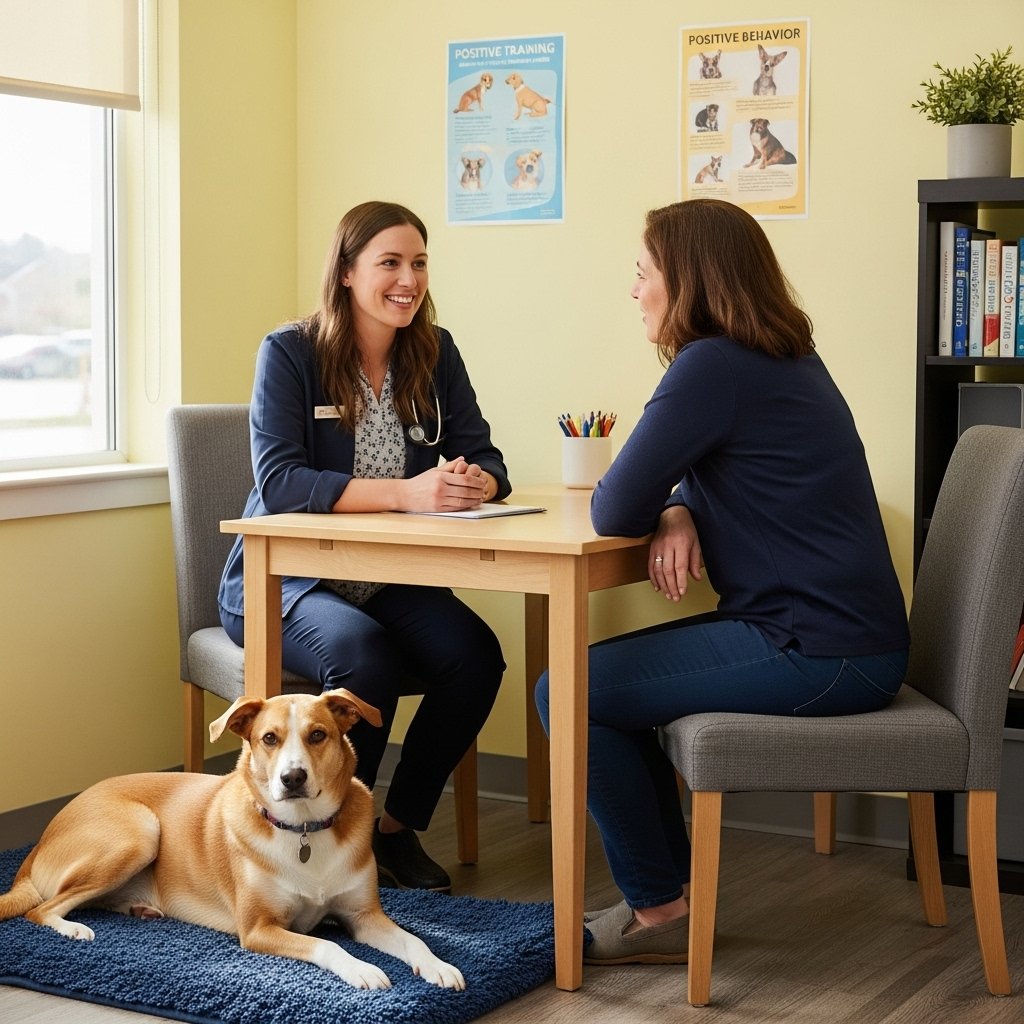
While many cases of mild to moderate sliding door phobia can be managed with the protocol outlined above, some situations warrant the intervention of a qualified professional. There is no shame in seeking help; it is a responsible and loving choice for your pet’s well-being.
Signs You Need a Professional
- Lack of Progress: If you have been consistently working for several weeks with no discernible improvement, a professional can help identify subtle roadblocks you may be missing.
- Extreme Panic Responses: If your dog’s reaction to the doors is not just nervousness but outright panic—such as uncontrollable shaking, drooling, trying to bolt, or having accidents—this is beyond the scope of simple DSCC and requires professional guidance.
- Generalized Anxiety: If the fear of sliding doors is just one symptom of a larger, more generalized anxiety disorder (e.g., the dog is also afraid of loud noises, strangers, new environments), a comprehensive behavior modification plan is needed.
- Aggressive Reactions: If your dog’s fear manifests as aggression (growling, snapping, or lunging), it is crucial to stop training immediately and consult a professional for safety reasons.
Who to Contact
When looking for help, it’s important to find the right qualifications. Look for these credentials:
- Veterinary Behaviorist (DACVB): This is a veterinarian who has undergone extensive, specialized training in animal behavior. They can diagnose underlying medical conditions that may contribute to anxiety and can prescribe medication if necessary as part of a holistic treatment plan.
- Certified Applied Animal Behaviorist (CAAB): These are professionals with advanced degrees (Ph.D. or Master’s) in animal behavior.
- Certified Professional Dog Trainer (CPDT-KA/KSA): Look for trainers who are certified by reputable, science-based organizations and who explicitly state they use positive reinforcement methods. Ask them about their experience with phobias and anxiety cases.
A professional can provide a tailored training plan, help you with timing and technique, and offer support when you feel overwhelmed. Their expertise can be the key to unlocking progress for dogs with more deeply ingrained fears.
Conclusion
Helping your dog conquer a phobia of sliding doors is a journey of trust-building and communication. It is a testament to the deep bond you share. By understanding the root of their fear, arming yourself with the right tools, and patiently applying the principles of desensitization and counter-conditioning, you can systematically reshape their perception of these everyday obstacles. Remember that every small step forward is a victory. Celebrate the calm glances, the relaxed body language, and the growing confidence your dog displays.
The most important elements of this process are your patience and your commitment to positivity. Avoidance of punishment and a refusal to flood your dog are non-negotiable pillars of this training. By remaining a safe and predictable leader, you empower your dog to face their fears, knowing you are there to support them. While the path may have its challenges, the result is a more resilient, confident canine companion who can navigate the human world with greater ease and less stress, allowing you both to enjoy more of life’s adventures together.