The Ultimate Guide To Stopping The Midnight Trash Raider Forever
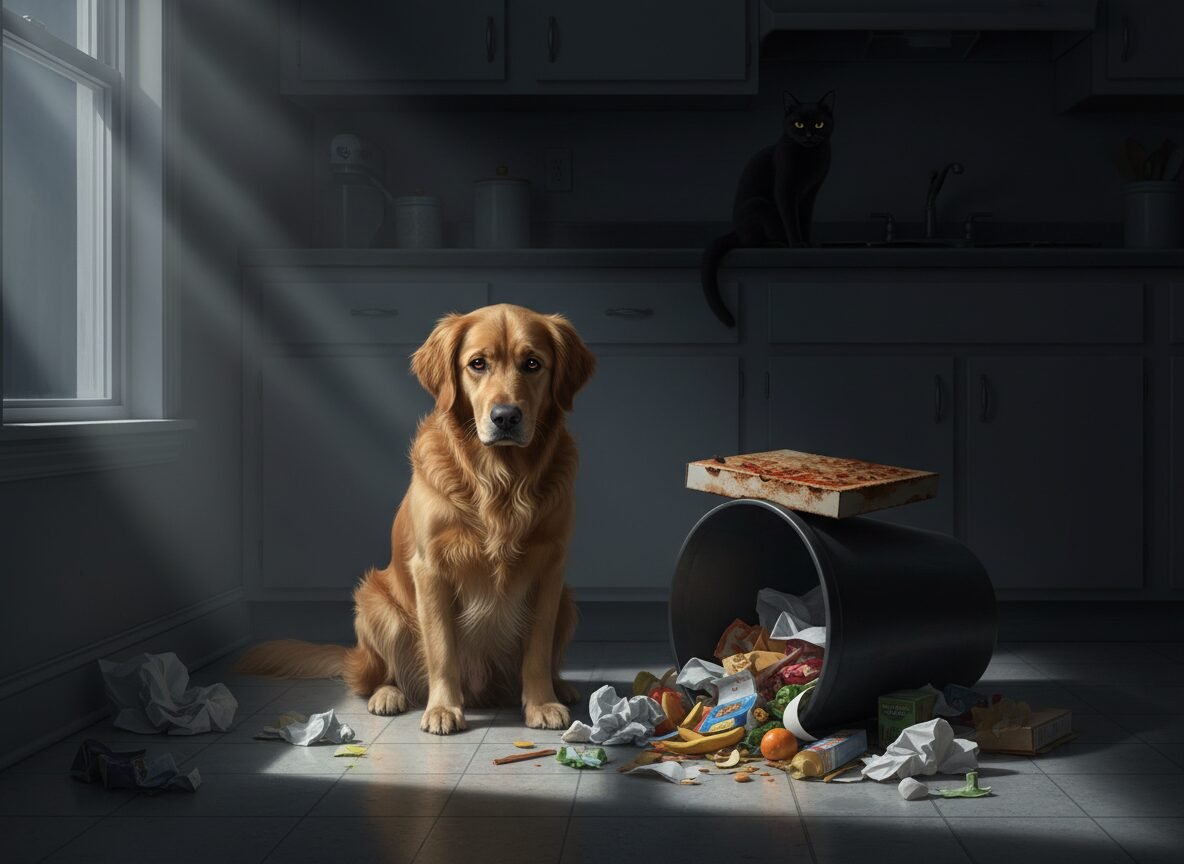
The jarring sound of a crashing trash can in the dead of night is a familiar and frustrating experience for many dog owners. You rush into the kitchen to find a triumphant—or perhaps guilty—canine surrounded by the spoils of their latest raid. This behavior, while common, is more than just a messy inconvenience; it poses significant health risks to your dog, from ingesting toxic foods to potential intestinal blockages. Stopping this ‘midnight trash raider’ requires more than just a stern ‘No!’. It demands a multi-faceted approach that addresses instinct, environment, and training.
This definitive guide provides a professional framework for understanding and resolving your dog’s trash-raiding habits for good. We will delve into the deep-seated canine instincts that drive this behavior, establish foolproof management strategies to prevent immediate access, and outline step-by-step training protocols to build reliable impulse control. By combining environmental management with positive reinforcement and proper enrichment, you can create a lasting solution that ensures both the safety of your pet and the sanitation of your home.
Why Your Dog Sees Treasure in Your Trash
Understanding the Canine Instinct to Scavenge
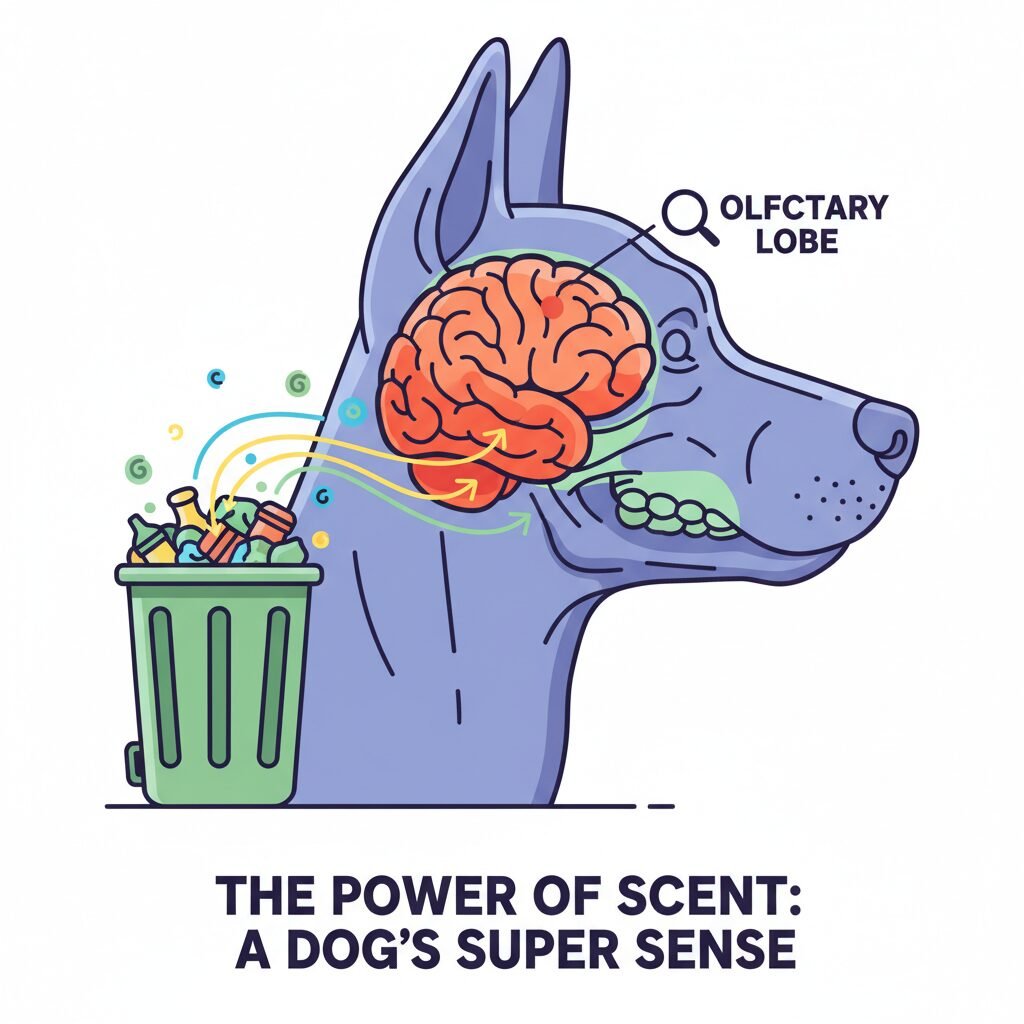
Before you can effectively modify a behavior, you must first understand its origin. A dog’s attraction to the trash bin isn’t a sign of defiance or spite; it’s a deeply ingrained instinct. Domestication has not erased the powerful, primal drive to scavenge for food that allowed their ancestors to survive. To your dog, the trash can is not a receptacle for waste—it’s a treasure chest of intoxicating aromas and high-value rewards.
The Power of Scent
A dog’s sense of smell is estimated to be 10,000 to 100,000 times more acute than ours. The combination of discarded food items—leftover chicken, vegetable peels, used paper towels soaked in grease—creates a potent olfactory cocktail that is nearly impossible for a dog to ignore. What we find repulsive, they find irresistible. This scent profile signals a potential source of calories and valuable nutrients, triggering a powerful foraging instinct.
Underlying Behavioral Triggers
While instinct is the primary driver, other factors can exacerbate trash-raiding behavior:
- Boredom and Lack of Enrichment: A dog without sufficient mental or physical stimulation will often create its own ‘fun.’ Knocking over a trash can is an incredibly engaging activity. It involves problem-solving (how to open it), physical exertion (tipping it over), and a grand finale of sensory rewards (the smells and tastes).
- True Hunger: It is crucial to assess if your dog’s diet is meeting their nutritional needs. An inadequate or improperly balanced diet can lead to a persistent feeling of hunger, driving them to seek out supplemental food sources. Consult your veterinarian to ensure your dog’s caloric intake and feeding schedule are appropriate for their age, breed, and activity level.
- Opportunism and Reinforcement: Every time your dog successfully raids the trash, the behavior is powerfully reinforced. They learn that the bin contains delicious rewards, making them more likely to try again. This creates a strong cycle of self-rewarding behavior that can be challenging to break without intervention.
Fortifying the Kitchen: Your First Line of Defense
The Foundation: Management and Prevention
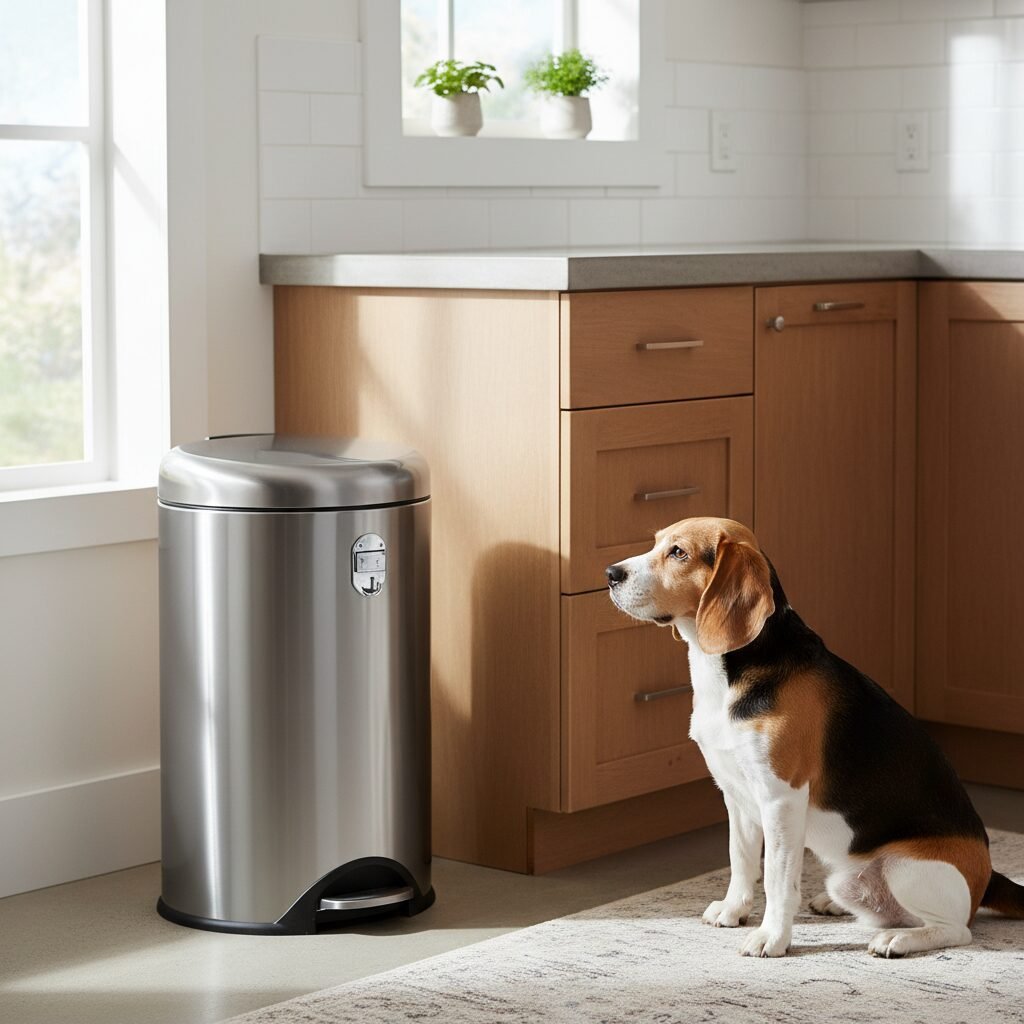
Training is essential for a long-term solution, but immediate management is non-negotiable for your dog’s safety. Management means altering the environment to make the undesirable behavior impossible. You cannot train a dog not to raid the trash if they are constantly given the opportunity to practice and be rewarded by the behavior. Your first priority is to make the trash can completely inaccessible.
Choosing the Right Equipment
Investing in a dog-proof trash can is the single most effective management step you can take. A standard open-top bin or a flimsy plastic can is an open invitation. Consider these options:
| Trash Can Type | Mechanism | Best For | Potential Downsides |
|---|---|---|---|
| Heavy-Duty Step Can | Requires foot pressure on a pedal to open a tight-fitting lid. | Most dogs, except for very large or clever ones who can operate the pedal. | Some dogs learn to nudge the pedal or knock the entire can over. |
| Locking Lid Can | Features a manual latch or slide-lock that secures the lid. | Persistent and intelligent dogs who can figure out simple mechanisms. | Requires a consistent habit from all humans in the house to re-lock it every time. |
| Cabinet-Mounted Bin | The trash can is stored inside a kitchen cabinet, often on a pull-out slider. | Excellent for nearly all dogs, as it puts the bin completely out of sight and reach. | Requires cabinet space and installation; may not be an option for renters. |
| Motion-Sensor Can | The lid opens automatically when a hand is waved over it. | Small or timid dogs who may be startled by the mechanism. | Smart dogs may learn to trigger the sensor, and batteries need replacing. |
Strategic Placement
If a new trash can isn’t in the budget, placement becomes your primary tool. The goal is to create a physical barrier. Store your kitchen trash can in a location your dog cannot access, such as:
- Inside a pantry with a closed door.
- Under a kitchen sink with a child-proof latch on the cabinet door.
- In a garage or mudroom that is kept closed off.
Expert Tip: Management is not a temporary fix; it is a permanent part of the solution. Even a well-trained dog can have a moment of weakness. A secure trash can protects them from a potentially fatal mistake.
Building Better Habits: The ‘Leave It’ and ‘Place’ Commands
The Training Protocol: Teaching Impulse Control
With management in place, you can now focus on teaching your dog what you want them to do. The goal is to build strong impulse control and provide your dog with alternative behaviors that are more rewarding than investigating the trash. This training should be done in short, positive sessions away from the trash can itself initially.
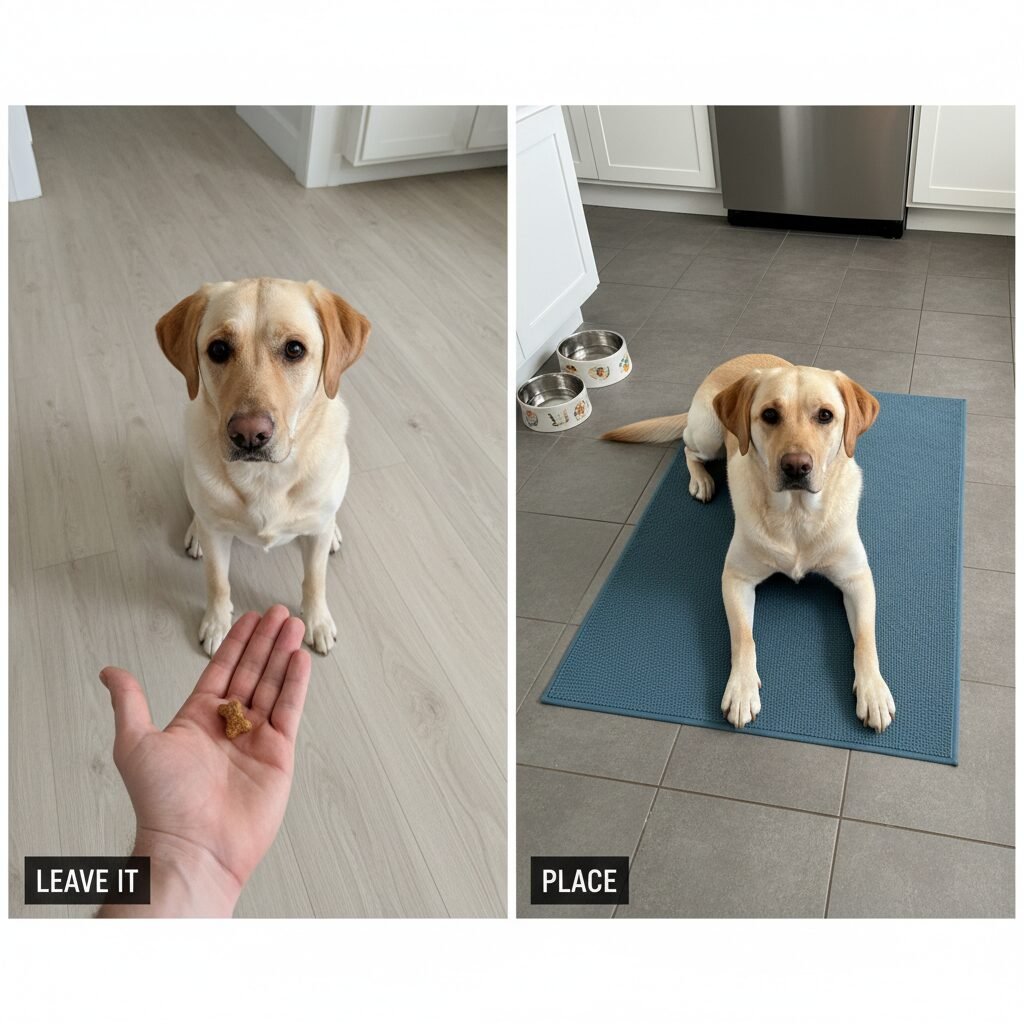
The ‘Leave It’ Command: Your Verbal Barrier
The ‘Leave It’ command teaches your dog to ignore a tempting item on your cue. It is a potentially life-saving skill. Follow these steps:
- Phase 1 (Boring Item): Place a boring, low-value piece of kibble in your closed fist. Let your dog sniff and lick your hand. The moment they turn their head away, even for a second, say ‘Yes!’ and reward them with a high-value treat from your other hand. Repeat until they are readily ignoring your closed fist.
- Phase 2 (Open Hand): Now, place the boring kibble in your open palm. When your dog goes for it, close your fist. When they back away, say ‘Yes!’ and reward from your other hand. The goal is for them to learn that leaving the item alone is what earns the reward.
- Phase 3 (On the Floor): Place the low-value kibble on the floor, but cover it with your hand. When your dog ignores it, reward them. Gradually lift your hand higher and higher off the kibble until it is completely uncovered, rewarding them for not touching it.
- Phase 4 (Adding the Cue): Once your dog is reliably ignoring the floor kibble, add the verbal cue. As you place it down, say ‘Leave It.’ When they ignore it, praise and reward them.
- Phase 5 (Increasing Difficulty): Slowly increase the value of the ‘Leave It’ item, always ensuring the reward you give is of higher value. Practice in different rooms and situations to generalize the command.
The ‘Place’ Command: An Alternative Behavior
Instead of just telling your dog ‘No,’ it’s more effective to tell them what ‘Yes’ is. The ‘Place’ command teaches your dog to go to a specific spot, like their bed or a mat, and stay there. This is invaluable when you are cooking or unable to supervise them closely.
- Introduce the Place: Toss a high-value treat onto your dog’s bed or mat. When they step onto it to get the treat, say ‘Yes!’ Repeat this several times until they are eagerly going to the mat.
- Add the Cue: As they are confidently heading to the mat, add the cue ‘Place’ or ‘Go to your bed.’ Continue to reward them for getting on the mat.
- Build Duration: Once they are on the mat, delay the reward by a second. Then two seconds, then five. Gradually build up the time they must remain on the mat before receiving their treat. Release them with a cue like ‘Okay!’ or ‘Free!’.
- Add Distance and Distractions: Start asking for the ‘Place’ command from further away. Practice while you are doing other things, like walking around the kitchen, opening the fridge, and eventually, opening the (secure) trash can.
Beyond the Bin: Fulfilling Your Dog’s Needs
Addressing the Root Cause: Enrichment and Diet
A well-exercised and mentally stimulated dog is far less likely to engage in destructive or nuisance behaviors like trash raiding. Often, these behaviors are simply a symptom of a larger, unmet need. Addressing your dog’s holistic well-being is a critical component of a permanent solution.
Combating Boredom with Canine Enrichment
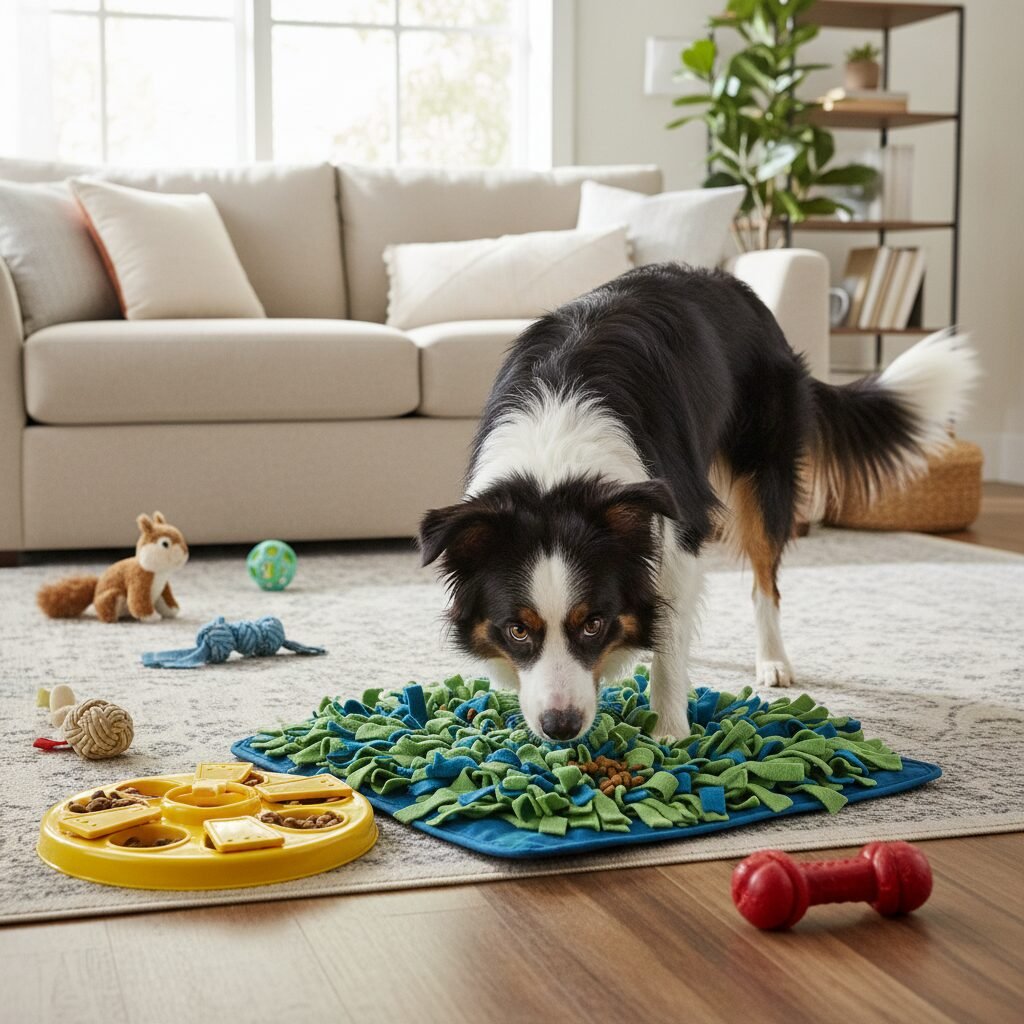
Enrichment refers to activities that allow dogs to engage in their natural behaviors in a safe and appropriate way, reducing stress and boredom. Instead of letting them ‘scavenge’ in the trash, provide them with approved outlets for their energy and intelligence.
- Food Puzzles and Slow Feeders: Ditch the standard food bowl. Feeding your dog’s meals from a puzzle toy or snuffle mat forces them to work for their food, engaging their brain and nose. This mimics the natural foraging process and can be very satisfying for them.
- Scheduled Training Sessions: Short, daily training sessions (5-10 minutes) reinforce good behavior and strengthen your bond. Work on commands they already know and introduce new tricks. This mental workout is often more tiring than physical exercise.
- Appropriate Chew Toys: Provide a variety of safe and durable chew toys. Chewing is a natural stress-relieving behavior for dogs. Regularly rotating the toys can help maintain their novelty and interest.
- Scent Work Games: Hide treats or your dog’s favorite toy around the house and encourage them to ‘Find It.’ This is a fantastic way to engage their powerful sense of smell and provides an excellent mental workout.
Evaluating Your Dog’s Diet
While opportunism is often the main driver, you must rule out genuine hunger. A dog that is constantly hungry will be more motivated to find extra food. It is imperative to consult with your veterinarian to assess your dog’s body condition and diet. They can help you determine:
- If the type of food you are providing is nutritionally complete and appropriate for their life stage.
- If the quantity of food is correct for their ideal weight and activity level.
- If the feeding schedule (once, twice, or three times a day) is optimal for keeping them satiated.
Sometimes a simple dietary adjustment, such as switching to a food with higher fiber content to promote a feeling of fullness, can make a significant difference in scavenging behavior.
When Raids Persist: Troubleshooting and What Not to Do
Troubleshooting Common Issues and Avoiding Pitfalls
Even with the best management and training plan, you may encounter setbacks. Understanding how to troubleshoot these situations and what common mistakes to avoid is crucial for long-term success.
The ‘Only When I’m Gone’ Raider
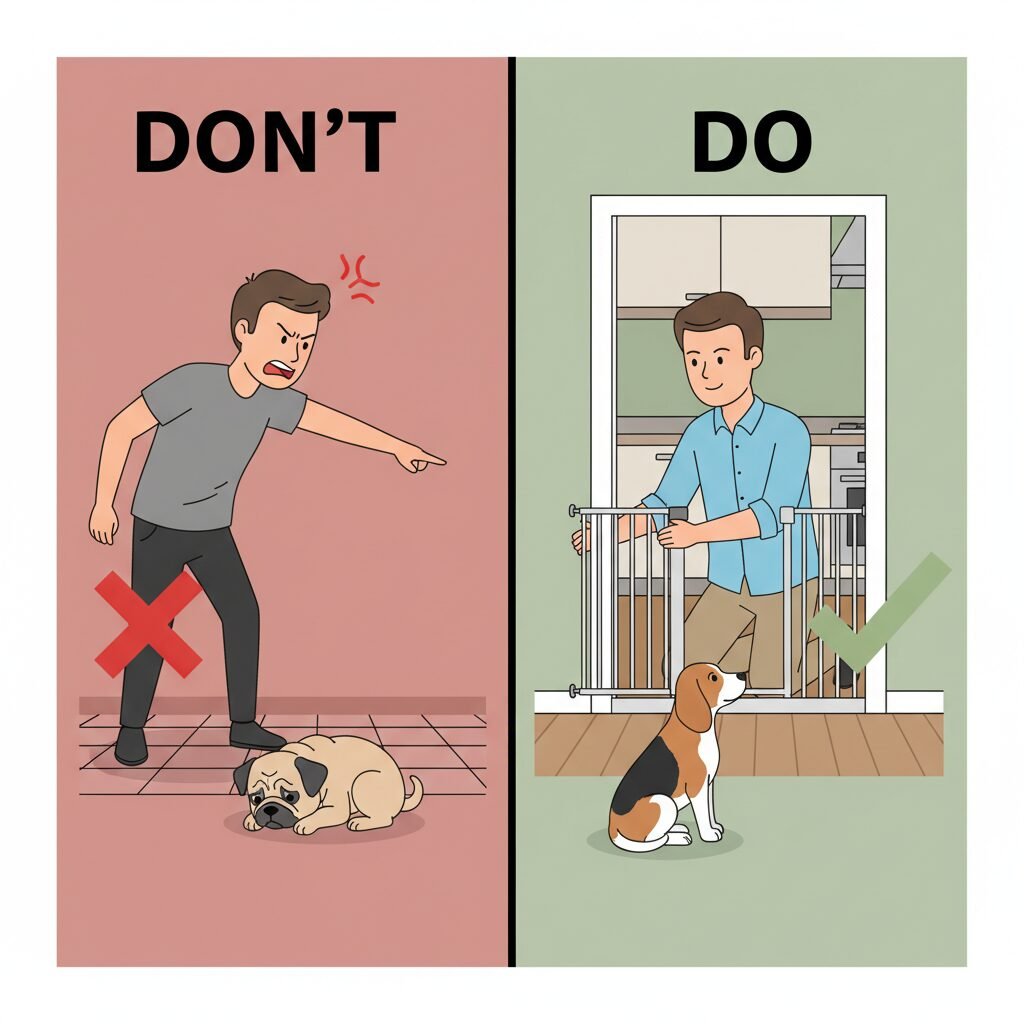
One of the most common complaints is that the dog only raids the trash when the owners are away. This is a clear sign that the behavior is purely opportunistic, not defiant. The dog understands there is no one present to interrupt them. In this case, management is the only solution. The dog must not have access to the kitchen or the trash can when unsupervised. This can be achieved by:
- Using baby gates to block off the kitchen.
- Crate training your dog so they have a safe, comfortable space to rest when you are out.
- Ensuring the trash is in a locked room or secure cabinet before you leave.
The Dangers of Punishment
It is a natural human reaction to feel angry when you discover a trashed kitchen. However, punishing your dog after the fact is not only ineffective but also detrimental to your relationship.
A Critical Concept: Dogs live in the immediate moment. If you come home and yell at your dog for a mess they made an hour ago, they will not connect your anger to the act of tipping over the trash. They will only associate your arrival with punishment, which can lead to fear, anxiety, and a breakdown of trust. The ‘guilty look’ is not guilt; it is a submissive posture in response to your angry tone and body language.
Never punish your dog for trash raiding. Instead, calmly clean up the mess without interacting with your dog, and then reassess your management plan to determine how they gained access. The failure was in the prevention, not in the dog’s behavior.
The Importance of Consistency
For any training plan to succeed, every member of the household must be on board. If one person diligently locks the trash can and another frequently forgets, the dog receives mixed signals and will continue to test the bin. Hold a family meeting to explain the new rules: the trash can lid is always locked, the cabinet door is always latched, and the dog is never left unsupervised in the kitchen. Consistency is the key to creating new, lasting habits for both humans and dogs.
Conclusion
Transforming your midnight trash raider into a well-behaved canine citizen is a completely achievable goal. Success hinges on a consistent, three-pronged strategy: diligent management to make the behavior impossible, positive training to build impulse control and offer better alternatives, and dedicated enrichment to meet your dog’s fundamental needs. Remember that you are working against a powerful natural instinct, and progress requires patience and empathy.
By securing the environment, teaching commands like ‘Leave It’ and ‘Place,’ and ensuring your dog is happy and fulfilled, you are not just solving a messy problem. You are building a stronger bond of communication and trust, ensuring your dog’s safety, and creating a more peaceful and harmonious home for everyone. The quiet nights and clean kitchen floors will be well worth the effort.