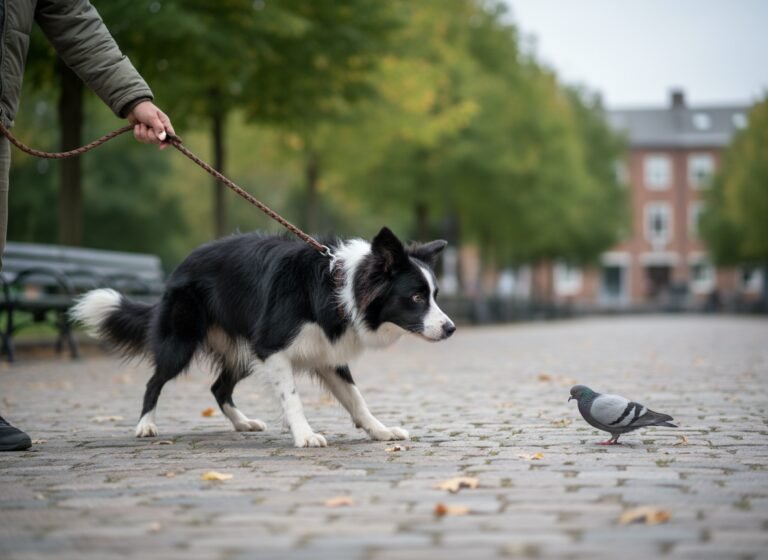
End Dinner Begging: How to Eat in Peace Without Those Sad Puppy Eyes

The scene is familiar to countless pet owners. You sit down to enjoy a well-deserved meal, and within moments, you feel a gentle nudge, hear a soft whine, or meet a pair of soulful, pleading eyes. Dinner-time begging is one of the most common and frustrating behavioral challenges dogs present. It transforms a relaxing meal into a battle of wills, often laced with guilt. While it may seem harmless, giving in to this behavior not only reinforces a bad habit but can also lead to dietary issues and create an unbalanced dynamic in your home.
Understanding that begging is not a sign of malice but a combination of instinct and learned behavior is the first step toward resolving it. Dogs are natural opportunists and scavengers, and for thousands of years, their survival depended on securing food whenever possible. When we, as their loving owners, occasionally drop a morsel or offer a treat from our plate, we are unintentionally teaching them a powerful lesson: begging works. This guide is designed to help you break that cycle. We will move beyond simple commands and delve into a holistic approach that combines management, targeted training, and household consistency to teach your dog polite mealtime manners. By following this professional protocol, you can finally eat in peace and foster a more respectful, well-understood relationship with your canine companion.
Why Dogs Beg: Unpacking the Instincts and Habits

Before you can effectively modify a behavior, you must first understand its origin. Begging is not simply a ‘bad habit’; it’s a complex behavior rooted in both deep-seated instinct and simple conditioning. By appreciating the ‘why,’ you can approach training with more empathy and strategic insight.
The Ancestral Scavenger
Domestication has not erased the core instincts of the dog’s wild ancestors. Wolves and early canids were opportunistic scavengers. In a pack setting, observing the alpha members eat and then waiting for leftovers was a crucial survival skill. This behavior of watching, waiting, and positioning oneself for a potential share is hardwired into your dog’s DNA. When your dog watches you eat with intense focus, it is, on a primal level, acting out this ancient survival strategy. They see you as the provider, the ‘alpha’ of the pack, and are waiting for their turn.
The Power of Reinforcement
While instinct lays the groundwork, it is human interaction that solidifies begging as a persistent habit. This is a classic example of operant conditioning. The behavior (begging) is followed by a consequence (receiving food). If the consequence is rewarding, the behavior is more likely to be repeated. Consider these scenarios:
- Accidental Rewards: A small piece of chicken falls off your fork. To your dog, this is a jackpot. They learn that proximity to the table during dinner can lead to unexpected prizes.
- Intentional Rewards: You give in to those sad eyes ‘just this once.’ Unfortunately, dogs do not understand ‘just once.’ They understand that their strategy of staring, whining, or pawing was successful. This creates a ‘variable reinforcement schedule’—the same principle that makes slot machines so addictive. Because they don’t get a reward every time, they become more persistent, hoping this will be the time it pays off.
- Social Facilitation: Dogs are highly social animals. Eating is a communal activity. They naturally want to be part of what the family group is doing. This desire for inclusion, combined with the enticing smells of human food, creates a powerful draw to the dinner table.
It is crucial to recognize that from your dog’s perspective, begging is a logical and effective strategy that has been rewarded in the past. To change the behavior, we must make it consistently unrewarding and teach a more desirable alternative.
Setting the Stage for Success: Management Before Training
Effective dog training is as much about prevention as it is about teaching. Before you even begin to actively train a new behavior, you must manage the environment to prevent the old, unwanted behavior from being practiced and reinforced. Management is your first line of defense; it provides immediate relief from the problem while you work on a long-term solution.
The Golden Rule: Stop All Reinforcement
The single most important step is to establish a strict, household-wide rule: the dog is never, ever fed from the dinner table or from your plate again. This includes small tidbits during cooking, a dropped piece of food you allow them to ‘clean up,’ or a final lick of the plate. Consistency is non-negotiable. One person giving in can sabotage weeks of effort. This ‘extinction’ process—where the behavior stops yielding a reward—is the foundation upon which all other training rests.
Strategic Management Techniques
Here are several practical ways to manage your dog during your mealtimes to make begging impossible:
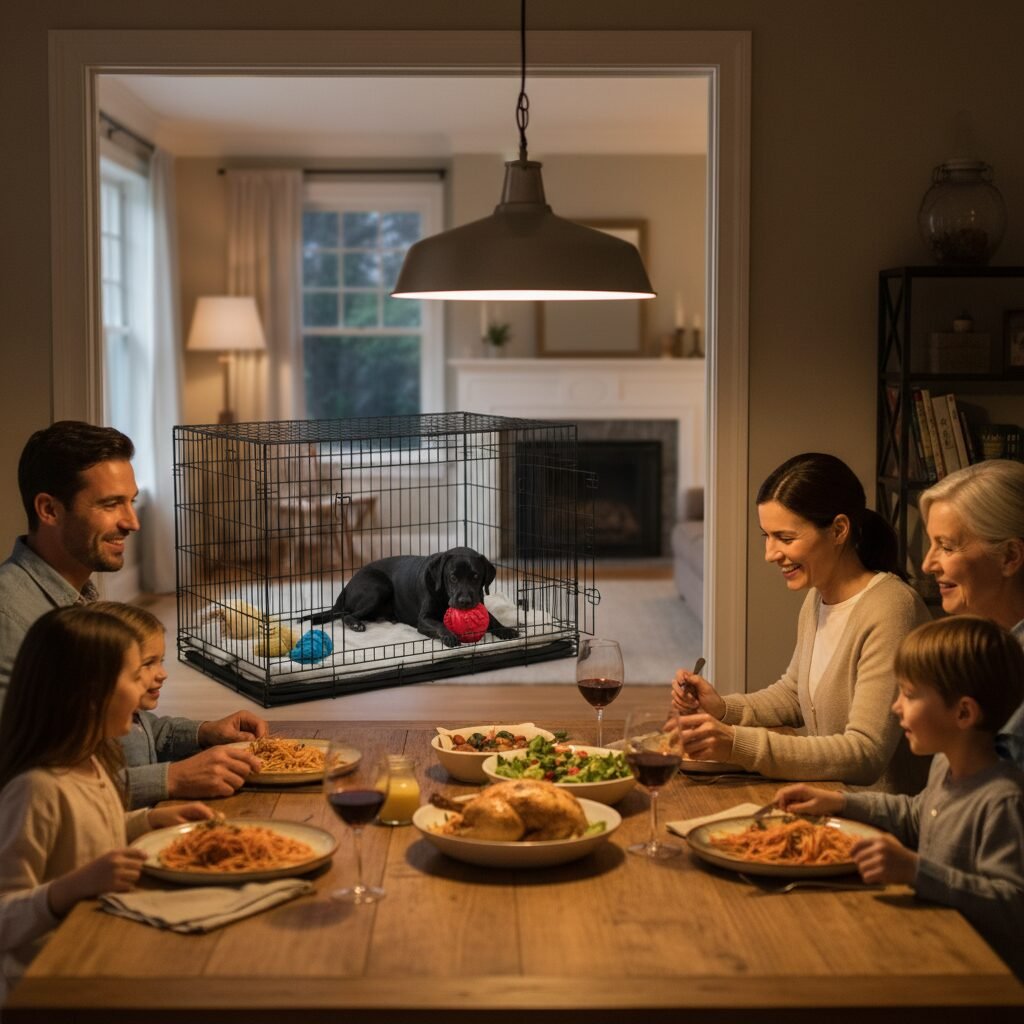
- Crate or Separate Room: The simplest solution is to have your dog in their crate with a special chew or in another room behind a closed door or baby gate while you eat. This is not a punishment. Frame it as their special time. Give them a high-value item they only get during your mealtimes, such as a frozen Kong stuffed with peanut butter or a long-lasting dental chew. This creates a positive association with being separated during dinner.
- Concurrent Mealtimes: Feed your dog their own meal in their own bowl at the same time the family sits down to eat. This redirects their focus to their own food and satisfies their immediate hunger, making them less likely to be preoccupied with yours.
- Tethering: Use a leash to tether your dog to a heavy piece of furniture a comfortable distance away from the table. Place their bed or mat there and provide them with a toy. This keeps them nearby but prevents them from getting underfoot and practicing the close-contact begging behaviors like nudging or placing their head in your lap.
By managing the situation, you are not avoiding the problem; you are preventing your dog from failing. This sets both of you up for a more positive and less frustrating training experience.
The ‘Go to Your Spot’ Method: A Step-by-Step Training Protocol
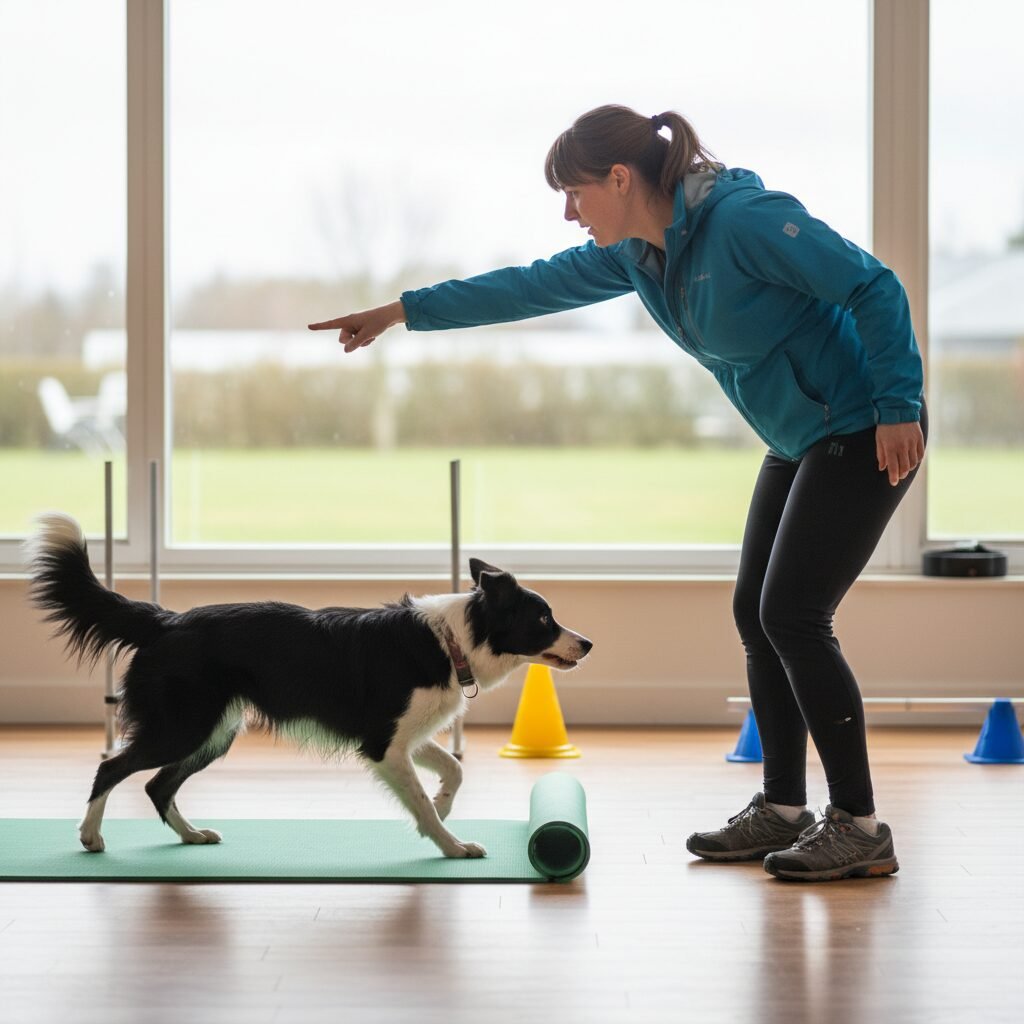
Once you have a solid management plan in place, you can begin teaching your dog what you want them to do instead of begging. The ‘Go to Your Spot’ or ‘Place’ command is the gold standard for this situation. It gives your dog a clear job to do, which is far more effective than simply telling them ‘no.’ The ‘spot’ can be a dog bed, a specific mat, or even a raised cot.
Phase 1: Make the Spot a Wonderful Place
Before you even name the behavior, you need to build a powerful positive association with the mat. This is called ‘charging the mat.’ Several times a day, for short sessions, walk over to the mat with your dog. Without saying anything, toss a few high-value treats onto it. Let your dog eat them and walk away. Repeat this process. Your dog will quickly learn that the mat is a place where amazing things happen.
Phase 2: Introduce the Verbal Cue
Now, you can start to link the action with a command. Say your chosen cue—’Go to Your Spot’ or ‘Place’—in a cheerful tone. Lure your dog onto the mat with a treat in your hand. The moment all four paws are on the mat, say ‘Yes!’ or click your clicker, and give them the treat. Release them immediately with a word like ‘Okay!’ or ‘Free!’ Practice this in short, successful repetitions.
Phase 3: Build Duration and a Calm Settle
The goal isn’t just for your dog to touch the mat, but to stay there. Once your dog is reliably going to the mat on cue, start delaying the reward. Lure them to the spot, and once they are there, wait one second before marking (‘Yes!’) and rewarding. Gradually increase this duration. Start rewarding them for calmer behaviors on the mat, like sitting, and eventually, lying down. Periodically drop treats between their paws while they remain on the mat to reward them for staying.
Phase 4: Add Distance and Distractions
Begin practicing from further away. Stand a few feet from the mat and give the cue. When they go, walk over and reward them. Gradually increase the distance. Next, add mild distractions. While they are on the mat, walk around the room. Pick up a book. If they stay, walk back and reward them. The key is to build up the difficulty slowly so your dog is always succeeding.
Phase 5: Implementing During Mealtimes
This is the final test. Before you sit down to eat, send your dog to their spot. Have a small cup of their kibble or low-value treats with you at the table. Periodically, when they are lying quietly on their mat, get up, walk over, and calmly place a treat between their paws. Do not call them to you. You are rewarding them for staying. If they get up, simply say ‘Oops!’ and calmly guide them back to the spot without emotion. It will take time, but they will learn that the only way to get a reward during dinner is to be lying calmly on their spot.
Common Roadblocks and How to Overcome Them
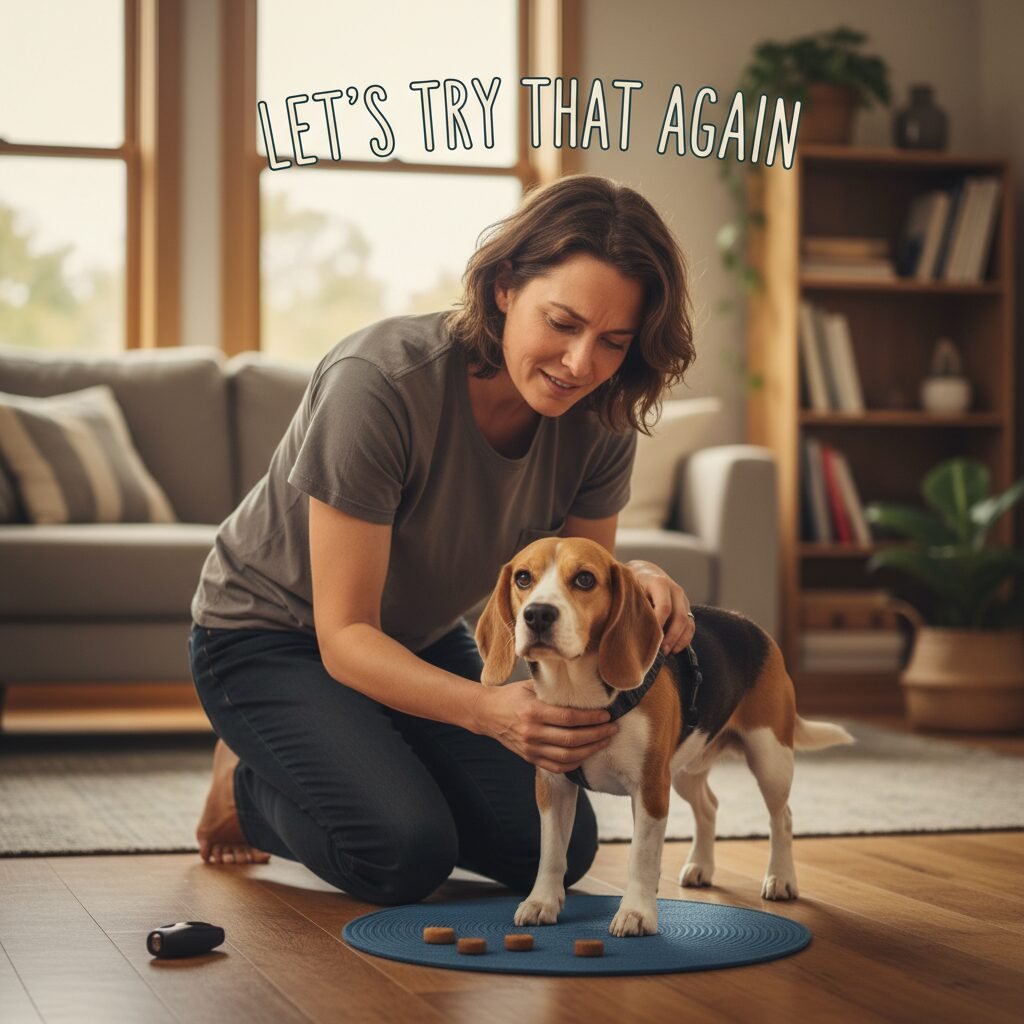
Even with the best training plan, you may encounter challenges. Anticipating these roadblocks and having a strategy to address them will keep you from getting discouraged and help you stay on track.
‘My dog gets up from their spot immediately.’
This is the most common issue and it almost always means you’ve progressed too quickly. The ‘stay’ component of the ‘Go to Your Spot’ command must be built in layers. Go back to Phase 3 and work on building duration. Start with just one second, then two, then five. Use a higher rate of reinforcement. Reward them every few seconds for staying, then gradually stretch out the time between rewards. Ensure the mat is comfortable and in a location where they can still see you, which can reduce separation anxiety.
‘My dog whines, barks, or cries from their spot.’
This is called an ‘extinction burst.’ The dog is trying their old tactics (vocalizing) to get a reward because the previous tactic (staring) is no longer working. It is absolutely critical that you ignore this behavior. Do not look at them, speak to them, or scold them. The instant they are quiet for even a moment, mark that silence with a ‘Yes!’ and go reward them. They will learn that only quiet behavior earns reinforcement. If the vocalizing is extreme, you may need to use a management tool like a stuffed Kong to keep their mouth busy while they are on their spot.
‘What about guests? They always give in!’
Guests can easily undo your hard work. You must be your dog’s advocate. Before guests who are unfamiliar with your rules come over for a meal, have a polite but firm conversation with them. Explain that you are in the middle of a specific training protocol and that it’s very important for your dog’s success that no one feeds them from the table. Most people will be happy to comply when they understand you’re serious about training. For repeat offenders, it’s often easiest to simply use management and have your dog in another room during the meal.
| Challenge | Primary Cause | Solution Strategy |
|---|---|---|
| Dog breaks ‘stay’ | Progressed too quickly; duration not established. | Return to shorter duration exercises. Increase reward frequency. Ensure the ‘spot’ is comfortable. |
| Vocalizing (whining/barking) | Extinction burst; testing old behaviors. | Completely ignore the noise. Heavily reward moments of quiet. Provide a chew toy to occupy them. |
| Guests feeding the dog | Lack of communication; social pressure. | Proactively inform guests of the ‘no feeding’ rule. Use management (e.g., separate room) if necessary. |
| Inconsistent results | Not all family members are following the plan. | Hold a family meeting to ensure everyone understands and consistently applies the rules. |
A United Front: Why Every Family Member Must Be Onboard
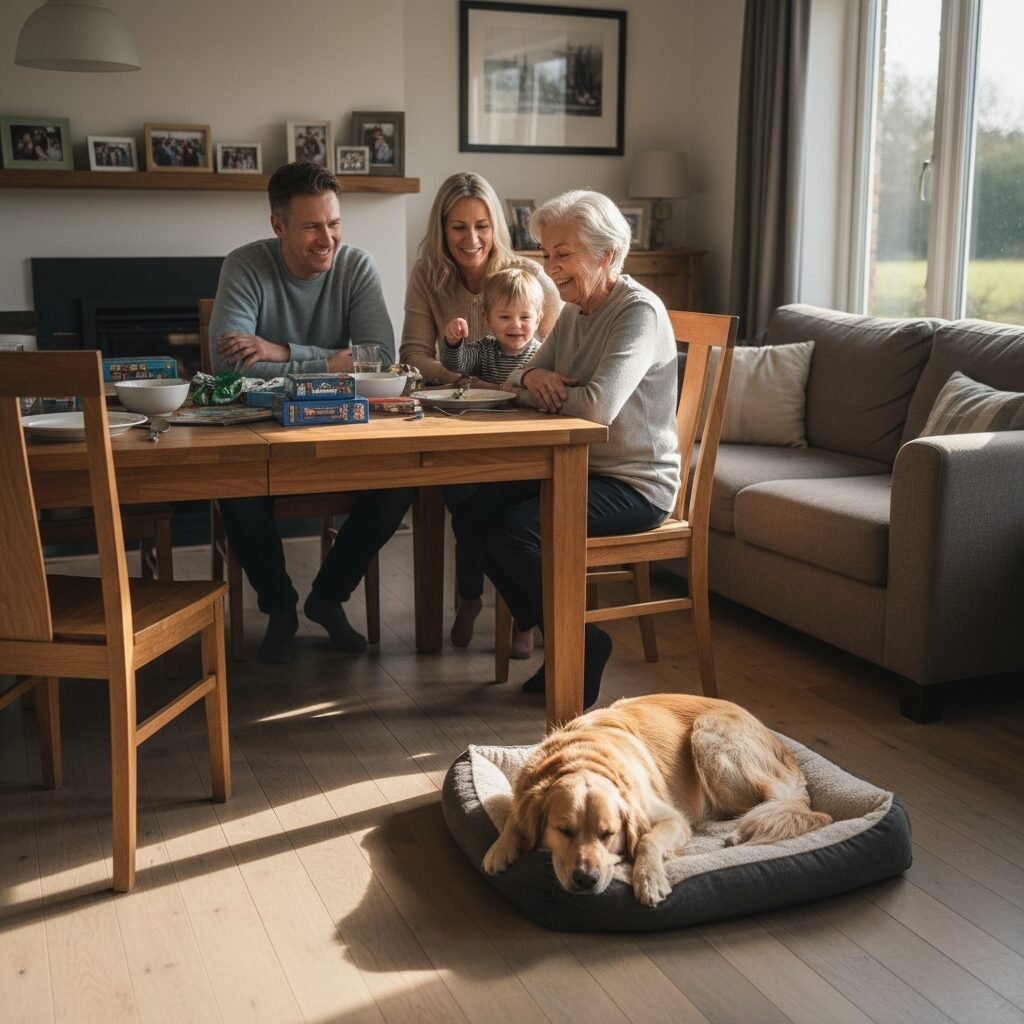
A dog training plan is only as strong as its weakest link. When it comes to ending begging, that weak link is often a well-meaning family member who slips the dog a piece of crust or a fallen green bean. To your dog, there is no difference between a planned reward and a forbidden snack; both powerfully reinforce the act of begging. For training to be successful, every single person in the household must be committed to the same set of rules.
The ‘Slot Machine’ Effect
When one person enforces the ‘no begging’ rule but another occasionally gives in, you are not meeting in the middle. You are creating the aforementioned ‘variable reinforcement schedule.’ The dog learns that while begging doesn’t always work, it sometimes does, which makes the behavior even stronger and more resistant to extinction. They will often target the person they identify as the ‘easy mark,’ increasing the intensity of their begging toward them. This can create friction among family members and sends confusing, unfair messages to your dog.
Achieving Household Consistency
To create a united front, communication and clear boundaries are essential:
- Hold a Family Meeting: Gather everyone who lives in the home, including older children. Explain why you are starting this training and the importance of everyone’s participation. Frame it as being in the dog’s best interest for their health and well-being.
- Define the Rules Clearly: The rules should be simple and absolute. For example: 1. The dog is never fed from a human’s plate. 2. The dog is not fed while people are eating at the table. 3. During mealtimes, the dog must be on their designated spot.
- Empower Children: Teach children how to redirect the dog. Instead of scolding the dog for begging, they can be taught to ask the dog to ‘Go to Your Spot’ or to get a specific toy for the dog to play with away from the table. This gives them a positive role in the training process.
In the world of dog training, consistency isn’t just important; it’s everything. A consistent message from the entire ‘pack’ is the fastest and kindest way to help your dog understand new household rules.
By ensuring everyone is on the same page, you create a predictable environment for your dog. This predictability reduces anxiety and confusion, allowing them to learn the new, desired behavior of settling calmly during meals much more quickly.
Conclusion
Reclaiming your dinner table is a completely achievable goal that pays dividends far beyond just peaceful meals. By systematically addressing your dog’s begging, you are not punishing them; you are providing clarity, structure, and a deeper form of communication. The process reinforces your role as a trusted leader and strengthens the bond you share. Remember the core pillars of this strategy: manage the environment to prevent failure, train a positive alternative like the ‘Go to Your Spot’ command, and maintain unwavering consistency across all members of your household. There will be moments of challenge, but patience and a commitment to the plan will prevail. Soon, the sad puppy eyes will be replaced by the contented sigh of a well-behaved dog who understands its role, allowing your entire family—two-legged and four-legged alike—to truly enjoy your time together.