Stop The Feeding Frenzy: Teach “Wait” Before The Bowl Drops
Mealtime for many dog owners is a frantic, chaotic event. The moment the kibble bag rustles, a furry tornado of excitement, barking, and jumping can ensue. This ‘feeding frenzy’ is more than just a minor annoyance; it can pose safety risks, from a tripped owner to resource guarding behaviors. Fortunately, there is a powerful and simple solution: teaching the ‘wait’ command. This foundational skill does more than just instill polite table manners. It is a cornerstone of impulse control, a critical life skill that translates to better behavior in countless other situations. By establishing a calm, structured routine around feeding, you not only ensure a safer environment but also reinforce your role as a confident leader, strengthening the bond of trust and respect between you and your canine companion. This guide will provide a detailed, step-by-step approach to transform your dog’s mealtime madness into a moment of mindful connection.
The Foundational Importance of Mealtime Manners
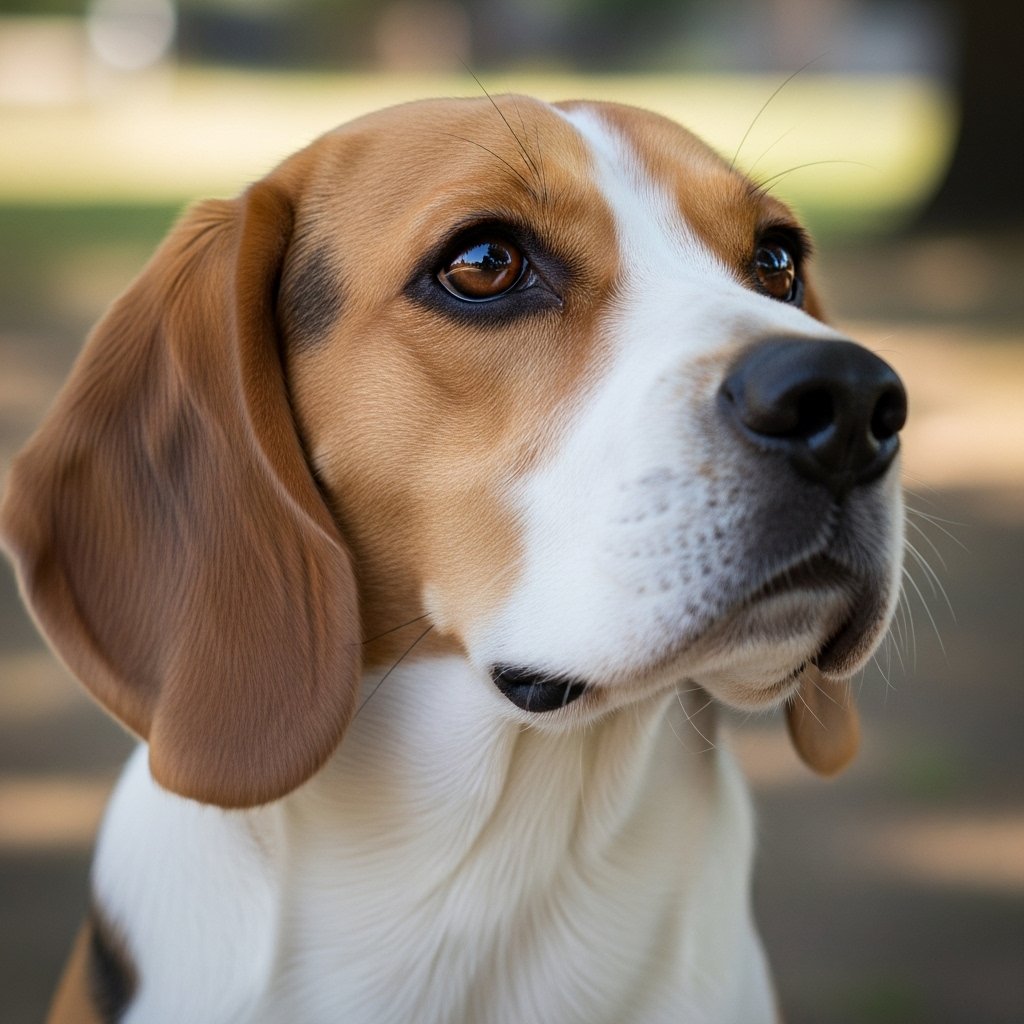
Why ‘Wait’ is More Than Just a Trick
Before diving into the mechanics of the training, it is crucial to understand the profound benefits of teaching ‘wait’ at mealtimes. This command is not about asserting dominance, but about building a language of cooperation and safety. A dog that lunges for its bowl is operating on pure instinct, a behavior that can escalate if left unchecked.
Enhancing Safety for All
A dog that barrels into the kitchen, jumps on you, or tries to snatch the bowl from your hands creates a hazardous situation. An owner can easily be knocked off balance, especially if they are elderly, have mobility issues, or are a child. Spilled food creates a slip hazard, and a dropped ceramic or metal bowl can cause injury. By teaching ‘wait,’ you create a safe, predictable space where you can place the food on the ground without being mobbed.
Building Critical Impulse Control
Impulse control is the ability to resist a temptation in favor of a greater reward later. For dogs, this is not an innate skill; it must be taught and reinforced. The food bowl is one of the highest-value temptations a dog faces daily. Successfully teaching them to wait for it is a powerful exercise in self-regulation. This skill has a ripple effect, improving their ability to wait at doorways, resist jumping on guests, and ignore distractions on walks.
Expert Tip: Think of the ‘wait’ command as a deposit into your dog’s ‘impulse control bank.’ Every successful repetition builds their capacity for self-control in more challenging scenarios.
Strengthening the Human-Canine Bond
Clear communication is the bedrock of any strong relationship. When you teach ‘wait,’ you are not just issuing a command; you are engaging in a cooperative exercise. Your dog learns to look to you for cues and guidance, reinforcing the idea that good things come from you when they are calm and patient. This structured interaction builds trust and deepens your connection, transforming a transactional activity (feeding) into a relational one (training and rewarding).
Preparation for Success: Setting Up the Training Environment
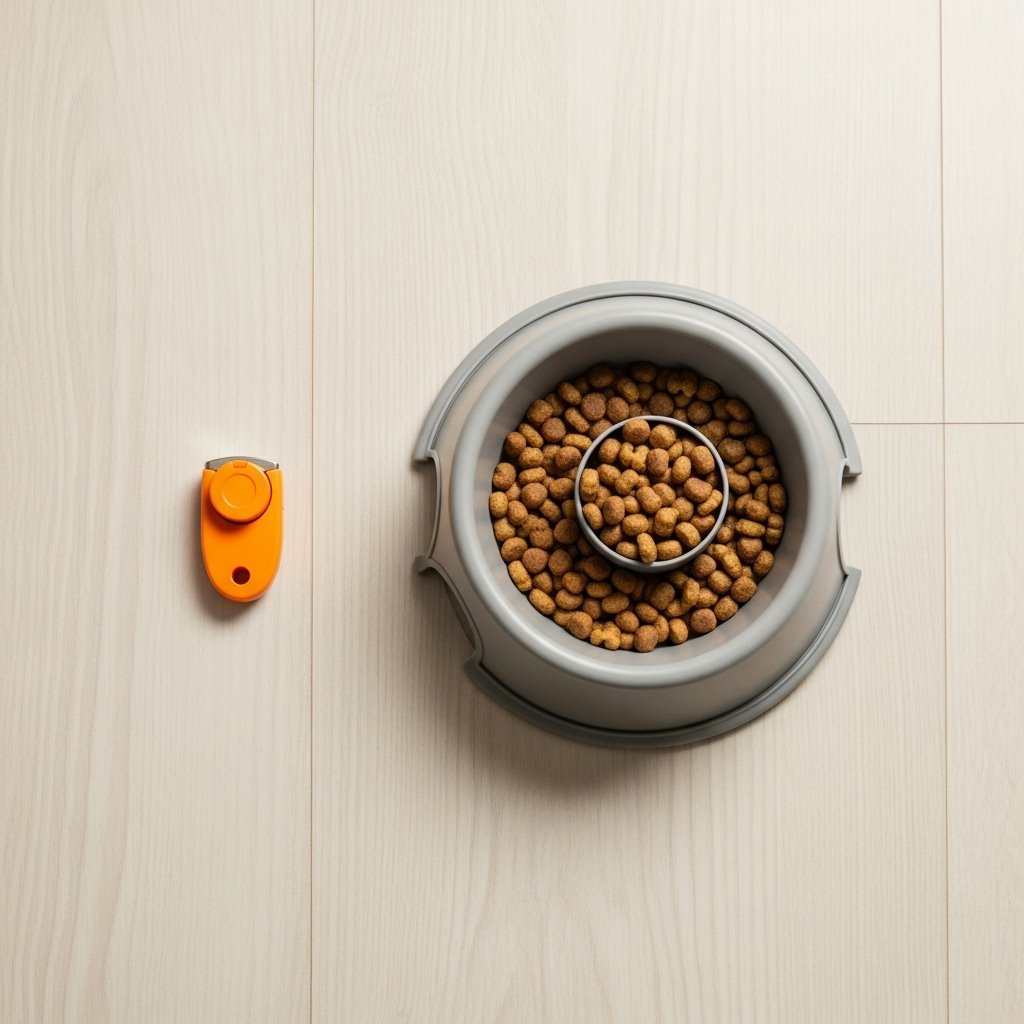
Gathering Your Tools and Creating the Right Atmosphere
Effective training begins long before the first command is given. Setting up the right environment and having the necessary tools on hand will significantly increase your chances of success and make the process smoother and more positive for both you and your dog.
Essential Equipment
The beauty of this training is its simplicity. You likely already have everything you need:
- Your Dog’s Regular Food: While some initial training can use high-value treats, the ultimate goal is for your dog to perform the ‘wait’ for their actual meal. Using their kibble makes the reward contextual and practical.
- A Non-Slip Food Bowl: A bowl that slides across the floor can be distracting and may encourage your dog to break their position to chase it. A heavy ceramic bowl or one with a rubber base is ideal.
- A Quiet, Low-Distraction Space: Choose a location where you typically feed your dog, but ensure it is free from other pets, family members, or loud noises during your initial training sessions. A calm environment helps your dog focus on you.
Mental Preparation: The Trainer’s Mindset
Your energy and attitude are paramount. Dogs are incredibly perceptive and will mirror your emotional state.
- Patience is Paramount: This is a process. Some dogs may pick it up in a few sessions; others may take weeks. Never show frustration. If you feel yourself getting tense, end the session on a positive note and try again later.
- Keep Sessions Short and Positive: For a new skill, training sessions should be brief—no more than 5-10 minutes once or twice a day. Always end on a successful repetition to build your dog’s confidence.
- Understand the ‘Release’ Cue: Just as important as the ‘wait’ command is a clear release word. This tells your dog when the waiting period is over. Common choices include “Okay,” “Free,” or “Go eat.” Choose one and use it consistently.
A Step-by-Step Guide to Teaching ‘Wait’
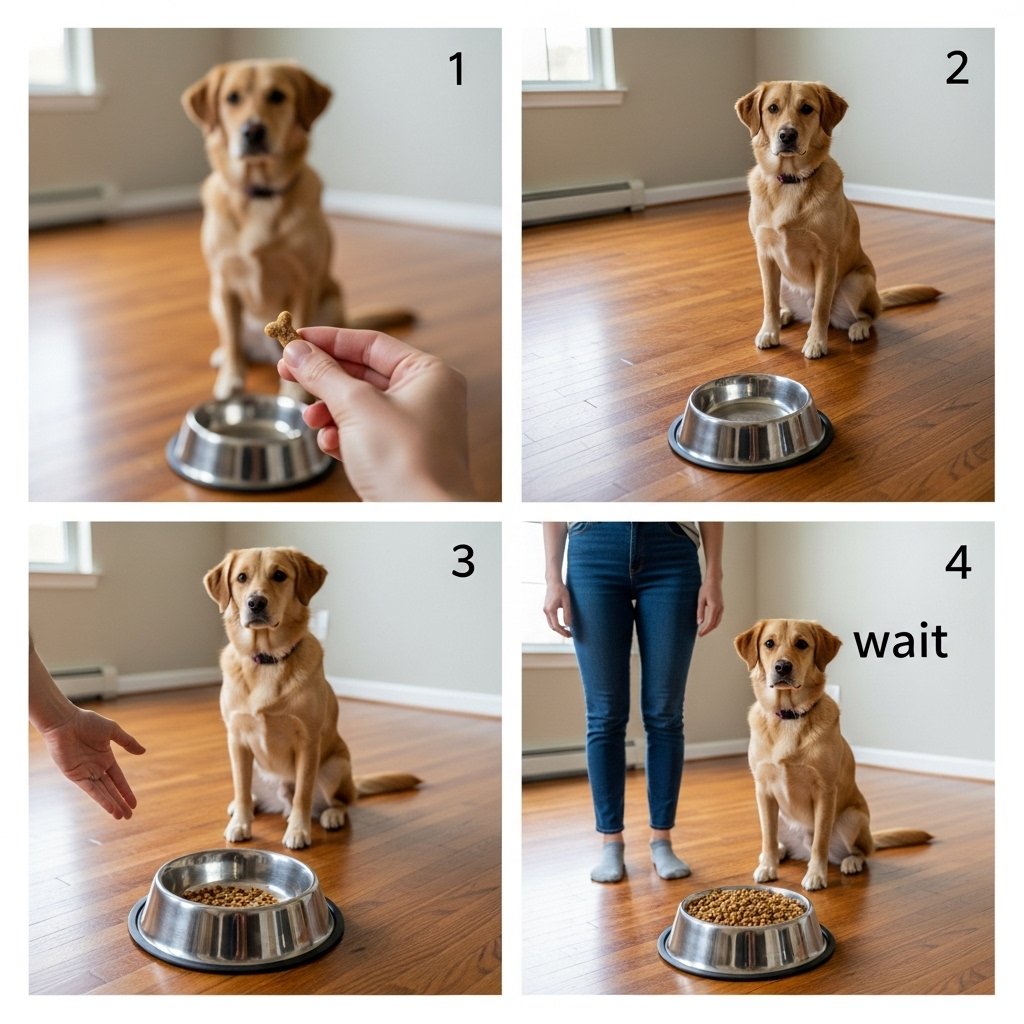
From Introduction to Mastery: The Training Progression
This process is broken down into progressive steps. Do not move to the next step until your dog is consistently successful at the current one. The key is to set your dog up for success at every stage.
-
Step 1: Introduce the Concept (No Bowl)
Start without the ultimate distraction—the food bowl. Ask your dog to sit. Hold a low-value treat or a piece of their kibble in your closed fist. Present your fist to your dog. They will likely sniff, lick, or paw at it. The moment they pull their head back, even for a split second, say “Yes!” and give them the treat from your other hand. Repeat this until they understand that moving away from your hand gets them the reward. Once they are reliably backing off, you can add the verbal cue “Wait” as you present your fist.
-
Step 2: Introduce the Empty Bowl
Now, place the empty bowl on the floor. If your dog immediately dives for the empty bowl, pick it up. Repeat until you can place the bowl down without them lunging. The goal is for them to remain in their ‘sit’ position. Reward them with a treat (from your hand, not the bowl) for any duration of stillness while the empty bowl is on the floor.
-
Step 3: Add a Single Piece of Kibble
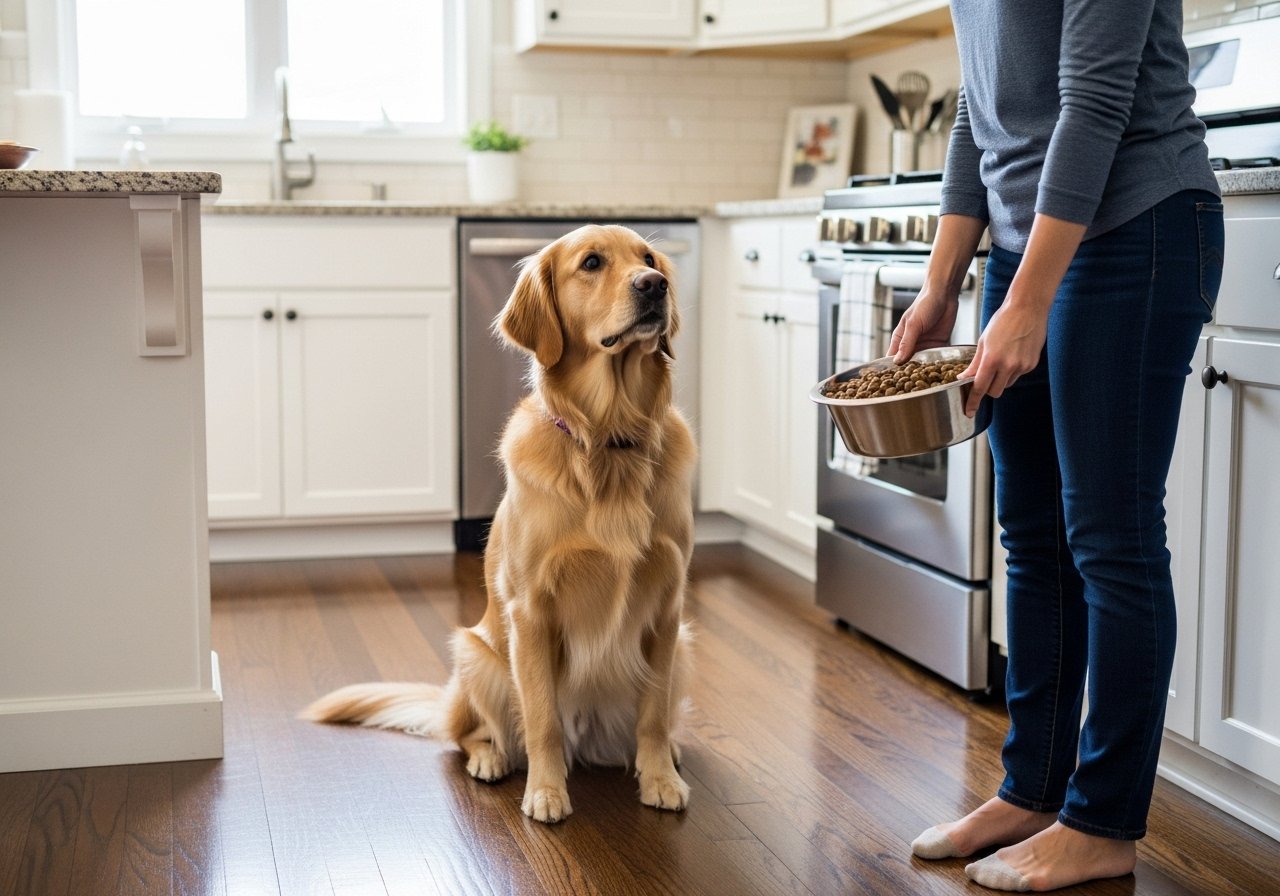
This is where the difficulty increases. Ask your dog to sit. Hold the bowl with one piece of kibble in it. Say “Wait” and begin to lower the bowl. If your dog stands up or lunges, immediately lift the bowl back up and say nothing. Reset them in a ‘sit’ and try again. The goal is to be able to place the bowl with the single kibble on the floor while they remain seated. Once you succeed, give your release cue (“Okay!”) and let them eat the piece. Repeat this multiple times.
-
Step 4: Gradually Increase the Amount of Food
Once your dog is reliably waiting for a single piece of kibble, you can start adding more food to the bowl. Start with a small handful, then half the bowl, and finally, a full meal. At each stage, if the dog breaks the ‘wait,’ simply lift the bowl and reset. The rule is simple: the bowl only stays on the floor if the dog is waiting patiently. This non-verbal communication is incredibly powerful.
-
Step 5: Increase Duration and Add Distance
With your dog successfully waiting for a full bowl, you can now add the two final challenges: duration and distance. After placing the bowl down, make them wait for 3 seconds before giving the release cue. Gradually increase this to 5 seconds, 10 seconds, and so on. Next, after placing the bowl down, take one step back before giving the release cue. Slowly build up the distance until you can place the bowl down, walk across the room, and then release them to eat. This solidifies the command and demonstrates true mastery.
Troubleshooting Common Training Hurdles
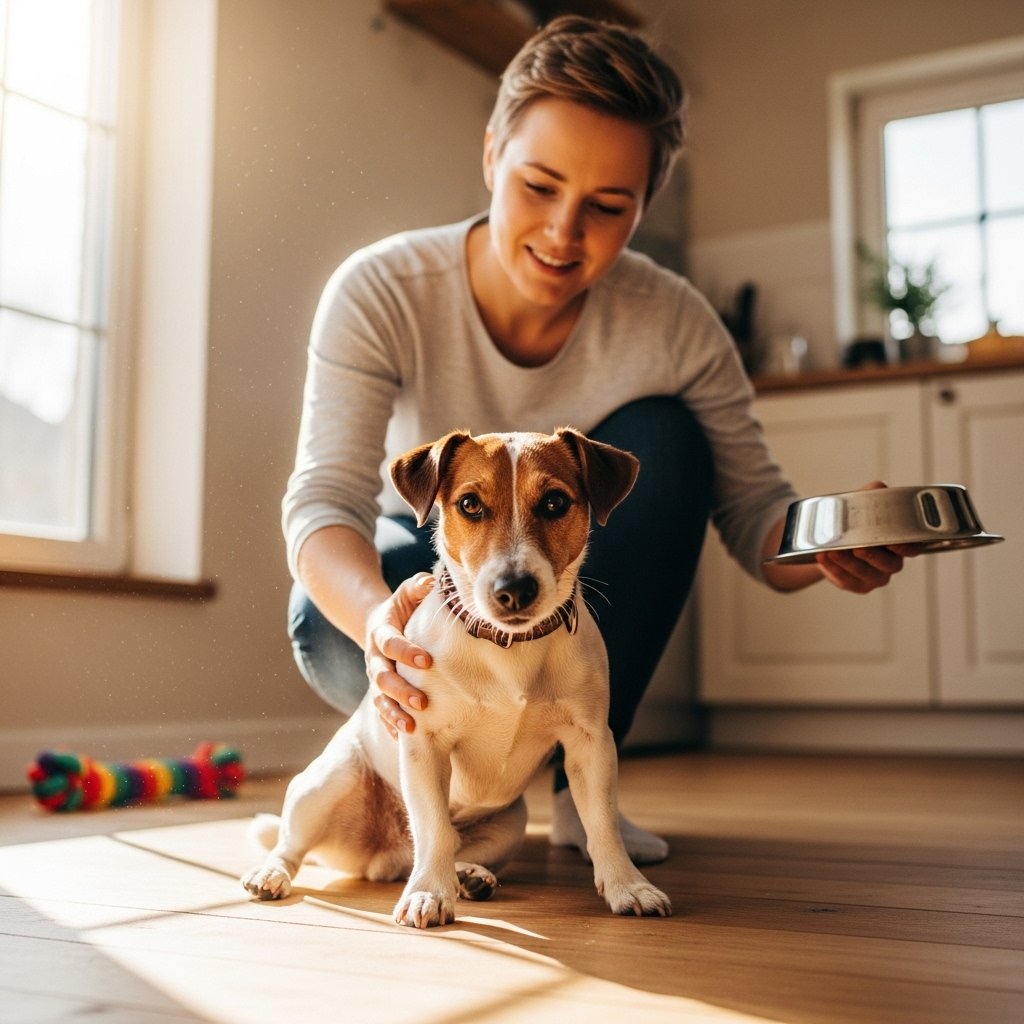
Navigating Bumps in the Road
Training is rarely a perfectly linear process. It’s normal to encounter challenges. Here’s how to address the most common issues when teaching the ‘wait’ command.
| Common Problem | Underlying Cause | Effective Solution |
|---|---|---|
| Dog Immediately Breaks the ‘Sit’ | The temptation is too high for the current stage of training. The dog’s excitement is overriding their self-control. | Take a step back. If they break when you lower a full bowl, go back to practicing with an empty bowl or just a few pieces of kibble. Shorten the duration. Your criteria might be advancing too quickly. |
| Whining, Barking, or Pawing | This is often a sign of frustration or a ‘protest’ behavior. The dog is trying to communicate their impatience. | Ignore the vocalizations completely. Do not reward the dog while they are making noise. Wait for a moment of quiet before giving the release cue. This teaches them that only calm behavior gets them what they want. |
| Dog Lunges at the Last Second | Anticipation. The dog has learned the pattern but is trying to beat you to the release cue. | Vary the duration of the wait. Sometimes release them after 2 seconds, other times after 10. This unpredictability keeps them focused on you for the cue, rather than guessing when it will come. |
| Loss of Focus / Distraction | The training environment may be too stimulating, or the session has gone on for too long. | Ensure you are training in a quiet area. Keep sessions short and energetic. If your dog seems bored or distracted, end the session with an easy win and try again later when they are more focused. |
Crucial Reminder: Never use punishment. If your dog makes a mistake, simply remove the reward (lift the bowl) without scolding. The absence of the reward is the only consequence needed. The goal is to teach, not intimidate.
Expanding the ‘Wait’ Command Beyond the Bowl
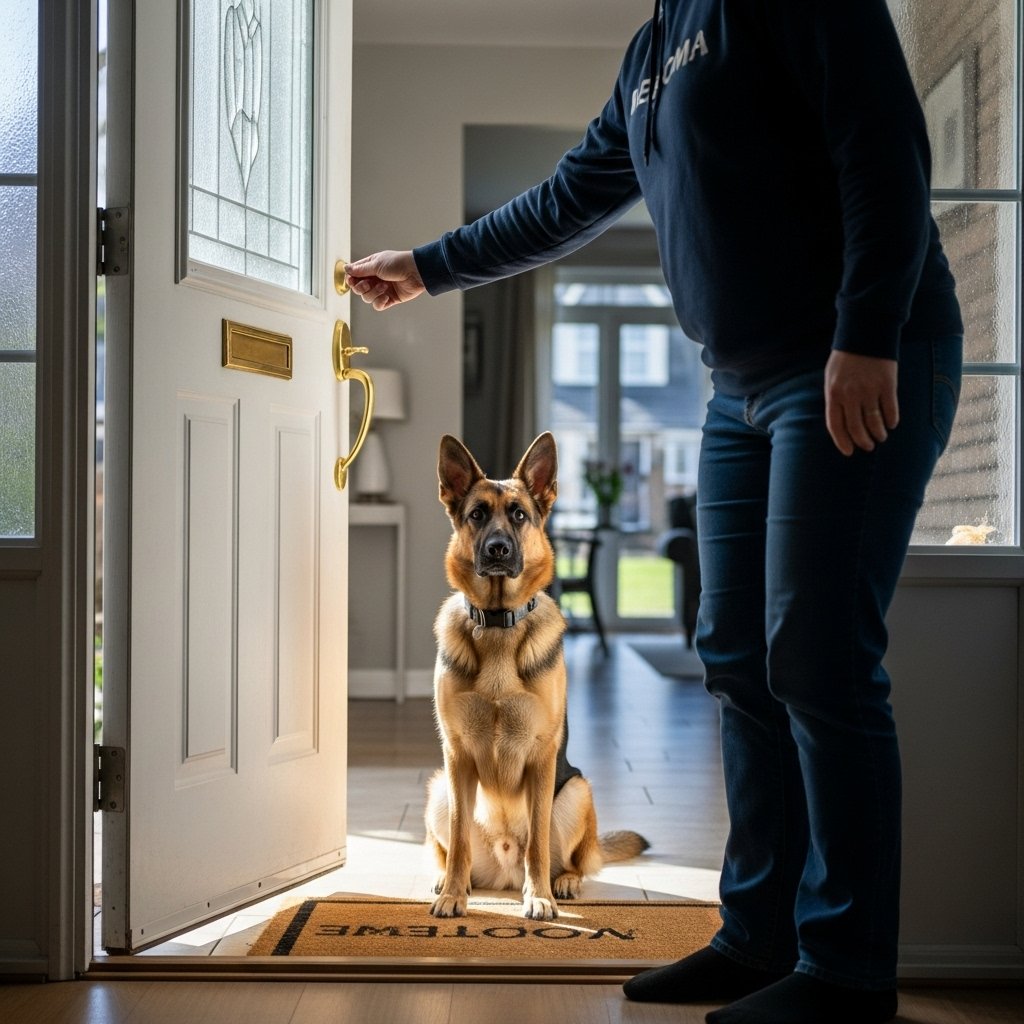
Generalizing the Skill for a Well-Mannered Dog
The impulse control learned at the food bowl is a transferable skill. Once your dog has mastered ‘wait’ for their meals, you can generalize the command to other areas of daily life, creating a safer and more polite companion.
Waiting at Doorways
This is a critical safety measure. A dog that bolts through an open door is at risk of getting lost or hit by a car. Practice having your dog ‘wait’ when you open the front door, the car door, or their crate door. They should only exit after you give their release cue. Start with the door only slightly ajar and gradually increase how wide you open it as their reliability grows.
Polite Greetings
Jumping on guests is a common complaint. The ‘wait’ command can help. Before a guest enters, put your dog in a ‘sit-wait.’ This gives them a specific job to do, channeling their excitement into a controlled behavior instead of an unruly one. Reward them for maintaining their position as the guest enters.
During Playtime
Incorporate ‘wait’ into games like fetch. After they bring the toy back, ask them to ‘wait’ before you throw it again. This prevents them from becoming over-aroused and teaches them that the game has structure and rules, which are dictated by you.
- At curbs before crossing the street.
- Before being allowed on furniture.
- Before taking a treat gently from your hand.
By integrating ‘wait’ into these various contexts, you are reinforcing the concept that patience and listening to you are always rewarding. This builds a dog who is not only a pleasure to live with but is also safer and more capable of navigating the human world.
Conclusion
Teaching your dog to ‘wait’ before their meal is one of the most valuable investments you can make in your relationship and their overall behavior. It transforms a daily chore into a powerful training opportunity, laying the groundwork for advanced impulse control and impeccable manners. Remember that consistency is the engine of all successful dog training. Every single meal becomes a chance to reinforce this calm, respectful behavior. Be patient, stay positive, and celebrate the small victories along the way. By stopping the feeding frenzy, you are not just creating a more peaceful home; you are building a more thoughtful, responsive, and deeply connected canine partner for life.