How to Teach Your Dog to “Say Prayers” in 3 Easy Steps
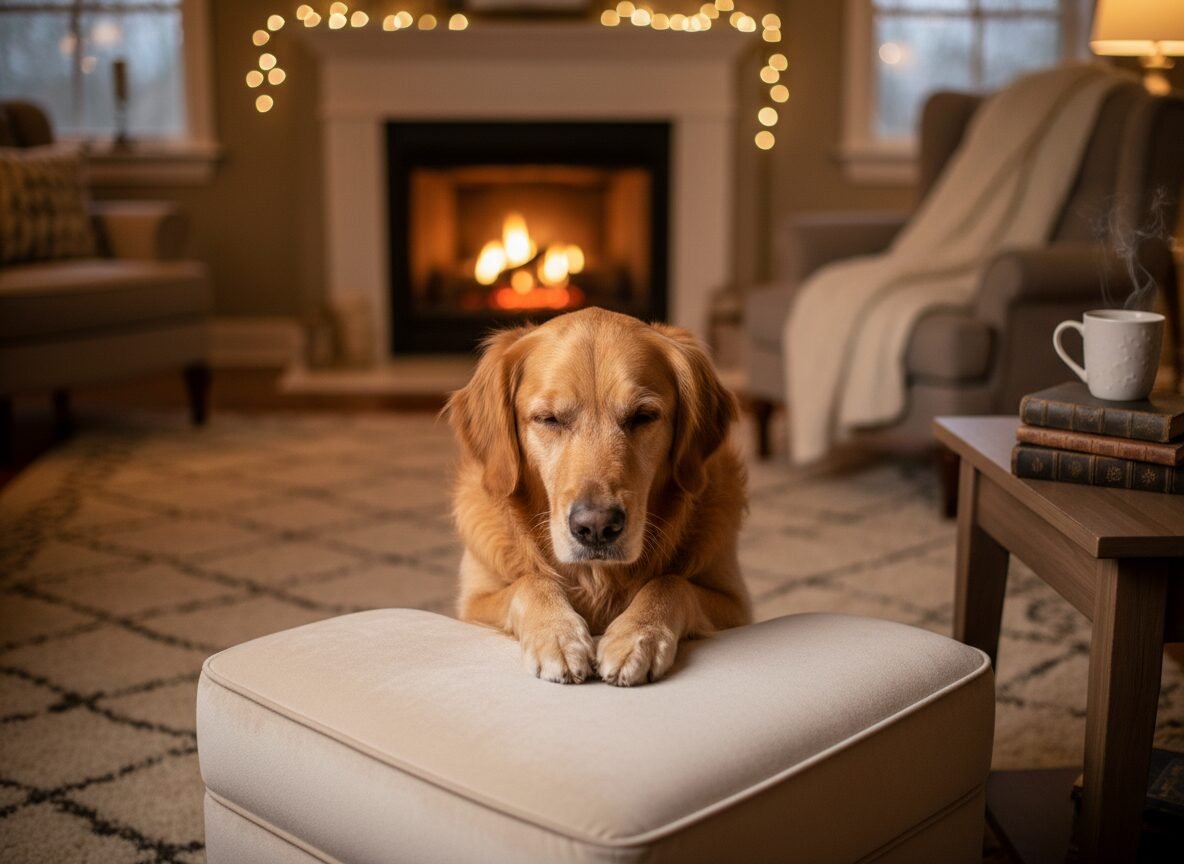
Trick training is far more than just a novelty; it is a powerful tool for enhancing the bond between you and your canine companion, providing critical mental stimulation, and improving overall obedience. One of the most endearing and impressive tricks you can teach is how to “say prayers.” This behavior involves the dog placing its front paws on a low surface and resting its head between them, creating a charming and photogenic pose. Not only is it a crowd-pleaser, but the process of teaching it reinforces foundational training skills and builds your dog’s confidence.
This comprehensive guide utilizes modern, science-backed positive reinforcement techniques to break down the training process into three clear, achievable steps. We will guide you from establishing the basic components of the behavior to combining them into the final, polished trick. Whether you are a seasoned trainer or a new pet owner, this step-by-step approach ensures a positive and successful experience for both you and your dog. Prepare to unlock a new level of communication and have fun along the way.
Pre-Training Essentials: Setting Up for Success
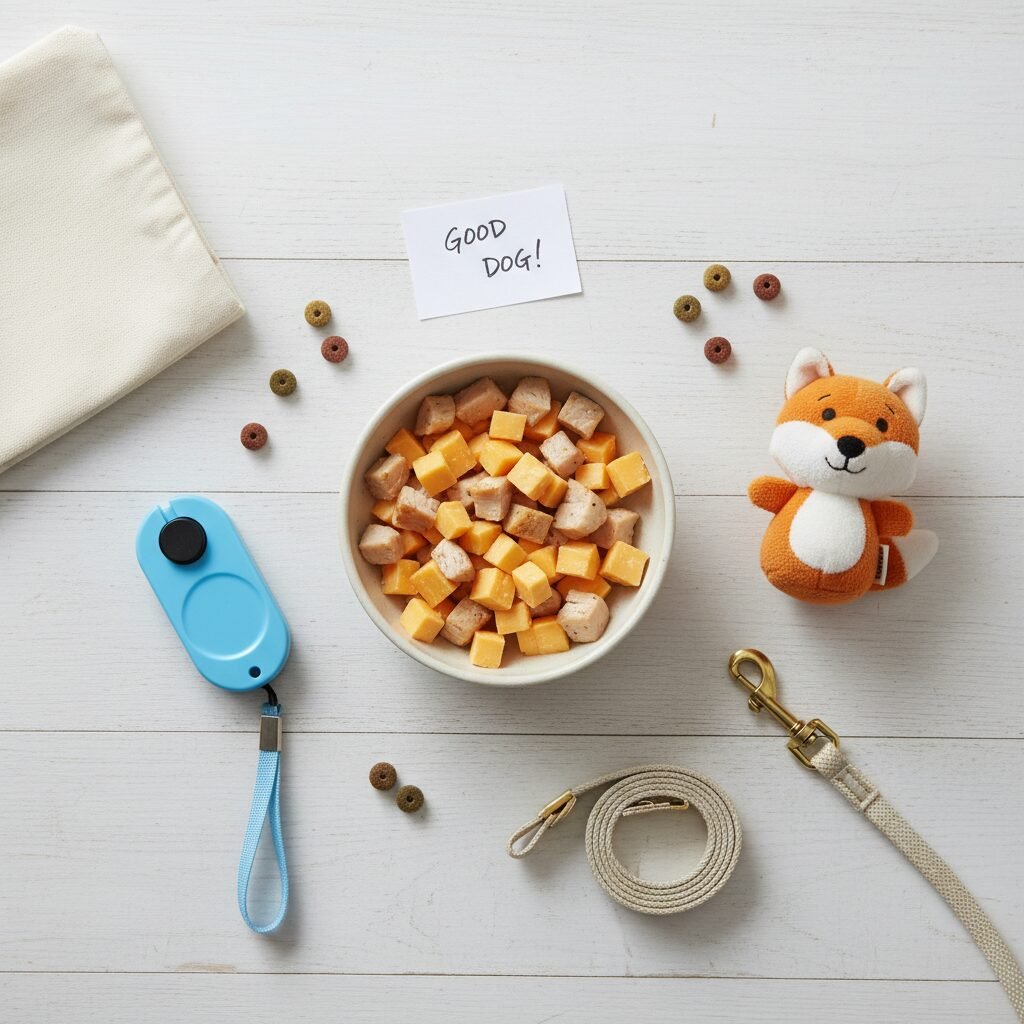
Before you begin teaching any new trick, establishing the right environment and gathering the necessary tools is paramount to success. A well-prepared training session minimizes frustration and helps your dog learn more efficiently. Think of this stage as building the foundation upon which the entire trick will be constructed. Rushing this step can lead to confusion and a longer learning curve.
Essential Equipment
You don’t need an extensive collection of professional gear, but having a few key items will make the process smoother:
- High-Value Treats: These are special treats that your dog absolutely loves and doesn’t get regularly. Small, soft, and fragrant options like tiny pieces of boiled chicken, cheese, or commercial training treats work best. The high-value nature of the reward will keep your dog motivated and focused.
- A Low, Stable Surface: The “altar” for the prayer pose is crucial. This could be a low ottoman, a sturdy footstool, a wide step, or even your lap or outstretched arm. The surface should be comfortable and at a height where your dog can easily place its paws and rest its head without straining.
- Clicker (Optional): A clicker is a valuable tool for marker training. It makes a distinct sound the moment your dog performs the correct action, providing clear and instantaneous feedback. If you are not using a clicker, a consistent verbal marker like a sharp “Yes!” serves the same purpose.
The Ideal Training Environment
A dog’s ability to focus is heavily influenced by its surroundings. To set your dog up for success, choose a training location that is:
- Quiet and Distraction-Free: Start in a familiar room with minimal foot traffic, noise, and other pets. Turn off the television and put away any distracting toys.
- Comfortable: Ensure the temperature is pleasant and the flooring provides good traction. A slippery floor can make a dog hesitant to place its paws on a new object.
Expert Tip: Keep your training sessions short and engaging. For most dogs, two or three sessions of 5-10 minutes per day are far more effective than one long, grueling session. Always end on a positive note, with a successful repetition or a simpler command your dog knows well.
Finally, ensure your dog is in the right frame of mind. A dog that is overly energetic or has just eaten a large meal may not be receptive to training. A short walk or a calm play session beforehand can help them settle into a more focused state.
Step 1: Mastering the Chin Rest

The first mechanical component of the “say prayers” trick is the chin rest. This foundational action teaches your dog to target a surface with its chin and hold the position. By isolating this behavior first, you make the learning process much clearer for your dog, avoiding the confusion of trying to teach multiple actions at once. Patience in this step will pay significant dividends later.
Introducing the Concept
Your initial goal is simply to get your dog to voluntarily touch its chin to the designated surface. We will use a luring technique to guide the dog into the correct position.
- Begin with your dog in a comfortable position, such as a sit or a down, in front of the chosen surface (e.g., a low stool or your arm held out flat).
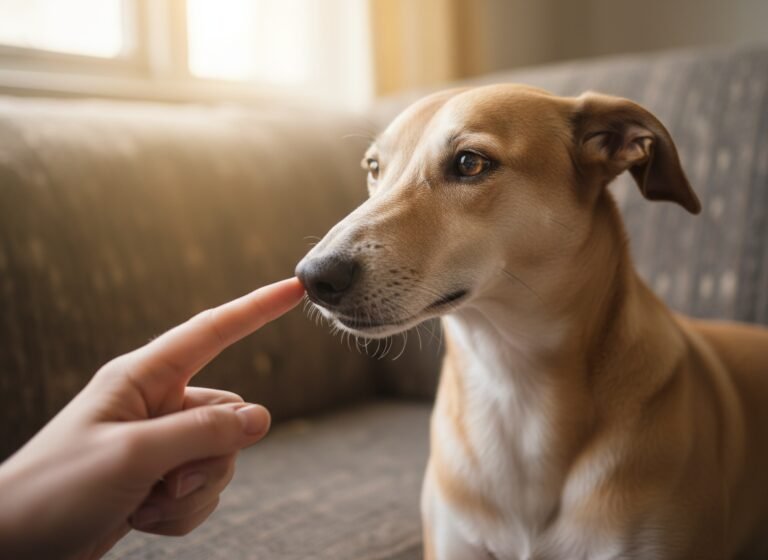
- Hold a high-value treat in your closed hand. Let your dog sniff your hand to know a reward is present.
- Lower your hand to the surface, placing it flat. Your dog will likely follow your hand with its nose.
- As your dog lowers its head to investigate your hand, its chin will inevitably make contact with the surface. The very instant its chin touches, mark the behavior with your clicker or verbal marker (“Yes!”) and immediately give the treat.
- Lift your hand and reset. Repeat this process several times. The key is precise timing—mark the exact moment of contact.
Building Duration
Once your dog reliably touches its chin to the surface, the next phase is to build duration. You want the dog to hold the chin rest for more than a split second.
- Lure your dog into the chin rest as before. This time, delay the marker and reward by one second. If your dog holds the position, mark and treat. If it lifts its head, simply reset without comment and try again for a shorter duration.
- Gradually increase the hold time in small increments: one second, then two, then four, and so on. This process is called “shaping duration.”
- Vary the duration. Don’t always make it harder. Sometimes ask for a one-second hold, then a three-second hold, then a two-second hold. This unpredictability keeps the dog engaged.
Adding the Verbal Cue
Only add a verbal cue when your dog is offering the behavior consistently without a lure. The cue should be a simple, distinct word that you don’t use in everyday conversation.
- As your dog is about to perform the chin rest, say your chosen cue, such as “Rest” or “Chin.”
- When the dog completes the action, mark and reward enthusiastically.
- After several repetitions, start saying the cue just before the dog would normally move, without the hand lure. If the dog performs the chin rest on the verbal cue alone, provide a “jackpot” reward—several treats at once—to signify a major breakthrough.
Step 2: Introducing the Paw Placement
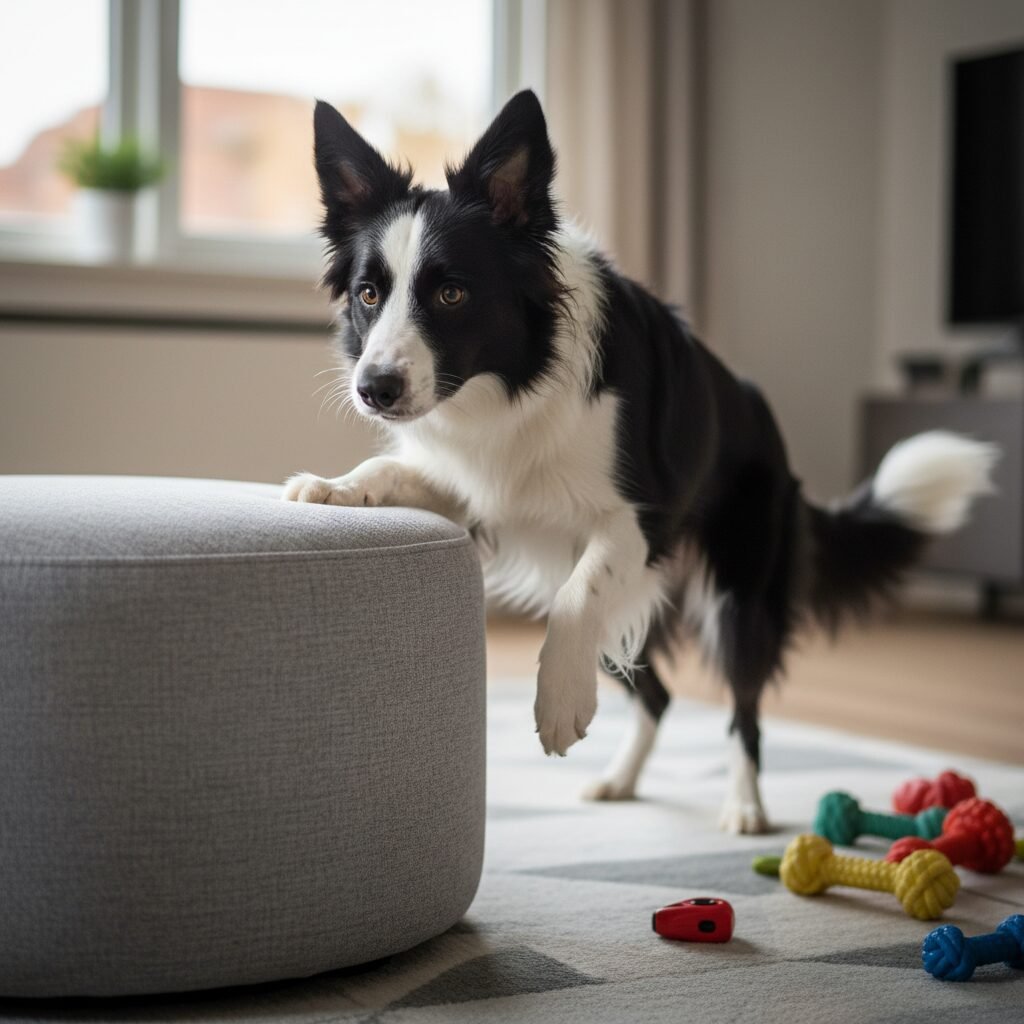
With a solid chin rest in your training toolkit, the next piece of the puzzle is teaching your dog to place its paws on the surface. For many dogs, this is an intuitive action, especially if they are used to offering a “shake” or “high five.” However, we must teach it as a deliberate, cued behavior. The goal is to have the dog place both front paws on the stool or ottoman on command, creating the upright posture needed for the prayer pose.
Capturing the Paw Touch
The easiest way to introduce this behavior is by capturing and rewarding your dog’s natural curiosity.
- Position your dog in front of the training surface. Hold a treat in your hand and place it on the surface, making it visible but slightly out of reach.
- Your dog will likely try to get the treat. It may nudge it with its nose or, ideally, reach for it with a paw. The moment a paw touches the surface, mark and reward. At this stage, you are rewarding any paw interaction.
- If your dog is hesitant, you can gently tap the surface to draw its attention there. The goal is for the dog to make the connection: Paw on stool gets me a reward.
Shaping for Two Paws
Once your dog is consistently touching the surface with one paw, you will shape the behavior to get both paws up.
- Begin rewarding only when the dog places its paw more firmly or fully on the surface.
- Next, hold the reward in a way that encourages the dog to put its second paw up for better balance while reaching for the treat. Mark and reward the instant the second paw makes contact.
- Practice this until the dog offers to place both paws on the surface reliably. This may take several short sessions.
Adding a Cue for “Paws Up”
Just as with the chin rest, introduce a verbal cue once the behavior is predictable.
- As your dog begins to move to place its paws on the surface, say your cue, such as “Paws Up” or simply “Up.”
- Mark and reward the successful completion of the action.
- After many repetitions, test the cue by saying it without any physical lure. If the dog responds correctly, offer a high-value jackpot reward.
Training Insight: Avoid physically placing your dog’s paws on the surface. This can be uncomfortable for the dog and doesn’t teach it to perform the action voluntarily. The learning process is far more powerful and lasting when the dog figures out the behavior for itself through shaping and positive reinforcement.
Step 3: Combining and Fading Cues to Finalize the ‘Say Prayers’ Trick
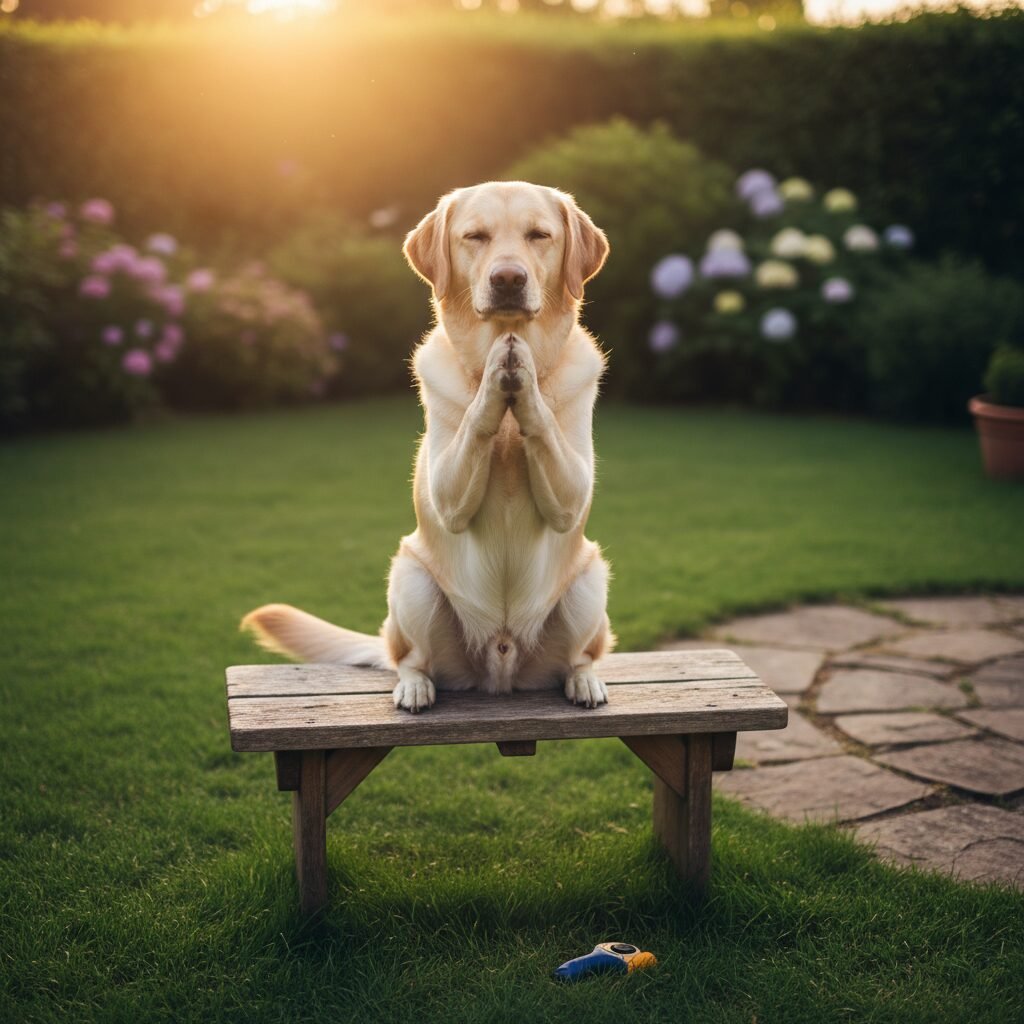
This final step is where the magic happens. You have successfully taught your dog the two core components of the trick: the chin rest and the paw placement. Now, you will chain these behaviors together into a single, fluid sequence and associate it with the final verbal cue, “Say Prayers.” This stage requires precision in your timing and a clear understanding of how to fade prompts so the dog performs the trick independently.
Chaining the Behaviors
The process of linking two or more known behaviors is called back-chaining. In this case, since the final action is the head going down, we will cue the paws up first, then the chin rest.
- Ask your dog to perform the “Paws Up” cue. Once its paws are firmly on the surface, immediately give the “Rest” cue for the chin rest.
- When your dog places its chin down between its paws, give a massive jackpot reward. This helps the dog understand that this specific combination is highly desirable.
- Repeat this sequence several times in a session. Your goal is to make the transition from “Paws Up” to “Rest” smooth and immediate.
Introducing the Final Cue
Once the sequence is reliable, you can introduce the final cue that will represent the entire chain of actions.
- As your dog is about to begin the sequence, say your new cue, “Say Prayers.” Then, immediately follow up with your known cues: “Paws Up,” then “Rest.”
- After many successful repetitions, start to fade the old cues. Say “Say Prayers” and then pause, giving your dog a moment to think. It may offer the “Paws Up” on its own. If it does, praise it and then cue “Rest.”
- Continue this process, gradually fading the intermediate cues until the dog performs the full sequence—getting into position and lowering its head—from the single “Say Prayers” command.
Proofing the Behavior
Proofing is the process of generalizing the trick so your dog can perform it in various contexts, not just in your quiet training room.
- Practice the trick using different surfaces (a different stool, a step, a cushion).
- Try it in different rooms of the house.
- Gradually introduce mild distractions, such as another person sitting quietly in the room.
By systematically combining and polishing the behaviors, you transform two simple actions into a complex and impressive trick that showcases your dog’s intelligence and your effectiveness as a positive trainer.
Troubleshooting Common Training Challenges
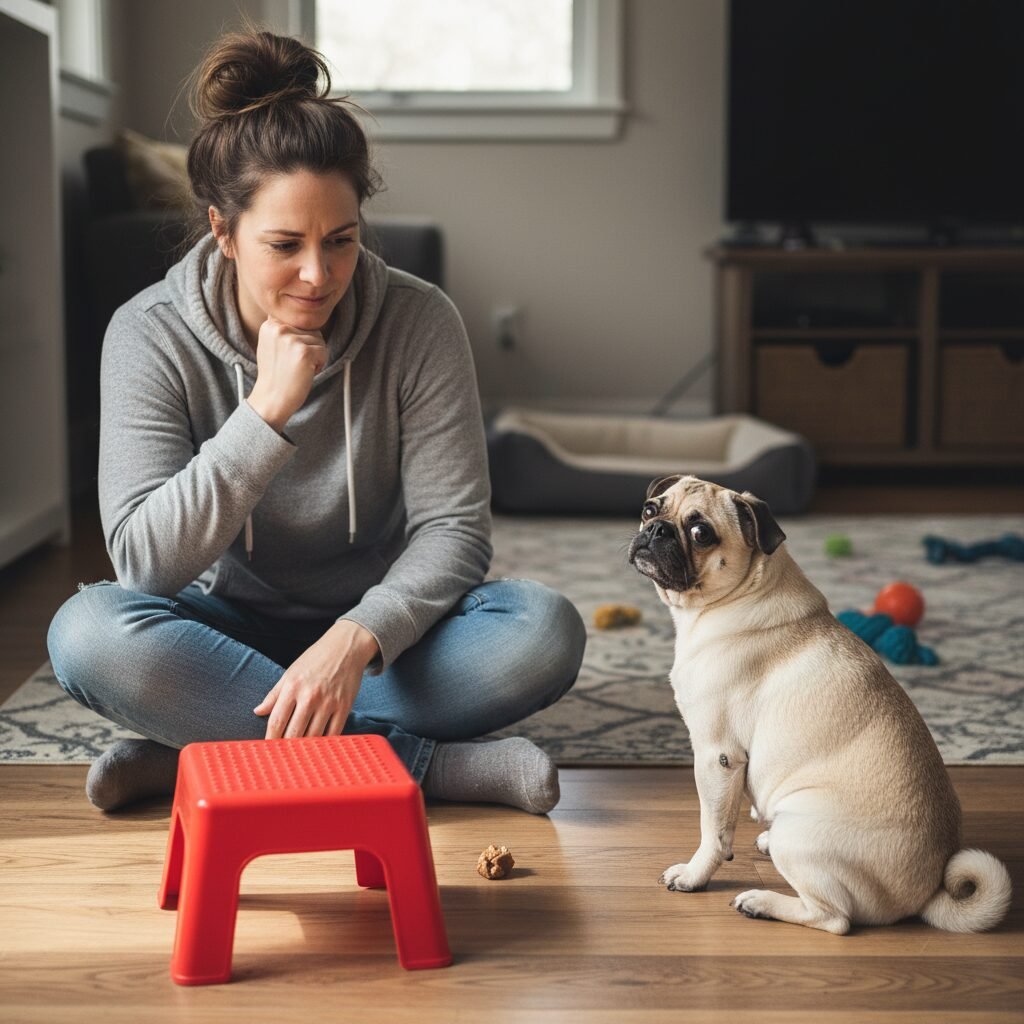
Even with the best plan, training sessions can sometimes hit a snag. It is completely normal to encounter challenges along the way. The key is to address them with patience and a willingness to adjust your technique. Below are some common issues owners face when teaching the “say prayers” trick, along with professional solutions to get you back on track.
My Dog Won’t Put Its Paws on the Surface
This is often a confidence issue. The dog may be unsure about the new object. The solution is to break the behavior down into even smaller steps. Start by rewarding your dog for simply looking at the object. Then, reward for sniffing it. Then, reward for touching it with its nose, and finally, for any interaction with a paw. This process, called shaping, builds confidence by rewarding small approximations of the final goal.
My Dog Gets Up Immediately
If your dog performs the trick but won’t hold the position, you have likely increased the duration criteria too quickly. Go back to basics. In your next session, reward for just a split-second hold. Then, gradually and variably increase the time. Ensure the reward you are using is high-value enough to make holding the position worthwhile for your dog.
My Dog is Too Excited and Can’t Focus
Over-arousal can derail a training session. If your dog is bouncing off the walls, it’s not in a state to learn a nuanced trick. Before the session, engage your dog in a calming activity, like a short walk (not a vigorous run) or a few minutes of ‘sniffing’ games. Keep the sessions themselves very short, perhaps only 2-3 minutes at a time, and end before your dog gets overly excited.
The following table provides a quick-reference guide to common problems and their solutions:
| Problem | Primary Cause | Solution |
|---|---|---|
| Dog chews on the stool/surface. | Boredom or misdirected energy. | Provide a chew toy before the session. Keep the training pace quick and engaging. Use a verbal interrupter like “Ah-ah” and redirect. |
| Dog only offers the behavior when it sees the treat. | The treat has become a lure, not a reward. | Practice with the treat hidden in your pocket or a pouch. Reward after the behavior is complete by bringing the treat out. |
| Progress has stalled; the dog isn’t improving. | Trainer fatigue, dog fatigue, or the step is too large. | Take a 1-2 day break from this specific trick. When you return, break the current step into smaller, more achievable increments. |
| Dog barks during training. | Frustration or excitement. | Ignore the barking. Only mark and reward when the dog is quiet and performing the desired action. If barking is from frustration, the task is too hard; simplify it. |
Conclusion
Teaching your dog to “say prayers” is a rewarding journey that strengthens your communication and deepens your bond. By following these three systematic steps—mastering the chin rest, introducing paw placement, and finally combining the behaviors—you have turned a complex trick into a series of simple, positive achievements. Remember that the pillars of successful dog training are patience, consistency, and a positive attitude. Every short session, every small success, and even every challenge overcome contributes to building a more confident and engaged canine companion. Celebrate your progress, enjoy the process, and take pride in the incredible skills you and your dog have developed together.