Free Shaping: The Lazy Owner’s Guide to a Smarter Dog
In the world of dog training, methods often involve a great deal of physical guidance—luring with treats, gentle pushes, or leash pressure. But what if there was a way to teach complex behaviors with less physical effort and more mental engagement? What if you could transform your dog into an enthusiastic, creative learner who actively participates in the training process? Welcome to the world of free shaping. This technique, often hailed as the ‘lazy’ owner’s secret weapon, isn’t about doing less; it’s about training smarter. It’s a hands-off approach that taps into your dog’s natural intelligence, encouraging them to think, experiment, and offer behaviors voluntarily. Instead of showing your dog exactly what to do, you become a guide, marking and rewarding the small steps they take toward a goal. This guide will walk you through everything you need to know to get started, turning training sessions from a chore into a fascinating game you and your dog can play together, building a brilliant problem-solver one click at a time.
What Exactly is Free Shaping (and Why is it ‘Lazy’)?
Understanding the Core Concepts
At its heart, free shaping is the process of building a new behavior without any physical prompting, luring, or verbal cues in the initial stages. It operates on the principles of operant conditioning, where you selectively reinforce your dog’s spontaneous actions. Think of it as a game of ‘hot and cold.’ The dog tries different things, and your marker signal—typically a clicker—tells them when they are getting ‘warmer’ to the desired behavior. The ‘lazy’ moniker is somewhat tongue-in-cheek; it refers to the fact that the owner is physically passive. You are not bending over to lure your dog into a ‘down’ or using a leash to guide them. Instead, your primary job is to observe, wait, and mark the right moment with precision. This shifts the dynamic from a physical task for you to a mental puzzle for your dog.
Shaping vs. Luring: A Fundamental Difference
To truly grasp free shaping, it’s essential to contrast it with luring, a more common training method.
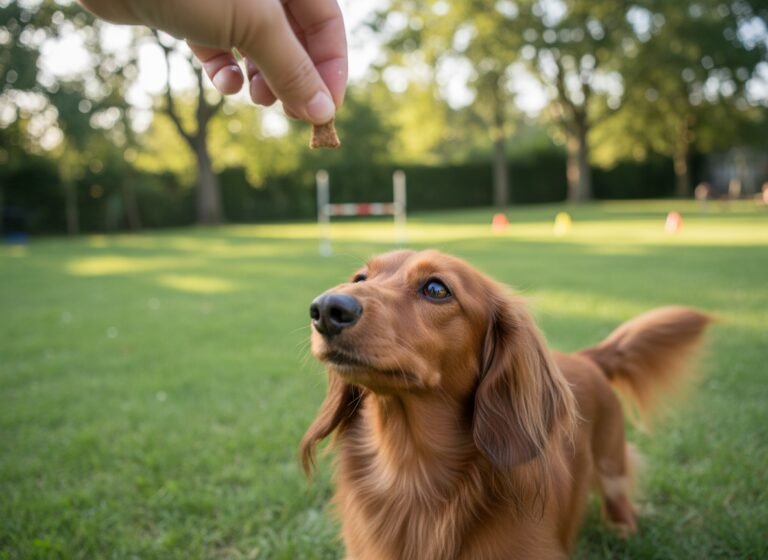
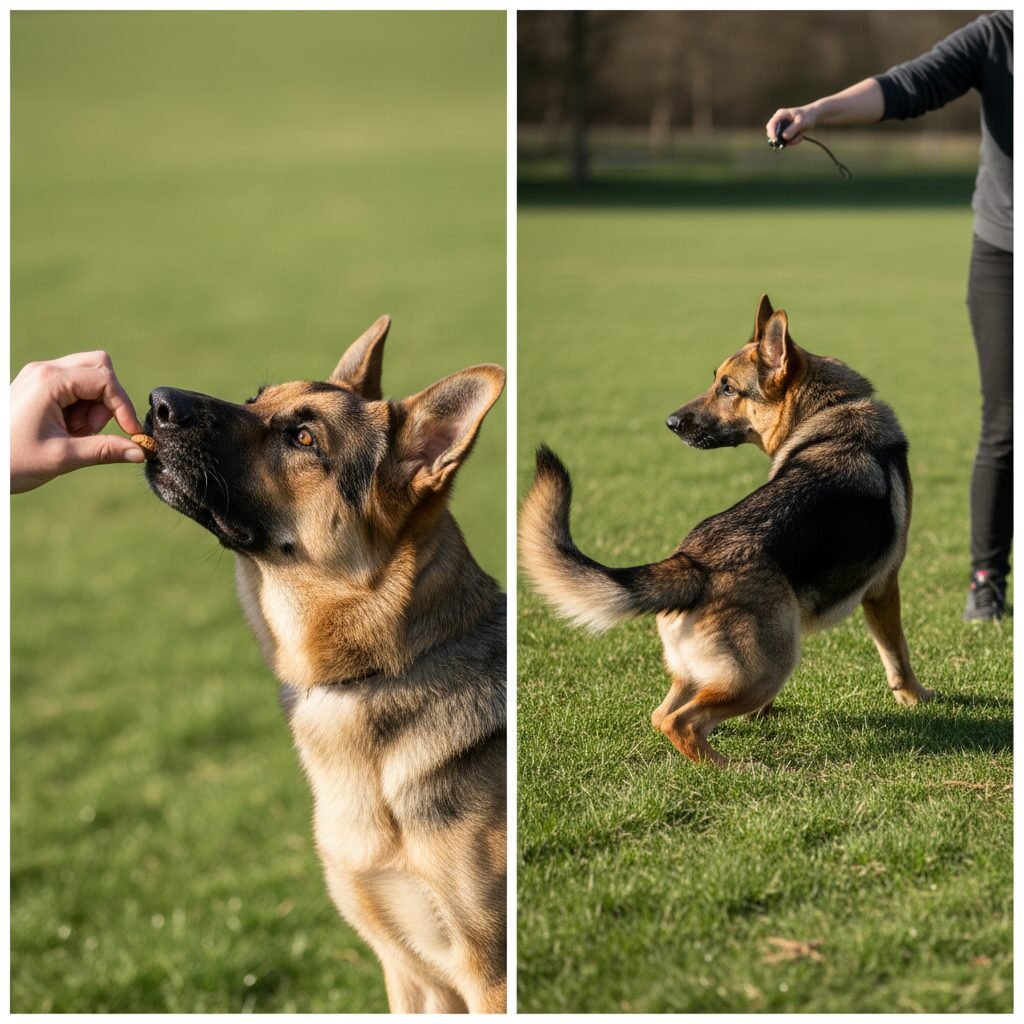
- Luring: In luring, you use a treat to guide your dog’s nose, and their body follows. To teach a ‘sit,’ you might hold a treat over their head and move it backward, causing their rear to lower. This is effective for teaching the basic motion, but the dog is passively following a prompt.
- Shaping: In shaping, you would wait for the dog to offer a behavior that is a small step towards a sit. You might click and treat for a slight dip of the hips, then for a deeper dip, and finally for a full sit. The dog figures out the puzzle on its own.
The key benefit of shaping is that the dog learns how to learn. They become an active participant, offering behaviors and trying to figure out what earns them a reward. This cognitive engagement builds confidence and creativity in a way that simply following a lure cannot. The ‘work’ is done by the dog’s brain, not the owner’s body, making it an incredibly efficient way to build complex and reliable behaviors.
Gathering Your Tools: The Simple Setup for Success
The Essential Toolkit for Effortless Training
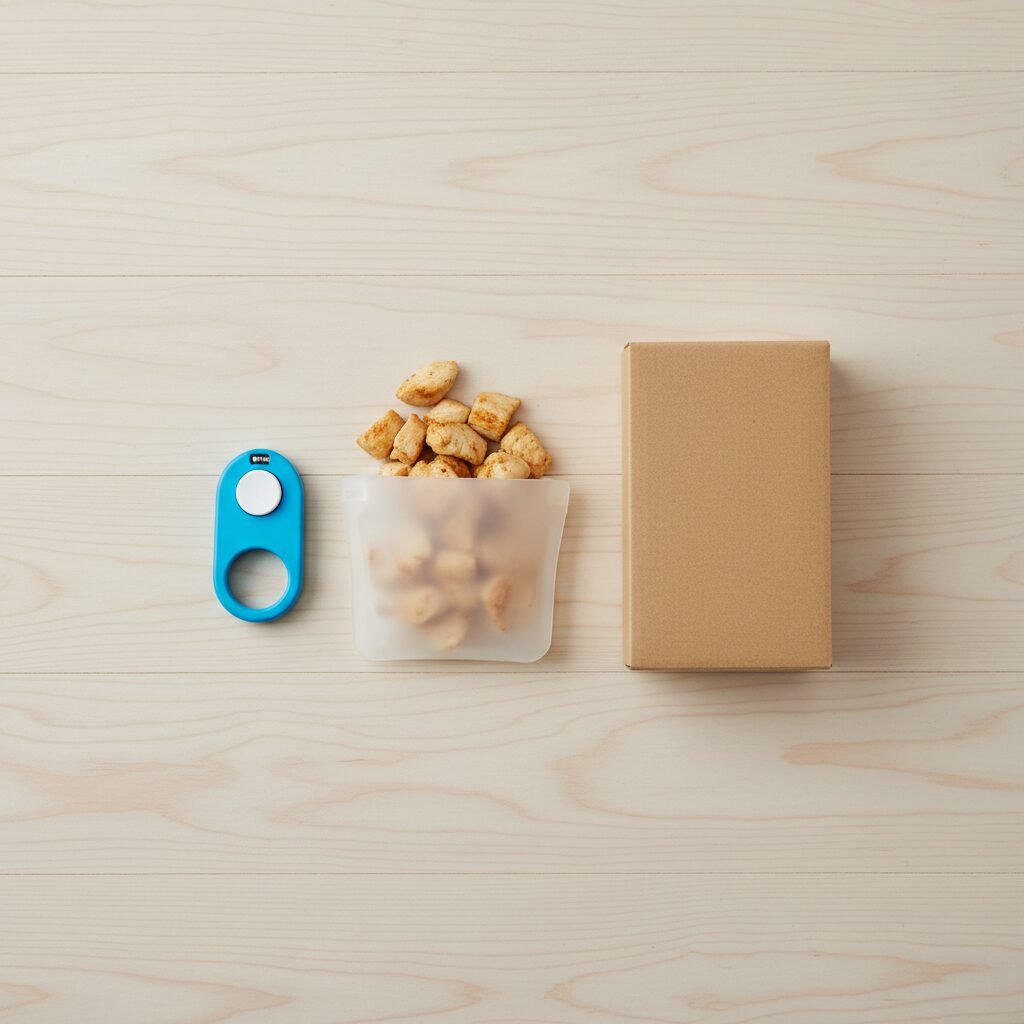
One of the most appealing aspects of free shaping is its minimalist approach to equipment. You don’t need expensive gear or complicated setups. Success hinges on a few simple, well-chosen tools and a prepared environment. Here’s everything you need to get started on your shaping journey.
Your Shaping Starter Kit:
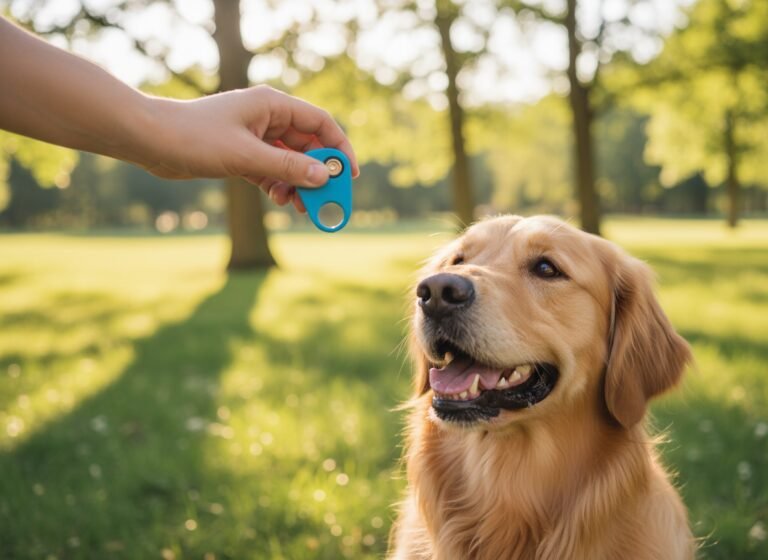
- A Marker Signal: This is a sound that tells your dog, ‘YES! That exact behavior is what earned you a reward.’ The most popular marker is a clicker due to its distinct, consistent sound. Alternatively, you can use a short, sharp verbal marker like ‘Yes!’ or ‘Click!’. Before you begin, you must ‘charge’ the marker. This simply means you click (or say your word) and immediately give your dog a treat, repeating this 10-15 times. Your dog quickly learns that the sound predicts a reward.
- High-Value Reinforcers: Since shaping is a brain game, you need to make it worth your dog’s while. Standard kibble might not be motivating enough. Opt for small, soft, pea-sized treats that are quick to swallow. Think tiny pieces of cooked chicken, cheese, or high-quality commercial training treats. The high value keeps your dog engaged and eager to solve the puzzle.
- A Target or Prop: While you can shape behaviors without any objects, starting with a simple prop gives your dog something concrete to interact with. This could be anything new and safe in their environment: a cardboard box, a plastic lid, a yoga mat, or a sticky note. The prop serves as the focal point for the training ‘game.’
- A Distraction-Free Environment: Your first few sessions should be in a quiet space where your dog can focus. A closed room with other pets and family members absent is ideal. By minimizing external distractions, you set your dog up for success and allow them to concentrate fully on the task at hand.
Expert Tip: Keep your training sessions short and sweet. For a beginner dog, a session of 1-3 minutes is plenty. Multiple short sessions are far more effective than one long, frustrating one. Always end on a high note with a successful repetition to keep your dog eager for the next game.
Your First Session: Shaping ‘Interact with the Box’
A Step-by-Step Guide to a Classic Exercise
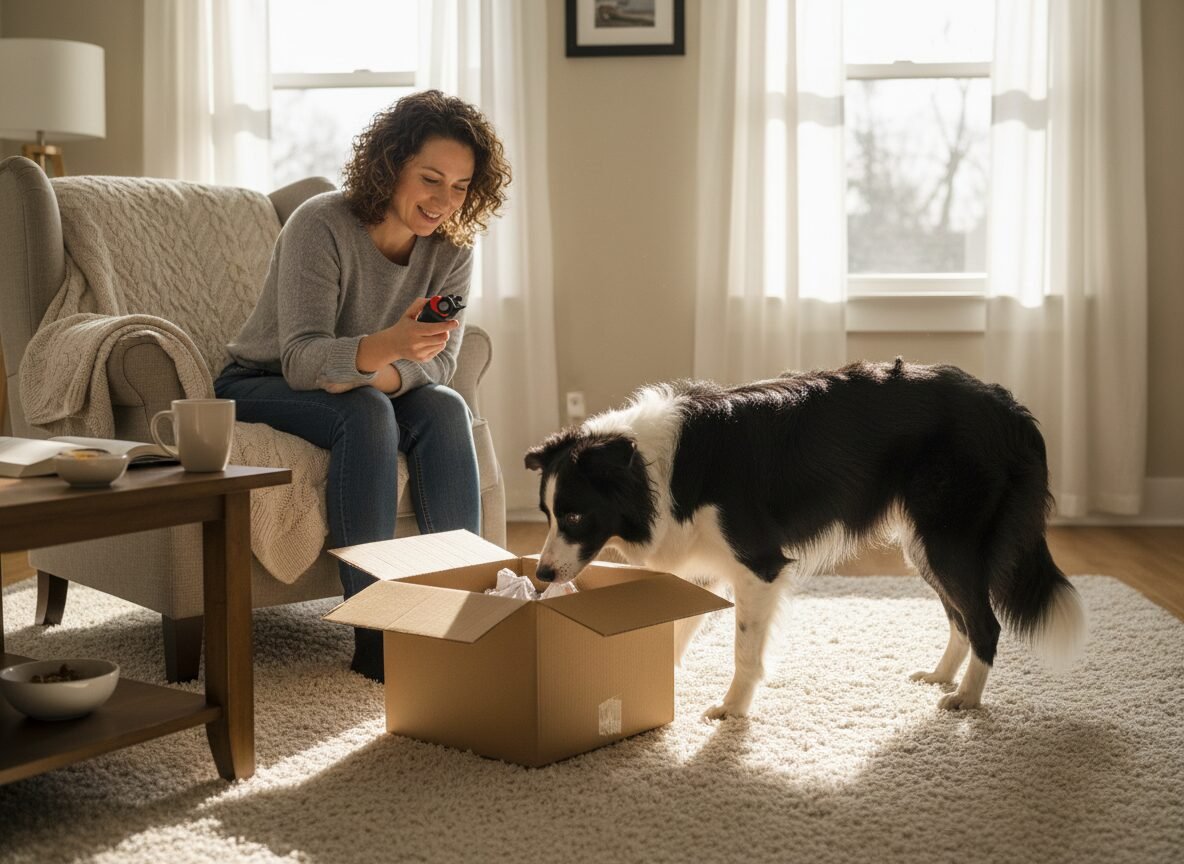
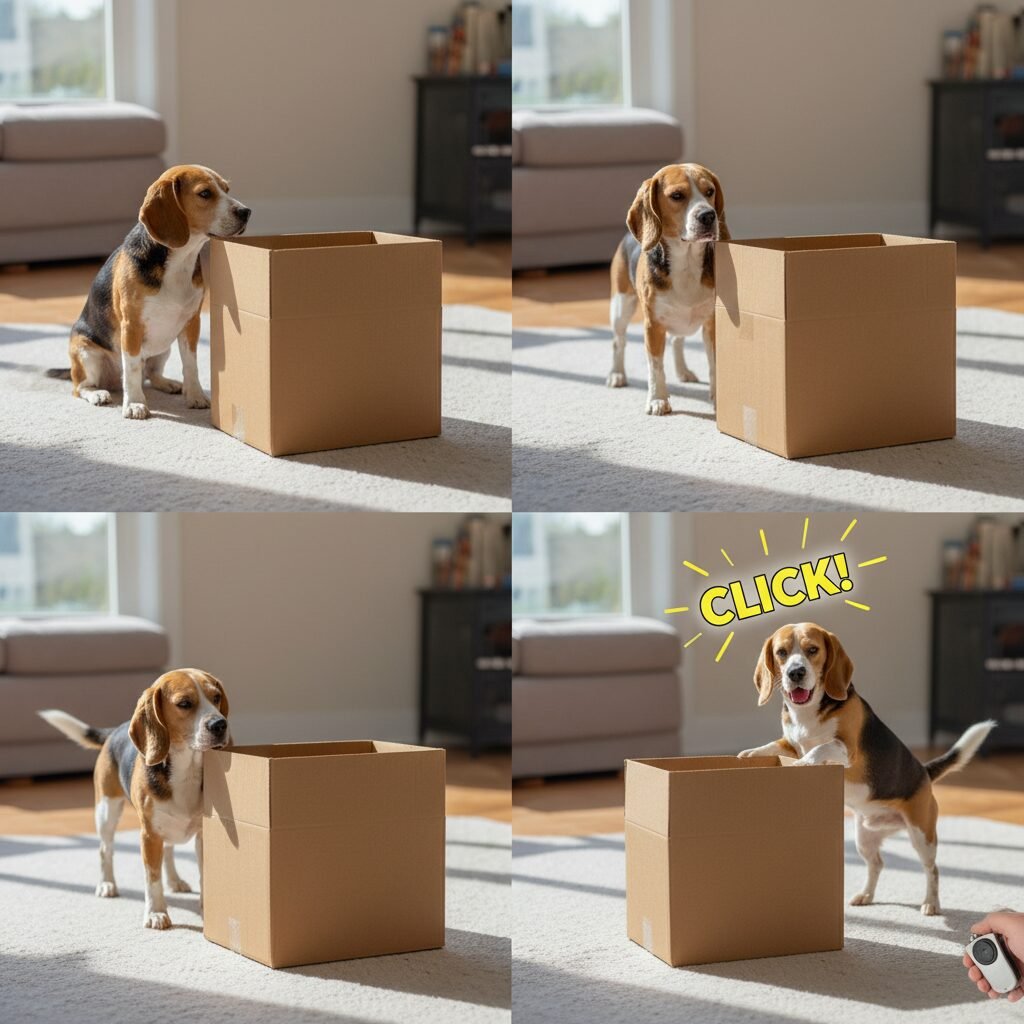
The ‘box game’ is a foundational exercise in free shaping. It’s the perfect introduction because it’s simple, builds confidence, and clearly teaches the dog the rules of the game: your actions make me click and treat. The goal is to get your dog to voluntarily interact with a simple cardboard box. Remember, your only tools are your clicker, your treats, and your patience.
The Shaping Plan: Step-by-Step
- Set the Stage: Enter your quiet training space with your dog, your clicker, and your treats. Place the box on the floor in the middle of the room. Now, do nothing. Simply stand or sit quietly and wait. Your dog will likely be curious about this new object.
- Mark the First Interaction: The moment your dog even looks at the box, click and toss a treat away from the box. Tossing the treat ‘resets’ the dog, allowing them to make a conscious choice to re-engage with the object on the next repetition.
- Raise the Criteria: After a few repetitions of clicking for a glance, your dog will likely start offering it consistently. Now it’s time to ask for a little more. Wait for a slightly more significant behavior. Perhaps they turn their head fully towards the box or take a single step in its direction. When they do, click and treat. You are now only rewarding this ‘better’ behavior.
- Shape Towards a Touch: Continue raising your criteria in small increments. From a step towards the box, you might wait for them to get within a foot of it. Then, you might wait for them to lower their head and sniff it. Finally, you will wait for them to make physical contact, such as a nose bump or a paw touch. Each new level of success becomes the new baseline for a reward.
- Keep Sessions Brief: A shaping session can be mentally taxing for a dog. Keep your first session to just a dozen treats or about two minutes. End on a successful click and treat, give your dog some praise, and put the box away. This leaves them wanting more and excited for the next ‘game.’
Through this simple process, you haven’t said a word or physically guided your dog at all. You have allowed them to solve a puzzle, and in doing so, you’ve opened up a new channel of communication and learning.
Troubleshooting and Leveling Up Your Shaping Skills
From Boxes to Complex Behaviors
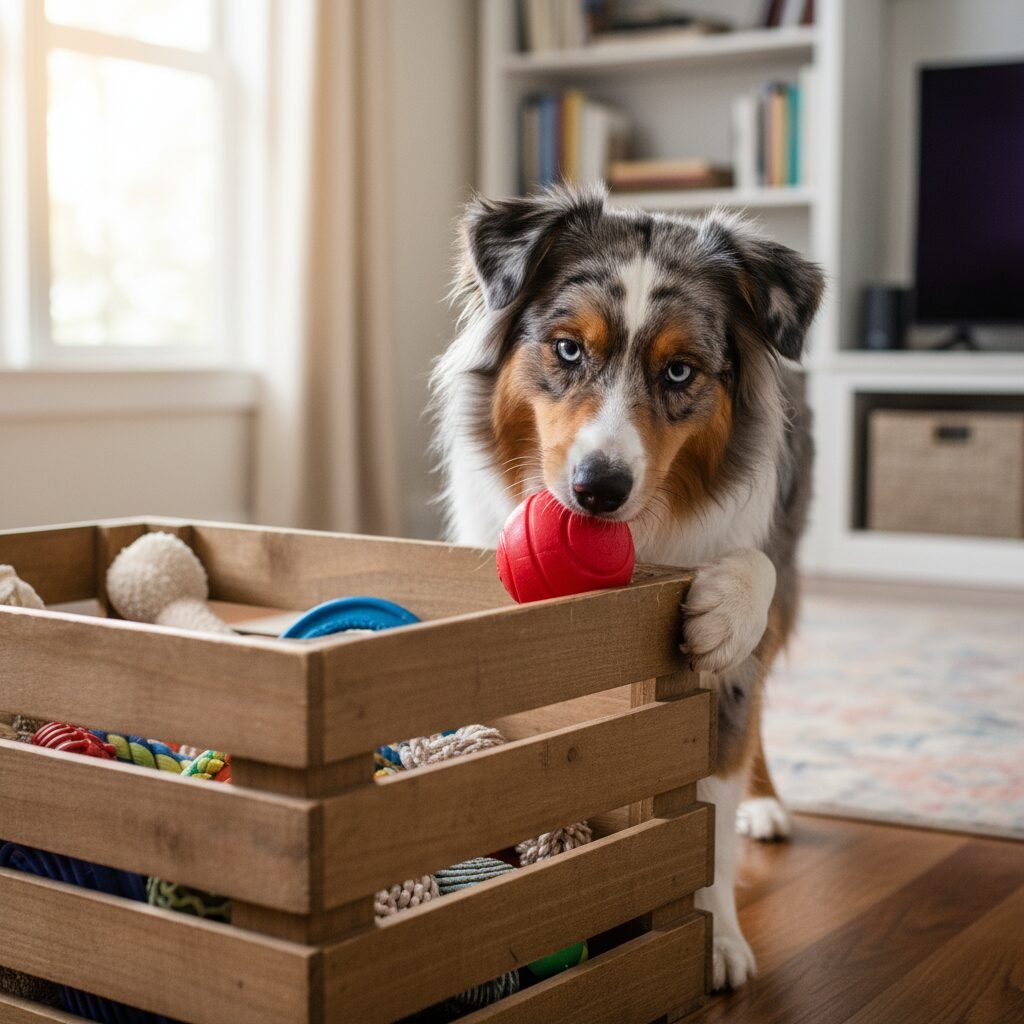
Once your dog understands the shaping game, you can apply the same principles to teach an almost limitless variety of behaviors. You can shape them to go to their mat, put their toys in a box, close a cabinet door, or even learn complex freestyle moves. The key is breaking down the final behavior into the smallest possible, achievable steps. However, the path isn’t always linear. You will inevitably encounter moments of confusion or frustration—from both you and your dog. Understanding how to navigate these challenges is key to becoming a skilled shaper.
Troubleshooting Common Hurdles
- My dog isn’t offering any behaviors. This is common at the start. It usually means your criteria are too high. Take a step back. Are you waiting for a nose touch when your dog hasn’t even learned to look at the object yet? Lower your criteria and click for the smallest possible effort, even just an ear twitch in the direction of the object. You have to start where the dog is.
- My dog is getting frustrated and barking or quitting. Frustration is a sign that the rate of reinforcement is too low or the mental effort has become too much. This is a cue to end the session immediately on a positive note. Ask for a simple, known behavior (like ‘sit’), reward it generously, and call it a day. Next time, use smaller steps or shorten the session duration.
- My dog keeps offering the same behavior over and over. For example, they keep booping the box with their nose but you want them to use their paw. This is an ‘extinction burst’—the dog is trying the last known successful strategy with more intensity. The solution is to simply wait. Don’t click for the nose boop. The dog will eventually try something else out of curiosity or frustration. The instant they offer a new behavior (like lifting a paw), click and deliver a jackpot of treats!
| Problem | Owner’s Action | Underlying Principle |
|---|---|---|
| Dog is confused or disengaged. | Lower the criteria for reinforcement. | Make it easier for the dog to be successful. |
| Dog shows signs of frustration (barking, whining). | End the session on a positive note and shorten future sessions. | Protect the dog’s confidence and love for the ‘game’. |
| Dog gets ‘stuck’ on one behavior. | Withhold the click and wait for a new, different behavior. | Encourage creativity and reward experimentation. |
More Than Tricks: Building a Confident, Problem-Solving Canine

The Deeper Cognitive and Behavioral Benefits
While teaching a dog to put away their toys is a fun party trick, the true power of free shaping lies in its profound impact on a dog’s overall psychological well-being. This training method is not merely about creating an obedient dog; it’s about fostering a confident, resilient, and engaged canine partner. The benefits extend far beyond the training sessions themselves, influencing how your dog interacts with the world.
One of the most significant advantages is the development of optimism and persistence. A dog accustomed to shaping learns that trying new things and experimenting can lead to wonderful outcomes. When faced with a novel challenge in their everyday life, they are more likely to approach it with a problem-solving mindset rather than with fear or anxiety. They have learned that they possess the ability to influence their environment and generate positive results. This can be particularly transformative for timid or fearful dogs, as it gives them a sense of agency and control.
Furthermore, free shaping actively combats a state known as ‘learned helplessness,’ where an animal gives up trying after repeated failures or experiences with uncontrollable negative events. Dogs trained exclusively with corrections or even constant luring can become passive learners, waiting to be told exactly what to do. A ‘shaped’ dog, in contrast, becomes a proactive learner, constantly thinking and offering behaviors. This mental stimulation is a powerful form of canine enrichment, preventing boredom and reducing the likelihood of destructive behaviors that stem from a lack of mental engagement.
Free shaping builds a fundamentally different kind of relationship between you and your dog. It moves beyond a simple command-and-reward structure into a collaborative partnership built on communication, observation, and mutual respect. You learn to read your dog’s smallest signals, and they learn to watch you for information. This two-way communication strengthens your bond in a way that few other activities can.
Conclusion
Free shaping is far more than a ‘lazy’ training shortcut; it is a sophisticated and deeply rewarding approach to building a relationship with your dog. It champions their intelligence, fosters their creativity, and empowers them to be active partners in their own learning. By trading physical manipulation for patient observation, you teach your dog the invaluable skill of how to think. The process transforms training from a rigid set of commands into an exciting and unpredictable game. You will be consistently amazed by your dog’s cleverness and ingenuity once you give them the freedom to experiment. So, grab a clicker, find a cardboard box, and prepare to see your dog in a whole new light. You’re not just shaping a new behavior; you’re shaping a smarter, more confident, and more connected companion.