Stop Dreaded Vet Visits: How Cooperative Care Training Changes Everything
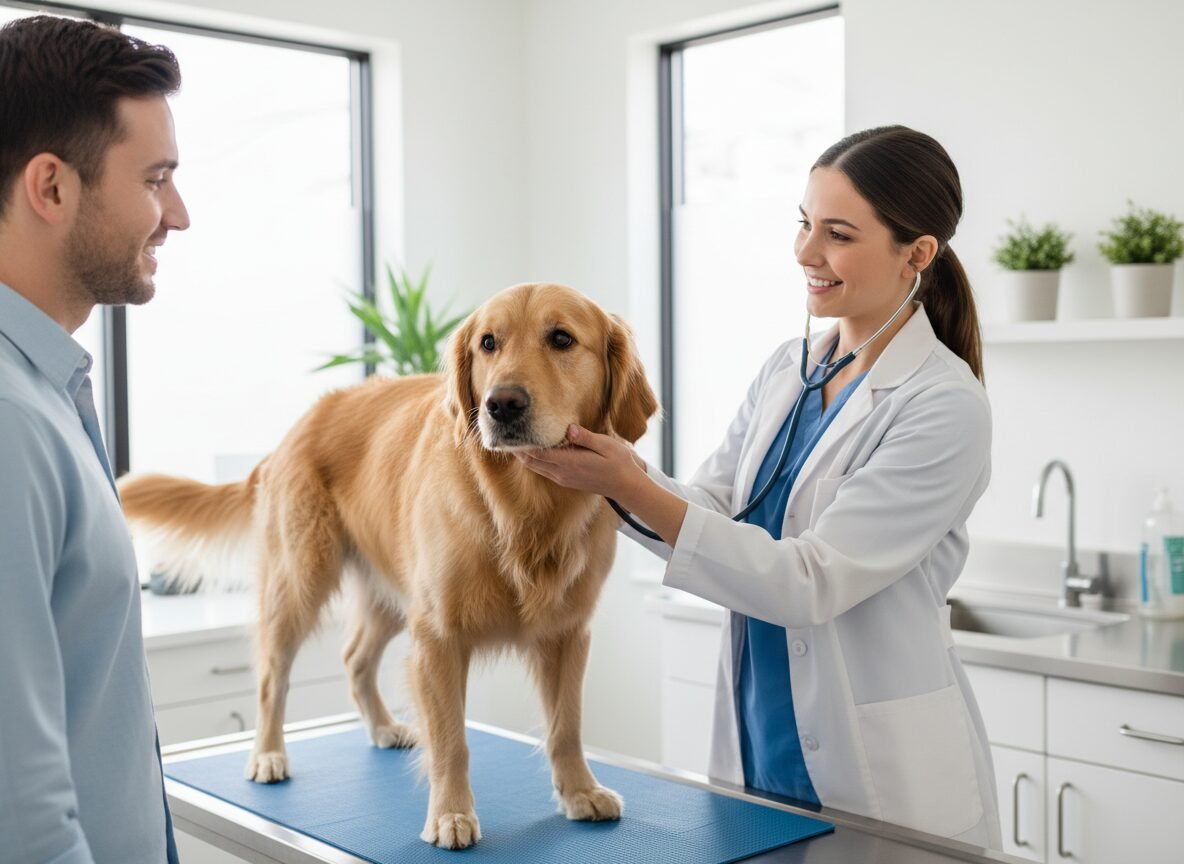
For many pet owners, the phrase “vet visit” conjures images of a trembling dog, a stressful car ride, and a difficult examination. The anxiety experienced by our canine companions can make essential healthcare a dreaded ordeal for everyone involved. What if there was a way to change this narrative? What if you could empower your dog to not just tolerate, but willingly participate in their own medical care? This is the promise of Cooperative Care, a revolutionary training philosophy built on trust, choice, and positive reinforcement.
Cooperative Care shifts the dynamic from one of restraint and force to one of partnership and consent. It involves teaching your dog specific behaviors that allow them to signal their readiness for a procedure and to remain calm and comfortable while it happens. This approach not only dramatically reduces fear, anxiety, and stress but also strengthens the bond you share with your pet. This guide will provide a detailed, step-by-step framework for implementing cooperative care, transforming dreaded vet visits into manageable, and even positive, experiences.
Understanding the Core Principles of Cooperative Care

The Foundations of Trust and Consent
Before beginning any training, it is crucial to understand the philosophy that underpins cooperative care. Unlike traditional methods that may rely on physical restraint to get a procedure done, cooperative care prioritizes the animal’s emotional well-being. The entire framework is built on several key principles:
- Choice and Consent: The most fundamental aspect of cooperative care is giving the animal control. We teach the dog a specific ‘start-button’ behavior, such as a chin rest. As long as the dog performs this behavior, the procedure (e.g., ear cleaning, nail trim) continues. If the dog lifts its head, the procedure stops immediately. This gives the dog a clear and effective way to say “stop,” which paradoxically makes them more likely to consent to the procedure for longer periods.
- Positive Reinforcement: This is a force-free training method. Every small success and moment of calm participation is marked and rewarded with something the dog finds highly valuable, such as a special treat or praise. This builds a positive association with husbandry procedures that were once frightening.
- Systematic Desensitization and Counter-Conditioning: We don’t expect a dog to be comfortable with a nail trim overnight. The process involves gradually exposing the dog to the tools and sensations of an exam at a level that does not provoke fear (desensitization). We simultaneously pair these exposures with high-value rewards to change the dog’s underlying emotional response from fear to anticipation (counter-conditioning).
Reading Your Dog’s Body Language
A critical skill for any owner practicing cooperative care is the ability to recognize subtle signs of stress. Your dog communicates their discomfort long before they might growl or snap. Ignoring these signals erodes trust and undermines training. Be vigilant for:
- Lip licking or nose licking
- Yawning when not tired
- ‘Whale eye,’ where the whites of the eyes are visible
- Tense facial muscles or a furrowed brow
- A lowered or tucked tail
- Panting when not hot or thirsty
- Freezing or sudden stillness
Expert Tip: When you see these signals, it is your cue to stop what you are doing. Take a break, reduce the intensity of the training, or end the session on a positive note. Honoring these subtle communications is how you build unbreakable trust.
Gathering Your Tools: Setting the Stage for Training

Essential Equipment and Environmental Setup
Successful training requires thoughtful preparation. Having the right tools and creating a conducive environment will set you and your dog up for success. Your cooperative care toolkit should include both physical items and a strategic mindset.
Physical Tools
- High-Value Reinforcers: Standard kibble likely won’t be motivating enough. You need special, high-value treats that your dog loves and only gets during these training sessions. Examples include small pieces of cooked chicken, cheese, commercial soft treats, or even squeeze tubes with dog-safe peanut butter or cream cheese.
- Comfortable, Non-Slip Surface: A yoga mat, bath mat with a rubber backing, or a raised grooming table with a non-slip surface provides stability and comfort. A slippery floor can increase a dog’s anxiety.
- Veterinary Props: To desensitize your dog, you will need mock-up tools. These do not need to be real. You can use a toy stethoscope, an empty (and needle-less) syringe, a bottle that looks like an ear cleaner, and the actual nail clippers or grinder you plan to use.
- Clicker (Optional): A clicker is a useful tool for precisely marking the exact moment your dog performs the desired behavior, followed immediately by a treat. If you are not familiar with clicker training, using a consistent verbal marker like “Yes!” works just as well.
Environmental and Mental Preparation
The training environment is just as important as the physical tools. Choose a location in your home where your dog feels safe and there are minimal distractions. Keep initial sessions very short—sometimes just 30 seconds to a minute—to maintain your dog’s enthusiasm and end on a high note. Your own mental state is also key; remain calm, patient, and positive. Your dog will pick up on your frustration, so if you feel it building, it’s time to end the session gracefully.
Step-by-Step Guide: Implementing Cooperative Care for Common Procedures
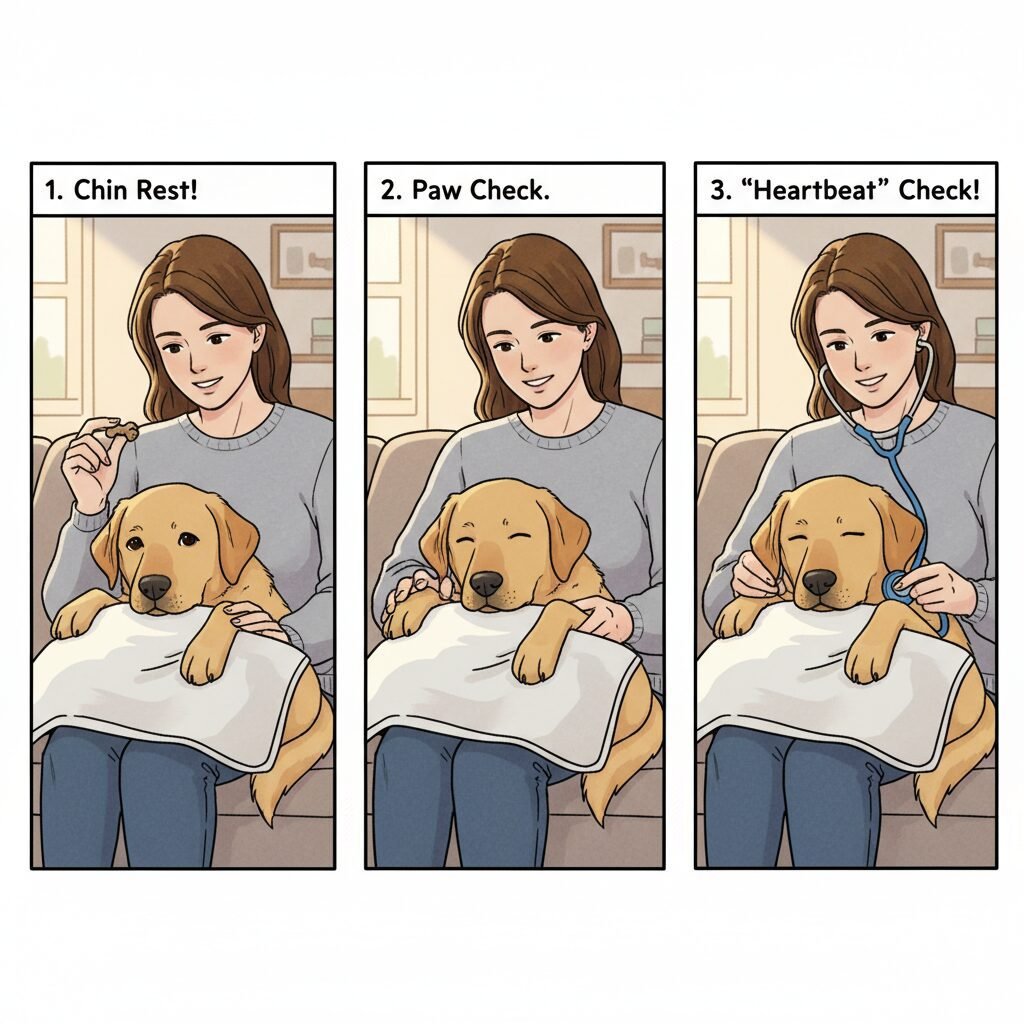
The Training Protocol: From Chin Rest to Mock Exams
This section breaks down the training into a clear, progressive plan. Remember to master each step before moving to the next and always work at your dog’s pace. Keep sessions short, fun, and positive.
Step 1: The Foundation – The ‘Chin Rest’ Start Button
The chin rest is the cornerstone of cooperative care. It is your dog’s way of saying, “I am ready.”
- Begin by sitting on the floor with your dog. Place a folded towel or small pillow on your lap or on the floor in front of you.
- Hold a treat in your hand and lure your dog’s head over the towel. When their chin touches the towel, even for a second, mark the moment (‘Yes!’ or a click) and give them the treat.
- Repeat this process. As your dog begins to understand, start to fade the lure and wait for them to offer the chin rest on their own.
- Gradually build duration. Start rewarding for one second of chin rest, then two, then five, and so on. If your dog lifts their head, the opportunity for a reward ends until they place it back down. This teaches them that the chin rest is what makes the good things happen.
Step 2: General Handling and Body Checks
Once the chin rest is reliable, you can begin to add gentle handling.
- Ask for the chin rest. While your dog is holding the position, gently touch their shoulder for one second. Mark and reward.
- If they remain calm, repeat and touch another part of their body, like their back or side. Always keep the touch brief at first.
- Slowly progress to more sensitive areas like paws, ears, and their tail. Go very slowly here. For a paw, you might first just touch the top of the leg, then the lower leg, and finally the paw itself over several sessions.
- If at any point your dog lifts their head, stop touching immediately. Wait for them to offer the chin rest again before you resume, perhaps going back to an easier step (like touching the shoulder).
Step 3: Introducing Veterinary Tools
Now, we change the dog’s emotional response to scary vet equipment.
- Present a tool, like the stethoscope. Let your dog sniff it. Mark and reward. Put it away. Repeat several times.
- Next, with the stethoscope in your hand, ask for a chin rest. Reward.
- While they hold the chin rest, touch the stethoscope to their shoulder (away from their head or chest at first). Mark and reward for staying in position. Remove the stethoscope.
- Gradually move the tool to the relevant body part (e.g., stethoscope to the chest, otoscope near the ear, nail clippers near the paw), rewarding heavily for calm acceptance.
Step 4: Putting It All Together – The Mock Examination
This is where you combine the previous steps into a simulated vet exam.
- Ask for the chin rest on their mat.
- Pick up a paw and hold it gently for two seconds, as if for a nail trim. Mark and reward.
- Use the toy stethoscope to ‘listen’ to their heart and lungs. Mark and reward.
- Gently lift their lip to look at their teeth. Mark and reward.
- Open and look into an ear. Mark and reward.
Important: Keep these mock exams very short and overwhelmingly positive. Intersperse easy, well-known behaviors with new, more challenging ones. The goal is to build a long history of reinforcement for calm, cooperative behavior during handling.
Troubleshooting and Overcoming Common Hurdles

Navigating Challenges in Your Training Journey
Cooperative care training is a process, and it’s normal to encounter setbacks. The key is to respond with patience and adjust your strategy rather than giving up. Here are solutions to common problems.
My Dog Shows Stress Signals (Whale Eye, Lip Licking)
This is the most important signal to pay attention to. It means you have progressed too quickly or the session has gone on too long. Solution: Immediately stop what you are doing. Go back to a much earlier, easier step where your dog was successful and comfortable. For example, if they showed stress when you touched their paw, go back to just rewarding the chin rest with no handling. End the session on that positive, successful note. In the next session, break the paw-touching step into even smaller increments.
My Dog Keeps Breaking the Chin Rest
This indicates that what you are doing is too difficult or that the duration you’re asking for is too long. Solution: Focus solely on building the value of the chin rest itself. Practice short-duration chin rests with very high-value rewards and no handling at all. Make it the best game in the world. Once the chin rest is enthusiastic and more durable, you can slowly re-introduce the handling you were attempting, but at a much lower intensity.
Progress Seems Incredibly Slow
It’s easy to get discouraged if you don’t see rapid improvement. Solution: Redefine what ‘progress’ means. A session where your dog participated for 10 seconds without stress is a huge win. Keep a training journal to track these small successes. It will help you see that you are moving forward, even if it’s in tiny steps. Consistency over time is more important than speed.
My Dog Has a History of Severe Trauma at the Vet
For dogs with a significant history of traumatic experiences, fear and anxiety can be deeply ingrained. Solution: While the principles of cooperative care are still the foundation, these cases often require professional guidance. Do not hesitate to seek help from a board-certified veterinary behaviorist (DACVB) or a certified professional dog trainer (CPDT-KA) with specific experience in cooperative care and behavior modification. They can create a tailored plan and help you and your dog work through these challenges safely.
Beyond the Basics: Partnering with Your Veterinary Team
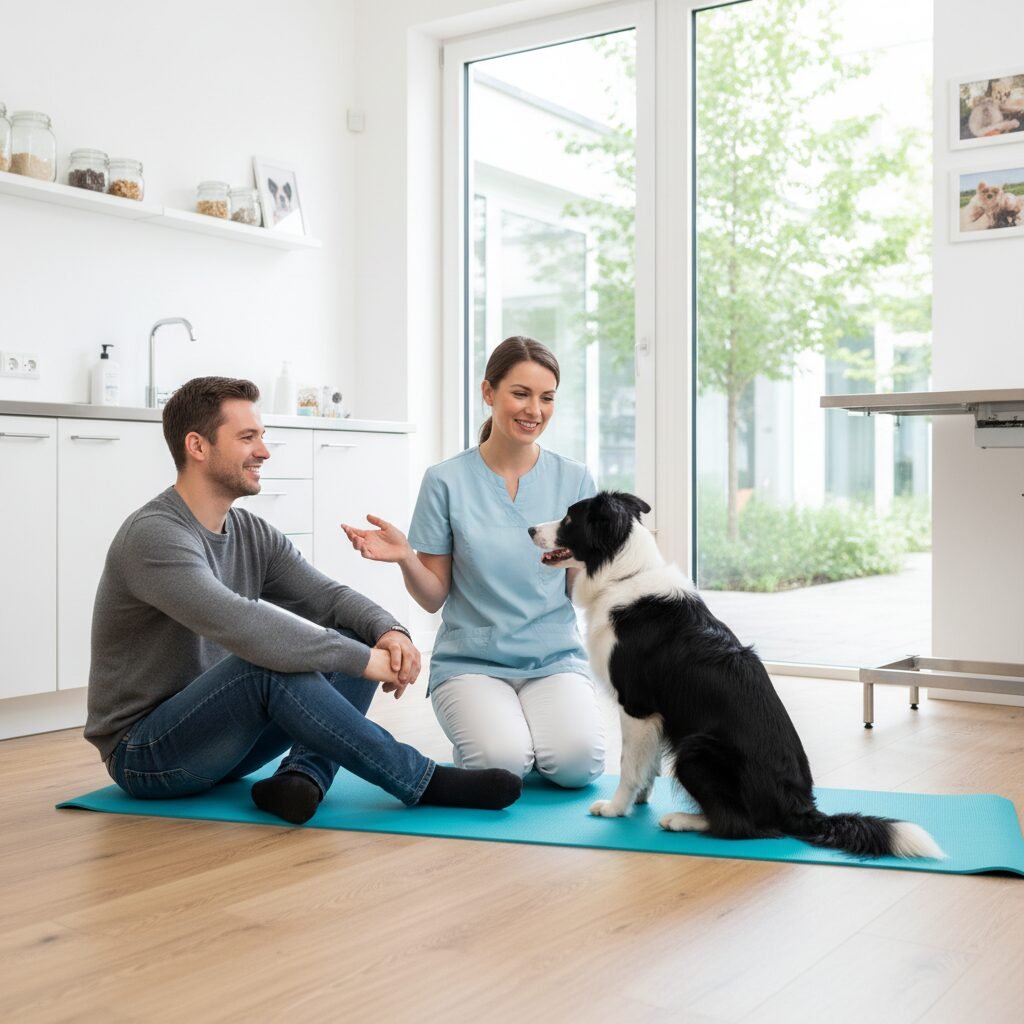
Applying Your Training in the Real World
Your hard work at home pays off when you can successfully apply it at the veterinary clinic. This requires proactive communication and some advanced training, such as positive muzzle conditioning.
Positive Muzzle Training: A Tool for Safety and Success
A muzzle is often seen as a punitive tool, but in the context of cooperative care, it’s a proactive safety measure that can paradoxically reduce stress. If the vet knows the dog cannot bite, they can often use less restraint, which keeps the dog more comfortable. The key is to train the dog to love wearing the muzzle.
| Step | Action | Goal |
|---|---|---|
| 1. Introduction | Show the muzzle. Feed a high-value treat through the front opening. | Muzzle = Amazing Treats |
| 2. Voluntary Interaction | Hold the muzzle and let the dog voluntarily put their nose into it to get a treat. Do not buckle it. | Putting nose in muzzle is a fun choice. |
| 3. Adding Duration | Once the dog is eagerly putting their nose in, start feeding multiple small treats in a row while their nose is inside. | Keeping nose in muzzle is rewarding. |
| 4. Buckling | Briefly buckle the strap, feed a treat, and immediately unbuckle. Gradually increase the time the buckle is fastened. | The sound and feel of the buckle is normal. |
Communicating with Your Veterinarian
Your veterinarian is your partner in your pet’s health. Help them help your dog by communicating effectively before and during the visit.
- Inform Them in Advance: When you book the appointment, let the staff know that you have been working on cooperative care training.
- Request a Fear-Free Professional: Many clinics now have staff certified in Fear-Free handling. Ask if you can book with one of them.
- Explain Your Dog’s Signals: Briefly explain your dog’s ‘start-button’ behavior (e.g., “He rests his chin on my hand to say he is ready. If he lifts his head, we need to pause.”).
- Advocate for Your Pet: Ask if exams can be done on the floor on your non-slip mat instead of on a cold, slippery table. Ask the vet to show your dog the equipment before using it.
- Schedule ‘Happy Visits’: These are short visits to the clinic where no procedures are done. The dog just goes into an exam room, gets lots of treats and praise from the staff, and then leaves. This helps build a positive association with the clinic itself.
Conclusion
Embarking on a cooperative care journey is one of the most profound investments you can make in your dog’s long-term well-being. It is a testament to your commitment to not only their physical health but also their emotional welfare. By replacing fear with trust and force with choice, you fundamentally change your dog’s experience of healthcare. The process requires patience, consistency, and an empathetic understanding of your dog’s communication, but the rewards are immeasurable. You will build a stronger, more trusting bond and empower your dog to be an active, confident participant in their own life. Start today, one chin rest at a time, and transform dreaded vet visits into a testament to your incredible partnership.