Stop Getting Tangled! Master The Long Line For Total Freedom
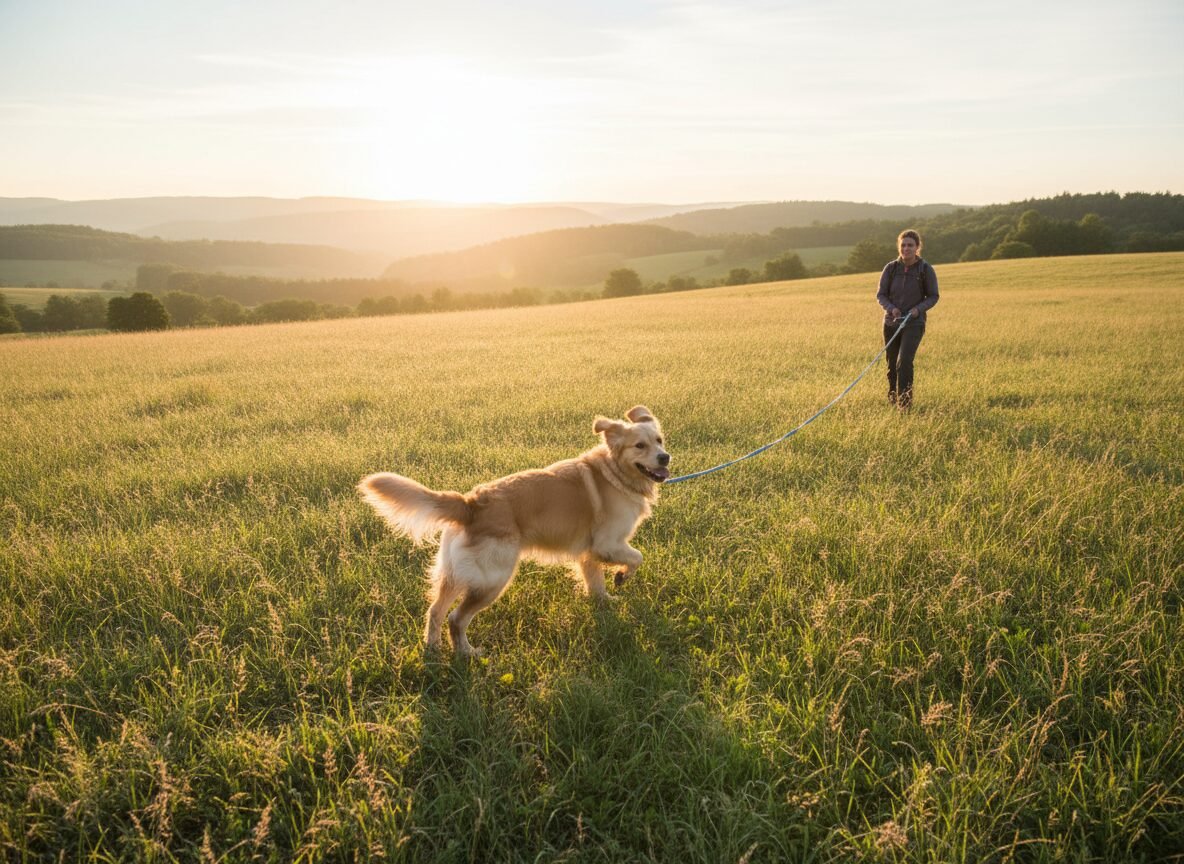
The long line is arguably one of the most powerful yet misunderstood tools in a dog owner’s arsenal. Many envision it as a ticket to freedom—a way to grant their dog the joy of exploration beyond the confines of a six-foot leash. Yet, the reality for many is a frustrating dance of knots, tangles around trees and legs, and a feeling of being more encumbered than liberated. If this sounds familiar, you are not alone. The challenge lies not with the tool itself, but in the technique used to wield it.
As a canine specialist, I’ve seen countless owners abandon the long line, convinced it’s an unmanageable mess. However, mastering this simple piece of equipment is the critical bridge between on-leash control and off-leash reliability. It is the key to building a bombproof recall, teaching boundary training, and safely providing your dog with the mental and physical stimulation it craves. This guide will demystify the long line, transforming it from a source of frustration into your most trusted training partner. We will move beyond the basics and delve into the specific handling skills, practical exercises, and safety protocols that separate the amateurs from the experts. Prepare to stop getting tangled and start experiencing true freedom with your canine companion.
Essential Gear: Selecting the Right Tools for Tangle-Free Training
Choosing Your Equipment Wisely
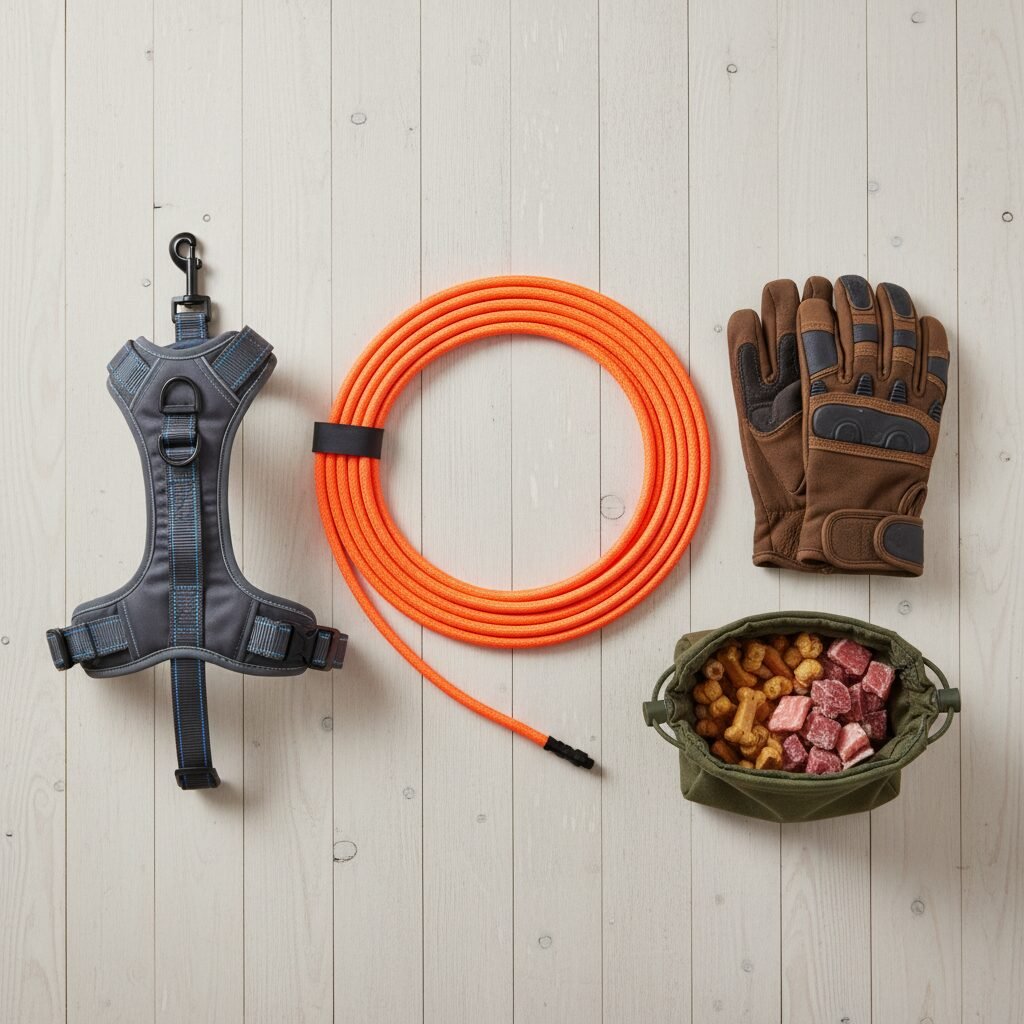
Before you take your first step, success begins with the right equipment. The market is flooded with options, and your choice of long line, harness, and accessories will directly impact your training experience’s safety and effectiveness. A poor-quality line can snap, a poorly fitted harness can cause injury, and the wrong material can lead to rope burn and constant knots.
The Long Line Itself
The length and material of your long line are the most critical decisions. For most training scenarios, a length of 20 to 30 feet is ideal. This provides enough distance for the dog to feel a sense of freedom while keeping them within a manageable range for effective recall practice. Lines shorter than 15 feet don’t offer enough liberty, while those exceeding 50 feet can become incredibly unwieldy and dangerous if not handled by a professional.
The material dictates the line’s weight, durability, and tendency to tangle. Here is a breakdown of common options:
| Material | Pros | Cons |
|---|---|---|
| Biothane | Waterproof, easy to clean, doesn’t absorb odors, slides easily over terrain, less likely to knot. | Can be slippery when wet, sometimes more expensive. |
| Nylon (Flat Webbing) | Inexpensive, widely available, lightweight. | Absorbs water and dirt, can cause severe rope burn, prone to tangling and knotting. |
| Nylon (Rope) | Often more comfortable to hold than flat webbing. | Can still cause rope burn, absorbs water, can be heavy when wet. |
| Cotton | Soft on the hands, less likely to cause rope burn. | Absorbs water, becomes very heavy, stretches when wet, can rot if not dried properly. |
Expert Tip: For the vast majority of pet owners, a 30-foot Biothane long line is the superior choice. Its all-weather capability and tangle-resistant nature significantly reduce the common frustrations associated with long line training.
Harness vs. Collar: A Non-Negotiable Safety Choice
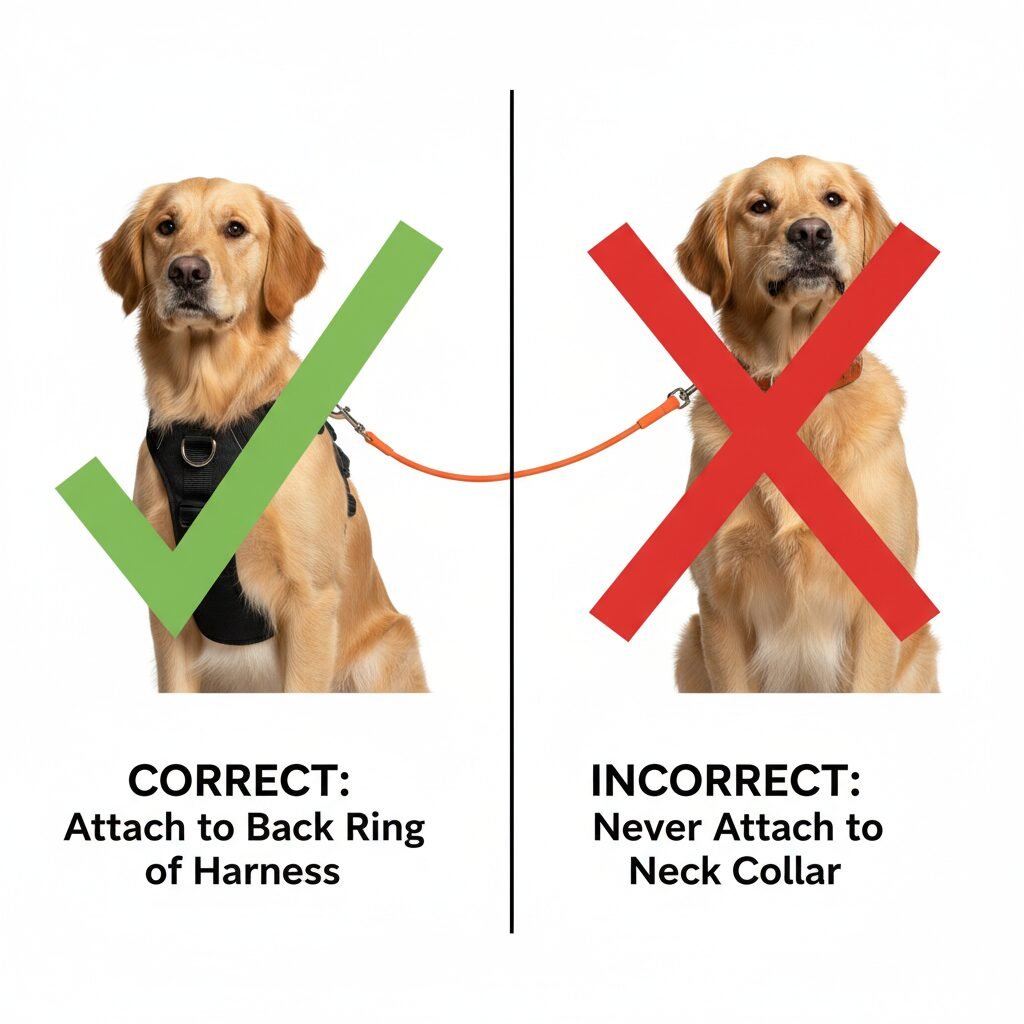
A long line must always be attached to a well-fitting, back-clip harness. Never attach a long line to a dog’s collar (including flat collars, martingales, choke chains, or prong collars). If a dog takes off at full speed and hits the end of a 30-foot line, the force exerted on its neck can cause severe tracheal, esophageal, or spinal injury. A back-clip harness distributes that force safely across the dog’s chest and shoulders, protecting its delicate neck structure.
Essential Accessories
- Gloves: A simple pair of gardening or athletic gloves can save your hands from rope burn, especially if you are not using a Biothane line.
- High-Value Treats: To build a powerful recall, you need a powerful reward. Use special treats your dog adores and only gets during these training sessions, such as small pieces of cooked chicken, cheese, or freeze-dried liver.
- Treat Pouch: A waist-worn treat pouch allows for quick, seamless access to rewards, which is crucial for marking and rewarding your dog’s successful recalls at the precise moment they occur.
Mastering Line Management: The Art of the ‘Butterfly’ Coil
The Core Skill: Preventing Tangles Before They Start
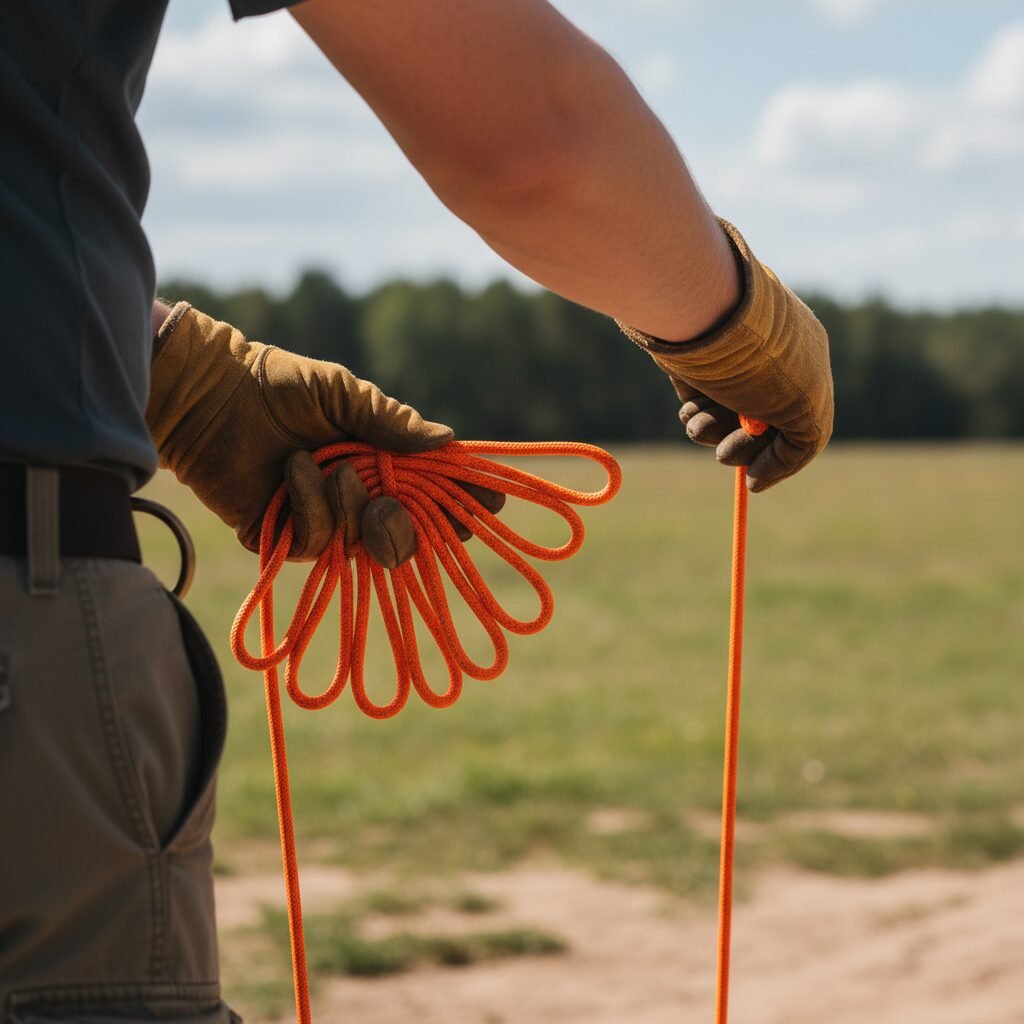
The secret to a frustration-free long line experience is proactive line management. You should never let the line drag in a long, messy trail behind you. Instead, you must learn to feed the line out and gather it in fluidly, keeping the excess neatly organized in your hand. This prevents tangles and ensures you can apply a brake or reel your dog in smoothly and safely at any moment.
Step-by-Step Guide to the Butterfly Coil
The ‘butterfly’ or ‘figure-eight’ coil is the most efficient method for managing the slack. Practice this at home without your dog first until the motion becomes second nature.
- Secure the Handle: Place the loop at the end of the long line securely over the thumb of your non-dominant hand. Never wrap the loop around your wrist, as a sudden bolt from your dog could cause serious injury. Your non-dominant hand will be your ‘anchor’ hand.
- Begin the Coil: With your dominant hand, take the line a foot or two from your anchor hand and bring it up, looping it over your thumb and pinky finger in a figure-eight pattern. The line should cross over itself in the palm of your anchor hand.
- Continue the Motion: Continue gathering the line in this figure-eight motion. Let the line slide through your dominant hand as you create successively larger loops over your thumb and pinky. The goal is to create a neat, organized ‘butterfly’ of coiled line in your anchor hand.
- Feed the Line Out: As your dog moves away from you, simply relax your anchor hand’s grip slightly and allow the coils to unfurl one by one. Use your dominant hand to guide the line out smoothly.
- Gather the Line In: As your dog moves toward you, use your dominant hand to pull the line in, hand-over-hand, and immediately reform the butterfly coil in your anchor hand. Do not simply pull the line in and let it fall at your feet—this is how tangles happen.
Important Takeaway: Your goal is to always maintain a gentle ‘smile’ or ‘J’ shape in the line between you and your dog. A taut line creates opposition reflex, encouraging the dog to pull, while a line with too much slack is a tripping and tangling hazard. The butterfly coil allows you to constantly adjust the slack to maintain that perfect ‘J’ shape.
Practical Application: Building a Reliable Recall
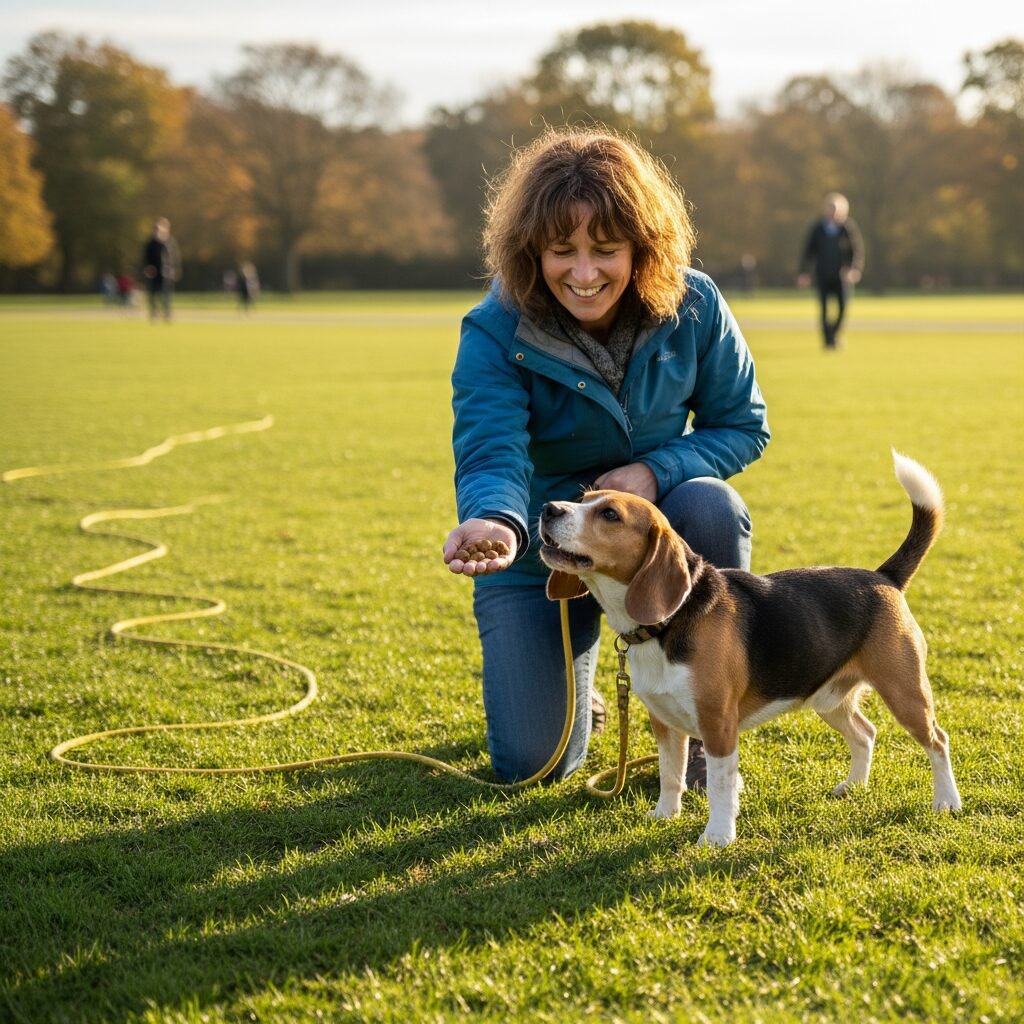
Putting Theory into Practice: From Games to Lifesaving Commands
With your gear selected and handling technique practiced, it’s time to begin training. Start in a low-distraction environment like a quiet park or an empty sports field. The primary goal of long line training is to teach your dog that returning to you is the best thing it can possibly do.
Phase 1: The ‘Check-In’ Game
The first step is to reward your dog simply for acknowledging you. Let your dog wander to the end of the line. The moment they pause and look back at you, mark the behavior with an enthusiastic “Yes!” and reward them. You can either toss a treat to them or encourage them to come back to you for it. This teaches the dog that keeping track of your location is a rewarding activity.
Phase 2: The Name Game and Directional Changes
Begin walking around the area. Every so often, say your dog’s name in a happy, upbeat tone. The instant their head turns toward you, say “Yes!” and reward them. Start making sudden turns. When your dog notices you’ve changed direction and moves to follow you, reward them enthusiastically. This builds engagement and teaches your dog to follow your lead.
Phase 3: Introducing the Recall Cue
Now, we formally introduce the recall command. Wait for a moment when your dog is not overly distracted.
- Use Your Cue: Say your recall word (e.g., “Come!” or “Here!”) in a cheerful, inviting tone. Use it only once. Repeating the command teaches the dog they don’t have to respond the first time.
- Create Motion: Immediately after saying the cue, turn and move away from your dog. This motion is instinctually enticing and encourages them to follow. You can clap your hands or pat your legs to seem more exciting.
- Gentle Guidance (If Needed): If your dog doesn’t immediately respond, use a gentle, steady pressure on the long line—like you are reeling in a fish—to guide them toward you. Do not yank or ‘pop’ the line.
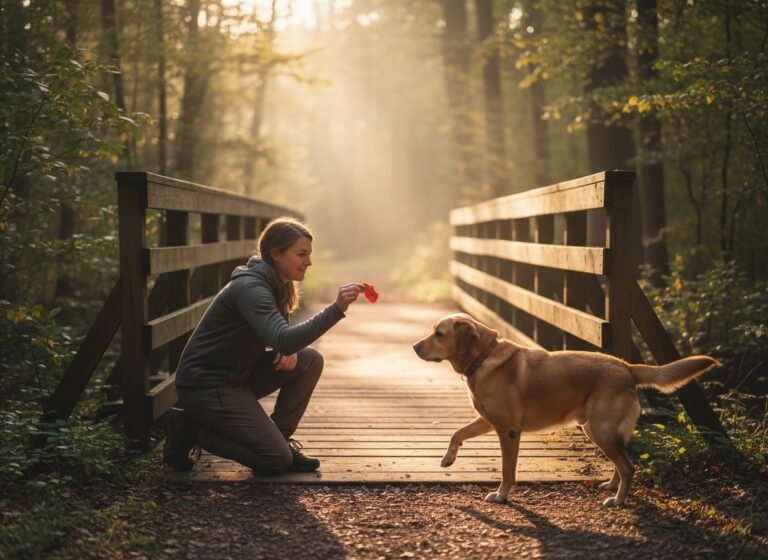
- The Payoff: The moment your dog arrives, throw a ‘treat party.’ Give them multiple high-value treats, one after the other, along with lots of verbal praise and petting. The reward must be significant enough to outweigh whatever they left behind.
- Release: After the reward, release your dog with a cue like “Okay, go play!” and let them move away again. This prevents the dog from associating a recall with the end of fun.
Troubleshooting Common Long Line Catastrophes
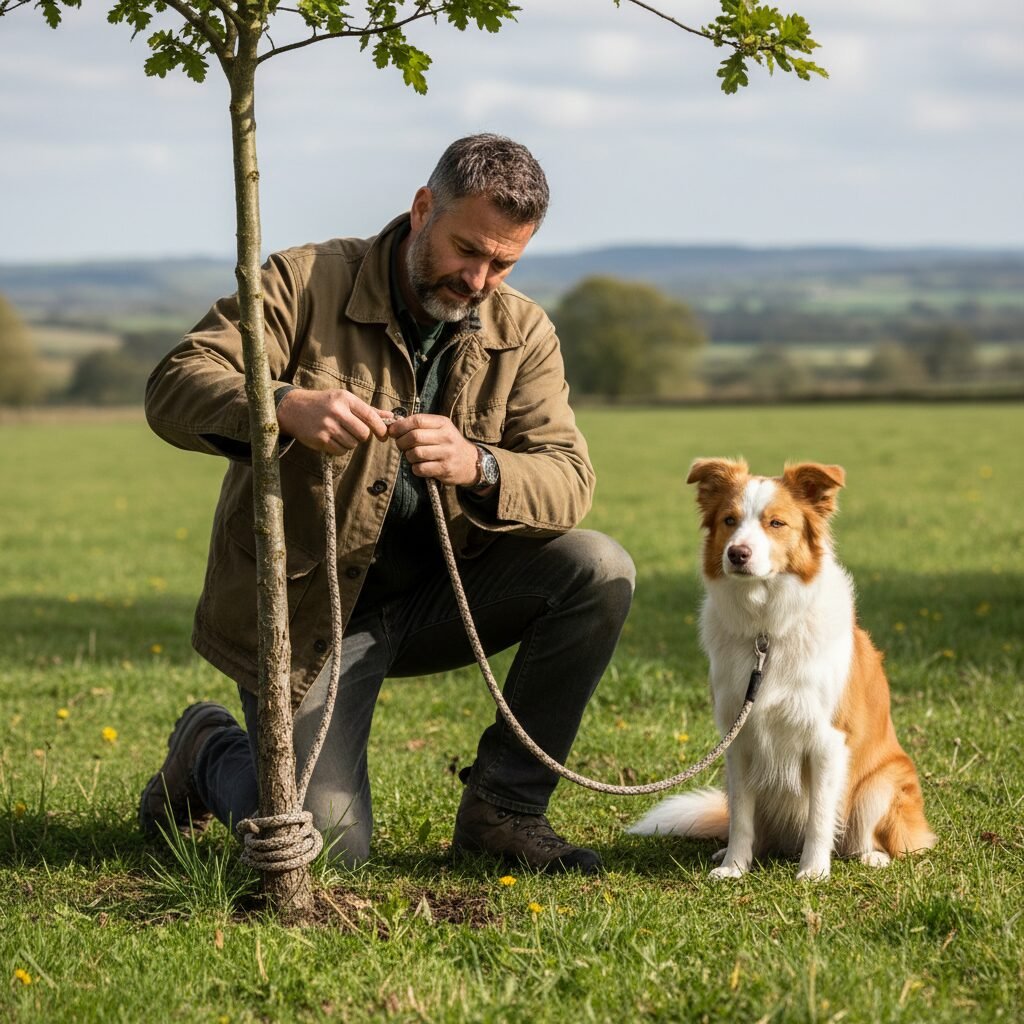
Navigating the Inevitable: Staying Calm and in Control
Even with perfect handling, challenges will arise. The key is to address them calmly and methodically, turning potential frustrations into learning opportunities.
Problem 1: The Line is Tangled Around a Tree or Bush
This is the most common issue. Do not pull or yank. This will only tighten the knot and frighten your dog. Instead, hold your position, keep the line from getting tighter, and calmly walk toward the obstacle. Walk yourself and the line back around the tree or bush the way it came. Verbally reassure your dog throughout the process.
Problem 2: The Dog Gets Tangled in the Line
If your dog gets a leg or its body caught, immediately stop all movement. Command your dog to ‘Stay’ or ‘Wait’ if they know it. Calmly approach them, talking in a soothing voice. Do not attempt to fix it from a distance by shaking the line. Walk right up to your dog and manually lift the line over their leg or body to free them. Give them a treat for their cooperation.
Problem 3: The Dog Chews on the Long Line
Chewing can destroy a line and is a dangerous habit. This often happens when the dog is bored or when there’s too much slack on the ground. To manage this:
- Keep the Line Moving: Practice your handling to keep the line off the ground as much as possible.
- Make it Unpleasant: Treat the line with a bitter-tasting but pet-safe spray.
- Trade for Something Better: If you see your dog start to mouth the line, immediately interrupt and offer a high-value treat or a quick game of tug with an appropriate toy. This teaches them that leaving the line alone leads to better things.
Problem 4: The Dog Ignores the Recall Cue Completely
If your dog is completely blowing you off, it’s a sign that the environment is too distracting or your reward isn’t valuable enough.
- Go Back a Step: Return to a less distracting environment and practice the foundational games.
- Increase Your Value: Upgrade your treats. If you were using kibble, switch to chicken. If you were using chicken, switch to steak. Find what truly motivates your dog.
- Check Your Tone: Ensure your recall cue sounds like an invitation to a party, not an angry summons. A low or frustrated tone will make your dog less likely to want to come to you.
Long Line Safety Protocols: The Non-Negotiables
Freedom with Responsibility: Rules for Safe Operation
A long line is a training tool, not a tether. Using it improperly can be dangerous for your dog, other people, and other animals. Adhering to strict safety protocols is not optional; it is a core component of responsible long line use.
Rule 1: Never Leave a Dog Unattended
Never, under any circumstances, tie a dog out on a long line and leave it unsupervised. A dog can easily get tangled and panic, leading to severe injury or strangulation. The long line is an active training tool that requires you to be holding the other end at all times.
Rule 2: Maintain Situational Awareness
You must be constantly scanning your environment. Be aware of:
- Other People and Dogs: A running dog on a long line can easily clothesline a person or become entangled with another dog, leading to a fight. If you see others approaching, shorten the line immediately and bring your dog close to you.
- Roads and Parking Lots: Ensure you are a safe distance from any traffic. A 30-foot line gives a dog a large radius, and you must be certain that the edge of that radius does not extend into a dangerous area.
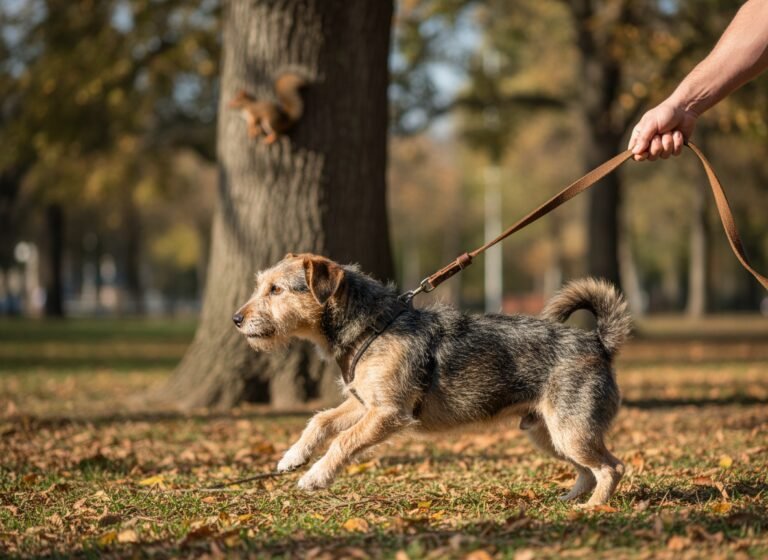
- Wildlife: Be mindful of squirrels, rabbits, or deer that might cause your dog to bolt unexpectedly.
Rule 3: The Harness is Mandatory
As stated earlier, but worth repeating: always attach the long line to a back-clip harness. The risk of a catastrophic neck injury when a dog hits the end of the line at speed is too great to ever attach it to a collar.
Rule 4: Know When to Let Go
This may sound counterintuitive, but in a true emergency—for example, if your large dog is bolting at full speed towards a street and you are being pulled off your feet—letting go of the line might be the safest option to prevent you from being pulled into traffic as well. This is a last resort, but it highlights the importance of training in safe, enclosed, or low-risk areas, especially in the beginning.
Final Safety Thought: The purpose of the long line is to create the illusion of off-leash freedom while maintaining a crucial safety net. Your goal is to train your dog to be so responsive that you rarely, if ever, need to use that net.
Conclusion
Mastering the long line is a journey of patience, consistency, and skill. It requires you to be as engaged in the training process as your dog. By investing the time to select the right gear, perfect your handling technique, and practice recall exercises with irresistible rewards, you will transform this simple rope into a powerful tool of communication and trust. The initial clumsiness will fade, replaced by a fluid and intuitive dance between you and your canine partner.
Remember, the ultimate goal is to build a relationship so strong that the long line becomes merely a safety precaution, not a constant restraint. The freedom your dog will experience—the ability to sniff, run, and explore with confidence—is a profound gift. Move forward with the knowledge you’ve gained, practice diligently, and soon you will be enjoying the kind of peaceful, liberating walks you’ve always dreamed of.