I Taught My Dog To Speak With Buttons And You Won’t Believe What He Said
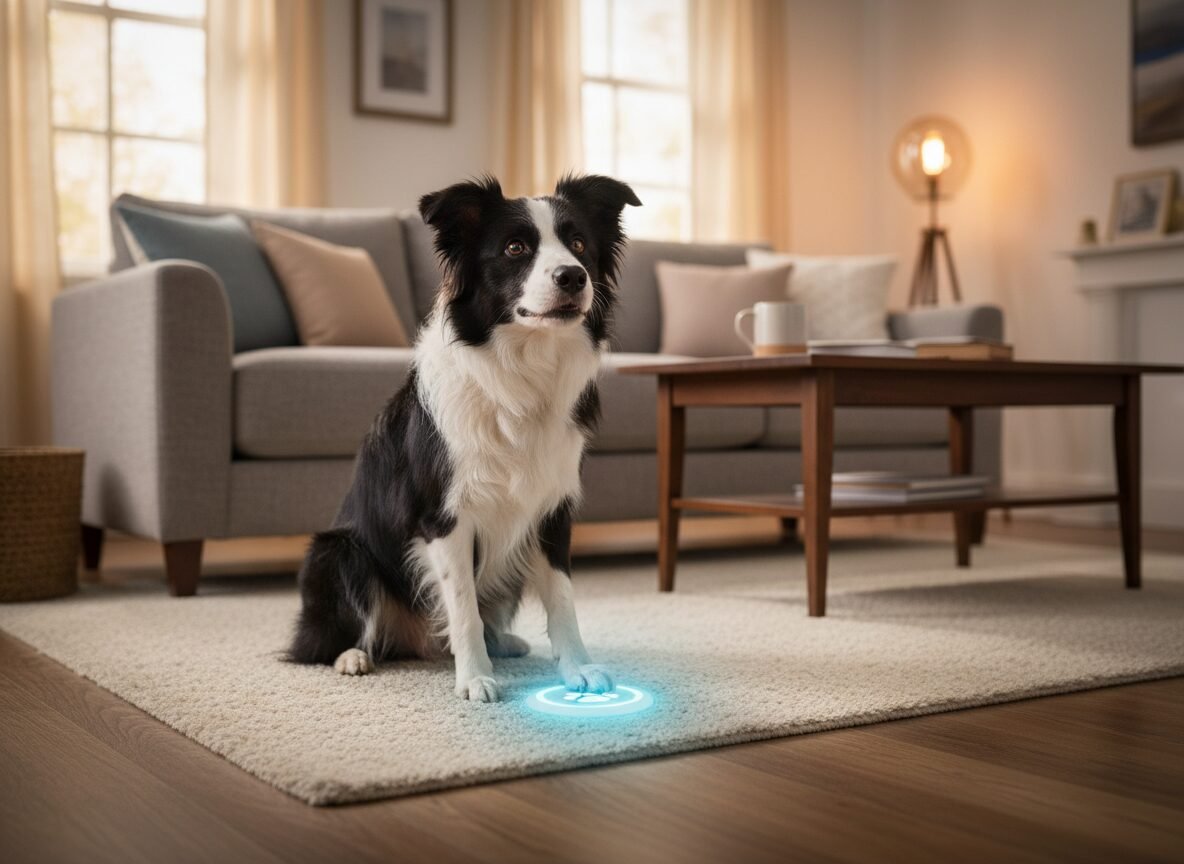
The internet is filled with viral videos of dogs seemingly expressing complex thoughts—asking for a walk, identifying a feeling, or even tattling on a sibling. These ‘talking’ dogs, like the famous Bunny or Stella, have captured our collective imagination, opening a window into the minds of our canine companions. But is this real communication, or just a clever trick? The answer lies in a fascinating and rapidly growing field: canine Augmentative and Alternative Communication (AAC). Using simple, recordable sound buttons, owners are providing their dogs with a vocabulary to express their needs, desires, and observations.
This is not about teaching your dog to speak English. It’s about providing a tool that bridges the communication gap, moving beyond barks, whines, and body language. It is a journey of patience, observation, and profound connection. This comprehensive guide will walk you through the science, the step-by-step training process, and the realistic expectations of embarking on this incredible endeavor. Prepare to listen to your dog in a way you never thought possible.
The Science Behind the ‘Talk’: Understanding Canine AAC
What Are Dog Communication Buttons and How Do They Work?
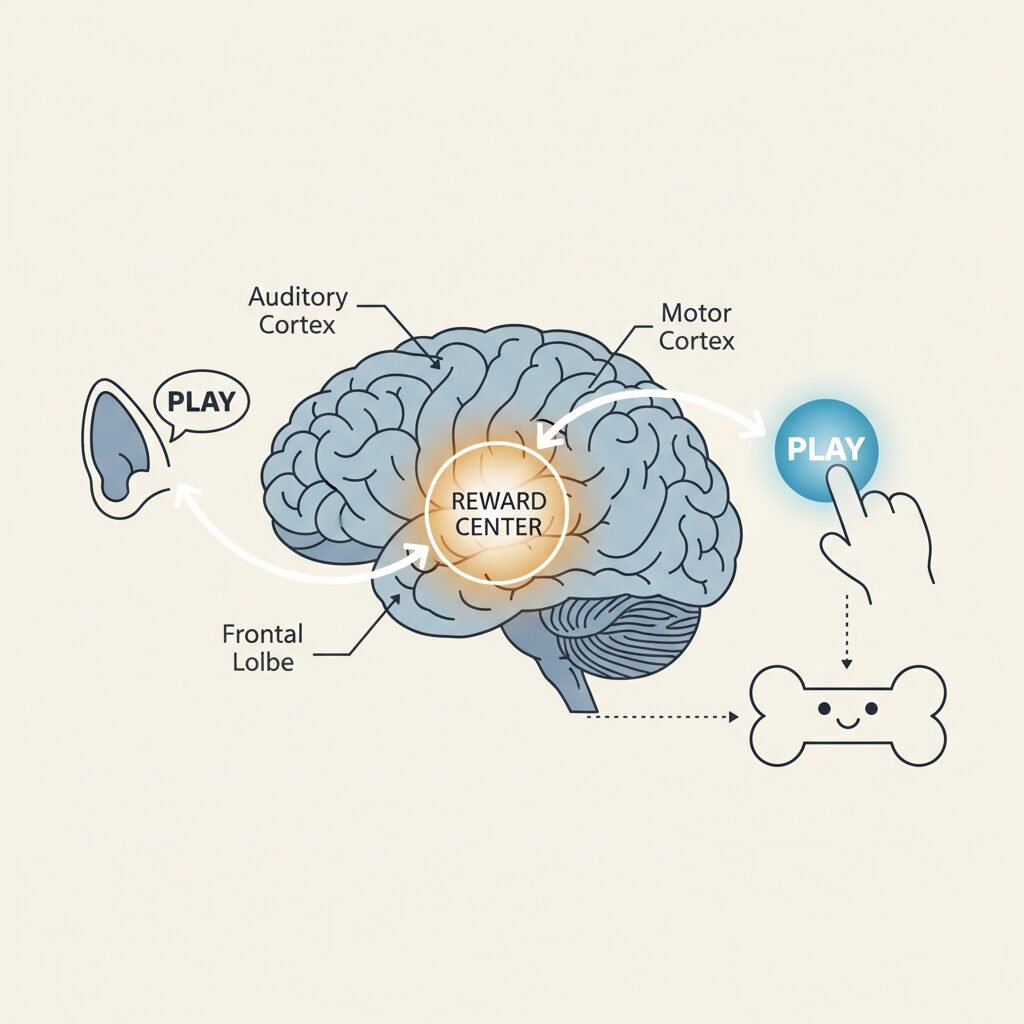
At its core, teaching a dog to use communication buttons is a sophisticated application of operant conditioning, a learning principle established by psychologist B.F. Skinner. The dog learns that a specific action (pressing a button) leads to a specific, predictable consequence (the corresponding event happens).
For example:
- The dog presses the button that says ‘Outside.’
- The owner immediately opens the door and lets the dog out.
- The dog’s brain forms a powerful association: Button = Potty Break/Sniffing Adventure.
These devices, often called AAC devices, are not creating language in the human sense, which involves grammar, syntax, and abstract thought. Instead, they empower a dog to make a specific, learned request. However, what researchers and dedicated owners are discovering is that with a robust vocabulary, dogs can begin to combine these requests in surprising ways, offering a richer glimpse into their cognitive world. It’s a functional communication system that gives them agency—the ability to influence their environment and express their internal state.
Expert Tip: Think of each button not as a word, but as a direct ‘request for action’ or a ‘label for an event.’ This mindset will help you structure your training for maximum clarity and success.
A Practical Guide: Teaching Your Dog to Use Communication Buttons
Embarking on this training journey requires patience, consistency, and a positive attitude. This is a marathon, not a sprint. Below is a phased approach to systematically introduce and expand your dog’s use of communication buttons.
Phase 1: Choosing Your Tools and First ‘Word’
Your first step is selecting the right equipment. Look for buttons that are durable, easy for your dog to press, and have clear audio playback. You don’t need a 50-button set to start. Begin with one or two. The most critical decision is your dog’s first word. It must be something that is highly motivating and has an immediate, tangible result. Excellent starting words include:
- Outside: A frequent and clear event.
- Play: Connects to a favorite, high-energy activity.
- Bed: For dogs that love to be prompted to go to their cozy spot.
- All Done: Useful for ending a session, meal, or activity.
Avoid starting with ‘Treat,’ as it can lead to obsessive button-spamming and detract from genuine communication. You can add it later once the concept is established.
Phase 2: Modeling and Association
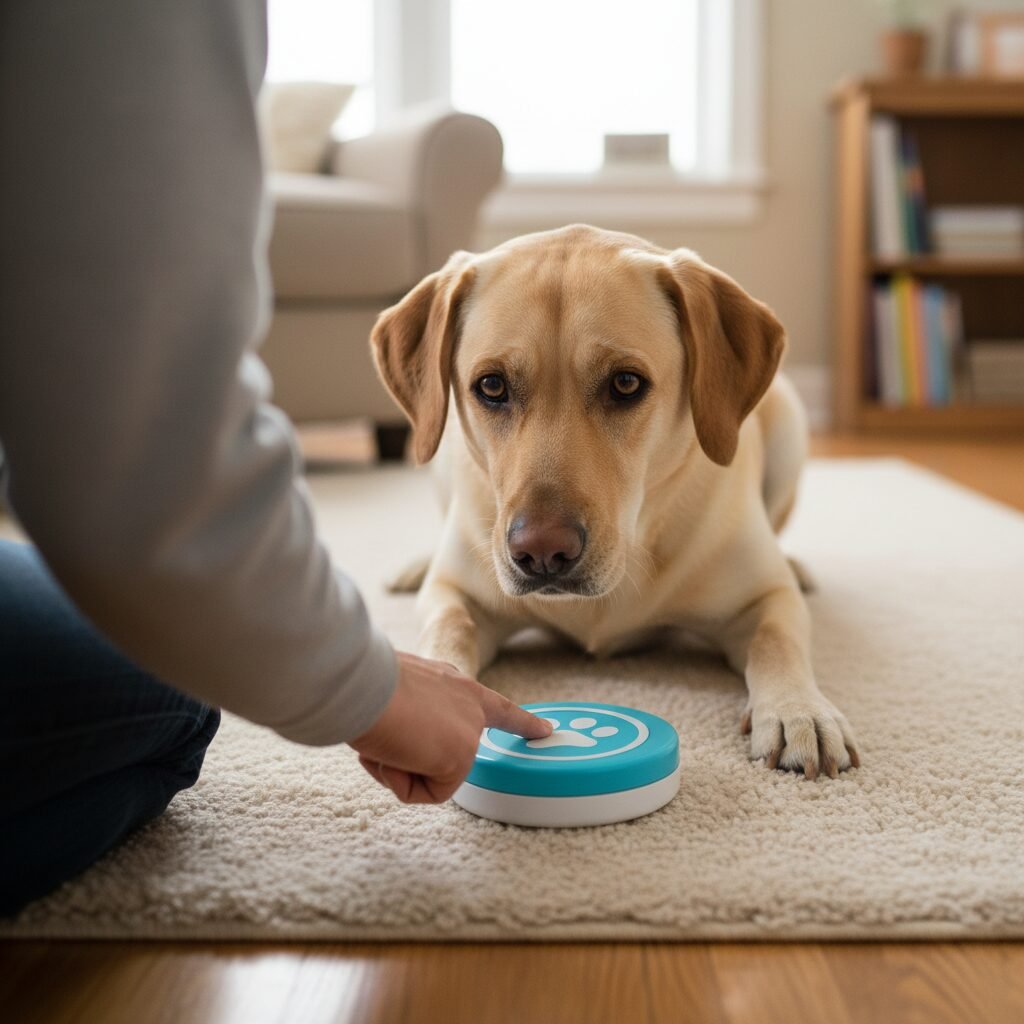
This is the most important and longest phase. Your job is to build a strong association between the button and the action. This is done through modeling. You, the human, will press the button every single time the corresponding action is about to happen, whether your dog is paying attention or not.
- Press and Act: Before you open the door to the backyard, press the ‘Outside’ button with your hand or foot and say the word ‘Outside.’ Then, immediately open the door.
- Be Consistent: Do this every. single. time. Repetition is the engine of learning. If you take your dog out 20 times a day, you should be modeling the ‘Outside’ button 20 times a day.
- Keep it Natural: Integrate the button presses into your normal routine. Don’t make it a formal, high-pressure training session.
During this phase, do not pressure your dog to interact with the button. You are simply wiring their brain to connect the sound of the button with the impending action.
Phase 3: Encouraging Interaction
After several weeks of consistent modeling, your dog will have a solid understanding of what the button means. Now, you can start encouraging them to press it. You might notice them looking at the button, sniffing it, or hovering near it when they want the associated action. This is your cue.
- Target Training: You can use a target stick or your hand to teach your dog to touch the button. Reward any interaction—a sniff, a nudge, or a full press—with praise and by immediately performing the action.
- Gentle Guidance: You can gently tap their paw and guide it toward the button. The moment they make contact, celebrate and deliver the outcome.
- Celebrate Success: The first time your dog presses the button independently is a monumental occasion! React with excitement and immediately grant their request. This positive reinforcement is crucial.
Phase 4: Expanding the Vocabulary
Once your dog is reliably using their first button to make requests, you can slowly expand their vocabulary. Introduce new buttons one at a time, using the same modeling process you did for the first one.
| Word Category | Example Words | Introduction Strategy |
|---|---|---|
| Core Needs | Outside, Water, Food, Play | Start with one of these. Once mastered, add another from this category. |
| People/Pets | Mom, Dad, [Dog’s Name], Cat | Introduce when your dog understands the concept. Model when that person enters the room or initiates play. |
| Locations | Upstairs, Bed, Crate, Car | Useful for directing movement. Model every time you are about to go to that location. |
| Feelings/States | Love You, Happy, Ouch, All Done | These are more abstract and should be introduced much later. Model ‘Love You’ during cuddle sessions. |
Deciphering the Dialogue: What Is Your Dog Really Saying?
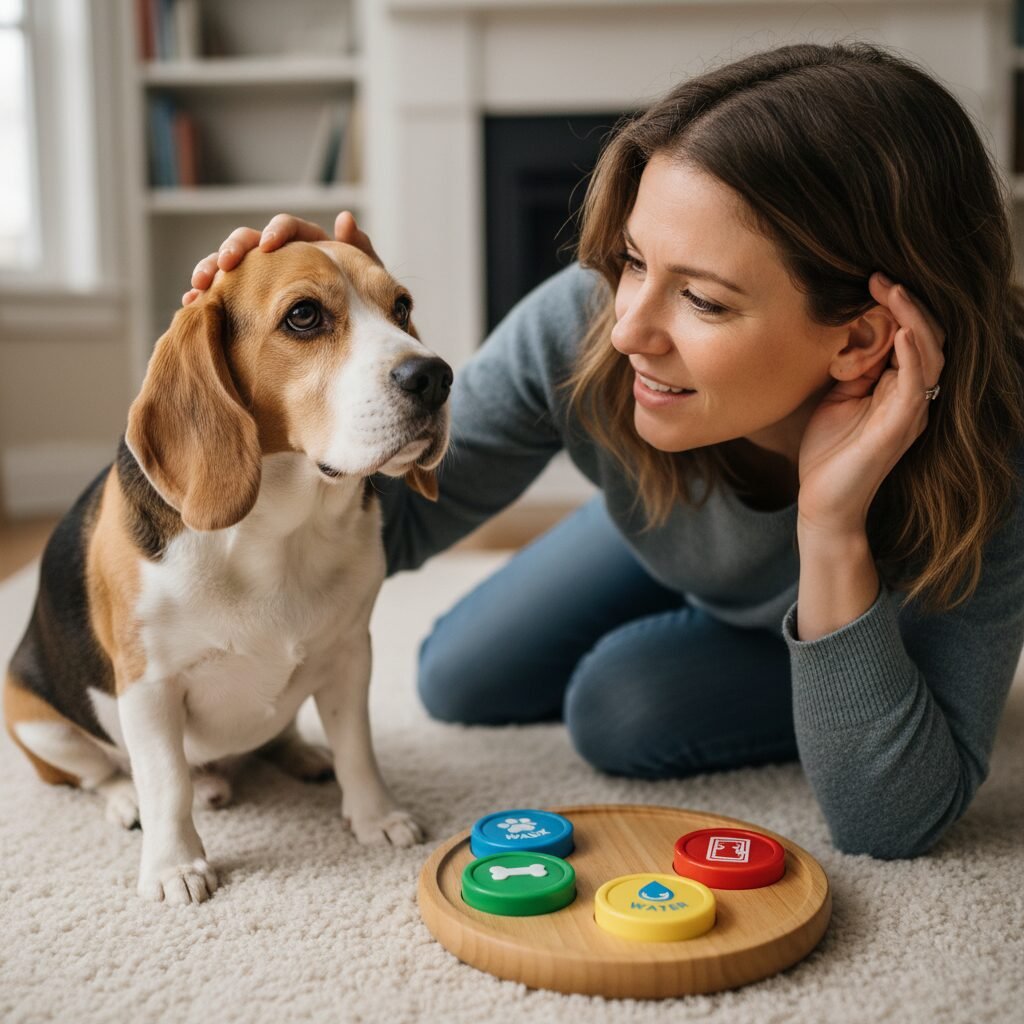
This is where the ‘unbelievable’ part of the journey begins. While your dog isn’t forming grammatically correct sentences, they are using the tools you’ve provided to express themselves. Interpreting their meaning requires you to become a canine detective, using context as your primary clue.
A press of ‘Play’ when you’re preparing their dinner might be a simple mistake. But a press of ‘Play’ followed by ‘Outside’ could be a clear request to fetch a ball in the yard. Owners report incredible moments of clarity, such as a dog pressing ‘Ouch’ and then ‘Ear’ to signal an ear infection, or pressing ‘Dad’ and ‘Car’ when they hear their owner’s vehicle pull into the driveway.
A key realization for many owners is that dogs have preferences and opinions they were previously unable to express. A dog might use the buttons to ask for a specific toy, request a cuddle with a particular person, or indicate they are finished with a training session by pressing ‘All Done’.
It’s important to manage expectations. Your dog is not engaging in philosophical debate. They are communicating in the here and now, about tangible things in their environment. The magic isn’t in complex sentence structure; it’s in the raw, unfiltered access to their immediate thoughts and needs. You’ll learn what frustrates them, what excites them, and what they notice that you don’t—like the mail carrier three blocks away.
Navigating the Hurdles: Troubleshooting Common Training Issues
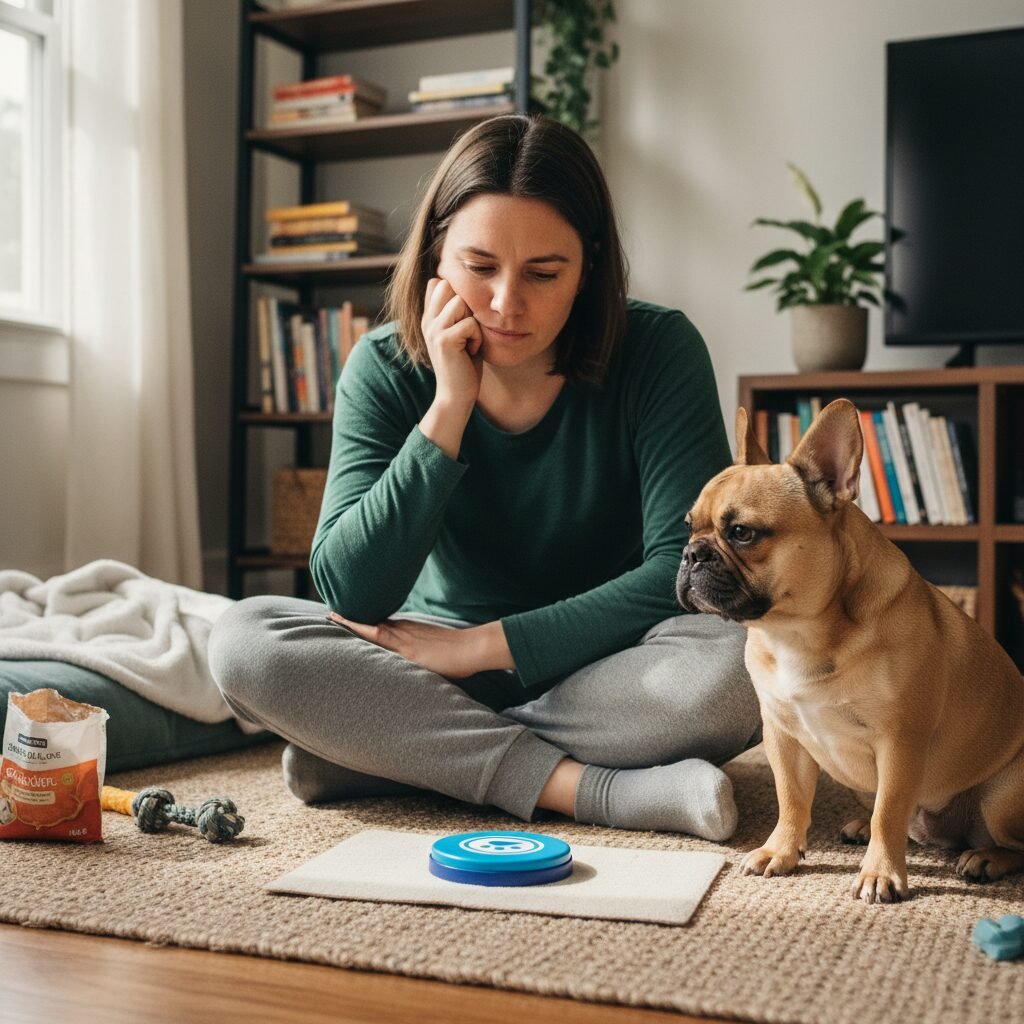
The path to button communication is rarely a straight line. Nearly every owner encounters bumps along the way. Here are some common challenges and how to address them with an authoritative and patient approach.
My dog just spams the ‘Play’ or ‘Treat’ button.
This is the most frequent issue. It’s crucial to teach your dog that the button is a request, not a magic command. Acknowledge every press. Say, ‘I hear you, you want to play. We can play in five minutes, after I finish this.’ You don’t have to grant every request, but you must acknowledge it to keep them from getting frustrated. For a ‘Treat’ button, the reward should not always be a food item. Sometimes the reward is praise or a pat. This prevents the button from becoming a simple vending machine.
My dog seems afraid of the button’s sound.
Introduce the button in a non-threatening way. Record your voice at a low volume. Place the button far away and press it, then immediately give your dog a very high-value treat. Slowly decrease the distance over many sessions until they associate the sound with something wonderful. Never force them to approach it.
My dog shows no interest at all.
It’s possible the ‘word’ you’ve chosen isn’t motivating enough. Re-evaluate what truly drives your dog. Is it a specific squeaky toy? Is it going for a car ride? Try recording that word and modeling it. Also, ensure you have modeled for long enough—some dogs need months of observation before the concept clicks.
We’re stuck and haven’t made progress in weeks.
Take a break. Put the buttons away for a week and just focus on enjoying your relationship. Re-introduce them later in a low-pressure way. Sometimes, removing the expectation to perform can free up the dog’s mind to learn. Remember, this is an enrichment activity, not a required skill. The goal is connection, not performance.
Beyond the Buttons: The Impact on the Human-Canine Bond
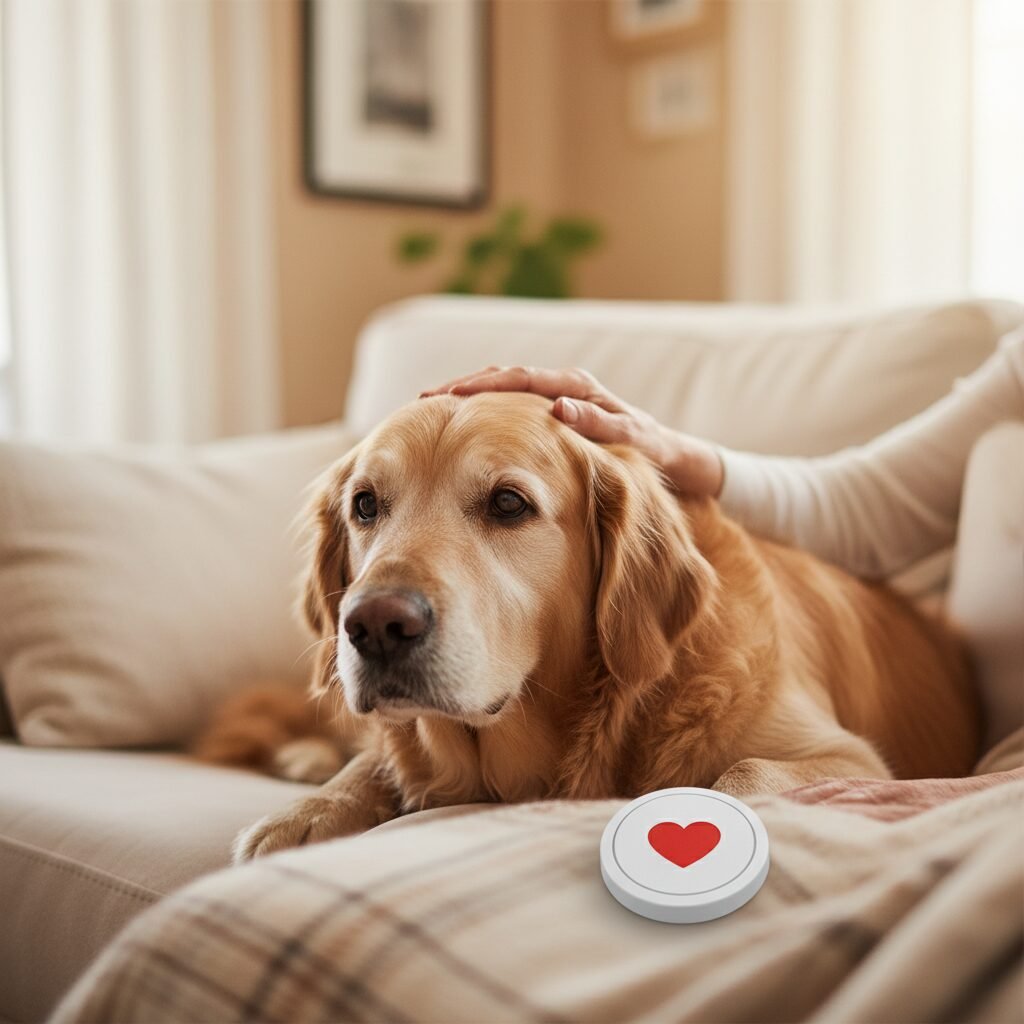
The true value of this endeavor extends far beyond the novelty of a ‘talking’ dog. The process fundamentally changes the dynamic between you and your pet, fostering a deeper level of understanding and respect.
For owners, the process hones observational skills. You become more attuned to your dog’s subtle cues because you are actively listening for their attempts to communicate. You start to see them not just as a pet to be managed, but as an individual with a distinct personality, preferences, and perspective.
For dogs, having a method to express their needs can be incredibly empowering. It can reduce frustration-based behaviors like nuisance barking or destructive chewing, which often stem from an inability to communicate a need. This is particularly transformative for certain populations:
- Senior Dogs: As their mobility or senses decline, buttons can help them signal needs like needing help onto the couch or alerting you to pain.
- Deaf or Vision-Impaired Dogs: For deaf dogs, buttons provide a clear auditory cue they can create themselves. For blind dogs, they serve as a reliable landmark to ask for help.
- Anxious or Shy Dogs: Giving a timid dog a quiet, clear way to ask for space or signal discomfort can be a massive confidence booster.
The scientific community, including research projects like the one at UC San Diego’s Comparative Cognition Lab, is actively studying this phenomenon to better understand the limits and potential of canine cognition. While the debate continues, one thing is certain for the thousands of owners who have embarked on this journey: the connection they feel with their dog has been immeasurably enriched.
Conclusion
Teaching your dog to communicate with buttons is one of the most fascinating and rewarding training challenges you can undertake. It demands consistency, challenges your preconceptions about animal intelligence, and requires you to listen more closely than ever before. While your dog may never tell you the meaning of life, they might just tell you they heard a funny noise outside, that they’d love to go for a car ride, or, simply, that they love you. And what you’ll find is that the most unbelievable thing your dog says isn’t a word at all—it’s the depth of the relationship you build while you’re learning to listen.