Stop The Tug-of-War: How to End Leash Biting During Walks Instantly
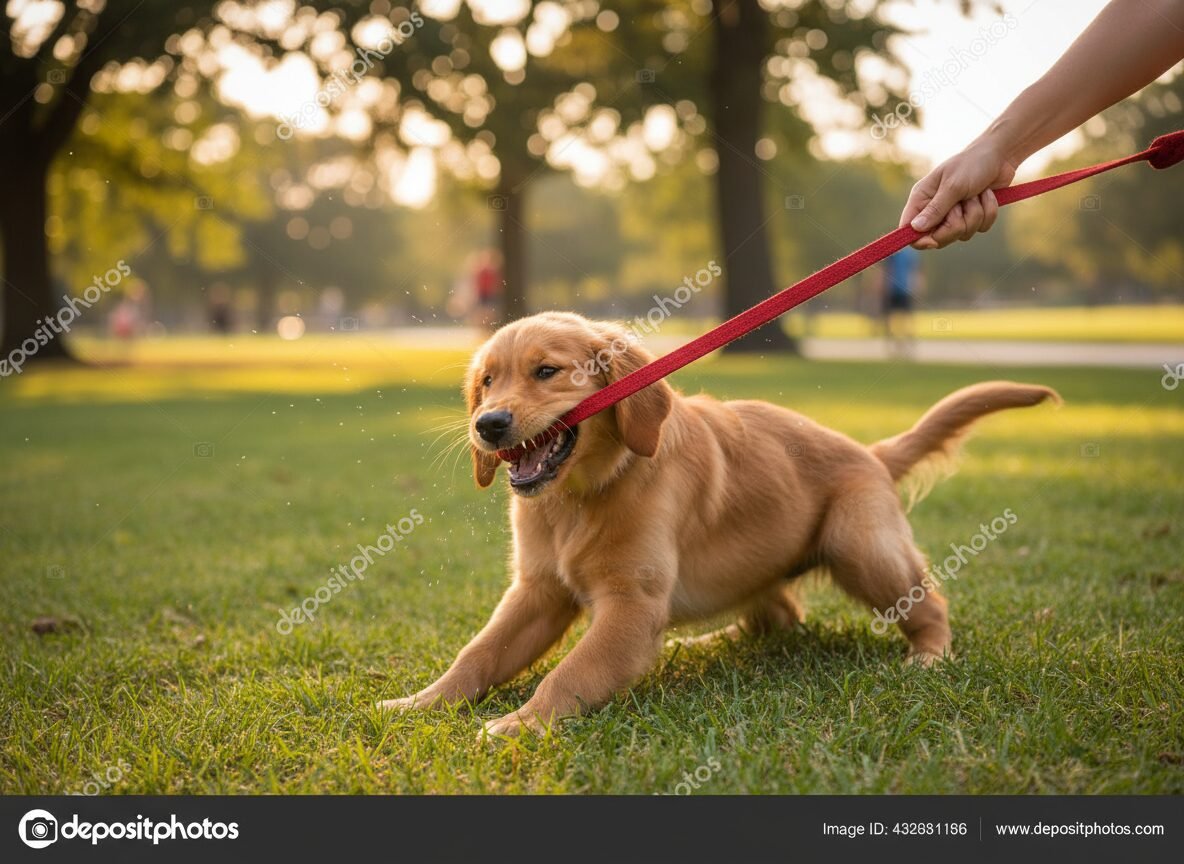
A leisurely walk with your canine companion should be a highlight of your day—a time for bonding, exercise, and exploring the world together. However, for many pet owners, this idyllic scene is shattered the moment their dog latches onto the leash, transforming a peaceful stroll into a frustrating game of tug-of-war. If you’re tired of frayed leashes and exasperating walks, you are not alone. Leash biting is a common behavior, particularly in puppies and high-energy dogs, but it’s one that can and should be addressed promptly.
This behavior is more than just a minor annoyance; it can damage equipment, undermine your training efforts, and even pose a safety risk. The key to resolving it isn’t to pull harder, but to understand the underlying motivation and implement a consistent, positive training strategy. This guide will provide a comprehensive, expert-led approach to end leash biting. We will delve into the psychology behind the behavior, equip you with the right tools and mindset, and walk you through a proven, step-by-step method to reclaim control and restore peace to your walks. Prepare to transform your daily tug-of-war into a harmonious heel.
Decoding the Bite: Why Your Dog Is Attacking the Leash
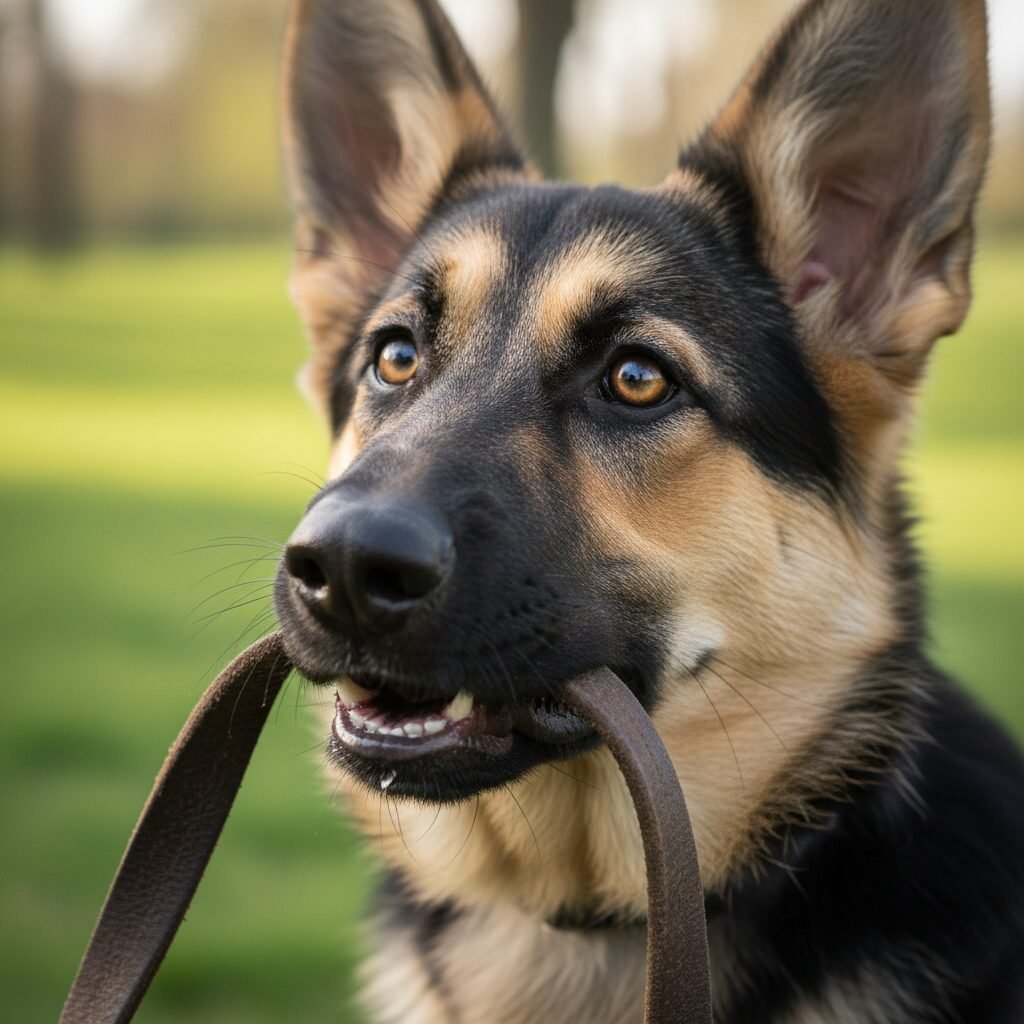
Before you can correct a behavior, you must first understand its origin. Dogs rarely do things without a reason, and leash biting is a form of communication. By identifying the root cause, you can tailor your training approach for maximum effectiveness. Here are the most common motivators behind this frustrating habit:
Puppy Teething and Oral Exploration
For puppies, the world is a giant chew toy. Between three to six months of age, puppies experience significant discomfort as their adult teeth emerge. Chewing helps alleviate this pain. A dangling, moving leash presents an irresistible target for a teething pup to gnaw on. It’s a natural, developmental stage, but one that requires immediate and gentle redirection to prevent it from becoming a lifelong habit.
Overexcitement and Redirected Energy
Walks are incredibly stimulating for a dog. The barrage of new sights, sounds, and smells can cause a dog’s arousal level to skyrocket. When this energy has no proper outlet, it can be redirected onto the nearest object—the leash. The dog isn’t being malicious; it’s simply overwhelmed with excitement and is expressing that energy in the only way it knows how. This is common in adolescent and high-energy breeds that may require more physical and mental exercise than they are currently receiving.
A Learned Attention-Seeking Behavior
Dogs are astute learners, and they quickly figure out what gets a reaction from their humans. If your dog bites the leash and you immediately respond by talking to them, pulling the leash away, or even scolding them, you may be inadvertently reinforcing the behavior. To a dog craving interaction, even negative attention is a reward. They learn that ‘leash bite = human interaction,’ creating a self-perpetuating cycle.
An Invitation to Play
The very nature of a leash—a long, dangly object connecting you and your dog—can resemble a tug toy. Many dogs, especially those from herding or retrieving breeds, may bite the leash to initiate a game of tug. If you pull back, you’ve accepted the invitation, confirming to your dog that this is an appropriate way to play. They aren’t trying to be defiant; they are simply trying to engage with their favorite playmate.
Anxiety, Stress, or Frustration
Sometimes, leash biting is a displacement behavior—a coping mechanism for stress or anxiety. The source of the stress could be anything from traffic noise to the presence of other dogs or people. The act of biting and chewing can be self-soothing. It can also stem from frustration. If a dog wants to greet another dog or chase a squirrel and the leash prevents it, that frustration can be taken out on the leash itself.
Preparing for Success: Essential Tools and Mindset
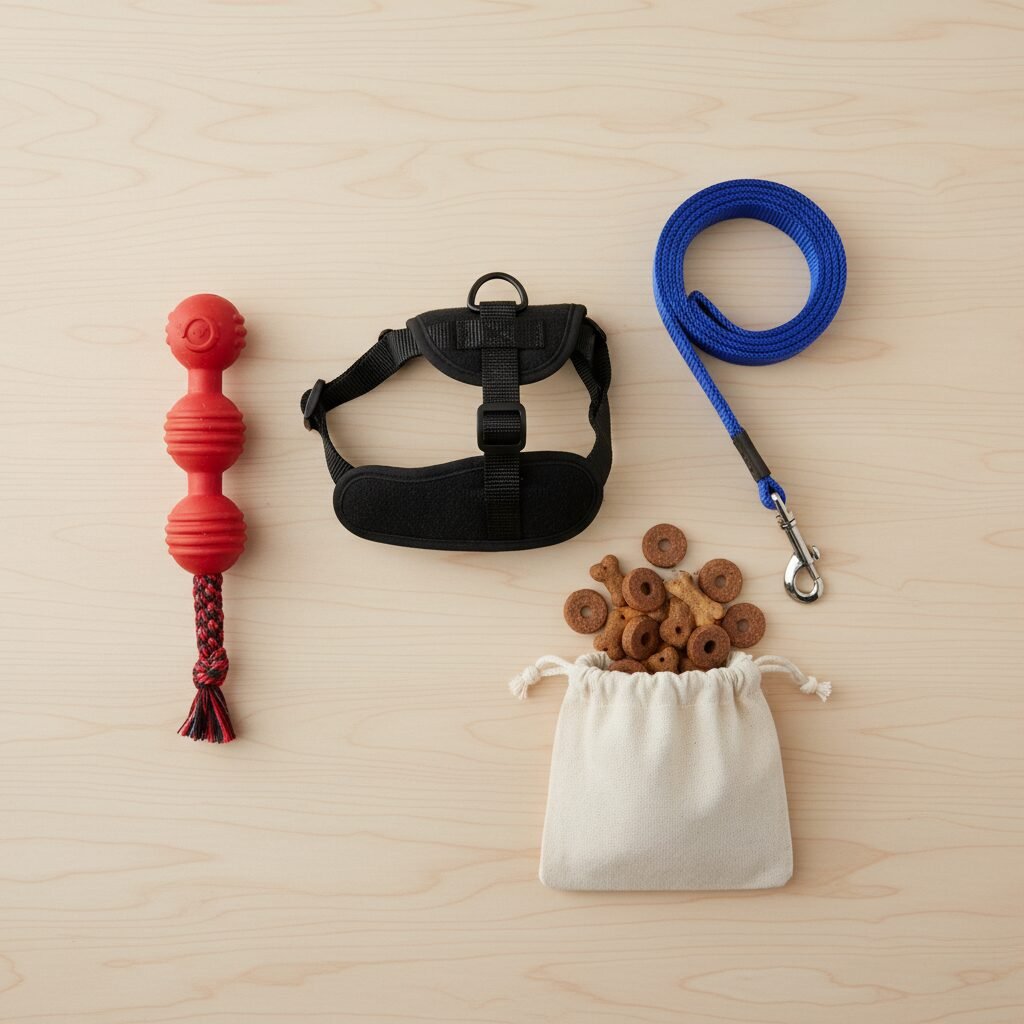
Effective dog training is as much about preparation as it is about execution. Setting yourself up with the right equipment and adopting the correct mindset will dramatically increase your chances of success and make the process smoother for both you and your dog. Before you implement any training techniques, ensure you have the following in your arsenal.
The Right Equipment
- High-Value Treats: These aren’t your dog’s everyday kibble. High-value treats are small, soft, incredibly fragrant, and reserved only for training. Think small pieces of chicken, cheese, or commercial training treats. Their purpose is to be more enticing than the act of biting the leash.
- A Designated Redirection Toy: Choose a specific toy, like a small rope or rubber tug toy, that your dog is allowed to bite and carry. This toy should be special and only brought out during walks to be used as a positive alternative to the leash.
- A Standard, Non-Retractable Leash: A 6-foot nylon or leather leash is the professional standard. It provides clear communication and control. Retractable leashes offer inconsistent tension and can encourage pulling and make leash-biting games even more tempting. Avoid them during this phase of training.
- A Proper Walking Harness: A front-clip harness is an excellent management tool. When the leash is attached to the D-ring on the dog’s chest, it discourages pulling by redirecting the dog back towards you. This can reduce the frustration that often leads to leash biting. It also takes pressure off the dog’s sensitive neck area.
The Trainer’s Mindset
Your most powerful training tools are patience and consistency. Remember, you are teaching a new skill and breaking an old habit. Progress will not always be linear, but consistency will always yield results.
Approach this challenge not as a battle of wills, but as a teaching opportunity. Your goal is to communicate clearly to your dog what you want them to do, rather than simply punishing what you don’t want. Stay calm, keep your energy neutral, and be prepared to celebrate small victories. Frustration from your end will only travel down the leash and create more stress for your dog, exacerbating the problem.
The Instant Interruption Method: A 4-Step Guide to Stop Leash Biting
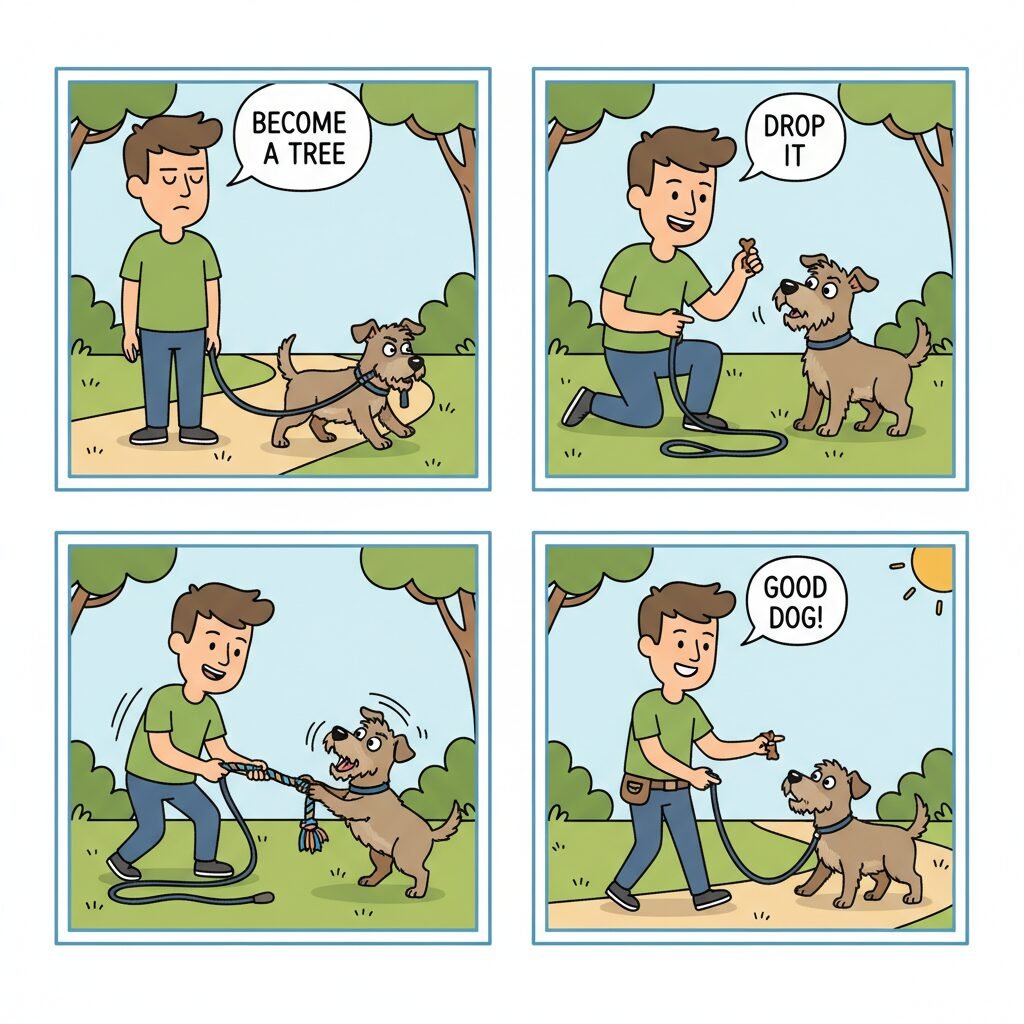
This training protocol is built on the principles of positive reinforcement and clear communication. The goal is to make biting the leash unrewarding and to make not biting the leash highly rewarding. It requires precise timing and consistency on every walk.
Step 1: Become a Tree (The Freeze)
The very instant your dog’s teeth make contact with the leash, your movement must stop completely. All forward motion ceases. Do not speak, do not make eye contact, and most importantly, do not pull the leash back. By becoming completely still and uninteresting, you immediately remove the ‘fun’ from the game. Pulling or struggling turns you into a willing participant in a game of tug. By freezing, you make the behavior ineffective; it no longer achieves anything for the dog.
Step 2: Cue the Release (‘Drop It’)
While you are frozen, calmly wait. The moment your dog lets go of the leash, even for a second, mark the behavior with a verbal ‘Yes!’ and immediately offer a high-value treat. To facilitate this, you can teach a ‘Drop It’ command separately in a calm environment at home using toys. When your dog is proficient, you can use the ‘Drop It’ cue during your ‘tree’ moment on the walk. Hold a high-value treat near their nose to entice them to release the leash in exchange for the better reward.
Step 3: Redirect to an Appropriate Outlet
Once the dog has released the leash and taken the treat, you need to redirect that oral fixation to an appropriate item. This is where your designated walking toy comes in. After the release, enthusiastically offer the toy and encourage a few seconds of appropriate play. This teaches a critical lesson: ‘The leash is boring and off-limits, but this toy is a fun and acceptable alternative for me to bite and carry.’ After a brief moment of play, cue ‘Drop It’ with the toy, reward the release, and resume your walk.
Step 4: Reinforce the Desired Behavior
Training isn’t just about stopping bad behavior; it’s about building good behavior. As you walk, proactively reward your dog for walking with a loose leash and for keeping their mouth off it. Every few steps, when the leash is slack and your dog is calm, offer verbal praise like ‘Good walk!’ or ‘Nice heel!’ and give them a treat. This teaches them that a calm walk with a loose leash is the most rewarding way to proceed. By reinforcing the absence of the problem behavior, you make it less likely to occur in the first place.
Advanced Strategies for Persistent Leash Biters
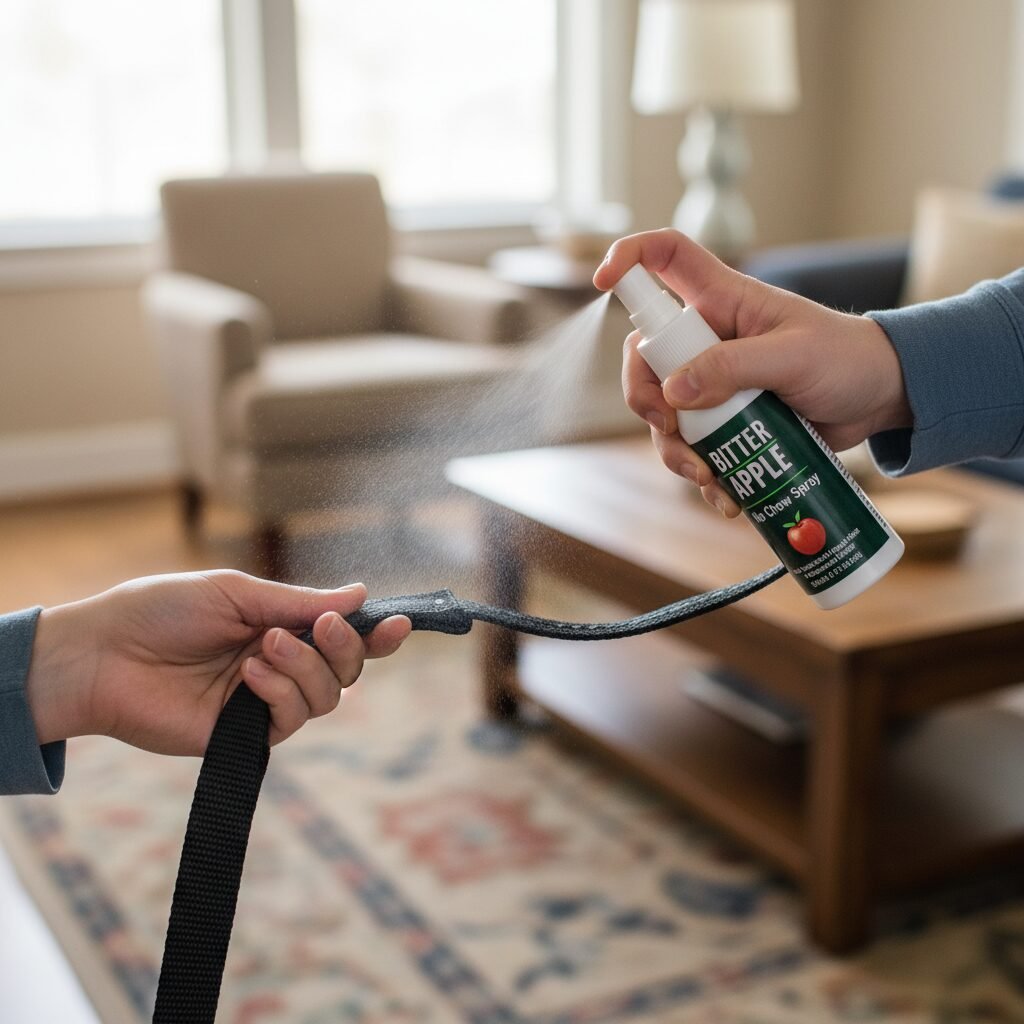
For some dogs, particularly those with a long-standing habit or extreme levels of arousal, the basic protocol may need to be supplemented with additional management strategies. These techniques can help make the leash less appealing and address the underlying energy that fuels the behavior.
Using a Taste Deterrent
Products like bitter apple or bitter cherry spray can be applied to the leash to make it taste unpleasant. Before your walk, lightly spray the bottom two to three feet of the leash—the area your dog is most likely to grab. It’s crucial to understand that this is a management tool, not a training solution. It deters the biting but doesn’t teach the dog what to do instead. Use it in conjunction with the 4-step method, not as a replacement. Some dogs are also completely unfazed by the taste, so its effectiveness can vary.
The ‘Leash is Dead’ Game
This exercise helps desensitize your dog to the leash in a controlled environment. Inside your home, place the leash on the floor. Let your dog investigate it. The moment your dog sniffs it and turns away, or ignores it completely, praise them and give them a high-value treat. The goal is to build a strong association that ignoring the leash is highly rewarding. Practice this for a few minutes each day to change their perception of the leash from a toy to a boring, irrelevant object.
Consider a Partial Chain Leash
As a temporary management tool for very persistent chewers, some trainers may recommend a leash that has a portion of chain at the end closest to the collar or harness. Most dogs dislike the feeling of metal in their mouths and will be naturally deterred from biting it. This should not be the first option and must be used carefully to avoid damage to the dog’s teeth. It is a tool to break the cycle of biting while you work diligently on the positive reinforcement training outlined above.
Upping the Ante on Exercise
Often, leash biting is a symptom of a larger problem: pent-up energy. A dog that has been cooped up all day will have a very difficult time maintaining composure on a structured walk. Before your training walk, ensure your dog’s energy reserves have been depleted. Engage in a vigorous game of fetch, a run in a securely fenced yard, or a session with puzzle toys that requires mental exertion. A mentally and physically tired dog is a much more receptive student for loose-leash walking skills.
Common Pitfalls: Mistakes to Avoid During Training
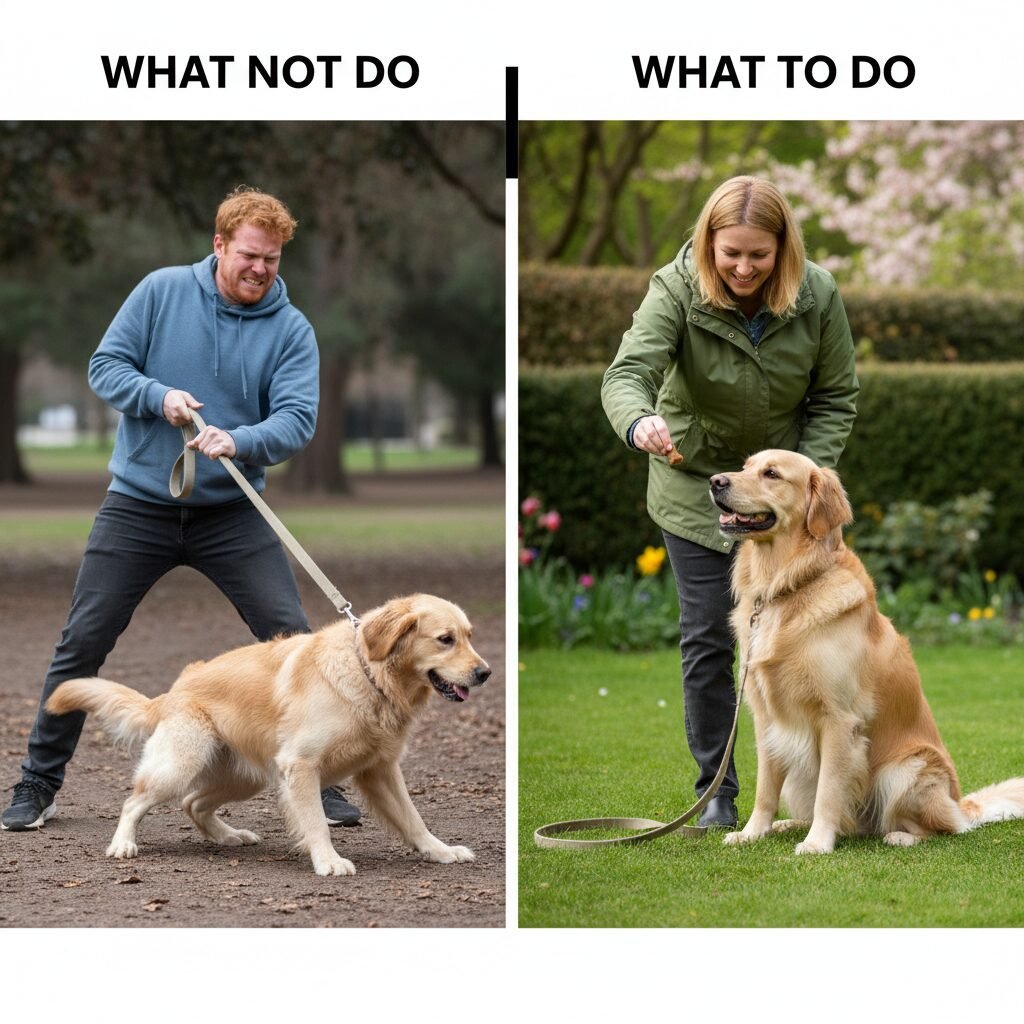
Your success in curbing leash biting depends heavily on avoiding common mistakes that can inadvertently reinforce the very behavior you’re trying to eliminate. Awareness of these pitfalls is the first step toward successful training. Below is a breakdown of what not to do, and the correct professional approach.
| Common Mistake | Professional Alternative |
|---|---|
| Turning it into a Game Yanking the leash back, raising your voice, or laughing when your dog bites the leash. |
Be Boring and Unresponsive Immediately freeze all movement and interaction. Your lack of reaction removes the reward, teaching the dog that biting the leash makes all the fun stop. |
| Inconsistent Corrections Allowing the dog to bite the leash on some walks (or when you’re in a hurry) but not others. |
Maintain 100% Consistency Every single time your dog’s mouth touches the leash, the ‘Freeze’ protocol must be initiated. Consistency is the fastest way to communicate your expectations clearly. |
| Relying on Punishment Using leash pops, scolding, or other aversive methods to stop the biting. |
Focus on Positive Redirection Instead of punishing the ‘wrong’ behavior, focus on teaching and heavily rewarding the ‘right’ behavior (walking with a loose leash, carrying a toy instead). |
| Forgetting Pre-Walk Prep Taking a high-energy, under-stimulated dog directly out for a structured training walk. |
Prioritize Energy Management Burn off excess physical and mental energy with play or enrichment activities before the walk begins. A calmer dog is a more trainable dog. |
| Walking When Frustrated Continuing the training session when you feel angry or overwhelmed. |
Keep Sessions Short and Positive It’s better to have a 5-minute successful walk than a 30-minute frustrating one. If you or your dog are getting stressed, end the session on a positive note and try again later. |
Conclusion
Transforming your dog’s leash-biting habit into a calm walking partnership is an achievable goal that strengthens the bond you share. The journey begins with understanding—recognizing that the behavior stems from excitement, playfulness, or anxiety, not malice. By equipping yourself with the right tools and a patient mindset, you set the stage for success. The core of the training lies in the ‘Instant Interruption Method’: consistently freezing to make the behavior unrewarding, and then actively redirecting your dog to an appropriate outlet like a toy.
Remember to avoid the common pitfalls of inadvertently rewarding the behavior or becoming inconsistent. Celebrate the small successes and focus on reinforcing the calm, loose-leash walking that you desire. While these techniques can produce rapid improvements, true mastery takes time. If the behavior persists, is extreme, or is coupled with other concerning issues like aggression, do not hesitate to seek guidance from a certified professional dog trainer or a veterinary behaviorist. With consistency and positive reinforcement, you can and will put an end to the tug-of-war, paving the way for countless miles of peaceful, enjoyable walks together.