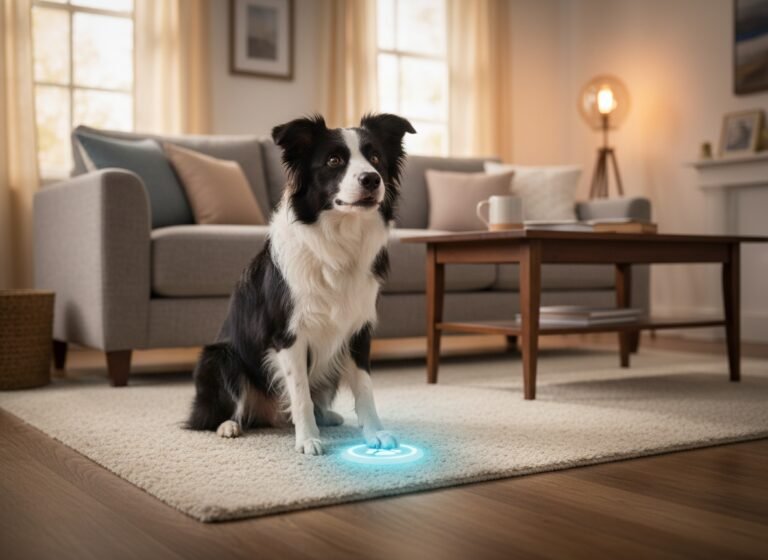
The Magic ‘Place’ Command: How to Get Your Dog to Settle Anywhere
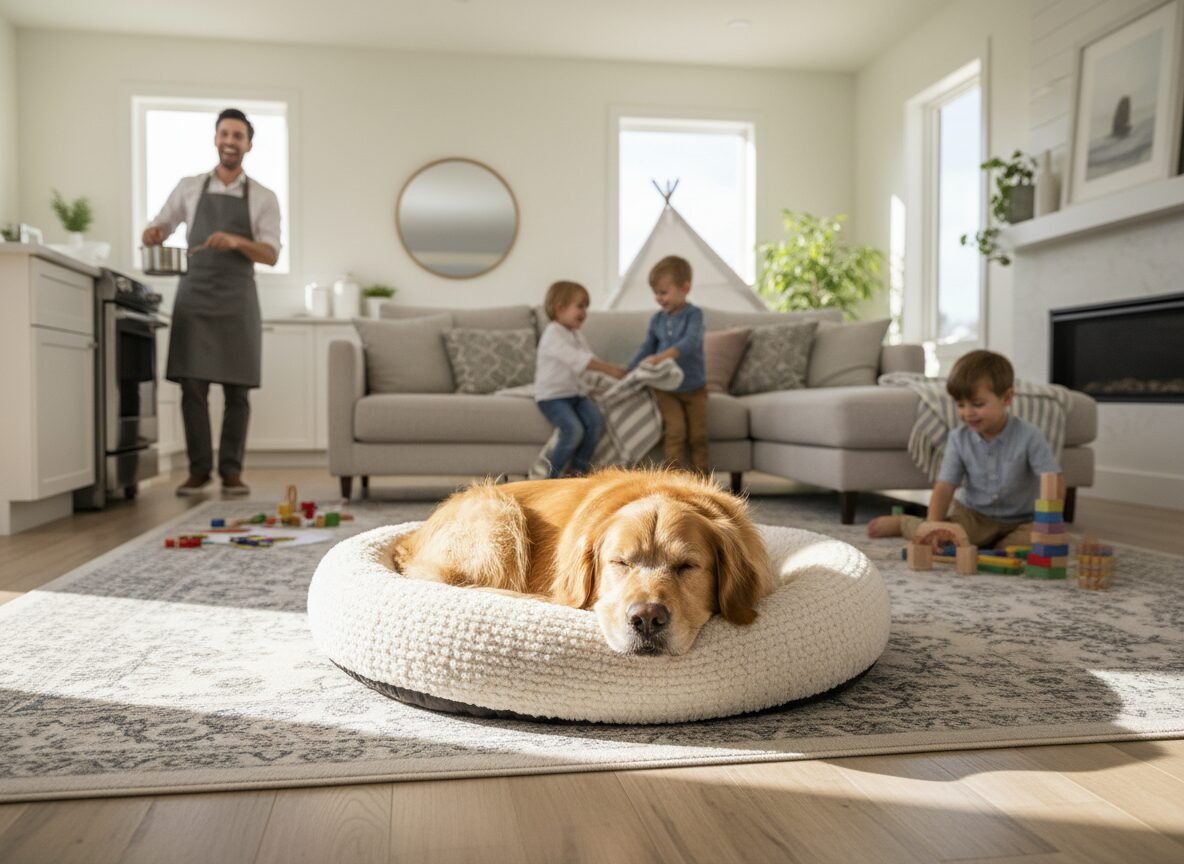
Imagine hosting a dinner party without your dog begging at the table. Picture answering the front door without a furry escort jumping on your guests. Envision a quiet evening at home where your dog isn’t restlessly pacing, but is instead calmly relaxing in their own designated spot. This isn’t a fantasy; it’s the reality for owners who have mastered one of the most powerful tools in dog training: the ‘Place’ command.
The ‘Place’ command is more than just another trick; it is a foundational behavior that teaches your dog an ‘off-switch.’ It instructs your dog to go to a specific location, such as a bed, mat, or cot, and to remain there in a calm state of mind until given a release cue. Unlike a ‘stay,’ which often implies a rigid, temporary freeze, ‘place’ is about duration, relaxation, and understanding boundaries.
In this comprehensive guide, we will deconstruct the ‘Place’ command from the ground up. We will explore its profound psychological benefits for your dog, outline the necessary tools for success, and provide a detailed, step-by-step training protocol. By investing the time to teach this command, you are not just managing behavior; you are building your dog’s confidence, reducing their anxiety, and forging a deeper, more respectful bond.
Why the ‘Place’ Command is a Game-Changer for Dog Owners
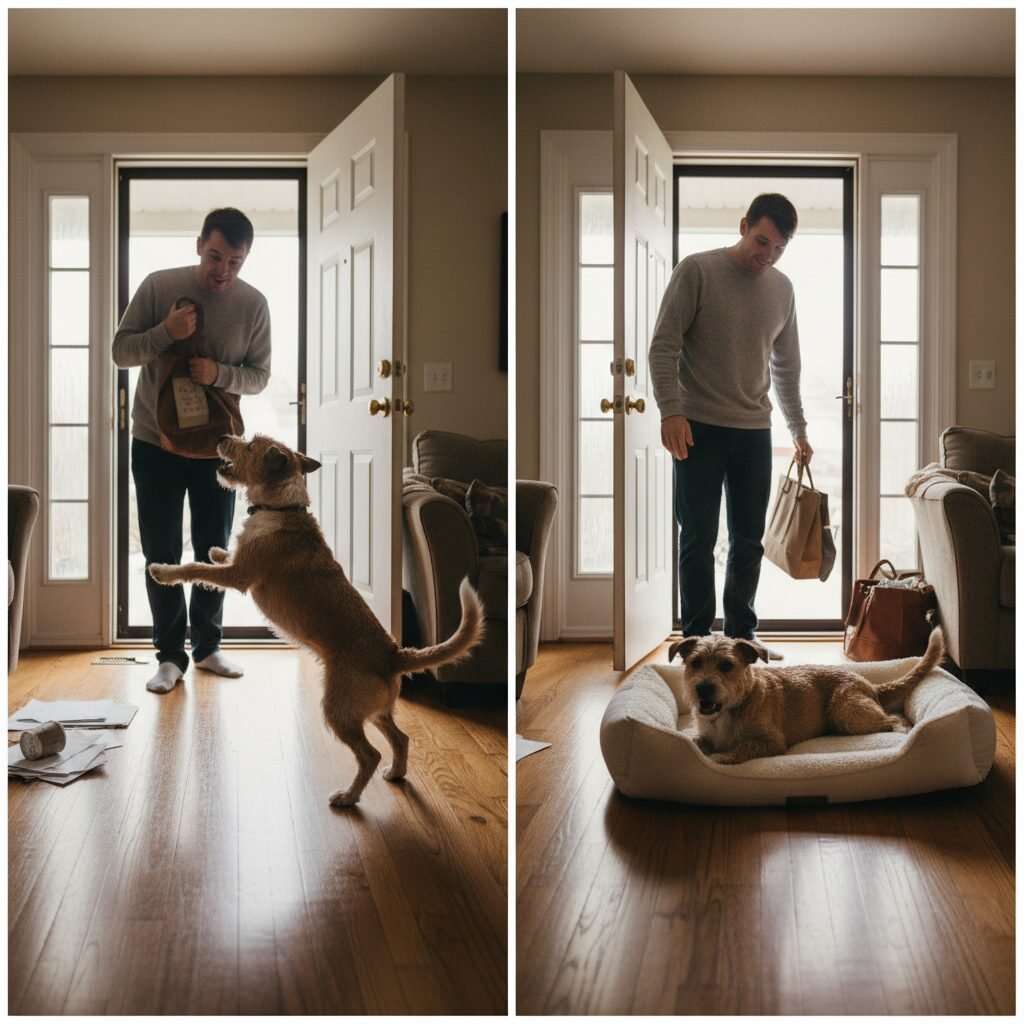
At its core, the ‘Place’ command is an exercise in impulse control and calm deference. For many dogs, especially high-energy or anxious breeds, the world is a constant stream of stimuli that demand a reaction. The doorbell rings, and they must bark. A bag rustles, and they must investigate. ‘Place’ teaches them an alternative behavior: to disengage from the chaos and defer to a known, safe routine.
Psychological Benefits for Your Dog
Dogs are creatures of habit and thrive on structure. Providing them with a clearly defined ‘job’—such as staying on their place—can be incredibly stabilizing. Here’s how it benefits them:
- Reduces Anxiety: When dogs are unsure of what to do in a stimulating environment (like when guests arrive), they can become anxious. The ‘place’ command gives them a clear, predictable task, removing the burden of decision-making and allowing them to relax.
- Builds Confidence: Successfully holding a ‘place’ command and receiving positive reinforcement builds a dog’s confidence. They learn that they can control their impulses and make good choices.
- Creates a Safe Haven: The designated place becomes a sanctuary. It is a space that belongs entirely to them, where they are never bothered and where only good things (like praise and high-value chews) happen.
Practical Applications for You
The utility of a reliable ‘place’ command extends to nearly every aspect of living with a dog. It is a management tool that fosters a more harmonious household.
- Managing Greetings: Prevents jumping on guests by having your dog wait calmly on their mat.
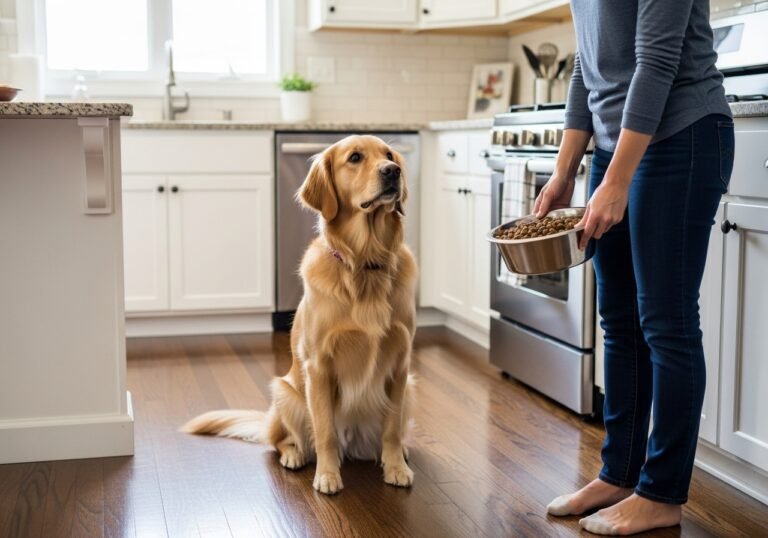
- Peaceful Mealtimes: Eliminates begging and underfoot hazards in the kitchen.
- Household Chores: Keeps your dog safely out of the way when you are vacuuming, carrying groceries, or working with tools.
- Multi-Dog Households: Helps manage excitement and resource guarding by giving each dog their own defined space.
Expert Tip: It is crucial to distinguish ‘Place’ from a punishment. Never send your dog to their place in anger. This spot must always remain a positive, relaxing sanctuary. It’s a ‘zen zone,’ not a ‘time-out corner.’
Setting Up for Success: Essential Tools and Preparation
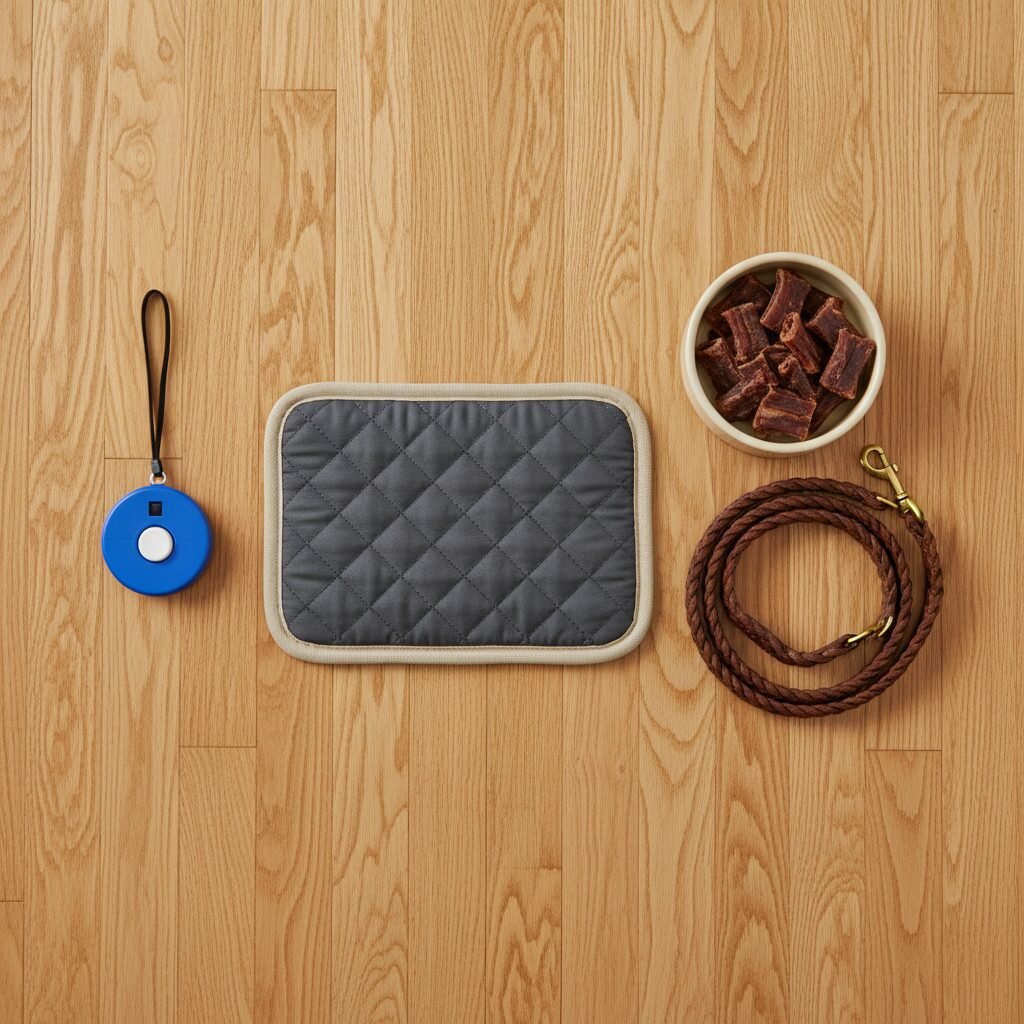
Before you begin your first training session, gathering the right tools and preparing your environment will significantly increase your chances of success. The goal is to make the desired behavior as easy and rewarding as possible for your dog. You don’t need expensive equipment, but the right setup is key.
Your Training Toolkit
- A Designated ‘Place’: This is the most critical item. It should be a clearly defined object like a dog bed, a bath mat, a raised cot, or even a flattened cardboard box. It needs to be large enough for your dog to lie down on comfortably. For clarity, it should be visually distinct from the surrounding floor.
- High-Value Treats: During the initial learning phase, you need rewards that are more enticing than your dog’s standard kibble. Think small, soft, smelly treats like pieces of cooked chicken, cheese, or commercial training treats. Their high value will keep your dog motivated and engaged.
- A Leash: A standard 6-foot leash is an invaluable tool for gently guiding your dog toward the place in the beginning, preventing them from wandering off if they lose focus.
- A Clicker (Optional): A clicker is a marker tool. It makes a distinct sound the instant your dog performs the correct action, followed immediately by a treat. This can help communicate precisely what behavior you are rewarding, but it is not strictly necessary.
- A Quiet Environment: Your first sessions should take place in a room with minimal distractions. Turn off the television, put away noisy toys, and ensure other pets or family members won’t interrupt the training process.
Once you have your tools, place the mat or bed in the room where you plan to do most of your training, such as the living room. Let your dog investigate it on their own terms before you begin the formal training process.
Mastering the ‘Place’ Command: A Step-by-Step Guide
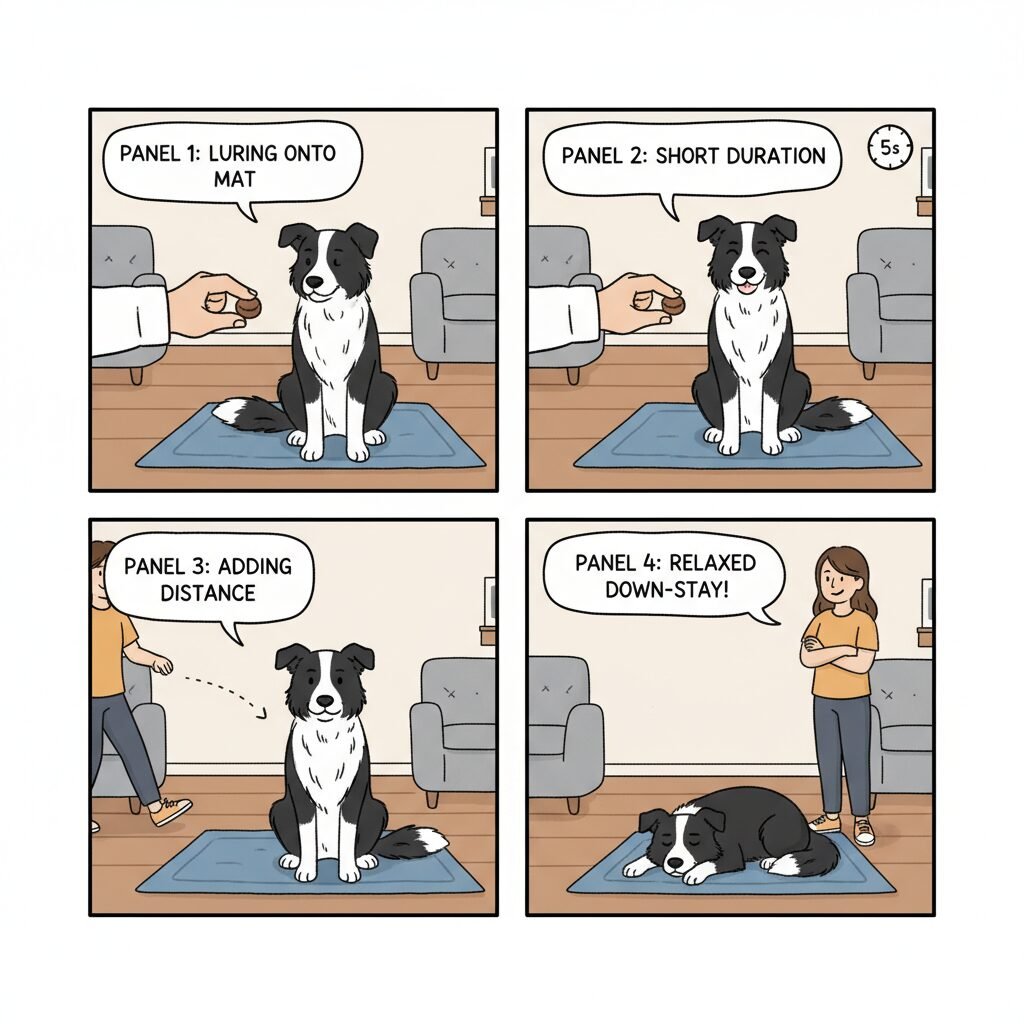
Training the ‘Place’ command is a process of layering behaviors. We will start with the simplest association and gradually add duration, distance, and difficulty. Keep your training sessions short (5-10 minutes) and always end on a positive note. Patience and consistency are your greatest assets.
-
Step 1: Introduce the ‘Place’ and Build Value
The initial goal is simple: make your dog believe the mat is the best spot in the house. Leash your dog and walk towards the mat. Use a piece of food to lure them onto it. The moment any paw touches the mat, mark the behavior with a ‘Yes!’ or a click, and give them the treat. Repeat this process, luring them on and off the mat. Once they are stepping onto it willingly, add the verbal cue ‘Place’ just as they are about to step on. The sequence is: say ‘Place,’ lure them on, mark/reward on the mat, then toss a treat off the mat to reset.
-
Step 2: Build Duration
Now that your dog understands that ‘Place’ means going to the mat, we’ll teach them to stay there. Lure your dog onto the place, and instead of rewarding immediately, wait one second. Then mark and reward. Release them with a cue like ‘Break!’ or ‘Okay!’ and toss a treat away from the mat. Gradually increase the duration they must wait before you reward them—two seconds, five seconds, ten seconds. If they get off before you release them, simply use the leash to guide them back on and try again with a shorter duration.
-
Step 3: Introduce a Settled Position
A dog standing on the mat is good, but a dog relaxing on the mat is the ultimate goal. Once your dog is holding their position for 10-15 seconds, start rewarding a calmer posture. If they sit, deliver several treats in a row. If they lie down, give them a jackpot (a handful of treats). You are teaching them that the ‘down’ position is the most rewarding one on the mat. You can use a ‘down’ cue if your dog already knows it.
-
Step 4: Add Distance
With your dog on their place in a down position, take one small step back. If they stay, step forward and reward them. Repeat this, gradually increasing the distance you can move away from the mat. Start with one step, then two, then moving around the mat. This teaches them that the command is valid even if you are not standing right next to them. If they break, you have moved too far too fast. Go back to a distance where they were successful and build up more slowly.
Proofing the Command: Duration, Distance, and Distractions
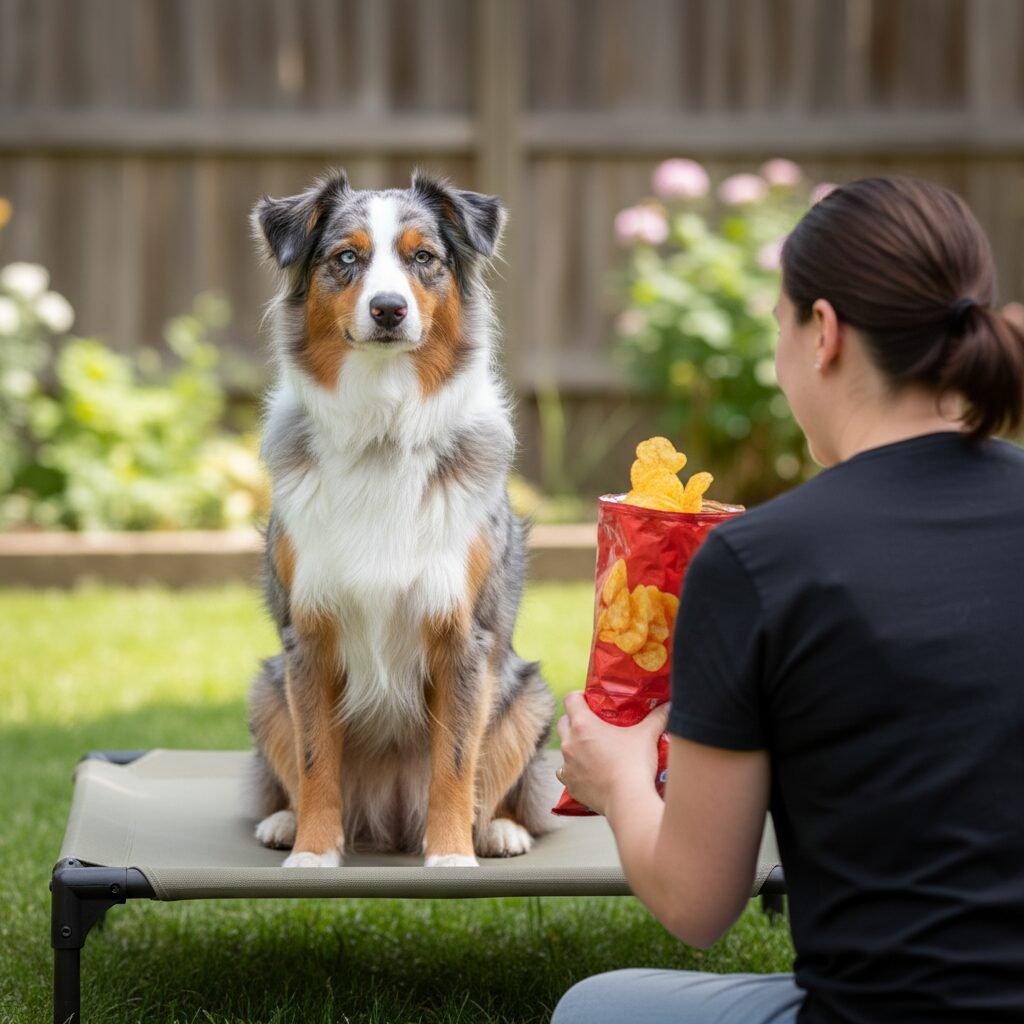
A command is only truly useful if it is reliable in the real world. ‘Proofing’ is the process of systematically adding challenges to solidify your dog’s understanding of the command in various contexts. This is where the ‘Place’ command transitions from a training exercise to a practical life skill. We focus on the three D’s: Duration, Distance, and Distractions.
Expanding Duration
Building duration is about teaching your dog that ‘Place’ can last for an extended period. The goal is to have them stay on their mat for the entire duration of a meal or a TV show. Start by asking for a ‘place’ and then sit in a chair nearby. At random intervals, walk over and reward your dog for staying put. Gradually extend the time between rewards. Providing a long-lasting chew, like a stuffed KONG, can help them settle in for longer durations.
Increasing Distance
Your dog should be able to go to their place from anywhere in the room, and eventually, from other rooms. Start by standing a few feet away and sending them to ‘Place.’ Gradually increase the distance until you can send them from across the room. Next, practice from just outside the doorway of the room, and then from further away in the house. This builds a powerful remote command.
Adding Distractions
This is the most critical and challenging part of proofing. Distractions must be introduced gradually and systematically. Start with low-level distractions and only increase the intensity when your dog is completely successful.
Use this table as a guide for escalating distractions:
| Distraction Level | Example Exercises |
|---|---|
| Low | You walk a circle around the dog. You sit down and stand up. You drop a boring object (like a pen) on the floor. |
| Medium | Another person calmly walks through the room. You bounce a tennis ball. You knock on a wall or table. |
| High | Someone knocks on the actual front door. You vacuum the room (at a distance initially). You bring another leashed, calm dog into the room. |
If your dog breaks their ‘place’ when a distraction is introduced, it means the challenge was too high. Remove the distraction, reset your dog on their place, and try again with a less intense version of the distraction. The key is to set the dog up for success, not for failure.
Troubleshooting Common Challenges and Mistakes
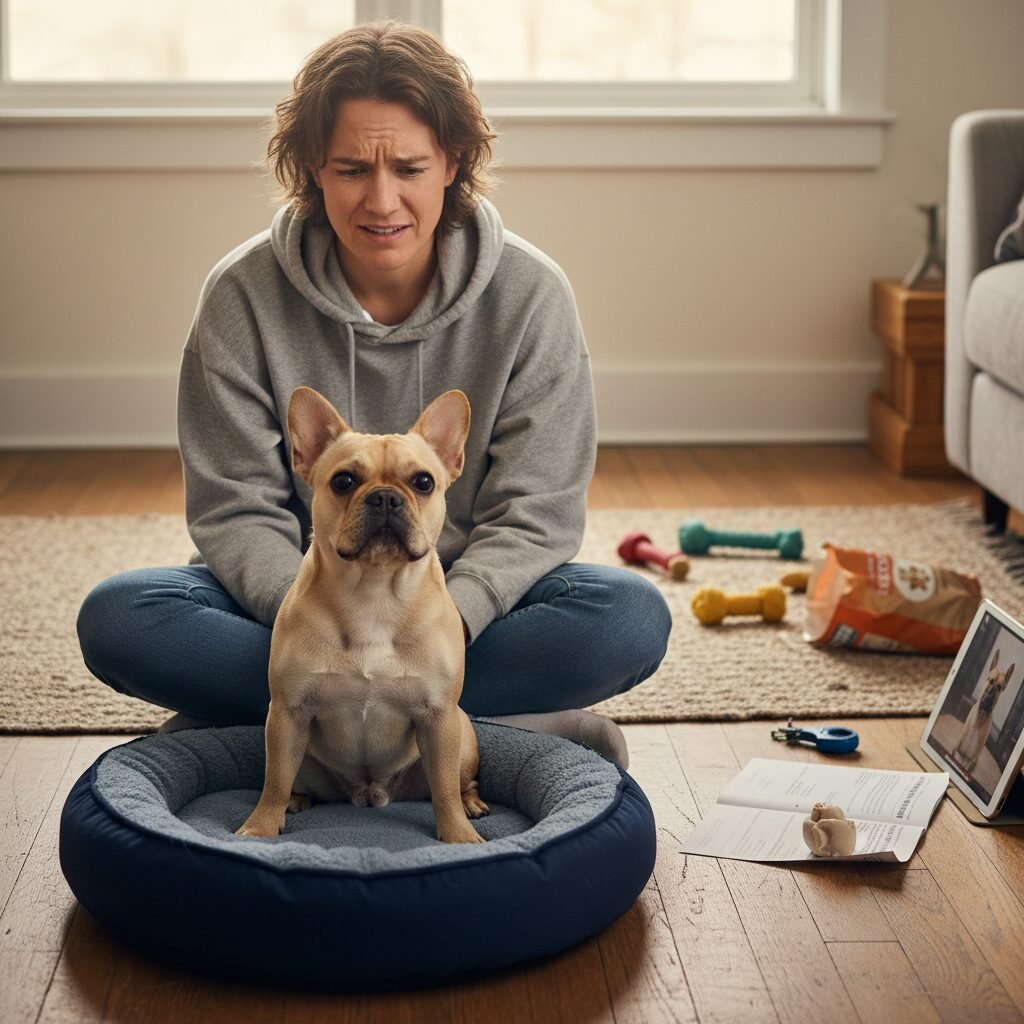
Even with the best training plan, you may encounter bumps in the road. Understanding common challenges and how to address them will keep you from getting frustrated and ensure the training process remains positive and productive. Most issues arise from moving through the steps too quickly.
Common Sticking Points
- My dog keeps getting off the mat. This is the most common issue and it almost always means you’ve increased one of the three D’s (Duration, Distance, Distractions) too fast. Go back to the last point of success. If they break after 30 seconds, go back to rewarding at 20 seconds. If they break when you take three steps away, go back to rewarding at two steps.
- My dog won’t lie down and settle. Some dogs are more prone to anxious standing or sitting. Do not force them down. Instead, heavily reward any sign of relaxation. If they shift their weight, drop their head, or sigh, mark and reward that behavior. You can also provide a high-value chew toy that encourages them to lie down to enjoy it. Ensure the ‘place’ itself is comfortable.
- My dog barks or whines on the mat. This is often a sign of frustration or a demand for a reward. Ignore the vocalization. Wait for a moment of quiet, and then reward. If you reward while they are whining, you are reinforcing the whining. Ensure you are not asking for a duration that is too long for their current training level.
Critical Mistakes to Avoid
How you approach the training is as important as the steps you take. Avoiding these common mistakes will safeguard the integrity of the command.
| Common Mistake | Correction Strategy |
|---|---|
| Using ‘Place’ as a Punishment | The ‘place’ must always be a positive, safe space. Never send a dog there in anger after they’ve done something wrong. This will poison the cue and create a negative association with their special spot. |
| Inconsistent Release Cue | Use a single, clear word (e.g., ‘Break,’ ‘Free,’ ‘Okay’) and use it every single time you want them to get up. Not using a release cue teaches the dog they can decide when the command is over. |
| Failing to Proof Adequately | A command isn’t truly learned until it’s reliable in real-world scenarios. Many owners stop after their dog can do it in a quiet living room. Consistent practice with varied distractions is non-negotiable. |
| Luring the Dog Off the Mat | When releasing your dog, toss the treat or toy away from the mat. This creates a clear distinction between being on the mat (where they get rewards) and being released from the mat. |
Conclusion
The ‘Place’ command is one of the most valuable gifts of communication and structure you can give your dog. It transcends simple obedience, fostering a state of calm and building a dog’s ability to self-regulate in a world that can often be overwhelming. By teaching your dog to go to their place, you are providing them with certainty, safety, and a clear role within the family unit.
The journey to a perfect ‘place’ command requires patience, consistency, and a commitment to positive reinforcement. Remember to keep sessions short, celebrate small victories, and always end on a high note. The challenges you troubleshoot along the way are not setbacks; they are opportunities to better understand your dog and strengthen your training skills.
The effort you invest now will pay dividends for years to come, resulting in a more peaceful home, less stress for both you and your dog, and a well-behaved companion who can be trusted in any situation. Begin your training today, and unlock the magic of a calm, settled, and confident dog.