Help! My Dog Is Terrified of Balloons (And How to Fix It)
The joyous atmosphere of a celebration can come to an abrupt halt with one small, colorful object: a balloon. For many dog owners, the sight of their canine companion dissolving into a state of panic—trembling, hiding, or frantic barking—at the mere presence of a balloon is both confusing and distressing. This intense fear, known as globophobia, is more common than many realize. It’s not an irrational quirk; it’s a genuine phobic response rooted in a dog’s sensory experience.
Balloons are, from a dog’s perspective, highly unpredictable. They move erratically, possess a strange squeaky texture, emit a faint odor, and can carry static electricity that may deliver a startling little shock to a curious nose. Above all, they hold the terrifying potential to pop, creating a sudden, explosive sound that can trigger a dog’s sensitive startle reflex and create a lasting negative association. Understanding the root of this fear is the first step toward resolving it. This guide provides a professional, step-by-step framework based on proven behavioral science to help you transform your dog’s terror into tolerance, and eventually, indifference. By using patience and positive reinforcement, you can help your dog navigate a world with balloons without fear.
Understanding Globophobia: Why Balloons Terrify Your Dog

The Science Behind the Fear
A dog’s fear of balloons is not a simple dislike; it is a complex phobic response driven by multiple sensory and psychological factors. To effectively address the behavior, it’s crucial to understand the underlying causes.
- Auditory Overload: A dog’s hearing is exponentially more sensitive than a human’s. The sudden, sharp bang of a popping balloon can be physically painful and acoustically shocking. This single event can be traumatic enough to create a permanent fear association, where the mere sight of a balloon triggers the anticipation of that terrifying sound.
- Unpredictable Movement: To a dog, a floating balloon is an object that defies the laws of nature. It hovers and drifts without a clear pattern, which can be perceived as a threat. Predatory instincts can be confused, and the inability to predict the object’s trajectory can induce significant anxiety.
- Sensory Triggers: Beyond sound and movement, other senses are at play. The latex material has a distinct smell, and its texture is unnatural. Furthermore, balloons can accumulate static electricity. A dog that approaches with a wet nose might receive a small, startling static shock, creating another layer of negative association.
- Neophobia (Fear of the New): Many dogs are inherently neophobic, meaning they have a fear of new objects or experiences. A balloon is a novel item that doesn’t fit into any familiar category (not a toy, not food, not a person), making it a source of suspicion and fear for a cautious dog.
Expert Insight: A single negative experience with a balloon, such as a loud pop during a critical puppy socialization period (3 to 16 weeks), can be enough to solidify a lifelong phobia. The goal of training is not just to expose the dog, but to systematically change its emotional response from fear to positive anticipation.
Preparing for Success: Your Training Toolkit and Environment
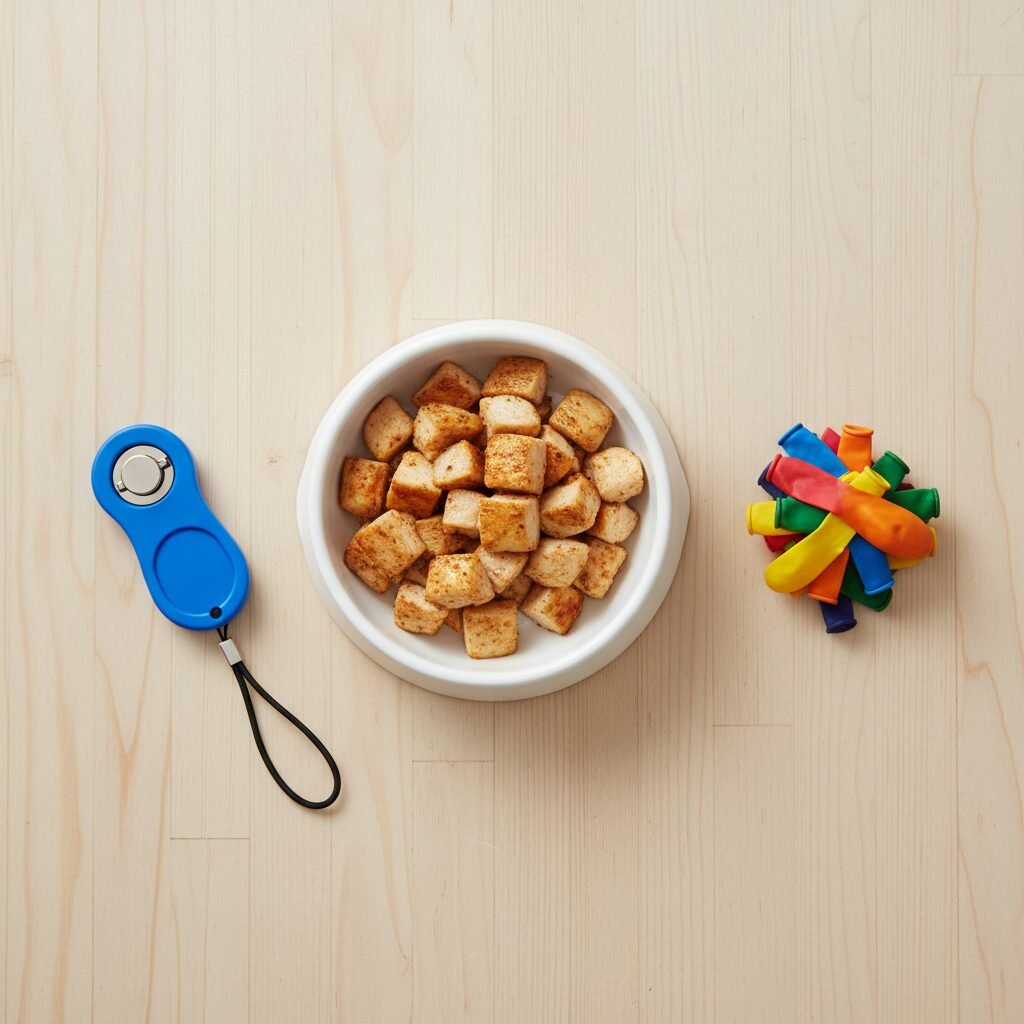
Before beginning any behavior modification protocol, preparation is paramount. Your goal is to create a controlled, positive, and safe learning environment. Rushing this stage can undermine your efforts before you even begin. Gather the following tools and set up your space for success.
Essential Materials
- High-Value Treats: These are not your dog’s everyday kibble. Think small, pea-sized pieces of boiled chicken, cheese, hot dogs, or commercial training treats that your dog finds irresistible. The goal is to have a reward so compelling it can override feelings of anxiety.
- Balloons: Start with a package of standard latex balloons. You will begin with them completely uninflated.
- A Clicker (Optional but Recommended): A clicker is a tool used in marker training. It makes a distinct sound to ‘mark’ the exact moment your dog performs a desired behavior, followed immediately by a treat. This can speed up learning by providing clear communication.
- A Safe and Quiet Space: Choose a room where your dog feels comfortable and there are minimal distractions. Close doors and windows to muffle outside noise. Ensure other pets or family members will not interrupt the session.
Setting the Stage
Your dog’s emotional state is critical. Never attempt a training session when your dog is already stressed, tired, or overly excited. Begin when they are calm and relaxed. Keep initial sessions very short—no more than 3-5 minutes—to prevent fatigue and end on a positive note. Your calm and confident demeanor is also part of the toolkit; your dog will take cues from your emotional state. If you are anxious, they will be too.
The Step-by-Step Guide to Overcoming Balloon Fear
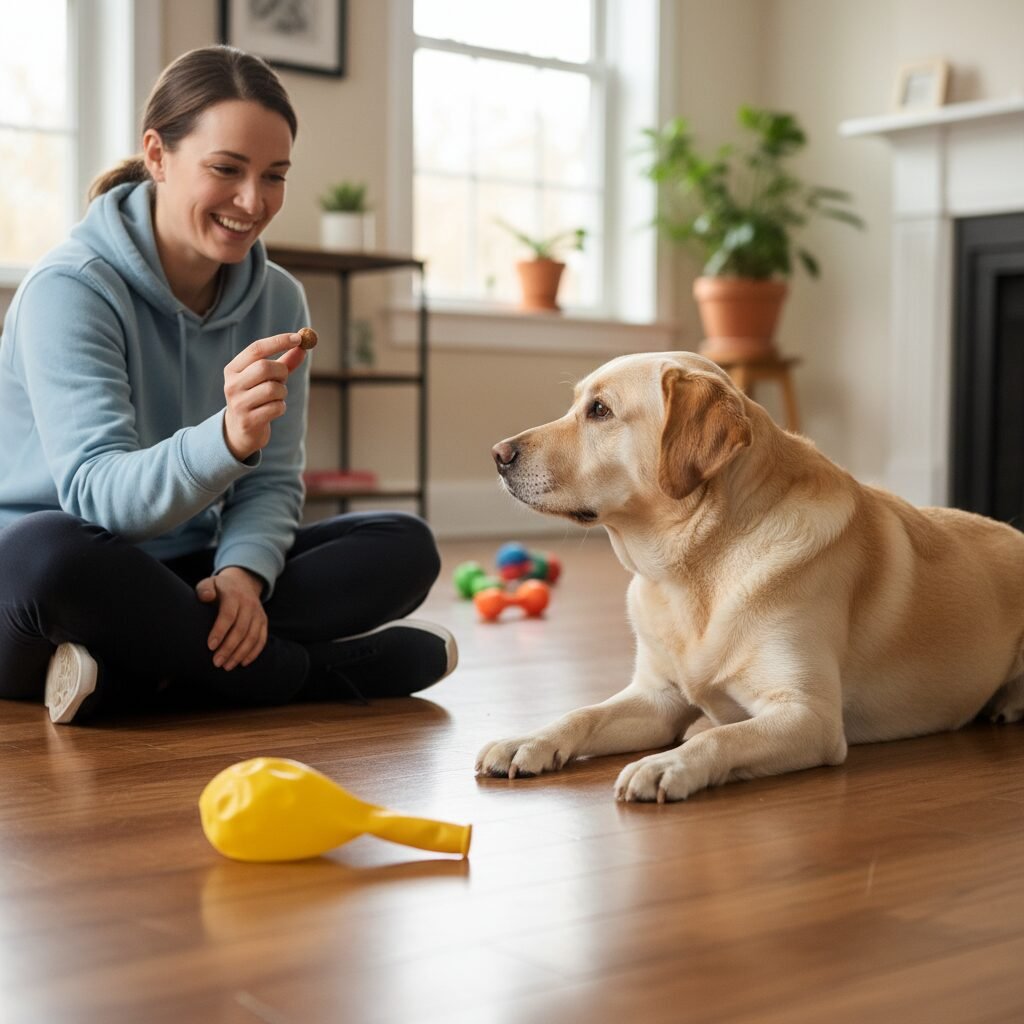
This process uses two core principles of behavior modification: Desensitization (gradual exposure to the scary thing at a level that does not produce fear) and Counter-Conditioning (changing the dog’s emotional response from fear to pleasure). Patience is non-negotiable. It may take weeks or months to progress through these stages. Watch your dog’s body language (tail tuck, lip licking, yawning) and never proceed to the next step if they show signs of stress.
-
Step 1: The Uninflated Balloon
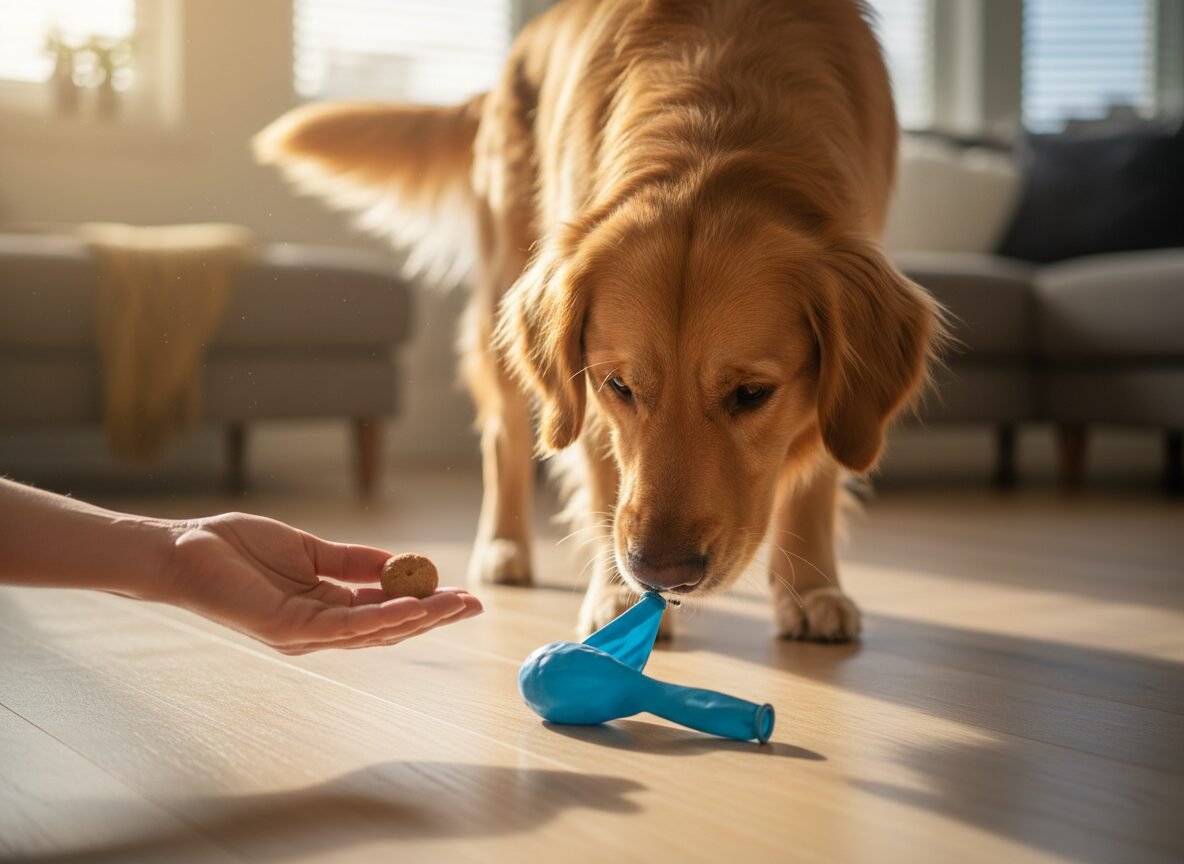
The goal here is to associate the limp piece of latex with good things. Place a single, uninflated balloon on the floor. The moment your dog looks at it, click (or use a verbal marker like “Yes!”) and immediately give a high-value treat. Do not lure your dog closer. Let them choose to investigate. If they sniff it or touch it, deliver a jackpot of several treats. Repeat this for a few short sessions until your dog sees the uninflated balloon and happily looks to you for a reward.
-
Step 2: The Partially Inflated Balloon
Inflate a balloon with just one or two small puffs of air and tie it off. It should be small and have no ‘floating’ quality. Place it on the floor at a significant distance from your dog. Repeat the same process as Step 1. Click/treat for looking at it, sniffing it, or any calm interaction. Your goal is to keep your dog “sub-threshold”—meaning they are aware of the balloon but not frightened by it. If they show fear, you have moved too close or too fast. Increase the distance and try again.
-
Step 3: Introducing Minor Movement
Once your dog is comfortable with the static, partially inflated balloon, gently nudge it with your foot so it moves an inch or two. The instant it moves, click/treat. The sequence is crucial: Balloon Moves -> Click -> Treat. The dog learns that the movement predicts a delicious reward. Keep the movements small and slow. Over many sessions, you can gradually increase the size of the balloon and the distance it moves.
-
Step 4: The Fully Inflated, Floating Balloon
This is a significant step. Tie a fully inflated balloon to a chair or doorknob so it is stationary but floating. Start at a very long distance, perhaps across the room or even in an adjacent room. Reward your dog for calm behavior in its presence. Click/treat for looking at it, for sitting calmly, for disengaging from it. Slowly, over many sessions, decrease the distance, always rewarding calm behavior. The goal is for the dog to learn that the presence of this strange floating object is a predictor of wonderful things.
-
Step 5: Managing the ‘Pop’
This is the final and most delicate stage. The goal is not to make your dog love the sound, but to reduce the fearful reaction. This should only be attempted when your dog is completely comfortable with balloons. Have a partner in another room, behind a closed door, pop a balloon. The instant the muffled sound occurs, give your dog a huge jackpot of the best treats. The sound should be so quiet it barely registers. Over time, decrease the distance (e.g., have the person pop it in the hallway, then in the same room but far away). The sound of the pop must always predict an amazing reward. Caution: This step carries the risk of re-traumatizing your dog. If you are not confident, it is better to manage the environment to prevent pops and skip this step entirely.
Proactive Management: Coexisting with Balloons in the Real World

While training is ongoing, and even after it is complete, management remains a critical skill. You cannot control every environment, but you can control your dog’s exposure and safety. Management is not a failure of training; it is a responsible part of owning a dog with a known phobia.
Strategies for Prevention and Safety
- Advocate for Your Dog: If you are attending a party or event, it is perfectly acceptable to ask the host if there will be balloons. If so, it may be best to leave your dog at home. When guests visit your home, politely inform them of your dog’s fear and request they do not bring balloons.
- Create a Safe Zone: During gatherings in your home where balloons might be present (like a child’s birthday party), create a secure and comfortable sanctuary for your dog. This could be a crate in a quiet bedroom with a favorite chew toy, a comfy bed, and a white noise machine or calming music to muffle celebratory sounds.
- Teach a ‘Find It’ Cue: A fun ‘find it’ or ‘scatter feed’ game can be a powerful tool. If you unexpectedly encounter a balloon, you can toss a handful of high-value treats on the ground away from the balloon and say ‘Find it!’. This redirects your dog’s attention, engages their nose, and can turn a potentially scary moment into a positive one.
- Build General Confidence: A confident dog is less likely to be fearful. Engaging in activities that build confidence, such as nose work, learning new tricks, or agility, can have a positive spillover effect on how your dog handles stressors like balloons.
Critical Mistakes to Avoid During Training
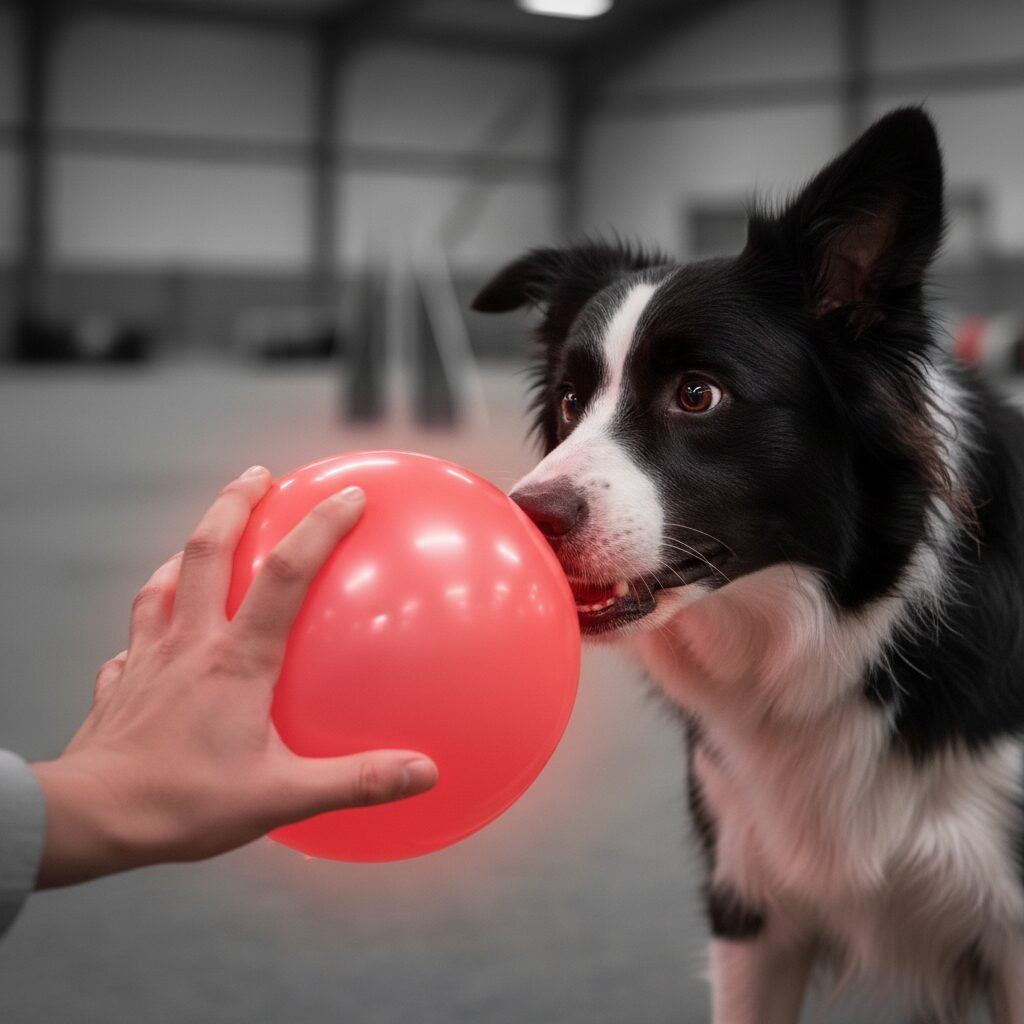
How you approach this training is as important as the steps themselves. Certain common mistakes can not only halt progress but can actually make the fear significantly worse. Avoiding these pitfalls is essential for success.
| Mistake to Avoid | Why It’s Harmful |
|---|---|
| Flooding | This involves forcing the dog into a situation with many balloons, hoping they will ‘get over it.’ This is the psychological equivalent of throwing someone with a fear of spiders into a pit of them. It overwhelms the dog, heightens terror, and destroys trust. |
| Punishment | Never scold, yell at, or punish a dog for showing fear. Fear is an involuntary emotional response, not an act of disobedience. Punishment will only add more negative associations to the situation, teaching the dog that balloons cause both fear and punishment from their owner. |
| Using Reassurance Incorrectly | While it’s natural to want to comfort your dog with petting and phrases like ‘It’s okay,’ this can sometimes be interpreted as praise for the fearful behavior. Instead of coddling, project calm confidence. Act as if the balloon is completely normal and uninteresting. |
| Moving Too Quickly | This is the most common error. Owners see a little progress and jump ahead several steps. Each step must be mastered with the dog showing zero signs of stress before you can advance. If your dog regresses, simply go back to the last successful step and work from there. |
| Forcing Interaction | Never force your dog to touch or get close to a balloon. All interaction must be voluntary. The goal is to give your dog the power to make good choices and build their confidence through positive reinforcement, not coercion. |
Recognizing When to Call a Professional

While the step-by-step guide provided is effective for many cases of mild to moderate fear, some phobias are so severe that they require professional intervention. Attempting to resolve a deep-rooted phobia on your own can be ineffective and potentially unsafe. It is a sign of responsible ownership to recognize when you need help.
Signs You Need a Professional
- Extreme Panic Response: If your dog’s reaction involves uncontrollable shaking, drooling, loss of bladder or bowel control, or frantic attempts to escape that could lead to injury.
- Aggression: If the fear manifests as aggression, such as growling, snapping, or biting at the balloon or at a person holding it. This is a defensive reaction that needs expert management.
- No Progress: If you have been patiently following the protocol for several weeks and see absolutely no improvement, or if the fear seems to be getting worse.
- Generalized Anxiety: If the fear of balloons is bleeding into other areas of your dog’s life, causing generalized anxiety, noise sensitivity, or a reluctance to go to places where they once saw a balloon.
Who to Contact
When seeking help, look for certified professionals with experience in treating anxiety and phobias. Good choices include:
- A Board-Certified Veterinary Behaviorist (DACVB): A veterinarian who has undergone extensive, specialized training in animal behavior. They can diagnose underlying medical issues and prescribe anti-anxiety medication if necessary, in conjunction with a behavior modification plan.
- A Certified Applied Animal Behaviorist (CAAB): A non-veterinarian with advanced degrees in animal behavior.
- A Certified Professional Dog Trainer (CPDT-KA/KSA): Look for a trainer who specifically advertises experience with fear and phobias and who uses modern, science-based positive reinforcement methods.
Conclusion
Helping your dog overcome a fear of balloons is a journey that requires more patience than expertise. By understanding the root of the fear, creating a positive training environment, and methodically following the principles of desensitization and counter-conditioning, you can fundamentally change your dog’s emotional response. Remember to celebrate small victories, never push your dog past their comfort level, and always end on a positive note. Your role is not just that of a trainer, but of a trusted guardian who can show your dog that the world, even with its strange, floating, popping objects, is a safe place to be. If the challenge feels too great, seeking professional guidance is a proactive step toward ensuring your dog’s long-term well-being.