The “Look at Me” Game: How to Get Laser Focus from a Distracted Dog
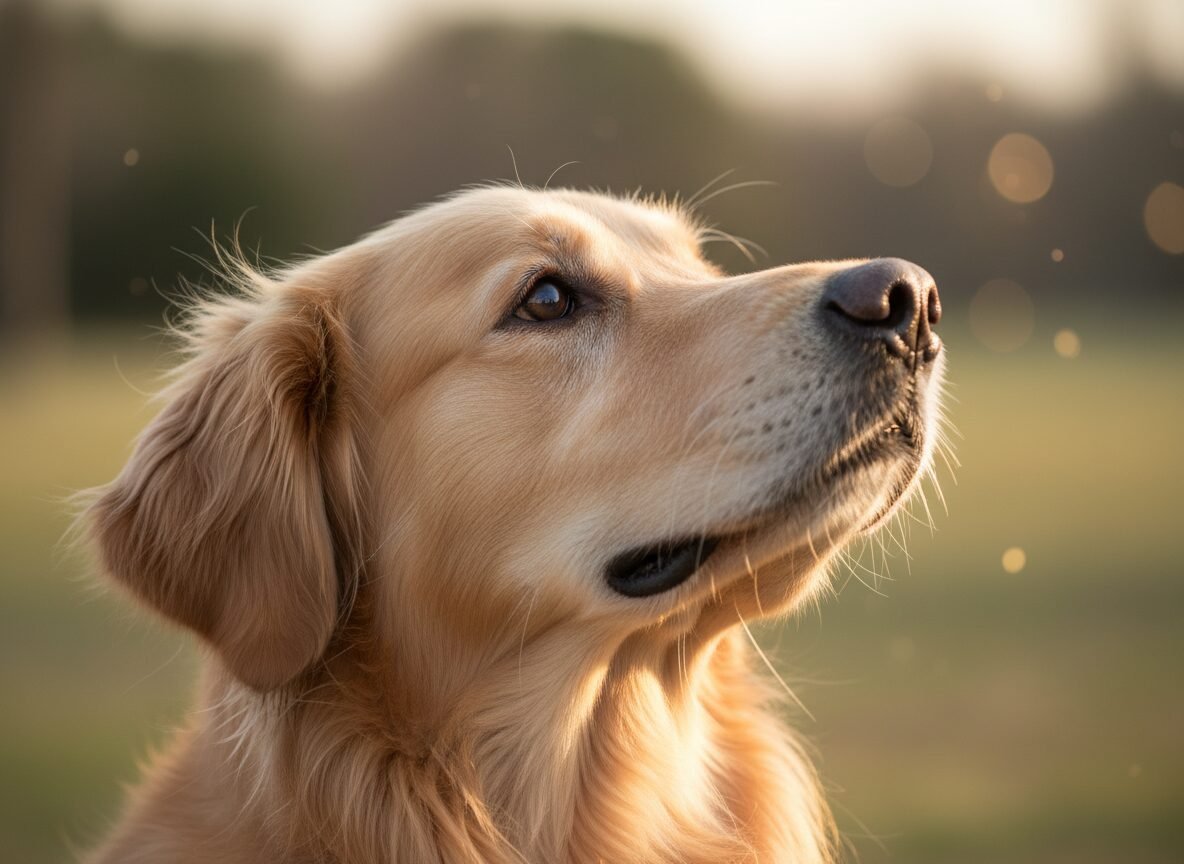
In a world filled with captivating smells, sounds, and squirrels, capturing your dog’s attention can feel like an impossible task. Whether you’re on a walk, at the park, or simply trying to train in your living room, a distracted dog can lead to frustration for both pet and owner. But what if you could teach your dog to willingly and happily offer you their undivided attention, regardless of the surrounding chaos? This is not a training fantasy; it is the powerful result of a simple, positive, and profoundly effective exercise known as the “Look at Me” or “Watch Me” game. This foundational skill is more than just a party trick; it is the cornerstone of a strong relationship, reliable obedience, and a safer, more enjoyable life with your canine companion. In this comprehensive guide, we will deconstruct this game-changing technique, providing you with a clear, step-by-step plan to cultivate laser-like focus from your dog, transforming moments of distraction into opportunities for connection.
The Science of Engagement: Why Voluntary Attention is a Training Superpower
Understanding the Core Principle
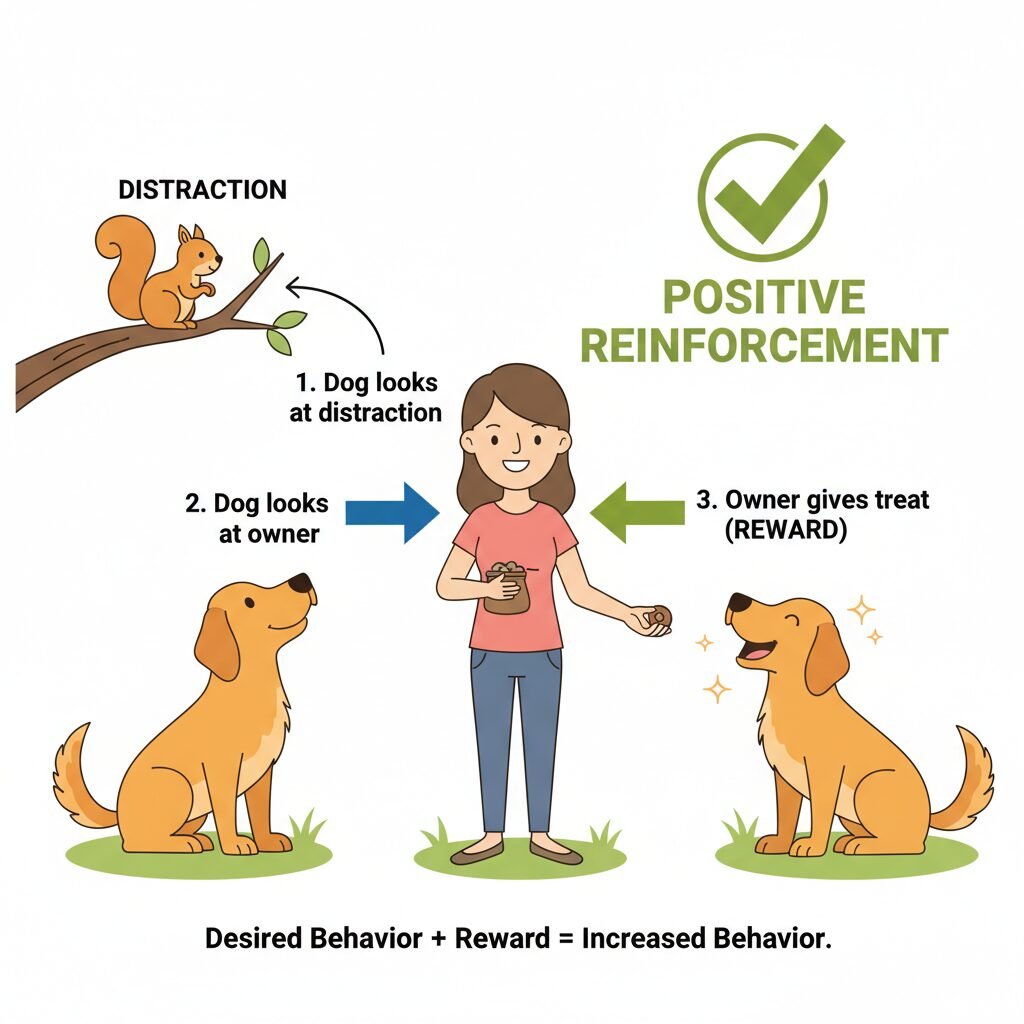
Before diving into the mechanics of the training, it’s crucial to understand why this exercise is so effective. The “Look at Me” game operates on the principle of operant conditioning, specifically using positive reinforcement. Instead of forcing or coercing your dog to look at you, you are creating a scenario where choosing to make eye contact becomes the most rewarding and desirable behavior your dog can perform. This is a critical distinction. When a dog chooses to disengage from a distraction to focus on you, it strengthens their problem-solving skills and, more importantly, reinforces your role as the source of all good things—treats, praise, and fun.
Benefits Beyond Basic Obedience
Mastering this single command has a ripple effect across all aspects of your dog’s behavior and your relationship:
- Builds a Stronger Bond: Mutual gaze is a powerful bonding mechanism for both humans and canines. It fosters trust and deepens your connection.
- Improves Communication: When you have your dog’s attention, you can communicate more effectively. Cues for other commands like “Sit,” “Stay,” or “Come” are more likely to be heard and followed.
- Manages Reactivity and Anxiety: For dogs that are reactive or fearful of certain stimuli (other dogs, strangers, loud noises), “Look at Me” is an invaluable tool. It allows you to redirect their focus away from the trigger and onto you, helping them feel safe and learn to cope.
- Enhances Safety: A dog that can focus on you amidst distractions is a safer dog. You can prevent them from darting into a street, eating something dangerous off the ground, or engaging in an unwanted interaction with another animal.
- Foundation for Advanced Training: Nearly all advanced training disciplines, from agility to competitive obedience, require a dog that can maintain focus on its handler. This game is the first and most important step on that journey.
Expert Tip: Think of attention as a currency. Every time your dog offers it to you, you must pay them generously with a high-value reward. This ensures they will continue to ‘invest’ their attention in you over environmental distractions.
Setting the Stage: Gathering Your Tools for Success
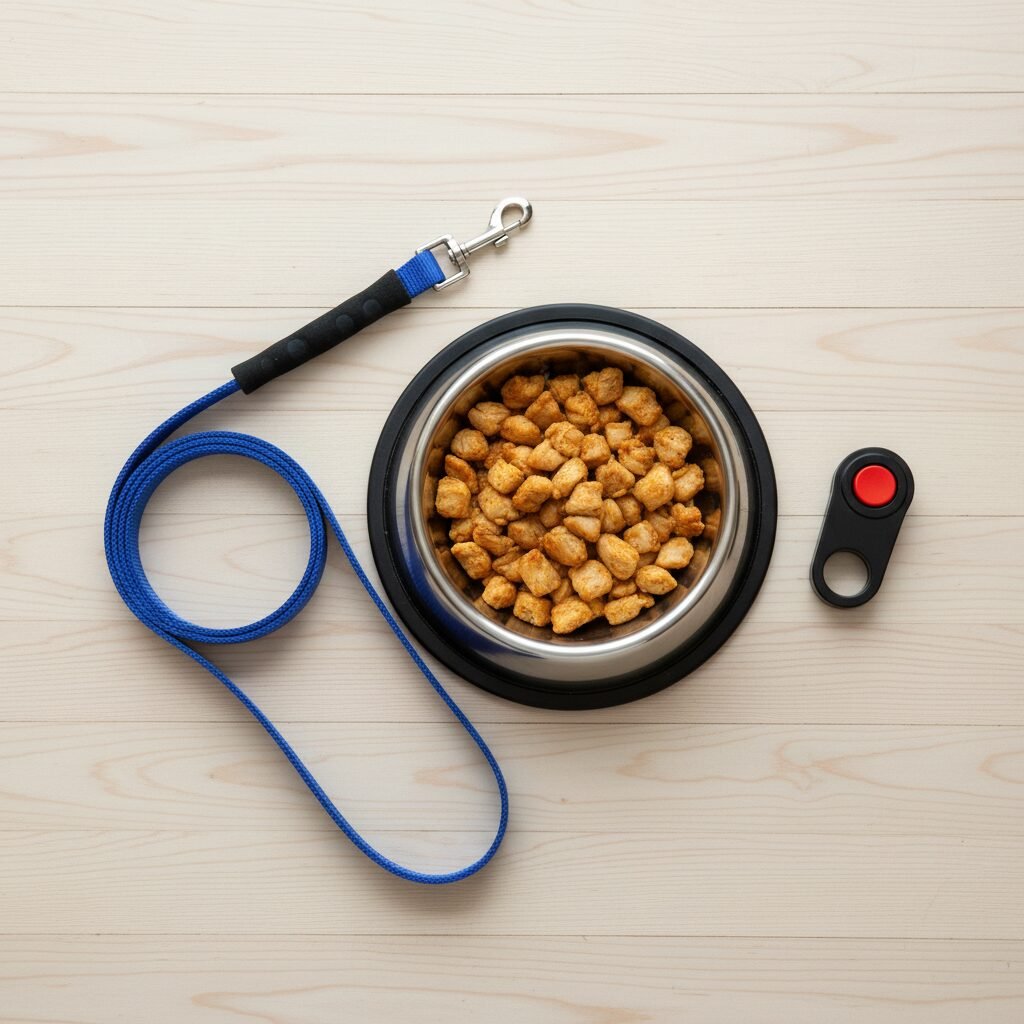
The beauty of the “Look at Me” game lies in its simplicity. You don’t need expensive equipment or a professional training facility. Success is built on consistency and the right motivation. Before you begin your first session, gather the following items to ensure a smooth and effective training experience.
Essential Training Toolkit
- High-Value Treats: This is non-negotiable. For this exercise, your dog’s standard kibble likely won’t be motivating enough to compete with major distractions. You need something special that your dog absolutely loves. Think small, soft, and smelly. Good options include small pieces of cooked chicken, cheese, hot dogs, or commercial training treats. The treat should be pea-sized so you can deliver many rewards without overfeeding.
- A Quiet, Low-Distraction Environment: Your initial training sessions should be set up for success. Choose a quiet room in your house, such as a living room or bedroom, where there are minimal distractions. Avoid areas with windows overlooking a busy street or other pets roaming around.
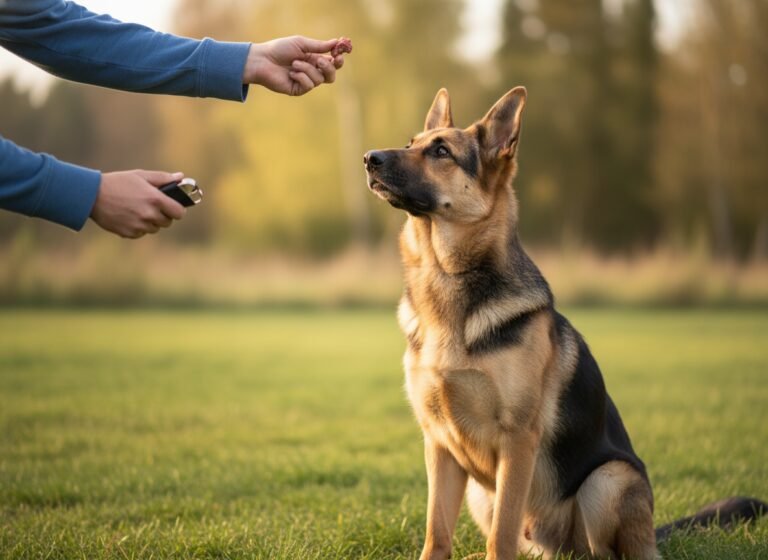
- A Clicker (Optional but Recommended): A clicker is a tool used to ‘mark’ the exact moment your dog performs the correct behavior. The ‘click’ sound is followed immediately by a treat. This provides clear, precise communication and can speed up the learning process. If you choose not to use a clicker, a consistent verbal marker like a sharp “Yes!” can be used instead.
- Patience and a Positive Attitude: This is perhaps the most important tool. Training takes time, and every dog learns at a different pace. Keep sessions short (1-5 minutes) and always end on a positive note. Your energy and enthusiasm are contagious and will make the game more fun for your dog.
Remember, the goal is to make this the best game your dog has ever played. Your preparation and choice of rewards will directly influence your dog’s enthusiasm and willingness to participate.
The ‘Look at Me’ Game: A Step-by-Step Training Protocol
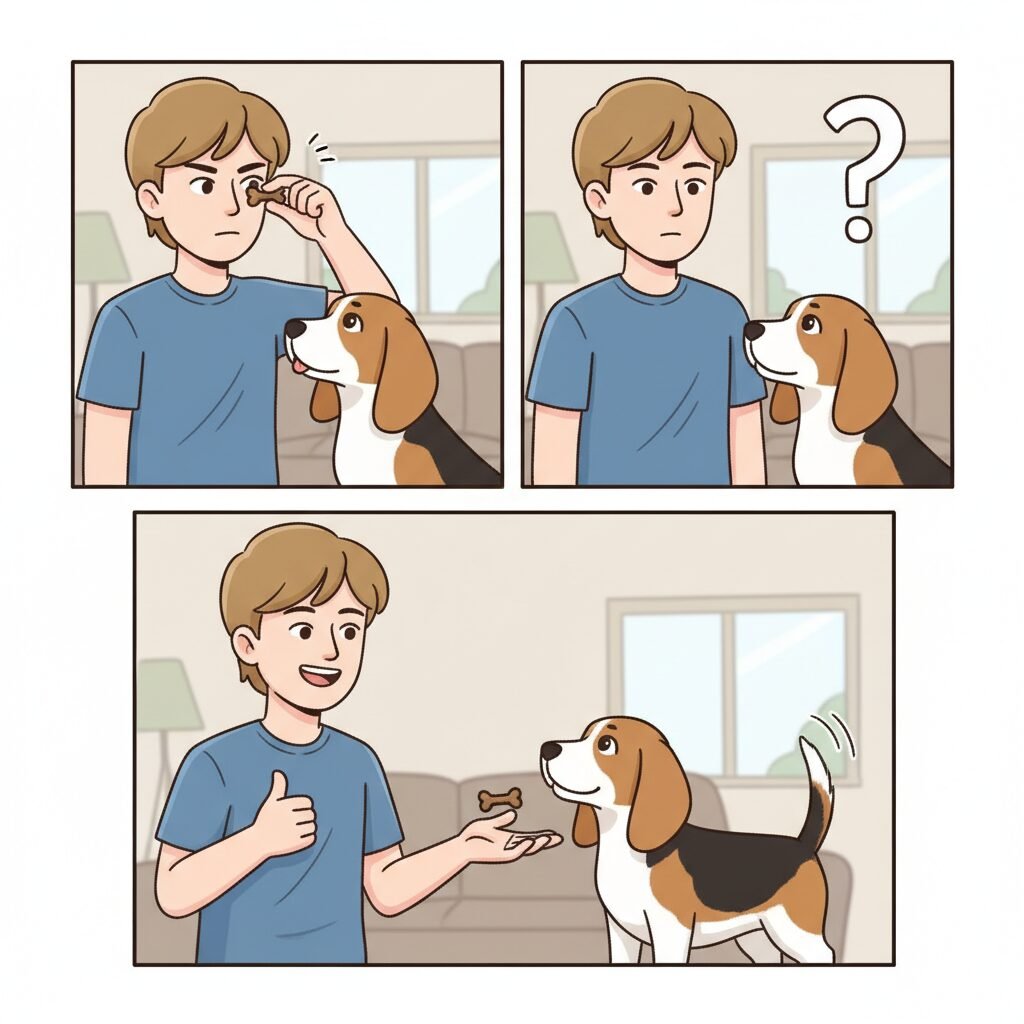
This training process is broken down into distinct phases. It is vital to master each phase before moving to the next. Rushing the process is the most common reason for failure. Keep sessions short, fun, and frequent—two or three 5-minute sessions per day are far more effective than one long, frustrating session.
Phase 1: Capturing the Behavior (No Verbal Cue)
The goal of this phase is to teach your dog that making eye contact with you is a rewarding action, without any verbal pressure.
- Position yourself in front of your dog in your quiet training area. Hold a high-value treat in your hand.
- Hold the treat up to your own eye. This will naturally lure your dog’s gaze towards your face.
- The very instant your dog’s eyes meet yours, even for a split second, mark the behavior with your clicker or verbal marker (“Yes!”) and immediately give them the treat.
- Repeat this process several times. At this stage, you are holding the treat near your face to make the behavior easy.
- Once your dog is reliably looking at the treat by your eye, start to lower your treat hand to your side. Your dog’s eyes will likely follow the treat. Wait patiently. Do not say anything.
- The moment your dog, realizing the treat isn’t being delivered, looks back up at your face to see what’s going on, mark that eye contact and reward them enthusiastically. This is a critical step where the dog begins to offer the behavior voluntarily.
- Practice this until your dog is quickly and consistently offering eye contact without the initial treat lure near your face.
Phase 2: Adding the Verbal Cue
Once your dog is voluntarily offering eye contact with reliability, it’s time to put a name to the action.
- With your dog in front of you, say your chosen cue clearly and happily—for example, “Look at Me” or “Watch Me.” Say it only once.
- Wait for a second or two. As your dog makes eye contact (which they should now be doing based on Phase 1), mark the behavior and reward lavishly.
- The sequence is: 1. Say the cue. 2. Dog makes eye contact. 3. Mark and reward.
- Practice this repeatedly. The goal is to build a strong association between the verbal cue and the action of making eye contact.
Phase 3: Increasing Duration and Distance
Now that your dog understands the cue, you can start asking for a longer, more sustained gaze.
- Give your cue, “Look at Me.” When your dog makes eye contact, wait for one full second before you mark and reward.
- Gradually increase the duration. Ask for two seconds of sustained eye contact, then three, and so on. If your dog looks away, you’ve gone too fast. Simply go back to a shorter duration where they can be successful.
- Once you can get 5-10 seconds of sustained focus, you can start adding a small amount of distance. Take one step back after giving the cue and reward them for holding your gaze. Gradually increase the distance over many sessions.
Proofing the Behavior: From Quiet Room to the Real World
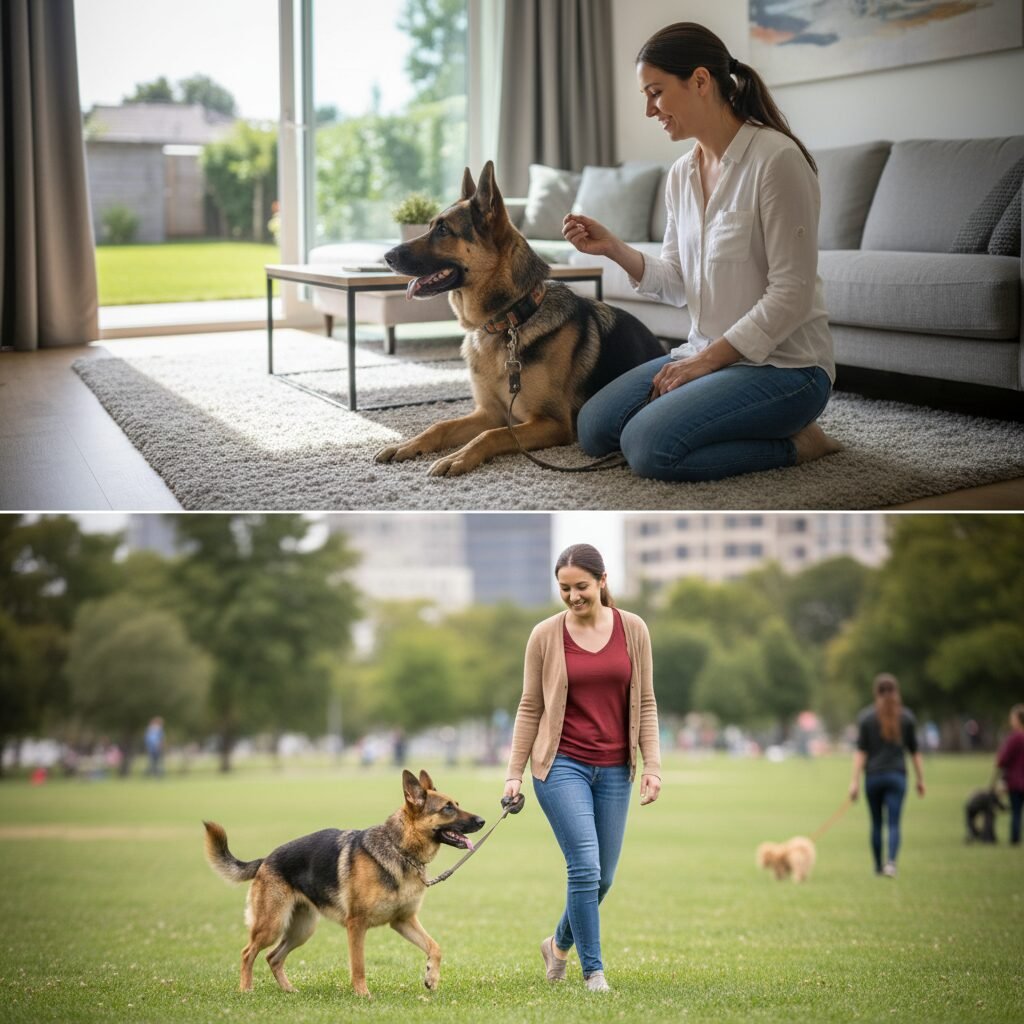
A reliable “Look at Me” cue is one that works not just in your living room, but also on a busy sidewalk or at the park. The process of teaching a command to be reliable in various environments is called ‘proofing.’ The key to successful proofing is to increase the difficulty level gradually. Throwing your dog into a high-distraction environment too soon will set them up for failure.
Introducing Low-Level Distractions
Start by introducing very mild distractions into your controlled training environment.
- Have another person walk quietly through the room in the background.
- Place a low-value toy on the floor at a distance.
- Turn on a television or radio at a low volume.
In each scenario, ask for the “Look at Me” cue. When your dog successfully disengages from the distraction to look at you, reward them with an extra-high-value ‘jackpot’ reward (multiple treats or a particularly special one) to acknowledge the increased effort.
A Gradual Progression Plan
Systematically increase the level of distraction over many training sessions. It’s helpful to think of it as a ladder, where you only climb to the next rung once the current one is solid. Below is a sample progression plan. Your dog may move faster or slower through these stages.
| Location | Distraction Level | Example Scenario | Goal |
|---|---|---|---|
| Indoors (Quiet Room) | Level 1: Very Low | No distractions present. | Mastering cue and duration. |
| Backyard | Level 2: Low | Ambient sounds, familiar smells. | Maintain focus for 5-10 seconds. |
| Quiet Street / Driveway | Level 3: Moderate | A distant car passing, a person walking on the other side of the street. | Quickly respond to cue and disengage from distant stimuli. |
| Quiet Park (on leash) | Level 4: High | Distant dogs, new smells, more people. | Hold focus for 3-5 seconds despite environmental activity. |
| Pet-Friendly Store Entrance | Level 5: Very High | People entering/exiting, shopping carts, new sounds. | Offer a brief moment of eye contact before proceeding. |
Important: If your dog fails to respond, the distraction is too high. Don’t repeat the cue or get frustrated. Simply increase your distance from the distraction to a point where your dog can be successful again, and make a note to work up to that level more slowly.
Troubleshooting Common Challenges and Mistakes
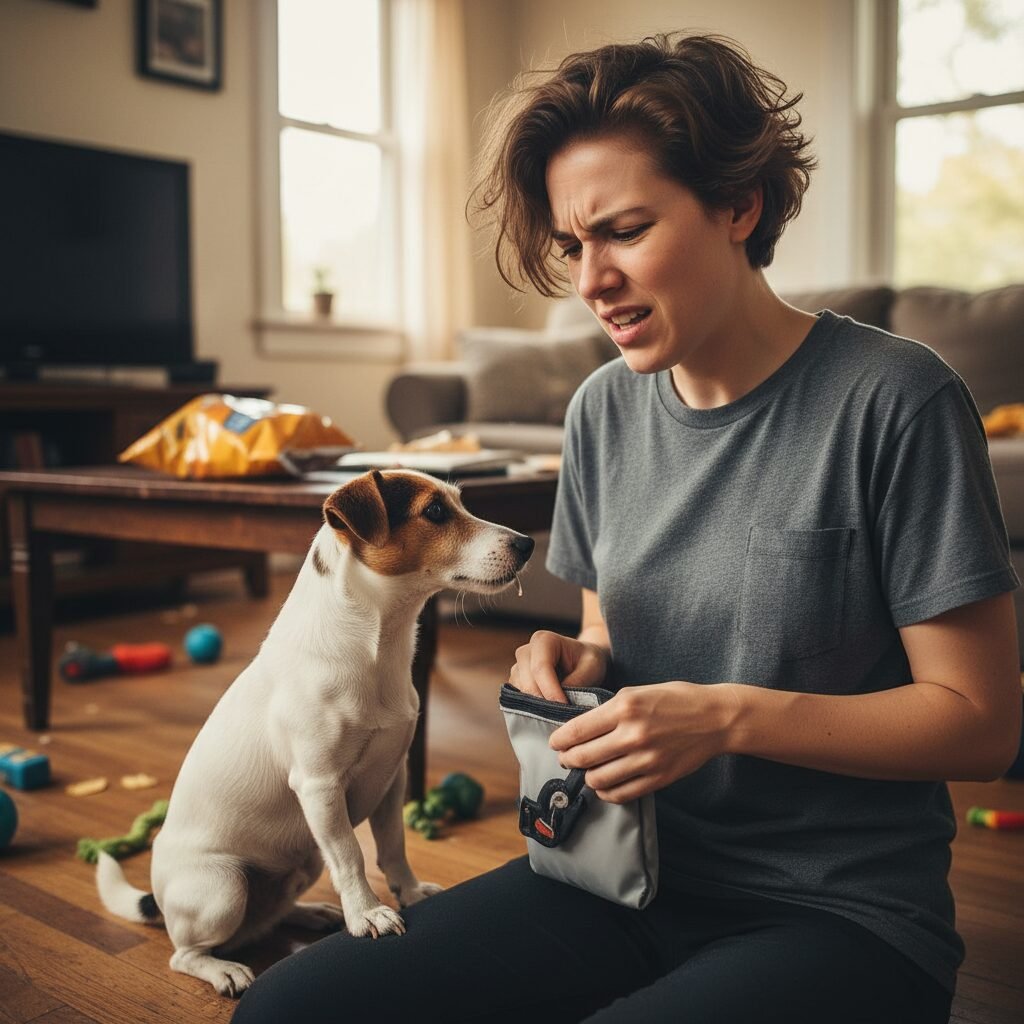
Even with the best plan, you might encounter some bumps in the road. This is a normal part of the training process. Identifying the problem and adjusting your technique is key to moving forward. Here are some of the most common mistakes owners make and how to solve them.
Problem: My Dog Just Stares at My Treat Hand
This is very common, especially in the beginning. It means the dog has associated the reward with your hand, not with the act of making eye contact.
- Solution: Go back to Phase 1, Step 5. Keep your treat hand still and low. Patiently wait for your dog to look away from your hand and up at your face. It may take 30 seconds or more initially, but be patient. The moment they look up, mark and reward. They will learn that looking at your hand gets them nothing, while looking at your face earns the reward. Also, try delivering the treat from your other hand or a treat pouch to break the association.
Problem: My Dog Loses Interest Quickly
If your training sessions feel like a chore and your dog is disengaging, there are a few potential culprits.
- Solution 1: Check Your Rewards. Are your treats truly high-value? What is exciting in the living room may be boring in the backyard. Increase the value of your reinforcer to match the level of distraction.
- Solution 2: Shorten Your Sessions. It’s better to have five 1-minute, highly successful sessions than one 5-minute session where the dog gets bored. Always end the game while your dog is still engaged and wanting more. This builds enthusiasm for the next session.
Problem: My Dog Won’t Look at Me When They See Their Trigger (e.g., another dog)
This indicates that the distraction level is far too high for your dog’s current training level. This is not disobedience; it’s an emotional reaction.
- Solution: You must manage the environment. This means increasing the distance between your dog and their trigger until you are at a point where they can notice the trigger but are not reacting to it (this is called their ‘threshold’). From this safe distance, you can begin to practice the “Look at Me” game. The goal is to reward them for looking at the trigger and then looking back at you. This is a more advanced technique often used in counter-conditioning protocols and may require the guidance of a professional trainer.
Final Tip: Never use the “Look at Me” cue to punish or scold your dog. This should always be a positive, fun game. Forcing your dog to look at you while you are angry will poison the cue and make them hesitant to perform it in the future.
Conclusion
The “Look at Me” game is far more than a simple command; it is a communication tool that transforms your relationship with your dog. By investing time and patience into teaching this skill, you are building a foundation of trust, focus, and mutual respect. You are giving your dog the ability to navigate distracting environments confidently and teaching them that you are their safe harbor and most valuable resource. Remember to progress at your dog’s pace, celebrate the small victories, and always keep it positive. The focused, attentive companion you desire is within reach, and the journey to achieving that connection begins with a simple, rewarding glance. Start playing the game today, and watch your bond with your dog flourish in ways you never thought possible.