Beginner Agility: Teach Your Dog to Jump Through a Hoop in 10 Mins
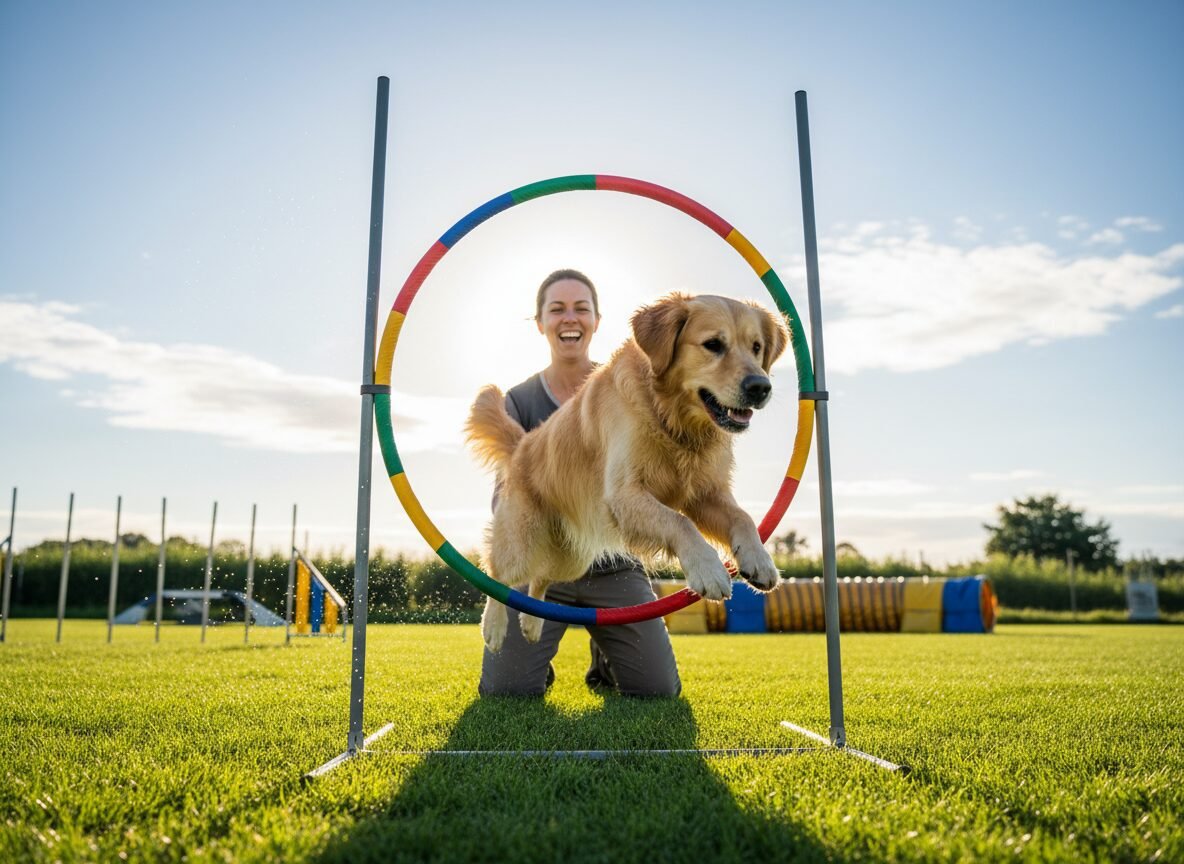
The world of canine agility is a thrilling display of speed, precision, and the incredible bond between a dog and its handler. It’s a sport that builds confidence, provides excellent physical and mental stimulation, and deepens your connection with your pet. While complex obstacle courses may seem daunting, the journey begins with a single, foundational skill. The hoop jump is one of the most accessible and enjoyable exercises to introduce your dog to the joys of agility.
This guide is designed to demystify the process, providing a clear, professional protocol to teach your dog the basics of jumping through a hoop in one positive, 10-minute session. Our focus is on building a strong foundation of enthusiasm and understanding through positive reinforcement. Before we begin, it is paramount to ensure your dog is physically prepared for this activity. A check-up with your veterinarian is always recommended before starting any new canine sport, especially for puppies whose growth plates are still developing or for senior dogs. With safety as our priority and a pocketful of high-value treats, let’s embark on this exciting first step into agility training.
Pre-Training Essentials: Setting Up for Success
Pre-Training Essentials: Setting Up for Success
Proper preparation is the cornerstone of any successful training session. By gathering the right equipment and establishing an ideal environment, you set the stage for clear communication and a positive learning experience for your dog. Rushing this step can lead to confusion and frustration for both of you. Taking a few moments to prepare ensures the 10-minute training block is as productive and enjoyable as possible.
Choosing the Right Equipment
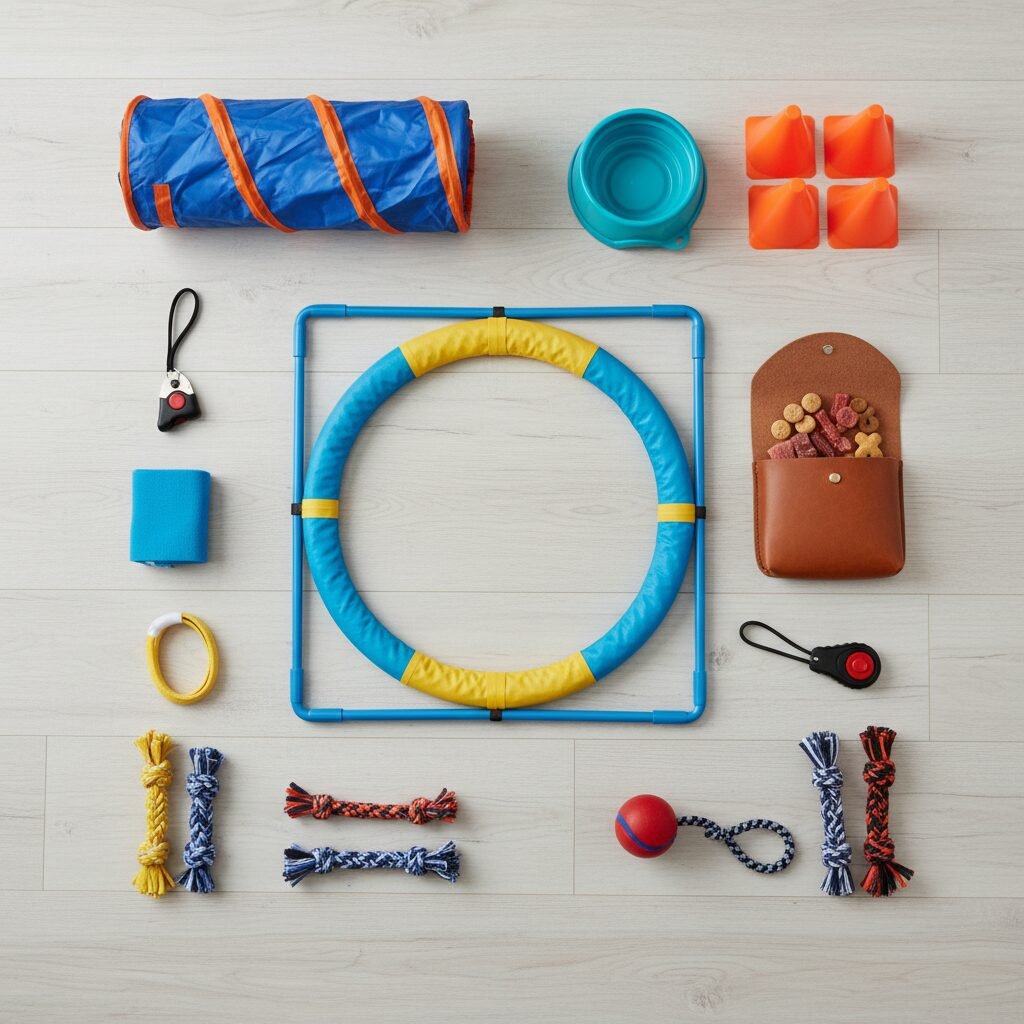
The primary pieces of equipment are simple but significant. Your selection will directly impact your dog’s safety and confidence.
- The Hoop: A standard hula hoop is an excellent and inexpensive starting point for most medium to large dogs. For smaller breeds, a dedicated, smaller-diameter agility hoop may be more appropriate. The hoop should be at least one and a half times the width of your dog’s shoulders to provide ample room. Ensure it is made of a lightweight material with no sharp edges.
- High-Value Rewards: Standard kibble may not be motivating enough for learning a new, dynamic skill. High-value treats are special, highly desirable rewards reserved for training. These should be small, soft, and easy for your dog to swallow quickly. Examples include tiny pieces of boiled chicken, cheese, hot dogs, or commercial soft training treats. The goal is a quick reward that doesn’t interrupt the flow of the session.
- Clicker (Optional): A clicker is a powerful tool for marking the exact moment your dog performs the correct behavior. If you are familiar with clicker training, have it ready. If not, a consistent verbal marker like a sharp “Yes!” works just as well.
Creating the Ideal Training Environment
Your training space can either help or hinder your progress. The ideal location minimizes distractions and maximizes safety.
- Location: A quiet, familiar area is best. A fenced backyard or a spacious indoor room is perfect. Avoid busy parks or areas with other people and dogs until your dog has mastered the skill.
- Footing: The surface must be non-slip to prevent injury. Grass, carpeting, or rubber matting provides excellent traction. Avoid training on tile, laminate, or wet surfaces where your dog could slip while landing.
- Distraction-Free Zone: Put away toys, ask other family members to give you space, and turn off the television or radio. Your dog’s focus should be entirely on you and the task at hand for these crucial 10 minutes.
The Step-by-Step 10-Minute Training Protocol
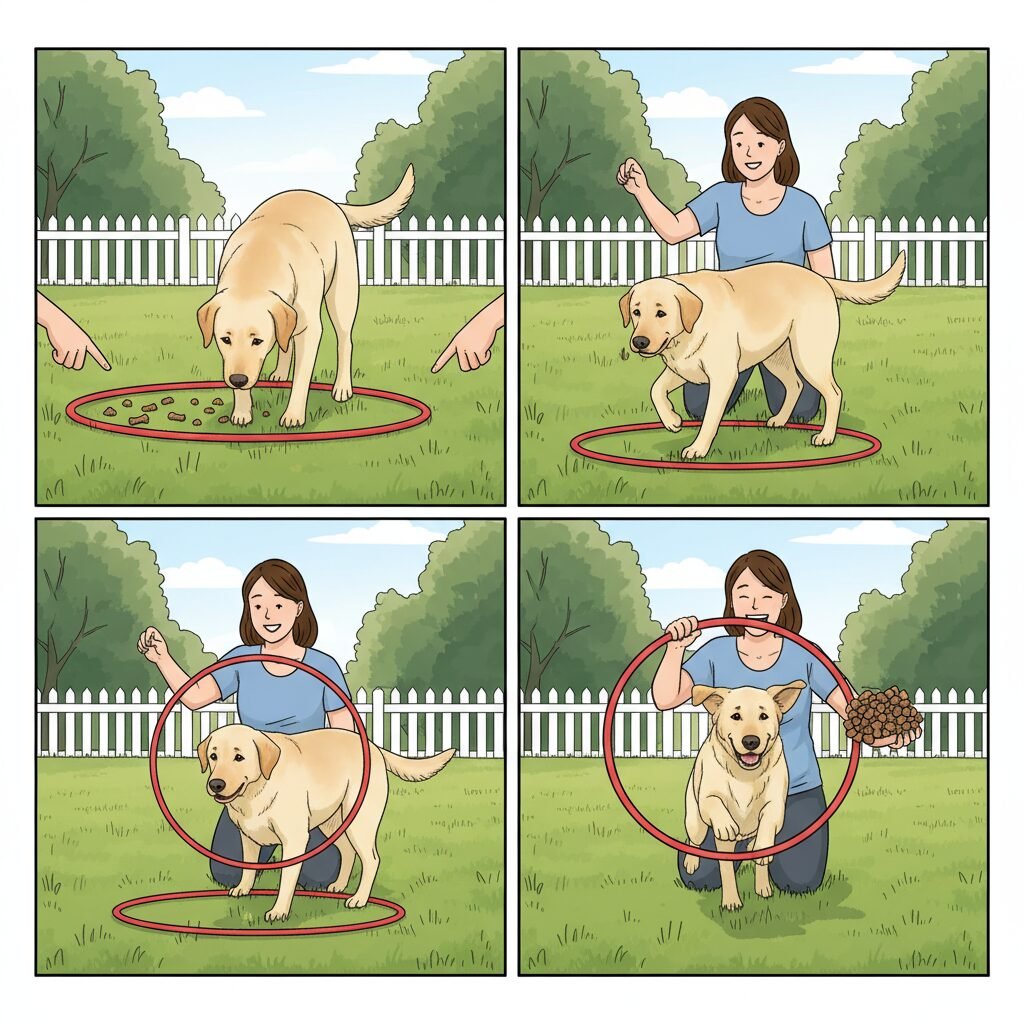
The Step-by-Step 10-Minute Training Protocol
This protocol is designed to be completed in a single, short session to build a positive initial association with the hoop. The key is to progress at your dog’s pace and end on a high note, even if you don’t complete every step perfectly. Enthusiasm is your greatest tool.
- Step 1: Introduction and Acclimation (Minutes 1-2)
The first objective is to ensure the dog is completely comfortable with the hoop as an object. Lay the hoop flat on the ground in your training area. Let your dog investigate it freely. Without any pressure, toss a few high-value treats on and around the hoop. When your dog eats the treats, offer calm praise. The goal is to create a simple, positive association: hoop equals delicious rewards. Do not ask for any specific behavior yet; simply reward curiosity and comfort. - Step 2: Luring Through the Flat Hoop (Minutes 3-5)
With the hoop still flat on the ground, take a treat in your hand. Show it to your dog, then use it as a lure to guide their head and then their body to walk across the hoop. As they step through it, say your chosen verbal cue, such as “Hoop!” or “Through!”, in a clear, encouraging tone. The moment they are on the other side, mark the behavior with your clicker or “Yes!” and give them the treat. Repeat this 5-6 times from different directions, ensuring the dog is willingly walking across the hoop. - Step 3: Elevating the Hoop (Minutes 6-8)
This is the most critical step and requires patience. Kneel on the ground and hold the hoop so the bottom edge is resting on the ground, creating a small arch. Hold it steady with one hand. With your other hand, use a treat to lure your dog through the opening. They will likely just step through it. This is perfect. Mark and reward this action enthusiastically. After a few successful repetitions, you can lift the hoop so the bottom edge is just one or two inches off the ground. This encourages a small step-over. Keep the barrier incredibly low to guarantee success and build confidence. - Step 4: Encouraging the First Jump (Minutes 9-10)
If your dog is showing confidence and enthusiasm, you can proceed to this final step of the initial session. Raise the hoop slightly higher, to a height no greater than your dog’s wrist (carpus). This low height makes the ‘jump’ more of a small hop. Use the same luring technique but with more energy in your voice and body language to encourage a bit more forward momentum. The moment your dog hops through, give them a “jackpot” reward—several treats at once—along with effusive praise and petting. End the session right there. Finishing on this moment of success leaves a powerful, positive impression and makes them eager for the next training session.
Troubleshooting Common Challenges and Mistakes
Troubleshooting Common Challenges and Mistakes
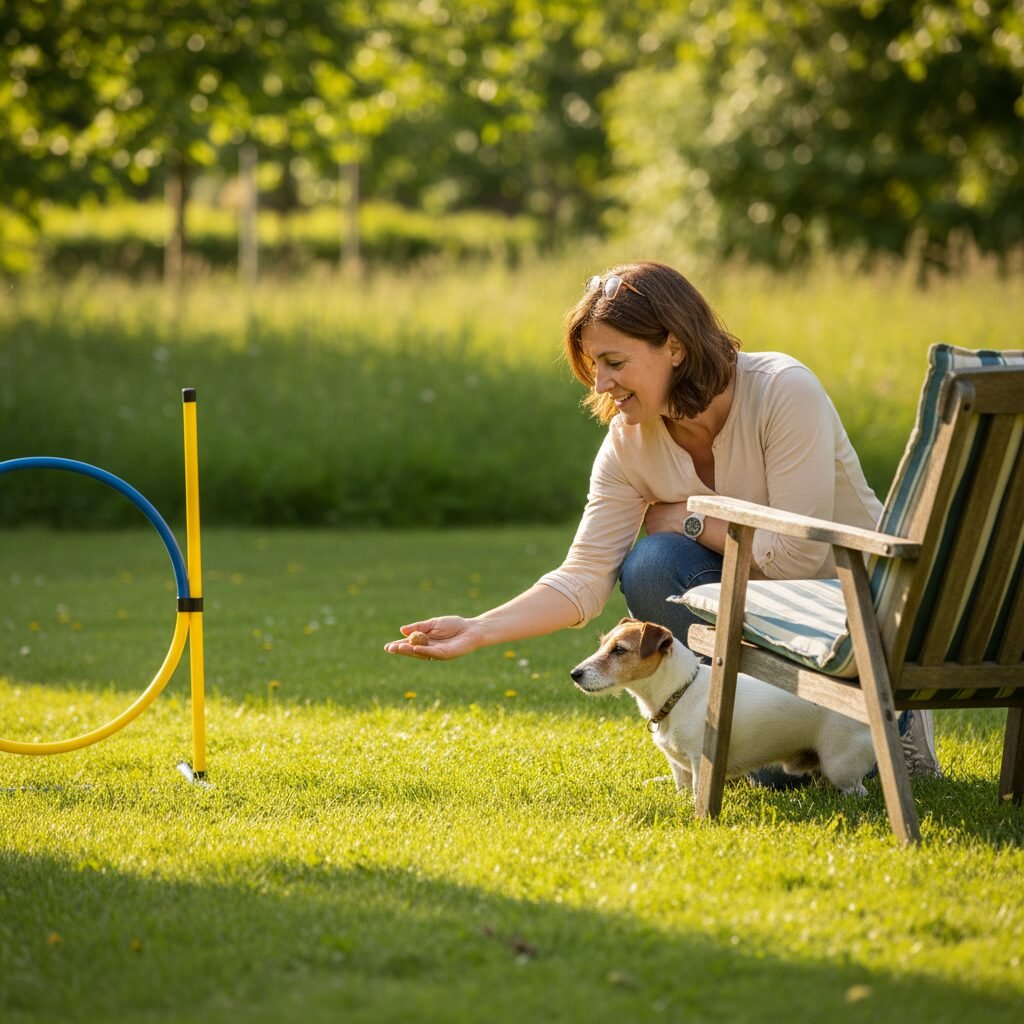
Even with a perfect plan, training rarely proceeds without a few bumps. Understanding common challenges allows you to address them calmly and effectively, keeping the session positive and productive. Avoid repeating a failed attempt; instead, take a step back to an easier version of the exercise where your dog can succeed.
Challenge: The Dog is Fearful of the Hoop
If your dog shows hesitation, tail-tucking, or avoidance, they are communicating discomfort. Never force them. Go back to Step 1. Place the hoop flat on the ground and simply exist around it. Have your dog’s meal time near the hoop. Play a game of fetch where the toy occasionally lands near it. The goal is desensitization. Make the hoop a boring, non-threatening part of the environment that occasionally produces treats. This may take more than one session, and that is perfectly acceptable.
Challenge: The Dog Bypasses the Hoop
A common issue is the dog running around the hoop instead of through it. This usually happens when the value of the treat isn’t high enough to justify the effort, or the dog is simply confused. To solve this, make going through the hoop the path of least resistance. Practice in a hallway where the walls naturally guide the dog through the center. Alternatively, you can create a simple ‘chute’ using cushions or boxes on either side of the hoop. This visual aid clarifies the task significantly.
Expert Tip: Ensure your lure hand is moving in a straight, direct line through the center of the hoop. If your hand arcs to the side, your dog will follow, leading them around the obstacle. Your body language must clearly communicate the intended path.
Common Mistake: Raising the Height Too Quickly
Enthusiasm can sometimes cause us to progress too fast. If your dog starts knocking the hoop down or refusing to jump, it’s a clear sign the height is too great for their current confidence level. This is the most common mistake in jump training. Immediately lower the hoop back to the last height where they were 100% successful and confident. Spend more repetitions at that lower height before attempting to raise it again, and only raise it by a single inch at a time over several sessions.
Advancing the Skill and Prioritizing Long-Term Safety
Advancing the Skill and Prioritizing Long-Term Safety
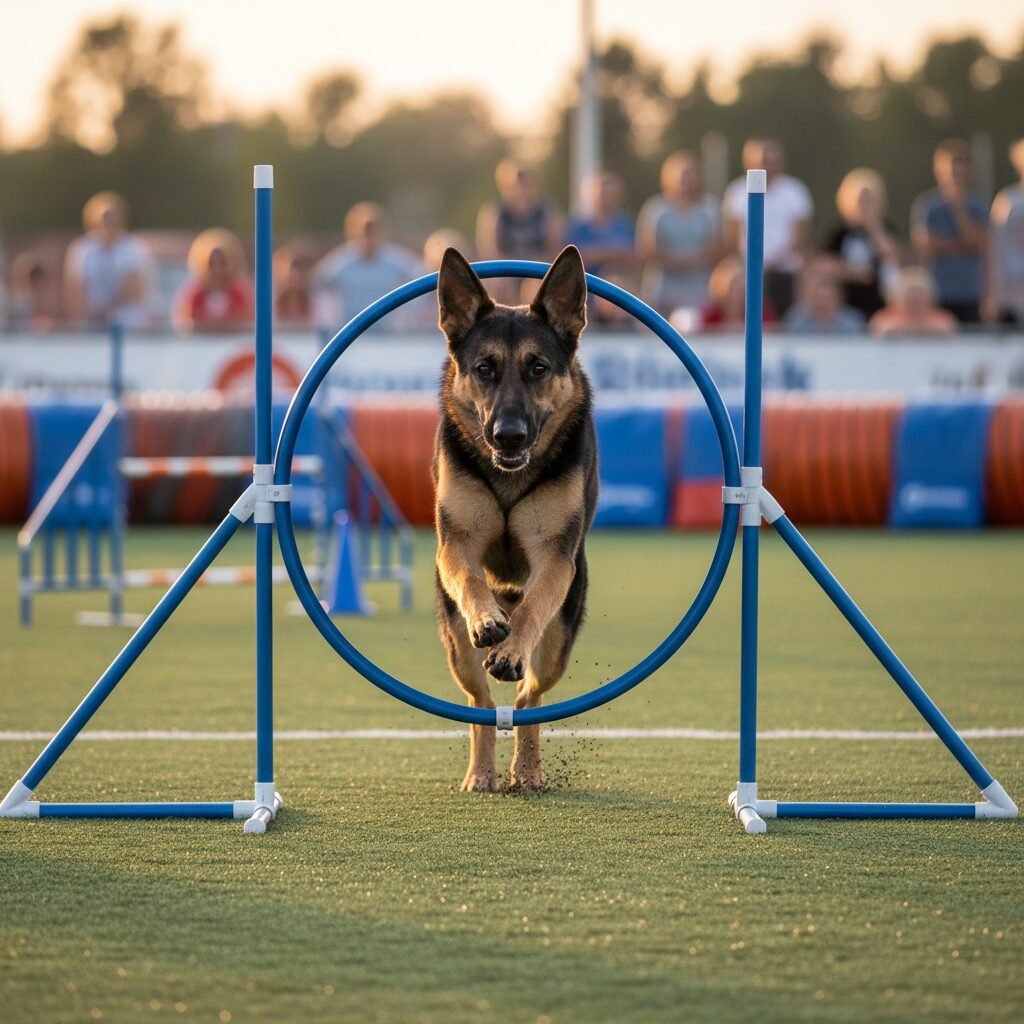
Your initial 10-minute session is a launchpad, not the finish line. True mastery comes from gradual, consistent practice. As you move beyond the basics, advancing the skill must be balanced with an unwavering commitment to your dog’s physical well-being. This phase focuses on building reliability, distance, and proper form while embedding safety protocols into every session.
Building on Your Success
Once your dog is confidently and happily hopping through a low hoop, you can begin to refine the skill.
- Gradually Increasing Height: The key word is gradually. Over many short sessions, you can begin to raise the height of the hoop. A good rule of thumb is to never ask a dog to jump higher than their elbow height for recreational agility. For official competitions, regulations dictate jump heights, but for at-home fun, safety is the priority.
- Fading the Lure: Your goal is for the dog to respond to the verbal cue (“Hoop!”) alone, not the presence of a treat. Start by luring with an empty hand but still rewarding after. Then, transition to a simple hand signal pointing through the hoop. Finally, progress to standing upright and using only the verbal cue.
- Introducing Distance: Begin asking your dog to perform the jump from a starting position a few feet away. Have them sit and stay, then give the command. This builds independence and understanding of the cue from a distance.
The Golden Rules of Safe Jumping
Jumping is a high-impact activity. Adhering to safety best practices is non-negotiable to prevent acute injury and long-term joint issues.
| Safety Protocol | Detailed Explanation |
|---|---|
| Warm-Up & Cool-Down | Always begin with 5 minutes of brisk walking or light trotting to warm up muscles. End with a similar 5-minute cool-down walk to help prevent stiffness and injury. |
| Correct Jump Height | Never exceed the height of your dog’s elbow for casual training. Forcing a dog to jump too high can cause serious injury to their back, shoulders, and legs. |
| One Jump at a Time | In early training, focus on a single jump followed by a reward. Avoid repetitive jumping, which can put excessive strain on joints. |
| Monitor Physical Condition | Never train a dog that is tired, sore, or appears unwell. Pay close attention to their landing; they should land cleanly on their feet without stumbling. |
| Age and Health Appropriate | Do not engage in jump training with puppies under 12-18 months (depending on breed) to protect their developing growth plates. Consult a veterinarian before starting with a senior dog or a dog with pre-existing health conditions. |
Conclusion
Your Journey into Agility Has Begun
Congratulations on completing your first agility training session! In just 10 minutes, you have laid a crucial foundation built on trust, clear communication, and positive reinforcement. You have shown your dog that learning new things with you is an exciting and rewarding game. Remember that the time on the clock is less important than the quality of the interaction. The true goal of this initial session was to create a moment of shared success and spark a flicker of enthusiasm for a new challenge.
The path to mastering the hoop jump—and any other agility skill—is a marathon, not a sprint. It will be paved with short, joyful training sessions, patience during setbacks, and celebrating small victories along the way. By consistently applying the principles of safety and positive training, you will not only teach your dog an impressive new skill but also forge an even deeper, more resilient bond.
Welcome to the wonderful world of dog agility. Continue to nurture your dog’s confidence, prioritize their well-being, and most importantly, have fun together every step of the way.