Saved by Bitter Spray? Stopping Seatbelt Chewing for Good
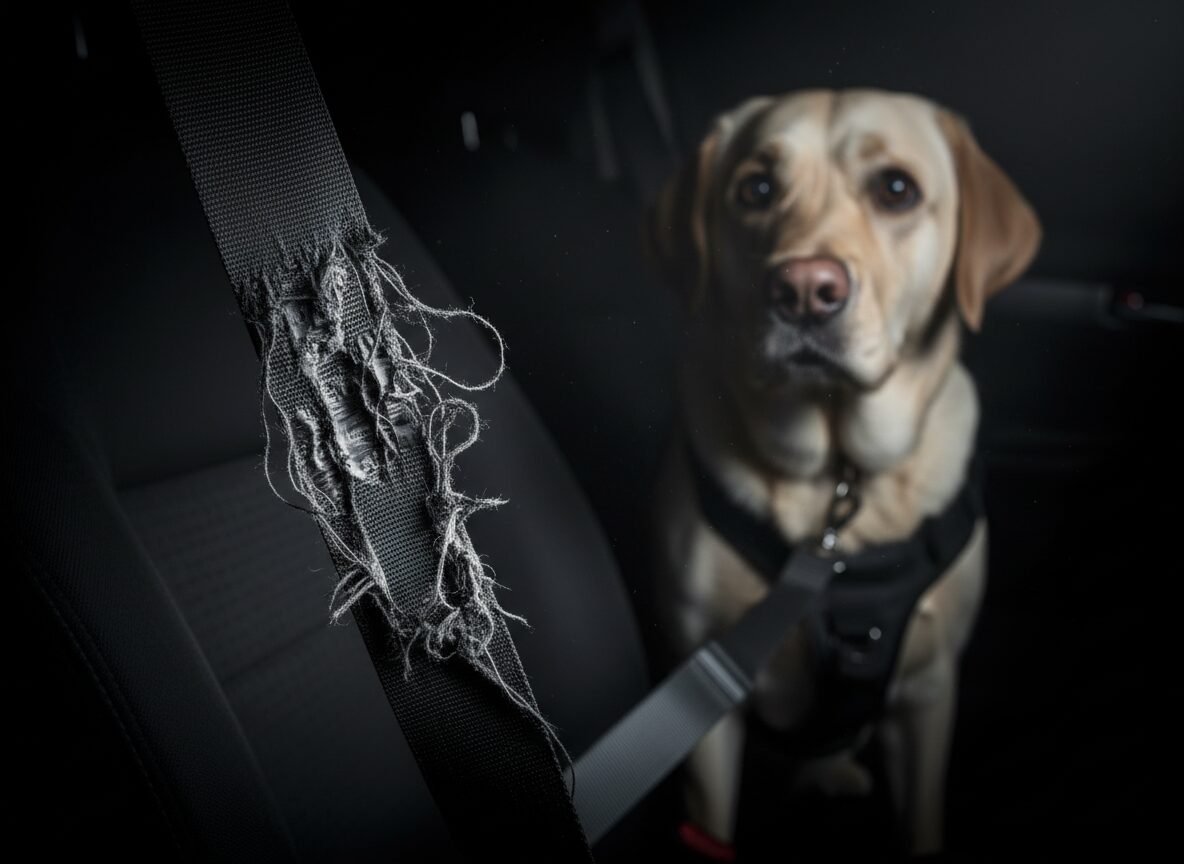
The sight of a frayed, chewed seatbelt is enough to send a chill down any pet owner’s spine. It’s not just the cost of replacement that’s alarming; it’s the profound safety risk it represents for both you and your beloved canine companion. Many owners, in a moment of desperation, reach for a bottle of bitter spray, hoping for a quick fix. While these sprays can be a part of the solution, they are rarely the complete answer. True, lasting success in stopping seatbelt chewing requires a deeper understanding of the behavior and a multi-faceted approach.
This guide is designed to move beyond the surface-level fix. We will delve into the root causes behind why your dog has chosen the seatbelt as their chew toy of choice—from anxiety and boredom to simple teething. We will then lay out a clear, actionable plan that combines immediate management for safety, the strategic use of deterrents like bitter spray, and powerful training techniques to redirect the behavior permanently. By the end of this article, you will be equipped not just to stop the chewing, but to build a safer, more positive travel experience for your dog for years to come.
Why Your Dog is Chewing the Seatbelt: Uncovering the Root Cause
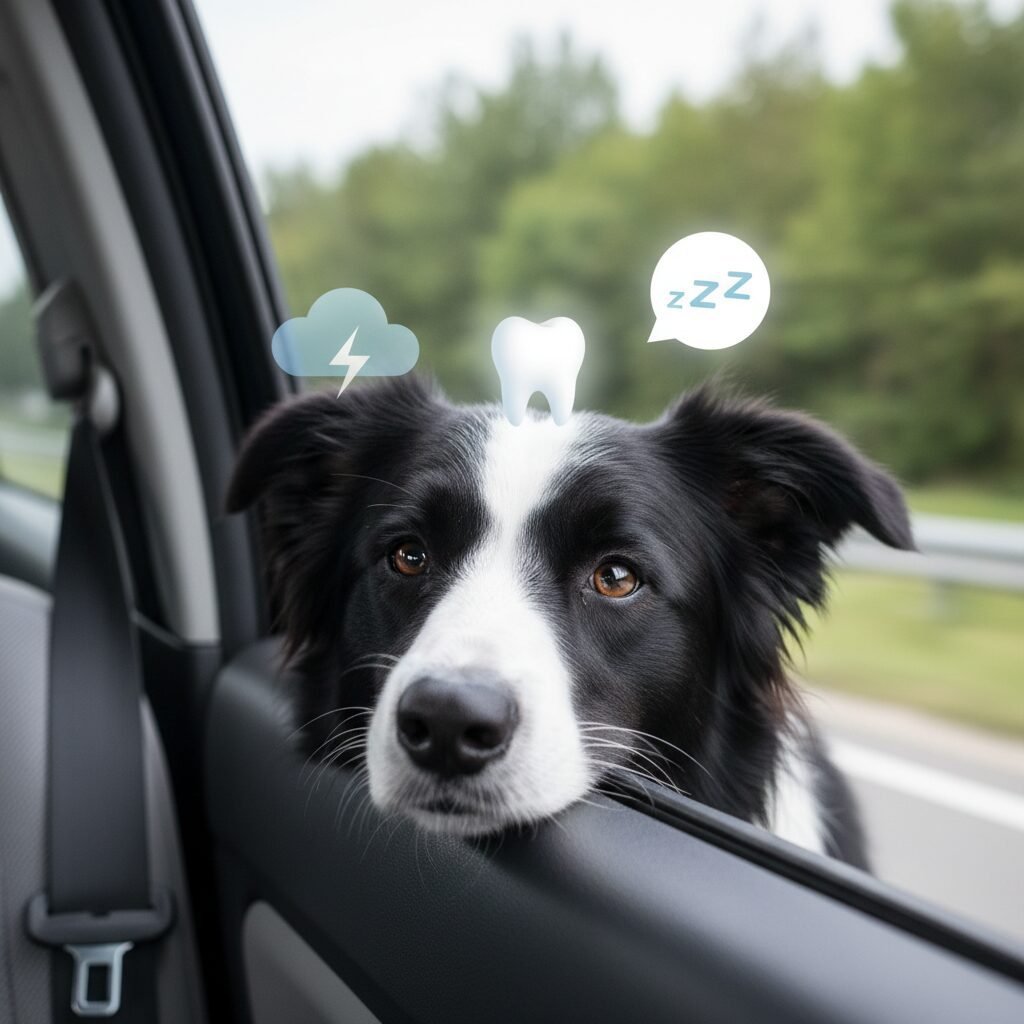
Before you can effectively stop a behavior, you must first understand its origin. A dog chewing on a seatbelt is not acting out of spite; they are trying to fulfill a need or communicate distress. Identifying the underlying motivation is the critical first step toward a permanent solution. Let’s explore the most common culprits.
Anxiety and Stress
For many dogs, car travel is a significant source of anxiety. The motion, unfamiliar noises, and confinement can be overwhelming. Chewing becomes a self-soothing mechanism, a way for the dog to cope with feelings of stress, fear, or even motion sickness. This is often accompanied by other signs like whining, panting, pacing, or excessive drooling. The seatbelt is simply an available, textured object on which to displace that nervous energy.
Boredom and Lack of Stimulation
If a car ride is long and uneventful, a dog without proper stimulation may create their own entertainment. A dangling seatbelt can seem like an intriguing toy, offering a satisfying texture and resistance. This is particularly common in high-energy breeds or adolescent dogs who are not given an appropriate outlet for their mental and physical energy before or during the trip. They aren’t being ‘bad’; they’re simply under-stimulated.
Teething in Puppies
Just like human babies, puppies experience discomfort as their adult teeth come in. The pressure of chewing helps alleviate the pain in their gums. A seatbelt’s tough, woven material can feel incredibly satisfying to a teething pup. If your dog is between four and six months old and has suddenly started chewing everything in sight, including the seatbelt, teething is a very likely cause.
Learned Behavior
Sometimes, the behavior starts for one reason (like teething) and continues out of habit. The dog may have learned that chewing the seatbelt gets them attention—even negative attention is still attention. If you react strongly every time they do it, you might be inadvertently reinforcing the very behavior you want to stop. They learn, ‘When I chew this, my human interacts with me.’
The Role of Bitter Sprays: A Tool, Not a Cure
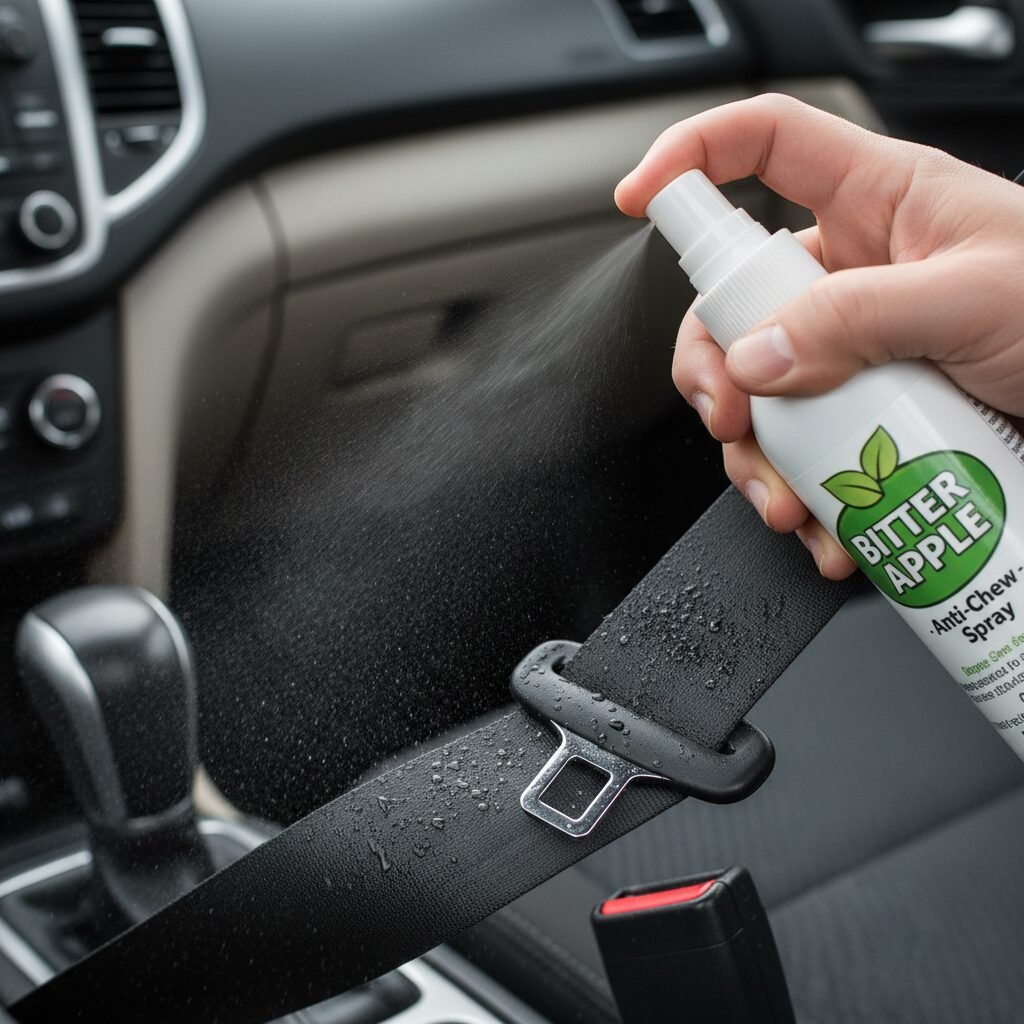
Taste deterrents, commonly known as bitter sprays, are often the first line of defense for frustrated pet owners. These products contain a substance that is non-toxic but extremely unpalatable to most dogs. The idea is simple: make the seatbelt taste so awful that the dog will no longer want to put it in their mouth. While this sounds like a perfect solution, it’s crucial to have a realistic perspective on their effectiveness.
Bitter sprays work on the principle of taste aversion. When used correctly, a dog will mouth the sprayed object, experience the foul taste, and ideally, form a negative association with chewing that object. However, their success is not guaranteed. Some dogs are so highly motivated to chew (due to severe anxiety, for example) that they will push through the bad taste. Others simply don’t mind the taste at all. Therefore, bitter spray should be viewed as one tool in your toolbox—a way to make the unwanted behavior less appealing while you implement more permanent training and management strategies.
When selecting a spray, always choose one formulated specifically for pets and check the ingredients for anything your dog might be sensitive to. Before dousing your seatbelt, it’s wise to do a patch test on a small, inconspicuous area to ensure it doesn’t cause discoloration.
| Pros of Bitter Sprays | Cons of Bitter Sprays |
|---|---|
| Easy to apply and readily available. | Not effective for all dogs; some ignore or even like the taste. |
| Can provide an immediate, temporary halt to the behavior. | Does not address the underlying reason for the chewing (e.g., anxiety, boredom). |
| Generally safe and non-toxic when used as directed. | Requires frequent reapplication as it wears off over time. |
| Can be a useful aid during the initial phases of training. | Can create a negative association with the car itself if not used carefully. |
Step 1: Management and Prevention for Immediate Safety
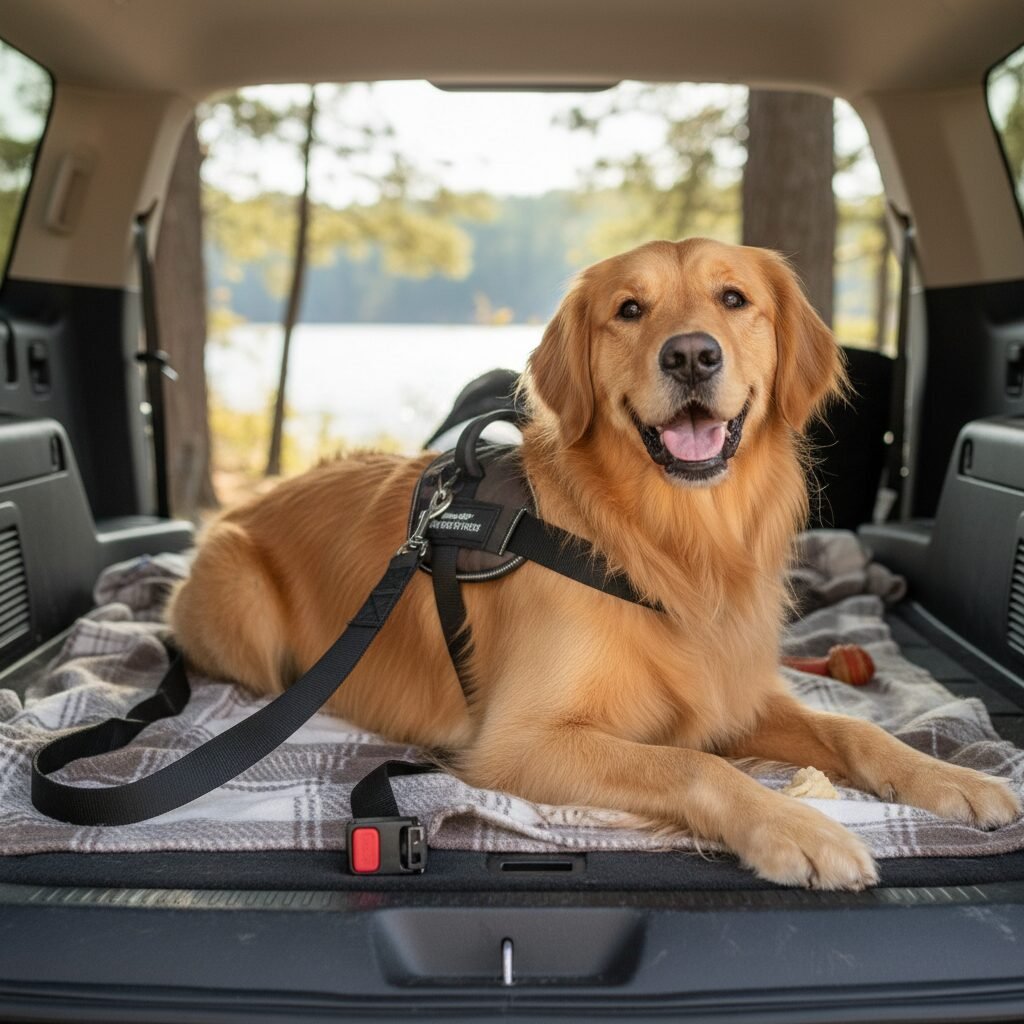
Before you can train a new behavior, you must prevent the old one from being practiced. Management is the most critical and immediate step you can take to ensure your dog’s safety and protect your vehicle. The goal of management is to make it physically impossible for your dog to chew the seatbelt. This is not a punishment; it is a responsible safety measure that sets your dog up for success.
Use a Crash-Tested Crate or Carrier
The single most effective management tool is a secure, crash-tested travel crate. By crating your dog during car rides, you remove any and all access to the seatbelts. This provides the highest level of safety for your pet in the event of an accident and gives you complete peace of mind. Ensure the crate is well-ventilated, the right size for your dog (enough room to stand and turn around), and securely fastened within the vehicle.
Invest in a Quality Seatbelt Harness System
If a crate is not feasible, a high-quality, crash-tested seatbelt harness is the next best option. This is not the same as a standard walking harness. A car safety harness is specifically designed to restrain a dog in a collision. When fitted correctly, it should keep your dog in their designated spot (e.g., on the seat) and restrict their ability to reach and chew on the seatbelt mechanism or webbing. This provides safety while still allowing them some limited movement.
Utilize Chew-Resistant Seatbelt Covers
As an additional layer of protection, consider using a seatbelt cover made from a durable, chew-resistant material like ballistic nylon or PVC. While a determined dog may still be able to damage these, they make the seatbelt a much less appealing and accessible target. This is a good supplementary tool to use in conjunction with a harness, but not as a standalone solution for a persistent chewer.
Remember, every time your dog successfully chews the seatbelt, the behavior is reinforced. Management stops this cycle, creating a clean slate for effective training.
Step 2: Training and Behavior Modification for a Lasting Fix
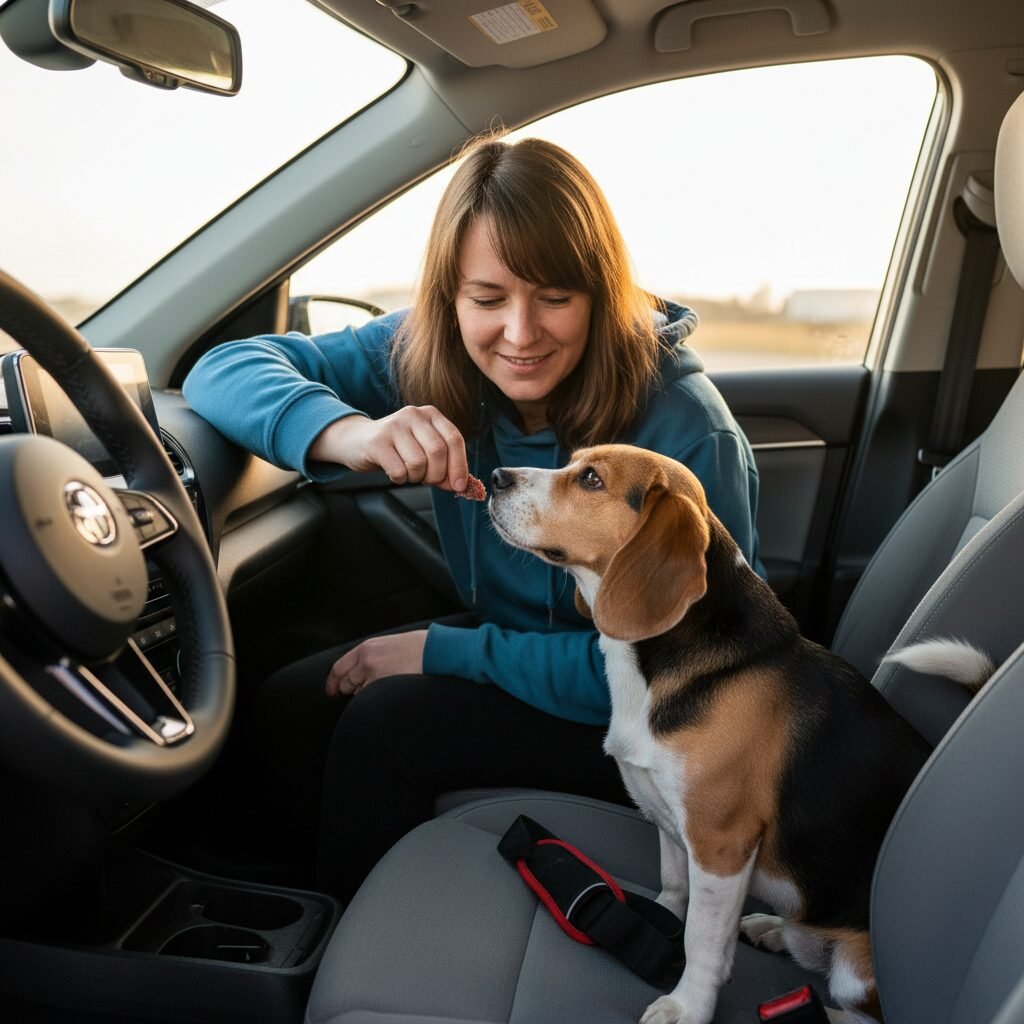
With safety managed, you can now focus on the long-term solution: teaching your dog what you want them to do instead. This involves a combination of obedience training, enrichment, and creating positive associations with the car.
Teach a Rock-Solid “Leave It” Command
The “Leave It” command is invaluable. It teaches your dog to disengage from an object on cue. Start training this in a low-distraction environment, like your living room, before ever practicing in the car.
- Phase 1 (Easy): Place a low-value treat in your closed fist. Let your dog sniff and lick your hand. The moment they pull their head away, even for a second, say “Yes!” and give them a high-value treat from your other hand.
- Phase 2 (Harder): Place the low-value treat on the floor, covered by your hand. When they stop trying to get it, say “Yes!” and reward them with a better treat.
- Phase 3 (Cue): Once they understand the game, say “Leave it” just as they are about to investigate the floor treat. Reward them for looking back at you. Gradually increase the difficulty by uncovering the treat and eventually using more tempting items.
Transfer the Training to the Car
Once “Leave It” is reliable in the house, practice in a stationary car. With your dog safely harnessed, present the seatbelt. The moment they look at or move toward it, say “Leave It.” When they look back at you, reward them enthusiastically. Keep sessions short and positive.
Provide an Acceptable Chew Outlet
A critical part of stopping unwanted chewing is to provide a desirable alternative. Never get in the car without a special, high-value chew toy that your dog only gets during car rides. This makes the toy novel and exciting. A frozen Kong stuffed with peanut butter or wet food, a durable nylon bone, or a tough puzzle toy can keep your dog happily occupied for the duration of the trip.
Build a Positive Association with the Car
If anxiety is the root cause, you must change your dog’s emotional response to the car. This process, called desensitization and counter-conditioning, involves breaking down the experience into tiny, manageable steps and pairing each one with something wonderful.
- Start by just rewarding your dog for approaching the parked car.
- Progress to rewarding them for sitting in the car with the doors open and the engine off.
- Then, turn the engine on for a few seconds, treat, and get out.
- Finally, take very short trips (e.g., to the end of the driveway and back) followed by a super fun reward, gradually increasing the duration as your dog’s confidence grows.
Conclusion
Stopping a dog from chewing on seatbelts is a journey that goes far beyond a single spray bottle. It’s about understanding, patience, and a commitment to their safety and well-being. By embracing a comprehensive strategy, you are not just fixing a problem; you are strengthening the bond with your dog and teaching them how to be a safe and confident travel companion.
Remember the three pillars of success: management to ensure immediate safety, training to build desired behaviors, and enrichment to address the underlying causes like boredom or anxiety. While tools like bitter sprays can assist in the initial stages, they are no substitute for this foundational work. With consistency and a positive approach, you can put the days of frayed seatbelts behind you and look forward to many miles of safe, stress-free adventures together.