The “Emergency Recall” Game: Make Your Dog Come Running Every Single Time
In the world of dog training, few commands carry the sheer life-or-death weight of the emergency recall. It’s more than just a party trick; it’s a vital safety net that can pull your dog back from the brink of danger—a busy street, an aggressive animal, or a toxic substance. While many owners teach a standard ‘come’ command, the emergency recall is its high-stakes, non-negotiable counterpart. It’s the one word that must cut through every distraction and trigger an immediate, enthusiastic response. But how do you build such a reliable behavior without creating fear or anxiety? The answer lies in transforming this critical command from a chore into the most exciting game your dog has ever played. This comprehensive guide will walk you through the professional, positive-reinforcement-based methodology to forge a bulletproof emergency recall, ensuring your canine companion will choose you over any temptation, every single time.
The Foundation: Why a Bulletproof Emergency Recall is Non-Negotiable
Before we dive into the mechanics of training, it is crucial to understand the profound importance of this command. A standard recall, often the simple word ‘come,’ is used in low-stakes, everyday situations—calling your dog in from the yard or asking them to move to another room. It can sometimes be ignored with minimal consequence. An emergency recall, however, is reserved for moments of genuine peril. It is your verbal lifeline.
Consider these real-world scenarios where a flawless emergency recall can be the difference between safety and tragedy:
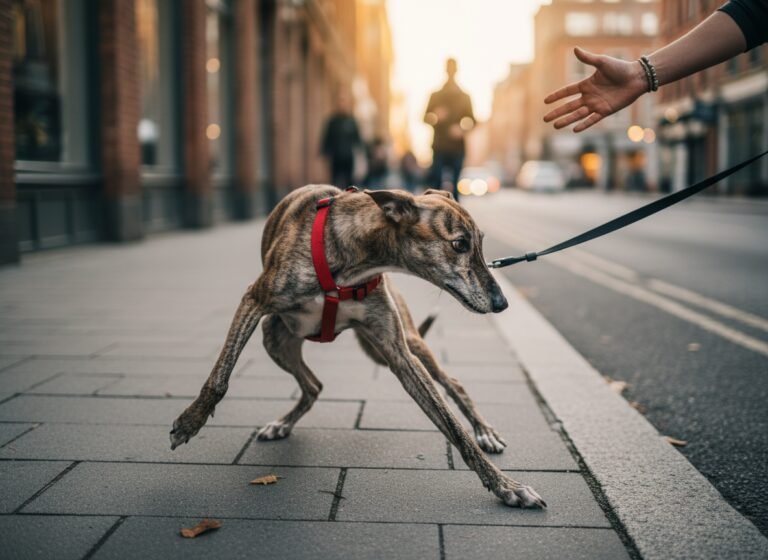
- Preventing Traffic Accidents: A leash slips from your hand, a gate is left ajar, or a collar fails. Your dog bolts towards a busy road, oblivious to the oncoming traffic. An emergency recall is the only tool that can override their instinct to run and bring them back to safety.
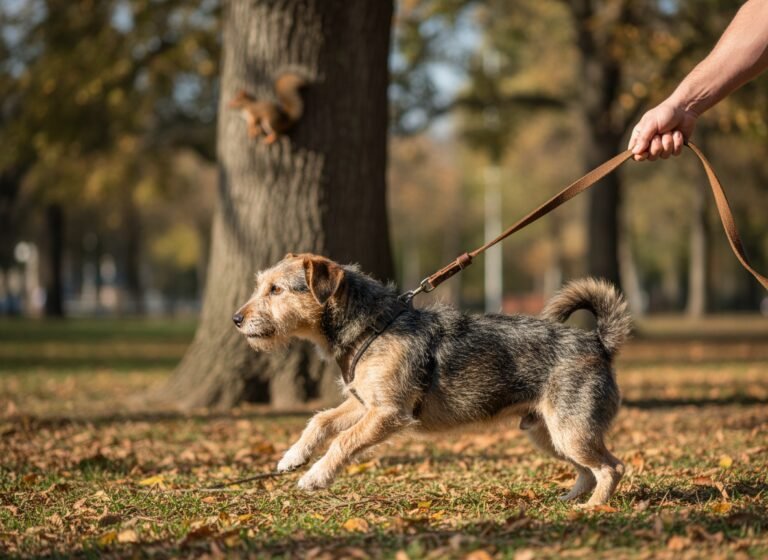
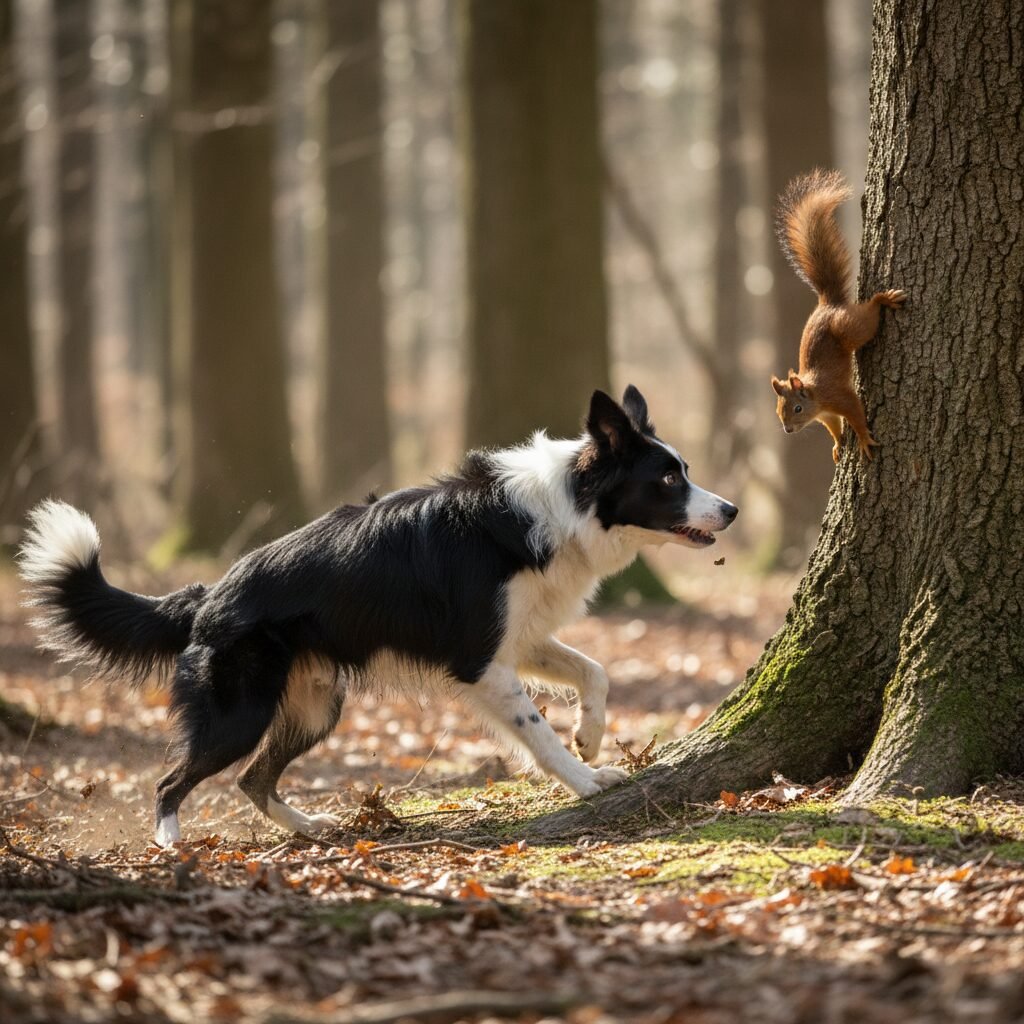
- Avoiding Animal Conflicts: During an off-leash hike, your dog might spot a deer, a coyote, or another dog that is showing aggressive body language. Recalling them instantly prevents a dangerous confrontation, protecting both your dog and the local wildlife.
- Escaping Environmental Hazards: Your dog might be about to ingest something toxic on the ground, run onto a frozen pond with thin ice, or get too close to a steep drop-off. The emergency recall stops them in their tracks before they can put themselves in harm’s way.
The psychological principle behind a separate emergency cue is that it remains pristine and undiluted. It is never used for mundane tasks like ending playtime, giving a bath, or putting your dog in their crate. This ensures the cue is exclusively associated with an extremely high-value reward and a sense of joyful urgency, never with something unpleasant. This is not just about obedience; it’s about building a bond of trust so deep that your voice becomes your dog’s ultimate safe harbor.
Expert Takeaway: The goal of the emergency recall is not to have a dog that simply obeys, but to have a dog that wants to come back to you more than anything else in that moment. It’s about making yourself the most valuable and exciting thing in their world.
Pre-Training Essentials: Setting the Stage for Success
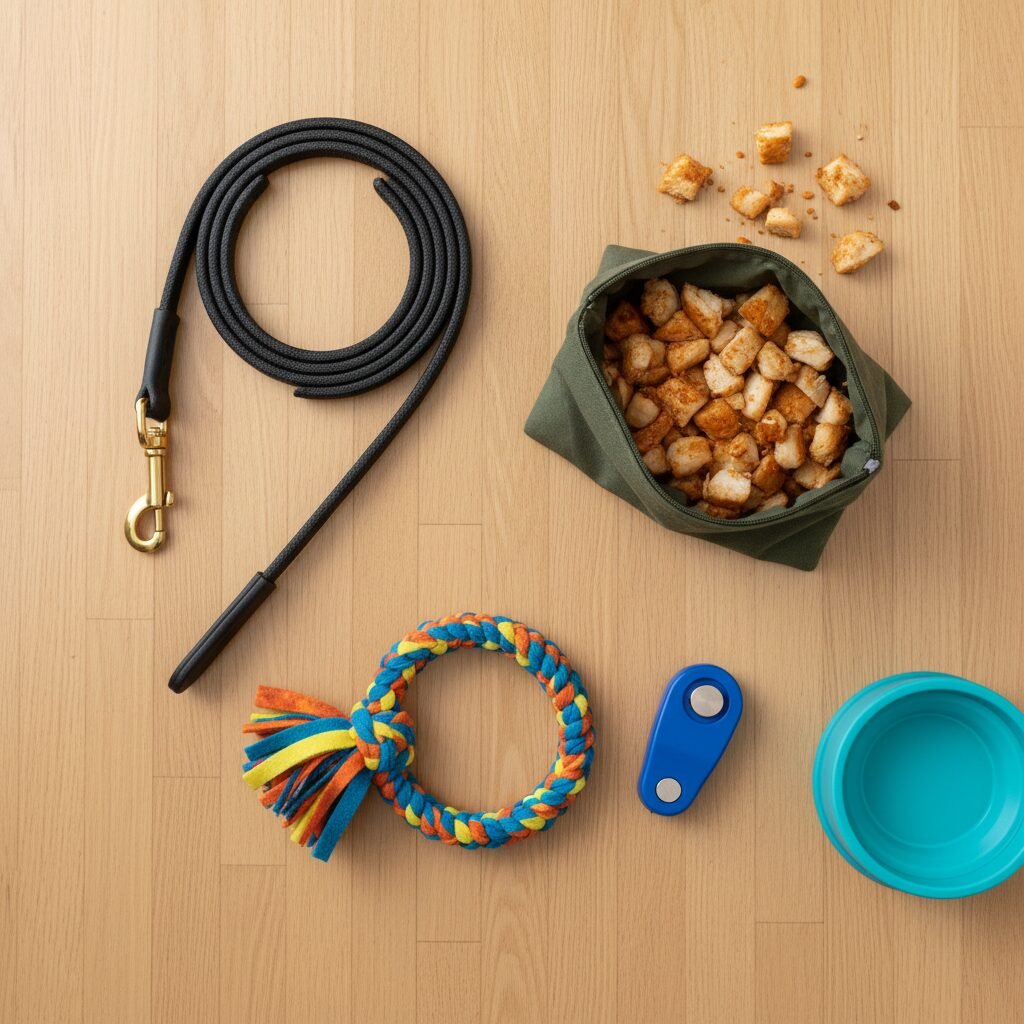
Proper preparation is the bedrock of successful dog training. Rushing into the process without the right tools and mindset can poison the cue before you even begin. Before you start playing the ‘Emergency Recall’ game, you must gather your resources and establish the ground rules.
Step 1: Choose Your Unique Emergency Cue
Your emergency recall word or phrase must be unique. It cannot be ‘come,’ ‘here,’ or any other word you use casually. It needs to be something that you will only ever use in training and in a true emergency. This prevents the cue from losing its power. Good options are short, sharp, and easy to yell in a high-pitched, exciting tone.
- Examples: ‘Jackpot!’, ‘Touchdown!’, ‘Bingo!’, ‘Zoom!’
- Avoid words that sound like other commands (e.g., ‘sit,’ ‘stay’).
Step 2: Identify Your Dog’s Highest-Value Reward
This is not the time for standard kibble or a dry biscuit. The reward for an emergency recall must be the canine equivalent of winning the lottery. This reward should be reserved exclusively for emergency recall practice. You need to determine what your specific dog finds irresistible.
- Food Rewards: Think beyond regular treats. Small pieces of cooked chicken, steak, cheese, or special commercial treats that are smelly and delicious are excellent choices.
- Toy Rewards: For some dogs, especially high-drive breeds, a specific toy is more motivating than food. This could be a special tug toy or a squeaky ball that only comes out for this training.
Step 3: Prepare Your Training Environment
Your initial training sessions must be in a controlled environment with zero distractions. This allows your dog’s brain to focus entirely on the new game and the connection between the cue and the amazing reward.
- Ideal Starting Location: A quiet room in your house or a securely fenced backyard with no other people or pets around.
- Essential Equipment: You will need a long line (15-30 feet) for when you transition to more distracting environments. This is a critical safety tool that prevents the dog from ‘failing’ by running off.
| Essential Item | Purpose & Key Features |
|---|---|
| Unique Cue Word | A novel, exciting word reserved only for this command. |
| High-Value Reward | A spectacular food or toy treat that your dog loves above all else. |
| Long Line (15-30 ft) | A safety tool for practicing in unsecured areas, allowing control without tension. |
| Quiet Training Space | An indoor or securely fenced area free of distractions for initial learning. |
The ‘Emergency Recall’ Game: A Step-by-Step Training Protocol
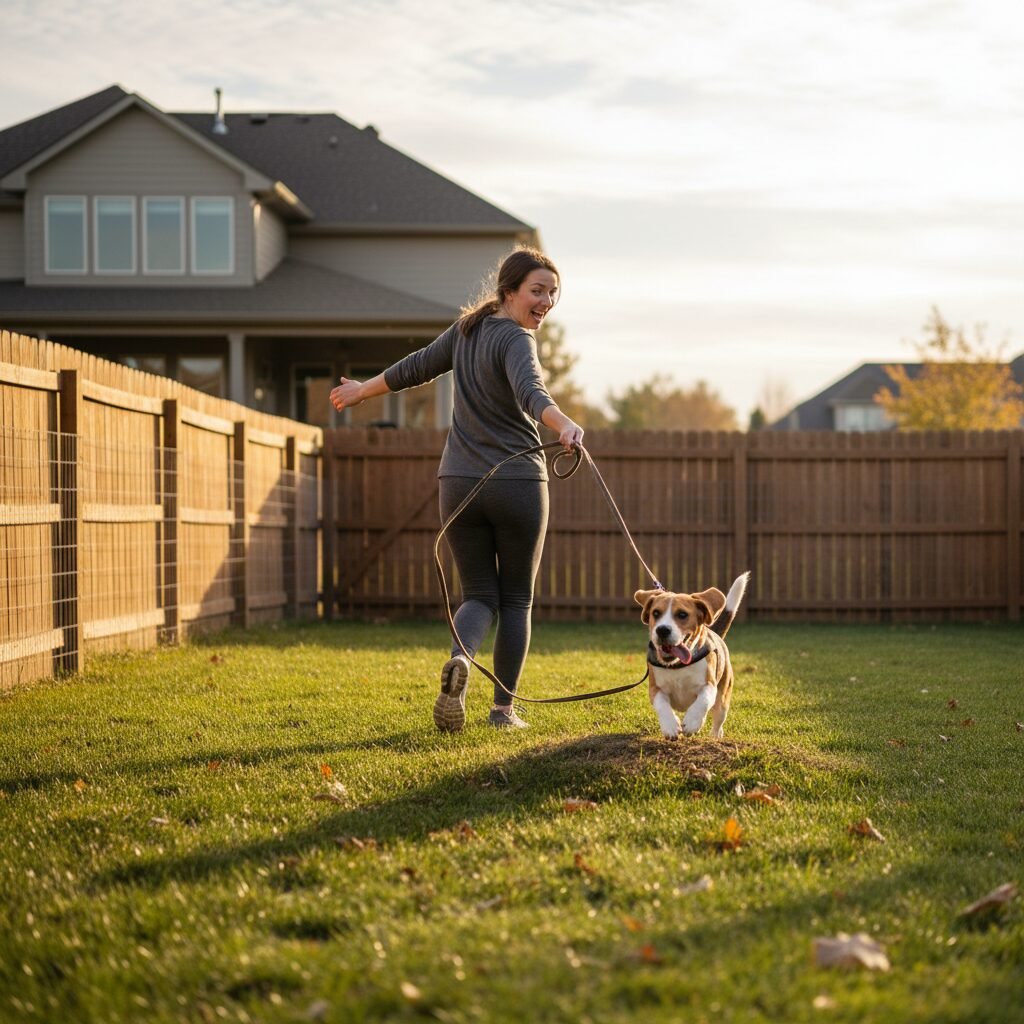
This training protocol is broken down into progressive phases. Do not rush through them. Your dog’s mastery of each phase is the foundation for the next. The goal is to build a joyful, reflexive response. Keep sessions short (2-5 minutes) and always end on a successful repetition.
Phase 1: Charging the Cue (Indoors, No Distractions)
The initial goal is to build a powerful positive association with your new cue word. The dog doesn’t have to do anything yet except learn that this word predicts something amazing.
- Start with your dog right in front of you in a quiet room.
- Say your emergency cue in a happy, excited tone of voice (e.g., ‘JACKPOT!’).
- The instant you finish saying the word, present the high-value reward. This could be showering them with 10-15 small, delicious treats or initiating a wild game of tug with their special toy. Make it a party!
- Repeat this 5-7 times in a session. Do this once or twice a day for a few days.
Phase 2: Introducing Distance and Movement (Indoors)
Now, we’ll ask the dog to move towards you to get the reward. We are still keeping the difficulty extremely low to guarantee success.
- Wait for your dog to be a few feet away and distracted by something else (e.g., sniffing a corner).
- Say your emergency cue in that same excited tone and immediately start moving backward, encouraging them to follow you.
- When they get to you, throw the ‘reward party’ with immense enthusiasm. Praise them lavishly.
- Gradually increase the starting distance between you and your dog, always within the same quiet room or house.
Phase 3: Transitioning to a Secure Outdoor Area
Once your dog is flying to you from across the house, it’s time to take the game outside. This introduces new sights and smells, increasing the difficulty.
- Go to your securely fenced backyard or a rented ‘sniff spot’ with no other dogs. Keep your dog on a long line for safety and management.
- Start with a short distance. Wait for a moment of mild distraction, then use your cue.
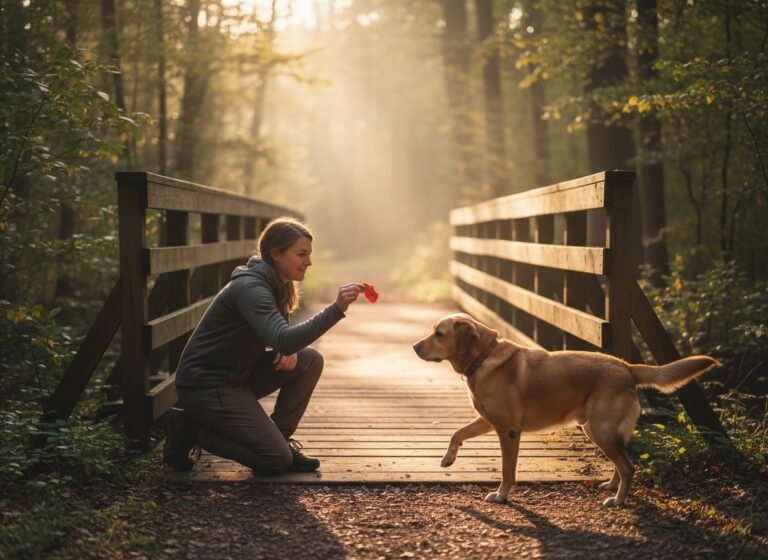
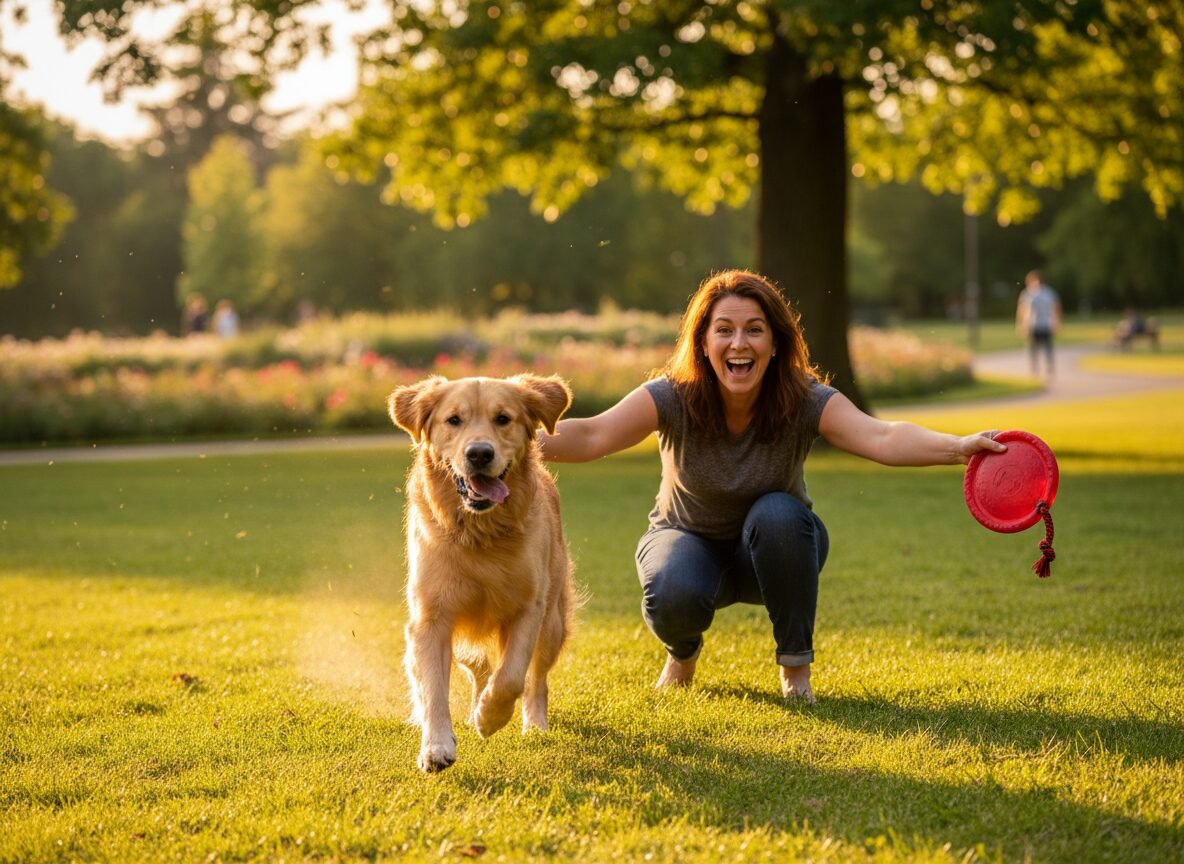
- As they run to you, use your body language to be as inviting as possible—crouch down, open your arms, and keep moving backward.
- When they reach you, deliver the jackpot reward. Gradually work up to practicing from one end of the yard to the other.
Phase 4: Systematically Adding Distractions
This is the most critical and challenging phase. The key is to introduce distractions that you can control, ensuring your dog can still succeed.
- Have a family member stand in the yard and act as a ‘human post’ (a low-level distraction). Practice the recall.
- Have the person walk around slowly. Practice again.
- Introduce lower-value toys scattered on the ground.
- Practice in a quiet park on a long line, far away from any other people or dogs.
- Slowly decrease the distance to the distractions over many sessions as your dog’s response becomes more reliable.
Important Note: If your dog fails (ignores the cue), the distraction was too high. Do not repeat the cue. Calmly use the long line to bring them back, reset, and try again from an easier position or with a lower-level distraction. Every failure can weaken the cue.
Troubleshooting Common Recall Roadblocks
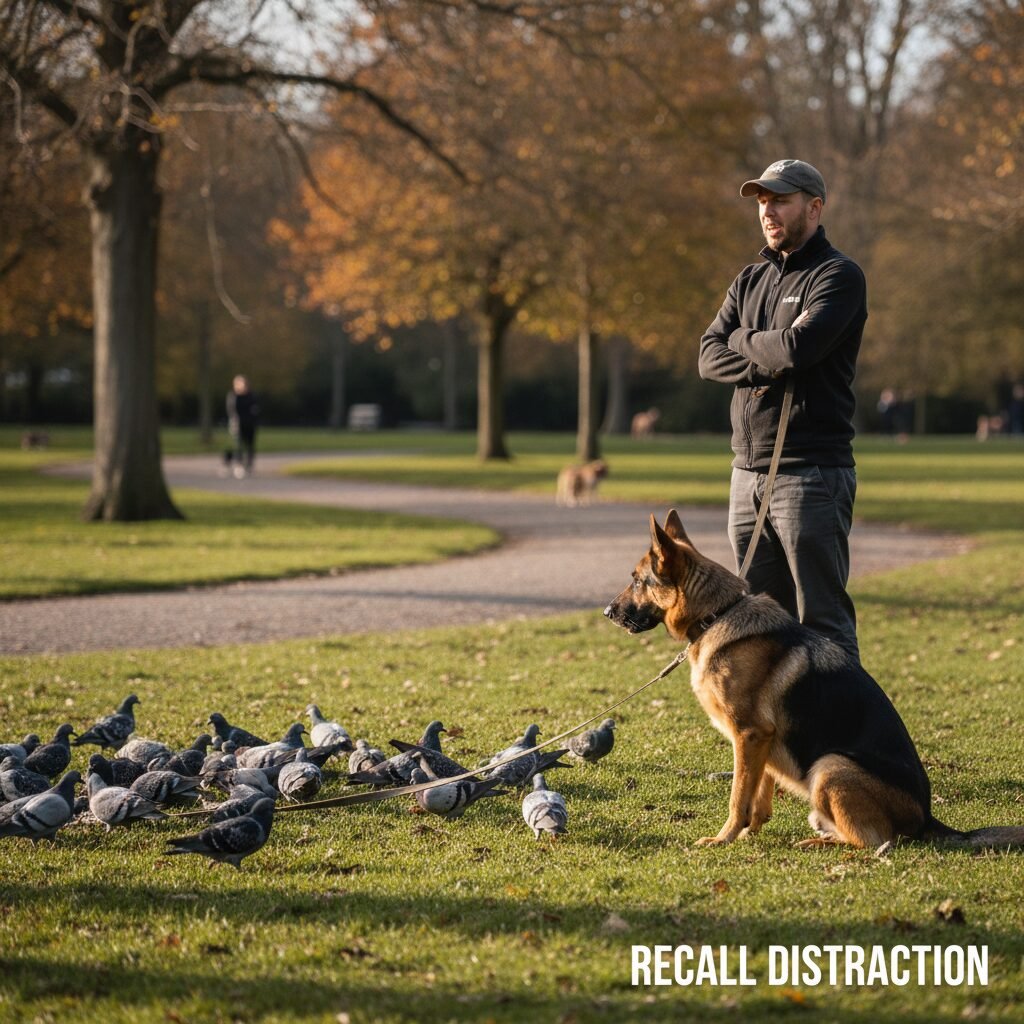
Even with the best training plan, you may encounter bumps in the road. Understanding why a problem is occurring is the first step to fixing it. Here’s how to address some of the most common recall challenges.
Problem: The Dog Runs Halfway and Then Stops or Gets Distracted.
This often happens when the dog’s motivation wavers or when the environment is more interesting than the anticipated reward. It can also mean you’ve increased the difficulty too quickly.
- Solution 1: Increase Reward Value. If you’re using treats, are they truly ‘jackpot’ level? Try something even more desirable. If you’re using a toy, make the game more exciting.
- Solution 2: Be More Exciting. Your job is to be the most interesting thing in the environment. Don’t just stand still. Move backward, clap, use an excited voice, and crouch down to be more inviting. Make it a chase!
- Solution 3: Go Back a Step. The distraction level is too high. Return to the previous phase of training where your dog was 100% successful and build up more slowly.
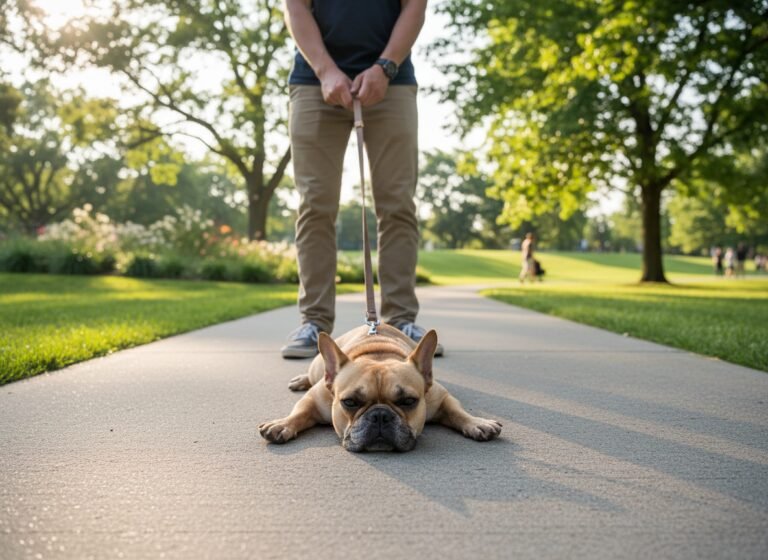
Problem: The Dog Looks at Me but Doesn’t Come.
This is often called ‘thinking about it.’ The dog is weighing its options. This hesitation means you haven’t built up enough reflexive momentum and positive association.
- Solution: Re-Charge the Cue. Go back to Phase 1 for a few sessions. Simply say the word and deliver the reward without requiring any movement. Rebuild the powerful, instant association between the cue and the jackpot.
Problem: The Recall Works at the Park, but Not on the Trail.
Dogs do not generalize well. Just because they know a command in one location doesn’t mean they’ll perform it in a new, more stimulating one.
- Solution: Train in Multiple Locations. You must actively practice (on a long line for safety) in many different environments. Start with quiet parks, then move to slightly busier ones, then to quiet hiking trails, and so on. Each new location is a new training challenge.
Patience is paramount during troubleshooting. Getting frustrated with your dog will only create a negative association with the recall, which is the exact opposite of your goal. View every challenge as a piece of information telling you where your training needs more reinforcement.
Critical Mistakes That Will Poison Your Emergency Recall
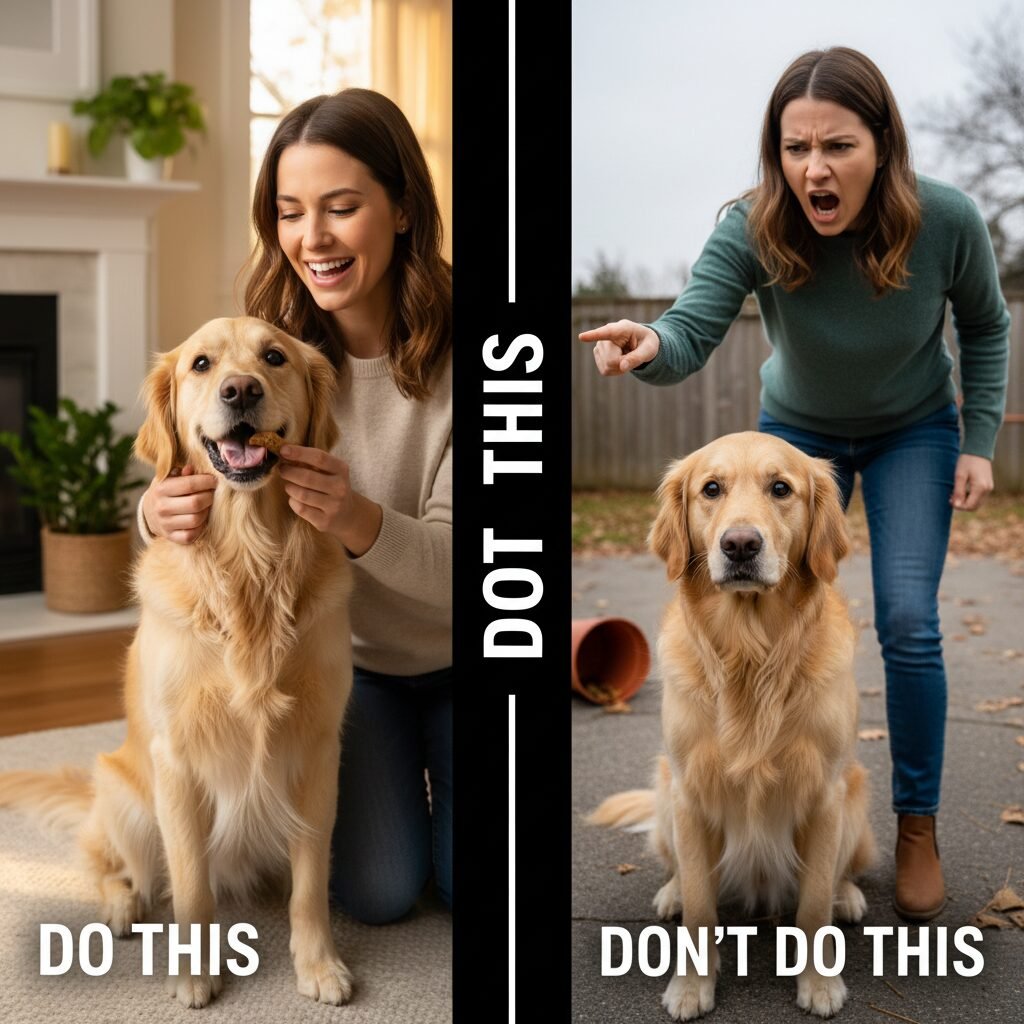
Building a reliable recall is as much about avoiding mistakes as it is about following the right steps. Certain actions can quickly undermine your hard work and teach your dog that the recall cue is irrelevant or, worse, a predictor of punishment. Avoid these common pitfalls at all costs.
- Using the Cue for Something the Dog Dislikes. This is the cardinal sin of recall training. Never, ever call your dog to you for a bath, nail trim, to be put in their crate, or to leave the dog park. Your recall cue must always lead to a fantastic reward. If you need to do something unpleasant, simply go and get your dog.
- Punishing the Dog When They Finally Arrive. If your dog takes a long time to come, it can be frustrating. However, scolding them when they finally get to you teaches them one thing: coming to you results in punishment. This guarantees they will be even more hesitant next time. You must reward the end behavior of coming to you, regardless of how long it took.
- Overusing the Cue. An emergency recall is for emergencies. Do not use it casually around the house when a simple ‘come’ would suffice. Saving it for training and true need preserves its power and special status.
- Repeating the Cue Over and Over. Chanting ‘Jackpot! Jackpot! Jackpot!’ when your dog is distracted teaches them that the cue is just background noise and they only need to respond after the fifth try. Say it once, clearly and excitedly. If they don’t respond, you know the distraction was too high for their current level of training. Use your long line to manage the situation without repeating the command.
- Practicing Only When You Need It. A recall is a skill that requires maintenance. If you only use it in a real emergency, the behavior will not be reliable. You must conduct short, fun training sessions regularly to keep the response sharp and enthusiastic.
By consciously avoiding these errors, you protect the integrity of your emergency recall cue. You ensure that when you truly need it, the command has a deep well of positive reinforcement and trust behind it, making it a powerful and reliable tool for your dog’s safety.
Conclusion
Teaching an emergency recall is one of the most profound gifts you can give your dog. It is a declaration of your commitment to their safety and a testament to the strength of your bond. By transforming this command into the ultimate game—replete with jackpots, praise, and unbridled joy—you are not just instilling obedience, you are building a reflexive desire in your dog to return to you, their trusted leader and source of all great things. Remember that consistency, patience, and an unwavering commitment to positive reinforcement are your greatest assets. The process requires dedication, but the peace of mind that comes from knowing you have a verbal lifeline to your dog, capable of pulling them back from any danger, is an invaluable reward. Continue to practice, continue to play, and cherish the reliable, life-saving connection you have built.