Safe Benadryl Dosage for Dogs: A Vet-Approved Cheat Sheet
As a responsible pet owner, your dog’s health is your top priority. You may have heard from other owners or read online that Benadryl, a common over-the-counter human antihistamine, can be given to dogs for issues like allergies or motion sickness. While this is true in certain situations, it is critically important to understand that administering any human medication to your pet requires extreme caution and precise knowledge. Giving the wrong dose or an incorrect formulation can have serious, and sometimes fatal, consequences.
This guide serves as a vet-approved cheat sheet, designed to provide clear, authoritative information on the safe use of Benadryl (diphenhydramine) for your canine companion. We will break down what Benadryl is, how to calculate the correct dosage based on your dog’s weight, the proper way to administer it, and the warning signs to watch for. Remember, this information is intended to be educational and should never replace a direct consultation with your veterinarian. Your vet knows your dog’s specific health history and is the only person qualified to give medical advice for your pet.
What is Benadryl and Why is it Used for Dogs?

Understanding Diphenhydramine’s Role in Canine Care
Benadryl is the brand name for an antihistamine drug called diphenhydramine. Antihistamines work by blocking the effects of histamine, a chemical released by the body during an allergic reaction. In veterinary medicine, diphenhydramine is used ‘off-label’—meaning it’s not officially FDA-approved for canine use, but is widely accepted and prescribed by veterinarians due to its long history of safe application when used correctly.
Common Veterinary Uses for Benadryl:
- Mild to Moderate Allergic Reactions: This is the most common reason for its use. It can help alleviate symptoms from environmental allergies (pollen, dust), food allergies, and reactions to insect bites or stings, such as hives, itching, swelling, and redness.
- Motion Sickness: The sedative effects of Benadryl can help reduce nausea, drooling, and vomiting associated with car travel or other forms of motion.
- Anxiety and Sedation: In some cases, veterinarians may recommend Benadryl for its mild sedative properties to help calm a dog during stressful events like thunderstorms, fireworks, or vet visits.
- Mast Cell Tumors: Dogs with mast cell tumors may be prescribed antihistamines like Benadryl to help counteract the large amounts of histamine released by the tumors.
Important Note: It is crucial to use only plain Benadryl (diphenhydramine). Never use combination products, such as Benadryl-D or other cold and sinus formulations, as they contain ingredients like pseudoephedrine or phenylephrine which are highly toxic to dogs.
Calculating the Correct Benadryl Dosage: The Vet-Approved Formula
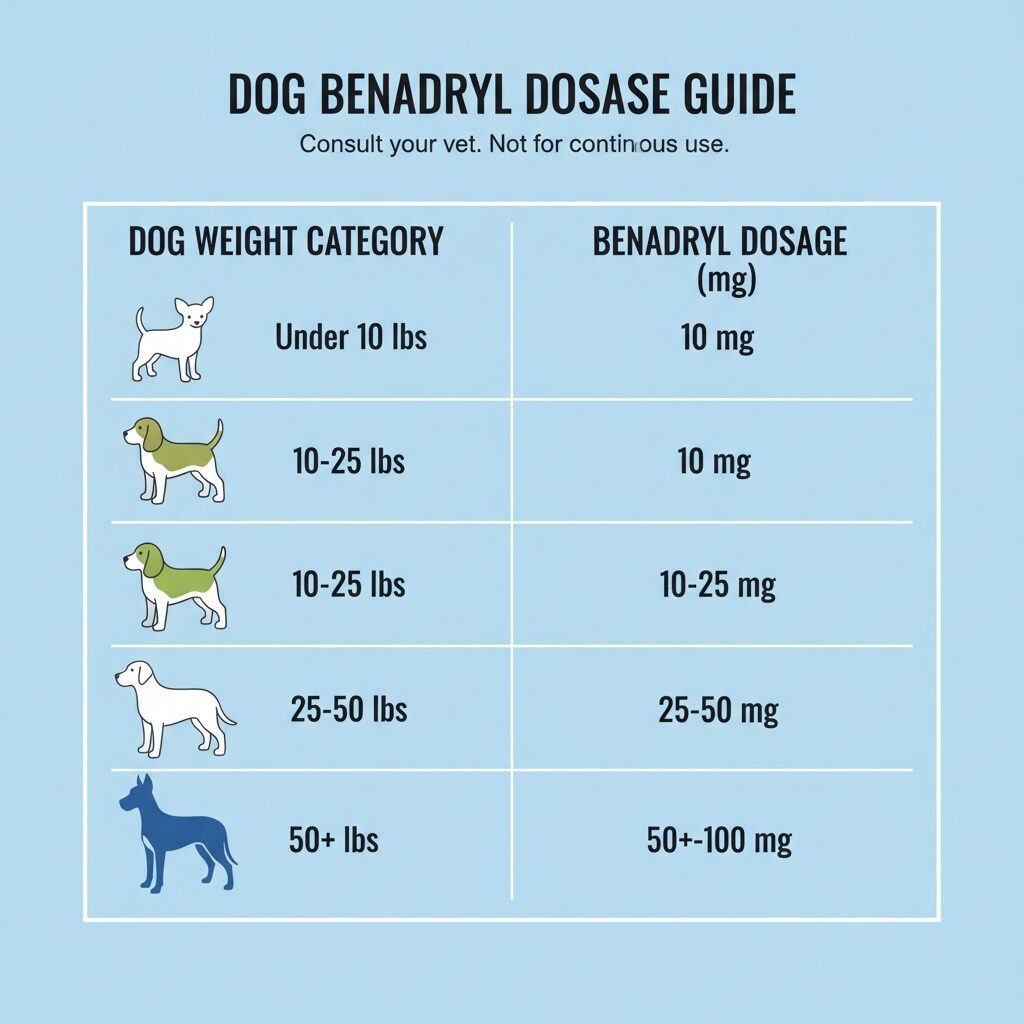
The Essential Dosage Calculation
The most critical aspect of giving your dog Benadryl is the dosage. An incorrect dose can be ineffective at best and dangerous at worst. The standard, vet-approved dosage for oral Benadryl is 1 milligram (mg) of diphenhydramine per pound (lb) of body weight, given two to three times per day (every 8-12 hours).
Before administering, you must do two things:
- Weigh your dog accurately. A recent, precise weight is non-negotiable.
- Check the medication’s concentration. Look at the box to see how many milligrams of diphenhydramine are in each tablet or each milliliter (ml) of liquid. Most standard tablets are 25 mg.
Benadryl Dosage Cheat Sheet for Dogs
This table provides a quick reference based on the standard 1 mg/lb formula. Always round down if you are between sizes, and double-check with your vet.
| Dog’s Weight (lbs) | Total Milligrams (mg) per Dose | Example Using 25mg Tablets |
|---|---|---|
| 10 lbs | 10 mg | Approx. 1/2 of a Children’s 12.5mg tablet |
| 25 lbs | 25 mg | One 25mg tablet |
| 50 lbs | 50 mg | Two 25mg tablets |
| 75 lbs | 75 mg | Three 25mg tablets |
| 100 lbs | 100 mg | Four 25mg tablets |
For smaller dogs, children’s liquid Benadryl (which is typically 12.5 mg per 5 ml) may be easier to dose accurately. However, you MUST ensure the liquid formula does not contain xylitol, an artificial sweetener that is extremely toxic to dogs.
Step-by-Step Guide to Safe Administration
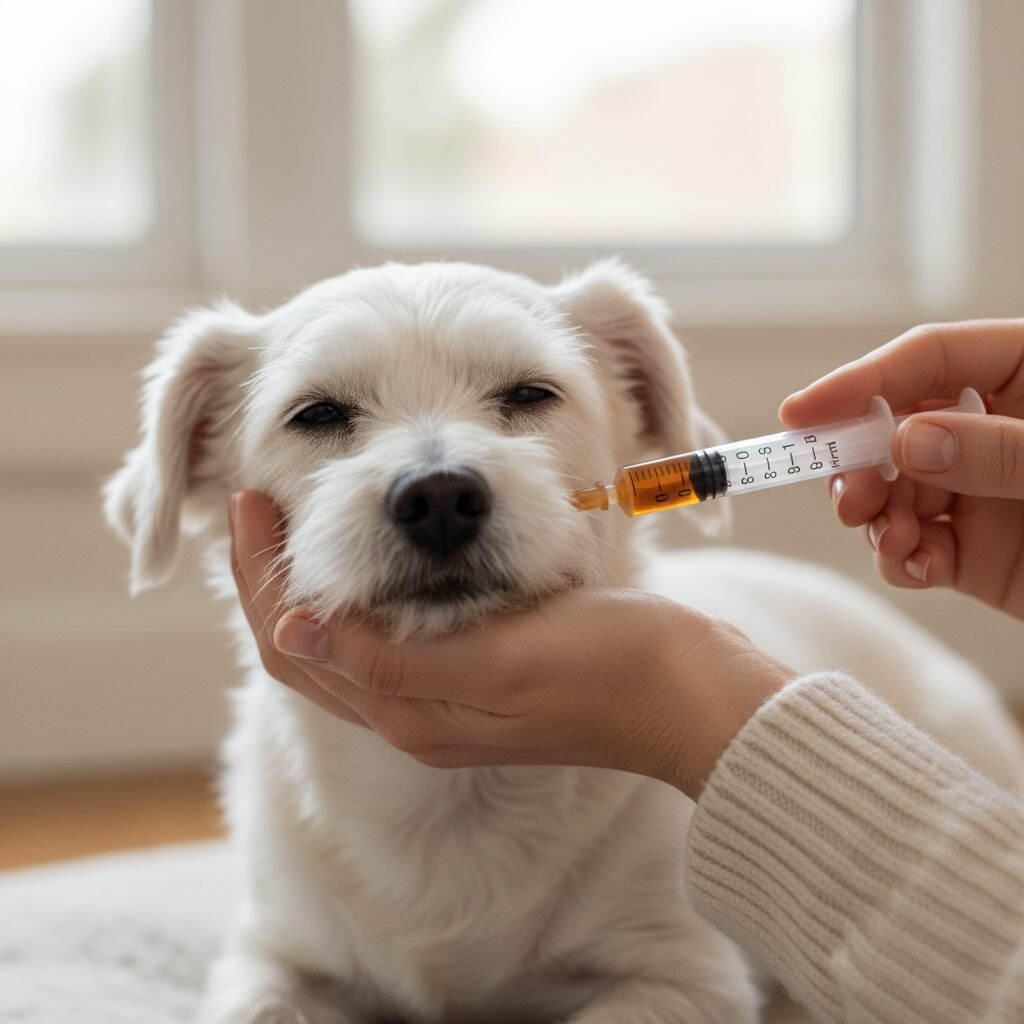
Administering Medication Without Stress
Giving your dog medication can be challenging. The key is to remain calm and positive. Here are the recommended methods for tablets and liquid formulations:
For Tablets:
- The Treat Method: This is the easiest approach. Hide the tablet inside a small piece of cheese, a dollop of peanut butter (ensure it’s xylitol-free), or a commercial pill pocket. Most dogs will gulp it down without a second thought.
- The Direct Method: If the treat method fails, you’ll need to administer it directly. Gently open your dog’s mouth with one hand. With the other, place the pill as far back on their tongue as you can. Close their mouth and hold it gently shut. Stroke their throat or lightly blow on their nose to encourage them to swallow. Follow up with a tasty treat and praise.
For Liquid:
- Measure Carefully: Use a needle-free oral syringe for accurate measurement. Do not use a kitchen spoon.
- Administer Slowly: Do not squirt the liquid directly down their throat, as they could inhale it. Instead, place the tip of the syringe into their cheek pouch, between their teeth and gums.
- Dispense Gradually: Slowly depress the plunger, allowing your dog to swallow the liquid in small amounts. Again, reward them with praise and a treat afterward.
Safety Check: Always read the full ingredient list on any medication you give your dog. For liquid Benadryl, the absence of xylitol is paramount. For tablets, ensure diphenhydramine is the ONLY active ingredient.
Recognizing Potential Side Effects and Signs of Overdose

Knowing What to Watch For
Even when given at the correct dose, Benadryl can cause side effects in some dogs. It’s important to monitor your pet after administration, especially the first time.
Common Side Effects:
- Drowsiness or Sedation: This is the most common side effect.
- Dry Mouth: You may notice your dog drinking more water.
- Urinary Retention: Difficulty or inability to urinate.
- Vomiting or Diarrhea: Some dogs may experience gastrointestinal upset.
While these are generally mild, a more serious concern is an overdose. An overdose of diphenhydramine is a medical emergency.
Signs of an Overdose:
- Hyper-excitability and Agitation: The opposite of the expected sedation.
- Rapid Heart Rate (Tachycardia)
- Dilated Pupils
- Extreme Lethargy or Coma
- Constipation
- Seizures
If you suspect your dog has received an overdose of Benadryl, or if you observe any of these severe symptoms, contact your veterinarian or the nearest emergency animal hospital immediately. You can also call the ASPCA Animal Poison Control Center at (888) 426-4435.
Contraindications and When to Call the Vet Immediately
When Benadryl is NOT the Answer
Benadryl is not safe for every dog or every situation. It is crucial to consult your vet before giving it if your dog has any pre-existing health conditions.
Do NOT Give Benadryl If Your Dog Has:
- Glaucoma
- High blood pressure
- Cardiovascular disease or heart failure
- Prostatic hypertrophy (enlarged prostate)
- Hyperthyroidism
Additionally, use extreme caution and consult a vet for puppies, senior dogs, or pregnant/nursing females.
Situations That Require an Immediate Vet Visit (Do NOT Medicate at Home):
Some symptoms may seem like a simple allergic reaction but are actually signs of a life-threatening emergency. Do not attempt to treat the following with Benadryl; seek immediate veterinary care:
- Anaphylactic Shock: This is a severe, rapid allergic reaction. Signs include sudden collapse, difficulty breathing (wheezing), pale gums, and vomiting.
- Significant Facial Swelling: Swelling of the muzzle, face, or neck that could compromise the airway.
- Snake or Venomous Spider Bites.
- Known Toxin Exposure.
- Any Difficulty Breathing.
In these cases, time is critical. Benadryl is not a substitute for emergency veterinary intervention.
Conclusion
Final Thoughts: Partner with Your Veterinarian
Benadryl can be a helpful tool in your pet first-aid kit for managing mild allergic reactions and motion sickness, but its use demands respect and diligence. The foundation of safe administration lies in an accurate diagnosis, a precise dose calculated for your dog’s specific weight, and the correct, single-ingredient formulation. Never guess at the dosage or assume that what works for one dog will work for another.
Ultimately, the most important takeaway is this: your veterinarian is your most valuable partner in your dog’s health. Before giving your dog Benadryl for the first time, have a conversation with your vet. They can confirm that it is the appropriate treatment, provide a precise dosage, and ensure it won’t interfere with other conditions or medications. By working together, you can ensure your beloved companion receives the safest and most effective care possible.