Why Tethering Your Dog Inside Is The Secret To Instant Calm
In the quest for a peaceful coexistence with our canine companions, many owners find themselves struggling with a common challenge: a dog that simply doesn’t know how to switch off. Constant pacing, jumping, counter-surfing, and demanding attention can turn a tranquil home into a chaotic environment. What if there was a simple, humane, and highly effective management tool that could teach your dog the art of calm? Enter indoor tethering. Often misunderstood as a punishment, tethering, when implemented correctly, is a powerful training technique recommended by professional trainers and behaviorists. It’s not about restriction; it’s about teaching your dog an essential life skill—how to settle and relax in a designated space. This guide will demystify the practice of indoor tethering, exploring the psychological principles that make it work and providing a clear, step-by-step framework to introduce it into your routine for a calmer dog and a more serene home.
The Psychology of Calm: Why Tethering Works
The Psychology of Calm: Why Tethering Works
To understand the effectiveness of tethering, we must first look at canine behavior. Dogs, especially young or high-energy ones, often thrive on structure and clear boundaries. An entire house full of choices can be overwhelming and can inadvertently encourage undesirable behaviors. Tethering works on several psychological levels to counteract this.
Limiting Choices and Preventing Rehearsal of Bad Habits
Every time your dog successfully jumps on the counter, chews on the furniture, or pesters a guest, the behavior is reinforced. It becomes a practiced, learned habit. Tethering physically prevents the dog from making these mistakes. By removing the opportunity to rehearse unwanted behaviors, you begin to extinguish them. Instead of constantly correcting your dog with ‘No!’ or ‘Off!’, you proactively manage the environment so the bad habit never gets a chance to start. This is a foundational principle of modern dog training: management prevents practice.
Encouraging the ‘Off-Switch’
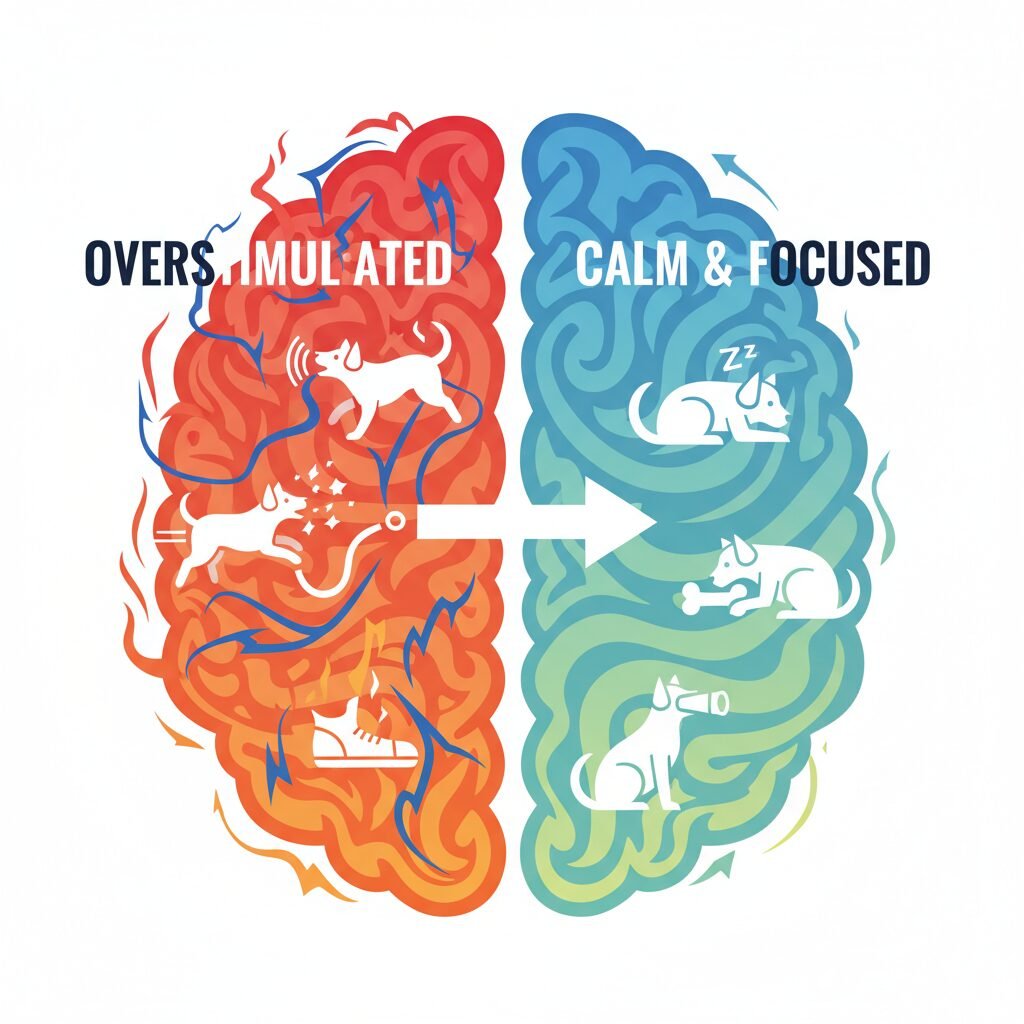
Many dogs genuinely don’t know how to settle on their own. They are in a constant state of readiness, waiting for the next exciting thing to happen. Tethering removes the stimulation of roaming and investigating. Initially, a dog might be restless, but with nothing else to do, they eventually discover that lying down and relaxing is the most rewarding option. This is where the magic happens. The dog learns, through its own choice in a limited environment, how to calm itself down. You are not forcing calm; you are creating an environment where calm is the most logical and comfortable choice.
Building Positive Associations
It is critical that tethering is associated with positive, calm experiences. The tether spot should be equipped with a comfortable bed, a safe chew toy (like a stuffed KONG), and be near you. The dog learns that this is their personal relaxation station. It’s not a ‘time-out’ corner for bad behavior. It’s a place for quiet chewing, napping, and simply observing the household from a calm state of mind. Over time, the dog begins to seek out this calm state even when not tethered, as they have learned the emotional and mental process of settling down.
Essential Tools for Safe and Effective Tethering
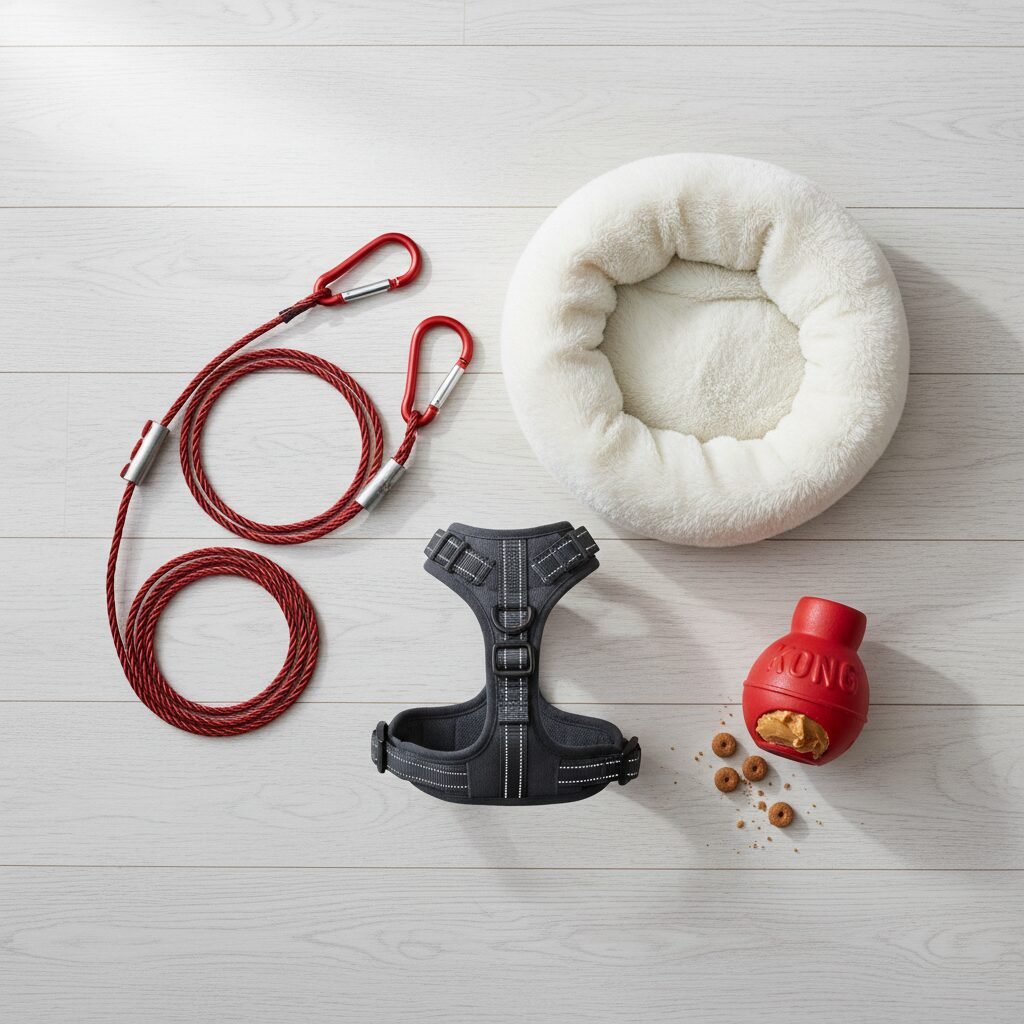
Essential Tools for Safe and Effective Tethering
Setting up your tethering system correctly is paramount for safety and success. Using the wrong equipment can be dangerous and counterproductive. Before you begin, gather these essential items.
The Right Equipment Checklist
- A Sturdy, Chew-Proof Leash or Tether: Do not use a retractable leash. A standard 4 to 6-foot nylon or leather leash is often sufficient. For dogs prone to chewing, a vinyl-coated steel cable tether, specifically designed for this purpose, is the safest option. The length should be just long enough for the dog to stand up, turn around, and lie down comfortably, but not long enough to get tangled around furniture or reach dangerous items.
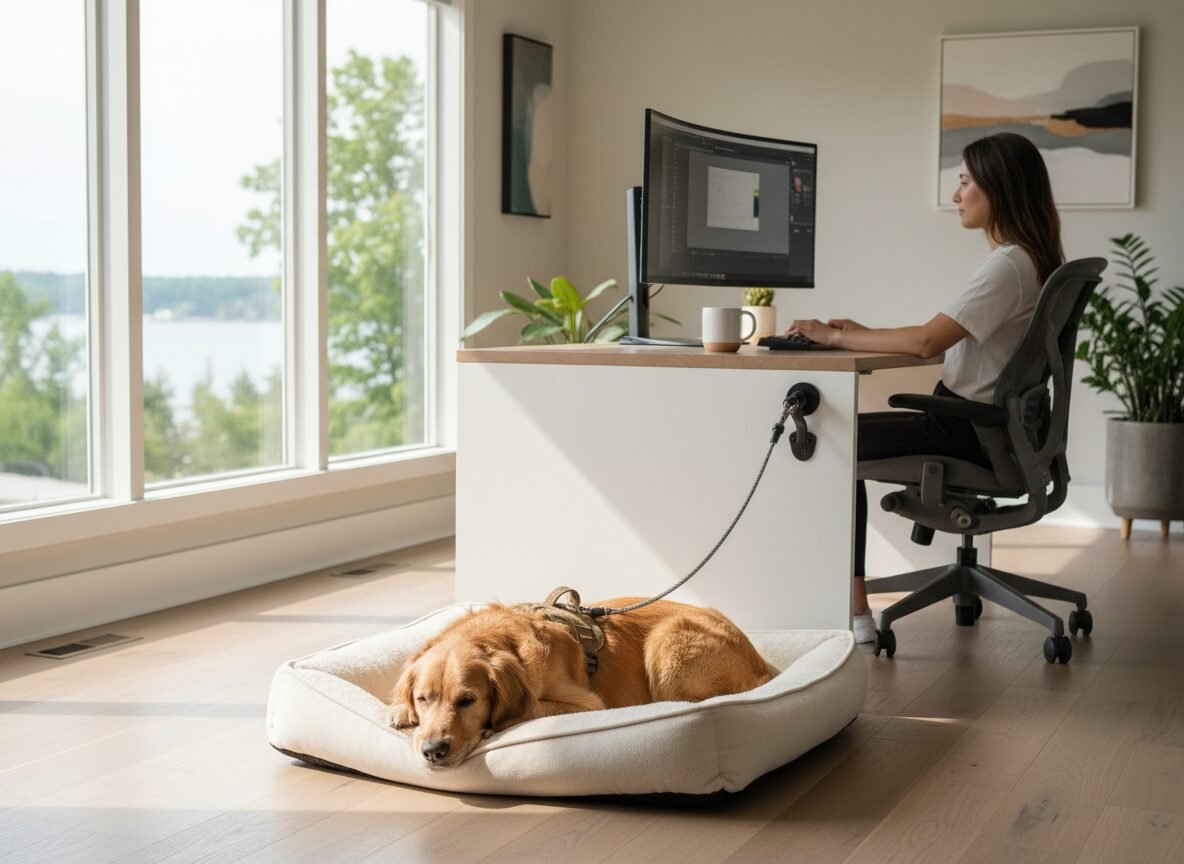
- A Comfortable, Well-Fitted Harness: Never tether a dog by its collar. A sudden pull or lunge against a collar can cause serious injury to the dog’s trachea, neck, and spine. A back-clip harness is the ideal choice, as it distributes pressure evenly across the chest and shoulders. Ensure the harness is properly fitted—snug enough that the dog cannot back out of it, but not so tight that it chafes or restricts movement.
- A Secure Anchor Point: The tether must be attached to something immovable and heavy. An eyebolt properly screwed into a wall stud is an excellent permanent option. Alternatively, you can use the leg of a very heavy piece of furniture, like a solid wood desk or a heavy sofa that the dog cannot possibly move. Never anchor the tether to something that could be pulled over, such as a table lamp or a dining chair.
- A Comfortable Resting Place: The entire point of tethering is to teach your dog to relax. Therefore, their designated spot must be comfortable and inviting. Place a high-quality, orthopedic dog bed or a soft blanket at the tether location.
- High-Value, Long-Lasting Chew Toys: To create a positive association, provide your dog with something engaging to do while tethered. A frozen KONG stuffed with peanut butter or wet food, a bully stick, or a durable puzzle toy can keep them happily occupied and redirect their energy into a calm, appropriate activity.
Expert Tip: Always supervise your dog when they are tethered, especially in the beginning. Never leave a tethered dog unattended, as they could become dangerously entangled. Tethering is a management tool for when you are present but occupied, not a substitute for a crate or confinement when you leave the house.
A Step-by-Step Guide to Introducing Tether Training
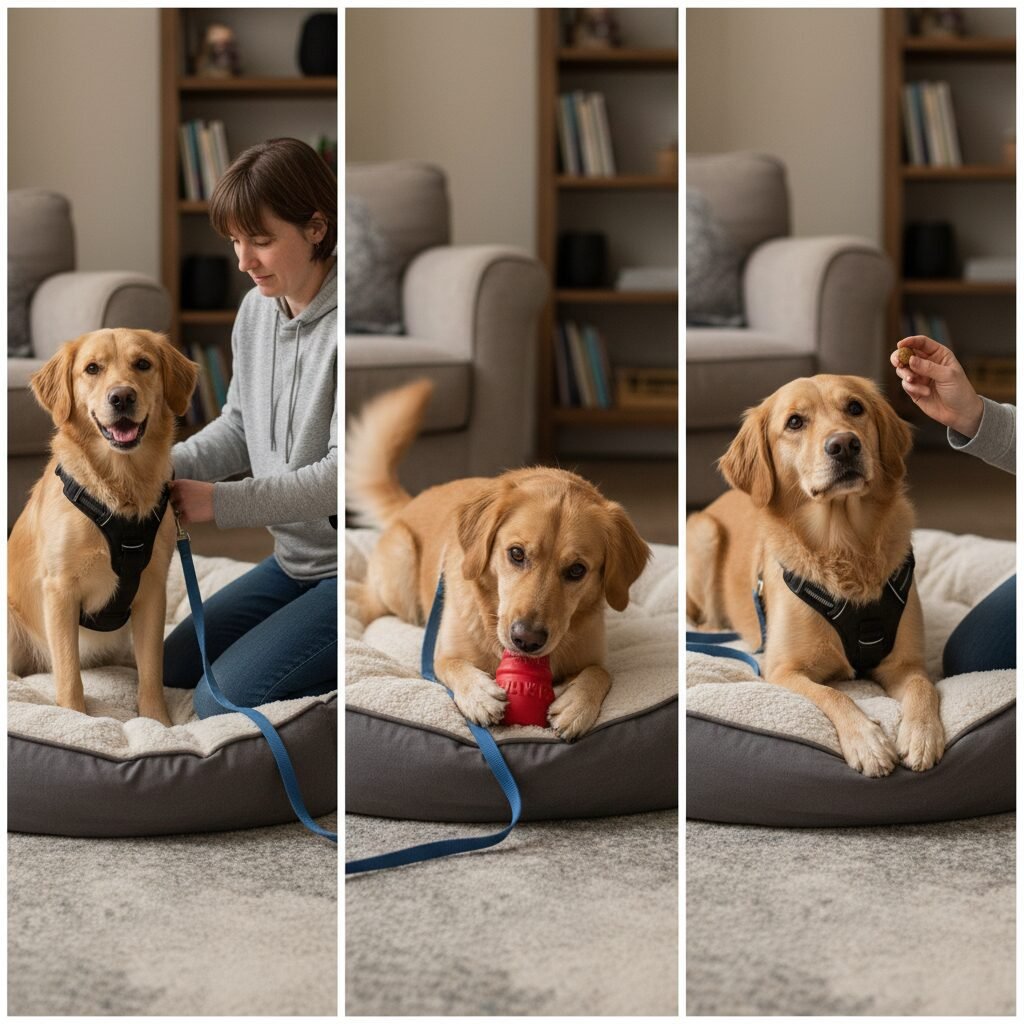
A Step-by-Step Guide to Introducing Tether Training
Introducing tethering requires patience and a positive approach. The goal is to make it a calm and rewarding experience from the very first session. Follow these steps carefully to set your dog up for success.
- Step 1: Choose the Right Time and Place. Begin when the house is quiet and your dog is already in a relatively calm state, such as after a good walk or a play session. Select a location where you will be stationary for a period, like next to your desk while you work or near the sofa while you read.
- Step 2: Introduce the Space Positively. Before attaching the tether, lead your dog to their designated spot (with the comfy bed). Reward them with praise and a small treat for simply being on the bed. Repeat this a few times to build a positive association with the location itself.
- Step 3: The First Tethering Session. Calmly and without fanfare, attach the tether to your dog’s harness and the anchor point. Immediately give them their high-value chew toy. Make the first session extremely short—just 5-10 minutes. Stay nearby and ignore any mild fussing, but if the dog shows signs of real distress, end the session on a positive note and try again later for a shorter duration.
- Step 4: What to Do During Tether Time. Your role is to be calmly present but mostly disengaged. This is not playtime. You can praise your dog quietly when they are calm or chewing their toy (‘Good settle’). If they start to whine or paw at the leash, ignore them completely. The moment they stop, even for a second, reward that quiet behavior with calm praise. They will learn that calmness gets your attention, while fussing does not.
- Step 5: Gradually Increase the Duration. Over several days and weeks, slowly extend the length of the tethering sessions. Go from 5 minutes to 15, then to 30, and so on. Always aim to end the session before your dog becomes overly antsy or upset. It’s better to have a successful 20-minute session than a stressful 40-minute one.
- Step 6: Releasing Your Dog. When the session is over, the release should be as calm as the introduction. Do not make a big, exciting deal out of it. Calmly unclip the tether and give a simple release cue like ‘Okay’ or ‘Free’. This prevents the dog from learning that the end of tether time is a trigger for wild excitement.
Practical Applications: When to Use Indoor Tethering
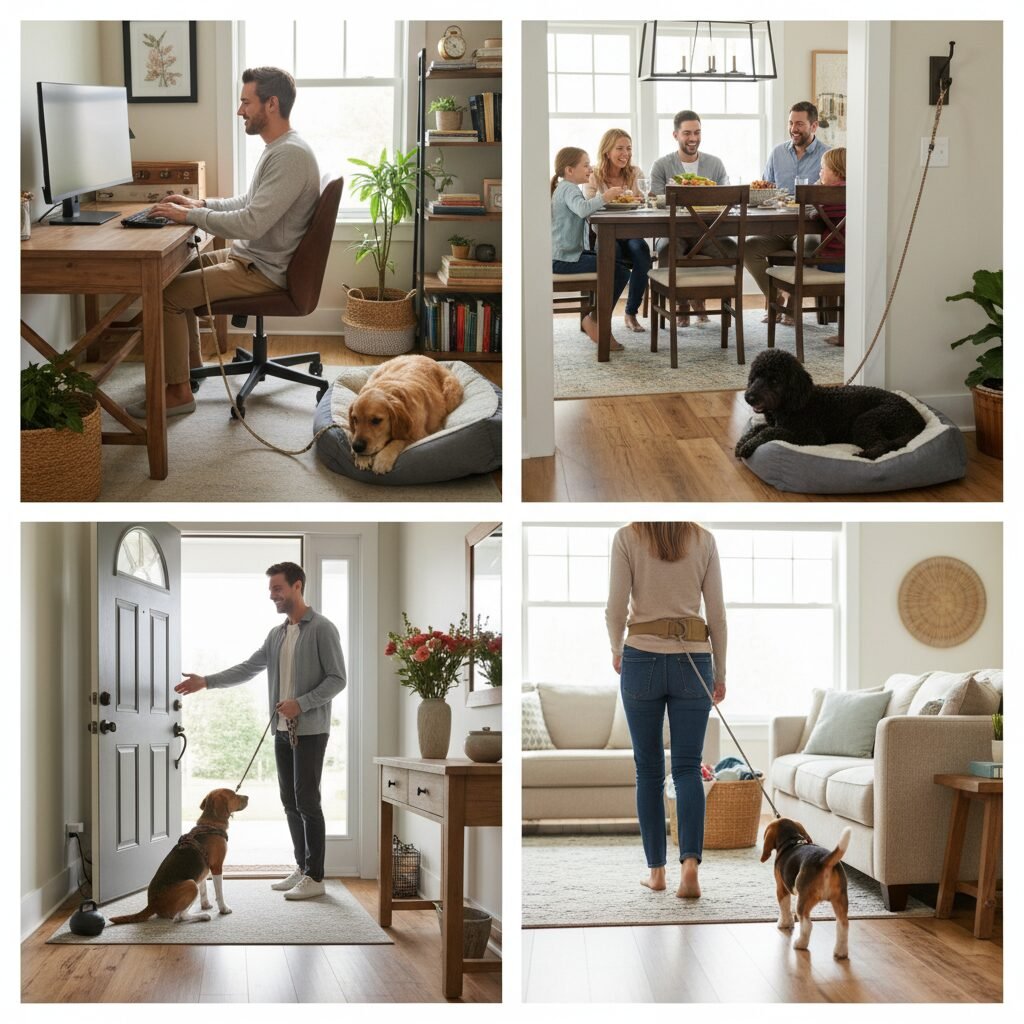
Practical Applications: When to Use Indoor Tethering
Tethering is not meant to be an all-day solution but a strategic tool used during specific times when you need your dog to be calm and under control. Integrating it into your daily routine can solve a multitude of common behavioral challenges.
During Your Work-from-Home Hours
For remote workers, a tether can be a game-changer. Tethering your dog to a spot near your desk prevents them from interrupting video calls, barking at deliveries, or constantly nudging you for attention. It teaches them to be content and quiet while you focus on your work.
When Guests Are Visiting
Jumping on visitors is a common and often embarrassing problem. Tethering your dog a few feet away from the door when guests arrive allows them to see and be part of the social interaction without being able to practice rude greeting behaviors. It gives them a chance to calm down from the initial excitement before being allowed to greet guests politely (if appropriate).
During Meal Preparation and Family Dinners
A dog underfoot in the kitchen is both a nuisance and a safety hazard. Tethering your dog on their bed just outside the main cooking area keeps them safe and prevents begging or counter-surfing. This establishes a clear boundary and creates a more peaceful mealtime for the entire family.
Reinforcing House Training
For puppies or newly adopted dogs, tethering is an invaluable house-training aid. By keeping the puppy tethered to you (a technique often called ‘umbilical cord training’), you can monitor them closely for signs they need to go outside, preventing accidents before they happen. It eliminates the possibility of them sneaking off to another room to potty.
Managing Multi-Dog Households
Tethering can be used to give dogs individual, quiet time, especially if one dog tends to pester another. It’s also useful for managing feeding times to prevent food stealing or resource guarding, allowing each dog to eat in peace in their designated spot.
Troubleshooting Common Tethering Challenges
Troubleshooting Common Tethering Challenges
While tethering is highly effective, you may encounter a few bumps in the road. Addressing these challenges with consistency and patience is key to long-term success.
| Challenge | Underlying Cause | Solution |
|---|---|---|
| Whining or Barking | The dog is protesting the lack of freedom or seeking attention. This is often an ‘extinction burst’—the behavior gets worse before it gets better. | Ignore the demand barking. Do not look at, speak to, or touch the dog while they are vocalizing. The instant they are quiet for 2-3 seconds, calmly praise them or toss a treat onto their bed. They must learn that quiet equals reward. Ensure they have had enough exercise beforehand. |
| Chewing the Leash/Tether | This can be due to boredom, anxiety, or a simple puppy habit. | Immediately interrupt the behavior with a firm ‘Ah-ah!’ and redirect them to their appropriate chew toy. If chewing persists, you must switch to a chew-proof cable tether for safety. Also, make their provided toys more enticing (e.g., use a higher-value filling in their KONG). |
| Frantic Pulling or Lunging | The dog is over-aroused, anxious, or has not had enough physical or mental stimulation. | Assess their daily routine. Are they getting enough exercise before tether sessions? A tired dog is more likely to settle. Keep initial sessions very short. If they lunge at a trigger (e.g., the cat walking by), work on desensitization and counter-conditioning separately. Ensure the tether is short enough to prevent a full-speed lunge. |
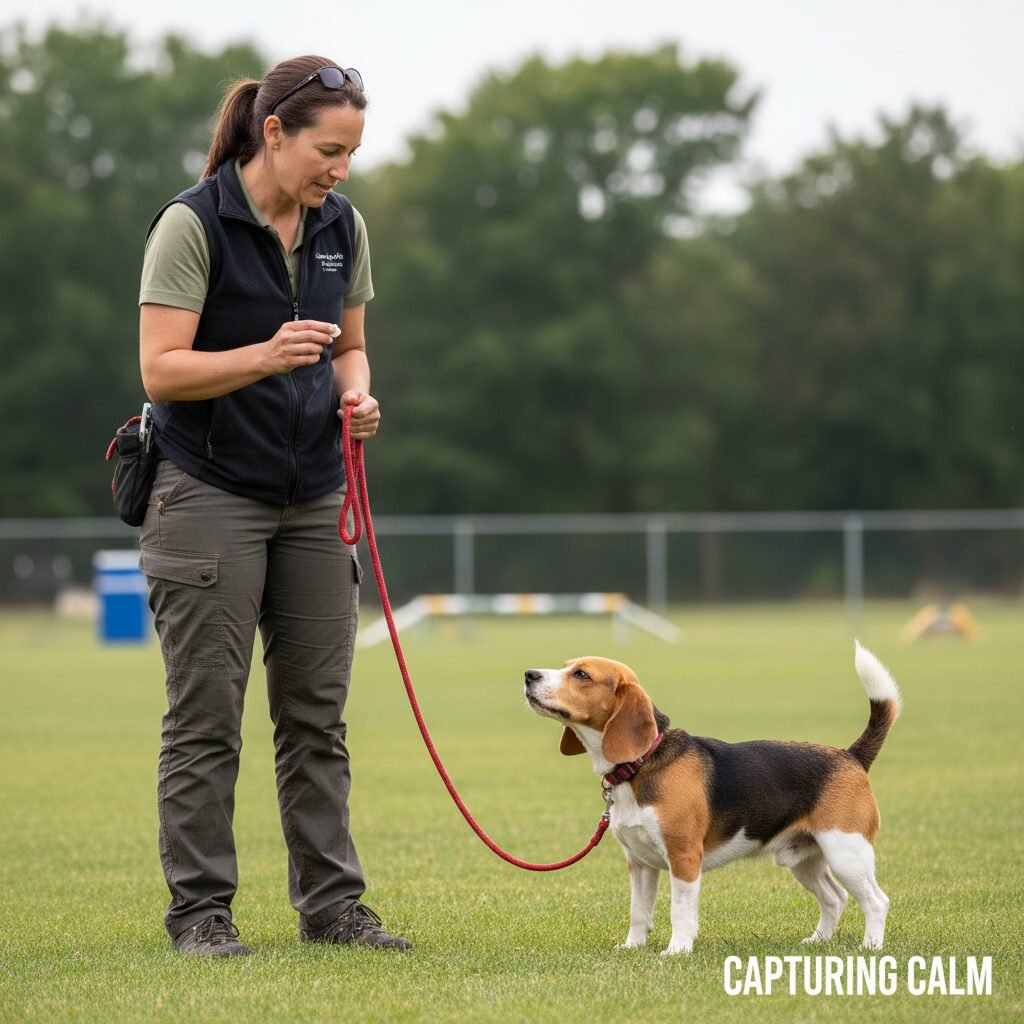
| Refusing to Settle or Lie Down | The dog may be uncomfortable, anxious, or simply hasn’t yet figured out what is expected. | Ensure the bed is comfortable and the location is not in a high-traffic, stressful area. Don’t force them to lie down. Instead, reward any small, calm behaviors. Reward a sit. Reward a moment of stillness. Eventually, use a high-value treat to lure them into a down position and reward them for staying there. This is called ‘capturing calm’. |
Conclusion
Indoor tethering is far more than a simple restraint method; it is a sophisticated training tool that empowers you to proactively teach your dog the invaluable skill of self-regulation. By managing your dog’s environment, preventing the practice of unwanted behaviors, and creating a positive association with a calm state of mind, you are laying the foundation for a well-behaved and balanced companion. Remember that success hinges on correct implementation: always use a harness, ensure constant supervision, and maintain a positive, patient attitude. When integrated thoughtfully into your daily routine, tethering can transform your household, fostering a quiet, predictable environment where both you and your dog can relax and thrive together. It is the secret to unlocking the ‘off-switch’ you’ve been searching for, leading to a truly harmonious partnership with your canine friend.