
Why Your Text Message Sound Is Terrifying Your Dog (And How to Fix It)
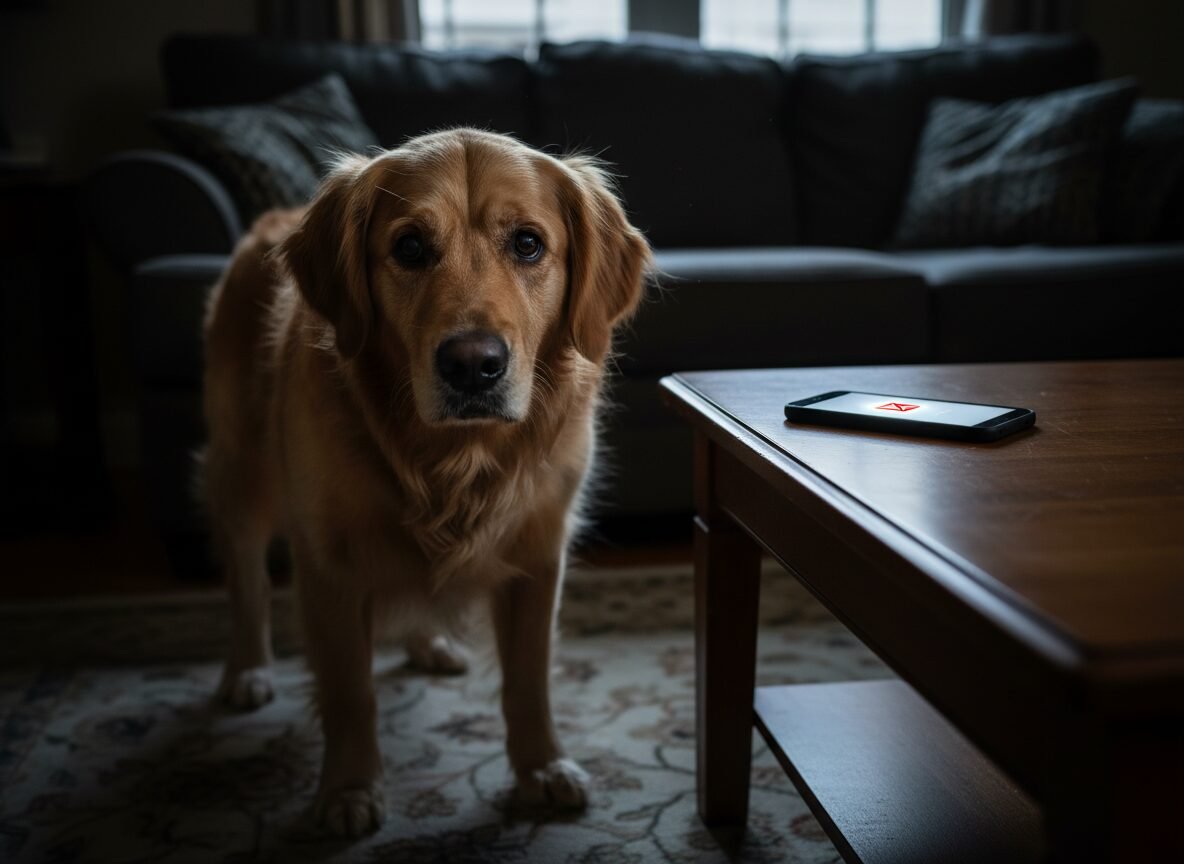
It’s a sound that has become ambient noise in our modern lives: the chime, buzz, or ping of an incoming text message. For us, it’s a simple notification. But for some dogs, this seemingly innocuous sound can trigger a cascade of anxiety, fear, and stress. You may have noticed your dog startle, tuck its tail, begin to pant, or even run and hide whenever your phone alerts you. This isn’t an overreaction or a quirky personality trait; it’s a genuine fear response rooted in canine biology and psychology.
Understanding why your dog is terrified of a simple sound is the first step toward helping them. The reasons are often multifaceted, involving their incredibly sensitive hearing, the specific frequencies of digital alerts, and powerful psychological principles like classical conditioning. Your dog may have learned to associate the text message sound with a negative event, such as your departure from the house, a change in your emotional state, or another startling noise that once coincided with the alert. This article will provide a comprehensive, authoritative guide to the underlying causes of this specific noise phobia and deliver a step-by-step, professionally approved training plan to resolve it through desensitization and counter-conditioning.
Canine Auditory Perception: A World of Sound We Can’t Hear
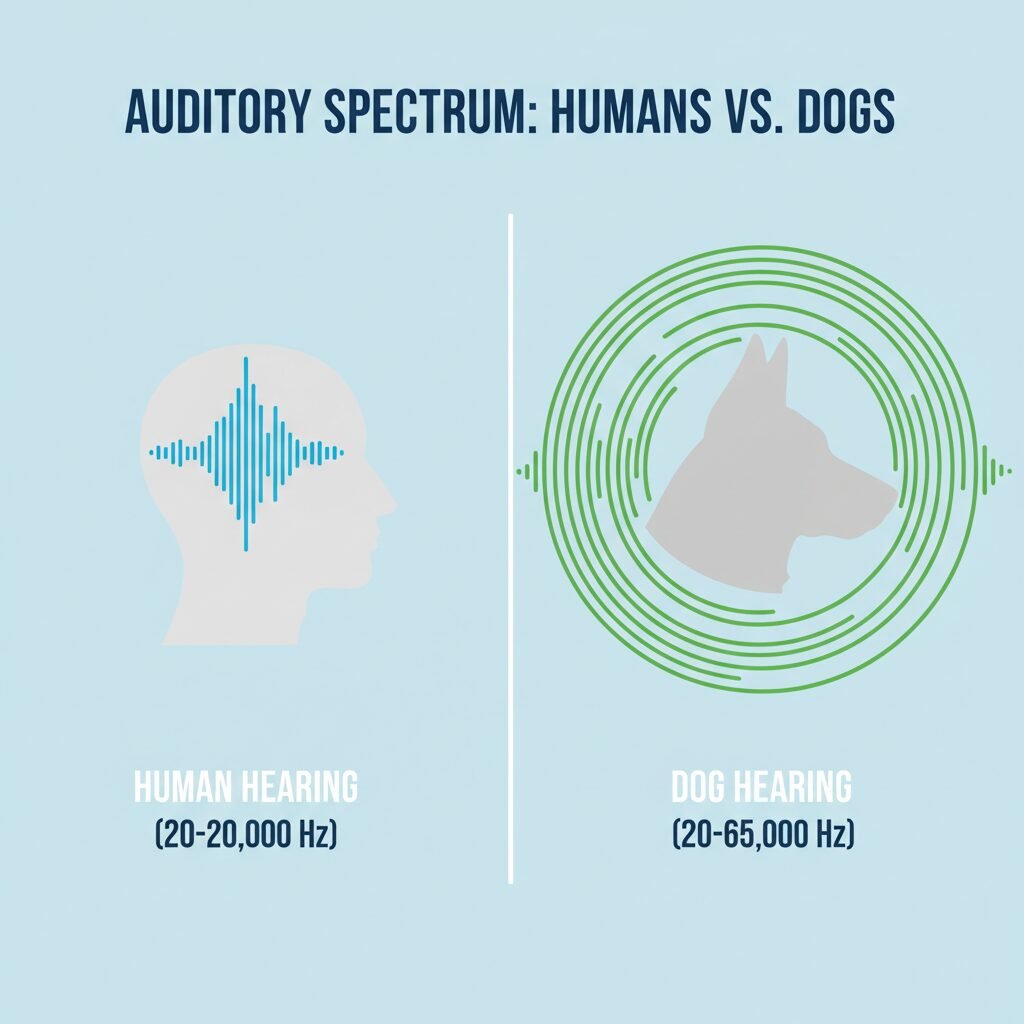
To comprehend why a text alert can be so distressing, we must first appreciate the profound differences between human and canine hearing. Dogs experience the world through a soundscape far richer and more intense than our own. Their auditory system is a finely tuned instrument designed for survival, capable of detecting subtleties that are completely lost on us.
Key Differences in Hearing
- Frequency Range: Humans can typically hear sounds in the range of 20 to 20,000 Hertz (Hz). Dogs, on the other hand, can hear frequencies up to 45,000–65,000 Hz. Many electronic devices, including smartphones, emit high-frequency sounds during operation or for notifications that are either inaudible or barely perceptible to us but may be loud, sharp, and uncomfortable for a dog.
- Auditory Sensitivity: Dogs can detect sounds at much lower decibel levels than humans. A noise that seems quiet to you could be significantly louder and more intrusive to your canine companion. The sharp, sudden nature of a text alert can be particularly jarring to their sensitive ears.
- Ear Mobility: With over 18 muscles controlling their pinnae (the external part of the ear), dogs can precisely pivot their ears to locate the source of a sound. This ability, while excellent for hunting prey or detecting threats, also means they cannot easily ‘tune out’ noises. The sound of a text message isn’t just ambient noise; it’s an event their brain is hardwired to locate and analyze.
This heightened auditory perception means that a sound we find trivial can be physically uncomfortable or even painful for a dog. It’s not just about the volume but the pitch and abruptness. This physiological sensitivity lays the groundwork for the development of a true noise phobia, where the dog’s reaction goes beyond simple surprise and enters the realm of debilitating fear.
The Power of Association: How Your Phone Became a Monster
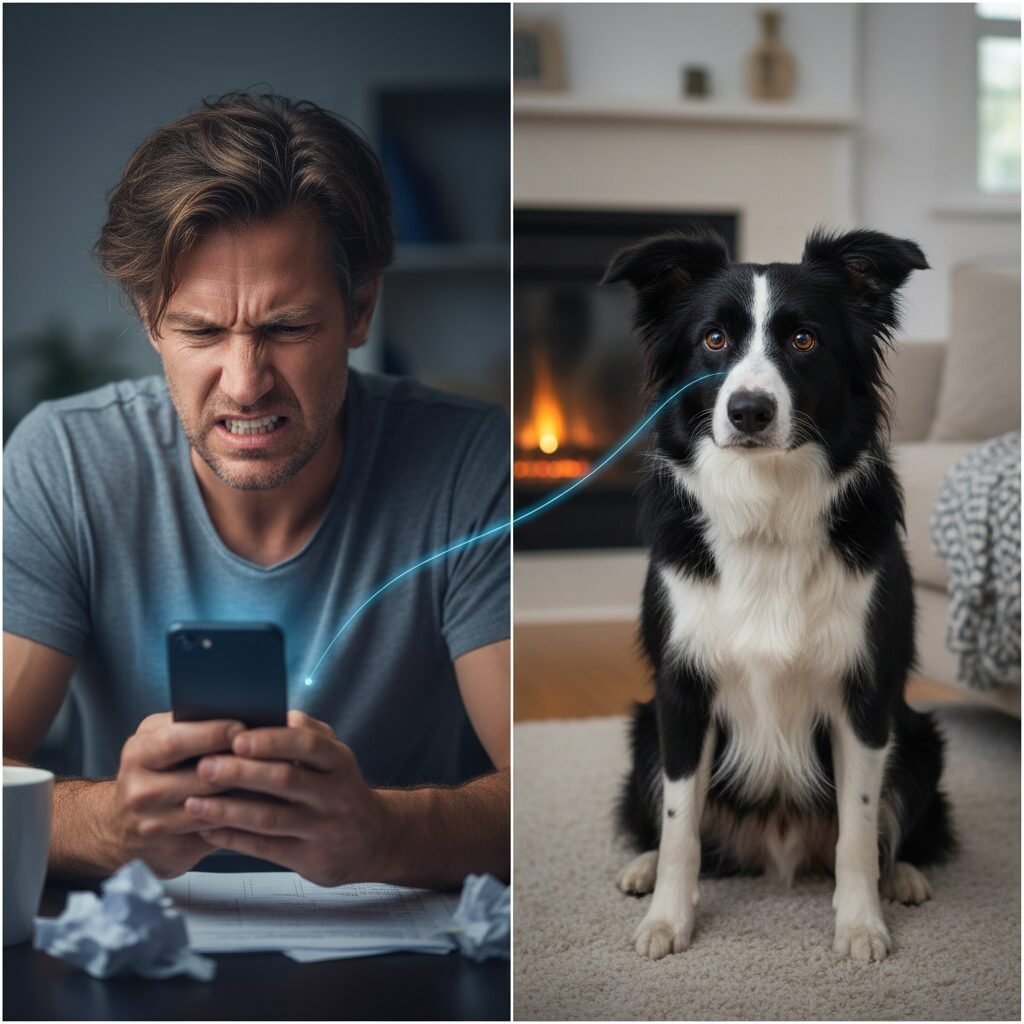
A dog’s innate sensitivity to sound is only one part of the equation. The other, more powerful component is psychological conditioning. Dogs are masters of association. Through a process known as classical conditioning, a neutral stimulus can become linked with a positive or negative emotional response. The text message sound, initially meaningless, can become a potent trigger for anxiety if it is repeatedly paired with an unpleasant experience.
Common Negative Associations
- The Owner’s Departure: Do you often pick up your keys, put on your shoes, and grab your phone right before leaving the house? Your dog certainly notices. The text alert sound may become one of the first cues in a sequence that predicts your departure, triggering separation anxiety. The sound itself comes to mean, ‘My human is leaving me alone.’
- The Owner’s Stress: Our phones are often conduits for stressful news or work-related demands. When you receive a text, you might sigh, tense up, or change your tone of voice. Your dog is incredibly attuned to your emotional state. If the text alert frequently precedes a negative emotional shift in you, the dog learns to fear the sound because it predicts that their leader is about to become stressed or upset.
- Coincidental Startling Events: The association could be entirely accidental. Perhaps a loud clap of thunder, a dropped pot, or a car backfiring occurred at the exact moment your phone pinged. The dog’s brain can forge a powerful link between the two events, causing the text sound to elicit the same fear response as the genuinely frightening noise.
Expert Tip: The conditioning process can be subtle. A dog may not need a major traumatic event to form a negative association. Consistent, low-level stress associated with a sound is often enough to create a lasting phobia.
Once this association is formed, the dog’s brain doesn’t differentiate. The text sound is no longer just a sound; it is a direct predictor of something bad. Their resulting anxiety is not a choice but an involuntary physiological and emotional reaction to a perceived threat.
A Step-by-Step Guide to Desensitization and Counter-Conditioning

The solution to this conditioned fear lies in a two-pronged behavioral modification technique: desensitization and counter-conditioning (DSCC). Desensitization involves gradually re-exposing your dog to the trigger sound at a level so low it doesn’t cause fear. Counter-conditioning is the process of changing your dog’s emotional response from fear to happy anticipation by pairing the sound with something they absolutely love. This process requires patience, consistency, and careful observation of your dog’s body language.
Step 1: Management and Trigger Control
Before you begin training, you must stop the fear from being reinforced. Change your text message alert to a completely different, softer sound. If possible, set your phone to vibrate only. This is a crucial first step to prevent your dog from having a fearful reaction throughout the day, which would undermine your training efforts. You are creating a ‘clean slate’.
Step 2: Prepare Your Tools and Environment
Gather your materials. You will need a separate device to play the sound (an old phone, tablet, or computer) and a supply of extremely high-value treats. These should be special rewards your dog doesn’t get at any other time, such as small pieces of boiled chicken, cheese, or freeze-dried liver. Choose a quiet time when your dog is calm and relaxed, and there are no other distractions.
Step 3: Establish a Baseline and Begin Desensitization
With your dog in a calm state, play the original offending text message sound from the separate device at the lowest possible volume setting—so quiet you can barely hear it. Watch your dog’s body language closely. You are looking for no reaction. No ear twitch, no head turn, no stiffening. If they react in any way, the volume is too high. Find the volume level below their ‘threshold’ of fear.
Step 4: Introduce Counter-Conditioning
Once you’ve found the sub-threshold volume, you can begin changing the association. The sequence is critical: sound first, then treat. Play the quiet sound once. The instant it ends, give your dog a high-value treat. Wait a few seconds. Repeat. The sound should predict the arrival of the amazing treat. Keep sessions very short, just 1-2 minutes at first, ending on a positive note.
Step 5: Gradual Volume Increase
Over many sessions and many days (or even weeks), you can begin to slowly increase the volume. Only increase the volume by one increment when your dog is showing a positive conditioned emotional response (a ‘happy’ look, looking at you expectantly for the treat) at the current volume. If at any point your dog shows signs of fear (lip licking, yawning, tucking tail), you have progressed too quickly. Immediately stop the session and revert to the last successful volume in your next session.
| Session Goal | Action | Dog’s Expected Response |
|---|---|---|
| Find Sub-Threshold | Play sound at lowest volume. | No reaction. Calm body language. |
| Create Positive Association | Play quiet sound, then immediately give a high-value treat. Repeat. | Begins to look at you expectantly after the sound. |
| Build Tolerance | Slowly increase volume over many sessions, always pairing with treats. | Remains calm and happy as volume increases. |
| Troubleshoot | If fear is shown, stop and revert to the last successful volume. | Recovers quickly and can succeed at the lower volume. |
Troubleshooting and Best Practices for Success

The path to resolving a noise phobia is not always linear. It’s common to encounter setbacks. Maintaining a patient and positive mindset is as important as the training protocol itself. Here are some common challenges and professional advice for overcoming them.
Common Sticking Points
- My dog is still reacting to my actual phone: Ensure you have completely changed the sound on your personal device. The DSCC process must happen in a controlled manner, separate from the unpredictable nature of daily life. For the duration of the training, your personal phone must not make the scary sound.
- Progress has stalled: If you can’t seem to increase the volume without a reaction, you may need to ‘split’ the criteria further. This could mean making the training sessions even shorter, using even higher-value treats, or increasing the distance between the dog and the sound source.
- My dog is too stressed to even start: If your dog’s anxiety is so high that they can’t relax enough for a training session, consider incorporating calming activities beforehand. A long walk, a puzzle toy, or a gentle massage can help set the stage for success. You can also consult your veterinarian about calming supplements or pheromone diffusers.
Important: Never punish or scold your dog for being afraid. Fear is an involuntary emotion, not a disobedience issue. Punishment will only increase their anxiety and damage their trust in you, making the problem significantly worse.
Always end each training session on a high note. If you have to lower the volume to get a successful repetition, do it. The goal is to build a foundation of positive experiences that will slowly chip away at the mountain of fear.
When to Consult a Professional

While the DSCC protocol is highly effective, some cases of noise phobia are severe, generalized to other sounds, or part of a larger anxiety disorder. If you are not seeing progress after several weeks of consistent effort, or if your dog’s quality of life is significantly impacted, it is time to seek professional help. An expert can provide a more tailored plan and may recommend additional therapies.
Who to Contact
- Veterinary Behaviorist: A Diplomate of the American College of Veterinary Behaviorists (DACVB) is a veterinarian who has undergone extensive, specialized training in animal behavior. They can diagnose underlying medical conditions that may contribute to anxiety and are qualified to prescribe anti-anxiety medication if necessary. This is the gold standard for severe behavior issues.
- Certified Applied Animal Behaviorist (CAAB): These professionals typically hold a PhD in animal behavior and have extensive experience in resolving complex behavior problems. They provide in-depth behavior modification plans but cannot prescribe medication.
- Certified Professional Dog Trainer (CPDT-KA/KSA): A certified trainer with specific experience in anxiety and phobias can be an excellent resource for guiding you through the DSCC process. Look for trainers who use positive reinforcement methods and have credentials from reputable organizations.
A professional can help you identify subtle triggers you might be missing, refine your training mechanics, and provide a comprehensive plan that may include medication, supplements, and environmental management in addition to behavior modification. Investing in professional guidance is an investment in your dog’s long-term well-being.
Conclusion
Your dog’s fear of your text message sound is not a trivial quirk; it is a legitimate stress response based on their unique auditory system and the powerful effects of psychological conditioning. By understanding the ‘why’—the combination of sensitive hearing and negative association—you can effectively implement the ‘how.’ The process of desensitization and counter-conditioning is a testament to the power of patient, positive training. It allows you to systematically rewrite your dog’s emotional response, transforming a trigger of fear into a predictor of wonderful things.
Remember to manage the environment, proceed at your dog’s pace, and celebrate small victories. While the process takes time and dedication, rebuilding your dog’s sense of security is one of the most rewarding endeavors a pet owner can undertake. If the challenge feels too great, do not hesitate to enlist the help of a qualified professional. Ultimately, creating a peaceful auditory environment is a critical component of a happy, stress-free life for your beloved canine companion.