Teach The “Chin Rest” To Make Vet Visits Zero Stress
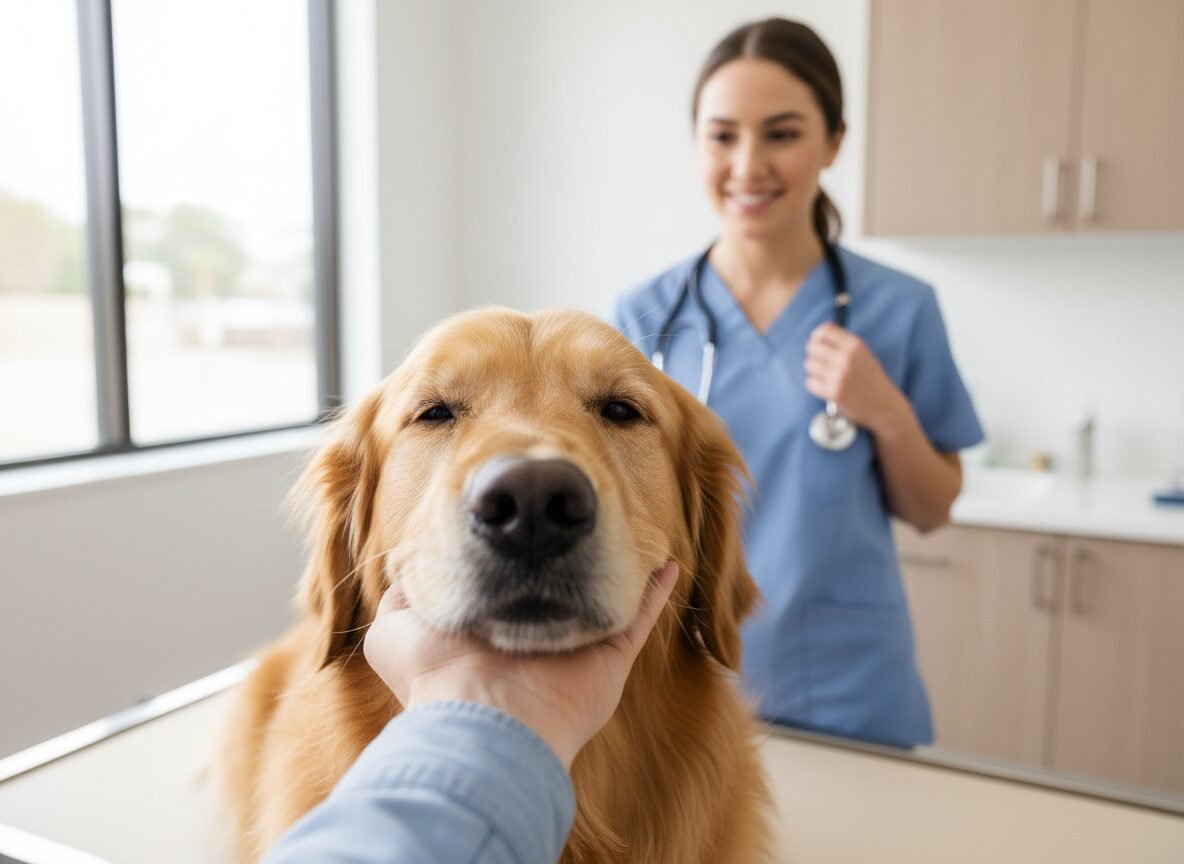
The familiar scene unfolds for many pet owners: the car ride filled with anxious panting, the trembling in the waiting room, and the struggle on the examination table. Veterinary visits, while essential for our dogs’ health, can often be a significant source of stress for both pet and owner. What if there was a way to change this narrative? What if you could replace fear and resistance with calm cooperation? There is, and it starts with a simple, yet profoundly powerful behavior: the chin rest.
Teaching your dog to voluntarily rest their chin in your hand or on a surface is more than just a cute trick. It is a cornerstone of cooperative care—a modern training philosophy centered on teaching animals to be active and willing participants in their own husbandry and medical procedures. By giving your dog a predictable, reinforced action to perform, you provide them with a sense of control and a clear way to communicate their comfort level. This single behavior can revolutionize everything from routine nail trims and ear cleanings to full veterinary examinations, transforming them from stressful ordeals into opportunities to strengthen your bond.
This comprehensive guide will provide you with the expert knowledge and step-by-step instructions to master the chin rest. We will explore the science behind why it works and walk you through the process of building this invaluable skill, ensuring your next vet visit is a zero-stress success.
The Philosophy: Understanding Cooperative Care
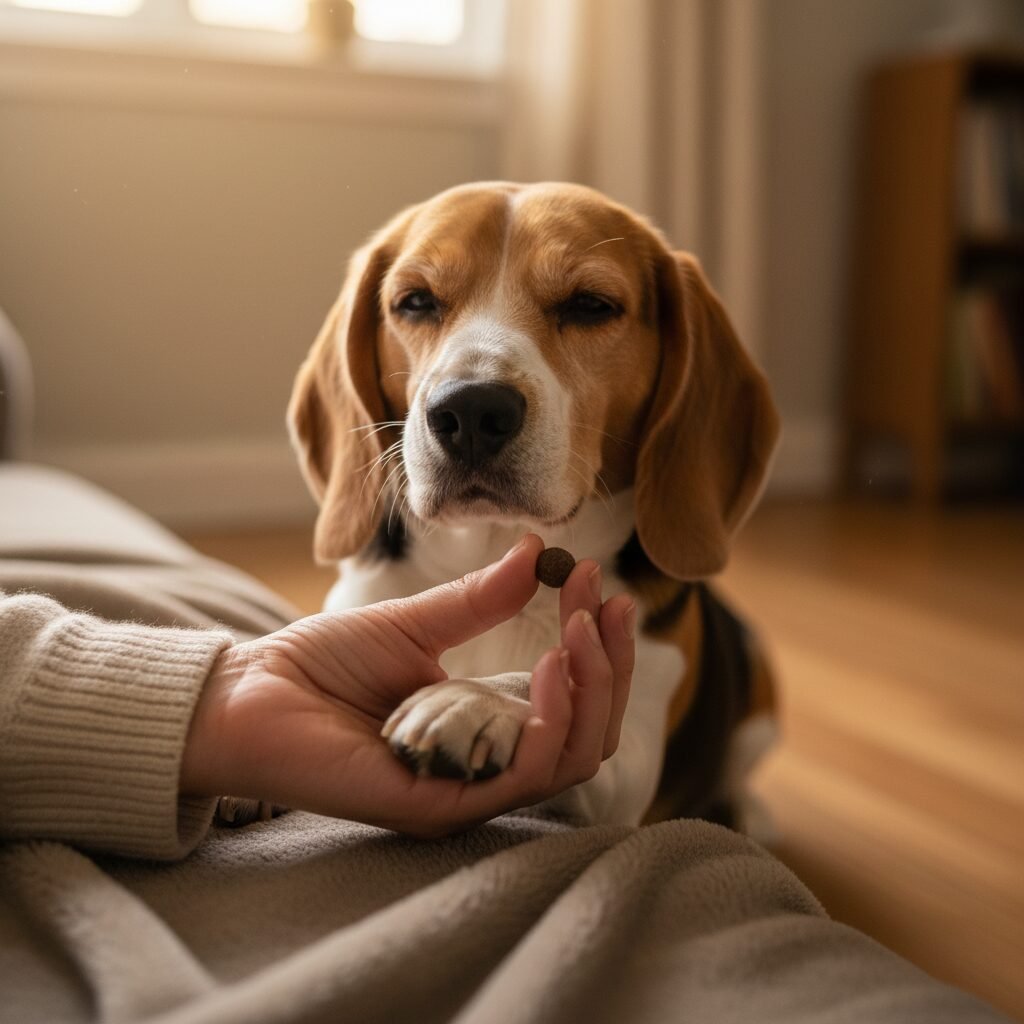
Before we dive into the ‘how,’ it’s crucial to understand the ‘why.’ The chin rest is not about achieving compliance through dominance; it’s about fostering a partnership. This is the essence of cooperative care, a training approach that has shifted the paradigm of animal handling.
What is Cooperative Care?
Cooperative care is a system of training where an animal voluntarily participates in procedures that are necessary for their well-being. This includes grooming, husbandry tasks, and medical care. Instead of using physical restraint or force, the handler teaches the animal specific behaviors (like the chin rest) that signal consent. If the animal breaks the position, the procedure stops. This simple rule is a game-changer.
By giving the dog the power to say ‘stop’ by simply lifting their head, we eliminate the need for them to escalate their communication to growling or snapping. We are, in effect, handing them the reins, which ironically makes them far more willing to cooperate.
This approach is built on a foundation of trust and positive reinforcement. Key principles include:
- Empowerment and Choice: The animal has control over the situation. They can choose to participate or not. This sense of agency dramatically reduces fear, anxiety, and stress (FAS).
- Clear Communication: The trained behavior (e.g., chin rest) becomes a clear, two-way communication signal. Chin down means ‘I am comfortable, you may proceed.’ Chin up means ‘I need a break.’
- Positive Associations: By pairing potentially unpleasant procedures with high-value rewards and respecting the dog’s consent, we change their underlying emotional response. The vet clinic can slowly transform from a place of fear to a place where good things happen.
- Proactive vs. Reactive: Cooperative care is proactive. We teach these skills in a calm, controlled environment long before they are needed in a high-stress situation. This prepares the dog for success.
By embracing this philosophy, you are not just teaching a command. You are fundamentally changing your relationship with your dog, building a resilient bond based on mutual respect and understanding that will pay dividends for years to come.
Preparing for Success: Essential Training Tools
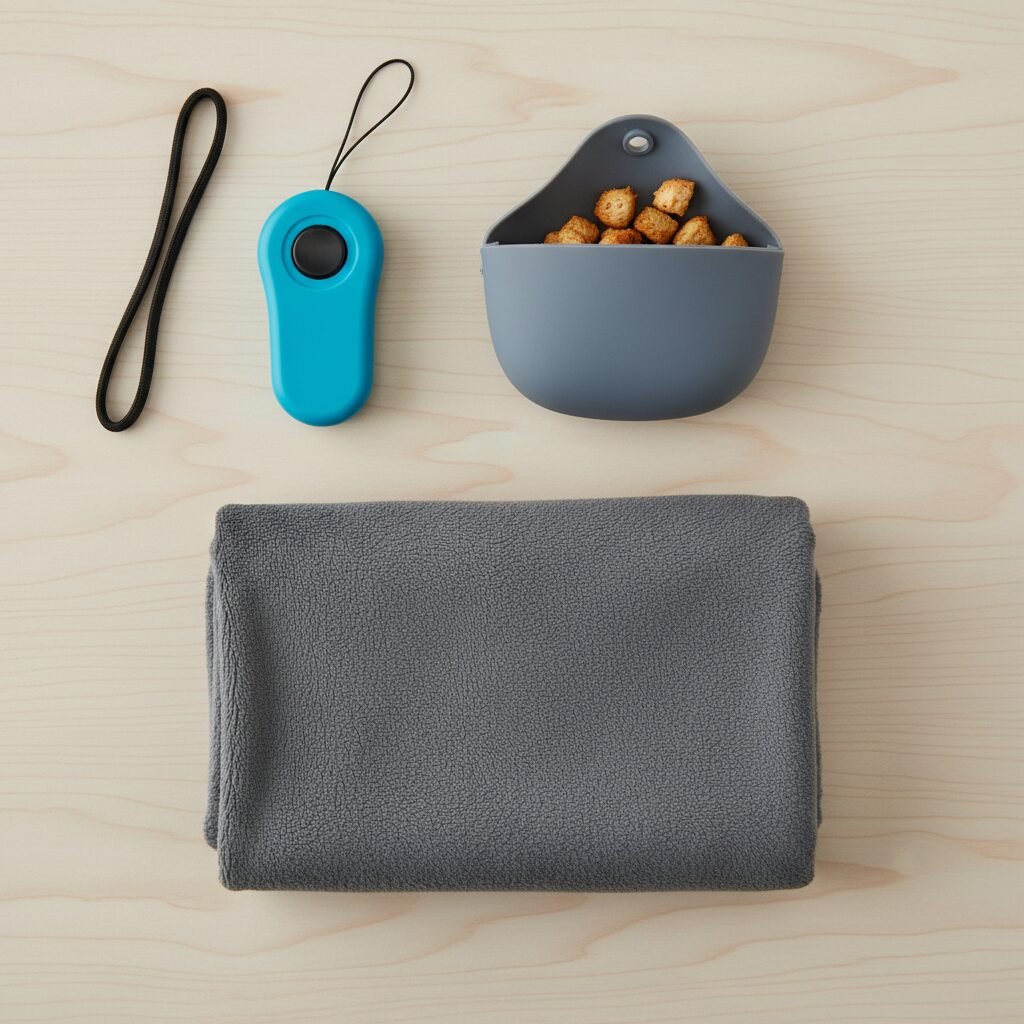
Effective training sessions are well-planned. Before you begin teaching the chin rest, gathering a few simple tools will help streamline the process and set you and your dog up for a positive experience. You don’t need expensive or complicated equipment; consistency and high-value motivation are the most important ingredients.
Your Cooperative Care Toolkit:
- High-Value Treats: This is non-negotiable. We need rewards that are far more exciting than standard kibble. Think small, pea-sized pieces of boiled chicken, cheese, hot dogs, or commercial soft training treats. The goal is to create a powerful positive association, so the reward must be worth the effort for your dog. Prepare more than you think you’ll need.
- A Marker Signal (Clicker or Verbal): A marker is a signal that tells the dog the exact moment they performed the correct behavior and that a reward is coming. A clicker is excellent for its precision and distinct sound. Alternatively, a consistent, short verbal marker like “Yes!” or “Good!” works just as well. If you’re new to marker training, spend a few minutes ‘charging’ it: click/say the word, then immediately give a treat. Repeat 10-15 times until your dog anticipates the treat upon hearing the sound.
- A Comfortable Training Surface: Initially, you’ll want to train in a quiet, low-distraction environment. The chin rest can be taught on your lap, on a stool, on a folded towel, or on a yoga mat. Using a specific mat or towel can also become part of the cue, helping your dog understand when a training session is about to begin.
- Patience and a Positive Attitude: This is your most important tool. Training sessions should be short, fun, and always end on a positive note. Your dog will feed off your energy. If you become frustrated, it’s better to end the session and try again later. Celebrate small successes and remember that every dog learns at a different pace.
The Step-by-Step Guide to Teaching the Chin Rest
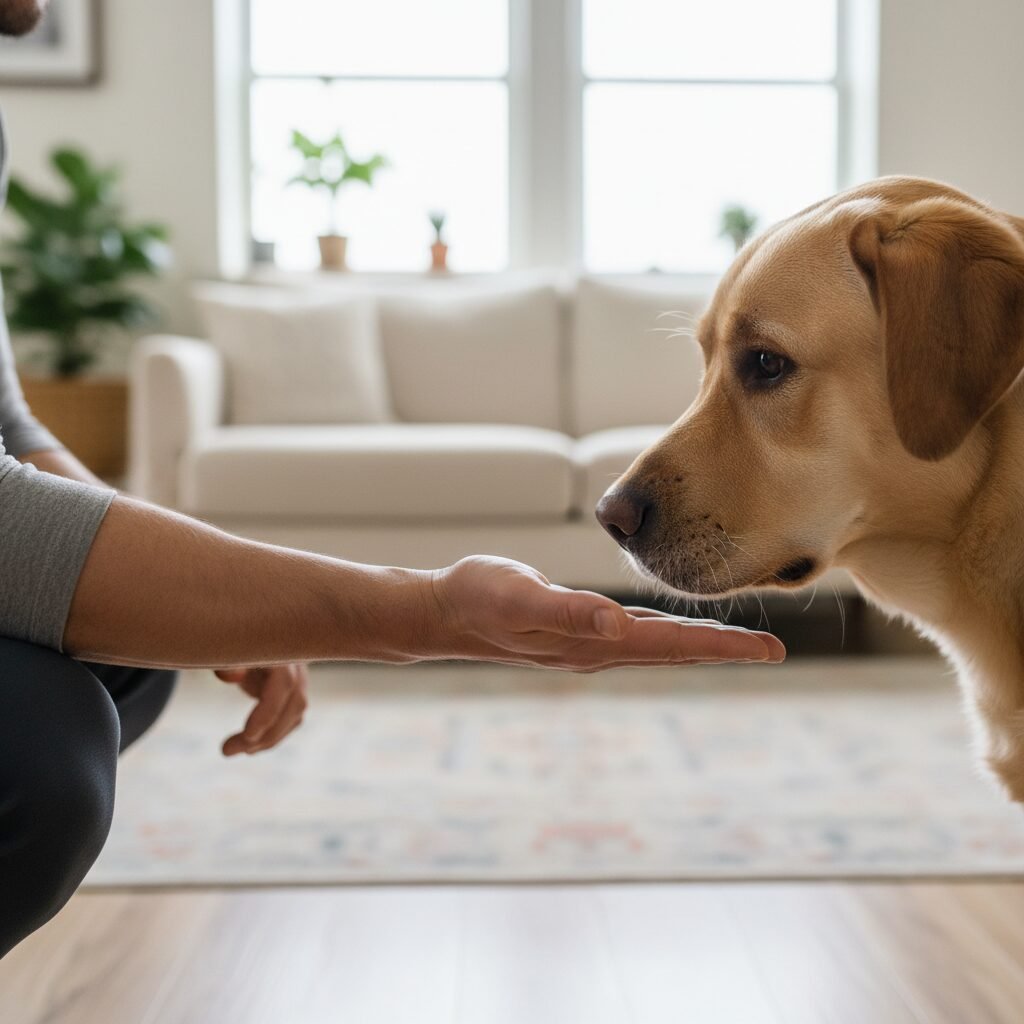
This is where we build the behavior from the ground up. We will use a process called ‘shaping,’ which involves rewarding successive approximations of the final behavior. Keep sessions short (1-5 minutes) to maintain your dog’s enthusiasm. Remember to mark the behavior first, then deliver the reward.
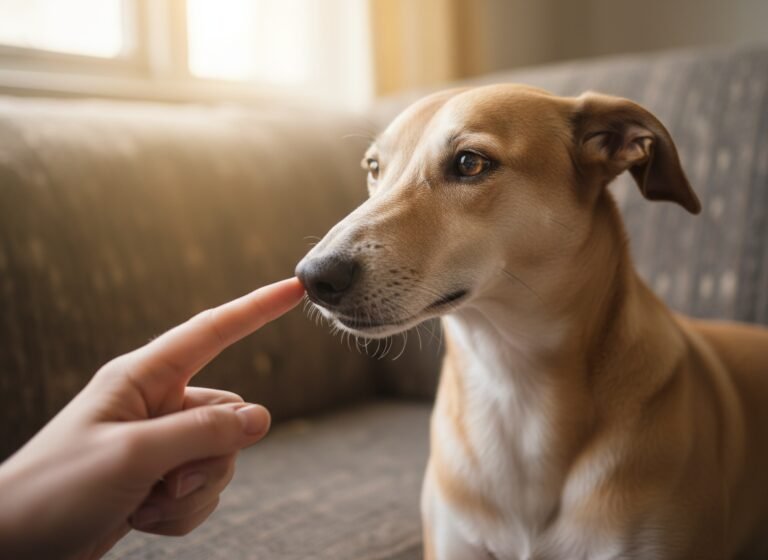
- Step 1: Introduce the Target. Sit on the floor or in a chair with your dog in front of you. Present your target—this could be your flat palm held out, your cupped hand, or your lap. Hold it still at a height just below your dog’s chin. The moment your dog shows any interest in the target—a glance, a sniff, a slight head turn towards it—mark and reward. The reward should be delivered away from the target hand to ‘reset’ the dog for the next repetition. Repeat this until your dog is consistently and deliberately looking at or sniffing your hand as soon as you present it.
- Step 2: Shape Physical Contact. Now, we raise the criteria. Withhold the mark and reward until your dog makes physical contact with the target. At first, this might just be a nose boop or a slight brush of their chin. Mark and reward that initial contact enthusiastically. Your goal is to communicate, ‘Yes, touching the target is what earns the reward!’ Continue until your dog is confidently touching your hand with their nose or chin.
- Step 3: Encourage the Chin Rest. As your dog becomes proficient at touching the target, wait for a moment when they rest their chin, even for a split second. This is the breakthrough moment. Mark and reward this specific action. You can encourage this by slightly cupping your hand to make it a more natural ‘cradle’ for their chin. At this stage, you are rewarding any deliberate placement of the chin on the target.
- Step 4: Build Duration. Once your dog understands the goal is to rest their chin, we can start building duration. After they place their chin on your hand, wait one second before you mark and reward. Then, gradually increase the time—two seconds, then three, and so on. If your dog lifts their head before you mark, that’s okay! It’s valuable information. Simply go back to a shorter duration where they were successful and build up more slowly. This is where you teach the ‘consent’ part of the behavior; the dog learns that keeping their chin down keeps the ‘game’ going.
- Step 5: Add the Verbal Cue. When your dog is reliably offering the chin rest and holding it for at least 3-5 seconds, you can add a verbal cue. Just before you anticipate them performing the behavior, say your chosen cue clearly—such as “Chin,” “Rest,” or “Place.” Then, when they perform it, mark and reward as usual. With repetition, they will associate the word with the action. Avoid repeating the cue; say it once and wait.
- Step 6: Generalize the Behavior. A behavior isn’t truly learned until it can be performed in various contexts. Practice the chin rest in different locations around your house. Use different targets, such as a folded towel on the floor, a pillow on the couch, or even the arm of a chair. Practice with you in different positions—sitting, kneeling, standing. This process, known as generalization, is vital for ensuring the skill is robust enough to work in the stimulating environment of a veterinary clinic.
From the Living Room to the Exam Room: Practical Application
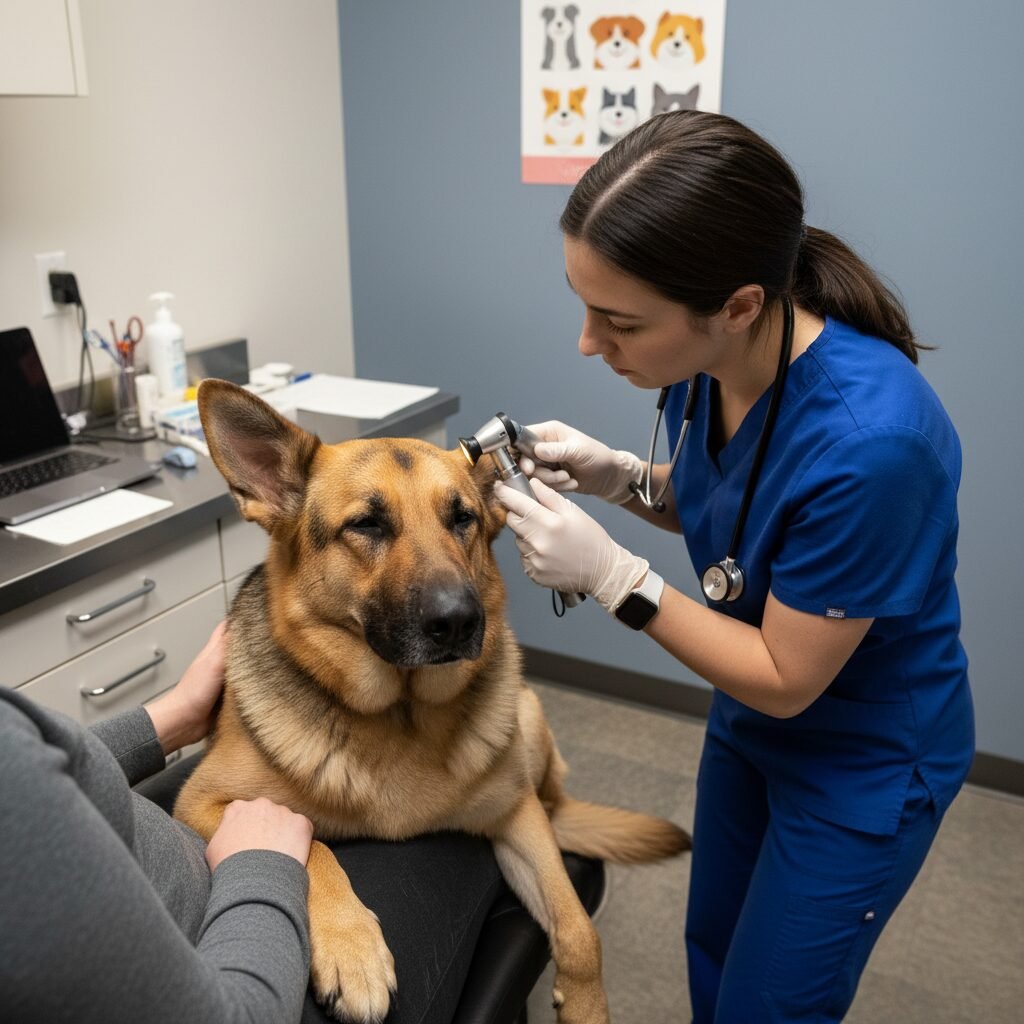
Mastering the chin rest at home is a fantastic achievement, but the ultimate goal is to make it a functional tool during real-life procedures. This requires systematically bridging the gap between a quiet training session and the sensory-rich environment of a vet clinic.
Husbandry at Home
Start by integrating the chin rest into low-stress husbandry tasks at home. This is your dog’s ‘dress rehearsal.’ Ask for a chin rest on your lap, and while they are holding the position, gently touch a paw. Mark and reward. Then, touch an ear. Mark and reward. Progress to picking up a paw, looking in an ear, or lifting their lip. Keep these interactions extremely short and positive. If your dog lifts their head, the handling stops immediately. This reinforces the rule: cooperation makes the ‘scary’ stuff happen briefly and predictably, followed by a great reward.
Preparing for the Vet Visit
Next, you need to simulate the vet experience. This is called ‘proofing’ the behavior against distractions.
- Surface Training: Practice the chin rest on a slippery or elevated surface, like a washing machine (turned off) or a sturdy coffee table with a yoga mat on top to mimic an exam table.
- Body Handling: Enlist a family member or friend to act as the ‘vet.’ While you maintain the chin rest, have the other person approach and gently handle your dog as a vet would—touching their legs, torso, and head. Start with very brief touches and build up.
- Tool Desensitization: Introduce mock veterinary tools. Ask for the chin rest and bring a stethoscope near your dog’s chest. Mark and reward. Use a pen to simulate giving a vaccine or an otoscope to look in their ear. The key is to pair the presence of these objects with the positive reinforcement of the chin rest game.
At the Veterinary Clinic
Communication with your veterinary team is paramount. When you arrive, let them know you have been working on cooperative care and that your dog has a trained chin rest for examinations.
| Action | Your Role | Veterinary Team’s Role |
|---|---|---|
| Entering the Exam Room | Arrive early to let your dog acclimate. Ask your dog for a few easy chin rests on a chair or your lap before the staff enters. | To enter calmly and give the dog space, initially focusing on you rather than the dog. |
| The Examination | Cue the chin rest. You are the ‘safe base’ and the reinforcer. Your job is to reward your dog for maintaining the position while the vet works. | To perform the exam in stages, allowing you to reward in between. They should watch the dog and stop if the chin rest is broken. |
| Procedures (e.g., Vaccines) | Use a high-value ‘distraction’ like a lick mat with peanut butter or a squeeze tube of cheese in conjunction with the chin rest. | To work efficiently and smoothly while the dog is engaged and voluntarily still. |
Advocate for your dog. If they seem too stressed, it’s okay to ask for a break or to reschedule a non-urgent procedure. A good veterinary team will appreciate your dedication to your dog’s emotional well-being and will see you as a partner in their care.
Troubleshooting Common Training Challenges
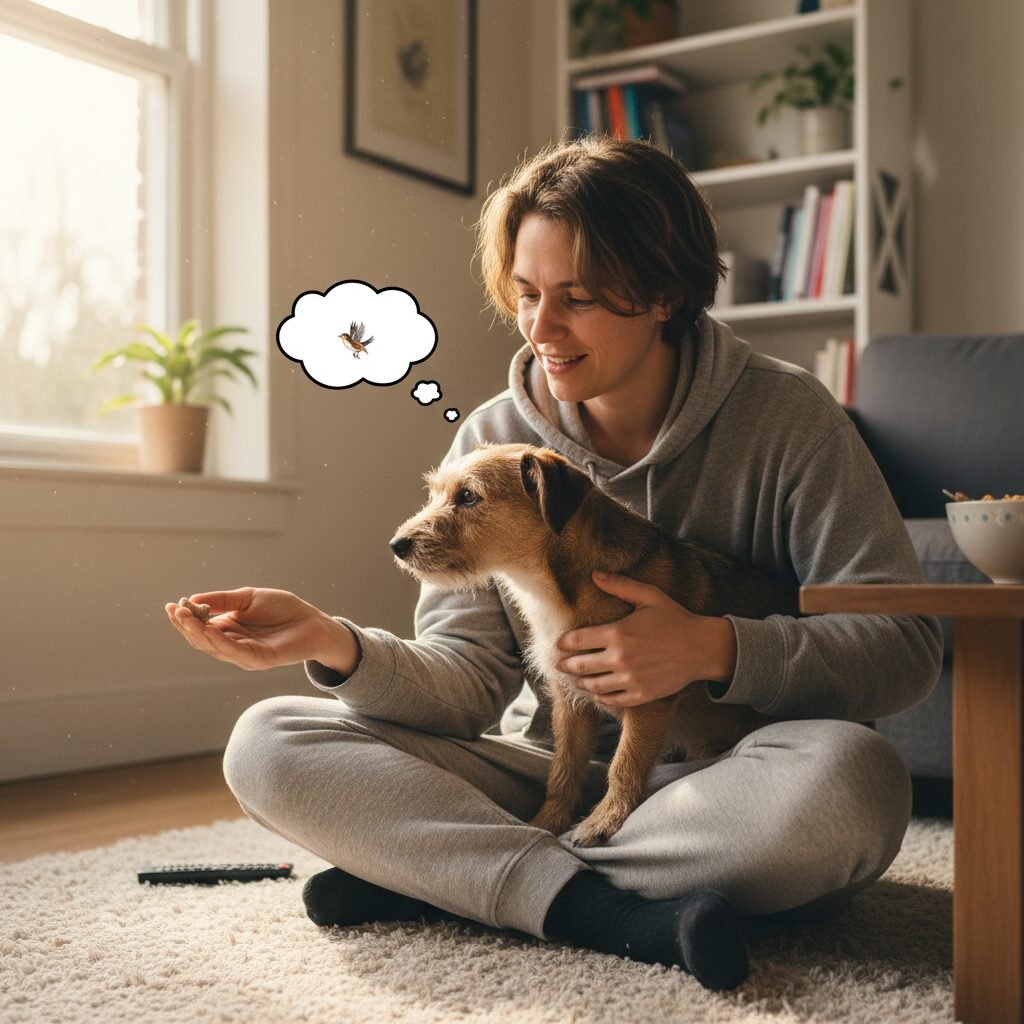
Even with the best plan, you may encounter bumps in the road. Training is never a straight line. Understanding how to address common challenges will keep you from getting stuck and ensure you and your dog continue to make progress. Here are solutions to frequent issues.
Challenge: My dog won’t offer the behavior or seems uninterested.
Solution: This usually points to one of two things: the reward isn’t valuable enough, or the task is too hard. First, upgrade your treats. If kibble isn’t working, try cheese. If cheese isn’t working, try steak. Find what truly motivates your dog. Second, ‘split’ the task into smaller steps. Go back to rewarding just a look towards your hand, or the slightest nose touch. Make it incredibly easy for your dog to be successful, then build from there. Also, ensure your training sessions are short; a bored or fatigued dog will disengage.
Challenge: My dog puts their chin down but lifts it immediately.
Solution: This is a classic duration problem. You’ve likely tried to increase the time too quickly. Go back to marking and rewarding the instant their chin touches down. After 5-10 successful repetitions of that, wait just a single half-second before marking. Build the duration in tiny, incremental steps. This is a marathon, not a sprint. You can also try rapid-fire rewarding: as long as the chin is down, deliver a steady stream of tiny treats, one after another. This teaches the dog that keeping their chin down is highly profitable.
Challenge: My dog offers other behaviors, like pawing at my hand.
Solution: This is great! It shows your dog is engaged and trying to solve the puzzle. Simply ignore the unwanted behaviors (like pawing) and wait patiently. The moment they offer the correct behavior (chin rest), mark and have a ‘jackpot’ reward—a handful of treats. Your dog will quickly learn which behavior brings the reward and which does not. Be patient and give them time to think.
Challenge: The training works at home, but my dog is too stressed at the vet to perform.
Solution: This is a generalization and proofing issue. The gap between your living room and the vet clinic is too large. You need to add more intermediate steps. Practice in your backyard. Practice in the car. Do ‘happy visits’ to the vet clinic lobby where you just go in, do a few chin rests, get treats, and leave. Ask to use an empty exam room for a 2-minute training session. You must gradually and systematically desensitize your dog to the triggers of the vet clinic environment before you can expect them to perform a calm, focused behavior there.
Conclusion
Teaching the chin rest is one of the most valuable investments you can make in your dog’s long-term well-being and in the strength of your relationship. It is a journey that replaces anxiety with agency, fear with communication, and stress with trust. By patiently following these steps, you are not simply training a static command; you are opening a sophisticated channel of two-way communication that will serve you in countless situations, from routine care at home to critical moments at the veterinary clinic.
Remember that every training session is a deposit in your shared bank of trust. Be patient with your dog and with yourself. Celebrate the small victories, learn from the setbacks, and never lose sight of the ultimate goal: a dog who is a confident and willing partner in their own care. The peace of mind that comes from a stress-free vet visit is an incredible reward, both for the dedicated owner who taught the skill and for the beloved dog who has been empowered by it.