The 15-Minute Flirt Pole Workout That Tires Dogs Out Faster Than Walking
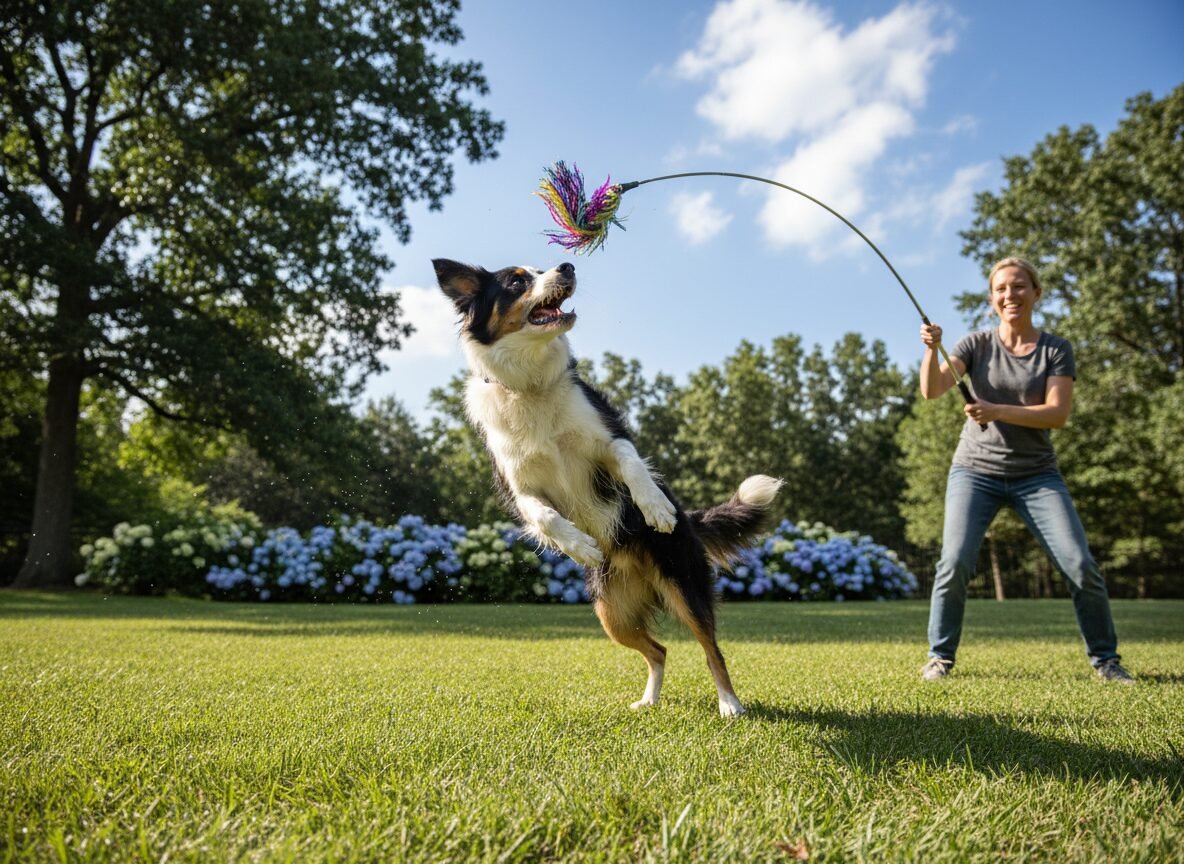
For owners of high-energy breeds, providing adequate exercise can feel like a full-time job. A leisurely walk around the block, while pleasant, often barely scratches the surface of their physical and mental needs. This can lead to frustration for both pet and owner, manifesting in destructive behaviors, hyperactivity, and anxiety. Enter the flirt pole—a simple yet profoundly effective tool that can transform your dog’s exercise routine. In just 15 minutes, a structured flirt pole session can deliver a high-intensity workout that engages your dog’s natural prey drive, sharpens their obedience skills, and expends more energy than a typical 30-minute walk. This guide will provide a comprehensive, step-by-step framework for implementing this powerful workout, ensuring you can safely and effectively meet your dog’s needs in a fraction of the time, strengthening your bond in the process.
Understanding the Flirt Pole: A Superior Tool for Canine Fitness
What Exactly is a Flirt Pole?
A flirt pole is essentially a giant cat toy for dogs. It consists of a long, lightweight pole, a bungee-like cord attached to the end, and a lure or toy tied to the end of the cord. The handler holds the pole and moves it around, causing the lure to skitter and dart along the ground, mimicking the movement of prey. This simple design taps directly into a dog’s innate predatory sequence: sight, chase, catch. Unlike passive forms of exercise, the flirt pole demands focus, agility, and explosive bursts of energy, making it an incredibly efficient conditioning tool.
Why It Outperforms a Standard Walk
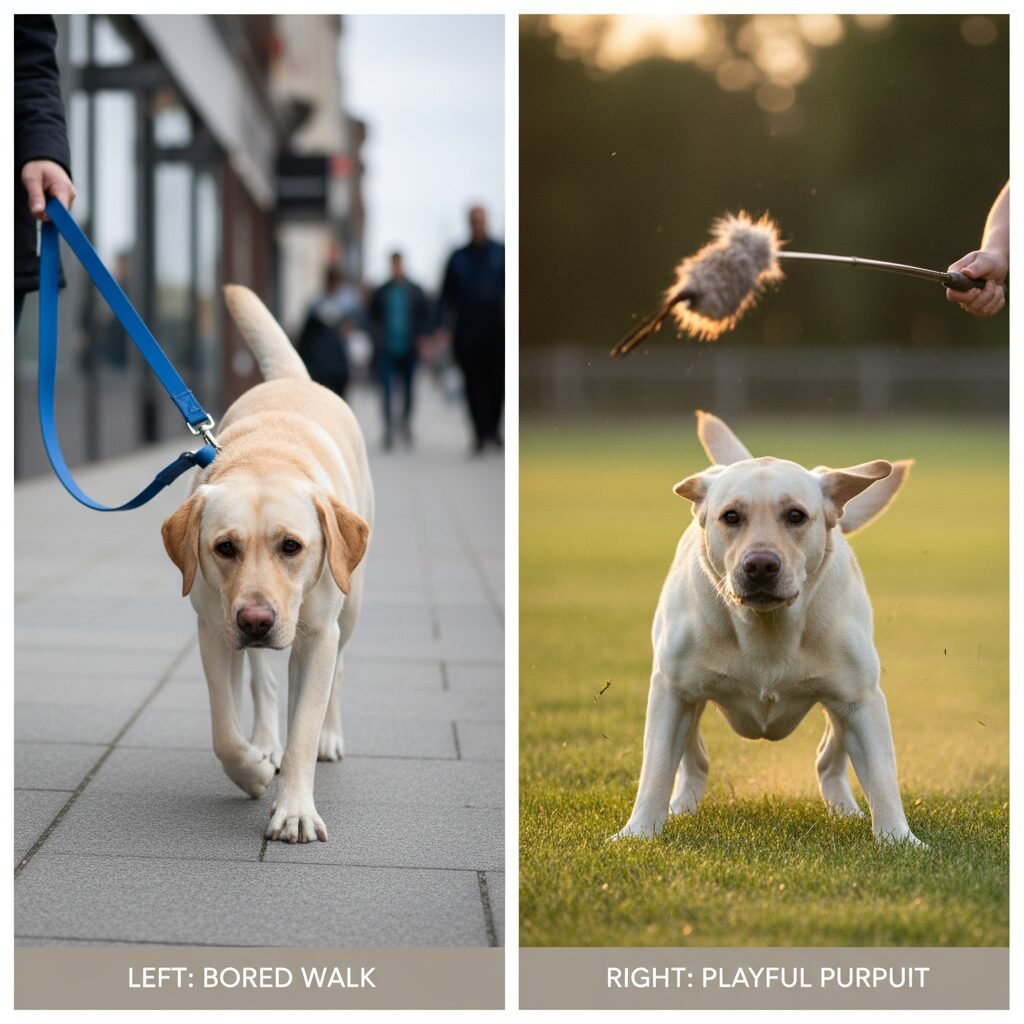
While walking is essential for decompression, sniffing, and socialization, it is not an intense cardiovascular workout for most athletic dogs. A flirt pole session, by contrast, is a form of high-intensity interval training (HIIT). The rapid acceleration, deceleration, and quick changes in direction challenge a dog’s muscles, coordination, and cardiovascular system in ways a steady-paced walk cannot. Furthermore, it provides a crucial outlet for prey drive—a fundamental instinct in many breeds that, if not properly channeled, can lead to undesirable behaviors like chasing cars, squirrels, or other pets. The mental component is equally significant; the dog must focus, anticipate, and practice impulse control, making it a mentally fatiguing activity as well.
| Exercise Metric | 30-Minute Leash Walk | 15-Minute Flirt Pole Session |
|---|---|---|
| Primary Engagement | Olfactory stimulation (sniffing), low-impact movement | Predatory drive, high-intensity cardio, mental focus |
| Physical Exertion | Low to moderate. Builds endurance but not explosive power. | High. Involves sprinting, jumping, and rapid direction changes. |
| Mental Stimulation | Moderate. Processing environmental scents. | Very high. Requires impulse control, focus, and strategic thinking. |
| Obedience Integration | Basic (e.g., ‘Heel’), but often passive. | Essential. Commands like ‘Drop It’ and ‘Leave It’ are integral. |
| Time Efficiency | Requires longer duration for moderate energy expenditure. | Maximum energy expenditure in a minimal amount of time. |
Preparation and Safety: Setting the Stage for Success
Choosing the Right Equipment
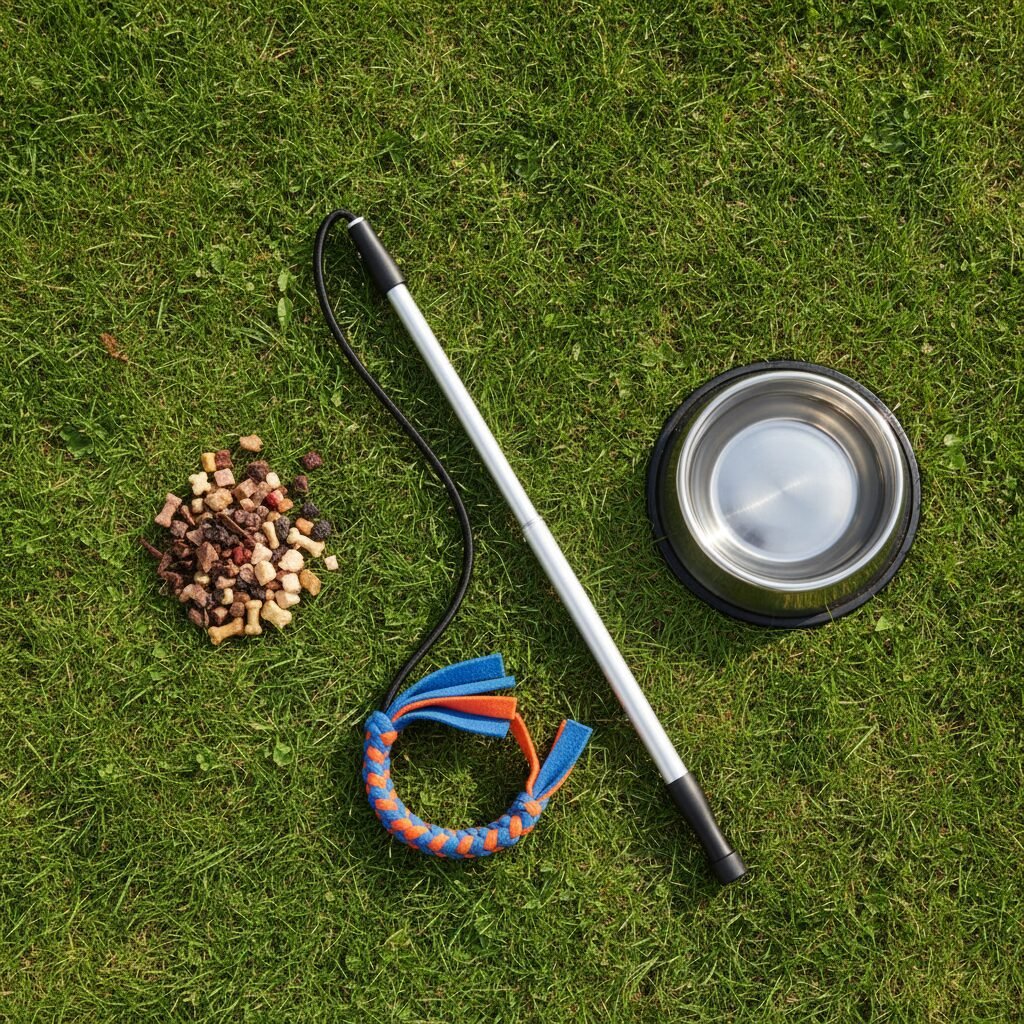
Not all flirt poles are created equal. For safety and durability, invest in a quality, purpose-built model rather than a DIY version that could splinter or snap. Look for these key features:
- A Non-Telescoping, Lightweight Pole: A solid pole provides better control. Materials like fiberglass are both strong and light.
- A Strong Bungee Cord: The bungee component is critical as it absorbs shock, protecting your dog’s neck and your shoulder from jarring impacts when the lure is caught.
- A Secure Lure Attachment: Ensure the lure can be replaced easily but is attached securely enough that it won’t fly off during vigorous play.
- A Comfortable Grip: You’ll be holding this for 15 minutes, so a non-slip, comfortable handle is important.
Creating a Safe Environment
The location of your workout is just as important as the equipment. The ideal space is a fenced-in yard with a non-slip surface. Avoid playing on hard, slick surfaces like concrete, asphalt, or wet decks, as these can lead to slips, falls, and joint injuries. Check the area for any hazards such as holes, rocks, or sharp objects before you begin.
Expert Tip: Always perform a brief physical warm-up before starting the flirt pole session. A few minutes of brisk walking or light trotting helps prepare your dog’s muscles for the high-intensity work to come, significantly reducing the risk of strains or sprains.
The 15-Minute High-Intensity Workout: A Step-by-Step Guide
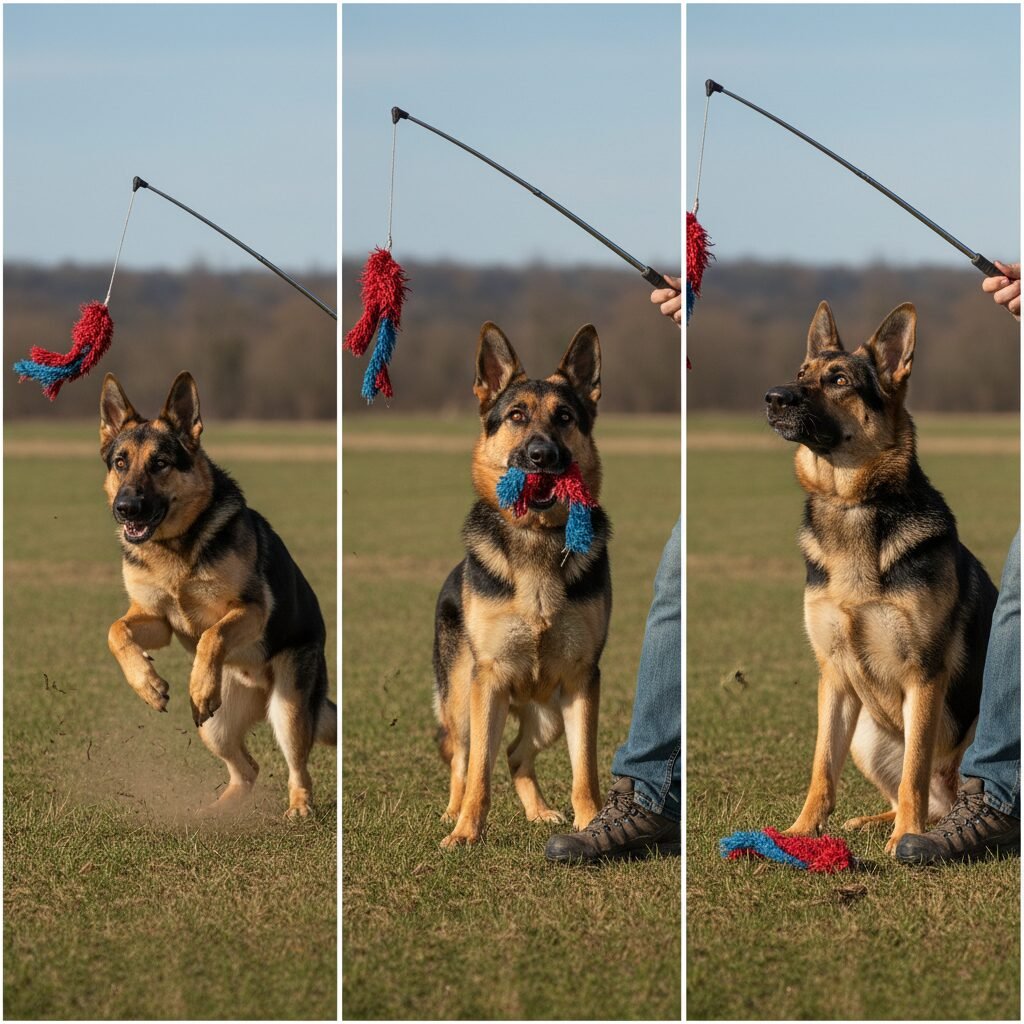
This structured 15-minute routine is designed to maximize physical output while reinforcing crucial obedience skills. The goal is not just to tire your dog out, but to do so in a controlled, mentally engaging way.
Phase 1: The Warm-Up (3 Minutes)
Begin by encouraging your dog to trot and stretch. Do not immediately start the high-speed chase. Use the flirt pole to drag the lure slowly along the ground in large, gentle circles. This allows your dog’s muscles to warm up and gets them focused on the game without encouraging premature pouncing or jumping.
Phase 2: The Workout Intervals (10 Minutes)
This is the core of the session. The key is to mix high-energy chasing with moments of calm and obedience. Follow this sequence:
- Initiate the Chase (60-90 seconds): Start moving the lure more erratically and quickly across the ground. Keep the lure on the ground to encourage chasing, not jumping. Move in large circles and zig-zags to make your dog run and change direction.
- Allow a Catch: Periodically, allow your dog to successfully catch the lure. Letting them ‘win’ keeps them engaged and motivated.
- Practice ‘Drop It’ (30 seconds): Once the dog has the lure, immediately give your ‘Drop It’ or ‘Out’ command in a calm, firm voice. You may need to trade them for a high-value treat at first. This step is non-negotiable and is a critical part of the game. Once they drop the lure, praise them enthusiastically.
- Practice ‘Leave It’ or ‘Wait’ (30 seconds): After they drop the lure, ask for a moment of impulse control. Place the lure on the ground and ask for a ‘Leave It’ or ‘Wait’. Start with just a second or two and gradually increase the duration. This teaches them that the game only restarts when you give the release cue.
- Repeat: Repeat this cycle of chase, catch, drop, and wait for the duration of the 10-minute interval.
Phase 3: The Cool-Down (2 Minutes)
Just as a warm-up is important, a cool-down is essential for helping your dog’s heart rate return to normal and preventing muscle soreness. Slow the game down significantly. Drag the lure very slowly, then stop it. Ask your dog for a few simple obedience cues like ‘Sit’ or ‘Down’. End the session on a positive note by putting the flirt pole away and giving your dog some calm praise and a drink of water.
Critical Safety Rules and Common Mistakes to Avoid
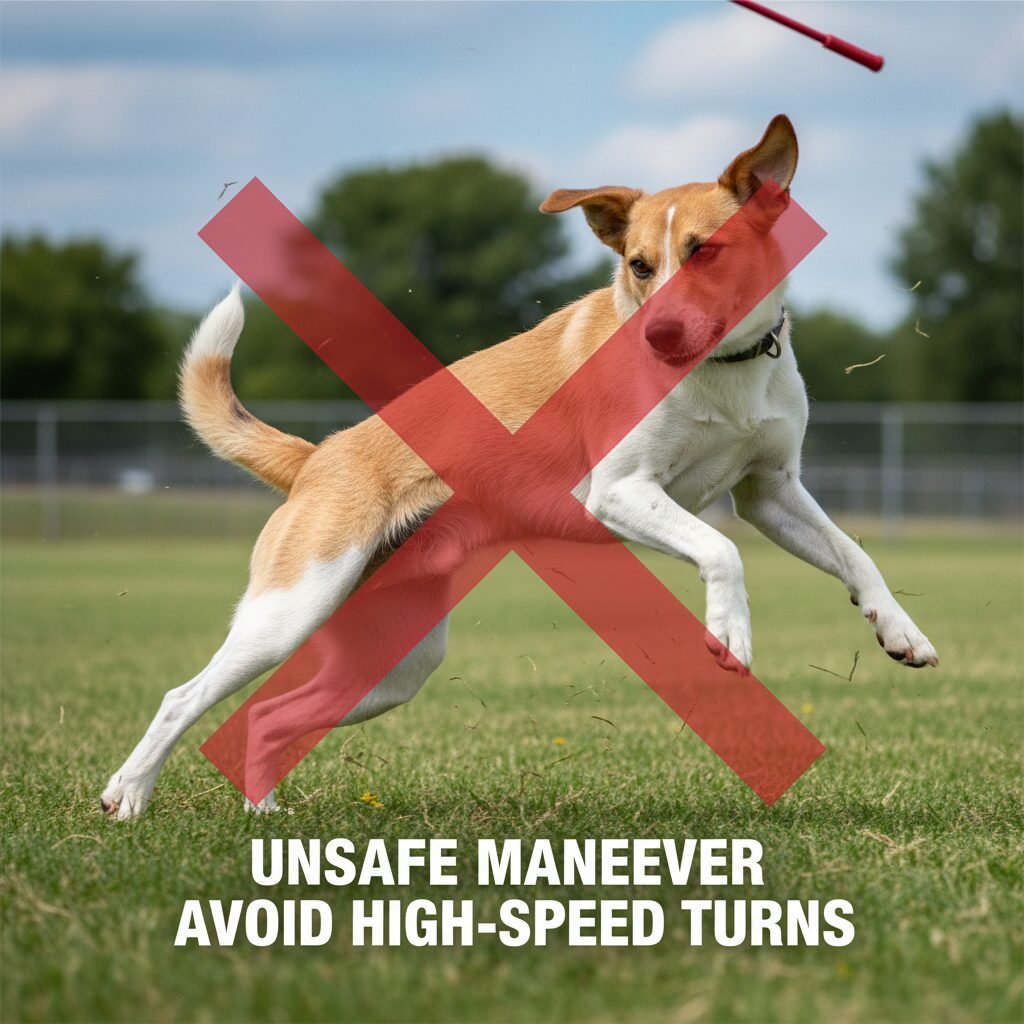
The flirt pole is an intense tool, and safety must be the top priority. Adhering to strict rules prevents injury and ensures the game remains a positive experience. Overlooking these guidelines can lead to joint damage, muscle tears, and behavioral issues.
Non-Negotiable Safety Rules
- Keep the Lure Low: Do not encourage your dog to leap high into the air or perform acrobatic flips. This places extreme stress on their joints, particularly the spine and rear legs, and can lead to serious injuries like cruciate ligament tears. The lure should stay on or very near the ground.
- Avoid Sharp Turns: Do not whip the pole around, forcing your dog to make sudden, high-speed pivots. Encourage wide, sweeping turns that are easier on their body.
- No Tug-of-War: The flirt pole is not a tug toy. Once your dog catches the lure, the game should pause until they release it. Engaging in a tug-of-war with the pole can injure your dog’s neck and teeth and can damage the equipment.
- Always Supervise: Never leave your dog alone with the flirt pole. It can easily become a choking or entanglement hazard if chewed on or wrapped around them. Always put it away securely after each session.
- Know When to Stop: Watch your dog for signs of fatigue, such as excessive panting, lagging speed, or loss of interest. It is always better to end the session a minute too early than a minute too late. Pushing a tired dog can lead to injury.
Common Mistakes Pet Owners Make
Avoiding these common pitfalls will make your sessions more productive and safer:
- Forgetting Obedience: The biggest mistake is treating the flirt pole as a pure exercise tool without integrating commands. The ‘Drop It’ and ‘Leave It’ components are what provide mental exercise and reinforce your role as the leader.
- Letting the Dog Win Every Time: While letting the dog catch the lure is important, they shouldn’t succeed every single time they try. The occasional ‘miss’ builds frustration tolerance and drive.
- Using it as a Primary Training Tool for Puppies: The high-impact nature of a flirt pole workout is not suitable for puppies whose growth plates have not yet closed. Consult your veterinarian about the appropriate age to start this type of exercise, typically after 12-18 months for medium to large breeds.
Advanced Techniques for Enhanced Mental Stimulation
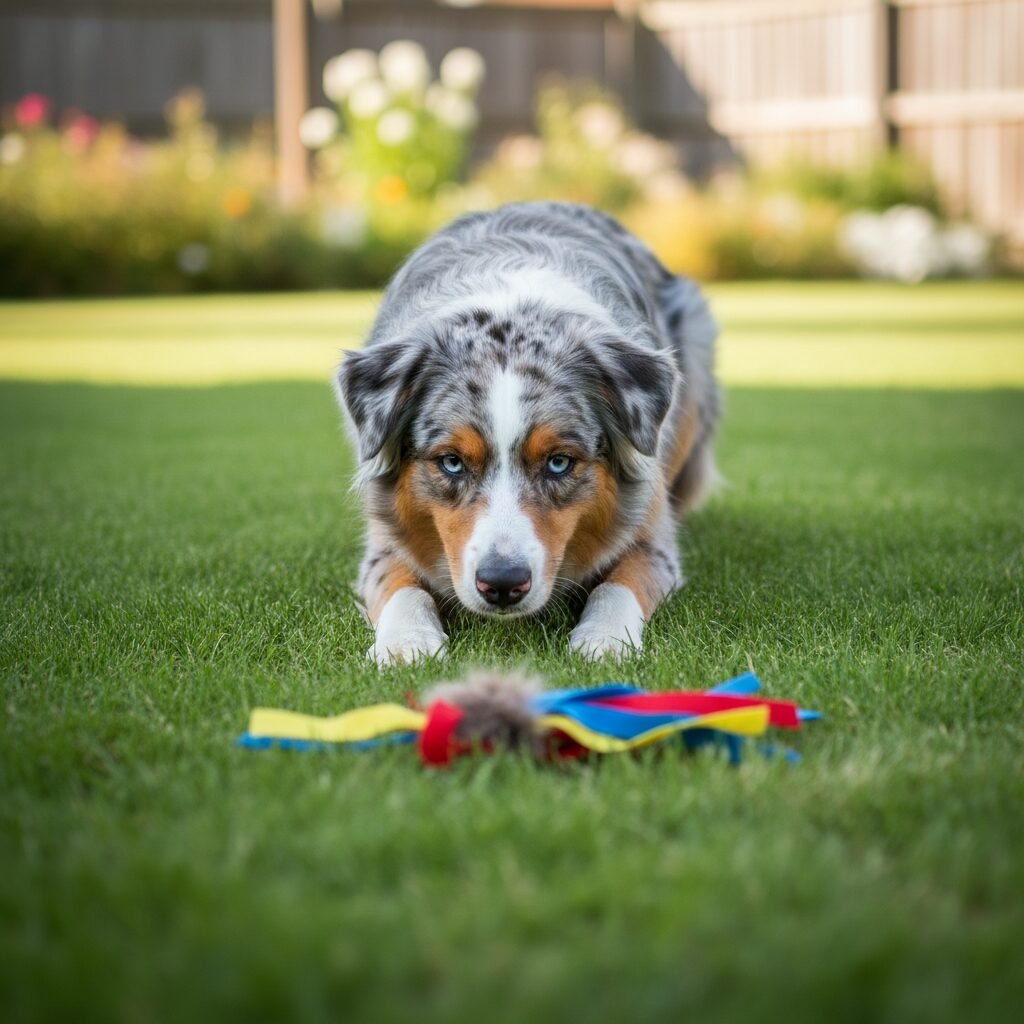
Once your dog has mastered the basic flirt pole game and has the necessary fitness level, you can introduce more complex variations to further challenge their mind and body. These advanced techniques are excellent for building focus, impulse control, and responsiveness to your cues, even in a state of high arousal.
Integrating Complex Obedience Chains
Instead of a simple ‘Wait’ before the chase begins, incorporate a chain of commands. For example, ask for a ‘Sit,’ then a ‘Down,’ then a ‘Stay’ before you give the release cue to start the chase. This requires your dog to maintain focus and self-control for a longer period, making the eventual release and chase even more rewarding.
Adding Directional Cues
You can use the flirt pole to teach directional commands. As you swing the lure, use cues like ‘Left’ or ‘Right’ to guide your dog’s movement. This adds a layer of cognitive processing to the physical activity. Start by making it obvious, swinging the lure in the direction you’ve cued, and reward them when they follow. Over time, they will begin to associate the word with the direction of the chase.
Practicing the ‘Emergency Stop’
This is an advanced safety and obedience skill. In the middle of a full-speed chase, give a specific command like ‘Stop!’ or ‘Down!’. The goal is for your dog to immediately cease the chase and drop into a down position. This is an incredibly difficult display of impulse control. To train this, start at a lower speed and be ready with an extremely high-value reward the instant they respond correctly. This skill has practical applications beyond the game, helping to solidify a reliable recall or stop command in real-world situations.
Professional Insight: The true value of advanced flirt pole work is teaching your dog to think and respond to you even when their prey drive is fully activated. This ‘thinking in drive’ is the hallmark of a well-trained, mentally balanced canine companion.
Conclusion
The flirt pole is far more than a toy; it is a sophisticated training and conditioning tool that addresses a dog’s most fundamental needs for physical exertion and mental engagement. By dedicating just 15 minutes to a structured, safety-conscious workout, you can provide an outlet for innate drives, reinforce critical obedience commands, and significantly tire out your canine companion. It transforms exercise from a chore into an exciting, collaborative game that strengthens the bond between you and your dog. Remember to always prioritize safety, integrate obedience, and be attentive to your dog’s physical limits. When used correctly, the 15-minute flirt pole workout is arguably one of the most efficient and effective ways to ensure you have a happy, healthy, and well-behaved pet.