The One Training Command That Could Save Your Dog From A Deadly Snake Bite
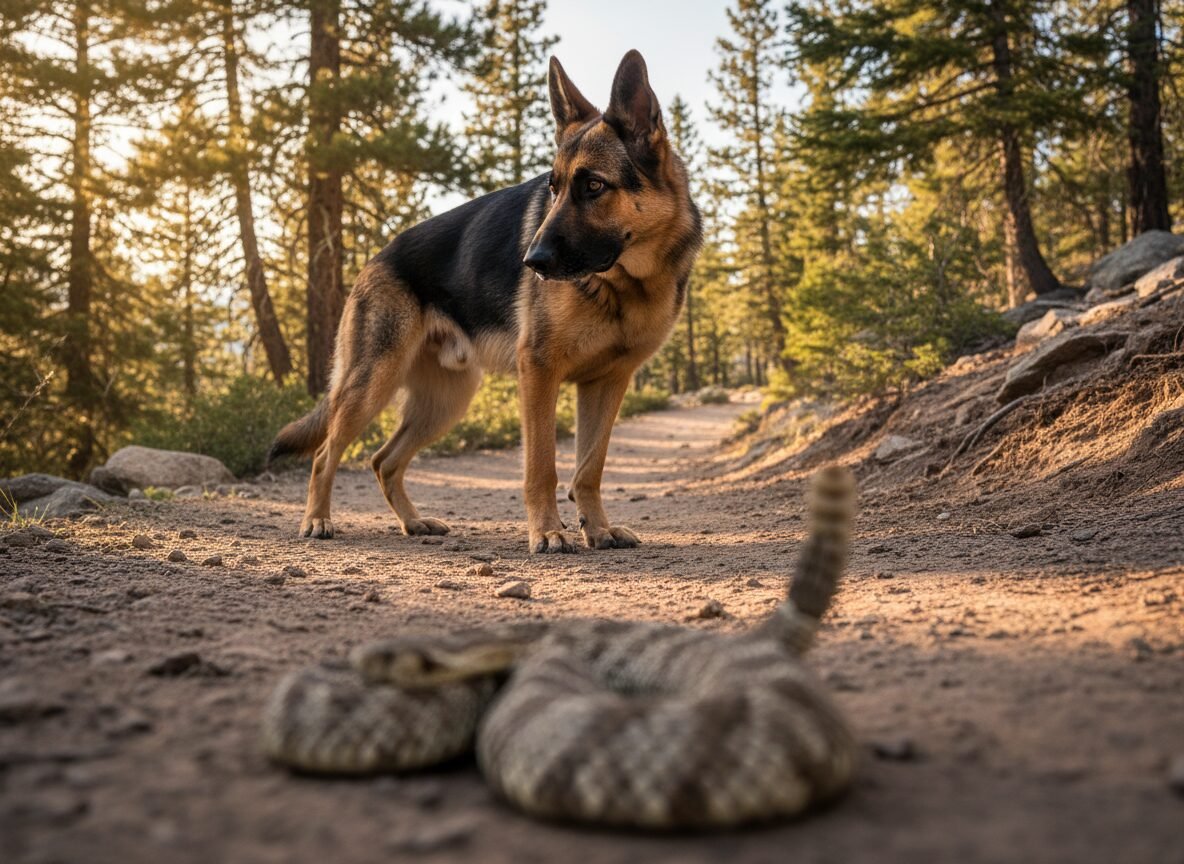
As a pet owner, your dog’s safety is paramount. We install physical fences, secure them with leashes, and ensure they are up-to-date on vaccinations. Yet, one of the most insidious dangers, particularly in rural or wilderness areas, cannot be contained by conventional means: a venomous snake. A dog’s natural curiosity can lead it to investigate a snake, often resulting in a defensive strike with potentially fatal consequences. While avoidance is ideal, the most powerful tool in your arsenal is not a physical barrier, but a deeply ingrained behavioral one. This article will detail the training, application, and mastery of the single most critical command in this scenario: ‘Leave It.’ A properly trained ‘Leave It’ is not merely a parlor trick for dropped food; it is an emergency stop, a non-negotiable directive to disengage from a potentially deadly stimulus. Mastering this command is a profound investment in your dog’s life.
The ‘Leave It’ Command: More Than Just Dropping a Toy
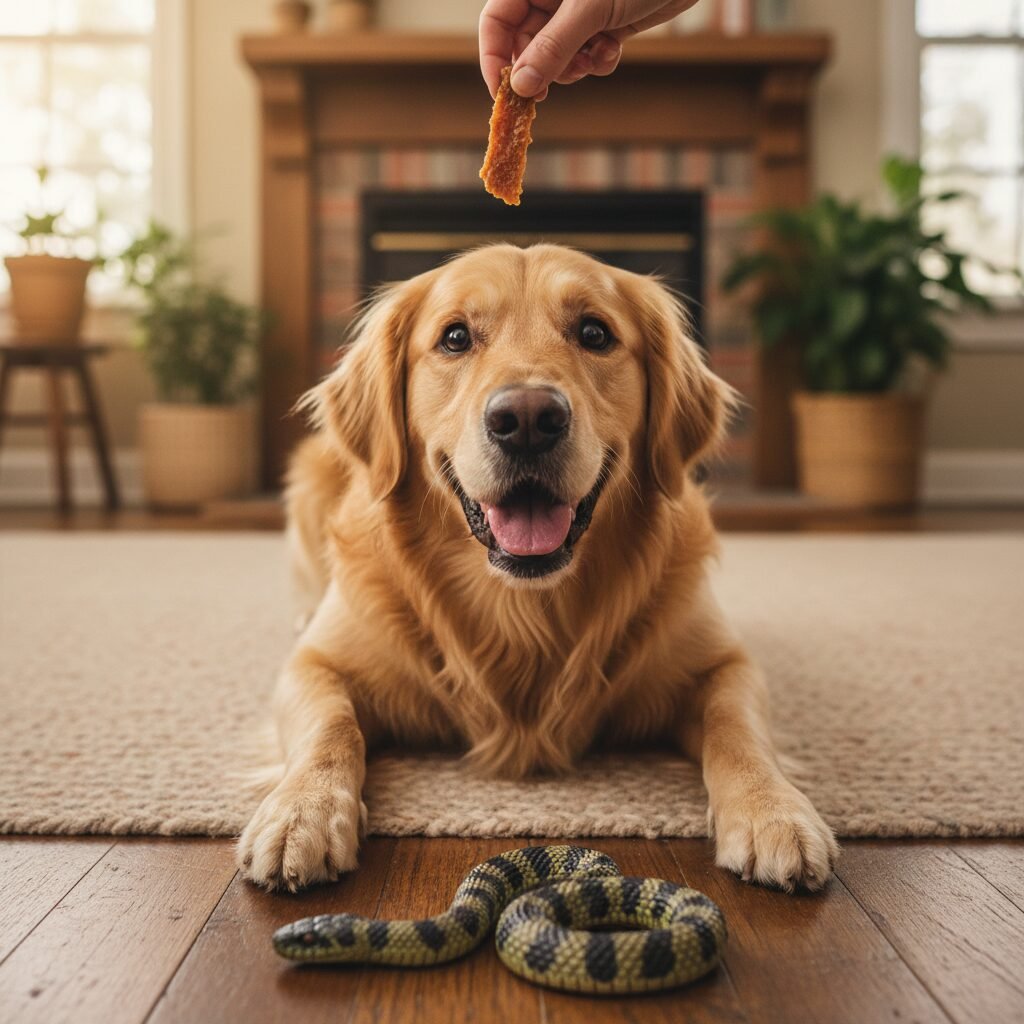
Many owners believe they have a functional ‘Leave It’ command. Their dog might drop a sock or back away from a piece of food on the floor. However, the command required to override a dog’s primal instinct to investigate a novel, moving creature like a snake must be on an entirely different level. It must be reflexive, immediate, and reliable under extreme stress.
Understanding the Psychology
A life-saving ‘Leave It’ command operates on two psychological principles:
- Inhibitory Control: This is the dog’s ability to consciously stop itself from acting on an impulse. We are conditioning the dog to suppress its instinct to sniff, paw at, or engage with the forbidden object (the snake).
- Differential Reinforcement of an Alternative Behavior (DRA): We are not just teaching the dog not to do something; we are teaching it what to do instead. The correct response to ‘Leave It’ is to disengage from the object and immediately orient back to the owner for a high-value reward. The owner becomes more interesting and rewarding than the snake.
A powerful ‘Leave It’ cue transforms a moment of dangerous curiosity into an opportunity for positive reinforcement from you. The dog learns that ignoring the ‘thing’ on the ground is far more profitable than investigating it.
This is why training must be structured, consistent, and proofed against increasingly powerful distractions. A casual ‘Leave It’ trained with kibble in the kitchen will not hold up against the sights, sounds, and smells of a living creature in the wild. The command must be absolute.
Phase 1: Building a Rock-Solid Foundation
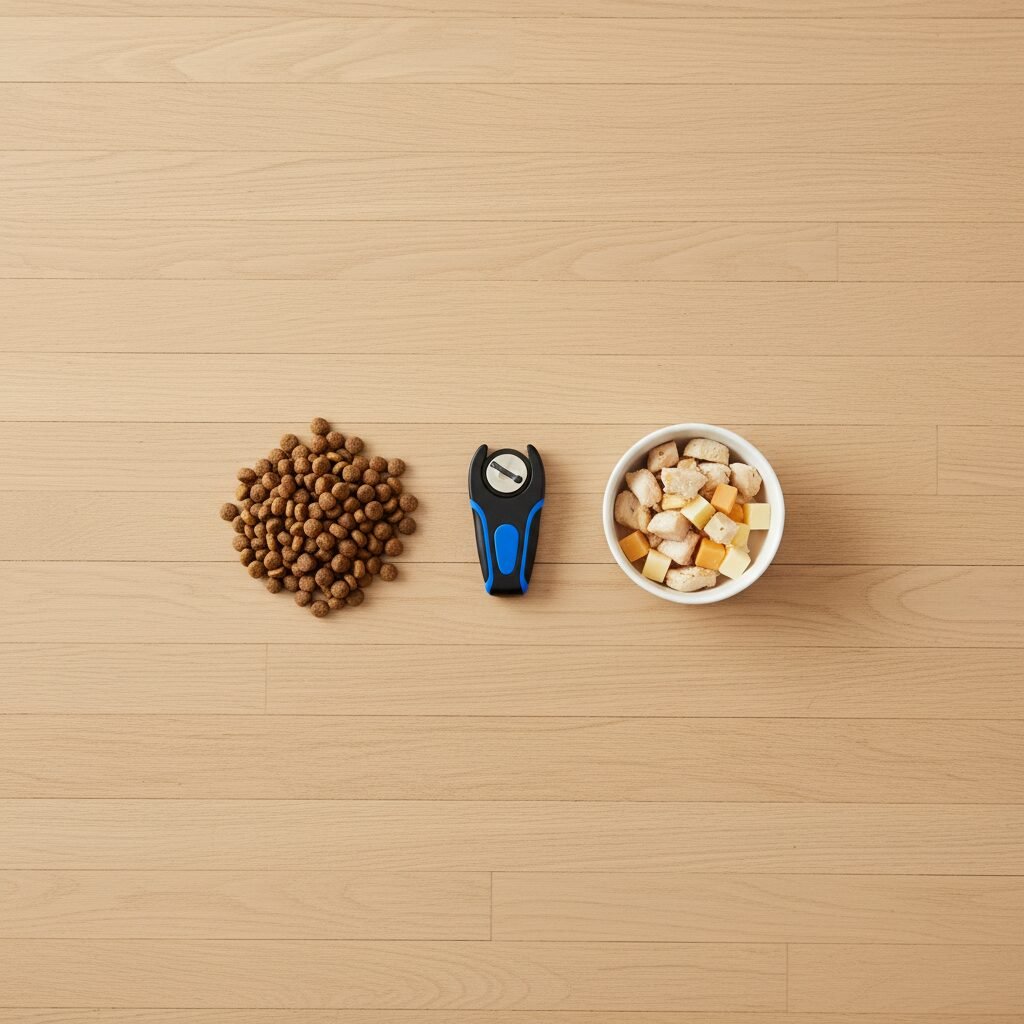
Before you can expect your dog to ignore a snake, you must lay the groundwork in a controlled, distraction-free environment. The goal of this phase is to teach the meaning of the command without any pressure or punishment. Your success hinges on making the training sessions short, fun, and highly rewarding.
Essential Tools and Preparation:
- High-Value Treats: These should be special rewards reserved only for this training. Think small pieces of cooked chicken, cheese, or commercial training treats that your dog loves.
- Low-Value Treats: A handful of your dog’s regular kibble or a less exciting biscuit.
- A Quiet Space: Begin training indoors in a room with minimal distractions.
- A Clicker (Optional): A clicker can be used to mark the precise moment your dog makes the right choice, but a verbal marker like ‘Yes!’ works just as well.
The core principle is simple: the dog is rewarded for ignoring one item in favor of a better item from you. You are teaching a choice, and you are rigging the game so the dog always makes the choice you want.
Phase 2: The Step-by-Step Training Protocol
Follow these steps methodically. Do not rush to the next step until your dog is successful in the current one at least 90% of the time. Keep sessions to 5-10 minutes, once or twice a day.
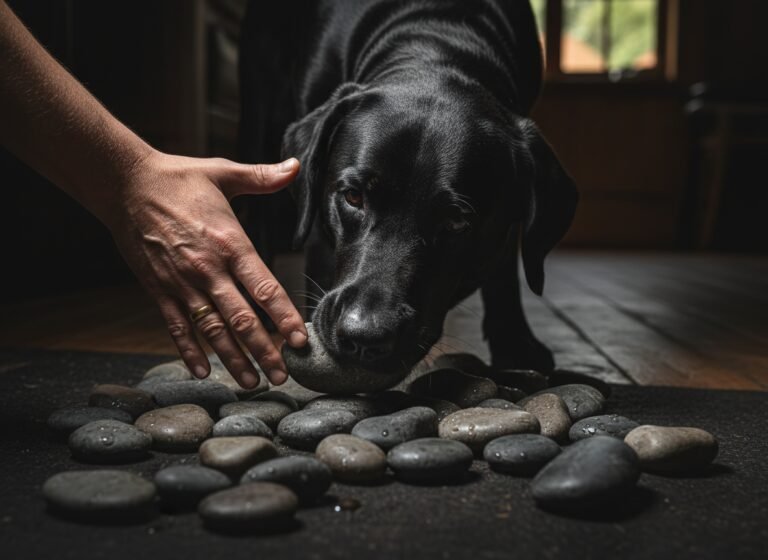
- Step 1: The Closed Fist. Place a low-value treat (kibble) in your hand and close your fist. Present your fist to your dog. They will likely sniff, lick, and paw at it. Ignore this. The moment your dog pulls their head away, even for a second, mark the behavior (‘Yes!’ or click) and reward them with a high-value treat from your other hand. Repeat until your dog is no longer mugging your hand and is instead looking at your face expectantly.
- Step 2: The Open Hand. Now, place the low-value treat in your open palm. If your dog dives for it, simply close your fist. When they back off, open your hand again. The moment they hesitate or look away from the treat in your palm, mark and reward from your other hand. This teaches them that the treat in the open is off-limits.
- Step 3: The Covered Floor Treat. Place a low-value treat on the floor and cover it with your hand. Repeat the process from Step 1. When your dog ignores your hand on the floor and looks at you, mark and reward.
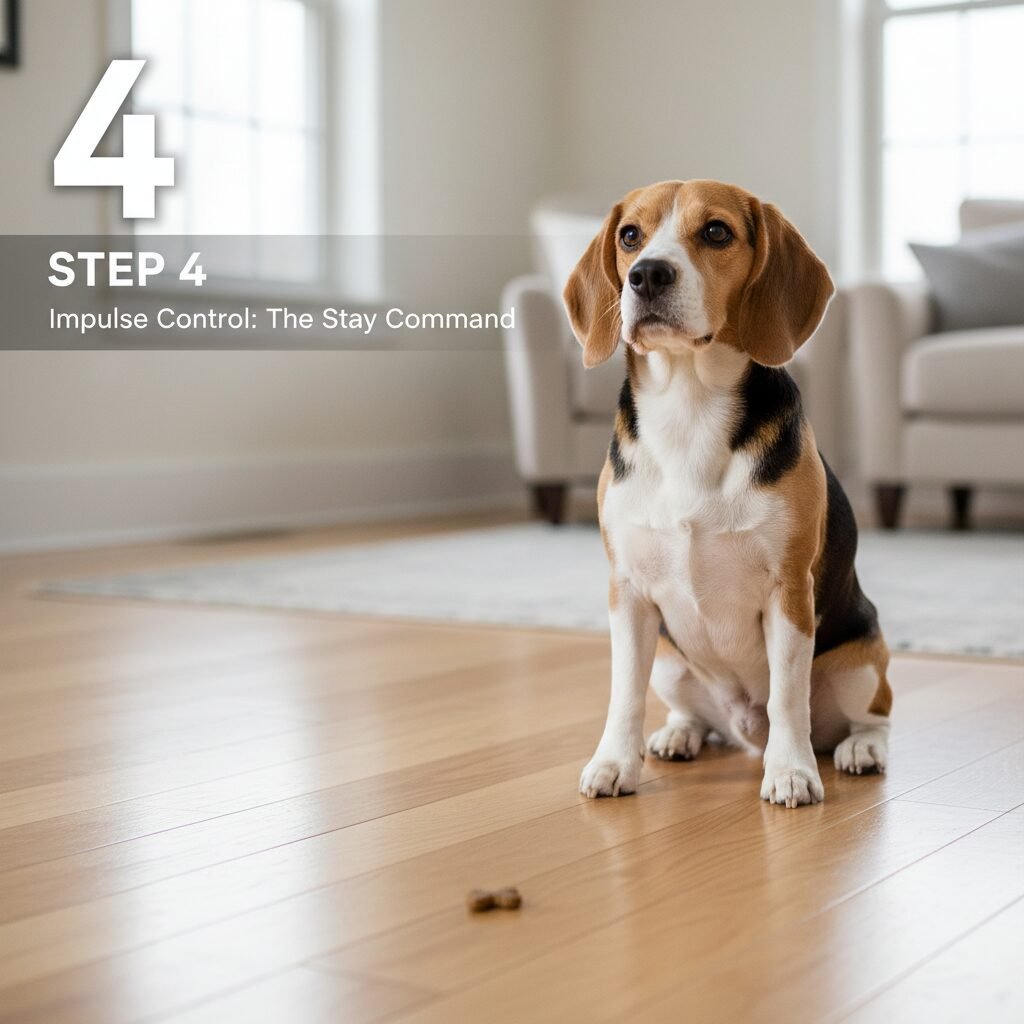
- Step 4: The Uncovered Floor Treat. This is a significant step up. Place a low-value treat on the floor. Be ready to cover it with your hand or foot if your dog lunges for it. The goal is for your dog to see the treat and immediately look to you. Mark and reward this choice lavishly.
- Step 5: Adding the Verbal Cue. Once your dog is reliably ignoring the floor treat, you can add the cue. As you place the treat on the floor, say ‘Leave It’ in a calm, neutral tone. When they ignore it, mark and reward. You are now associating the action of ignoring the item with the verbal command.
Phase 3: Advanced Proofing for Real-World Reliability
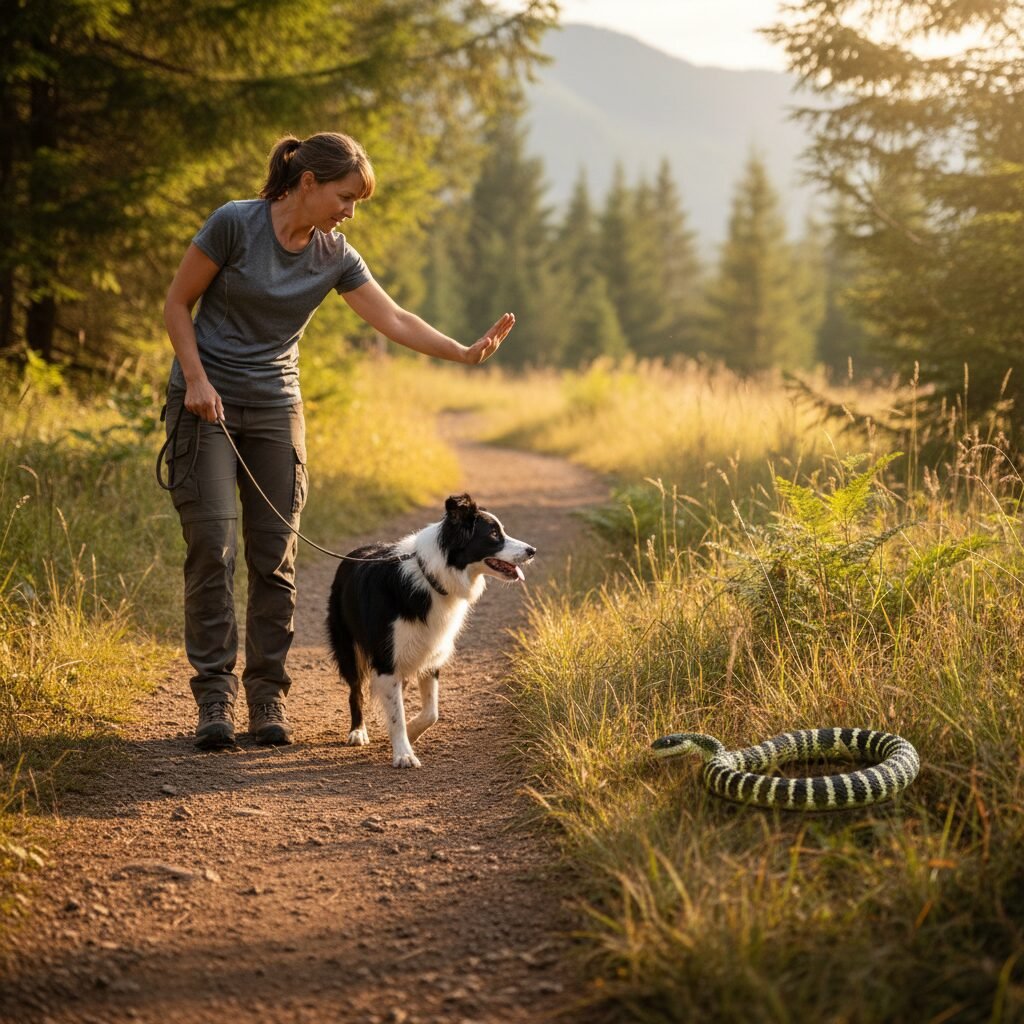
A ‘Leave It’ command trained in your living room is not a ‘Leave It’ command that will work on a hiking trail. ‘Proofing’ is the process of systematically increasing the difficulty and adding distractions to make the command reliable in any situation. This is the most critical phase for snake avoidance.
Generalizing the Command
Start by practicing with different objects (toys, tissues, shoes) and in different locations (backyard, front porch, quiet park on leash). The goal is for your dog to understand that ‘Leave It’ applies to everything, everywhere. Gradually increase the value of the ‘leave it’ items, but always ensure the reward they get from you is even better.
Simulating Snake Encounters
Once the command is solid with inanimate objects, you can begin to simulate a snake encounter. Use a realistic-looking rubber snake for this phase. Never use a live, defanged, or dead snake, as this is dangerous and can create unpredictable associations.
| Difficulty Level | Training Scenario | Goal |
|---|---|---|
| Level 1: Stationary & Scent-Free | Place the rubber snake on the grass in your yard. Walk your dog past it on a loose leash. Cue ‘Leave It’ before they show interest. | Dog calmly walks past the object, focusing on you for a reward. |
| Level 2: Adding Scent | Lightly rub the rubber snake in shed snake skin or scent from a reptile habitat (available from pet stores). Repeat Level 1. | Dog ignores the object despite the intriguing new scent. |
| Level 3: Adding Subtle Movement | Tie a thin fishing line to the snake. As you approach, have a helper give it a slight twitch. Cue ‘Leave It’. | Dog disengages immediately despite the startling movement. |
| Level 4: High-Distraction Environment | Practice on a familiar hiking trail (on leash). Place the snake just off the trail ahead of time. | Dog reliably obeys the command in an outdoor environment with competing smells and sounds. |
Always keep your dog on a leash during these advanced sessions to ensure safety and control. The goal is for the ‘Leave It’ command to become an automatic, reflexive response, overriding any instinct to investigate.
Troubleshooting Common Training Challenges

Training is rarely a linear process. It’s common to encounter setbacks. Understanding why a problem is occurring is the first step to fixing it. Here are some common issues and their solutions:
- Problem: My dog keeps grabbing the item before I can say ‘Leave It’.
Solution: You are moving too quickly. Go back a step in the training protocol. Use a lower-value item or manage the environment better (e.g., keep your hand closer to the item to cover it). The dog should be set up for success, not failure. - Problem: My dog ignores the item but then doesn’t look at me for the reward.
Solution: Your reward or your marking may not be exciting enough. Make sure you are marking the exact moment they look away from the item with an enthusiastic ‘Yes!’ and delivering a super high-value treat immediately. You may need to lure their head up toward you with the reward at first. - Problem: The command works indoors but falls apart outside.
Solution: The difficulty gap is too large. This is a classic proofing failure. You need to bridge the gap with intermediate steps. Practice in your garage, then your driveway, then your quiet front yard, before moving to a park or trail. Each new environment adds a layer of distraction that must be worked through. - Problem: I find myself repeating ‘Leave It, Leave It, LEAVE IT!’.
Solution: You are poisoning the cue. A command should be given once in a clear, neutral tone. If the dog doesn’t respond, it means the training is not yet solid enough for that situation. Do not repeat the command. Instead, use your leash to gently guide your dog away from the object, and make a note to practice at a lower difficulty level later.
Conclusion
The ‘Leave It’ command, when trained and proofed to a high degree of reliability, is one of the most powerful safety tools a dog owner can possess. It is a testament to the bond you share and your commitment to your dog’s well-being. While we hope you never have to use it in a life-or-death situation with a venomous snake, the peace of mind that comes from knowing your dog will respond is invaluable. Consistency, patience, and positive reinforcement are the pillars of this training. By investing the time and effort now, you are equipping your canine companion with a skill that could one day make all the difference. Stay vigilant on the trails, be aware of your surroundings, and trust in your training.