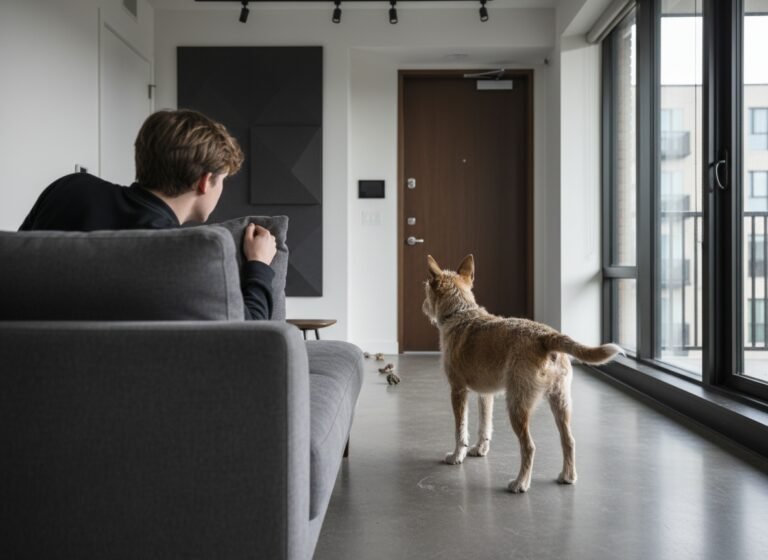
Work From Home Savior: Stop Your Dog Barking Every Time You Take a Call

The shift to remote work has brought many benefits, but for dog owners, it has also amplified a common challenge: managing a dog’s barking during crucial work calls. That sudden eruption of barks when you answer the phone can be unprofessional, stressful, and disruptive. You’re not alone in this struggle. Many pet owners find themselves constantly hitting the mute button, feeling a mix of frustration and helplessness. However, it’s essential to understand that barking is a natural form of canine communication. The goal isn’t to silence your dog forever, but to teach them when it’s appropriate to be quiet and to provide them with the tools to remain calm.
This comprehensive guide will serve as your roadmap to a quieter workday. We will delve into the root causes of this specific behavior, moving beyond simple fixes to address the underlying triggers. We’ll then provide a detailed, step-by-step training protocol grounded in positive reinforcement, empowering you to build new, desirable habits. From foundational commands to advanced desensitization techniques and immediate management strategies, you will gain the expert knowledge required to transform your vocal companion into a calm and quiet office mate. Patience and consistency are your greatest assets on this journey, and the result—a peaceful and productive work-from-home environment—is well within your reach.
Decoding the Bark: Why Your Dog Reacts to Your Calls

Before you can modify a behavior, you must first understand its origin. A dog that barks when you’re on the phone isn’t trying to be defiant; they are reacting to a specific trigger or communicating a need. Identifying the ‘why’ behind the bark is the critical first step in formulating an effective training plan. Your tone of voice changes, your attention shifts entirely away from them, and a disembodied voice enters the room—all of these can be confusing or stimulating for a dog.
Common Triggers for Phone Call Barking:
- Territorial Instinct: Your dog may perceive the voice on the other end of the line as an intruder in their territory. Since they can’t see the person, their protective instincts kick in, and they bark to alert you to the perceived threat and ward it off.
- Demand for Attention: When you pick up the phone, your focus shifts completely. Your dog, who may have been enjoying your passive company, suddenly feels ignored. Barking becomes an effective, learned strategy to redirect your attention back to them, even if it’s negative attention.
- Anxiety or Fear: A change in your tone of voice—perhaps becoming more animated or serious during a work call—can be unsettling for some dogs. They may bark out of anxiety, not understanding the context and feeling stressed by the shift in the home’s emotional atmosphere.
- Excitement and Play-Seeking: Conversely, if your ‘phone voice’ is high-pitched and energetic, your dog might interpret it as an invitation to play. The barking is a manifestation of their excitement and an attempt to join in on what they perceive as a fun activity.
- Boredom and Lack of Stimulation: A dog without sufficient mental and physical exercise is a dog that will create its own entertainment. Barking at the stimulus of a phone call can simply be a way to release pent-up energy and alleviate boredom.
Expert Tip: Keep a small log for a few days. Note what happens immediately before, during, and after a barking episode on a call. Does your dog’s body language show fear (tucked tail, flattened ears) or excitement (wagging tail, play bows)? This information is invaluable for pinpointing the primary motivator.
Foundational Training: The ‘Quiet’ and ‘Place’ Commands

With an understanding of the triggers, we can now build the behavioral foundation for success. Two commands are non-negotiable for this training: ‘Quiet’ and ‘Place.’ These commands give you a clear, positive way to communicate your expectations to your dog. Master these in low-distraction environments before attempting to use them during a real call.
Teaching the ‘Quiet’ Command
The goal is not to punish barking, but to reward silence. This distinction is crucial for building a positive association.
- Instigate a Bark: Start by having someone ring the doorbell or knock on the door—a reliable trigger for most dogs. Allow your dog to bark two or three times.
- Interrupt and Mark: Hold a high-value treat near your dog’s nose. The moment they stop barking to sniff the treat, say your marker word (like “Yes!” or “Good”) in a calm, positive tone and give them the treat.
- Introduce the Cue: Once your dog reliably stops barking to take the treat, you can add the verbal cue. As you present the treat to interrupt the barking, say “Quiet.” The moment they are silent, mark and reward.
- Extend the Duration: Gradually increase the length of silence required before they get the reward. Start with one second, then two, then five, and so on. If they bark, the ‘timer’ resets.
Teaching the ‘Place’ Command
The ‘Place’ command teaches your dog to go to a specific spot, like a bed or a mat, and stay there until released. This is their designated ‘work zone’ where they can learn to relax independently.
- Introduce the Place: Make the designated spot (a comfortable dog bed is ideal) highly appealing. Drop treats onto it and let your dog discover them. Use a positive, happy tone when pointing to the bed.
- Lure and Reward: Lure your dog onto the bed with a treat in your hand. The moment all four paws are on the mat, mark the behavior (“Yes!”) and give them the treat.
- Add the Verbal Cue: As your dog starts to anticipate going to the bed, add the cue “Place” just as you begin to lure them. Reward them generously once they are on the mat.
- Build Duration and Distance: Begin asking for a ‘down’ or ‘sit’ on the place. Reward them for staying. Start with a few seconds and slowly build up the time. Gradually add distance by taking a step back before returning to reward them. The goal is for them to remain on their place even when you are across the room.
The Step-by-Step Desensitization and Counter-Conditioning Protocol
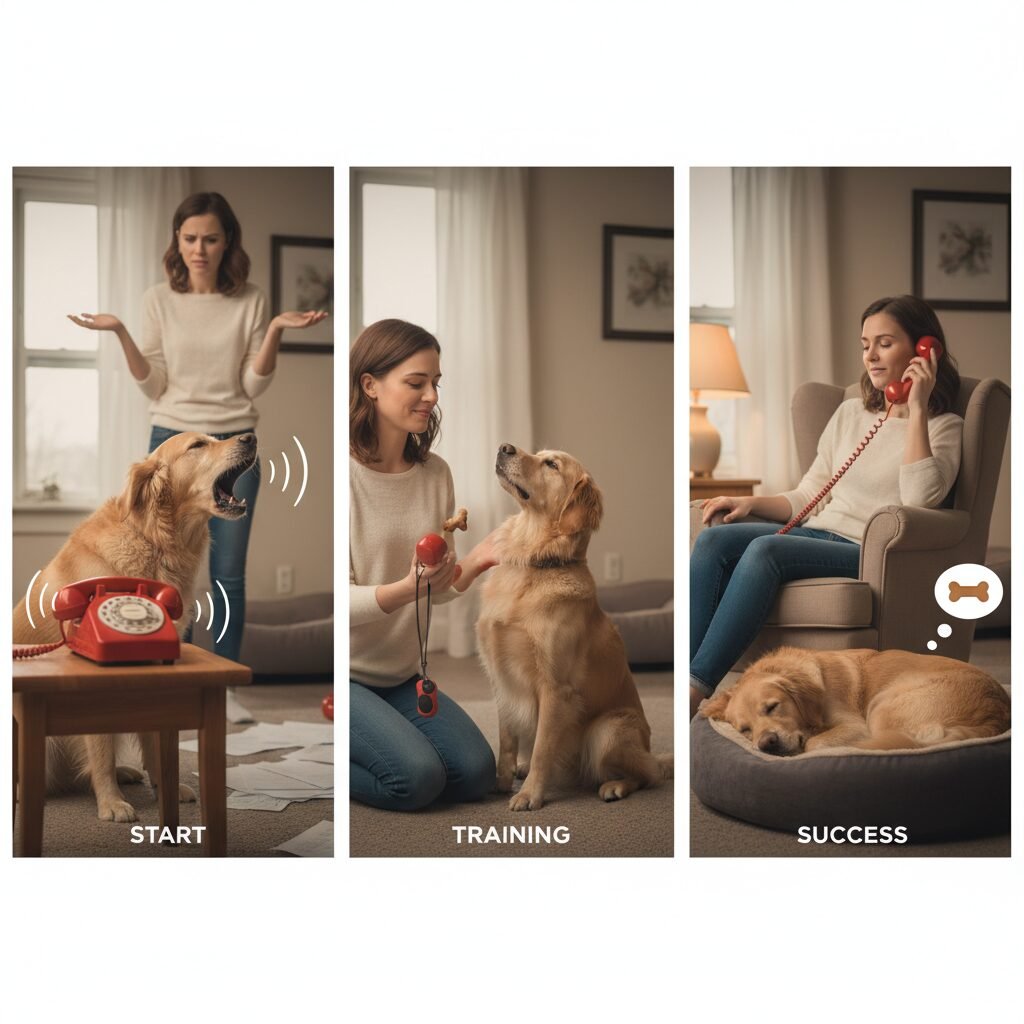
This is the core of your training. Desensitization involves exposing your dog to the trigger (the phone call) at a very low intensity, while counter-conditioning works to change their emotional response from negative (anxious, territorial) to positive (calm, expectant of a reward). This process must be gradual. Pushing too fast will undermine your progress.
What you’ll need: A helper or a second phone, and a supply of high-value treats (small pieces of chicken, cheese, or special training treats).
- Step 1: The Ringer: Have your helper call your phone from another room. The moment the phone rings, before you even move, start tossing treats to your dog. The goal is for the ringtone to predict treats. Do this 5-10 times, then end the session. Repeat over several days until the ringtone causes your dog to look at you expectantly for a treat, not to bark.
- Step 2: Picking Up the Phone: Once the ringer is no longer a trigger, proceed to the next step. Have your helper call. As it rings, toss treats. Then, pick up the phone and immediately hang up, while continuing to give treats. The action of you picking up the phone should be associated with good things.
- Step 3: The ‘Hello’: Now, pick up the phone and say a single word, like “Hello,” in a calm, neutral voice. Immediately hang up and reward your dog with a jackpot of treats for remaining quiet. If they bark, you’ve moved too fast. Go back a step.
- Step 4: Short Sentences: Gradually increase the duration of your speech. Pick up the phone and say, “Hello, how are you?” then hang up and reward. Your dog must remain calm on their ‘place’ during this entire interaction.
- Step 5: Simulated Conversations: Enlist your helper for a mock phone call. Ask them to talk to you for 30 seconds about something mundane. During this time, intermittently drop treats for your dog as long as they are quiet on their mat. This teaches them that calm behavior during your conversation earns rewards.
- Step 6: Real-World Practice: Start applying this to low-stakes, real phone calls. Ask a friend to call you. Before you answer, send your dog to their ‘place’ and give them a long-lasting chew or a puzzle toy. Reward them at the end of the call for their calm behavior.
Crucial Note: Throughout this entire process, your dog should ideally be on their ‘place.’ This combines the two training concepts: their job is to be on their mat, and their reward comes from being quiet while you handle the ‘scary’ phone.
Management Strategies for Immediate Relief
Training is a process that requires time and patience. While you are working on the long-term behavioral solution, you still have a job to do and need immediate ways to manage the barking. Management is not a substitute for training, but a crucial tool to prevent the dog from rehearsing the unwanted behavior and to help you get through your workday.
Enrichment and Exercise
A tired dog is a good dog. A mentally stimulated dog is a calm dog. Ensure your dog’s needs are met before you have important calls scheduled.
- Physical Exercise: A brisk walk, a game of fetch, or a run in the yard an hour before your major block of meetings can make a significant difference. This helps burn off excess physical energy that might otherwise manifest as barking.
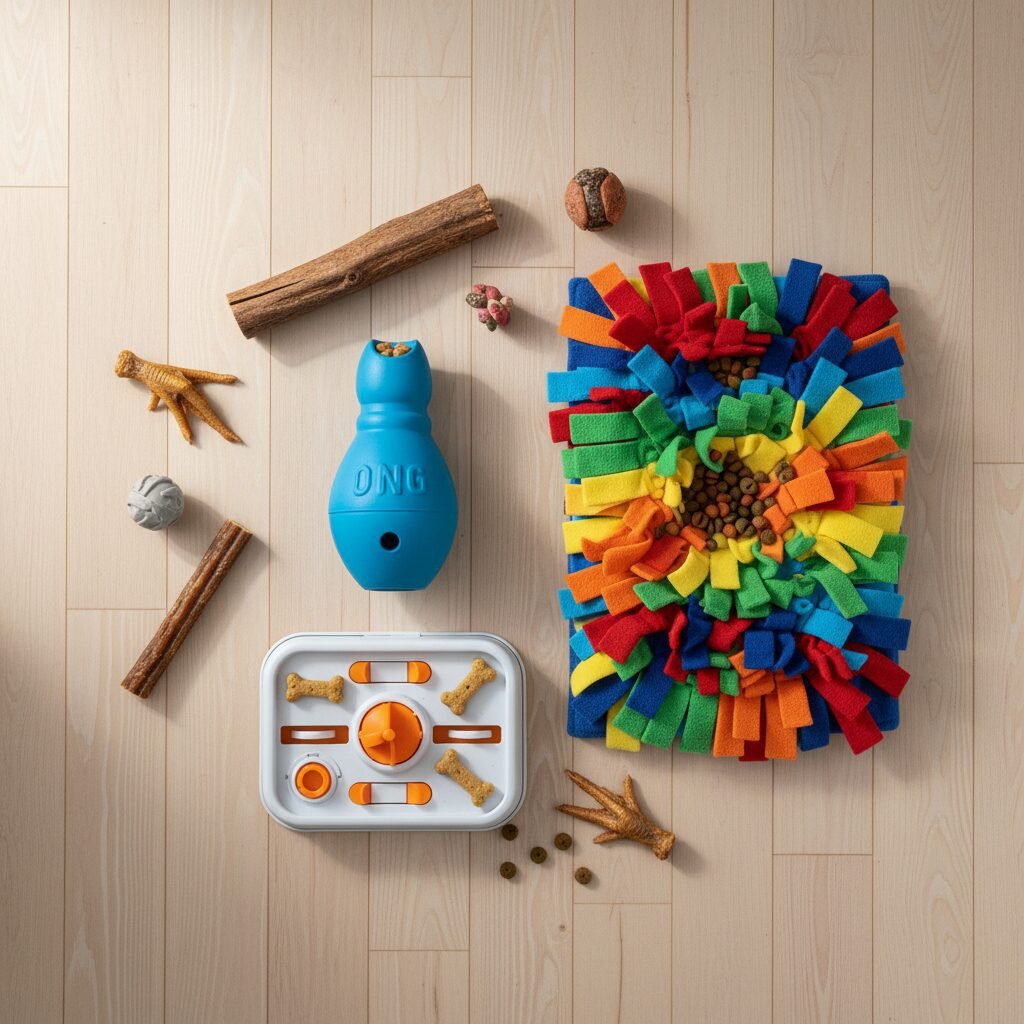
- Mental Stimulation: This is just as important as physical exercise. Food-dispensing puzzle toys, snuffle mats, or a frozen KONG filled with peanut butter can keep your dog occupied, focused, and quiet for a significant period. Reserve the ‘highest value’ enrichment toy exclusively for your call times.
| Enrichment Type | Best For | Duration of Engagement |
|---|---|---|
| Food Puzzle Toys | Problem-solving dogs, high food drive | 15-30 minutes |
| LickiMats / Frozen KONGs | Anxious dogs (licking is self-soothing) | 20-40 minutes |
| Snuffle Mats | Dogs that love to sniff and forage | 10-20 minutes |
| Long-Lasting Chews | Power chewers, teething puppies | 30+ minutes |
Environmental Management
Control the environment to set your dog up for success.
- Create a ‘Work Zone’: If possible, have your dog on their ‘place’ bed in a separate room or behind a baby gate with their special toy. This physical separation can reduce their impulse to ‘guard’ you from the phone call.
- Use White Noise: A white noise machine or a fan can help muffle the sound of your voice, making it less of a distinct trigger for your dog. It can also help block out external noises that might cause them to bark.
- Limit Visual Triggers: If your dog barks at passersby, close the blinds or use window film during your calls. Preventing this ‘trigger stacking’ can keep your dog below their reactivity threshold.
Troubleshooting: Common Pitfalls and How to Overcome Them

Even with the best plan, you may encounter setbacks. Canine behavior training is rarely a linear process. Understanding common challenges and knowing how to address them will keep you on track and prevent you from becoming discouraged.
What If: My Dog Breaks Their ‘Place’ Command?
This is very common, especially in the beginning. If your dog gets up from their mat, do not scold them. Calmly and without emotion, lead them back to their place. You may need to use a leash initially to guide them. This indicates you have likely increased the duration or distance too quickly. Go back to shorter durations where they can be successful and reward heavily for that success before trying to increase the difficulty again.
What If: The Barking Gets Worse (Extinction Burst)?
Sometimes, when you start ignoring a behavior that used to get a reaction, the dog will try it with more intensity. This is called an ‘extinction burst.’ For example, if barking used to make you look at them, they might bark louder or longer, thinking, ‘She must not have heard me!’ It is absolutely critical to ignore the intensified behavior (as long as the dog is safe). If you give in, you will have reinforced a much more intense version of the barking. Stay consistent, and the behavior will eventually fade when they learn it’s no longer effective.
What If: My Dog is Too Over-Aroused to Train?
If your dog is so frantic that they won’t take treats and can’t focus, they are ‘over threshold.’ No learning can happen in this state. You must end the session immediately and try again later when they are calmer. The next time, make the session much easier. For example, instead of picking up the phone, just touch it. Find the point where your dog can remain calm and work from there. This is a clear sign that the desensitization steps were too large.
What If: I Live in an Apartment and Can’t Let My Dog Bark?
This is a tough situation that requires a heavy reliance on management. Use the ‘Quiet’ command training, but capture the silence much faster—after a single ‘woof.’ You cannot let them practice barking. Rely heavily on providing a high-value chew or puzzle toy in a separate room before every single call. Prevention is your best and only strategy while the slower desensitization training happens in the background during non-work hours.
Conclusion
Achieving a peaceful work-from-home environment with your canine companion is not an overnight fix, but a journey of communication, patience, and consistent effort. By first understanding the root cause of your dog’s barking, you can move from a place of frustration to one of empathy and effective action. The solution lies in a multi-faceted approach: building a strong foundation with the ‘Quiet’ and ‘Place’ commands, systematically changing your dog’s emotional response through desensitization, and employing smart management strategies for immediate relief.
Remember that every interaction is a training opportunity. Celebrate the small victories—a moment of silence, a calm stay on the mat, a relaxed posture during a phone ring. These are the building blocks of lasting change. Stay consistent with your methods, and always rely on positive reinforcement to build a relationship based on trust, not intimidation. With these expert strategies in your toolkit, you can successfully reclaim your focus and transform your disruptive barker into the calm, quiet, and professional co-worker you’ve always wanted.