Why Does My Dog Bark at the Sky? Airplane Anxiety Solved
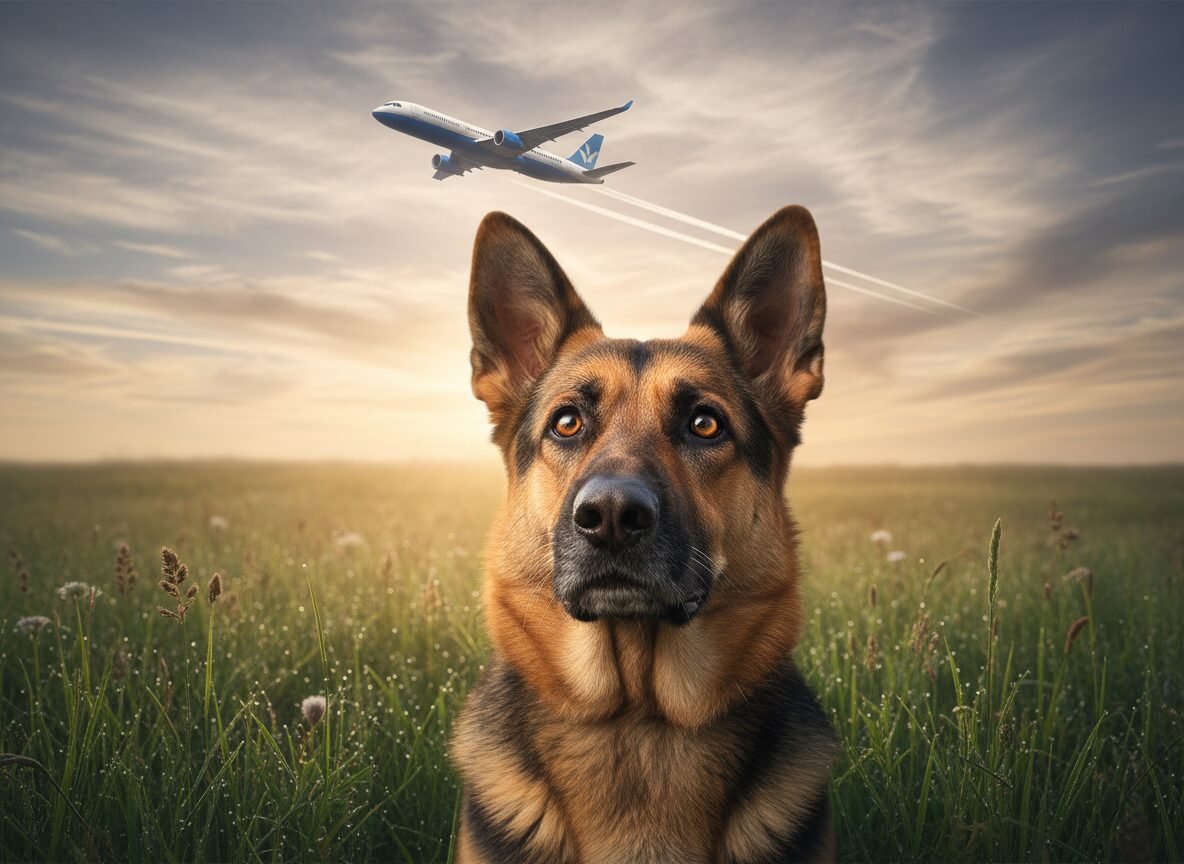
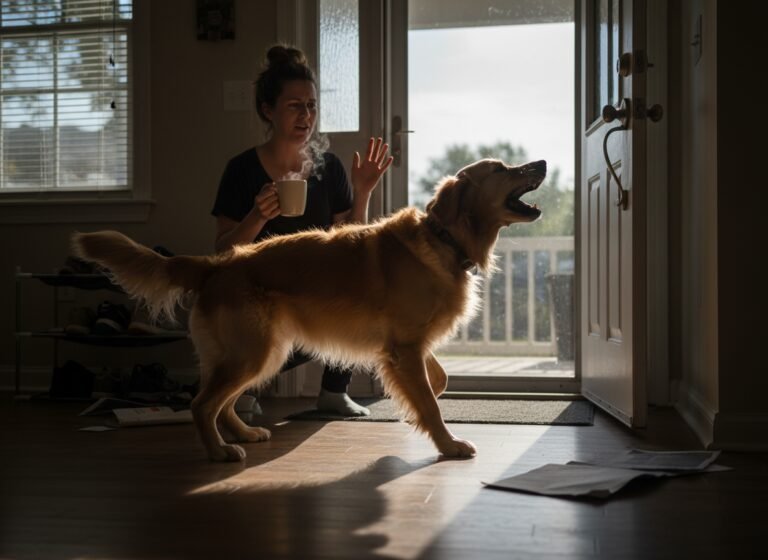
As a devoted pet owner, you are attuned to your dog’s every bark, whimper, and tail wag. However, one of the most perplexing behaviors you might witness is your canine companion standing in the yard, staring intently at the sky, and barking at what appears to be nothing. This behavior can be both confusing and concerning. Is it a sign of a neurological issue, a quirky habit, or something else entirely? In many cases, the culprit is unseen but not unheard: an airplane flying thousands of feet overhead. A dog’s incredible hearing can transform the distant drone of an engine into a distressing and intrusive threat, triggering a fear-based response. This article will serve as your definitive guide to understanding this phenomenon. We will delve into the sensory world of your dog, explore the mechanics of noise phobias, and provide a clear, actionable plan to alleviate your dog’s airplane anxiety, transforming their fear into a feeling of safety and calm.
Understanding the Root Causes: Sensory Overload and Phobias
Decoding Your Dog’s Sensory Experience
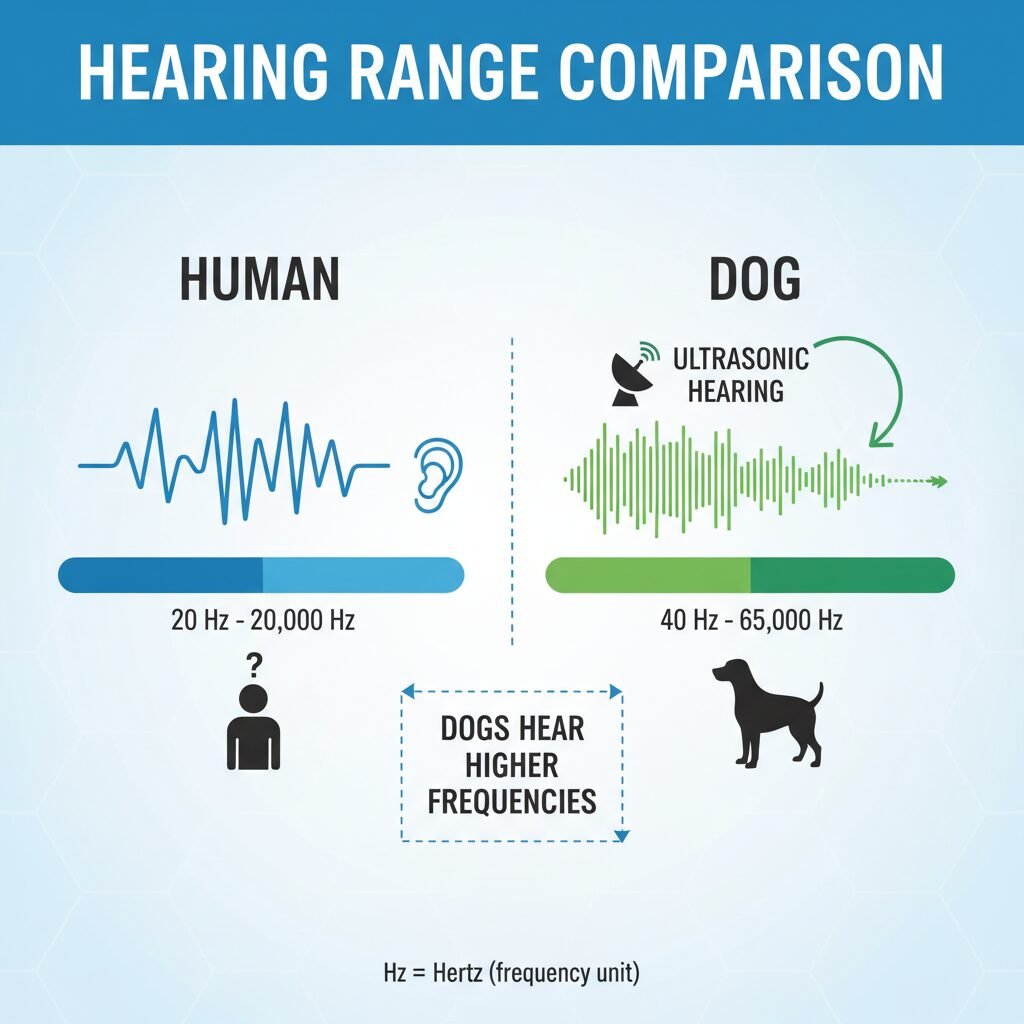
To understand why a dog barks at an airplane, we must first appreciate their vastly different sensory perception of the world. While we might barely notice a plane’s hum, for a dog, it can be an overwhelming auditory event. Dogs can hear a range of frequencies far beyond human capability, from approximately 67 Hz to 45,000 Hz (45 kHz), compared to the human range of 20 Hz to 20,000 Hz (20 kHz). This means they can detect high-frequency sounds, such as the whine of a jet engine, long before we can. What sounds faint to us can be sharp and clear to them.
Furthermore, this sound doesn’t just appear and disappear. It approaches, grows in intensity, passes directly overhead, and then fades. From a dog’s perspective, this is an invisible, loud entity invading their territory from a direction they cannot easily defend against—the sky. This can trigger a territorial or fear-based response, manifesting as barking. It’s not just about the volume; it’s the frequency, the duration, and the inability to identify a visible source that creates a perfect storm for anxiety.
Common Triggers Beyond Airplanes
While airplanes are a primary suspect, other aerial phenomena can elicit the same reaction:
- Drones: The high-pitched buzz of a drone is well within a dog’s hearing range and can be extremely irritating or frightening.
- Large Birds: Birds of prey like hawks or eagles can be perceived as a threat, triggering an instinctual alarm bark.
- Weather Balloons or Kites: Unfamiliar objects moving unpredictably in the sky can be unsettling for a dog.
- Sounds from Afar: Distant construction noise or sirens can be bounced and distorted by atmospheric conditions, making the source difficult for a dog to pinpoint and causing them to look skyward.
Understanding these potential triggers is the first step in diagnosing the problem. The core issue often isn’t the object itself, but the development of a specific noise phobia, a condition that requires careful and patient intervention.
Is It Really Airplanes? Pinpointing the Signs of Aviophobia in Dogs
Identifying the Telltale Symptoms
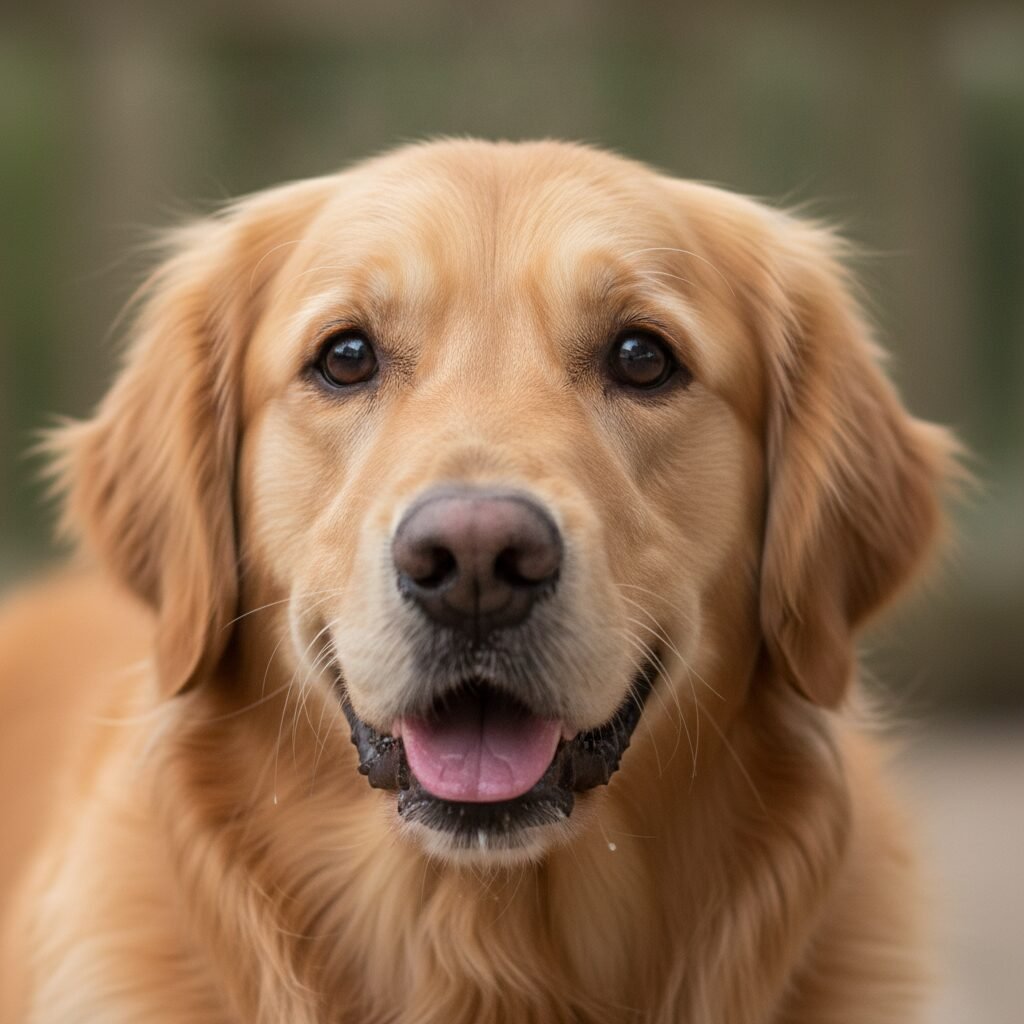
Once you suspect airplanes are the cause of your dog’s distress, the next step is to become a careful observer. A phobic response is more than just a simple bark; it’s a collection of stress signals that indicate genuine fear. Documenting these signs is crucial for confirming the trigger and measuring progress during training. Look for these behaviors immediately before, during, and after an airplane passes overhead:
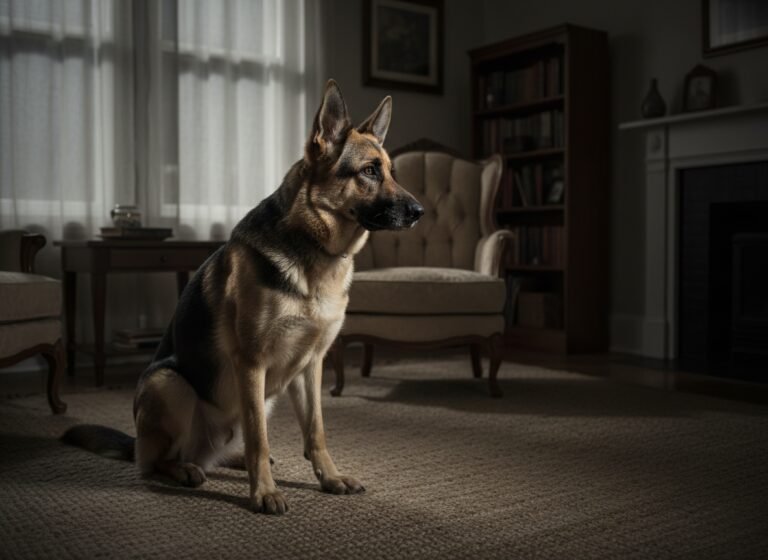
- Hyper-vigilance: Your dog may become tense, stop what they’re doing, and scan the sky long before you hear anything.
- Vocalization: This includes frantic, high-pitched barking, whining, or howling directed at the sky.
- Physical Trembling: Shaking or shivering that is not related to the temperature.
- Panting and Drooling: Excessive panting when not hot or exercising, along with drooling, are classic signs of stress.
- Hiding or Seeking Shelter: The dog might try to run inside, hide under furniture, or press against you for security.
- Pacing and Restlessness: An inability to settle down, walking in circles, or pacing back and forth.
- Destructive Behavior: In severe cases, a panicked dog may try to dig under a fence or chew on door frames in an attempt to escape the sound.
- Yawning and Lip Licking: These are subtle calming signals that dogs use when they feel anxious or uncomfortable.
The Power of a Behavior Journal
To confirm the pattern, start a behavior journal. This doesn’t need to be complicated. A simple notebook or a note on your phone will suffice. For a week or two, log the following information:
| Date & Time | Dog’s Behavior | Potential Trigger | Intensity (1-5) |
|---|---|---|---|
| Oct 26, 2:15 PM | Started pacing, ears back, whining. Ran to the back door. | Heard a faint plane approaching. | 3 |
| Oct 26, 2:17 PM | Intense, frantic barking at the sky as plane passed overhead. | Plane directly overhead. | 5 |
| Oct 26, 2:20 PM | Stopped barking, but continued to pant and pace for 5 minutes. | Plane sound faded. | 2 |
You can also use a flight tracking app on your phone to correlate your dog’s anxious episodes with actual flight paths over your home. This data is invaluable, not just for your own understanding, but also if you decide to consult with a professional trainer or veterinary behaviorist.
Step 1: Immediate Management and Creating a Safe Space
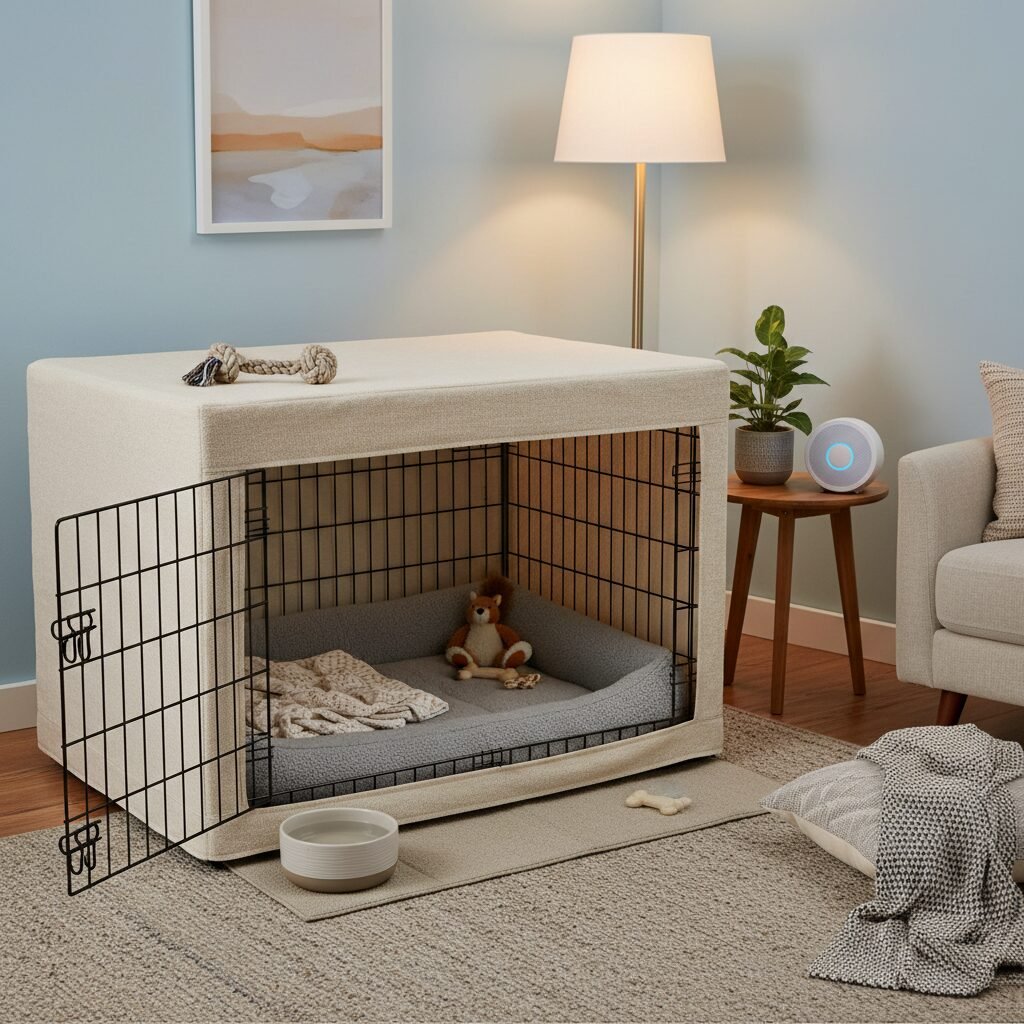
Proactive Management to Reduce Stress
Before beginning active training, the first priority is to manage the situation and reduce your dog’s ongoing stress. Every time your dog has a fearful reaction to an airplane, the phobia is reinforced. By managing their environment, you can prevent these reactions from occurring, creating a more stable emotional foundation for behavior modification.
Establish a ‘Safe Haven’
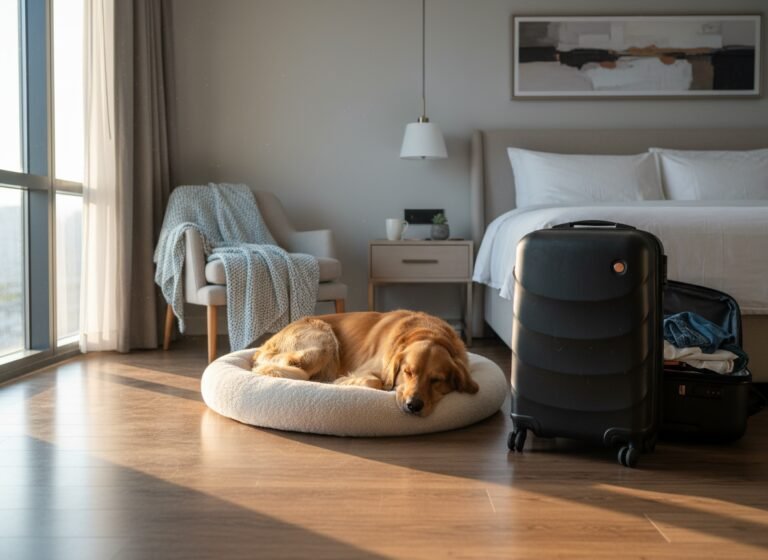
Every dog needs a space where they feel completely secure. This ‘safe haven’ or ‘den’ is where they can retreat when they feel overwhelmed. This could be a crate, a specific room, or even a closet.
- Make it Comfortable: Fill the space with soft bedding and your dog’s favorite toys.
- Make it Positive: Never use this space for punishment. Offer special, long-lasting chews or puzzle toys only in this area to build a strong positive association.
- Block Stimuli: If the space has windows, use blackout curtains. A sound machine, fan, or classical music can help mask the external noises of an approaching plane. A sturdy, covered crate is an excellent tool for this.
Expert Tip: Encourage your dog to use this space voluntarily throughout the day, not just during stressful events. This ensures they see it as a place of relaxation, not a place they only go when something scary is happening.
Control the Environment
Simple changes to your routine can make a significant difference:
- Strategic Potty Breaks: Use a flight tracking app to identify the busiest times for air traffic over your home. Try to schedule potty breaks and walks during quieter periods.
- Stay Indoors: During peak flight times or when you know a storm is approaching (as thunderstorm phobias often coexist), keep your dog indoors where sounds are muffled and they are closer to their safe haven.
- Mask the Sound: Playing calming music or leaving a TV or white noise machine on can help drown out the lower-level sounds of distant planes, preventing the anxiety from building.
Management is not a long-term solution on its own, but it is a non-negotiable first step. It stops the rehearsal of the fearful behavior and gives your dog’s nervous system a chance to recover, making them more receptive to the training that will follow.
Step 2: A Step-by-Step Guide to Counter-Conditioning and Desensitization
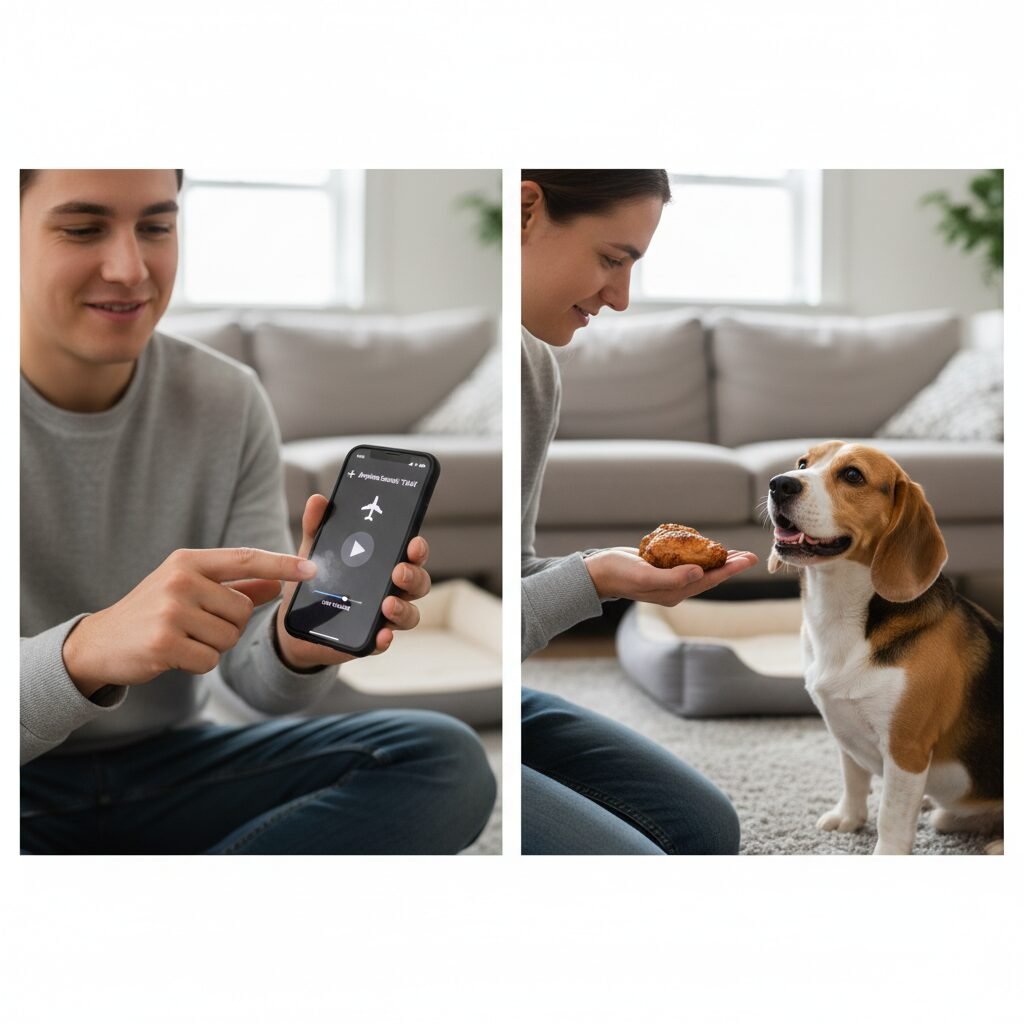
Actively Changing Your Dog’s Emotional Response
With management strategies in place, you can now begin the active training process. The goal is to change your dog’s association with the sound of airplanes from something scary to something that predicts a wonderful reward. This is achieved through two powerful techniques: Desensitization (gradual exposure to the trigger at a low intensity) and Counter-Conditioning (pairing the trigger with something the dog loves).
What You’ll Need:
- High-Value Treats: These should be extra special treats your dog doesn’t get at any other time. Think small pieces of cooked chicken, cheese, or freeze-dried liver.
- A Sound Source: A smartphone, tablet, or computer with speakers.
- Airplane Sound Recordings: You can find hours of airplane sounds on websites like YouTube.
The Step-by-Step Protocol:
- Establish a Baseline: Find a recording of airplane sounds. With your dog in a calm state, play the sound at the absolute lowest possible volume, so low you can barely hear it. Watch your dog for any sign of stress (ear twitch, head turn, stiffening). You are looking for the volume level just below their reaction threshold. This is your starting point.
- First Session: Sound + Treat: Play the sound at your starting volume. The instant the sound begins, give your dog a high-value treat. After a few seconds, stop the sound, and the treats stop. Repeat this for 2-3 minutes. The rule is simple: airplane sound makes delicious food appear.
- Gradual Volume Increase: Over many sessions (spread across days or weeks), slowly begin to increase the volume. If at any point your dog shows signs of anxiety, you have gone too fast. Immediately lower the volume back to a level where they were comfortable and successful, and proceed more slowly from there. Patience is paramount.
- Vary the Sounds: Use different recordings of airplanes—propeller planes, jets, planes taking off, planes landing—to help your dog generalize their positive association to all types of airplane noises.
- Transition to Real Life: Once your dog is comfortable with the recorded sounds at a realistic volume, start applying the technique to real airplanes. The moment you hear a real plane approaching, start a ‘treat party.’ Shower your dog with high-value treats until the plane is gone. The goal is for your dog to hear the plane and look to you expectantly for their reward.
Important: Keep training sessions short and positive, ideally no more than 5 minutes at a time. Always end on a successful note. This process is a marathon, not a sprint. Rushing will only set your dog back.
Advanced Strategies and When to Consult a Professional

Supporting Your Training with Additional Tools
For some dogs, particularly those with severe phobias, behavior modification alone may not be enough, or they may need extra support to be successful. Several adjunctive therapies can complement your training efforts.
- Anxiety Wraps: Products like the Thundershirt apply gentle, constant pressure to the dog’s torso. This pressure can have a calming effect on the nervous system, similar to swaddling an infant. It can be particularly useful during training sessions or when you anticipate a stressful event.
- Pheromone Diffusers: Adaptil is a synthetic copy of the calming pheromone a mother dog releases to comfort her puppies. Available as a plug-in diffuser or collar, it can help create a more serene ambient environment, lowering baseline anxiety.
- Nutritional Supplements: Certain supplements containing ingredients like L-theanine, tryptophan, or milk protein derivatives (like Zylkene) can help promote calm. However, you must consult your veterinarian before adding any supplement to your dog’s diet.
Knowing When to Seek Professional Help
It is crucial to recognize when a problem is beyond your ability to manage alone. You should seek professional guidance if:
- Your dog’s anxiety is severe and not improving with your efforts.
- The dog is at risk of harming themselves or escaping during a panic episode.
- The anxiety is beginning to generalize to other sounds or situations.
- You feel overwhelmed and unsure how to proceed.
There are two main types of professionals to consider:
- Certified Professional Dog Trainer (CPDT-KA/KSA): A certified trainer with experience in fear and anxiety cases can provide invaluable coaching, help you refine your training technique, and ensure you are implementing the desensitization and counter-conditioning protocol correctly.
- Veterinary Behaviorist (DACVB): A veterinary behaviorist is a veterinarian who has undergone extensive, specialized training in animal behavior. They are uniquely qualified to diagnose underlying medical conditions that may contribute to the behavior, rule out other causes, and, when necessary, prescribe anti-anxiety medication. Medication can be a critical tool to reduce a dog’s anxiety to a level where they are capable of learning new, positive associations through training.
Working with a professional is not a sign of failure; it is an act of responsible and compassionate ownership. Their expertise can provide the specific support your dog needs to overcome their fear.
Conclusion
Understanding and addressing your dog’s fear of the sky is a profound act of communication and care. What may seem like an irrational quirk is, in fact, a genuine expression of anxiety rooted in their sensitive perception of the world. By recognizing the signs of aviophobia, managing their environment to prevent panic, and patiently implementing a plan of desensitization and counter-conditioning, you can fundamentally change their experience. You are teaching them that the once-terrifying sound of an airplane is no longer a threat, but a predictor of safety and reward. Remember to be patient with both your dog and yourself. Overcoming a deep-seated phobia takes time, consistency, and a great deal of empathy. With the strategies outlined here, you have the power to help your canine companion feel secure and transform their sky-gazing barks into calm, confident silence.