The Vacuum Monster: How To Stop Your Dog From Attacking Your Cleaning Gear
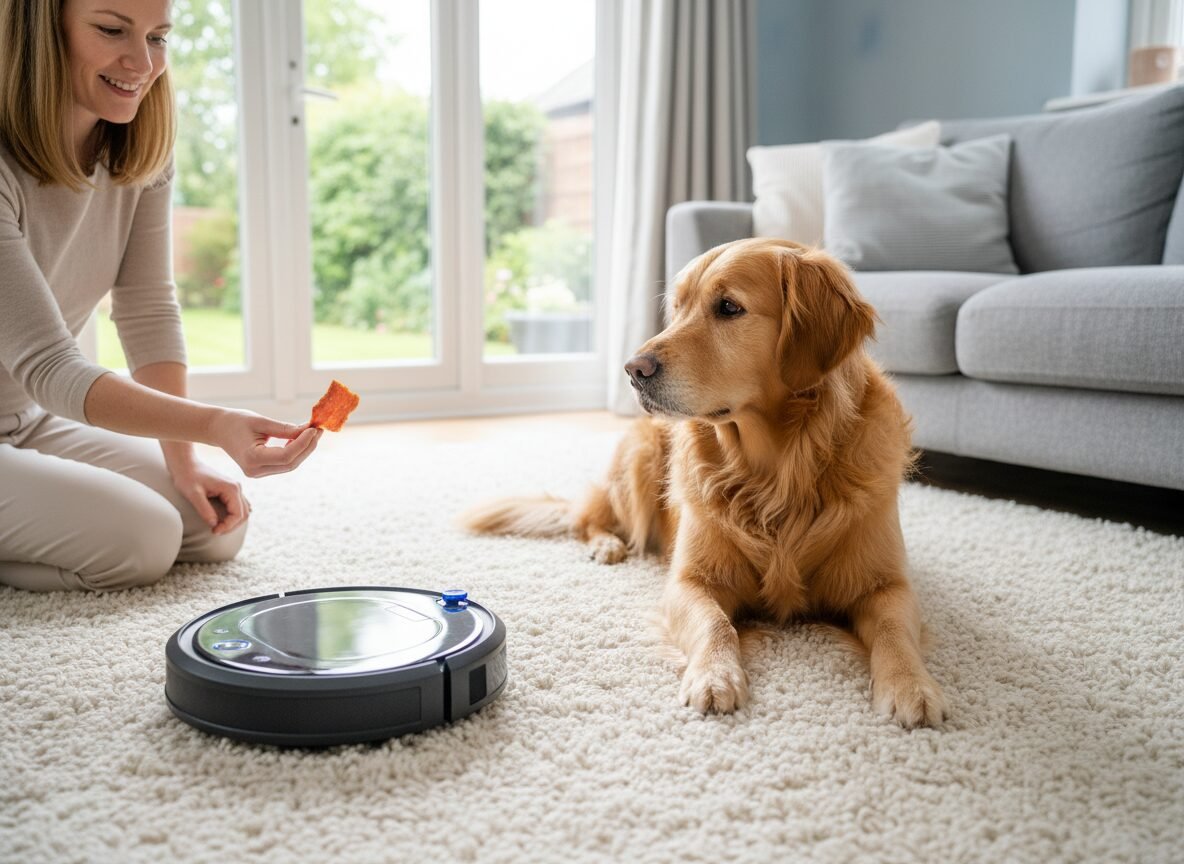
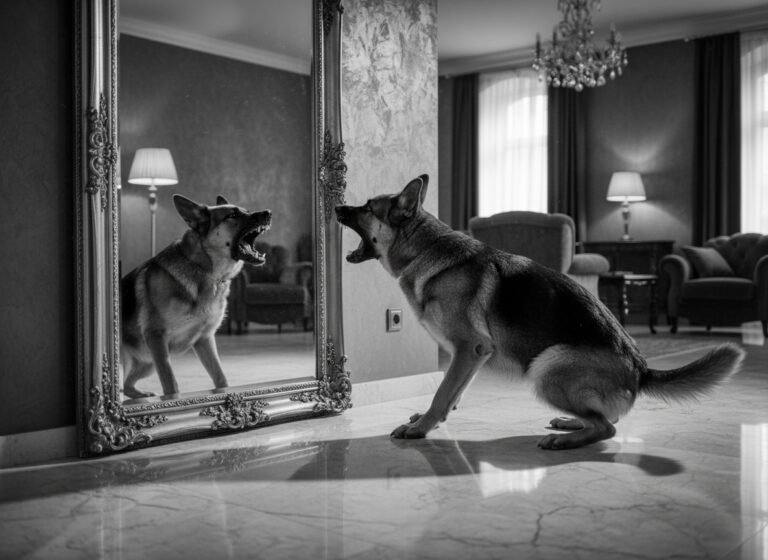
The sudden roar of the vacuum cleaner can transform even the most placid canine companion into a barking, lunging adversary. This daily or weekly battle, often dubbed the ‘vacuum monster’ phenomenon, is a source of stress for both pets and their owners. It’s not a sign of a ‘bad dog’; rather, it’s a complex reaction rooted in fear, sensory overload, and instinct. The vacuum’s loud, high-frequency noise, unpredictable movements, and strange smell can trigger a fight-or-flight response. For some dogs, it’s a terrifying intruder; for others with a high prey drive, it’s an erratic creature that must be herded or neutralized. This guide provides a professional, behaviorist-approved framework to dismantle this fear. We will move beyond simply managing the problem and delve into a systematic training protocol designed to change your dog’s emotional response from terror to tolerance, and eventually, to calm indifference. By employing the principles of desensitization and counter-conditioning, you can restore peace to your cleaning routine and teach your dog that the vacuum is a harmless part of a tidy home.
Understanding the Enemy: Why Dogs Perceive Vacuums as a Threat
Understanding the Enemy: Why Dogs Perceive Vacuums as a Threat
Before beginning any training protocol, it is crucial to understand the root cause of the behavior. A dog’s aggression or fear towards a vacuum cleaner is rarely arbitrary. It stems from a combination of sensory, instinctual, and experiential factors that make the machine a uniquely terrifying object in their world.
Sensory Overload
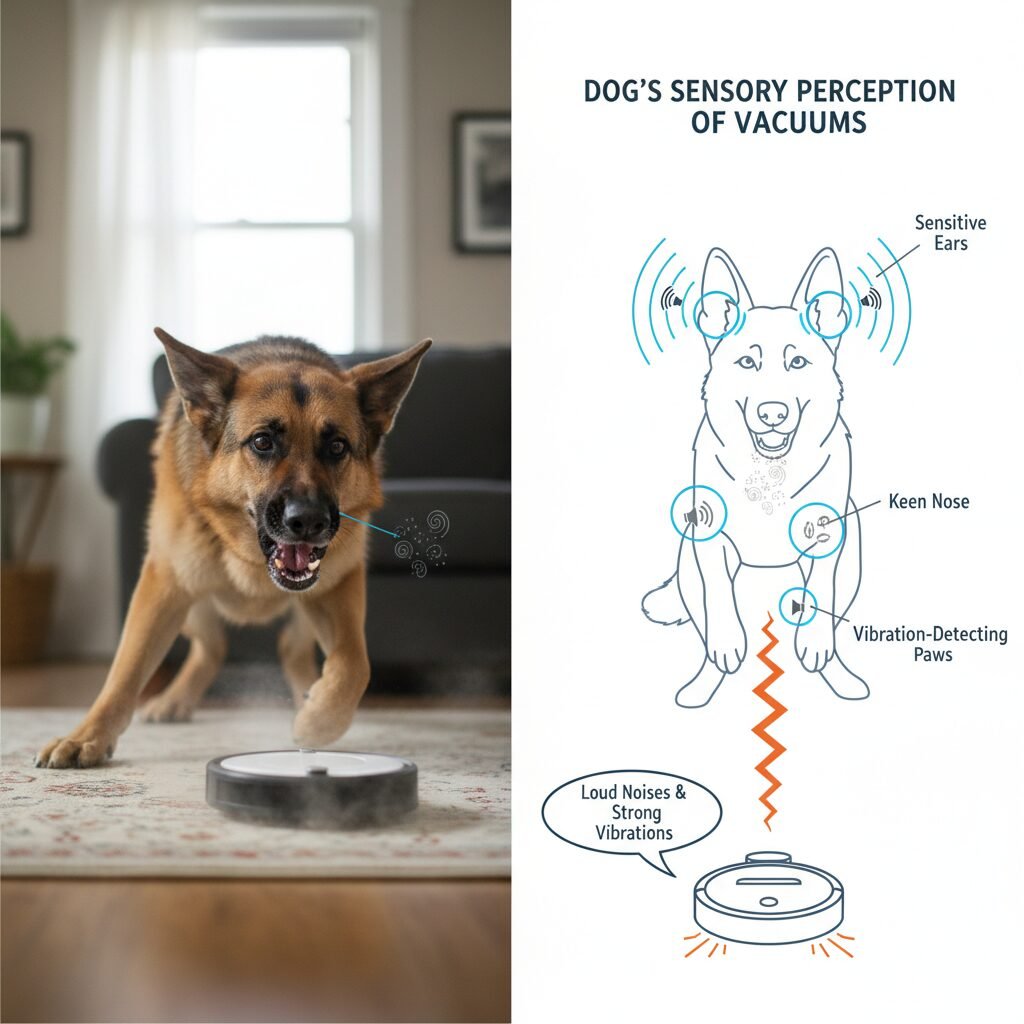
Dogs experience the world through a much more acute sensory lens than humans. Consider the vacuum from their perspective:
- Auditory Assault: The motor of a vacuum cleaner operates at a high frequency and volume that can be physically painful to a dog’s sensitive ears. What is merely loud to us can be an overwhelming, frightening roar to them.
- Vibrations: Beyond the sound, the machine produces low-frequency vibrations that travel through the floor. Dogs, particularly those lying down, can feel this unsettling rumble throughout their bodies, signaling a large, approaching disturbance.
- Strange Odors: As the vacuum works, it agitates dust, dander, and other particles, releasing a flurry of old and new smells into the air. This olfactory chaos can be confusing and alarming.
Instinctual Triggers
A dog’s innate behaviors also play a significant role in their reaction to cleaning equipment.
- Prey Drive: The quick, erratic movement of the vacuum head can trigger a dog’s prey drive. The instinct to chase, grab, and ‘kill’ a fast-moving object is deeply ingrained, especially in herding and terrier breeds. The vacuum becomes an endlessly frustrating ‘prey’ that cannot be subdued.
- Territorial Defense: To your dog, you are a high-value resource and the home is their territory. The vacuum is a loud, strange-smelling invader that moves aggressively through this territory. Your dog’s barking and lunging can be an attempt to ‘protect’ you and their home from this perceived threat.
- Startle Response: A vacuum cleaner is often stored away in a closet and appears without warning. This sudden introduction of a loud, moving object can be incredibly startling, creating a negative association from the very first encounter.
Expert Insight: A dog’s reaction is not defiance; it’s a genuine emotional response. Punishing the fear will only validate their belief that the vacuum is indeed a source of negativity and conflict. The goal is to change the underlying emotion, not just suppress the outward behavior.
Preparation for Peace: Assembling Your Training Toolkit
Preparation for Peace: Assembling Your Training Toolkit
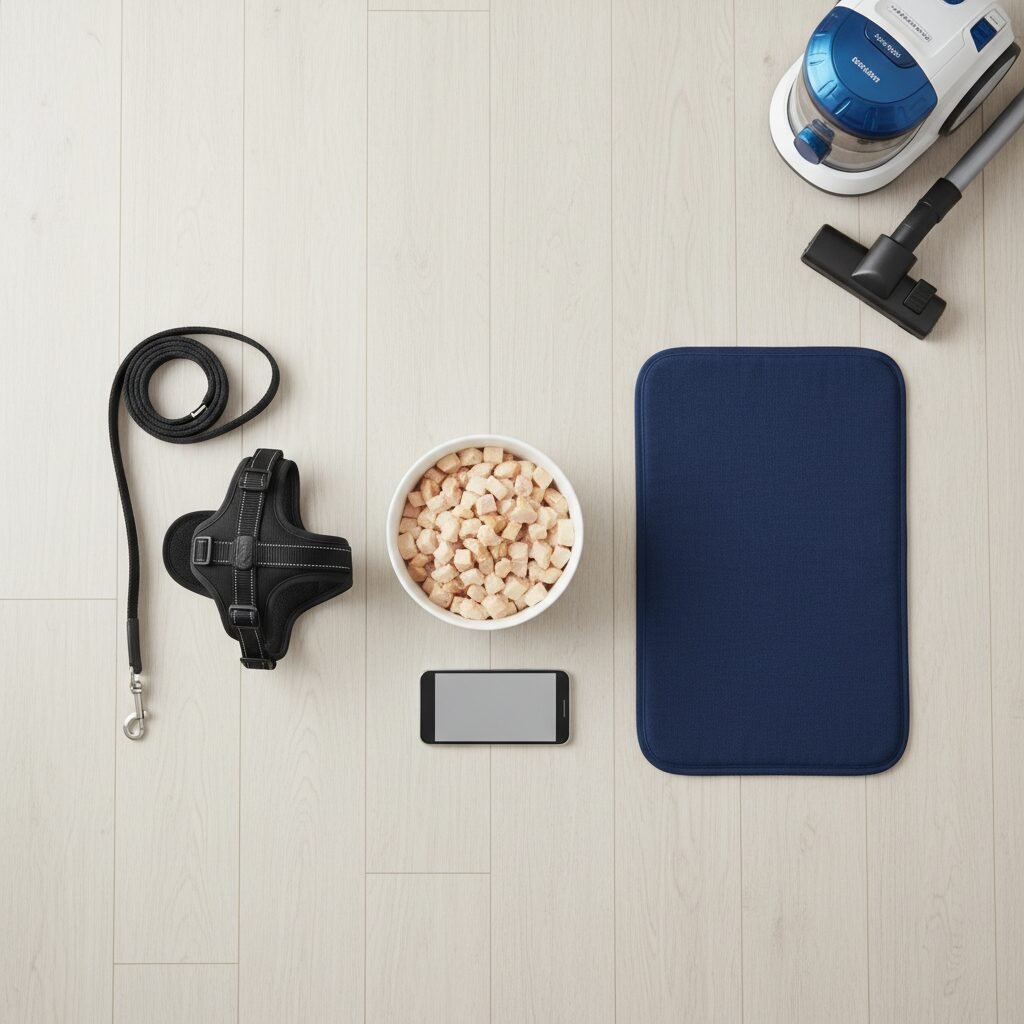
Successful behavior modification requires preparation. Before you begin the training process, gather the necessary tools to create a positive and controlled learning environment. Having everything on hand ensures that sessions run smoothly and that you can effectively reward your dog for calm behavior. Your goal is to build a new, positive association with the vacuum, and these tools are the foundation of that process.
Here is what you will need:
- Extremely High-Value Treats: Standard kibble or dry biscuits will not be sufficient. You need rewards that are exceptionally motivating for your dog. Think small pieces of cooked chicken, cheese, hot dogs, or commercial soft treats they rarely get. The treat’s value must outweigh the fear of the vacuum.
- The Vacuum Cleaner: You will need the object of fear itself. Ensure it is clean and in good working order. For the initial stages, it will remain unplugged.
- A Leash and Collar/Harness: A standard 6-foot leash will help you manage your dog and prevent them from rushing towards the vacuum, especially in the later stages of training. This is a safety tool, not a tool for correction.
- A ‘Safe Zone’ or Mat: Designate a comfortable spot, like a dog bed or a specific mat, at a significant distance from where the vacuum will be. This will be your dog’s station, where they learn that calm behavior earns rewards.
- A Smartphone or Speaker: For the sound desensitization phase, you will need a device to play recordings of vacuum cleaner noises at a controlled volume.
Once you have assembled your toolkit, choose a time for training when the house is quiet and there are minimal distractions. Sessions should be short—no more than 5-10 minutes at a time—to prevent your dog from becoming overwhelmed or stressed. Your energy is also part of the toolkit; remain calm, patient, and positive throughout the process.
The Step-by-Step Desensitization and Counter-Conditioning Protocol
The Step-by-Step Desensitization and Counter-Conditioning Protocol
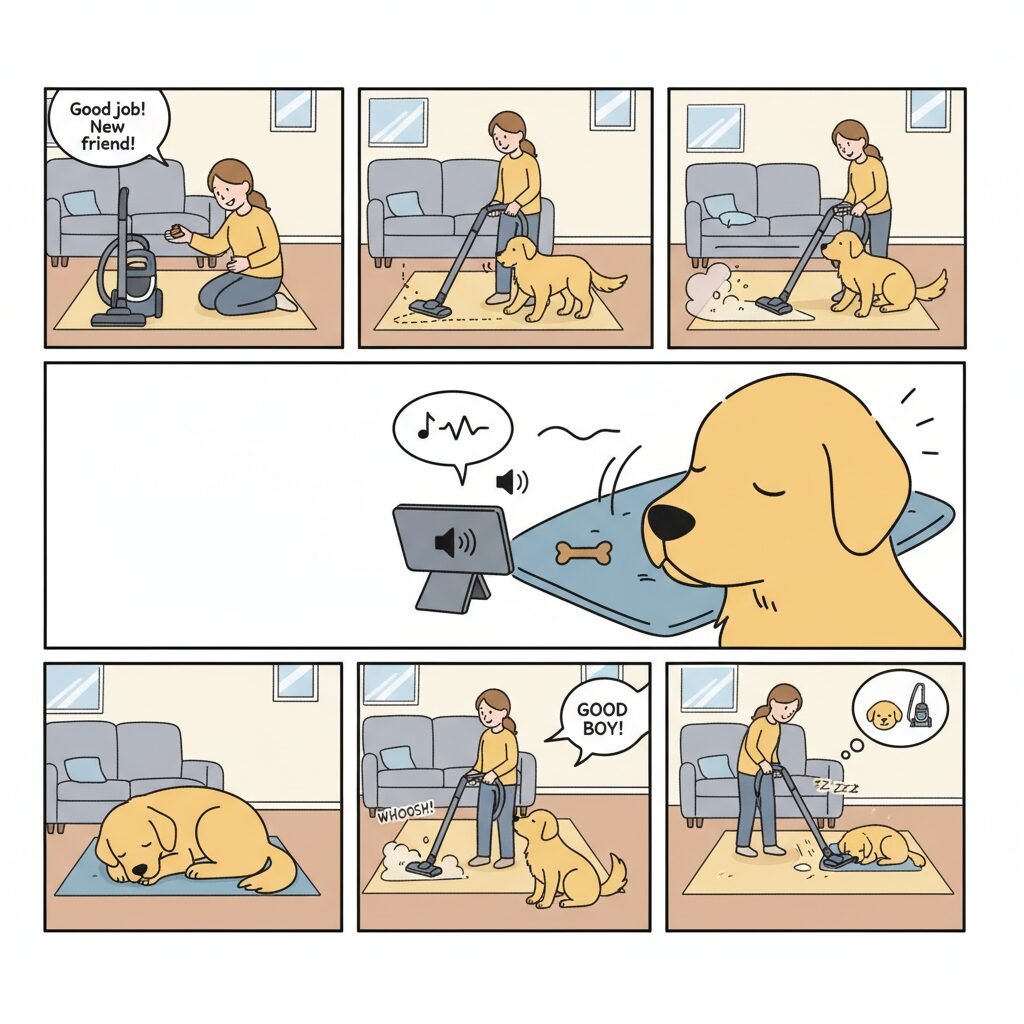
This protocol is a gradual process designed to slowly reduce your dog’s fear (desensitization) while simultaneously creating a positive association with the vacuum (counter-conditioning). The key to success is patience. Never move to the next step until your dog is completely comfortable and relaxed with the current one. If at any point your dog shows signs of stress (panting, whining, whale eye), you have moved too fast. Simply go back to the previous step where they were successful and work there for a few more sessions.
-
Step 1: The Stationary, Silent Object
The goal here is to teach your dog that the vacuum’s mere presence is a predictor of good things. Place the unplugged vacuum in the center of a room. Let your dog enter the room on their own. The moment they look at the vacuum, mark the behavior with a ‘Yes!’ or a clicker and toss them a high-value treat. The treat should be tossed away from the vacuum, encouraging them to reset and look again. Do not lure them closer. We are rewarding observation, not interaction. Repeat this for several short sessions over a few days until your dog sees the vacuum and happily looks to you for a treat.
-
Step 2: Introducing Harmless Movement
With the vacuum still off, begin to move it slightly. Push it forward an inch, then stop. If your dog remains calm, reward them. Gradually increase the range of motion, pushing the vacuum back and forth slowly and calmly. Continue to reward your dog for any calm behavior in the presence of the moving-but-silent machine. If they bark or lunge, you are moving it too much or too quickly. Slow down.
-
Step 3: Introducing Sound at a Distance
Leave the actual vacuum in its storage place. With your dog relaxed in their ‘safe zone,’ use your smartphone to play a recording of a vacuum cleaner at the lowest possible volume. As the sound plays, give your dog a steady stream of their favorite treats. After 15-20 seconds, stop the sound, and the treats also stop. The lesson is simple: vacuum sound makes treats appear. Over many sessions, slowly increase the volume, always ensuring your dog remains calm and below their reaction threshold.
-
Step 4: Combining Sound and Object (The Real Deal)
This is a significant step. Position your dog with a helper or on their mat at a great distance (e.g., the other end of a large room or even in an adjacent room). Turn the vacuum on for just one second, then immediately turn it off. The moment it turns off, your helper should reward the dog, or you should toss a treat. The sequence is: Noise (1 sec) -> Noise Off -> Reward. The reward must come after the noise stops. Gradually increase the duration the vacuum is on—two seconds, then five, and so on. This teaches your dog that the cessation of the noise brings rewards, which builds positive anticipation.
-
Step 5: Closing the Gap and Real-World Application
Once your dog is comfortable with the vacuum running for 30-60 seconds at a distance, you can begin to slowly decrease the distance between them and the machine, session by session. Continue the same process of rewarding calm behavior. Finally, you can begin to vacuum for short periods. Start with one small section of the room, then turn the vacuum off and give your dog a jackpot of treats on their mat. This shows them that tolerating the cleaning leads to a big payoff. Over time, you can extend the duration of your actual cleaning while periodically rewarding your dog for staying calmly on their mat.
Common Mistakes to Avoid During Training
Common Mistakes to Avoid During Training
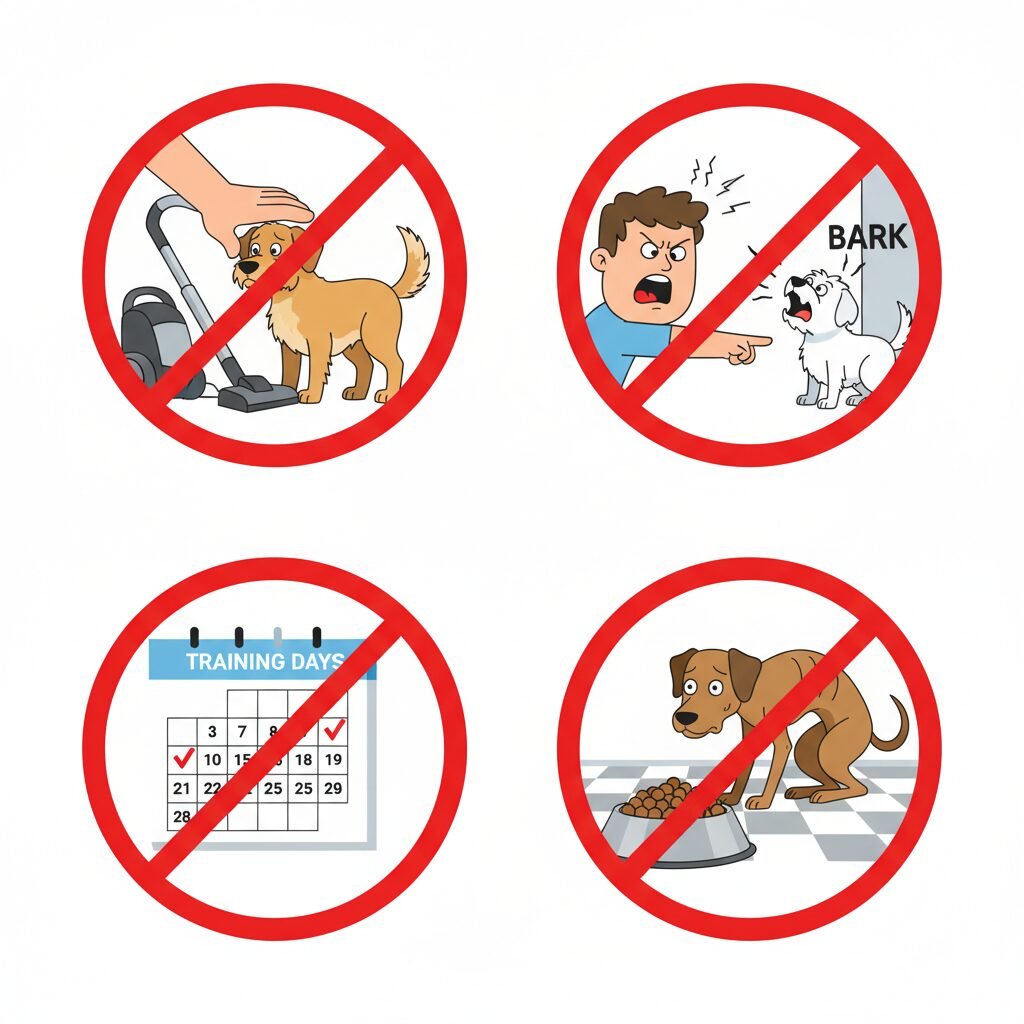
The path to a peaceful coexistence with your vacuum cleaner can be derailed by common training errors. Avoiding these pitfalls is just as important as following the steps correctly. These mistakes often stem from impatience or a misunderstanding of canine body language and learning theory. Committing to a positive, force-free approach is paramount for building trust and achieving lasting results.
- Forcing Interaction: Never drag your dog towards the vacuum or force them to sniff it. This technique, known as ‘flooding,’ is highly likely to backfire. It can intensify their fear and anxiety, confirming their belief that the vacuum is something to be terrified of. All interactions must be voluntary on the dog’s part.
- Punishing the Reaction: Yelling ‘No!’, using a spray bottle, or giving a leash correction when your dog barks at the vacuum is counterproductive. You are punishing the outward symptom (barking) of an internal emotion (fear). This only adds another layer of negativity to the situation and can damage your relationship with your dog.
- Moving Too Quickly: This is the most common mistake. Owners are often eager to see results and push their dog past their comfort level. Each step in the desensitization process may take several days or even weeks. Watch your dog’s body language carefully for signs of stress—lip licking, yawning, ‘whale eye’ (showing the whites of their eyes)—and be prepared to take a step back. Progress is not always linear.
- Using Low-Value Rewards: Expecting your dog to overcome a significant fear for a piece of their regular kibble is unrealistic. The reward must be sufficiently powerful to change their emotional state. If your dog is not interested in the treats you’re offering, you need to find something they value more.
- Inconsistent Training Sessions: Conducting one or two sessions and then stopping for a week will not yield results. Behavior modification requires consistency. Short, positive sessions conducted daily or every other day will build momentum and reinforce the new, positive association much more effectively than infrequent, long sessions.
When to Seek Professional Help
When to Seek Professional Help
While the desensitization and counter-conditioning protocol is highly effective for most cases of vacuum-related fear and reactivity, there are situations where the issue is more severe or complex. It is important to recognize when professional guidance is necessary for the safety and well-being of both your dog and your family.
Consider seeking help from a qualified professional if you observe the following:
- Extreme Aggression: If your dog’s reaction goes beyond barking and lunging to include biting or attempting to bite the vacuum cleaner, this is a significant safety concern. A dog that is intensely redirecting aggression onto the machine could potentially redirect that bite onto a person who gets in the way.
- No Progress or Regression: If you have been following the training protocol consistently and patiently for several weeks with no discernible improvement, or if your dog’s fear seems to be getting worse, there may be underlying anxiety issues that require a more nuanced approach.
- Generalized Anxiety: If the fear is not isolated to the vacuum but extends to many other household appliances (blenders, hair dryers) or general loud noises, your dog may be suffering from a more pervasive noise phobia or anxiety disorder. This often requires a comprehensive behavior modification plan, sometimes in conjunction with veterinary-prescribed medication.
- Owner Frustration and Stress: Training can be a long and sometimes frustrating process. If you feel overwhelmed, stuck, or unsure of how to proceed, a professional can provide personalized guidance, support, and a clear path forward. It is better to ask for help than to give up or resort to punitive methods.
Who to Contact
When seeking help, look for professionals with certified credentials. Good options include:
- Certified Applied Animal Behaviorist (CAAB): These are experts with advanced degrees in animal behavior.
- Veterinary Behaviorist (DACVB): A veterinarian who has undergone specialized training in animal behavior and can prescribe medication if necessary.
- Certified Professional Dog Trainer (CPDT-KA/KSA): Look for trainers who specialize in force-free, positive reinforcement methods for behavior modification.
A professional can help you accurately assess your dog’s emotional state, tailor a specific training plan, and provide the coaching needed to implement it successfully, ensuring a safe and effective resolution.
Conclusion
Transforming your dog from a ‘vacuum monster’ into a calm bystander is a journey of patience, consistency, and empathy. By understanding the root of their fear and diligently applying the principles of desensitization and counter-conditioning, you are not just solving a behavioral problem; you are building a deeper bond of trust with your canine companion. Remember that every dog learns at a different pace. Celebrate small victories and never punish fear-based reactions. The ultimate goal is not for your dog to love the vacuum, but for them to learn to tolerate it as a normal, non-threatening part of their environment. With the right approach, the roar of the vacuum can be replaced by the quiet confidence of a well-adjusted dog, bringing peace back to your home and your cleaning routine.