
What Is Dog Chuffing? That Weird ‘Boof’ Sound Explained

As a pet owner, you are intimately familiar with the symphony of sounds your canine companion produces. The joyful bark of greeting, the soft whine for attention, the low growl of warning—each vocalization is a piece of a complex communication puzzle. But what about the more subtle sounds? One of the most common yet frequently misunderstood is the ‘chuff’ or ‘boof’—a quiet, breathy, closed-mouth sound that seems to be neither a bark nor a growl. It’s a sound that often leaves owners wondering, ‘What was that?’
This unique vocalization, which we will refer to as ‘chuffing,’ is a critical and nuanced part of your dog’s communicative repertoire. It’s not an aggressive alarm, nor is it a simple expression of excitement. Instead, it occupies a fascinating middle ground, conveying a range of emotions from mild alertness to gentle inquiry. Understanding the chuff is key to deciphering your dog’s moment-to-moment thoughts and feelings, strengthening the bond you share.
In this comprehensive guide, we will delve deep into the world of canine chuffing. We will define precisely what this sound is, explore the psychological drivers behind it, and provide you with the tools to differentiate it from other, more urgent vocalizations. By examining the crucial role of body language and context, you will learn to interpret your dog’s chuffs with confidence and authority, ensuring you can respond appropriately to their subtle signals.
Defining the ‘Chuff’: More Than Just a Quiet Bark

Before we can interpret the meaning behind the chuff, we must first establish a clear definition. Unlike a full-throated bark that resonates from the chest and is projected through an open mouth, the chuff is a much more contained and subtle sound. It is best described as a short, low-pitched, breathy burst of air expelled through the nose and partially closed mouth. Think of it as an auditory puff of air.
The mechanics behind the sound are distinct. A dog produces a chuff by forcing air out quickly while keeping the jaw mostly shut. This creates a muffled ‘boof,’ ‘woof,’ or ‘huff’ sound that lacks the sharp, percussive quality of a true bark. It is a low-effort vocalization, requiring minimal physical exertion, which is why it’s often used for low-stakes communication.
Expert Tip: Pay attention to the physical action. A chuff is characterized by the visible puffing of the cheeks and a slight vibration around the muzzle, all while the mouth remains closed or only slightly parted. This physical cue is a primary differentiator from other sounds.
It’s crucial to distinguish this sound from its more intense cousins:
- A Bark: A bark is loud, sharp, and designed to travel distances. It’s an alarm, a greeting, or a demand. The mouth is wide open, and the entire body is often engaged.
- A Growl: A growl is a low, rumbling, and sustained vibration originating deep in the chest. It is an unmistakable warning sign, often accompanied by curled lips and visible teeth. The intent is to create distance and signal serious displeasure or threat.
- A Whine: A whine is a high-pitched, nasal sound used to signal needs like hunger, pain, stress, or a desire for attention.
The chuff exists in its own category. It is a sound of assessment and acknowledgment rather than a high-intensity alarm or demand. It’s your dog’s way of saying, ‘I’ve noticed something, and I’m thinking about it,’ without escalating the situation. Recognizing this distinction is the first step toward becoming a more fluent interpreter of your dog’s language.
The Psychology Behind the ‘Boof’: Unpacking the Common Reasons

A dog’s decision to chuff instead of bark is a conscious, albeit instinctual, choice. This vocalization serves several distinct psychological and social functions. Understanding these underlying motivations is essential for accurately interpreting the sound in any given situation. Here are the most common reasons your dog may be chuffing.
Alertness and Investigation
This is arguably the most frequent cause of chuffing. A dog hears a faint or unfamiliar sound—a car door down the street, the neighbor’s gate, a rustle in the bushes—and the chuff is their initial response. It’s a low-level alert that signifies, ‘I hear something, and I am assessing its relevance.’ It’s not a full-blown alarm bark because the stimulus hasn’t been identified as a definite threat. This investigative chuff is often accompanied by perked ears, a focused gaze in the direction of the sound, and a moment of stillness as the dog processes the information.
Surprise or Being Startled
A sudden, unexpected event can elicit a chuff. If you accidentally drop something in the kitchen or if your dog is dozing and you startle them awake, the chuff can be an involuntary reflexive sound. It’s less of a conscious communication and more of a soft exclamation—the canine equivalent of a person quietly gasping or muttering ‘Oh!’ when caught off guard. It typically subsides as quickly as it appears once the dog realizes there is no danger.
A Bid for Attention or Play
When a dog wants to engage with you but doesn’t want to be demanding, a chuff can be a polite request. It’s softer and less obnoxious than persistent barking. Your dog might approach you with a toy, make eye contact, and let out a soft ‘boof’ to say, ‘Are you busy? I’d like to play now.’ This type of chuff is usually paired with playful body language, such as a wagging tail or a slight play bow, making its intent clear.
Mild Annoyance or Frustration
Chuffing can also be an expression of minor frustration. If a favorite ball has rolled under the sofa just out of reach, or if you are preparing their dinner and not working fast enough, your dog might let out a chuff. It’s a sound of impatience, a sigh of canine exasperation. It communicates their desire for something without escalating to more demanding behaviors. It’s a complaint, but a low-key one.
Contentment and Acknowledgment
In some contexts, a chuff can be a sound of simple contentment or acknowledgment. When you speak to your dog in a calm voice while they are resting, they might chuff in response without lifting their head. In this scenario, it’s akin to a human’s ‘mhm’ or a soft grunt. It’s their way of saying, ‘I hear you, I acknowledge you, and all is well.’ This is often seen when a dog is relaxed and comfortable in its environment.
Chuff vs. Growl vs. Bark: A Comparative Guide
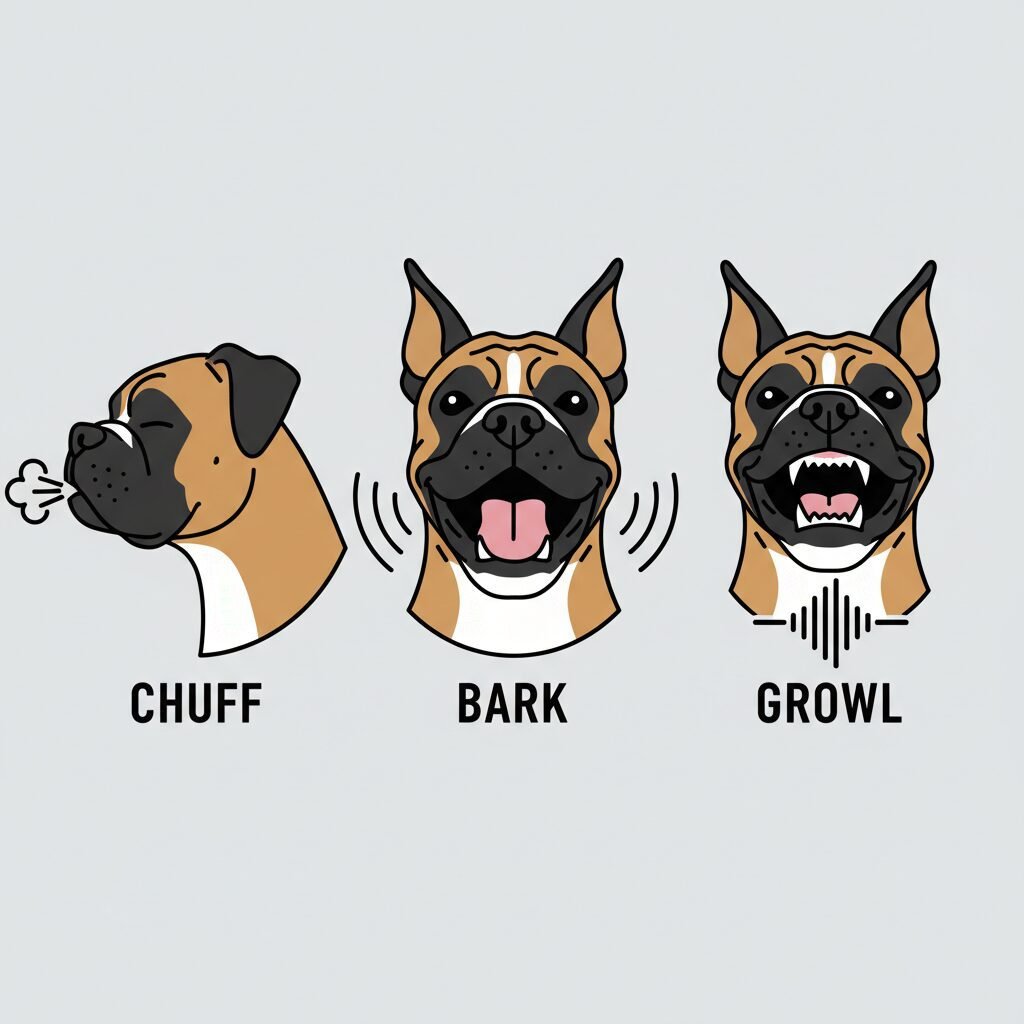
For a pet owner, the ability to accurately differentiate between canine vocalizations is not just helpful—it can be critical for safety and training. A misinterpretation can lead to missed warning signs or unnecessary anxiety. The chuff, growl, and bark each have distinct characteristics in sound, physical presentation, and intent. This table provides a clear, side-by-side comparison to help you become a more discerning listener.
| Vocalization Feature | Chuff (‘Boof’) | Bark | Growl |
|---|---|---|---|
| Acoustic Quality | Low-pitched, breathy, short puff of sound. Lacks resonance. | Sharp, loud, percussive, and resonant. Can be high or low pitched. | Low-frequency, sustained, vibrating or rumbling sound. |
| Mouth Position | Closed or only slightly parted. Cheeks may visibly puff out. | Mouth is wide open to project the sound. | Lips are often curled back (a ‘snarl’) to expose teeth. Mouth can be closed or slightly open. |
| Typical Body Language | Often neutral or curious. Perked ears, focused gaze, still body. Can also be relaxed or playful. | Highly variable. Can be excited (loose body, wagging tail) or aggressive (stiff body, forward posture). | Almost always tense. Stiff body, hard stare, lowered head, raised hackles. A clear warning. |
| Primary Intent | Assessment, acknowledgment, mild alert, or polite request. A low-intensity communication. | To send a message over a distance. An alarm, a greeting, a demand, or an expression of excitement. | A warning to increase distance. A clear signal of discomfort, fear, or aggression. Meant to de-escalate a potential conflict by warning the other party. |
| Owner’s Interpretation | ‘I hear/see something and I’m checking it out.’ or ‘Pay attention to me.’ | ‘Intruder alert!’ or ‘I’m so happy you’re home!’ or ‘Let’s play!’ | ‘Back off now. You are making me uncomfortable.’ |
Understanding these distinctions is paramount. Reacting to a chuff with alarm can create anxiety in your dog, while ignoring a low growl can lead to a dangerous escalation. By analyzing the complete package—the sound, the mouth shape, and the accompanying body language—you can respond to your dog’s communications with precision and care.
Context is Key: Reading Body Language to Interpret the Chuff
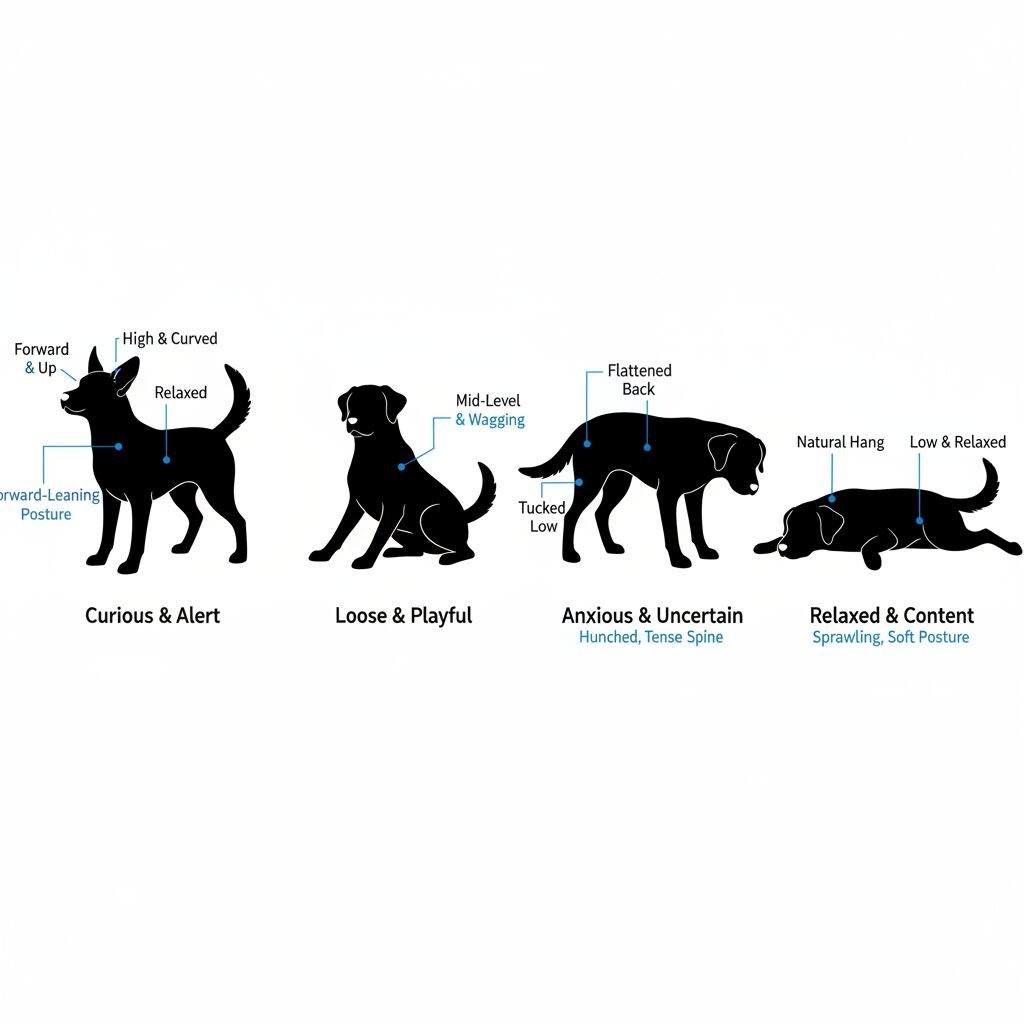
A chuff rarely occurs in a vacuum. It is a single data point in a stream of communication that includes your dog’s posture, tail position, ear set, and gaze. To truly master the art of interpreting this sound, you must become a student of your dog’s entire body. The same ‘boof’ can mean vastly different things depending on the physical cues that accompany it.
The Alert and Investigative Dog
When a chuff is driven by curiosity or a low-level alert, the body language is one of focused attention. Look for:
- Ears: Perked up and oriented toward the source of the sound.
- Body: A forward-leaning, but not aggressive, stance. The dog may be very still.
- Tail: Held neutral or slightly higher than normal, often still.
- Gaze: Intense and fixed on a specific point.
In this context, the chuff is your dog’s way of processing information. They are not yet alarmed, merely investigating.
The Playful and Engaging Dog
A chuff used as a play solicitation is easy to spot when you know the signs. The body language will be loose, relaxed, and inviting.
- Posture: A ‘play bow’ (front end down, back end up) is a classic invitation.
- Tail: A broad, sweeping wag.
- Movement: Bouncy, ‘inefficient’ movements, like hopping from foot to foot.
- Eyes: Soft, ‘smiling’ eyes that make frequent contact with you.
Here, the chuff is a gentle and polite way of saying, ‘Come on, let’s have some fun!’
The Anxious or Uncertain Dog
Less commonly, a chuff can be a sign of mild anxiety or uncertainty. It’s a sound made when a dog is unsure how to react to a situation. This is often a precursor to more obvious signs of fear if the stressor persists.
- Body: A lowered body posture, possibly with a slightly arched back.
- Tail: Tucked low or between the legs.
- Facial Cues: Whale eye (showing the whites of the eyes), lip licking, or yawning out of context.
- Ears: Pinned back against the head.
If you see these signals with a chuff, it’s a sign that your dog is uncomfortable and needs reassurance or removal from the situation.
When to Be Concerned: Is a Chuff Ever a Bad Sign?

In the vast majority of cases, chuffing is a perfectly normal, benign part of canine communication. It is a healthy expression of a dog’s emotional and cognitive state. However, there are rare instances where a sound that resembles a chuff, or chuffing that occurs in a specific pattern, may warrant a closer look from a professional.
Potential Medical Issues
Sometimes, what sounds like a behavioral chuff can be an indicator of physical discomfort. It’s important to consider this possibility, especially if the behavior is new or has changed in frequency.
- Respiratory Conditions: Issues like tracheal collapse (common in small breeds), laryngeal paralysis, or even something caught in the throat can produce coughing or huffing sounds that might be mistaken for a chuff. If the chuffing is persistent, sounds wet, or is followed by gagging, a veterinary visit is essential.
- Pain or Discomfort: A dog experiencing orthopedic pain (like arthritis) or abdominal discomfort might emit a soft grunt or groan when changing positions or being touched. This sound of pain can be misinterpreted as a chuff of contentment. Observe if the sound is linked to specific movements.
Behavioral Red Flags
While a chuff itself is not aggressive, it can be part of a larger sequence of behaviors that signal a potential problem. The key is to watch what happens immediately after the chuff.
Behavioral Warning: A chuff that is immediately followed by body stiffening, a hard stare, lip curling, or a low growl is no longer a simple alert. It has become the first step in a warning sequence. This is often seen in cases of resource guarding (guarding food, toys, or space) or territorial behavior.
If you notice your dog chuffing and then escalating to these more serious warning signals when approached, it is crucial to seek help. A certified canine behavior consultant or veterinary behaviorist can help you address the underlying anxiety or aggression safely and effectively before it escalates further.
When to Seek Professional Advice
Consult a professional if you observe any of the following:
- The chuffing is a new behavior that has appeared suddenly without any clear environmental change.
- The sound is accompanied by signs of illness, such as lethargy, loss of appetite, or difficulty breathing.
- The chuff consistently and immediately precedes aggressive displays like growling, snarling, or snapping.
- The behavior seems obsessive or occurs constantly without an apparent trigger, which could indicate a compulsive disorder or cognitive issue in senior dogs.
Trust your instincts. You know your dog better than anyone. If their chuffing seems unusual or concerns you, a professional consultation is always a wise investment in their health and well-being.
Conclusion
The humble ‘chuff’ is a testament to the remarkable complexity of canine communication. It is a subtle, nuanced vocalization that offers a direct window into your dog’s mind, revealing their thoughts on everything from a passing squirrel to their desire for a game of fetch. It is a sound of inquiry, of mild surprise, of gentle persuasion, and of quiet contentment. By learning to distinguish the chuff from a bark or a growl, and by paying close attention to the rich tapestry of body language that accompanies it, you move beyond being just an owner and become a true partner in communication.
Remember that every sound your dog makes is a piece of information. The chuff is one of the most valuable because it often signals your dog’s thought process before they commit to a more significant action. Embrace your role as an observer and interpreter. Listening to your dog’s chuffs—and understanding the context behind them—will not only prevent misunderstandings but will also deepen the trust and enrich the incredible bond you share with your canine companion.