12 Genius DIY Dog Fence Ideas That Won’t Break the Bank
Ensuring the safety of our canine companions is a top priority for every responsible pet owner. A secure fence provides a protected space for your dog to play, exercise, and enjoy the outdoors without the risk of wandering off or encountering potential dangers. However, the cost of professional fence installation can be a significant financial barrier, often running into thousands of dollars. Fortunately, with a bit of ingenuity and effort, you can construct a reliable and effective dog fence yourself. This comprehensive guide explores 12 genius DIY dog fence ideas that are not only cost-effective but can also be customized to suit your property and your dog’s specific temperament. Whether you’re a seasoned DIY enthusiast or a novice looking for a weekend project, these solutions offer practical ways to secure your yard and provide peace of mind.
Phase 1: Essential Planning and Preparation
Before you start building, a solid plan is crucial for success. Rushing into a DIY fence project without proper preparation can lead to wasted materials, a non-compliant structure, or a fence that fails to contain your dog.
Assess Your Dog’s Needs
First, consider your dog’s size, breed, and behavior. A Jack Russell Terrier with a high jump requires a different type of barrier than a calm, elderly Basset Hound. Ask yourself:
- Is my dog a jumper? If so, you’ll need a taller fence, generally 5-6 feet for medium to large dogs.
- Is my dog a digger? For avid diggers, you must bury the bottom of the fence at least 6-12 inches underground or install an L-footer (a piece of wire mesh extending inward at the base).
- Is my dog a chewer or a pusher? Powerful breeds may require stronger materials like welded wire or reinforced wood, rather than PVC or light netting.
Check Local Regulations and Utility Lines
Before digging a single hole, you must contact your local authorities. Many municipalities have specific regulations regarding fence height, materials, and placement (setbacks from property lines). You may need a permit. Additionally, always call 811 or your local utility locating service to have underground lines (gas, water, electric) marked. Hitting a utility line is dangerous and can result in costly repairs.
Measure and Map Your Fence Line
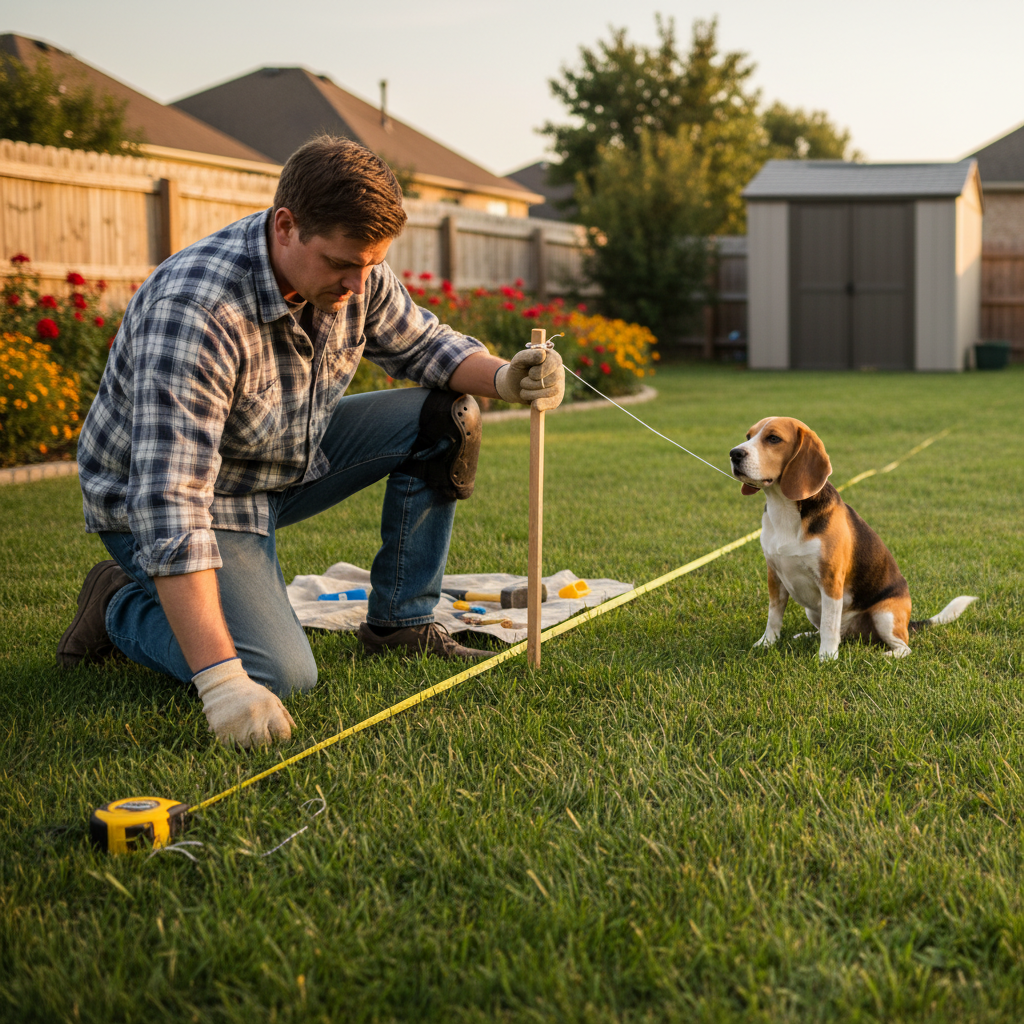
Walk your property and determine the exact perimeter of the fence. Use stakes and string to create a clear guideline. This will help you calculate the precise amount of materials needed, including posts, fencing material, and hardware. Remember to account for gates in your plan.
Upcycled and Cost-Effective Material Fences
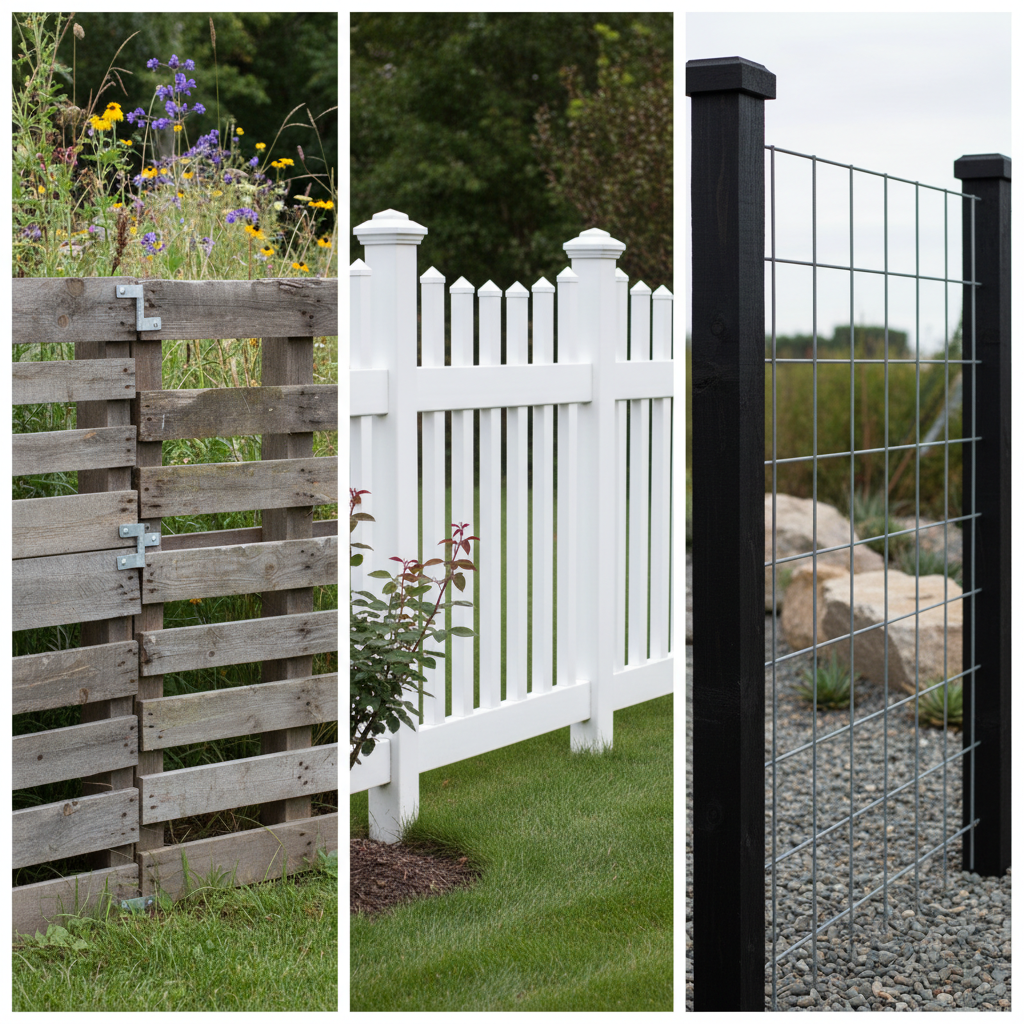
Using reclaimed or inexpensive materials is the cornerstone of a budget-friendly DIY project. These ideas are not only economical but also environmentally conscious.
1. The Classic Pallet Fence
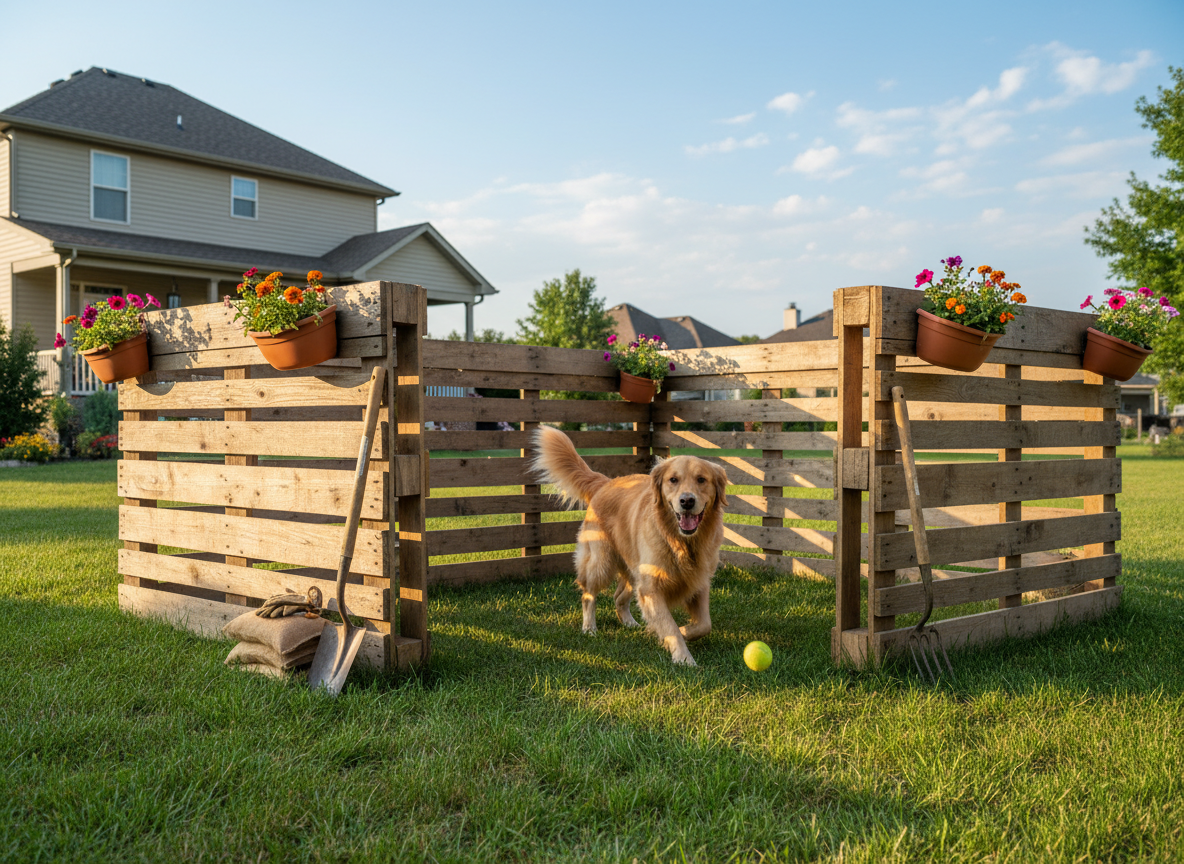
Wooden pallets are often available for free from local businesses, warehouses, or construction sites. They are sturdy, modular, and create a rustic, charming look. To build, you simply stand the pallets upright, connect them securely to one another, and anchor them to posts set in the ground. Important: Ensure the pallets are heat-treated (marked with ‘HT’) rather than chemically treated (marked with ‘MB’ for methyl bromide), as the chemicals can be toxic to pets.
2. Reclaimed Wood or PVC Privacy Fence
Scrap lumber from old decks, fences, or construction projects can be repurposed into a beautiful and effective barrier. Similarly, PVC pipes or lattice panels can be used to create a lightweight and weather-resistant fence. The key is to ensure the reclaimed materials are free of nails, sharp edges, and toxic finishes. This option offers excellent privacy and can be customized with paint or stain to match your home.
3. Hog or Cattle Panel Fence
Available at farm supply stores, hog or cattle panels are extremely durable, rigid sections of welded wire. They are designed to contain livestock, making them more than strong enough for most dogs. These panels can be attached to sturdy wooden or T-posts for a simple, effective, and surprisingly modern-looking fence that offers excellent visibility.
Flexible Mesh and Wire Solutions
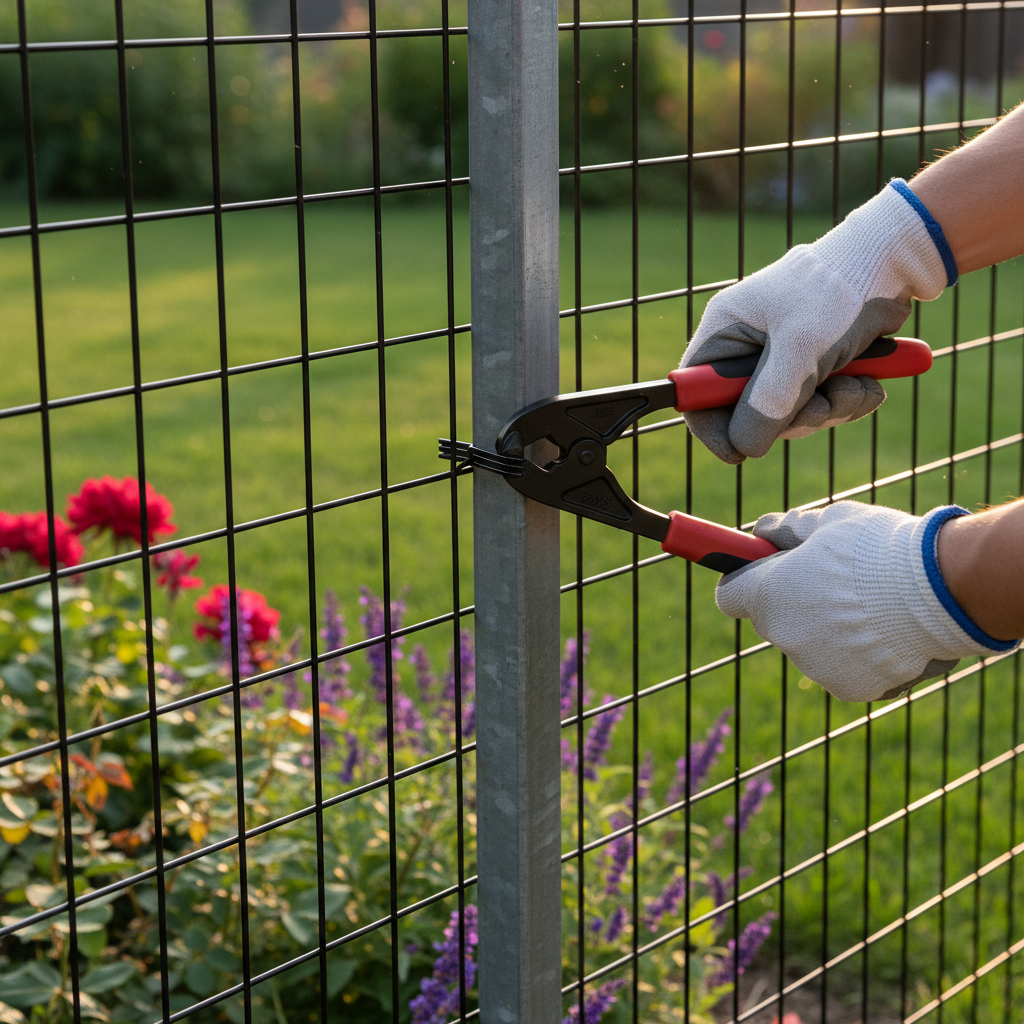
For those who prefer a less obtrusive look or have a large area to cover, mesh and wire fencing are excellent, affordable choices.
4. Welded Wire or Hardware Cloth Fence
Welded wire is a popular choice for its strength and affordability. It’s more rigid than chain-link and can be attached to metal T-posts or wooden posts. For smaller dogs or to prevent digging, you can use a finer mesh known as hardware cloth along the bottom portion of the fence. This material is highly effective and blends well into the landscape, preserving your view.
5. Garden Fencing or Poultry Netting
For small, calm dogs that are not prone to testing boundaries, standard garden fencing or vinyl-coated poultry netting (chicken wire) can be a sufficient and very inexpensive solution. This type of fencing is easy to install using simple stakes or T-posts. However, it is not recommended for large, strong, or determined dogs, as they can easily push through or jump over it.
6. Heavy-Duty Pet Netting
A step up from garden netting, specialized polypropylene pet netting is designed to be stronger and more UV-resistant. It’s a great ‘invisible’ fence option that is less expensive than professional systems. When installed correctly with sufficient tension, it can effectively contain dogs of various sizes. It’s a popular choice for renters or for areas where a solid fence is not aesthetically desired.
Natural and Landscape-Integrated Barriers
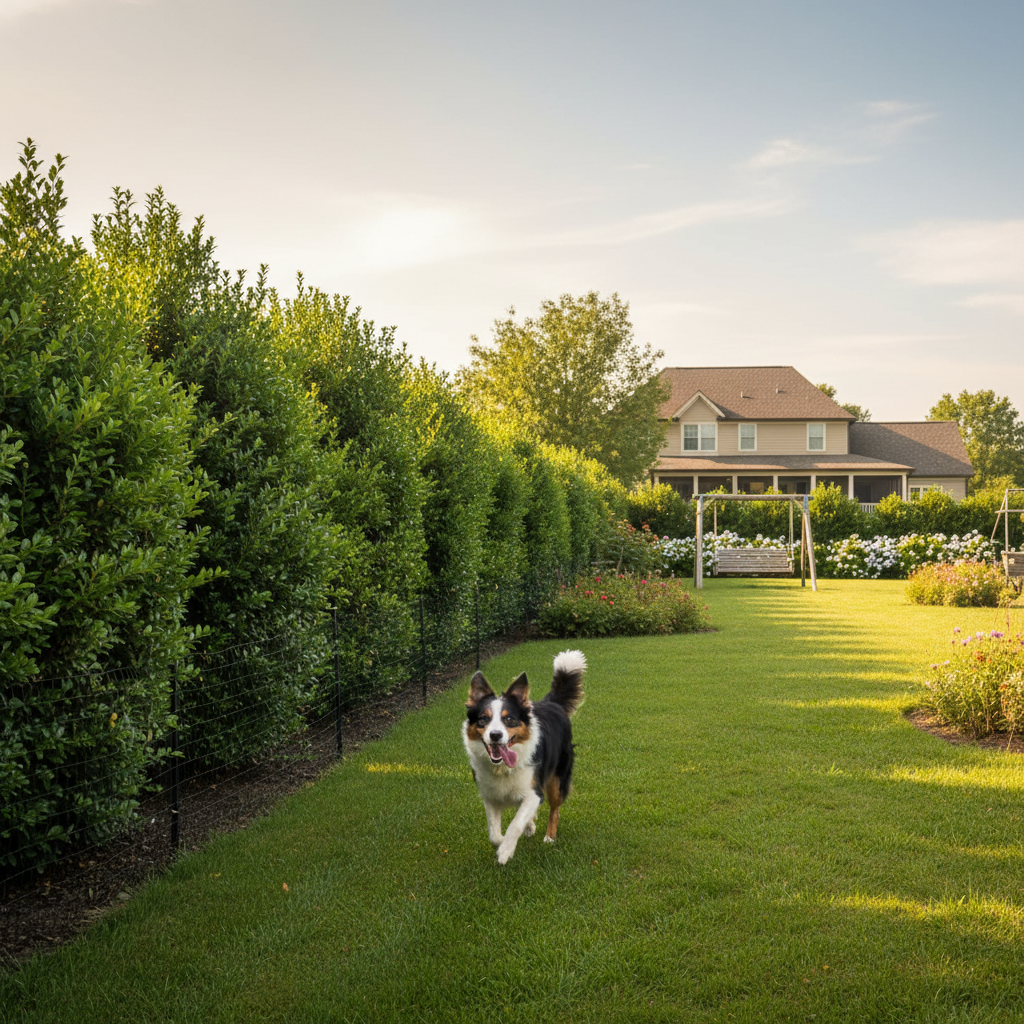
For a truly unique and beautiful solution, consider integrating your dog fence directly into your landscape design.
7. The Living Fence (Hedges and Shrubbery)
A living fence involves planting dense, fast-growing shrubs or hedges like Boxwood, Privet, or Arborvitae to form a natural barrier. While this is not an immediate solution—it can take a few years to mature—it is incredibly beautiful and environmentally friendly. For the initial years, you may need to reinforce the young shrubs with a temporary wire mesh fence woven between them to ensure your dog remains contained.
8. Natural Rock or Stone Wall
If your property has an abundance of rocks or you can source them affordably, building a low stone wall can be an effective and permanent solution. A well-built dry-stack wall (made without mortar) is a challenging but rewarding DIY project. The height and stability must be sufficient to contain your dog, making this best for smaller breeds or less athletic dogs.
9. Split Rail Fence with Mesh Reinforcement
A split rail fence offers a classic, rustic aesthetic but has large gaps that dogs can easily slip through. By adding a layer of black or green vinyl-coated wire mesh to the interior side of the fence, you maintain the open, pastoral look while creating a secure barrier. This combination is one of the most popular and effective DIY solutions, balancing style and security perfectly.
Expert Tip: When choosing plants for a living fence, always verify they are non-toxic to dogs. Avoid common plants like Yew, Holly, and certain types of Ivy.
Temporary and Specialized DIY Fences
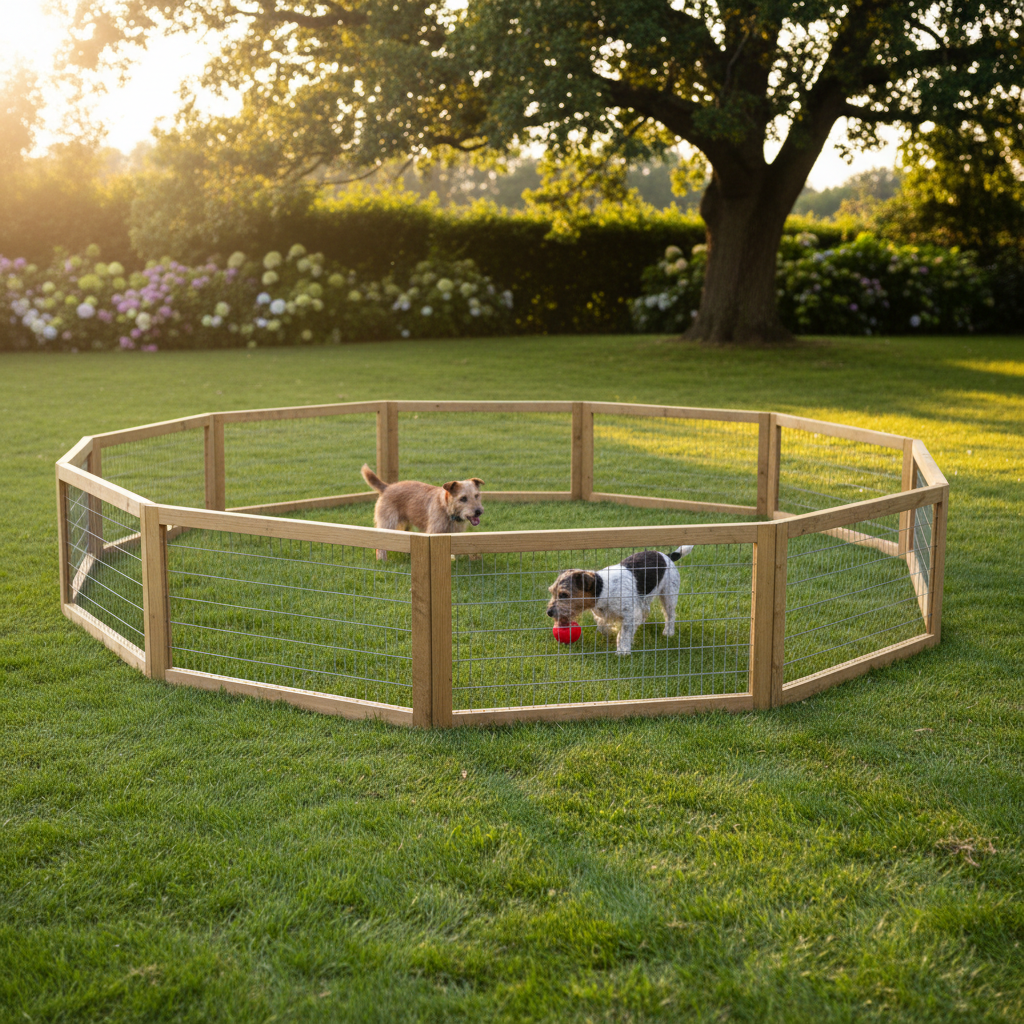
Not everyone needs a permanent fence. These ideas are perfect for renters, campers, or for sectioning off specific areas of a yard.
10. DIY A-Frame Portable Fence
This clever design involves creating movable A-frame sections of fencing. Each section has two fence panels hinged at the top, allowing them to stand freely in an ‘A’ shape. They can be linked together to create a temporary enclosure of any size. This is an excellent option for creating a temporary playpen on the lawn or for bringing on camping trips.
11. Driveway Gate and Barrier
Sometimes, you don’t need to fence the entire yard. If your property is mostly enclosed by existing structures or hedges, you may only need to block off the driveway. A DIY driveway gate can be built from wood, PVC, or even a reinforced cattle panel. For a simpler solution, a temporary driveway guard made of durable mesh can be quickly erected and taken down as needed.
12. The ‘Invisible’ DIY Fence Reinforcement
This idea is for those who already have a fence that their dog has learned to jump or climb. Instead of replacing the entire fence, you can install PVC pipe extenders or commercially available coyote rollers along the top. These devices roll when a dog tries to use them for leverage, preventing them from getting the grip needed to pull themselves over. It’s a genius, budget-friendly fix for an existing problem.
| Fence Idea | Estimated Cost | Skill Level | Best For |
|---|---|---|---|
| Pallet Fence | Very Low | Beginner | Medium to large dogs; not for heavy chewers. |
| Welded Wire Fence | Low-Medium | Beginner | All dog sizes; good for jumpers and diggers (if buried). |
| Split Rail with Mesh | Medium | Intermediate | All dog sizes; balances aesthetics and security. |
| Living Fence (Hedges) | Low (if grown from small plants) | Beginner (Gardening) | Patient owners; requires reinforcement while maturing. |
Conclusion
Creating a safe and secure environment for your dog does not have to be an expensive undertaking. The 12 DIY fence ideas presented here offer a range of solutions to fit nearly any budget, skill level, and aesthetic preference. From the rustic charm of a pallet fence to the seamless integration of a living barrier, the possibilities are vast. The most important steps are careful planning, understanding your dog’s specific containment needs, and adhering to local regulations. By investing your time and effort, you can build a functional, reliable fence that provides your beloved pet with the freedom to enjoy their yard safely and gives you invaluable peace of mind.